
Review · TRAIN EXPERIENCES
Bangkok: Bridge on the River Kwai and Thailand-Burma Railway Tour
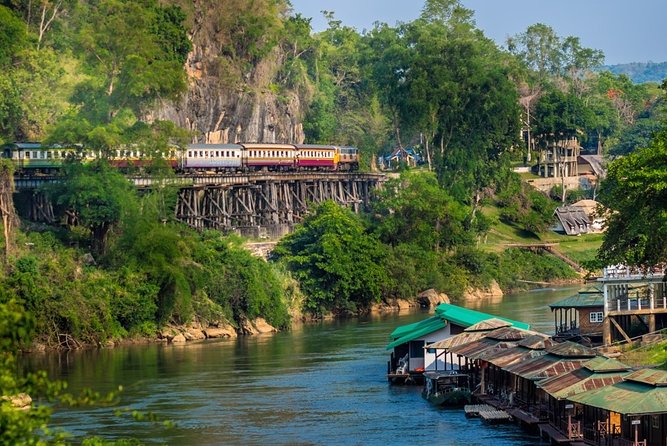
The most moving part of this long day is not the bridge itself. It is the quiet Kanchanaburi War Cemetery, where rows of graves recall prisoners of war who died building the Thailand-Burma Railway. Then the mood shifts as you ride a long-tailed boat and take the train across the famous bridge.
I like the way this tour combines serious wartime history with real transportation rather than treating the bridge as a quick photo stop. I also like the included hotel pickup, lunch, museum visit, and small maximum group of 15. The main drawback is the distance: expect about 11 hours, and Bangkok traffic can make the return even longer.
In This Review
- Key points at a glance
- Why the Bridge on the River Kwai still matters
- Leaving Bangkok early for Kanchanaburi
- Arriving by long-tailed boat on the River Kwai
- Walking across the Bridge on the River Kwai
- Remembering the dead at Kanchanaburi War Cemetery
- The JEATH War Museum and its difficult photographs
- Riding the train along the Death Railway
- Lunch beside the river
- Is the $99.40 price good value?
- What to bring and how to prepare
- Who will appreciate this day most?
- Should you book the River Kwai tour?
- FAQ
- How long is the Bridge on the River Kwai tour?
- Is hotel pickup included?
- Is the train ride included in the price?
- What places does the tour visit?
- Is lunch included?
- Can someone with mobility problems join the tour?
- Can I cancel for a full refund?
Key points at a glance
- A full day from Bangkok: Hotel pickup begins around 7 a.m., with collection often 30 to 60 minutes earlier depending on your hotel.
- Three ways to travel: You ride in an air-conditioned vehicle, take a long-tailed speedboat, and travel by train along the Death Railway.
- A thoughtful memorial visit: The Kanchanaburi War Cemetery is beautifully maintained and gives the history a human scale.
- Train seating costs extra: The ride is included, but a 300-baht local fee is requested for a guaranteed seat and small onboard extras.
- Guides make a real difference: Guides including Rach, Oom, and Zoom have been praised for clear explanations, practical help, and friendly manner.
- Best for history-minded visitors: The day suits you if you want context, not just a bridge photograph, and do not mind a long road journey.
Why the Bridge on the River Kwai still matters
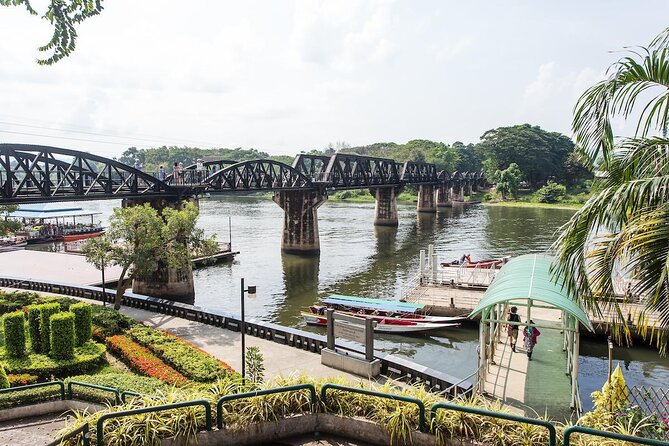
The bridge is part of the railway built during World War II between 1942 and 1943. Japanese forces used prisoners of war and enslaved laborers to construct the railway under brutal conditions, and many died from mistreatment, disease, exhaustion, and hunger.
The site became famous worldwide through Pierre Boulle’s book and the 1957 film The Bridge on the River Kwai. The real story is more complicated than the film, and a good guide helps you separate movie fiction from the events connected with the railway.
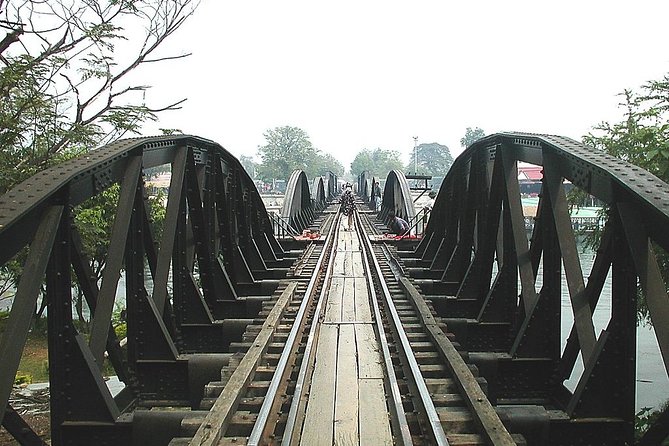
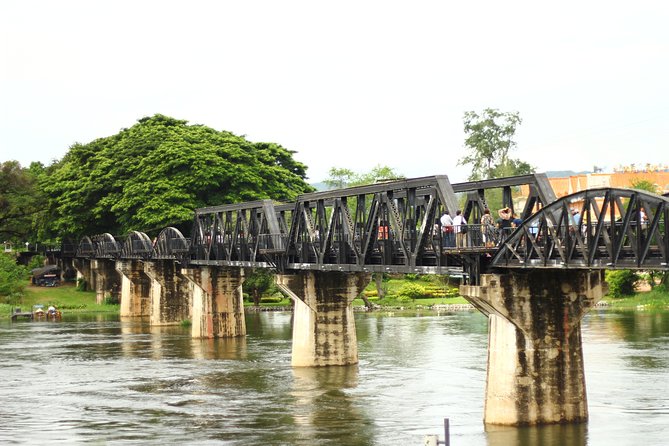
You can walk across the bridge and look down at the river below. The structure is not a museum piece sealed behind barriers. It is part of an active route, so you need to pay attention when trains approach and take care on the uneven surfaces.
That direct contact is one reason this excursion works. You are not simply reading a plaque and moving on. You are standing on the railway, seeing the river, and later riding a train along the route.
A few more Bangkok trips to weigh up
- Bangkok: Damnoen Saduak Market and Maeklong Railway Market
★ 4.5 · 26,723 reviews - The Old Siam: Damnoen Saduak and Maeklong Railway Market
★ 4.5 · 10,992 reviews - Bangkok: Train Market & Floating Market with Boat Ride
★ 4.7 · 9,547 reviews
Leaving Bangkok early for Kanchanaburi
Pickup is offered from most centrally located Bangkok hotels. The advertised start time is 7 a.m., but your actual hotel collection may be 30 to 60 minutes before that, depending on where you stay.
That early start is necessary. Kanchanaburi is far enough from Bangkok to require a substantial road journey, and the total day runs about 11 hours. The air-conditioned vehicle makes the ride more comfortable, but you should still regard this as an active day rather than a quick half-day outing.
The small group limit of 15 is useful here. A compact group makes it easier to hear the guide, move between the vehicle and the sites, and ask questions. Some departures may be much smaller. One particularly favorable arrangement described a group of only four, while another had just two couples.
The guide is central to the experience. Names associated with strong tours include Rach, also written as Rac in one account, Oom, and Zoom. Their approach can vary, but the best guides explain the history during the long journey, answer questions, help with photographs, and keep the day moving.
One caution: guide quality can affect how much you take away. A report about a guide speaking through a face covering shows that communication is not always perfect. If you cannot hear or understand something, tell the guide during the tour. There is a better chance of fixing the problem on the spot than waiting until the day is over.
Arriving by long-tailed boat on the River Kwai
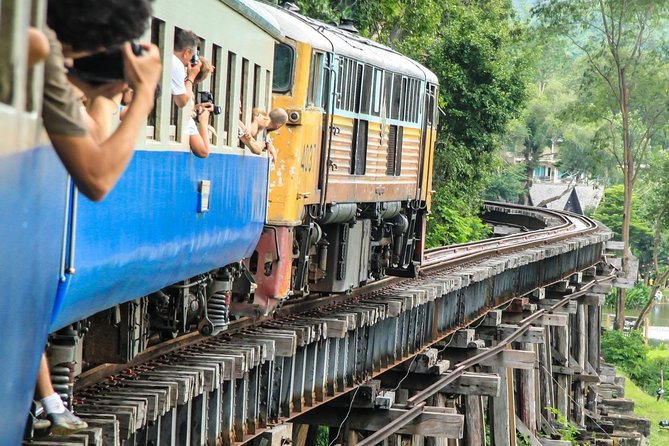
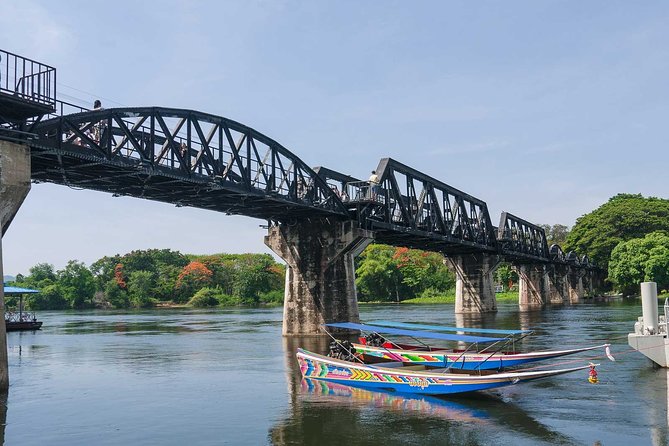
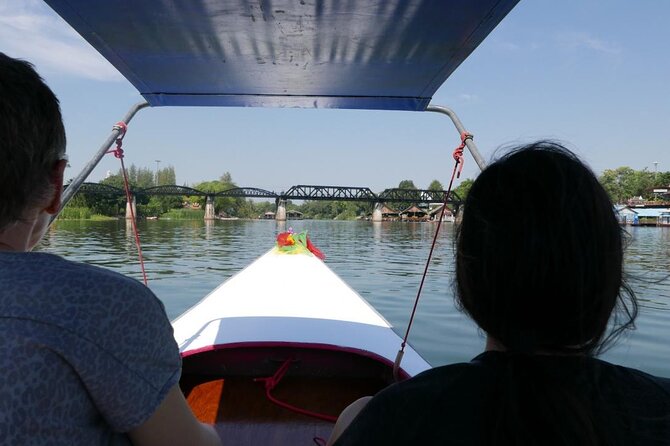
The long-tailed boat ride gives the day a welcome change of pace. Rather than approaching the bridge only by road, you travel along the river in a Thai-style boat, with the water and surrounding scenery forming part of the story.
The river is commonly called the River Kwai, while the section associated with the bridge is the Khwae Yai River. It flows through western Thailand, with its source in the Tenasserim Hills and a total course of about 380 kilometres through areas including Sangkhla Buri, Si Sawat, and Mueang Kanchanaburi.
The boat is a speedboat, and the ride is one of the more enjoyable parts of the schedule. It also helps break up the long drive. You get a different view of the bridge and the river corridor before walking onto the railway itself.
If you have mobility problems, boarding may be difficult. The operator asks you to tell the guide at the start of the tour. A road transfer to the bridge can be arranged instead of the boat ride, which is a useful option, though it means missing one of the signature parts of the day.
Walking across the Bridge on the River Kwai
At the bridge, you have time to see the structure up close and learn why it became such a powerful symbol of wartime suffering. Admission to the bridge itself is included.
The setting can seem almost peaceful, which is part of the discomfort. There is a river, open air, and attractive scenery, yet the railway was built through coercion and extreme suffering. The guide’s explanation matters here because the physical setting alone cannot tell you what happened.
Walking surfaces are uneven in places. Wear shoes that give you steady footing, and do not expect a polished, fully sheltered attraction. The bridge can also feel high and exposed, especially if you are uncomfortable with heights.
The train journey later gives you another perspective. First you walk the bridge and see its construction as an object. Then you ride along the railway and understand it as a working route through the region.
Same coastline, a completely different day out:
- From Bangkok: Ayutthaya Temples Guided Tour with Lunch
★ 4.7 · 10,535 reviews - From Bangkok: Ayutthaya & Ayothaya Floating Market Day Trip
★ 4.7 · 6,084 reviews - Bangkok Canal Tour: 2-Hour Longtail Boat Ride
★ 4.5 · 5,909 reviews - Bangkok: Muay Thai Boxing Tickets at Rajadamnern Stadium
★ 4.9 · 4,740 reviews
Remembering the dead at Kanchanaburi War Cemetery
The cemetery is, for many people, the emotional center of the excursion. It is the main prisoner of war cemetery for those who died while Japanese forces held them during construction of the Burma Railway.
You get about 30 minutes here. That is not a long time, but it allows you to walk among the graves, read inscriptions, and absorb the setting without turning the visit into a rushed photograph stop.
The cemetery is on Saeng Chuto Road in Kanchanaburi, close to the town. Its careful maintenance creates a sharp contrast with the suffering described by the guide. Names, ages, and epitaphs can make the history feel personal, particularly if you have a family connection to the campaign or the prisoners held here.
You should approach this stop quietly and allow yourself time to read. The visit is not designed as entertainment, and the most respectful response is often simply to slow down.
The JEATH War Museum and its difficult photographs
The JEATH War Museum is small and focuses mainly on the ordeal of prisoners of war who built the railway. It opened in 1977 and displays original photographs, letters, drawings, and material showing harsh living conditions.
The museum takes about 20 minutes. That short visit is enough for an introduction, but do not expect a large modern institution with extensive interpretation or climate-controlled galleries.
The material can be upsetting. Images and personal documents show the conditions prisoners endured, and the museum adds detail to what you hear from the guide. One useful feature of the tour is the sequence: cemetery first, museum after, then the bridge and railway experience. The day moves between remembrance and physical evidence.
You should also know that a War and Research Centre has caused confusion in past descriptions of the excursion. The information provided for this tour identifies the JEATH War Museum as the museum stop. Do not assume a separate research centre is included.
Riding the train along the Death Railway
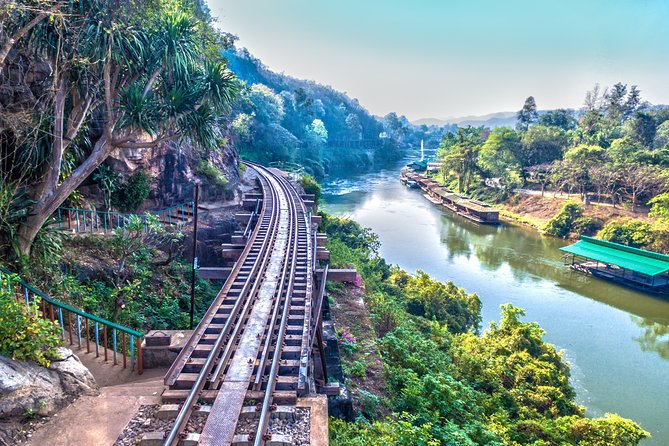
The train ride is included in the package, but the seating arrangement needs close attention. A mandatory local fee of about 300 baht per person is paid at the train station. This is separate from the advertised tour price.
According to the tour details, the fee guarantees a seat and includes tea or coffee, drinking water, a cold towel, and a certificate. The train itself can be crowded, and the fee is therefore not just a vague optional upgrade in practical terms. Still, the extra cost should be part of your budget from the start.
Some people find the train ride a highlight because it lets you travel over the bridge and along the historic railway rather than only looking at it. You get changing views of the river and surrounding countryside, and the train offers a slower, more physical connection to the route.
Others may find the ride somewhat long. One account described it as lasting around an hour and a half, while the published tour information does not give a precise train duration. If you dislike long vehicle journeys, remember that the train comes after the morning drive, boat ride, museum, cemetery, and bridge visit.
The train may be the most distinctive part of the day, but it is not luxury rail travel. Think of it as a working railway journey with historic value. If you want a guaranteed seat, pay the 300 baht and confirm the arrangement with the guide at the station.
Lunch beside the river
Lunch is included as a buffet in Kanchanaburi. The meal is served with the tour group, and the setting can add to the break. Some arrangements have a view over the River Kwai, which makes lunch a pleasant pause after the cemetery and museum.
The food itself has received mixed practical comments. It has been described as good, while another account found the buffet cold. You should treat the meal as a convenient included lunch rather than a reason to book the excursion.
Beverages are not included, so carry money for drinks. Water is part of the train seat package, but you should not rely on that for every part of an 11-hour day.
Is the $99.40 price good value?
At $99.40 per person, the tour includes quite a lot of logistics: hotel pickup and drop-off from central Bangkok hotels, an air-conditioned vehicle, a professional Thai guide, entrance fees, the long-tailed boat, train ride, and buffet lunch.
I consider that a reasonable price for a long-distance day trip where transport connections would otherwise be awkward to arrange. You are paying for convenience as much as admission. The vehicle, boat transfer, rail segment, and return to Bangkok are bundled together, and the group size is capped at 15.
The extra 300 baht for the train seat changes the calculation slightly. It is a required additional payment according to the tour information, so the true cost is the listed price plus that local charge. Be sure you understand this before departure, since some people have felt caught off guard when asked to pay it at the station.
The price makes the most sense if you have only a few days in Bangkok and want the bridge, memorial sites, river, and railway in one organized day. If you are staying longer in Kanchanaburi, a local stay could give you more time and less road travel, but that is a different type of trip.
What to bring and how to prepare
Wear comfortable shoes. The bridge and some surrounding walking areas have uneven surfaces, and you may be on your feet at several stops.
Bring drinking money, sun protection, and patience for traffic. The return to Bangkok can be slow, and a day advertised at about 11 hours may run longer when traffic is heavy.
Provide your hotel details when booking. Pickup is limited to most centrally located Bangkok hotels, and missing hotel information can result in cancellation or a request to meet at a nearby location.
The tour requires at least two people to operate as a shared departure. A solo booking is possible, but it can be cancelled if the minimum is not met. If that happens, an alternative date or refund is offered.
Most people can take part, but the boat requires getting in and out of a long-tailed speedboat. Tell the guide early if you have mobility concerns so the road option can be arranged.
Who will appreciate this day most?
I would choose this tour if you care about World War II history, memorials, and learning the real story behind a famous film location. It is especially suitable if you want a guide to explain the role of prisoners of war and enslaved laborers rather than simply pointing out the bridge.
You will also enjoy it if you like mixing transport styles. The long-tailed boat and train ride give the excursion more character than a simple minibus trip to a landmark.
This is less suitable if you want a relaxed day near Bangkok, dislike early starts, or have difficulty with long periods in a vehicle. The itinerary is full, and the return journey can be tiring.
The guide can make the difference. Rach has been praised for answering detailed questions and making the long drive pass quickly. Oom has been noted for clear planning, humor when appropriate, photographs, and help throughout the day. Zoom has also received warm praise for guiding a moving cemetery and museum visit.
Should you book the River Kwai tour?
Book it if you want a structured, history-focused day that combines the bridge with the cemetery, JEATH Museum, river, lunch, and train. The package offers solid value for the amount of transport and guiding involved, especially with hotel pickup and a maximum of 15 people.
Go in with realistic expectations. This is a long excursion, the museum is small, lunch may be basic, and the 300-baht train fee is extra. If those points do not bother you, the day gives you a serious memorial visit, a memorable boat ride, and a rare chance to travel across part of the Thailand-Burma Railway itself.
FAQ
How long is the Bridge on the River Kwai tour?
The tour lasts approximately 11 hours. The start time is around 7 a.m., and the return can take longer because of traffic entering Bangkok.
Is hotel pickup included?
Yes. Pickup and drop-off are included for most centrally located Bangkok hotels. Collection may take place 30 to 60 minutes before the stated start time, depending on your hotel location.
Is the train ride included in the price?
The train ride is included, but a separate mandatory fee of about 300 baht per person is paid locally at the train station. This fee guarantees a seat and includes tea or coffee, drinking water, a cold towel, and a certificate.
What places does the tour visit?
The tour visits the Bridge on the River Kwai, the River Khwae area, Kanchanaburi War Cemetery, and the JEATH War Museum. It also includes a long-tailed boat ride, train journey, and lunch.
Is lunch included?
Yes. A buffet lunch in Kanchanaburi is included. Beverages are not included.
Can someone with mobility problems join the tour?
Most people can participate, but getting into and out of the long-tailed speedboat may be difficult. Tell the guide at the beginning, and a road transfer to the bridge can be arranged instead.
Can I cancel for a full refund?
You can cancel for a full refund up to 24 hours before the experience start time. Cancellations or changes made less than 24 hours beforehand are not accepted for a refund.
Just added around Bangkok
- 1.5 – 2 hour afternoon SUP class for all ages and levels★ 5.0 · 35 reviews
- Erawan Waterfall & Train Tour from Kanchanaburi – Full Day★ 4.0 · 16 reviews
- Cycling in rural Kanchanaburi area★ 5.0 · 12 reviews
- Kanchanaburi Tour: Erawan Waterfall and Death Railway★ 5.0 · 13 reviews
- 1.5 – 2 hour morning SUP boarding class for all ages and levels★ 5.0 · 13 reviews
- Yoga in the Park Thailand★ 5.0 · 12 reviews
- re:leaf spa and massage★ 4.0 · 10 reviews
- Visit temples in and around Bangkok with a former monk of 10 years★ 5.0 · 30 reviews
Train Experiences, compared.
Damnoen Saduak Market and Maeklong Railway Market
Read our review →
The Old Siam: Damnoen Saduak and Maeklong Railway Market
Read our review →
Train Market & Floating Market with Boat Ride
Read our review →
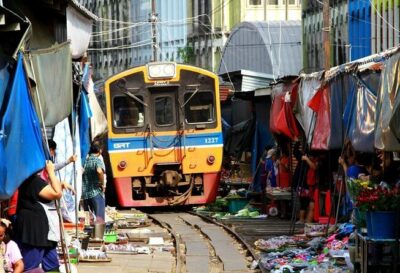
Half-Day Railway Market and Floating Market Tour in Thailand
Read our review →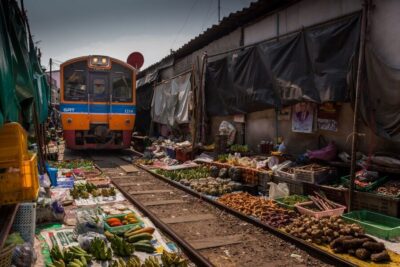
Damnoen Saduak, Train Market & Mahanakhon Day Trip
Read our review →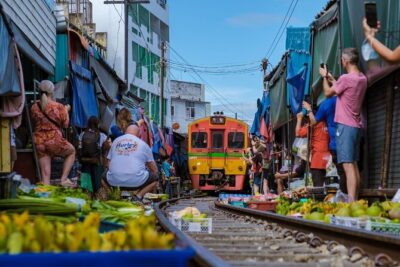
Damnoen Saduak Floating Market and Maeklong Railway Market Tour
Read our review →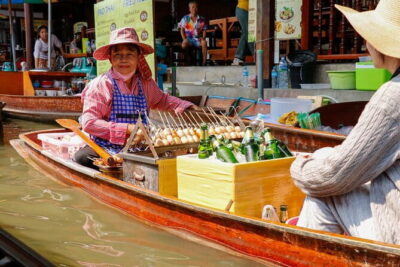
Day Trip to Bangkok Floating Market & Maeklong Railway
Read our review →Browse the lists this tour appears in