
Review · FOOD
Bangkok: Cook authentic Thai food with Smart Cook
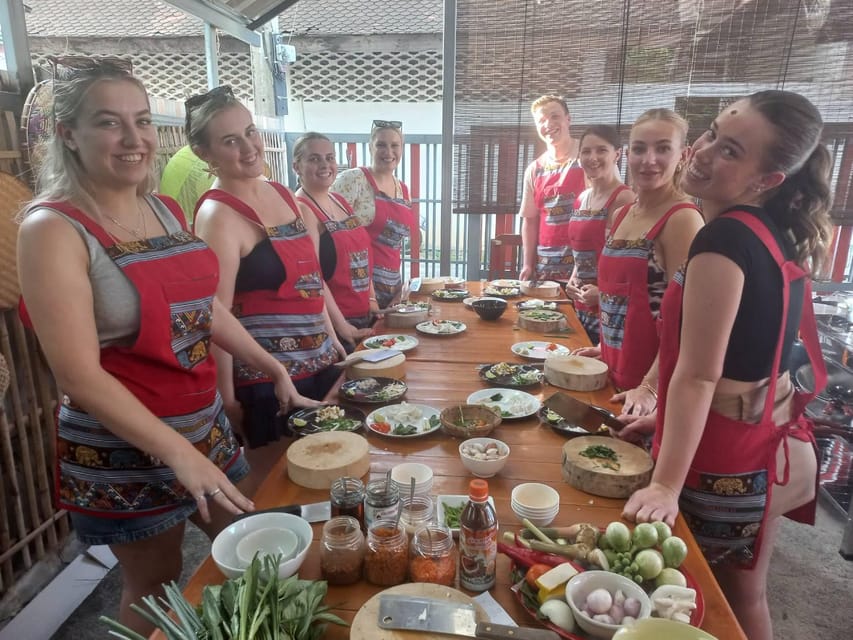
Bangkok Smart Cook puts you in a more interesting kitchen than a polished cooking studio. Near the Giant Swing, you’ll work in a traditional teak home in a local old-city community, learning Thai herbs, spices, curry pastes, and several dishes from chef Snow White. The class is hands-on from the start, not a demonstration where you simply watch someone else chop.
I like the freedom to choose your own stir-fry, soup, and curry. I also like the small group limit of seven people, which gives you room to ask questions and actually handle the ingredients. The one consideration is that a 210-minute class with several dishes can feel like a long meal as well as a lesson, so come hungry and wear comfortable clothes.
In This Review
- Key points
- Cooking Thai food beside the Giant Swing
- Start with Thai herbs, spices, and fresh ingredients
- Make spring rolls together before choosing your dishes
- Learn three styles of Thai soup
- Pound curry paste, then cook your chosen curry
- Finish with mango sticky rice
- What the $41 price includes
- Who will enjoy Smart Cook Bangkok most
- Small details that can improve your class
- Should you book this Thai cooking class?
- FAQ
- How long does the Bangkok Smart Cook class last?
- How much does the cooking class cost?
- Where do I meet the group?
- Is the class taught in English?
- How many people are in the class?
- Which dishes can I choose?
- What dishes does everyone make?
- Is alcohol included?
Key points
- Traditional setting: Cook in a more than 100-year-old teak home near Bangkok’s Giant Swing.
- Chef Snow White: Learn in English with an instructor who has taught people from around the world.
- Choose your menu: Pick a stir-fry, soup, and curry while everyone makes spring rolls and mango sticky rice.
- Useful skills: Study herbs, vegetables, spices, curry pastes, and the role of fresh ingredients in Thai cooking.
- Small class size: Groups are limited to seven, so you get direct, hands-on instruction.
- Good value at $41: The price covers the class, food, teaching, and an online PDF recipe book.
Cooking Thai food beside the Giant Swing
The meeting point is at the Giant Swing, one of the easiest old-city landmarks to recognize. From there, walk roughly 100 meters to Trok Turk Din alley. This short approach takes you away from the open landmark area and into a more local neighborhood, where the class takes place in a traditional teak house.
That setting matters. You are not just buying a cooking lesson. You are spending part of your Bangkok day in an old family-style home, with cooking areas described as both indoor and outdoor. The house is more than 100 years old, giving the class a sense of place that a commercial kitchen would not provide.
You should allow a little patience for finding the alley. The directions are short and clear, but a Bangkok lane can feel less obvious than a major street. Using the Giant Swing as your starting point is helpful, and you should arrive in comfortable clothes since the class involves standing, preparing ingredients, and moving between cooking tasks.
The class is offered in English. The group size is limited to seven people, a useful detail for anyone who wants individual help with knife work, spice quantities, or curry paste. A larger class could turn this into a show. This format gives you a better chance to cook rather than simply watch.
A few more Bangkok trips to weigh up
- Bangkok: White Orchid Chao Phraya Dinner Cruise free Beer
★ 4.4 · 4,573 reviews - Bangkok by Night: Temples, Markets and Food Tuk-Tuk Tour
★ 5.0 · 3,752 reviews - Bangkok: Backstreets Food Tour with 15+ Tastings
★ 4.9 · 2,880 reviews
Start with Thai herbs, spices, and fresh ingredients
The first useful lesson is not a recipe. It is learning what is in front of you.
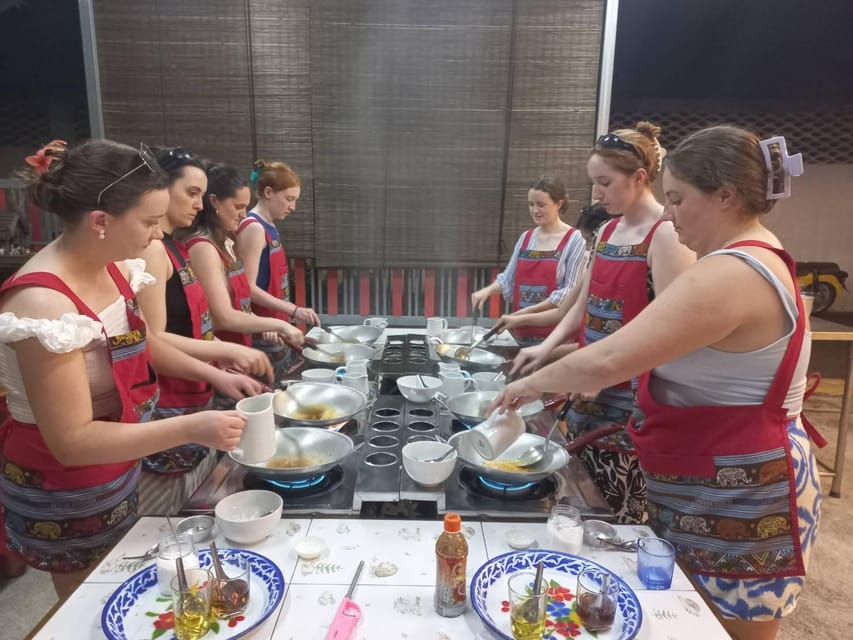
You’ll be introduced to vegetables, herbs, spices, and other basic ingredients used in Thai cooking. The focus is on how to use them in a fresh and healthy meal, as well as how they contribute to taste. This is especially helpful if Thai food at home has always seemed difficult to reproduce. A finished dish can look simple, but the balance often comes from small choices in herbs, curry paste, chilies, and aromatics.
I like this part because it gives the cooking a reason. You are not only following steps. You are learning why an ingredient belongs in a dish and how the parts work together.
Chef Snow White’s teaching style is described as patient and clear, with good English and careful directions. That is important in a cooking class where ingredients may be unfamiliar and the method can move quickly. You can ask questions as you work, rather than trying to remember a long demonstration.
The food is prepared with fresh ingredients, and cleanliness is part of the experience. Still, you should keep your expectations sensible. This is a friendly home setting, not a formal culinary school. The charm comes from the relaxed family-style kitchen, while the trade-off is that the surroundings may feel less polished than a purpose-built studio.
Make spring rolls together before choosing your dishes
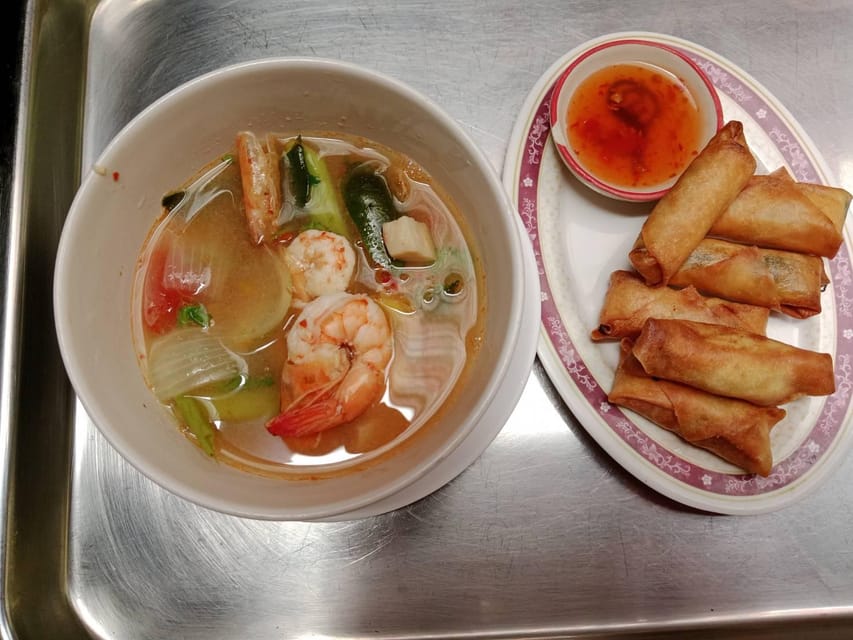
Everyone begins with deep-fried spring rolls. This shared first dish gives the group a common task, even when people choose different main courses later.
Spring rolls are a good opening recipe because they involve several simple stages. You prepare the filling, wrap it, and cook it. The result is immediate, and you get to eat what you made. It also lets the instructor see how the group is working before the more varied menu choices begin.
The class then gives you a choice among several stir-fried dishes:
- Fried rice with chicken
- Pad Thai
- Fried chicken with holy basil
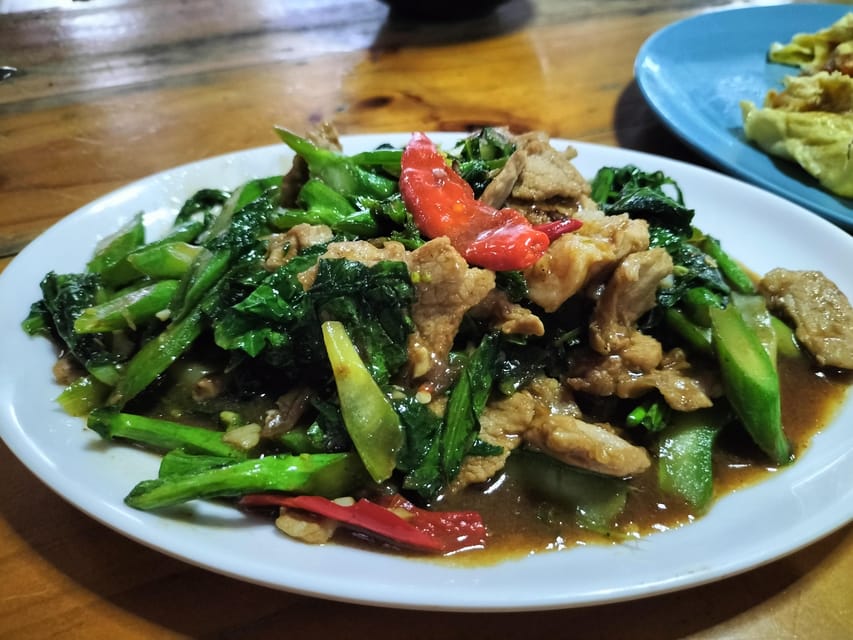
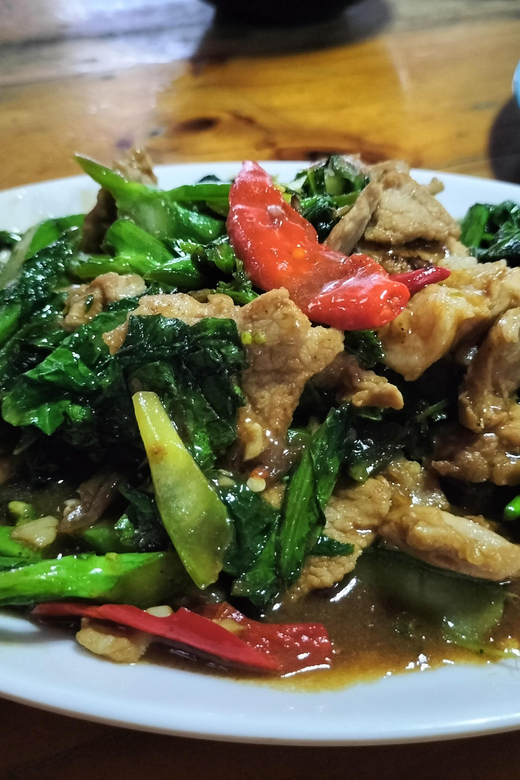
This is one of the strongest parts of the experience. You can choose a dish you already love, or select something you have not tried making before. Pad Thai is the familiar choice, while fried chicken with holy basil offers a more direct lesson in one of Thailand’s best-known flavor combinations. Fried rice is a practical option if you want a recipe that may be easy to repeat at home.
The menu choice also makes the class feel personal. In a fixed lesson, you may spend time cooking something you would never order. Here, you have a say in the meal. That does mean the exact cooking sequence can differ among participants, so the class may not feel identical for every person.
Learn three styles of Thai soup
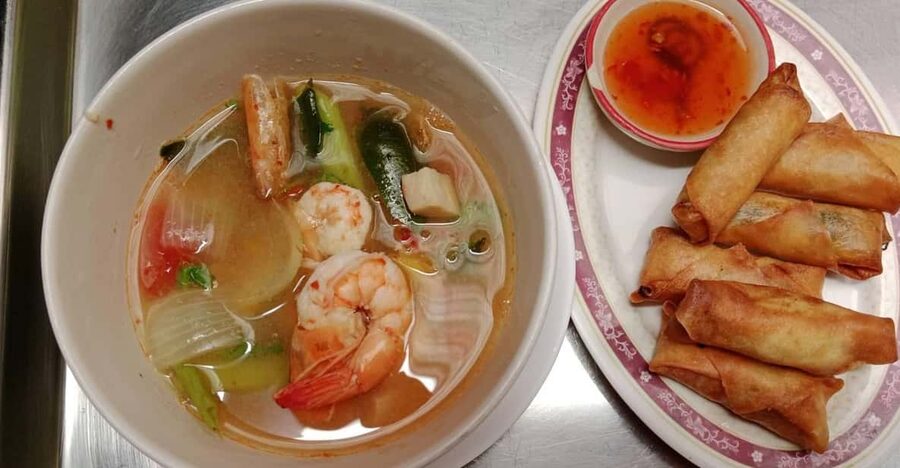
For the soup course, you can choose hot and sour prawns soup, chicken in coconut milk soup, or local hot and sour chicken soup.
These options cover different sides of Thai cooking. The prawn soup gives you a seafood-based choice, while chicken in coconut milk shows the softer, creamier side of Thai flavor. The local hot and sour chicken soup keeps the sharper, more acidic profile associated with Thai soups.
This menu is useful because it lets you compare techniques and ingredients. Thai cooking is not one single flavor style. Sour, hot, sweet, salty, herbal, and creamy notes can all take the lead, depending on the dish. Learning that range in one class gives you a better sense of how Thai cooks build balance.
If you are choosing for dietary or personal reasons, pay close attention to the listed options before booking. The provided information does not describe vegetarian, vegan, allergy-free, or halal alternatives. You can ask the instructor about your needs, but the menu choices given here center on chicken, prawns, and fish sauce style Thai cooking.
Same coastline, a completely different day out:
- Bangkok: Damnoen Saduak Market and Maeklong Railway Market
★ 4.5 · 26,723 reviews - The Old Siam: Damnoen Saduak and Maeklong Railway Market
★ 4.5 · 10,992 reviews - From Bangkok: Ayutthaya Temples Guided Tour with Lunch
★ 4.7 · 10,535 reviews - Bangkok: Train Market & Floating Market with Boat Ride
★ 4.7 · 9,547 reviews
Pound curry paste, then cook your chosen curry
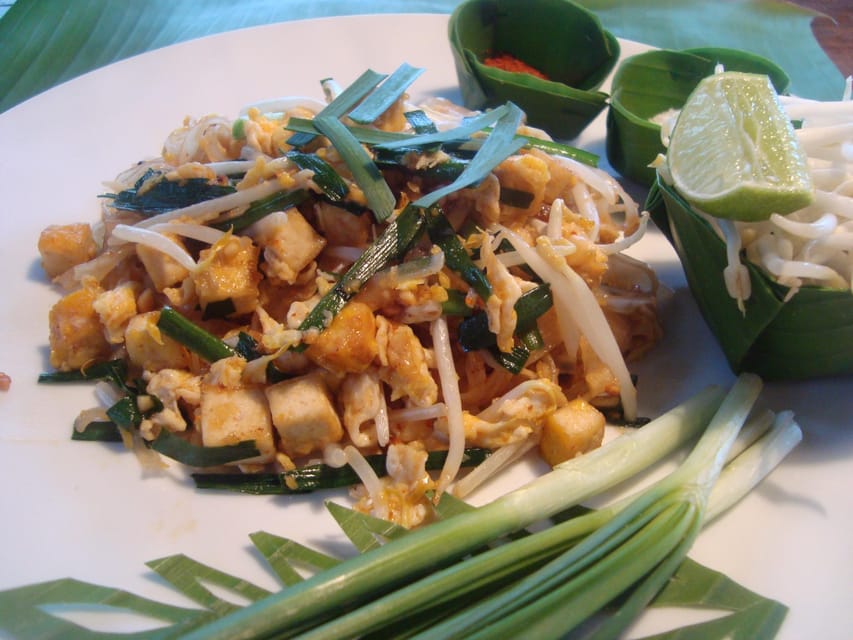
The curry section is likely to be the most hands-on part of the class. You will make a curry paste for green curry, Pha Naeng, or Kao-soi, then cook the chosen curry with chicken.
Making paste from the start teaches something a prepared jar cannot. You can see how herbs and spices become a base for the finished dish, and you get a closer look at the work behind Thai curry. The exact paste depends on your selection, so your group may be making different versions at the same time.
Green curry is the obvious choice if you want a familiar Thai classic. Pha Naeng offers a different curry direction, while Kao-soi gives you the chance to work with a northern Thai style. The class description does not promise a particular heat level, so you should ask Snow White about spice if that matters to you.
This part also highlights the value of a local instructor. A recipe can tell you what to add, but a teacher can show you texture, timing, and the point at which the paste is ready. Those visual and practical cues are often what you need when making the dish alone later.
The main limitation is time. The class includes spring rolls, a stir-fry, soup, curry paste, curry, and dessert within three and a half hours. You will be active, but you should not expect a slow, detailed culinary course on every dish. The aim is to give you a broad, useful introduction to Thai home cooking.
Finish with mango sticky rice
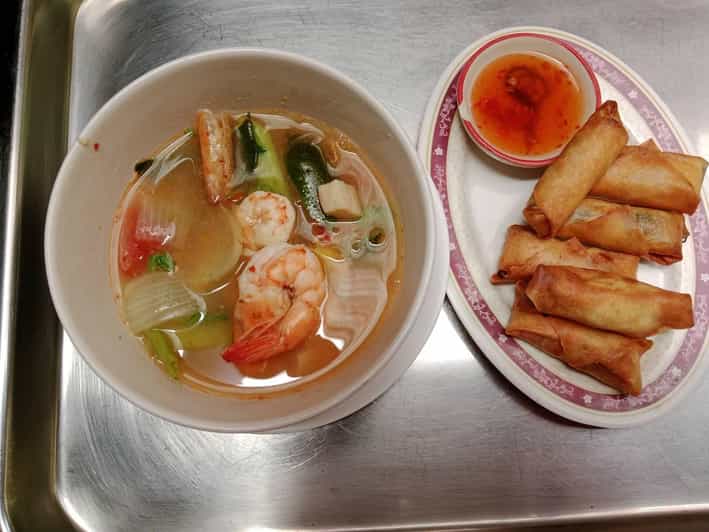
Everyone makes sweet sticky rice with mango, giving the class a shared dessert at the end.
This is a fitting finish because it is simple in appearance but depends on the right texture and balance. Sticky rice and mango also make a pleasant contrast with the savory dishes you have just prepared. By this point, you will have worked through fried food, stir-fry, soup, curry, and dessert in one sitting.
Several people have described making around six dishes during the class. That is a substantial amount of food for a half-day activity. You may leave full, so avoid scheduling an important restaurant meal immediately afterward.
The food is not just served to you. You prepare it and then eat in a traditional Thai family-style setting. That makes the meal part of the lesson, rather than a separate reward at the end.
What the $41 price includes
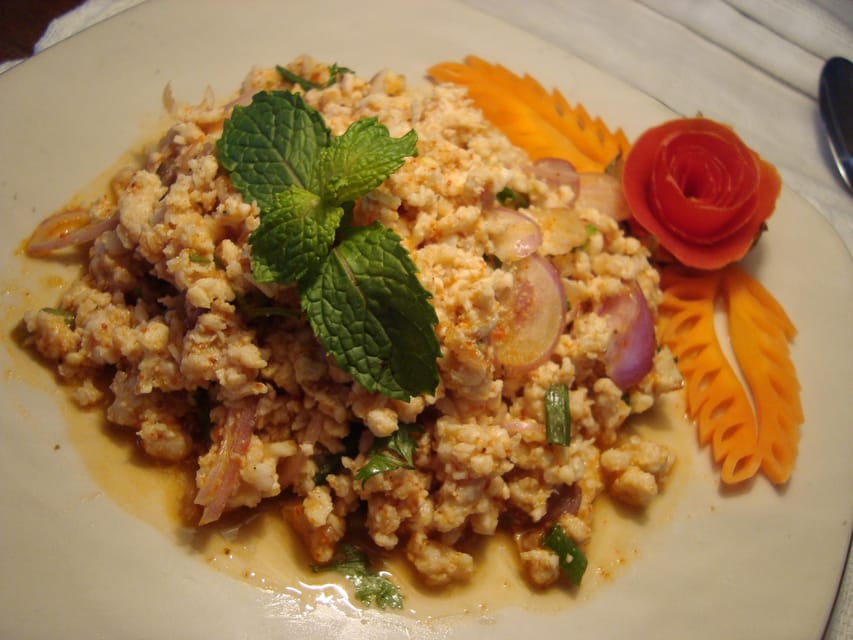
At $41 per person, this class offers reasonable value if you want both a meal and a practical activity. The 210-minute session includes ingredient instruction, several recipes, hands-on preparation, and the food you cook. You also receive an online PDF recipe book, which is important if your goal is to repeat the dishes at home.
The recipe book adds lasting value. A cooking class can be fun for one afternoon, but its usefulness depends on whether you can remember the methods later. Having the recipes online gives you something to consult when you are back in your own kitchen.
The price does not include beer or other alcohol. That is a minor point, but it helps set expectations. This is a food-focused class, not a cooking-and-drinking event.
The return to your hotel is provided after the class and questions are finished. Since the meeting point is near the Giant Swing, you can pair the activity with other old-city sights before or after, though the class itself already takes three and a half hours. Check the available starting time when booking so you can fit it around your Bangkok plans.
Free cancellation is available up to 24 hours before the activity for a full refund. You can also reserve now and pay later, which helps if your schedule is still changing.
Who will enjoy Smart Cook Bangkok most
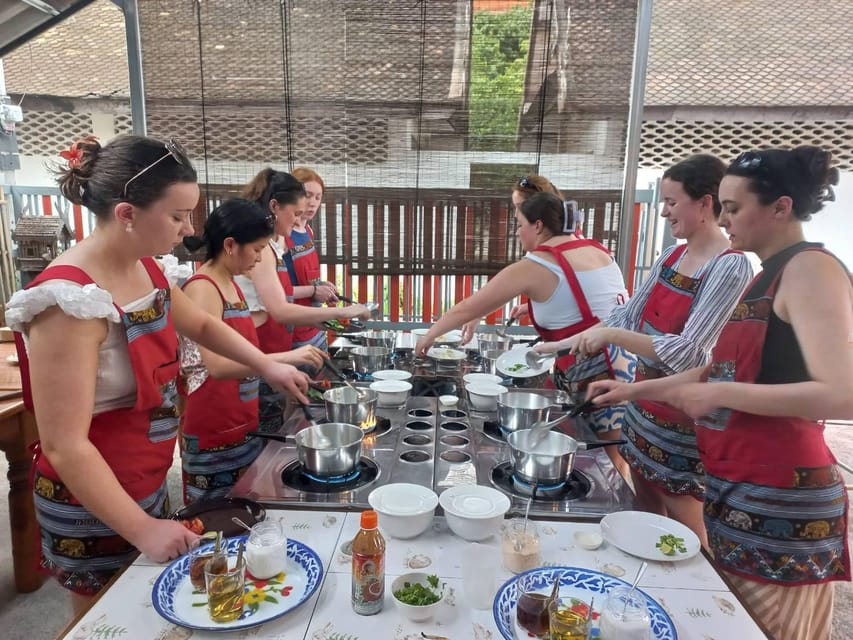
I would choose this class if you want to do more than sample Thai food. It suits couples, friends, solo food lovers, and small groups who enjoy working with their hands and eating what they prepare.
It is also a good fit if you want a local setting. The old teak home and community location offer more character than a standard hotel kitchen. You get a look at Bangkok’s old city while learning recipes connected to daily Thai cooking.
The class works well for people with different interests because of the menu choices. One person can make Pad Thai, another can choose holy basil chicken, and each can select a different soup or curry. That flexibility is more useful than it may sound.
It is less suitable for children under seven, who are not permitted. It may also be a poor match if you want a quiet, passive activity, a formal chef-school lesson, or a class built around vegetarian food. The provided menu is centered on meat and prawns, and the class moves through several dishes in a limited time.
Small details that can improve your class
Wear comfortable clothing. You will be cooking for about 210 minutes, and the setting includes indoor and outdoor kitchen areas.
Read through the menu before you arrive so you have an idea which stir-fry, soup, and curry you want. You can still ask Snow White for help, but having a preference will make the selection easier.
Bring your appetite. The class can produce a generous meal, including spring rolls, a main stir-fry, soup, curry, and mango sticky rice. If you are sensitive to spice or certain ingredients, raise the issue before cooking begins.
Alcohol and drugs are not allowed. The language of instruction is English, and the class is limited to seven participants.
The strongest reason to book is the combination of personal menu choices, a small group, and a real old-city home. The strongest reason to hesitate is the packed schedule and the lack of stated alternatives for special diets. Consider those points honestly before reserving.
Should you book this Thai cooking class?
Book Smart Cook Bangkok if you want an active, friendly introduction to Thai home cooking in an atmospheric setting. The price is fair for a 210-minute lesson with food, several dishes, an English-speaking instructor, a small group, and a PDF recipe book.
I especially like it for visitors who want to bring a piece of Bangkok home with them. Chef Snow White’s patient instruction, the chance to make curry paste, and the freedom to choose dishes give the class more purpose than a simple food stop.
Skip it if you dislike group cooking, need a clearly stated vegetarian menu, or prefer a short demonstration with no preparation. For everyone else, this is a practical way to spend part of a Bangkok day near the Giant Swing, with a full meal and useful skills at the end.
FAQ
How long does the Bangkok Smart Cook class last?
The activity lasts 210 minutes, or three and a half hours.
How much does the cooking class cost?
The listed price is $41 per person.
Where do I meet the group?
Meet at the Giant Swing in Bangkok’s old city, then walk about 100 meters to Trok Turk Din alley.
Is the class taught in English?
Yes. The instructor language is English.
How many people are in the class?
The group is limited to seven participants.
Which dishes can I choose?
You can choose a stir-fried dish, including fried rice with chicken, Pad Thai, or fried chicken with holy basil. For soup, you can choose hot and sour prawns soup, chicken in coconut milk soup, or local hot and sour chicken soup. For curry, you can choose green curry, Pha Naeng, or Kao-soi with chicken.
What dishes does everyone make?
Everyone makes deep-fried spring rolls and sweet sticky rice with mango. The class also includes making curry paste and cooking a chosen curry.
Is alcohol included?
No. Beer and alcohol are not included, and alcohol and drugs are not allowed during the activity.
Just added around Bangkok
- Damnoen Saduak Floating Market Small Group Tour★ 4.0 · 107 reviews
- Private Best of Bangkok Full Day Highlights City Tour★ 4.5 · 13 reviews
- Angkor Wat 2-Day Tour from Bangkok★ 5.0 · 8 reviews
- Arrival Private Airport Transfer : Bangkok Airport to Hotel in Bangkok★ 4.5 · 142 reviews
- Ancient Wonders of Ayutthaya with Return Scenic River Cruise★ 4.0 · 31 reviews
- Private Ancient city of Ayutthaya Shore Excursion★ 5.0 · 9 reviews
- Ancient City Ayutthaya Private Guided Day Tour★ 5.0 · 49 reviews
- Ancient City Bangkok and Erawan Museum Tickets★ 4.5 · 8 reviews
Food, compared.
Bangkok by Night: Temples, Markets and Food Tuk-Tuk Tour
Read our review →


Southern Flavors Phuket Food Tour with 15+ Tastings
Read our review →Bangkok Backstreets Food Tour with 15+ Tastings
Read our review →
Bangkok Authentic Tasting Thai-Chinatown Walking Food Tour
Read our review →Browse the lists this tour appears in