Review · BANGKOK TOURS
Bangkok: Must things to see in China town, Small group
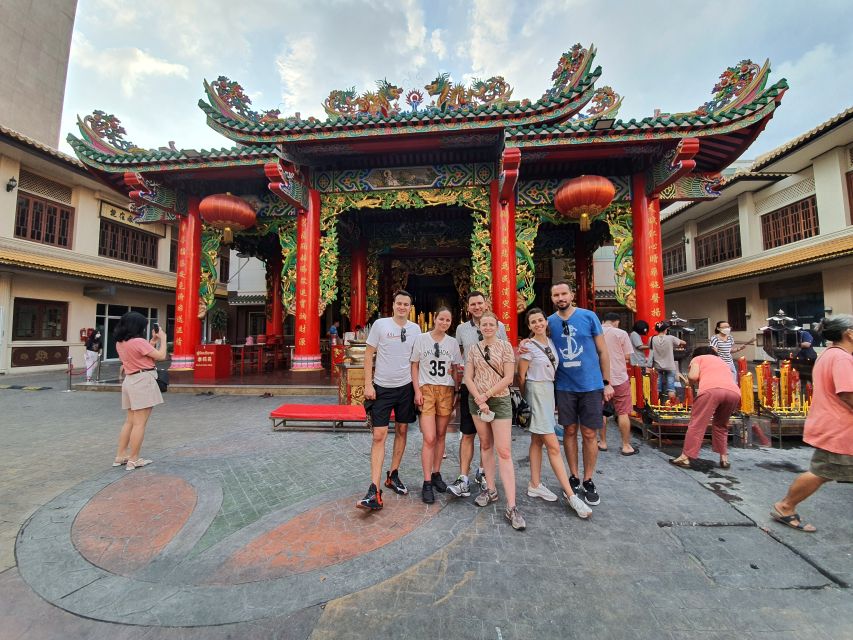
Bangkok Chinatown reveals its best sides in the narrow lanes between the main roads. This 3.5-hour walk takes you past secret temple corners, street art, old houses, and Sampeng Market, with local snacks and lunch along the way. It is a useful way to see how Thai Chinese culture still shapes daily life here.
I like the mix of places. You get both major neighborhood sights and quieter corners that are easy to miss alone. I also like the food stops, since snacks and a local lunch turn the area’s culture into something you can taste, not just look at.
The main consideration is the walking. You cover about 4 kilometers, and one temple has steep stairs. Chinatown’s lanes can also feel tight and busy, so this suits people who are comfortable on foot more than anyone wanting a slow, fully accessible outing.
In This Review
- Key points at a glance
- Why a walking tour works so well in Chinatown
- Starting at MRT Hualampong Exit 1
- Street art, narrow lanes, and everyday Chinatown
- The Chinese temple and its steep stairs
- Sampeng Market, Chinatown’s narrow commercial maze
- Food stops that make the culture easier to understand
- Stories from Thai Chinese community life
- How much value do you get for $41?
- Walking conditions, clothing, and weather
- Who should book this Chinatown walk?
- Should you book it?
- FAQ
- Where does the Chinatown tour begin?
- Where does the tour finish?
- How long does the tour last?
- How far do you walk?
- Is the route flat?
- What languages does the guide speak?
- What food and drinks are included?
- Is hotel pickup included?
- What should I wear for the temple visit?
- Is the tour suitable for wheelchair users or pregnant women?
Key points at a glance
- About 4 kilometers on mostly flat streets: The route is manageable for a reasonably active walker, with steep steps only at the Chinese temple.
- More than 15 Chinatown locations: Expect a broad neighborhood walk rather than a single temple visit.
- Sampeng Market adds local energy: Its narrow lanes are packed with goods and show a working side of Chinatown.
- Food is part of the tour: Your price includes a snack, coffee, and a local lunch.
- Guide-led cultural context: English and Thai are offered, and guide Mee is noted for sharing detailed stories about the area.
- A practical meeting point: Begin and end at MRT Hualampong Exit 1, near the Tang Hua Pug Building.
Why a walking tour works so well in Chinatown
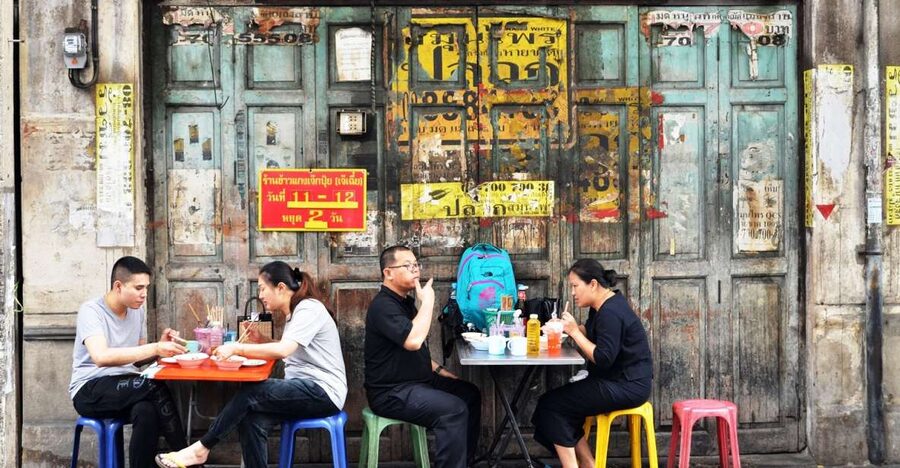
Bangkok Chinatown is best understood at street level. From a car or train, you see signs, traffic, and temple roofs. On foot, you can turn into a narrow passage, stop beside a traditional house, watch shopkeepers work, and notice how old customs sit beside modern cafes.
This experience keeps the focus on the neighborhood rather than rushing between distant attractions. The route includes more than 15 places, so you get a varied picture of Chinatown’s streets, religious life, food, markets, and community.
I especially like the chance to speak with local Chinese residents. The point is not simply to collect photographs. Conversations and stories help explain why this part of Bangkok feels distinct, and how Thai Chinese traditions continue in ordinary homes, shops, and places of worship.
The small-group format should also make it easier to hear the guide and ask questions. It does not mean the walk will be quiet. Chinatown is a working district, and its noise, crowds, and tight lanes are part of what you are coming to see.
Other Bangkok days people book alongside this one:
- Bangkok: Damnoen Saduak Market and Maeklong Railway Market
★ 4.5 · 26,723 reviews - The Old Siam: Damnoen Saduak and Maeklong Railway Market
★ 4.5 · 10,992 reviews - From Bangkok: Ayutthaya Temples Guided Tour with Lunch
★ 4.7 · 10,535 reviews
Starting at MRT Hualampong Exit 1
The meeting point is MRT Hualampong Exit 1. Look for the guide wearing an Eatwalktalktour shirt. The route begins at the Tang Hua Pug Building, which gives you a clear starting point near public transportation.
This is convenient if you are staying elsewhere in Bangkok and plan to arrive by subway. Hotel pickup and drop-off are not included, so you need to make your own way to the station and return from there after the walk.
Arrive ready to walk rather than expecting a vehicle-based tour. Easy-on-and-off shoes are a smart choice because you may move between streets, alleys, food stops, and temple areas. Flip-flops are also listed as suitable, though shoes with a secure fit may feel better over 4 kilometers.
Street art, narrow lanes, and everyday Chinatown
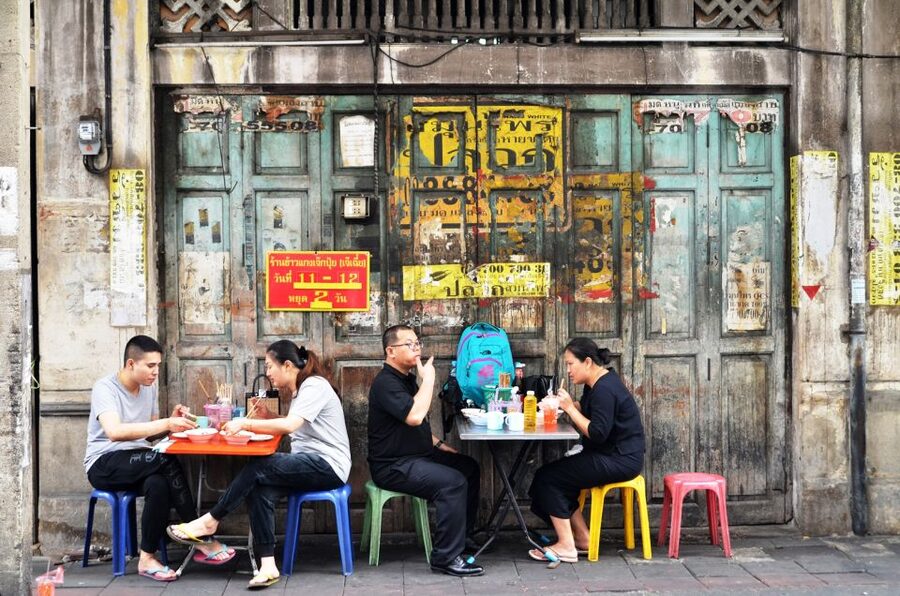
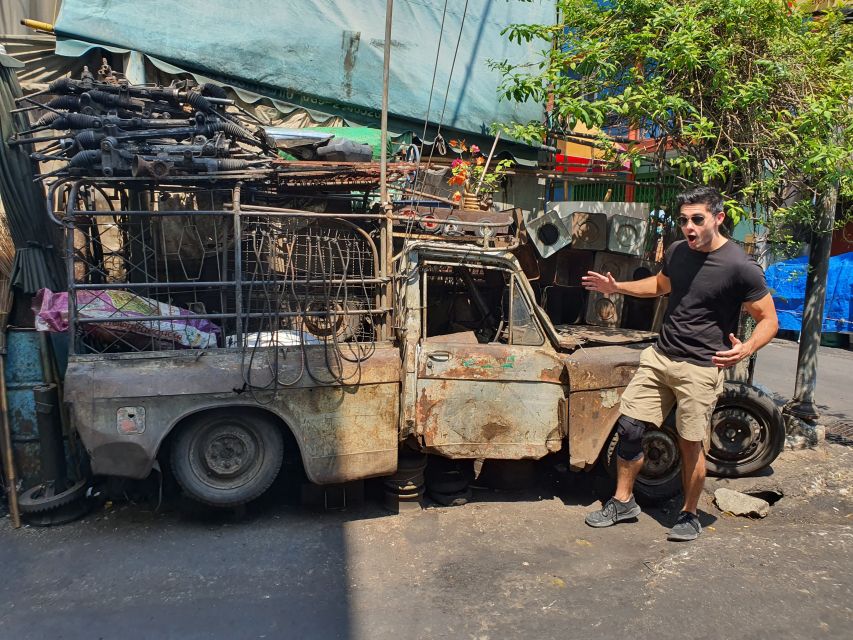
Early in the walk, you move into Chinatown’s smaller streets and passageways. These lanes reveal colorful walls and works of art that are easy to miss if you stay on the main road.
The art adds a modern layer to the district, but the older surroundings keep the route from feeling like a gallery visit. You may pass traditional houses, family businesses, and busy commercial areas as the guide explains what you are seeing.
This is one of the tour’s strongest features. You are not only shown a polished set of sights. You are taken through the places where people live, shop, work, and worship. That gives the neighborhood a more useful sense of scale.
Keep your camera ready, but do not let photography turn the walk into a checklist. The best moments may be small: a painted wall at the end of an alley, a view between buildings, or a brief exchange with someone from the local community.
The Chinese temple and its steep stairs
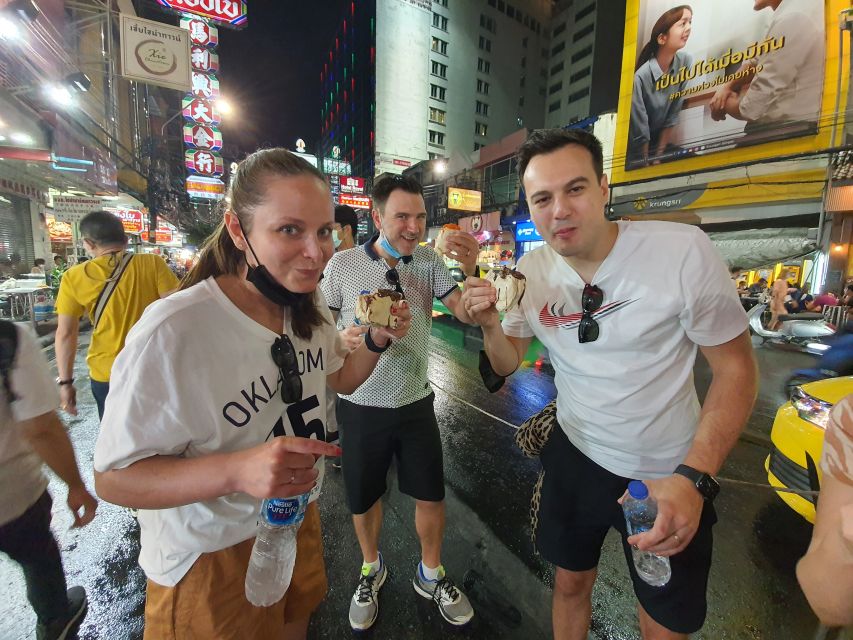
A temple visit gives the walk a quieter change of pace. You can expect to learn about the religious side of Chinatown and see a site that is less obvious than the large attractions on the main streets.
The temple has steep stairs, so take care as you go up and down. This is the clearest physical challenge on the route, especially if you have knee trouble or feel uncertain on stairs.
Temple clothing matters. Do not wear short skirts or short pants. A respectful outfit also saves you from worrying about whether you are properly dressed once you arrive.
The climb is worth treating as a slow stop rather than a race. The tour information also points to a viewpoint, so this part of the route can provide a different look over the surrounding streets. Exact views depend on the route and conditions, but the change in height gives you a useful break from alley-level scenery.
Same coastline, a completely different day out:
- Bangkok: Train Market & Floating Market with Boat Ride
★ 4.7 · 9,547 reviews - From Bangkok: Ayutthaya & Ayothaya Floating Market Day Trip
★ 4.7 · 6,084 reviews - Bangkok Canal Tour: 2-Hour Longtail Boat Ride
★ 4.5 · 5,909 reviews - Bangkok: Muay Thai Boxing Tickets at Rajadamnern Stadium
★ 4.9 · 4,740 reviews
Sampeng Market, Chinatown’s narrow commercial maze
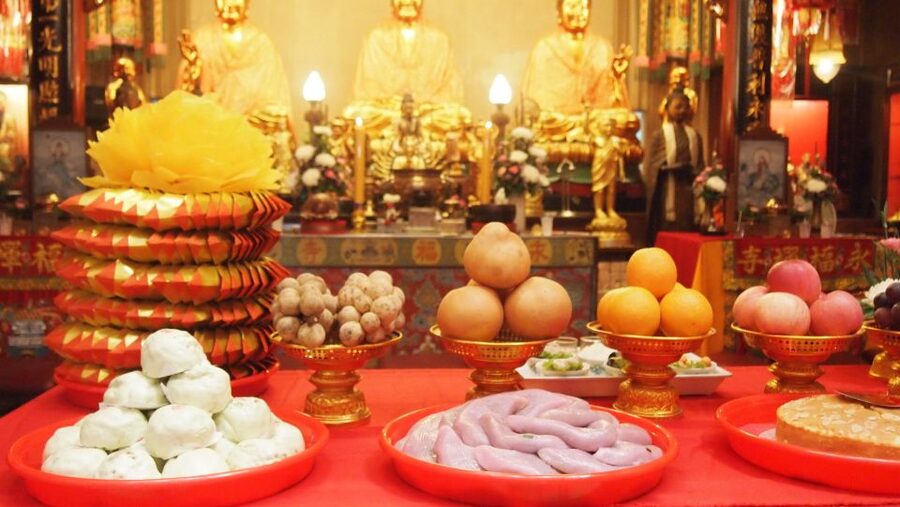
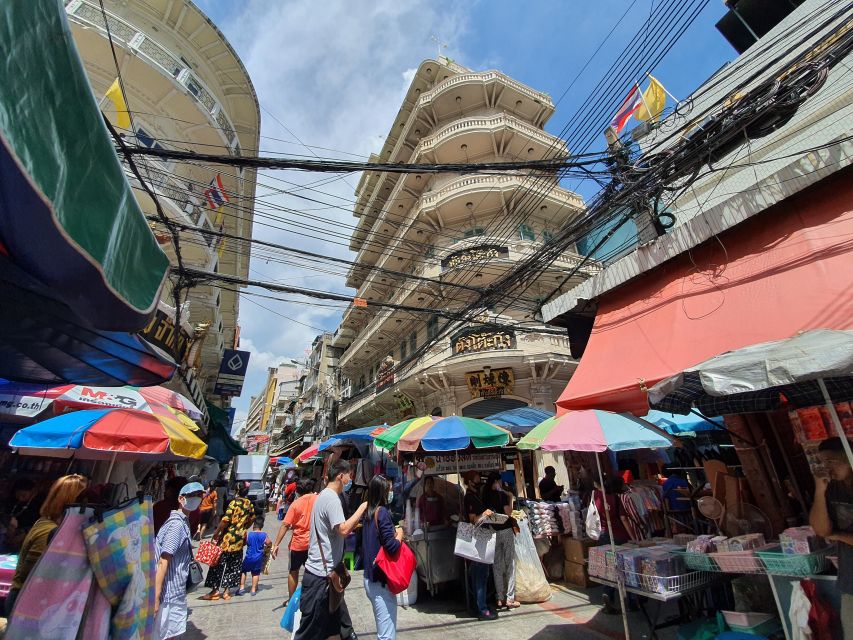
Sampeng Market is one of the most distinctive parts of the walk. This old open market runs through tight lanes filled with a wide range of goods, and it feels more like a place for local commerce than a purpose-built attraction.
You will need to stay aware of other people and the movement around you. The paths are narrow, and the market’s energy comes from its constant activity. If you dislike crowded spaces, this may be the least relaxing section of the tour.
For me, that is also why it matters. Sampeng shows Chinatown as a living district, not a preserved display. You see where goods are sold and how the neighborhood functions during the day.
Shopping is included as part of the sightseeing time, but the tour is not presented as a dedicated shopping trip. You may find interesting items, but the main value is seeing the market’s layout and atmosphere while learning how it fits into Chinatown.
Food stops that make the culture easier to understand
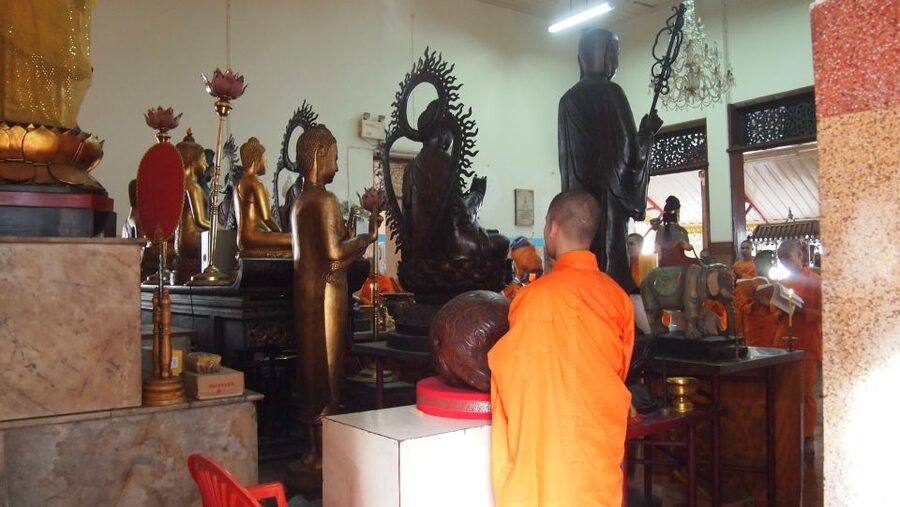
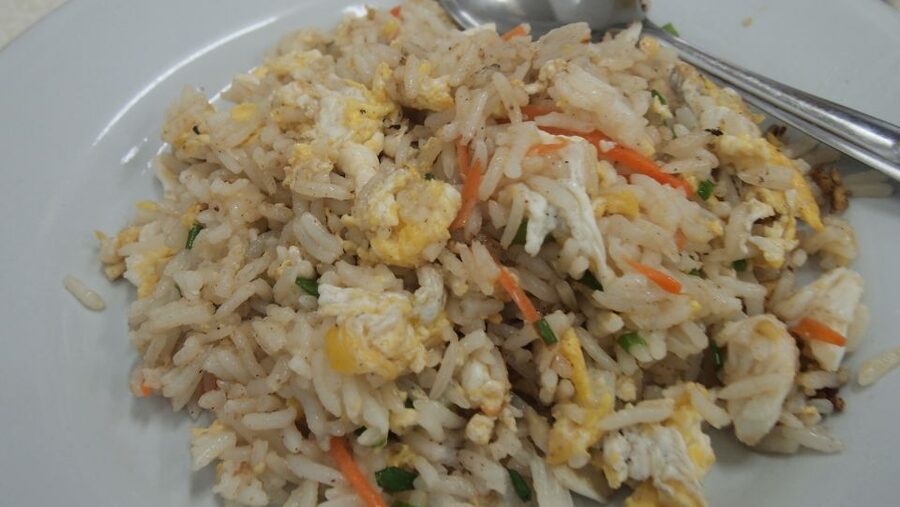
Food is built into the experience rather than added as an afterthought. Your package includes local snack samples, coffee, and lunch at a local restaurant.
The snack stop gives you a quick taste of Chinatown’s street-food culture. It also breaks up the walking, which matters during a 3.5-hour outing. You get a chance to sit or pause, ask questions, and continue with more energy.
Lunch provides a fuller look at local cooking. The exact dishes are not specified, so do not book this expecting a particular meal or a menu tailored to your preferences. The useful point is that the food stop takes place within the neighborhood and connects the meal to the area you are exploring.
Coffee is served at a cafe, described as one of Chinatown’s trendier places. This pause adds contrast to the market and temple visits. You can rest in a more modern setting while still being surrounded by the district’s mixed old-and-new character.
Alcoholic drinks are not included. If you want one, you would pay separately, but the listed inclusions already cover the main food and drink elements of the tour.
Stories from Thai Chinese community life
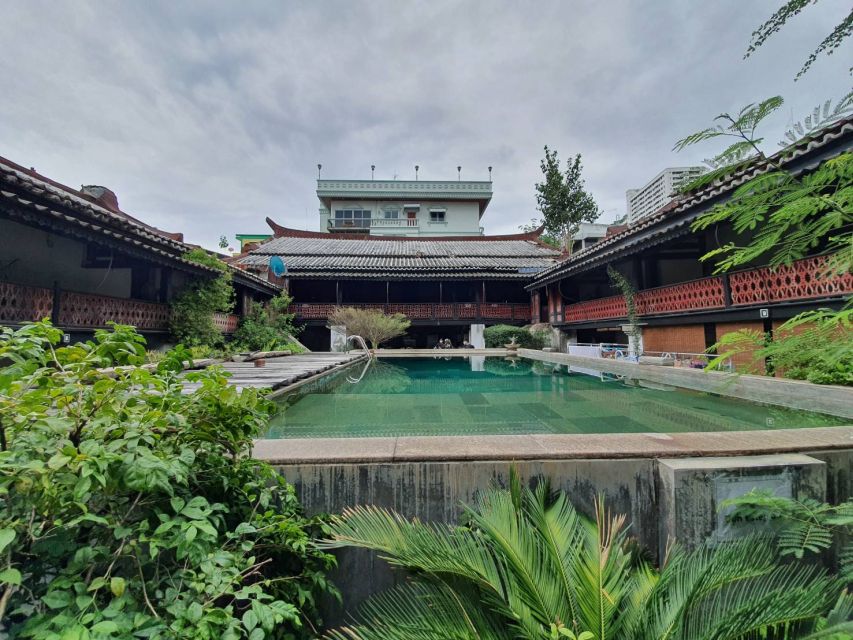
A good neighborhood walk depends heavily on its guide. The guide speaks English or Thai and explains Chinatown’s past and present through stories, local observations, and conversations.
Mee is one guide associated with this experience, and the feedback about her points to a serious, enthusiastic approach. You should expect a guide who pays attention to the less obvious corners of Chinatown and explains the significance of temples, people, and daily life rather than simply naming buildings.
That kind of guidance is particularly valuable here. Chinatown can be visually overwhelming, with signs, food stalls, shrines, shops, and traffic competing for your attention. A guide helps you understand what deserves notice and why.
The tour also includes contact with local Chinese community members. Conversations may be brief, and the exact people you meet can vary, but the chance to hear directly from residents gives the walk a human scale.
How much value do you get for $41?
At $41 per person, the price is reasonable if you would otherwise pay separately for lunch, snacks, coffee, and a guided walk. You are also paying for route planning and local interpretation, which can save you time in a district where it is easy to wander without understanding what you are seeing.
The strongest value comes from variety. In one half-day outing, you get street art, narrow lanes, a temple, a viewpoint, a market, local food, a cafe, and stories about Thai Chinese life. A shorter tour focused only on food or temples could cost less, but it would not offer the same range.
The price may feel less attractive if you want a private tour, extensive shopping time, or a long sit-down meal. It is also not a transport tour, so your Bangkok travel budget needs to include the cost of reaching Hualampong and returning afterward.
For someone visiting Chinatown for the first time, I think the combination is useful. You see enough to get oriented, while the guide gives you a reason to return later on your own.
Walking conditions, clothing, and weather
The total distance is about 4 kilometers, or roughly 2 miles. Most of the route is flat, but the temple stairs are steep. Plan on standing and walking for much of the 3.5 hours, with rest stops including the cafe and food breaks.
Wear comfortable clothing that works for a temple visit. Short skirts and short pants are not appropriate for the temple, so loose trousers or a longer skirt are safer choices.
Rain is possible from May through September. Carry an umbrella during the wet season, since the tour takes place outdoors and moves through open streets and alleys.
The route is not suitable for wheelchair users. It is also not recommended for pregnant women, babies under one year, or people over 95 years old. Those limits reflect the walking, uneven urban conditions, and steep temple stairs.
Who should book this Chinatown walk?
I would choose this tour if you want a guided introduction to Chinatown that mixes culture, food, and ordinary neighborhood life. It suits first-time visitors, curious eaters, photographers, and anyone who prefers local streets to a bus ride between major sights.
It is also a good fit if you want context. Chinatown’s visual appeal is immediate, but the guide helps connect temples, markets, houses, food, and community stories into a clearer picture.
I would hesitate if you have limited mobility, dislike narrow or crowded spaces, need hotel pickup, or want a highly structured sightseeing tour with long visits at major monuments. The route is active and informal, with its best moments coming from small details and local encounters.
The 4.8 rating from 17 reviews fits the experience’s strongest points: guides who explain the area well, useful rest stops, and good food. The praise is most consistent around the guide’s care and the way the walk reaches parts of Chinatown you might not find alone.
Should you book it?
Book this walk if you want to understand Chinatown through its lanes, market, temples, food, and people rather than simply photograph the main road. The included snack, coffee, and lunch make $41 fair, especially when you value a well-planned route and a guide such as Mee who can add local context.
Skip it if steep temple stairs, 4 kilometers of walking, or crowded market lanes would make the outing uncomfortable. For an active visitor who wants a focused half-day in one of Bangkok’s most layered districts, this is a strong choice.
FAQ
Where does the Chinatown tour begin?
It begins at MRT Hualampong Exit 1, near the Tang Hua Pug Building. Look for the guide wearing an Eatwalktalktour shirt.
Where does the tour finish?
The activity ends back at the meeting point.
How long does the tour last?
The walking tour lasts 3.5 hours. Starting times depend on availability when you book.
How far do you walk?
The total walking distance is about 4 kilometers, or approximately 2 miles.
Is the route flat?
The route is flat almost everywhere, but the Chinese temple has steep stairs.
What languages does the guide speak?
Live guiding is available in English and Thai.
What food and drinks are included?
The price includes a snack, coffee, and a local lunch. Alcoholic drinks are not included.
Is hotel pickup included?
No. Hotel pickup and drop-off are not included, so you must reach the meeting point yourself.
What should I wear for the temple visit?
Do not wear a short skirt or short pants. Easy-on-and-off shoes or flip-flops are recommended, and you should take care on the steep temple stairs.
Is the tour suitable for wheelchair users or pregnant women?
No. The activity is not suitable for wheelchair users or pregnant women. It is also not suitable for babies under one year or people over 95 years old.
Just added around Bangkok
- Damnoen Saduak Floating Market Small Group Tour★ 4.0 · 107 reviews
- Angkor Wat 2-Day Tour from Bangkok★ 5.0 · 8 reviews
- Arrival Private Airport Transfer : Bangkok Airport to Hotel in Bangkok★ 4.5 · 142 reviews
- Private Best of Bangkok Full Day Highlights City Tour★ 4.5 · 13 reviews
- Ancient Wonders of Ayutthaya with Return Scenic River Cruise★ 4.0 · 31 reviews
- Private Ancient city of Ayutthaya Shore Excursion★ 5.0 · 9 reviews
- Ancient City Ayutthaya Private Guided Day Tour★ 5.0 · 49 reviews
- Ancient City Bangkok and Erawan Museum Tickets★ 4.5 · 8 reviews
Bangkok Tours, compared.
Damnoen Saduak Market and Maeklong Railway Market
Read our review →
The Old Siam: Damnoen Saduak and Maeklong Railway Market
Read our review →
Train Market & Floating Market with Boat Ride
Read our review →
Ayutthaya & Ayothaya Floating Market Day Trip
Read our review →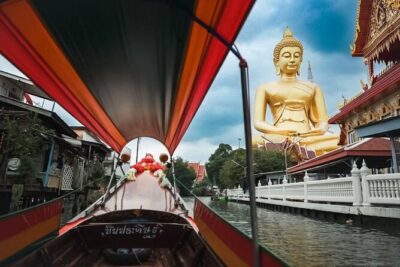
Bangkok Canal Tour: 2-Hour Longtail Boat Ride
Read our review →
Muay Thai Boxing Tickets at Rajadamnern Stadium
Read our review →