
Review · FOOD
Bangkok Night Michelin Foodie Tour in Chinatown with 15+ tastings
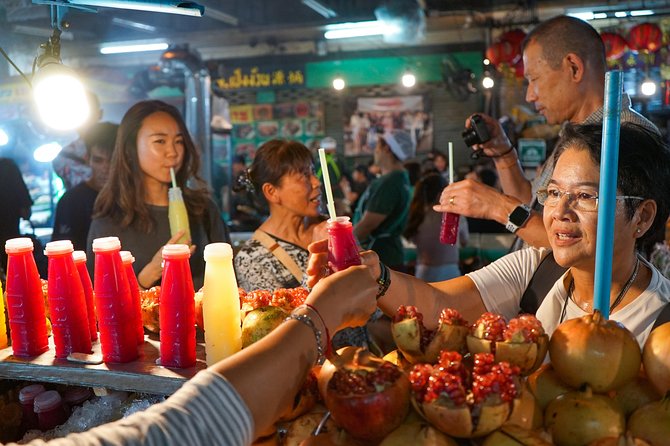
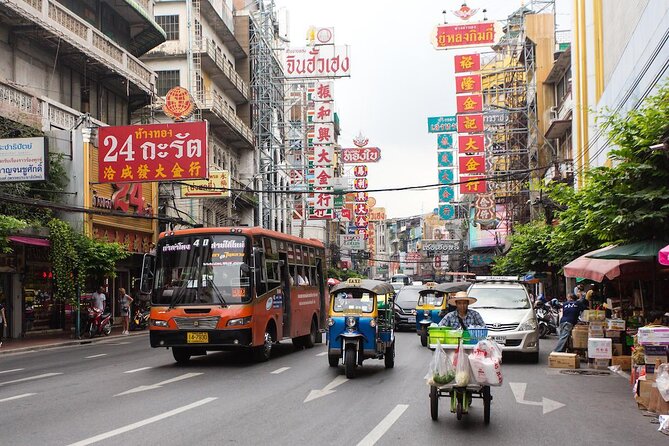
Bangkok’s Chinatown is at its best after dark, when Yaowarat Road fills with food carts, old shopfronts, neon signs, and the smell of frying garlic. This tour turns that glorious confusion into a three-hour eating route, with 15 or more tastings at restaurants and street stalls, including Michelin-recognized stops.
I like the small group, capped at seven, because a guide such as Kwan, Shin, Poon, or Chris can keep you together and explain what is in front of you. I also like the sheer range: dumplings, dim sum, pad thai, noodles, small snacks, and two classic Thai desserts, all for about $56.38.
The main catch is simple: come very hungry. The portions add up fast, and Chinatown is loud, crowded, and hard on anyone with mobility or sensory concerns. Vegetarian choices are limited, and this is not a good fit for vegans or vegetarians who avoid seafood.
In This Review
- Key points to know before you book
- Why Bangkok Chinatown works so well at night
- Meeting at Wat Mangkon Station
- First bites: dumplings and dim sum
- Pad thai in the heart of Yaowarat
- A walk through Yaowarat’s food streets
- Small snacks and Michelin-acclaimed fishball noodles
- Doughnuts, pandan, and mango sticky rice
- The old bar street and the walk out
- How much food do you really get?
- Dietary needs and comfort
- Is $56.38 a fair price?
- Who should book this Chinatown food tour?
- Should you book it?
- FAQ
- How long does the Bangkok Chinatown food tour last?
- Where does the tour start?
- Where does the tour end?
- How many people can join the tour?
- Are vegetarian or vegan options available?
- Can I cancel for a full refund?
Key points to know before you book
- 15-plus dishes, not 15 separate venues: You get a broad tasting menu while walking between a smaller number of food stops.
- A true night experience: The route passes through Yaowarat’s food streets, old bar lanes, and crowded market areas after dark.
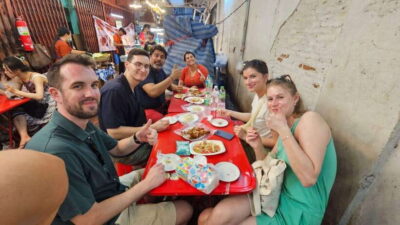
- Small group size: The stated maximum is seven people, which helps when crossing busy streets and ordering shared dishes.
- Michelin-linked local food: The tour includes Michelin-awarded or Bib Gourmand-associated stops, but it is street food and casual dining, not fine dining.
- Dessert is a strong finish: Fried doughnuts with pandan sauce and mango sticky rice are among the most memorable bites.
- Strict timing matters: Meet at Wat Mangkon MRT Station, Exit 3, and do not arrive late, since missed departures are not refundable.
Why Bangkok Chinatown works so well at night
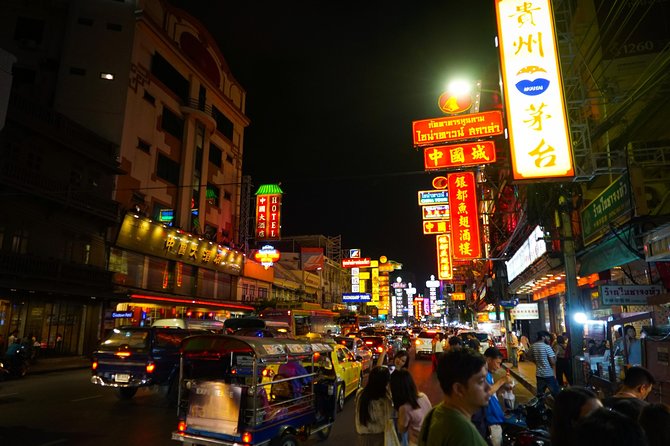
Chinatown is not a quiet museum district. It is a working food neighborhood, and the streets can feel like a moving wall of people, scooters, signs, smoke, and cooking heat. That is exactly why a guide is useful here.
You begin near Wat Mangkon Station, one of the easiest access points for Yaowarat. From there, the route links food shops with street carts, so you get both seated stops and quick sidewalk tastings. You are not simply eating dishes in a restaurant. You are seeing how the neighborhood feeds itself.
The Thai and Chinese sides of Bangkok’s food culture meet all along this route. Dumplings, dim sum, noodles, and barbecue pork reflect Chinatown’s Chinese roots, while pad thai, mango sticky rice, pandan, and Thai-style snacks add the local Bangkok character. I like this mix because it gives you a wider picture than a tour focused only on famous Thai dishes.
The route is also a useful first look at Chinatown. You might not feel ready to choose a random cart on your own during your first visit, especially when menus are unclear and every stall seems busy. With a guide leading the way, you can focus on tasting and watching the street scene instead of trying to work out where to go next.
A few more Bangkok trips to weigh up
- Bangkok by Night: Temples, Markets and Food Tuk-Tuk Tour
★ 5.0 · 3,752 reviews - Bangkok: Backstreets Food Tour with 15+ Tastings
★ 4.9 · 2,880 reviews - Bangkok Midnight Food Tuk Tuk Tour
★ 5.0 · 2,542 reviews
Meeting at Wat Mangkon Station
The official starting point is MRT Blue Line Wat Mangkon Station, Exit 3, near MezzoX Drip Cafe on Charoen Krung Road. Plan to arrive early. The operator is strict about departure time, and you cannot join later, receive a refund, or reschedule if you miss the group.
That rule is worth taking seriously. Wat Mangkon is near the action, but the station exits and surrounding streets can be confusing if you are rushing. A mobile ticket is provided, and confirmation arrives at booking, so keep the booking details easy to open on your phone.
The stated duration is about three hours, though the actual evening can vary. One account describes a tour lasting closer to four hours, while another puts it around three and a half. Food service, crowds, and the pace of the group can all affect the finish time, so avoid booking a tight connection afterward.
The listed end point is Hua Lamphong Station, while the meeting information also says the activity ends back at the meeting point. Because those details do not fully match, confirm the final drop-off point before you go. Either way, the tour takes place near public transportation.
First bites: dumplings and dim sum
The first stop features dumplings at a Michelin-awarded shop described as a tucked-away local stop. This is a smart opening dish. Dumplings are easy to share, familiar enough for cautious eaters, and still interesting when made fresh in a busy Chinatown kitchen.
You then move to dim sum, with choices that may include barbecue pork, xiao long bao, and custard buns. These small dishes give you several textures and flavors in quick succession. The custard bun adds sweetness, while barbecue pork and soup dumplings bring the savory side of the meal.
The exact dishes can change. One useful point to understand is that the route is not a fixed restaurant crawl with every item guaranteed in the same order. Food availability and daily conditions may lead to substitutions. The guide makes the choices and orders ahead where possible, which helps the group move through each stop without a long wait.
If you have never tried soup-filled dumplings, listen closely when the guide explains how to eat them. A hot bite can surprise you. This is also a good time to tell the guide about preferences, though the operator cannot promise allergy-free food or make every dietary substitution.
Pad thai in the heart of Yaowarat
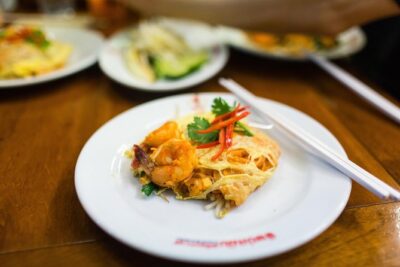
The next stop is a serving of pad thai at OK Pad Thai. It is a familiar dish for many people, but eating it in Chinatown, surrounded by the evening food trade, gives it a different setting from a hotel restaurant or cooking class.
You may find this stop less exotic than the noodles or small carts later in the route. That is not a flaw for first-time visitors. Pad thai gives you a known reference point before the tour moves into less familiar dishes.
The tour is built around shared tastings rather than a formal meal at each place. That means you can try many dishes without ordering a full portion of every item yourself. Still, the amount of food is substantial. Several people found they were full well before dessert, so eating lightly earlier in the day is sensible.
Same coastline, a completely different day out:
- Bangkok: Damnoen Saduak Market and Maeklong Railway Market
★ 4.5 · 26,723 reviews - The Old Siam: Damnoen Saduak and Maeklong Railway Market
★ 4.5 · 10,992 reviews - From Bangkok: Ayutthaya Temples Guided Tour with Lunch
★ 4.7 · 10,535 reviews - Bangkok: Train Market & Floating Market with Boat Ride
★ 4.7 · 9,547 reviews
A walk through Yaowarat’s food streets
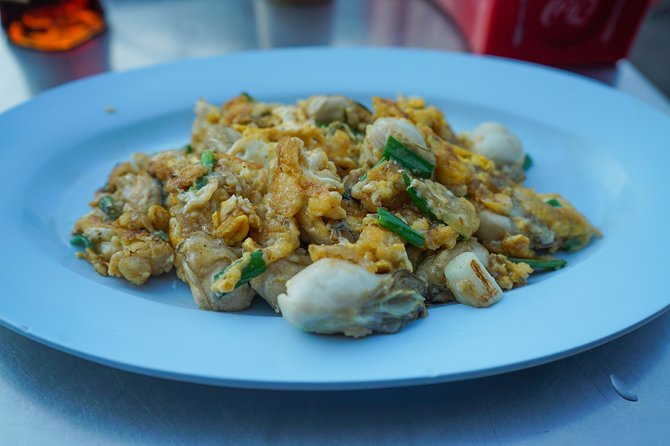
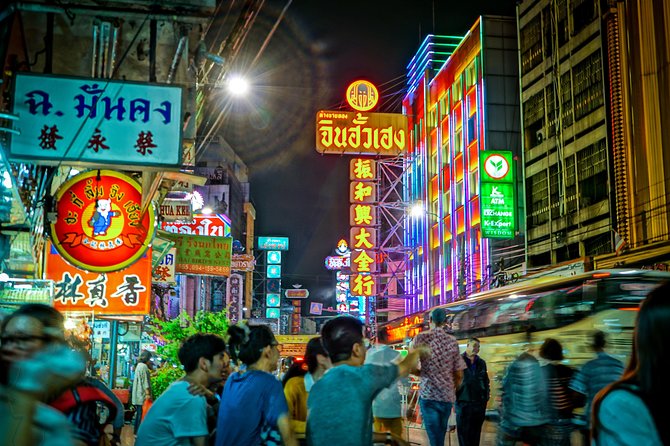
Between dishes, the guide leads you through Chinatown’s night market area. This is where the tour becomes more than a meal. You can watch vendors prepare food, see restaurant tables spill into the street, and catch the mix of Chinese signs, Thai cooking, and old commercial buildings.
Bring water and tissues. Those are small but useful items on a warm walking evening with sauces, noodles, and crowded pavements. Comfortable shoes matter too, since the tour includes repeated walks between stops and does not suit people with walking problems.
The streets can be hard to hear in. One guide may explain a dish clearly at a quiet table, then become difficult to hear beside traffic and cooking equipment. Stay close to the guide, especially when the group crosses busy streets.
I would not choose this tour if you dislike crowds or loud city scenes. Chinatown can feel overwhelming, particularly for anyone with sensory concerns. For many people, though, the noise and movement are part of the point. You are seeing the neighborhood at its most active.
Small snacks and Michelin-acclaimed fishball noodles
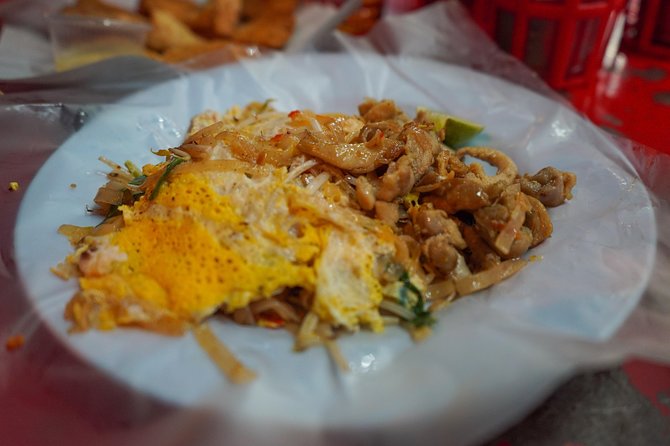
The next food stop is a small snack, with the exact item subject to change. This flexible part of the route matters because it lets the guide respond to what is fresh and available that evening. It may also be where you try something you would not have ordered without help.
The noodle stop is one of the most appealing parts of the experience. You finish the savory section with fishball noodles at a Michelin-acclaimed shop. Some versions of the route also include egg noodles and fishball soup, and this dish has been singled out as a highlight.
Fishball noodles may sound modest, but a good bowl depends on the broth, noodles, fishballs, and balance of seasoning. It is the sort of everyday comfort food that tells you more about local eating than a grand restaurant dish can. You get a taste of what people eat in the neighborhood, not just what is arranged for an overseas audience.
This stop also explains the Michelin language used to describe the tour. Michelin recognition here refers to selected casual food shops and street food venues, including Bib Gourmand-associated places. You should not expect a Michelin-starred dining room, polished service, or a fine-dining tasting menu. The value is in trying respected local food in its normal setting.
Doughnuts, pandan, and mango sticky rice
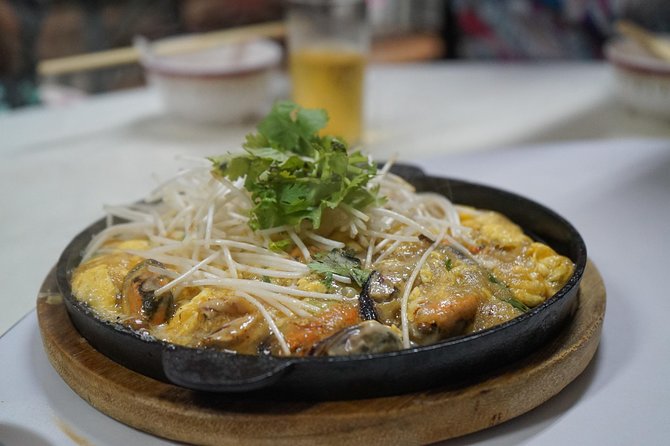
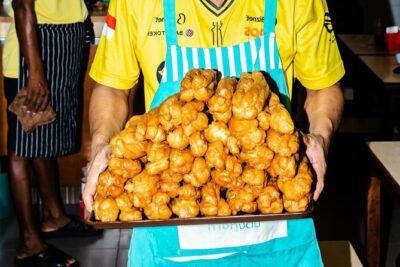
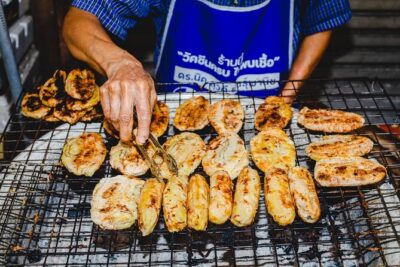
Dessert gives the tour a cheerful finish. You choose between Michelin-awarded fried crispy doughnuts and mango sticky rice, with some routes offering both or additional sweet snacks.
The fried doughnuts are especially worth saving room for. They may come with pandan sauce, a fragrant green-hued flavor that adds a sweet, herbal note to the crisp dough. Mango sticky rice is the more familiar Thai classic, pairing ripe mango with sweet coconut rice.
Additional dessert carts may include pancakes or other small sweets, depending on the evening. This is one area where the tour can feel generous to a fault. If you are already full, you may need to share, take smaller portions, or politely pass.
I like ending with sweets because the final bites are easy to enjoy while walking. It also leaves you with a clearer sense of Thai flavors beyond chili and fish sauce. Coconut, pandan, mango, and fried dough make a satisfying close to a long savory meal.
The old bar street and the walk out
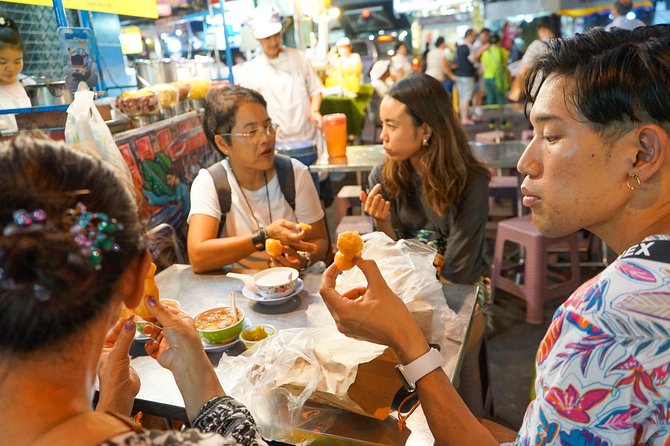
After dessert, the route continues along an atmospheric old bar street. This short walk offers a change of mood from the food lanes, with a glimpse of older Bangkok nightlife and Chinatown’s past.
It is not a major sightseeing stop with a long guided history talk. Think of it as a pleasant final stroll through a different part of the district. Guides such as Kwan, Shin, and Teh have been praised for adding food background and bits of local history, but the amount of historical detail can vary.
If you want a dedicated Chinatown history tour, this is not the best choice. The focus is food first, with cultural context woven into the walk. One practical improvement would be to bring a small notebook or use your phone to record dish names, since there are many tastings and it is easy to forget what you ate by the end.
How much food do you really get?
The tour advertises 15-plus tastings, and that should be read as 15-plus dishes or samples, not 15 restaurants. The route includes dumplings, dim sum, pad thai, small snacks, noodles, and dessert, with several dishes served at some stops.
This is a high-volume food tour. Come with an empty stomach, but do not assume you must finish every bite. If you have a small appetite, share with someone in your group and tell the guide early. The food is plentiful enough that you can still enjoy the evening without forcing down every portion.
The group size helps here. With no more than seven people, the guide can keep track of preferences and make ordering easier. Tables are sometimes prepared in advance, which reduces waiting at the restaurant stops.
Dietary needs and comfort
Vegetarian-friendly dishes are available, but the selection is limited. The tour is not recommended for vegans or for vegetarians who cannot eat seafood, since seafood and fish-based ingredients may appear across the route.
The operator cannot guarantee an allergy-free experience. Food is prepared in kitchens that are not controlled by the tour company, and substitutions may not always be possible. If you have a serious allergy, this is not the setting for guesswork. Contact the provider before booking and understand that compensation at another stop may be the only option offered.
Most people can take part, but the walking and crowds require reasonable mobility. If you have walking difficulties, a private tour is recommended. A baby in a carrier has been accommodated, and several stops offer seats, but a stroller may be less practical in packed streets.
Is $56.38 a fair price?
At $56.38 per person, the price is strong if you value variety and guidance. You are paying for 15-plus tastings, a local escort, advance ordering at some stops, and a route through places that can be difficult to find on a first visit.
You could spend less by eating from a few street stalls on your own. That approach gives you freedom, but you would need to choose the stalls, understand the menus, order enough small portions, and find your way through crowded streets. The tour earns its cost through convenience and access to a broad sample in one evening.
The small group is another part of the value. Seven people is far more manageable than a large bus-style food tour. You get a better chance to ask questions and stay close to the guide, though street noise can still make explanations difficult.
The price does not include a fine-dining setting. If the phrase Michelin foodie tour makes you expect white tablecloths or a succession of starred restaurants, adjust your expectations. This is a casual Chinatown food crawl using Michelin-linked and respected local spots.
Who should book this Chinatown food tour?
I would choose this for a first Bangkok visit, especially if you want an easy introduction to Chinatown after dark. It suits adventurous eaters, couples, families with older children, and solo visitors who like sharing food with a small group.
It is also useful early in your Bangkok stay. The guide can point out dishes and food areas you may want to revisit later. The range of stops gives you quick orientation without asking you to plan a complicated evening.
I would skip it if you need strict control over ingredients, prefer quiet restaurants, dislike crowds, or want a history-focused walk. It is also a poor match for vegans and for vegetarians who avoid seafood.
Book at least 24 hours before the start time if your plans are not firm. Cancellation at least 24 hours ahead earns a full refund, while cancellations or changes within 24 hours are not accepted.
Should you book it?
Book this tour if you want a generous, casual night of Bangkok food and do not mind noise, walking, and a few surprises in the menu. The strongest reasons are the small group, the large number of tastings, the chance to try Michelin-linked street food, and guides such as Kwan, Shin, Chris, and Teh who bring warmth and useful food context.
Do not book it for formal Michelin dining or dietary certainty. For everyone else, arrive early at Wat Mangkon Station, bring water and tissues, wear comfortable shoes, and save room for the pandan doughnuts and mango sticky rice.
FAQ
How long does the Bangkok Chinatown food tour last?
The stated duration is approximately three hours. The evening may run longer depending on food service, walking speed, and crowd conditions, so leave extra time after the tour.
Where does the tour start?
Meet at Wat Mangkon MRT Station, Blue Line, Exit 3, near MezzoX Drip Cafe on Charoen Krung Road in Bangkok.
Where does the tour end?
The itinerary identifies Hua Lamphong Station as the ending point, while the meeting information also says the activity ends back at the meeting point. Confirm the final location before departure.
How many people can join the tour?
The stated maximum is seven people. This small group size is intended to make the walking route and food ordering easier to manage.
Are vegetarian or vegan options available?
Some vegetarian-friendly dishes are available, but choices are limited. The tour is not recommended for vegans or for vegetarians who cannot eat seafood.
Can I cancel for a full refund?
Yes, if you cancel at least 24 hours before the experience start time. Cancellations or changes made within 24 hours are not accepted and are not refundable.
Just added around Bangkok
- 1.5 – 2 hour afternoon SUP class for all ages and levels★ 5.0 · 35 reviews
- Erawan Waterfall & Train Tour from Kanchanaburi – Full Day★ 4.0 · 16 reviews
- Cycling in rural Kanchanaburi area★ 5.0 · 12 reviews
- Kanchanaburi Tour: Erawan Waterfall and Death Railway★ 5.0 · 13 reviews
- 1.5 – 2 hour morning SUP boarding class for all ages and levels★ 5.0 · 13 reviews
- Yoga in the Park Thailand★ 5.0 · 12 reviews
- re:leaf spa and massage★ 4.0 · 10 reviews
- Visit temples in and around Bangkok with a former monk of 10 years★ 5.0 · 30 reviews
Food, compared.
Bangkok by Night: Temples, Markets and Food Tuk-Tuk Tour
Read our review →
Southern Flavors Phuket Food Tour with 15+ Tastings
Read our review →Bangkok Backstreets Food Tour with 15+ Tastings
Read our review →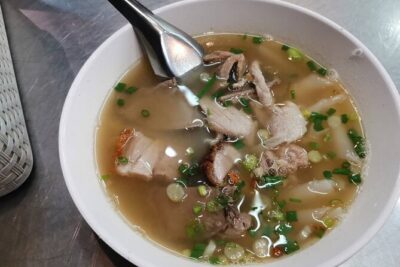
Bangkok Authentic Tasting Thai-Chinatown Walking Food Tour
Read our review →Browse the lists this tour appears in