
Review · SCOOTER RENTALS
Bangkok: Riverside E-Scooter Adventure with StreetFood Snack
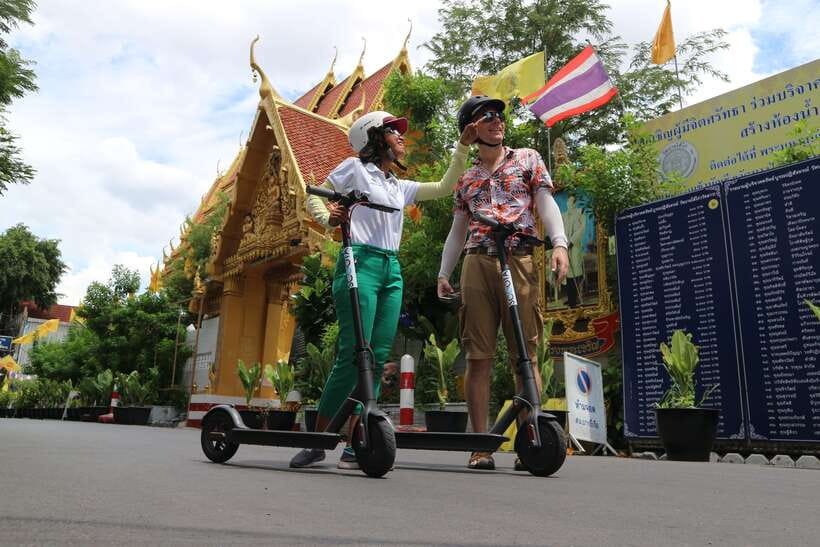
Bangkok looks very different from the back of an electric scooter. This three-hour ride slips through narrow lanes, food markets, temple grounds, and old neighborhoods that are easy to miss from a taxi or hard to reach on foot. You cross the Chao Phraya River twice, once by bridge and once on a local ferry.
I like the mix of food and everyday city life. You taste fruit at a local market, sample dishes in Chinatown, feed turtles near Wat Prayoon, and try Portuguese-influenced muffins in Kudeejeen. I also like the small groups, with no more than eight people, and the careful guides. The main drawback is that you must be comfortable riding a scooter in Bangkok’s heat, tight lanes, and busy traffic.
In This Review
- Key points to know before booking
- What this Bangkok scooter tour is really like
- Starting in Thonburi, Bangkok’s quieter side
- Wat Kalayanamitr and the Chao Phraya crossing
- Chinatown food and the story behind it
- The ferry ride and Tha Din Daeng Market
- Wat Prayoon, turtles, and Kudeejeen
- Why the e-scooter changes the experience
- Price, timing, and meeting point
- Who should book this ride
- Should you book the Bangkok Riverside E-Scooter Adventure?
- FAQ
- How long is the Bangkok e-scooter tour?
- What is included in the $38 price?
- Where does the tour start?
- How do I reach the meeting point by MRT?
- Is hotel pickup included?
- What age is required to join?
- Are there height and weight limits?
- Which languages are available?
- Can I cancel or pay later?
Key points to know before booking
- The route covers old Bangkok on both sides of the Chao Phraya, including Thonburi, Chinatown, Talat Noi, and Kudeejeen.
- Food is part of the experience, with fruit, street food, traditional Thai dishes, Chinatown snacks, and local muffins included.
- Guides make the difference, with guides such as Jobe, Pong, Phillip, Tony, Jam, and Tommy praised for safety, humor, local knowledge, and good English.
- The scooter saves time and energy, letting you reach back alleys and neighborhoods that a walking tour cannot cover in three hours.
- The meeting point is easy to reach by MRT, but a downtown hotel can still be up to an hour away during rush hour.
- It suits riders aged 14 and above, at least 140 centimeters tall and no more than 120 kilograms, who do not have mobility limitations.
What this Bangkok scooter tour is really like
This is not a polished sightseeing loop built around Bangkok’s biggest monuments. It is a moving introduction to the city’s older communities, local food habits, religious sites, and small streets. The e-scooter gives you enough range to connect these places without spending half the afternoon walking between them.
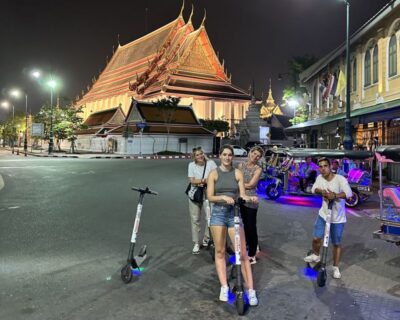
The experience begins at Jamming Thailand Bangkok, on the Thonburi side of the river. You receive a Xiaomi electric scooter, a helmet, and a short operating demonstration before setting off. If you have never used an e-scooter, that first lesson matters. The activity is not described as a technical riding course, so you should be willing to learn quickly and follow the guide closely.
The guides are a major part of the experience. Names appearing repeatedly in the tour’s feedback include Jobe, Pong, Phillip, Tony, Jam, Tommy, Kriss, and Sky. Their styles vary, but the consistent pattern is clear: the best guides keep the pace safe, explain what you are seeing, stop for photos, answer questions, and adjust the outing when the group needs it.
The route is limited to eight participants. That is a useful size for a city ride, since a large line of scooters would be harder to manage in narrow lanes. It also gives you a better chance to hear explanations and ask for help if you are a nervous rider.
A few more Bangkok trips to weigh up
- Bangkok: E-Scooter Night Tour with Local Street Food
★ 4.8 · 488 reviews - Bangkok: Bang Kachao E-Scooter Jungle Tour
★ 4.8 · 154 reviews - Bangkok By Night by Electric Scooter &/or Bike
★ 4.6 · 40 reviews
Starting in Thonburi, Bangkok’s quieter side
The opening ride introduces Bangkok and its food culture before reaching a local Thai market. This is a good choice for the first food stop because you see how local shoppers buy everyday ingredients rather than simply visiting a market arranged for sightseeing.
You can expect fruit tasting here, along with a look at the produce and food stalls. The exact fruit selection can change, which is part of the point. You are not being handed the same packaged snack found at every tourist stop. The guide helps explain what you are eating and how the market fits into neighborhood life.
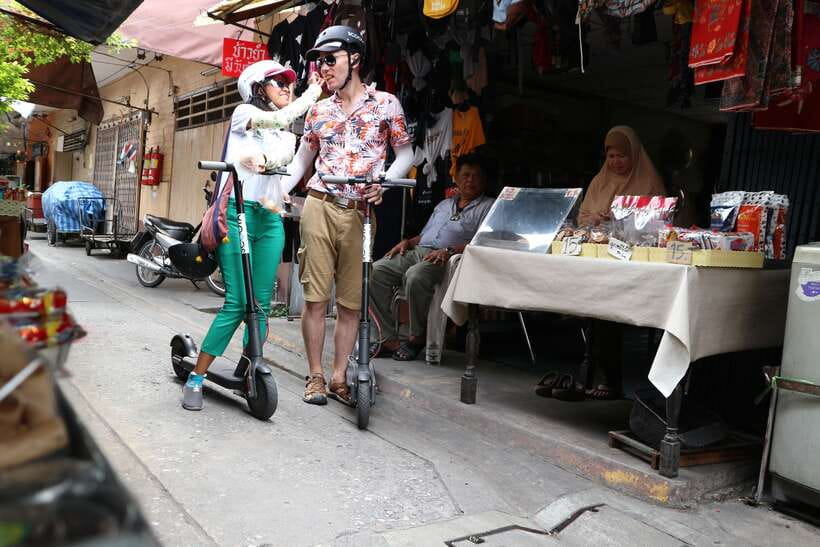
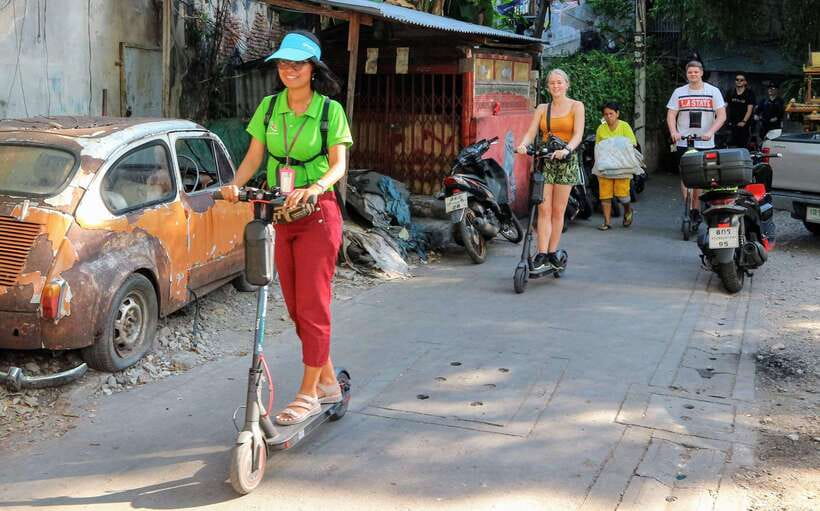
From here, the scooters enter Thonburi’s narrow back lanes. This is one of the strongest reasons to choose the tour. On foot, you could certainly explore some of these streets, but covering the full route in three hours would be difficult. By scooter, you get a sense of old residential Bangkok, passing through small lanes and local areas between the main attractions.
You should not expect a long, formal ride through empty streets. Bangkok remains busy, hot, and unpredictable. The scooter makes the distances manageable, but you still need to pay attention to the guide, other vehicles, pedestrians, uneven surfaces, and tight corners.
Wat Kalayanamitr and the Chao Phraya crossing
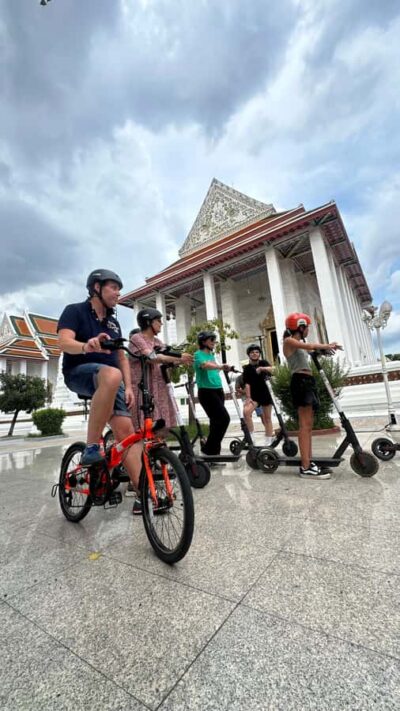
Wat Kalayanamitr Varamahavihara is one of the main cultural stops, with about 30 minutes set aside for a guided visit. The temple gives the ride a useful pause after the first stretch on the scooters, and it adds religious context to the food and neighborhood stories.
Your guide explains Buddhist traditions and local customs in practical terms. Several people who took the ride particularly valued the temple explanations, along with the chance to ask questions rather than simply take photographs and move on.
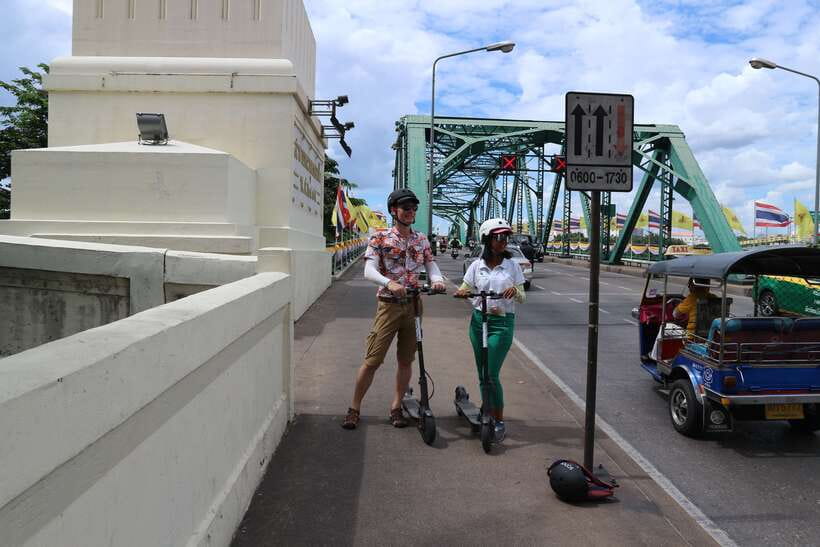
The route then crosses the Chao Phraya via the Memorial Bridge, also known as Phra Phutthayotfa Bridge. The bridge itself is a short pass-by stop, but it helps connect the two halves of the route. You move from Thonburi toward Chinatown, with the river acting as both a physical crossing and a useful way to understand Bangkok’s growth.
The ride also passes Talat Noi for around ten minutes. This old riverside area is known for lanes, workshops, and a long Chinese presence, though this tour treats it mainly as a photo stop and pass-by section rather than a full walking visit. That distinction matters if Talat Noi is your main reason for booking.
Chinatown food and the story behind it
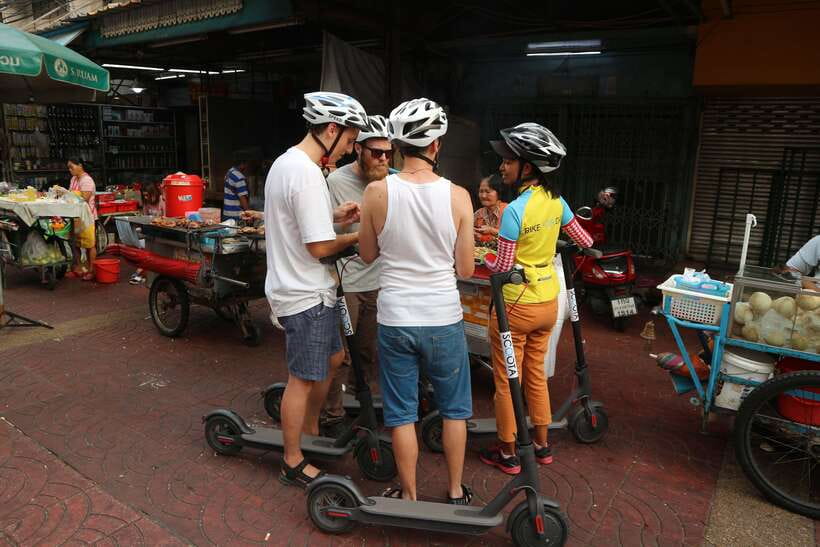
Chinatown receives about 30 minutes, combining sightseeing, local stories, and snacks. This is not a long restaurant meal. It is a compact taste of one of Bangkok’s best-known food districts, with the guide choosing stops along the route.
You might try dishes such as papaya salad, fried chicken, pork on a skewer, Thai dumplings, and other market foods. The food is included, as are the fruit tastings, so the $38 price does not leave you paying at every stop. The exact dishes can vary, and anyone with dietary restrictions should ask the operator before booking rather than assume every snack will suit them.
The guide also explains how Bangkok’s Chinese community influenced Thai food and culture. That context gives the food stops more meaning. Instead of seeing Chinatown as a string of stalls, you begin to understand why Chinese cooking methods, ingredients, and community life are part of Bangkok’s identity.
The back streets are the real reward here. You move away from the most obvious lanes and see the less polished side of the district. One of the tour’s strengths is the contrast between famous Chinatown food and ordinary neighborhood passages. It feels less like checking off a landmark and more like learning how the city fits together.
A small caution: the one less enthusiastic assessment of the experience preferred a street cart meal over a restaurant stop. If your dream food tour means eating only at curbside stalls, this may not always match that expectation. The tour does include street food and market tastings, but the food format can include more than one type of stop.
Same coastline, a completely different day out:
- Bangkok: Damnoen Saduak Market and Maeklong Railway Market
★ 4.5 · 26,723 reviews - The Old Siam: Damnoen Saduak and Maeklong Railway Market
★ 4.5 · 10,992 reviews - From Bangkok: Ayutthaya Temples Guided Tour with Lunch
★ 4.7 · 10,535 reviews - Bangkok: Train Market & Floating Market with Boat Ride
★ 4.7 · 9,547 reviews
The ferry ride and Tha Din Daeng Market
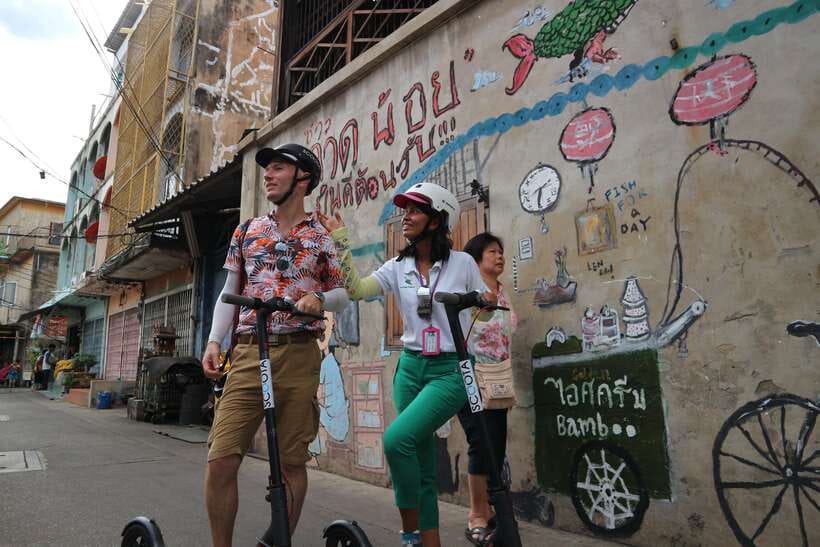
After Chinatown, you return toward the river and board a local ferry. Ferry tickets are included. This is a short but memorable change of pace, and it gives you a view of Bangkok from the water without adding the cost and time of a separate river cruise.
The ferry is also more than simple transport. It shows you a normal part of river life and breaks up the scooter riding. If the heat is wearing you down, this pause can be welcome. You should still expect an active outing, since the ferry does not turn the tour into a restful sightseeing cruise.
Next comes Tha Din Daeng Market, with about 30 minutes for food and exploration. This stop focuses on traditional Thai dishes and local market atmosphere. The market visit helps balance Chinatown, since you are not tasting only the city’s Chinese-influenced foods.
I like the way the markets are used here. You get small tastes rather than one large meal, which lets you try several kinds of food without committing to a full plate at every stop. Come hungry, but not starving. The tour moves at a steady pace, and this is not designed as a slow, sit-down food crawl.
Bangkok can be very hot, especially on an afternoon departure. Cold drinks and water have been provided during the ride, but you should still wear light clothing, use sun protection, and bring a sensible attitude toward heat. The scooter creates a little moving air, which makes it more comfortable than walking, but it does not remove the humidity.
Wat Prayoon, turtles, and Kudeejeen
The route pauses at a local park before visiting Wat Prayurawongsawat Worawihan, commonly called Wat Prayoon. About 20 minutes are allocated for the temple and surrounding area.
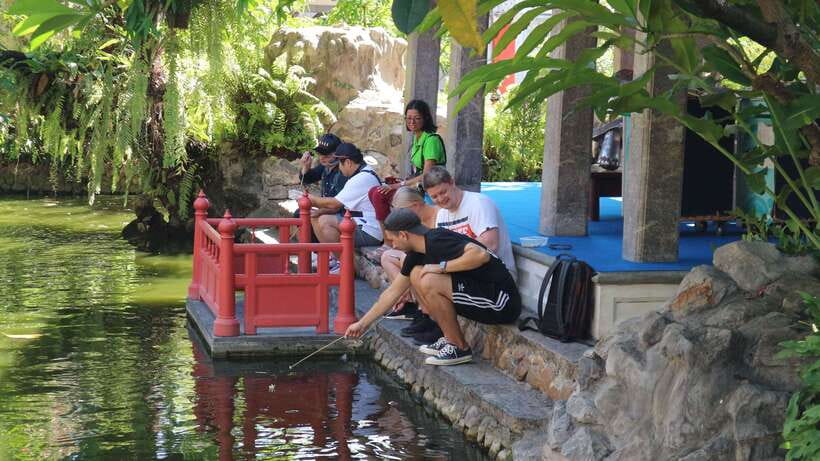
A highlight here is feeding the friendly turtles nearby. It is a simple activity, but it gives the tour a gentle, personal moment after the traffic, food stalls, and bridge crossings. You are not just looking at a temple from the outside. You get time to slow down, notice the grounds, and hear more about the site from the guide.
The final neighborhood is Kudeejeen, home to a long-established Portuguese-influenced community. At Soi Kudeejeen, you have around 20 minutes for a visit, local snacks, photographs, and an explanation of how Portuguese colonizers shaped Thai food.
The local muffins are a distinctive finish. You visit a small local factory and try the muffins, which connect the neighborhood’s food traditions to its past. This is one of the more unusual stops on the route, especially for someone who has already visited Bangkok’s major temples and markets.
Santa Cruz Church receives a short photo stop of about ten minutes. The church adds another layer to the Kudeejeen story and helps you see that Bangkok’s history is not only Buddhist or Thai-Chinese. The area reflects several communities living close together over time.
The Kudeejeen section is brief, so you should not expect a long historical walking tour or an extended church visit. Its value comes from the combination of the neighborhood, the church, the muffin tasting, and the guide’s explanation of cultural exchange.
Why the e-scooter changes the experience
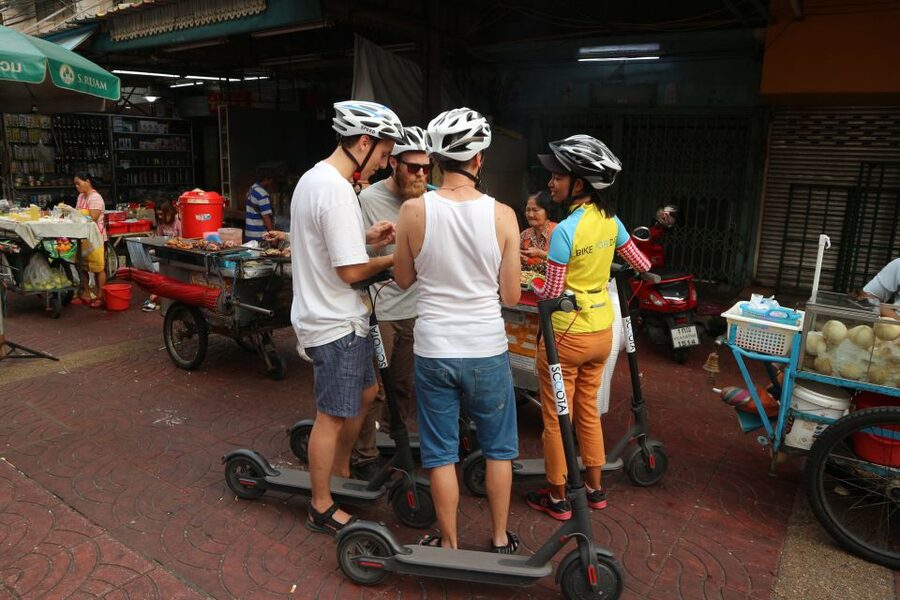
A walking tour keeps you close to street level, but it limits how much ground you can cover. This route moves across several districts and includes two river crossings, markets, temples, and narrow lanes. The scooter makes that range possible in a practical way.
I also like the way the scooter gets you between major stops without turning the tour into a sequence of vehicle transfers. You remain connected to the streets, and the back lanes become part of the experience rather than scenery seen through a car window.
That said, an e-scooter is not automatically easy for everyone. You need balance, basic coordination, and the ability to react to changing conditions. The operator requires participants to be at least 14 years old, at least 140 centimeters tall, and no more than 120 kilograms. The activity is not suitable for pregnant women, people with mobility impairments, or anyone under those limits.
You wear a helmet, and third-party insurance is included. The guides have been praised for keeping nervous riders comfortable, including a rider’s mother who had less confidence on the scooter. Still, you should not book this as a passive sightseeing activity. You are riding for much of the three hours.
Price, timing, and meeting point
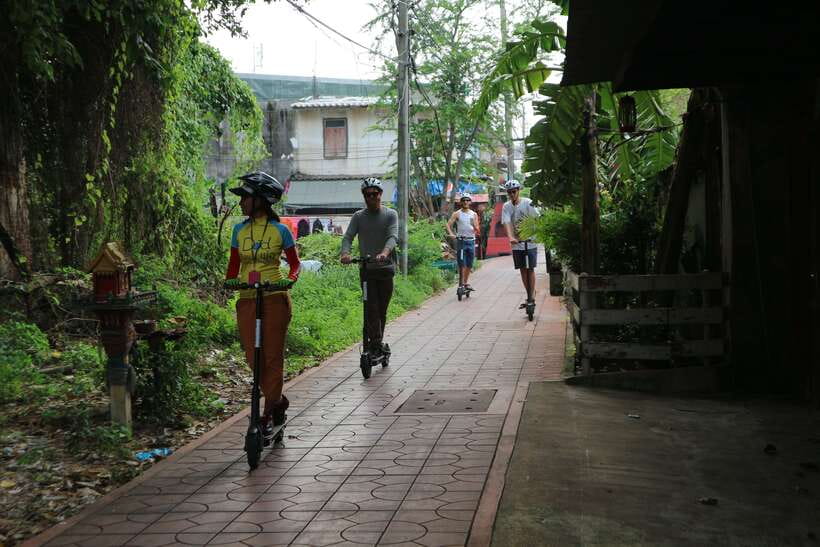
At $38 per person, the tour offers solid value if you want several experiences in one outing. The price includes the scooter, helmet, insurance, guide, ferry tickets, street food, and fruit. You are paying for transport across the city as well as food tastings and interpretation at several cultural sites.
The value is strongest for a first visit or a short stay. You get a quick introduction to Thonburi, Chinatown, Tha Din Daeng, Talat Noi, and Kudeejeen without arranging separate transport. It can also work well if you have visited Bangkok before and want places beyond the standard central route.
The meeting point is Jamming Thailand Bangkok, near Itsaraphap MRT station. The easiest route is to take the MRT to Itsaraphap, use Exit 2, walk to Soi 23, and continue past Achcha Coffee until you see the office with bikes.
For a Grab ride, search for Jamming Thailand Tours rather than relying on the street address. If you use a taxi, the Thai directions provided are: ฝั่งธนบุรี, ถนน อิสรภาพ ซอย 23, ติด รถไฟฟ้าใต้ดิน MRT อิสรภาพ, ใกล้ วัดราชสิทธาราม.
Allow extra time to reach the start. From a downtown hotel, the trip can take up to an hour in rush hour. The tour does not include hotel pickup or drop-off, so late arrival caused by self-arranged transport can create stress, even though the team has sometimes helped late arrivals join the experience.
Free cancellation is available up to 24 hours before departure, and you can reserve now and pay later. Starting times vary, so check availability when choosing a date.
Who should book this ride
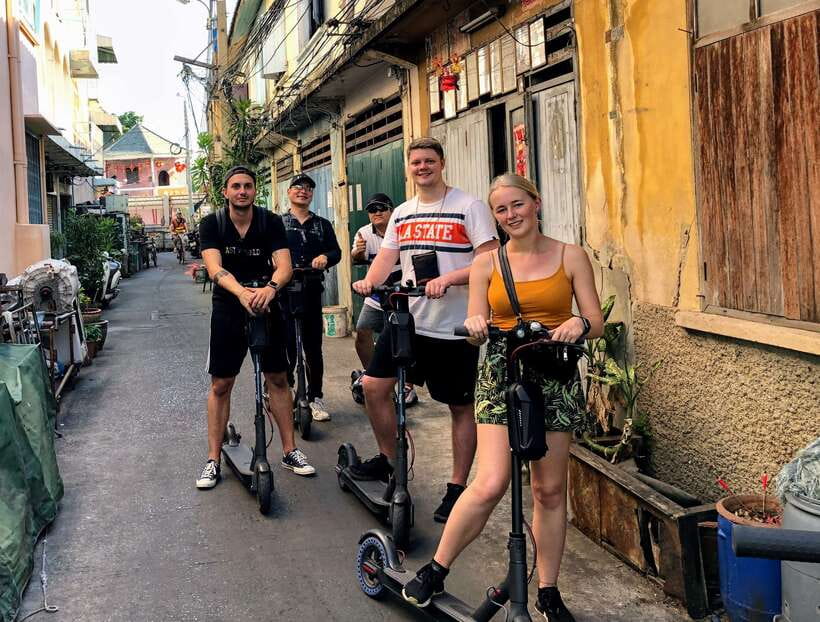
I would choose this for an active visitor who wants food, culture, and local streets in one compact outing. It is especially useful early in a Bangkok stay, since the guide can help you understand the city’s neighborhoods and food culture before you explore on your own.
It also suits repeat visitors. Several stops focus on less familiar areas, and the route reaches places you might not think to visit without local direction. The small group size makes it more personal, and guides have sometimes taken photographs during the ride and sent them afterward.
You should think twice if you dislike scooters, struggle with heat, want a long sit-down meal, or prefer a slow temple tour. You should also ask about food needs before booking, since the included snacks and dishes are selected along the route.
Should you book the Bangkok Riverside E-Scooter Adventure?
Yes, if you want to cover a lot of Bangkok without giving up contact with the street. The strongest parts are the narrow Thonburi lanes, Chinatown food, local ferry, Wat Prayoon turtles, and Kudeejeen’s Portuguese connection. At $38, that is a generous spread of experiences in three hours.
I would not book it solely as a dedicated food tour or solely as a temple tour. It is best understood as a fast, friendly city sampler led by guides such as Jobe, Pong, Phillip, Tony, or Tommy, depending on the day. If you are old and tall enough to ride, reasonably comfortable on a scooter, and ready for Bangkok’s heat, this is one of the more useful ways to see the city beyond its main roads.
FAQ
How long is the Bangkok e-scooter tour?
The activity lasts three hours, including scooter riding, food stops, temple visits, sightseeing, and the ferry crossing.
What is included in the $38 price?
The price includes a Xiaomi electric scooter, helmet, third-party insurance, professional guide, ferry tickets, street food, and fruits.
Where does the tour start?
It starts at Jamming Thailand Bangkok, near Itsaraphap MRT station on Bangkok’s Thonburi side.
How do I reach the meeting point by MRT?
Take the MRT to Itsaraphap station and leave through Exit 2. Walk to Soi 23, continue past Achcha Coffee, and look for the office with bikes.
Is hotel pickup included?
No. Hotel pickup and drop-off are not included, so you need to arrange your own transport to and from the meeting point.
What age is required to join?
The minimum age is 14 years.
Are there height and weight limits?
Participants must be at least 140 centimeters tall and no more than 120 kilograms, or 264 pounds.
Which languages are available?
The tour is offered with live guides in English and Thai.
Can I cancel or pay later?
You can cancel up to 24 hours in advance for a full refund. Reserve now and pay later is also available.
Just added around Bangkok
- Damnoen Saduak Floating Market Small Group Tour★ 4.0 · 107 reviews
- Angkor Wat 2-Day Tour from Bangkok★ 5.0 · 8 reviews
- Arrival Private Airport Transfer : Bangkok Airport to Hotel in Bangkok★ 4.5 · 142 reviews
- Private Best of Bangkok Full Day Highlights City Tour★ 4.5 · 13 reviews
- Ancient Wonders of Ayutthaya with Return Scenic River Cruise★ 4.0 · 31 reviews
- Private Ancient city of Ayutthaya Shore Excursion★ 5.0 · 9 reviews
- Ancient City Ayutthaya Private Guided Day Tour★ 5.0 · 49 reviews
- Ancient City Bangkok and Erawan Museum Tickets★ 4.5 · 8 reviews
Scooter Rentals, compared.
Explore Krabi with Hotel-Delivered Scooter Rental
Read our review →Browse the lists this tour appears in