
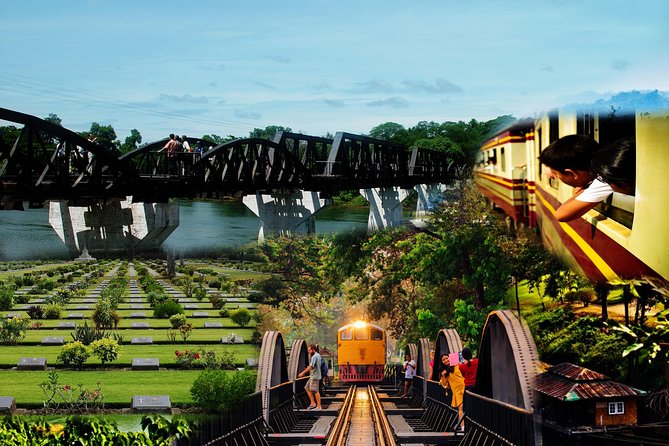
Review · TRAIN EXPERIENCES
Bridge on the River Kwai and Thailand-Burma Railway Guided Tour
The most moving part of this tour is not the bridge itself. It is the story behind it: prisoners of war and forced laborers building the Thailand-Burma Railway under brutal conditions during World War II. Walking across the bridge, then riding the old railway through the countryside, gives that history a physical sense that a film or book cannot quite match.
I like the boat ride on the river and the train journey, which break up the long drive from Bangkok and show you the area from two very different angles. I also like the guides who take the history seriously. Oom and Rach receive especially strong praise for clear, lively explanations.
The catch is the distance. Kanchanaburi is about 130 kilometers from Bangkok, and traffic can turn this advertised 11-hour outing into a 12 to 14-hour day. Some groups also find the minivan uncomfortable, the museum visit uneven, and the commentary hard to hear from the back rows.
In This Review
- Key points at a glance
- Why the Bridge on the River Kwai matters
- The long road from Bangkok to Kanchanaburi
- Arriving by long-tail boat
- Walking across the River Khwae Bridge
- Kanchanaburi War Cemetery: the quietest stop
- What to expect inside the JEATH War Museum
- Riding the Death Railway train
- Lunch with a view
- Guides, group size, and communication
- Is the $94.53 price good value?
- Who should book this tour?
- FAQ
- How long is the Bridge on the River Kwai tour?
- What time does the tour start?
- Does the tour include hotel pickup and drop-off?
- Is the tour shared or private?
- Is the train ride included?
- Are lunch and entrance fees included?
- Is the long-tail boat ride included?
- Can children join the tour?
- Can I cancel for a full refund?
Key points at a glance
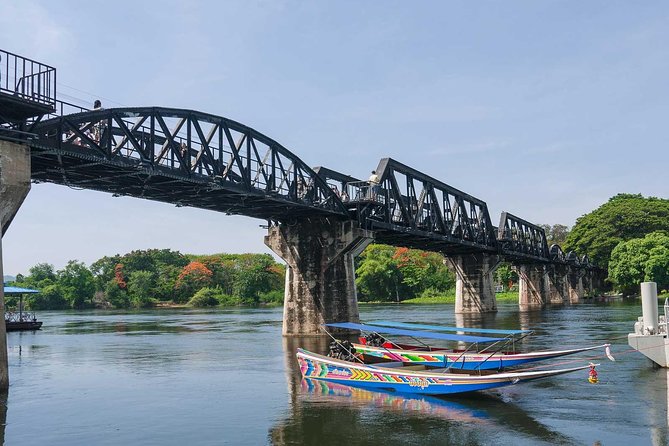
- World War II history in the actual setting: Visit the bridge, a POW cemetery, and the JEATH War Museum rather than simply viewing the site from a distance.
- Two memorable rides included: Take a long-tail boat on the river and ride part of the Death Railway by train.
- A very early, very long day: Pickup begins around 7:00 am, with hotel collection sometimes 30 to 60 minutes earlier.
- Strong guides can make the difference: Oom and Rach are praised for their historical knowledge, humor, and care with the group.
- Budget for the train seat: A mandatory 300 baht fee is paid locally in cash, even though the train ride is included.
- Shared or private choices: The shared tour has a maximum of 15 people, while a private upgrade gives you your own vehicle and guide.
Why the Bridge on the River Kwai matters
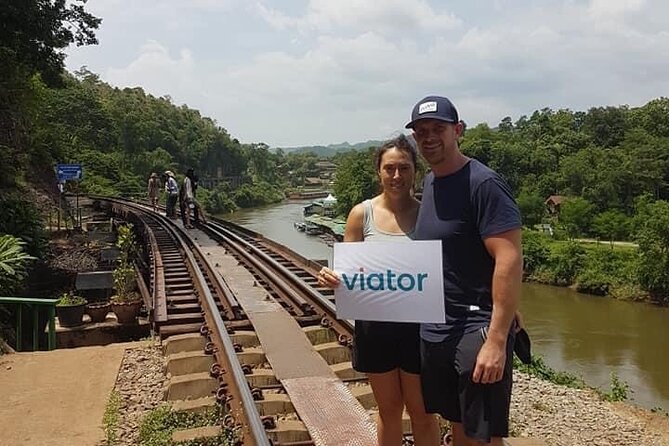
The famous bridge is part of the Thailand-Burma Railway, built between 1942 and 1943 during the Japanese occupation of Southeast Asia. The railway was intended to link Thailand with Burma, now Myanmar, and support Japanese military supply lines.
Its construction came at a terrible human cost. Prisoners of war from Allied countries and Asian forced laborers endured disease, hunger, violence, exhausting work, and harsh living conditions. The bridge is only one piece of that story, but it gives you a clear place to begin.
The 1957 film made the bridge famous around the world, though the movie takes artistic liberties. The tour’s historical commentary helps separate the popular image from the real events. You will learn about the railway, the POWs, and the bridge’s place in the wider wartime story.
I find the site most meaningful when the guide explains what you are seeing before giving you time to walk. Without that context, the bridge can look like a simple railway crossing with souvenir stalls nearby. With context, each rail and steel support carries more weight.
A few more Bangkok trips to weigh up
- Bangkok: Damnoen Saduak Market and Maeklong Railway Market
★ 4.5 · 26,723 reviews - The Old Siam: Damnoen Saduak and Maeklong Railway Market
★ 4.5 · 10,992 reviews - Bangkok: Train Market & Floating Market with Boat Ride
★ 4.7 · 9,547 reviews
The long road from Bangkok to Kanchanaburi
The first test is the journey. The drive from central Bangkok to Kanchanaburi generally takes about two to three hours each way, depending on traffic and the day’s schedule. That means the van is not a minor part of this tour. It is a major part of the experience.
Hotel pickup and drop-off are offered at most centrally located Bangkok hotels. Pickup can happen 30 to 60 minutes before the stated 7:00 am start, so do not book a tight breakfast appointment or a morning flight connection. You need to provide your hotel information when booking, or the reservation may be canceled.
The vehicle is air-conditioned, but comfort varies by group and van. Some people find the minibus clean and perfectly adequate. Others report hard seats, poor suspension, and difficulty hearing the guide from the rear rows. If you are tall or prone to motion sickness, the long road deserves serious thought.
There are rest stops, and guides such as Oom have been praised for spacing out breaks well. Still, bring water, a hat, tissues or toilet paper, and something to cool you down. Several restrooms may rely on handheld bidet sprays rather than supplying paper.
The countryside helps. Once you leave Bangkok, the scenery becomes a pleasant counterpoint to the city, and the long drive makes more sense when you remember that the bridge and railway are in another province. Even so, I would leave your evening free. One person planned an evening booking with a three-hour buffer and still missed it after returning to Bangkok around 8:30 pm.
Arriving by long-tail boat
The boat ride is a welcome change after the van. You travel on the River Kwai in a traditional long-tail boat, with the river and surrounding countryside providing a calmer approach to the historic site.
The boat is not a major sightseeing cruise. The supplied timing describes a ride of about 20 minutes, but some experiences have felt closer to five minutes. You should treat it as a short transport ride with scenery, not as a full river excursion.
That does not make it pointless. The boat gives you a better sense of the waterway and the terrain around Kanchanaburi, and it adds a distinctly Thai form of transport to a day otherwise dominated by road travel. The ride can also be one of the more enjoyable moments if the weather is hot.
Comfort is basic. One report described an uncomfortable boat and a rusty old jetty. Conditions can depend on the boat and boarding point used that day. Keep your expectations modest, hold onto loose belongings, and consider the ride a pleasant extra rather than the tour’s main attraction.
Walking across the River Khwae Bridge
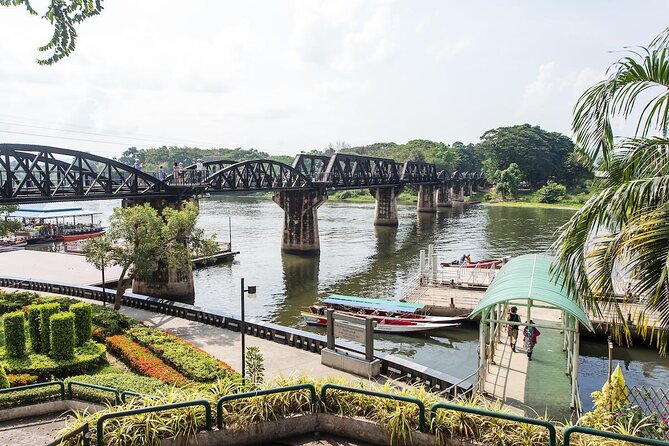
The bridge visit is usually brief, listed at around 30 minutes. That is enough time to walk across the structure, look along the railway line, take photographs, and listen to the guide’s explanation.
The bridge itself is not frozen in 1943. It is an active railway crossing, and trains still pass through the area. Pay attention to the guide’s instructions and stay aware of train movements while walking.
The setting is visually striking. The dark rails, river below, and green hills beyond make an unusual combination with the grim wartime story. That contrast can feel uncomfortable, but it is part of what makes the visit memorable. You are standing in a beautiful place connected to suffering on a vast scale.
Time here can feel short, especially if the group is large or the guide is trying to keep the day on schedule. A shared tour may offer less freedom to linger than a private one. If you want long stretches for quiet reflection or photography, the private option is worth considering.
Same coastline, a completely different day out:
- From Bangkok: Ayutthaya Temples Guided Tour with Lunch
★ 4.7 · 10,535 reviews - From Bangkok: Ayutthaya & Ayothaya Floating Market Day Trip
★ 4.7 · 6,084 reviews - Bangkok Canal Tour: 2-Hour Longtail Boat Ride
★ 4.5 · 5,909 reviews - Bangkok: Muay Thai Boxing Tickets at Rajadamnern Stadium
★ 4.9 · 4,740 reviews
Kanchanaburi War Cemetery: the quietest stop
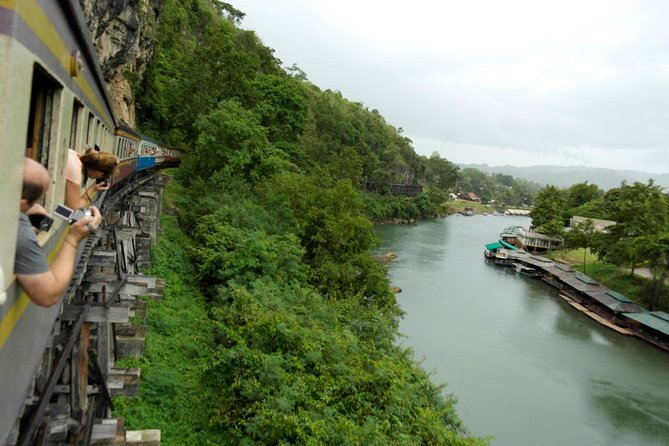
The Kanchanaburi War Cemetery is the most restrained and solemn part of the day. It is the main POW cemetery for those who died during the construction of the Burma Railway, and it sits in town on Saeng Chuto Road.
The cemetery is carefully maintained, with rows of graves that make the scale of the loss easier to grasp. Names, ages, and military units replace the general numbers you hear in a museum or documentary. I recommend slowing down here, even if the formal stop is only about 20 minutes.
Some people feel the cemetery visit is too short. That is a fair criticism. The stop has emotional weight, and rushing through it for the sake of the next activity can weaken the experience. Use your free minutes thoughtfully, and ask the guide questions before moving on.
The cemetery is also a useful balance to the film connection. The movie centers on the bridge and its drama. The cemetery brings your attention back to the people who did not survive the railway project.
What to expect inside the JEATH War Museum
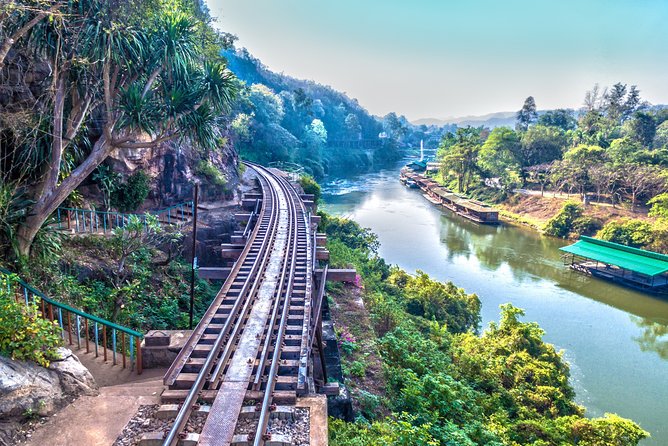
The JEATH War Museum is small and focuses on the POW experience. Its displays include original photographs, letters, drawings, and material about the harsh conditions faced by those who built the railway.
Do not expect a polished, modern museum with extensive climate-controlled galleries. The displays are modest, and parts of the museum may feel dated or poorly maintained. For some visitors, that roughness adds to the seriousness of the subject. For others, the visit feels too basic and takes time away from the bridge or cemetery.
The listed stop is about 20 minutes, though the exact timing can change at the guide’s discretion and according to the group. The museum is included in the entrance fees provided with the tour.
I would view this as a short introduction rather than the definitive museum experience. The guide’s explanation matters greatly here. A well-prepared guide can connect the photographs and letters to the railway you will see later. If the commentary is rushed or difficult to understand, the museum can feel like a quick walk through old displays.
Riding the Death Railway train
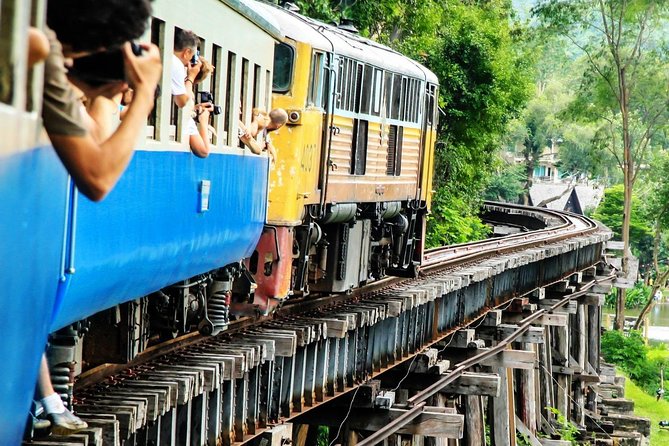
The train ride is the tour’s strongest practical feature. You ride along part of the Death Railway, seeing the countryside from the tracks that were built during the war.
The train is basic, and the windows are open. That creates excellent views, but it also means noise, heat, and no air-conditioning in the carriage. Bring water, a hat, and perhaps ear protection if loud sounds bother you.
The route gives you a better feel for the engineering challenge than a roadside explanation can. The train moves through rural scenery, and the slower pace lets you watch the river and countryside pass by. This is not a luxury rail journey. Its value comes from the setting and the connection to the railway’s past.
A 300 baht seat fee is mandatory for everyone and is paid locally in cash to the guide at the train station. The fee guarantees a seat. The ride itself and the train ticket are included, but this extra payment is easy to overlook when calculating your total cost.
The train schedule may not be explained as clearly as it should be on every departure. Keep track of the meeting instructions, stay near your group, and confirm where and when you need to rejoin the van. The exact timing can change during the day.
Lunch with a view
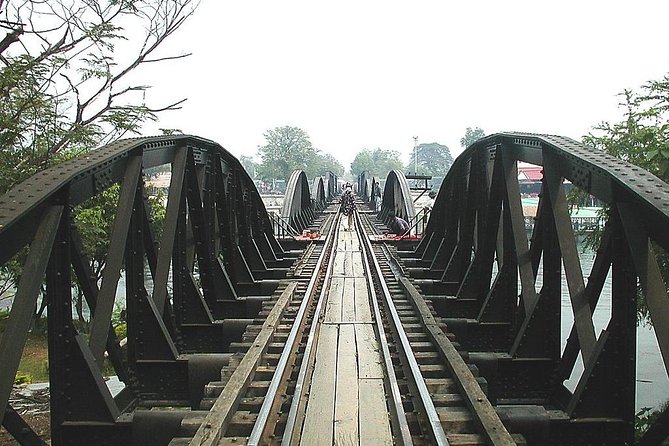
A buffet lunch is included, which is useful on such a long outing. You do not need to arrange a separate meal while moving between stops, and several people have found the food tasty or acceptable.
The setting is part of the appeal. Lunch is served at a restaurant with a good view, giving you a chance to sit down after the bridge, cemetery, museum, and transport segments. It is a practical break rather than a culinary highlight, but that is exactly what you need in the middle of an 11-hour tour.
Food preferences and personal expenses are not covered beyond the provided buffet. If you have strict dietary needs, the tour information does not promise special meals, so plan accordingly.
Guides, group size, and communication
The tour has a maximum of 15 people in the shared format. That is smaller than a large coach tour, but it is still large enough for the guide’s style and microphone setup to matter.
Oom receives especially warm praise for his humor, historical explanations, and attention to the group. Rach is also singled out for being informative, considerate, and attentive. A good guide does more than recite dates. The best ones explain how the railway affected POWs, point out what you are seeing, and leave room for questions.
Communication is not consistent for every group. Some people have had trouble understanding the guide, especially from the back rows of the van. Others found the guide excellent from beginning to end. The operator has acknowledged the need to improve audio, and a portable speaker would help in a full minivan.
The private option gives you your own vehicle and guide. I would consider it if you care strongly about asking questions, need a slower pace, or are traveling with family or a small group. It will not shorten the Bangkok to Kanchanaburi drive, but it should give you more control and direct attention.
Is the $94.53 price good value?
At $94.53 per person, the price covers a great deal for a full-day trip: central hotel pickup and return, an air-conditioned vehicle, a guide, entrance fees, lunch, the long-tail boat ride, and the Death Railway train ride.
The 300 baht train seat fee is not included, so add that to your real budget. You should also allow for personal expenses and drinks. The private upgrade costs more, but the supplied information does not state the exact surcharge, so compare it at booking rather than assuming it will be a small increase.
The value depends on how you feel about guided day trips. You are paying to avoid arranging several transfers, finding the cemetery and museum, buying train tickets, and managing the return to Bangkok. You are also paying with time, comfort, and flexibility.
For someone based in Bangkok with only one day available, I think the package makes sense. For someone already staying in Kanchanaburi, a shorter local arrangement may be more efficient, but that option is not part of this tour.
Who should book this tour?
You should book if World War II history, railways, and memorial sites are central to your interests. The combination of the cemetery, museum, bridge, and train gives you a fuller picture than a quick photo stop.
It also suits you if you want transport and ticket arrangements handled for you. The guide provides navigation and commentary, and lunch is already part of the day.
Think twice if you dislike long van journeys, need a firm return time, or want to spend a long period at one site. The schedule can change, the drive can be rough, and the most important stops may feel brief.
For the best chance of a satisfying day, request the private option if your budget permits, keep your evening free, bring water and tissues, and ask the guide to repeat anything you cannot hear. Go for the history first. The boat, countryside, and train make the day more enjoyable, but the real reason to come is to understand what happened here.
FAQ
How long is the Bridge on the River Kwai tour?
The advertised duration is approximately 11 hours. Traffic and delays can make the day longer, with some departures lasting 12 to 14 hours from pickup to drop-off.
What time does the tour start?
The stated start time is 7:00 am. Hotel pickup may take place 30 to 60 minutes earlier, depending on your hotel’s location.
Does the tour include hotel pickup and drop-off?
Yes, pickup and drop-off are included for centrally located Bangkok hotels. You must provide your hotel details when booking.
Is the tour shared or private?
You can take the tour as a shared experience with other passengers or upgrade to a private tour with your own vehicle and guide. The shared tour has a maximum of 15 people.
Is the train ride included?
The train ride along the Death Railway is included, but every participant must pay a mandatory 300 baht seat fee locally in cash. This fee guarantees a seat.
Are lunch and entrance fees included?
Yes. The tour includes a buffet lunch and entrance fees for the listed attractions.
Is the long-tail boat ride included?
Yes, a long-tail speedboat ride is included. The actual length of the boat ride can vary, and some departures have had a shorter ride than expected.
Can children join the tour?
Most travelers can participate. The child rate applies to children under 100 centimeters tall. Children over 100 centimeters are charged the adult rate.
Can I cancel for a full refund?
You can cancel at least 24 hours before the experience starts for a full refund. Cancellations or changes made less than 24 hours before the start time are not refunded or accepted.
Just added around Bangkok
- Damnoen Saduak Floating Market Small Group Tour★ 4.0 · 107 reviews
- Angkor Wat 2-Day Tour from Bangkok★ 5.0 · 8 reviews
- Arrival Private Airport Transfer : Bangkok Airport to Hotel in Bangkok★ 4.5 · 142 reviews
- Private Best of Bangkok Full Day Highlights City Tour★ 4.5 · 13 reviews
- Ancient Wonders of Ayutthaya with Return Scenic River Cruise★ 4.0 · 31 reviews
- Private Ancient city of Ayutthaya Shore Excursion★ 5.0 · 9 reviews
- Ancient City Ayutthaya Private Guided Day Tour★ 5.0 · 49 reviews
- Ancient City Bangkok and Erawan Museum Tickets★ 4.5 · 8 reviews
Train Experiences, compared.
Damnoen Saduak Market and Maeklong Railway Market
Read our review →
The Old Siam: Damnoen Saduak and Maeklong Railway Market
Read our review →
Train Market & Floating Market with Boat Ride
Read our review →
Half-Day Railway Market and Floating Market Tour in Thailand
Read our review →
Damnoen Saduak, Train Market & Mahanakhon Day Trip
Read our review →
Damnoen Saduak Floating Market and Maeklong Railway Market Tour
Read our review →
Day Trip to Bangkok Floating Market & Maeklong Railway
Read our review →Browse the lists this tour appears in