
Review · TRAIN EXPERIENCES
Bridge on the River Kwai and Thailand-Burma Railway Tour
The most powerful part of this day is not the famous bridge. It is the quiet Kanchanaburi War Cemetery, where rows of graves bring the human cost of the Thailand-Burma Railway into sharp focus. From there, you follow the story to the JEATH War Museum, cruise beneath the bridge by long-tail boat, and ride the railway built by POWs and forced laborers during World War II.
I like the mix of solemn history and moving scenery, and I like that the boat ride gives you a memorable approach to the bridge instead of simply arriving by road. Guides such as Betty, Luck, Tiny, Peter, Jenny, and Suki have been praised for clear explanations and thoughtful care. The main drawback is the distance: you spend a long time on the road from Bangkok, and the museum may feel basic if you want a polished, deeply detailed presentation.
In This Review
- Key points to know before booking
- Why this Bangkok day trip matters
- The early departure from Bangkok
- Kanchanaburi War Cemetery: start with the human cost
- JEATH War Museum and the limits of a short visit
- Approaching the River Kwai Bridge by long-tail boat
- Riding the Death Railway through rural Thailand
- Lunch and the value of the package
- What the guides add to the experience
- Comfort, pace, and who should book
- Booking details that matter
- Should you book the River Kwai tour?
- FAQ
- How long does the Bridge on the River Kwai tour last?
- What time does the tour start?
- Is hotel pickup included?
- What sites are included?
- Is the train ride included?
- Is the long-tail boat ride included?
- Is lunch included?
- Do I need to pay extra for a train seat?
- Can I cancel for a full refund?
Key points to know before booking
- The day begins early: Pickup starts at about 6:30 a.m., with a nine to ten-hour schedule.
- The cemetery is the emotional center: Allow yourself a quiet moment among the graves rather than rushing through for photographs.
- The bridge approach is by long-tail boat: You cruise along the Kwai River and pass beneath the bridge before exploring it.
- The train ride lasts about 90 minutes: You travel through the countryside on a scenic section of the Death Railway.
- Lunch, admissions, and transport are included: Drinks are extra, and selected Bangkok hotels qualify for pickup and drop-off.
- A train upgrade costs extra: About 200 baht guarantees a seat and adds water and a cold towel. About 300 baht adds tea or coffee and a certificate.
Why this Bangkok day trip matters
This is not just a bridge photo stop with a train ride attached. The railway was built in 1943 as part of the Japanese effort to support its occupation of Burma, now Myanmar, by creating a direct rail link from Bangkok toward Rangoon. POWs from Allied forces and large numbers of forced laborers worked in brutal conditions. Many died from disease, exhaustion, hunger, and mistreatment.
That context changes the mood of the whole day. The river can look peaceful, the countryside can feel pleasant, and the train ride can be fun. Yet the route carries a painful story. I appreciate that this tour places the cemetery and museum before the lighter parts of the day, giving you a factual base before you reach the bridge and railway.
You should come with time to listen. Some departures are led by guides who explain the war, local customs, and the construction project in detail. Others may offer less commentary while the coach passes through the countryside. If detailed narration matters to you, your experience will depend partly on the guide assigned that day.
A few more Bangkok trips to weigh up
- Bangkok: Damnoen Saduak Market and Maeklong Railway Market
★ 4.5 · 26,723 reviews - The Old Siam: Damnoen Saduak and Maeklong Railway Market
★ 4.5 · 10,992 reviews - Bangkok: Train Market & Floating Market with Boat Ride
★ 4.7 · 9,547 reviews
The early departure from Bangkok
Pickup begins around 6:30 a.m. from selected hotels in Bangkok. You must provide your hotel information when booking, or the reservation may be canceled. The ride to Kanchanaburi covers roughly 130 kilometers, or about 80 miles, so the morning road journey is a major part of the day.
You travel in an air-conditioned vehicle through rural Thailand. Sugarcane, rice paddies, and pineapple plantations fill much of the route, giving you a look at farmland beyond Bangkok’s city center. This is useful context, but do not expect a leisurely scenic drive with frequent photo stops. The schedule has several fixed visits, so the coach ride mainly gets you from one site to the next.
The vehicle quality can vary. Some people find the transport comfortable and well handled, while at least one account described the car as less comfortable than expected. That is worth keeping in mind if you prefer small, flexible tours. The maximum group size is listed as 99, although some departures may be smaller.
Kanchanaburi War Cemetery: start with the human cost
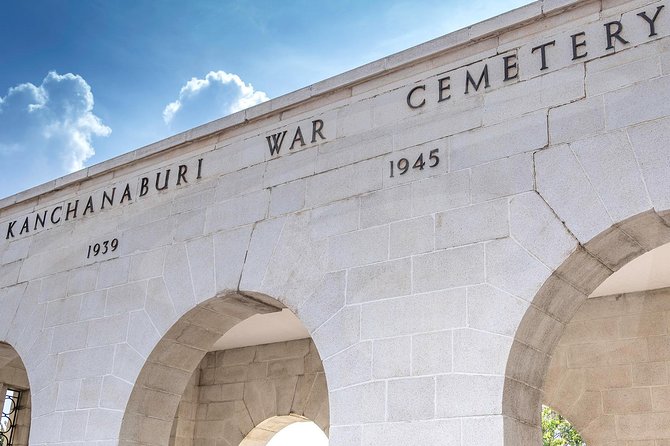
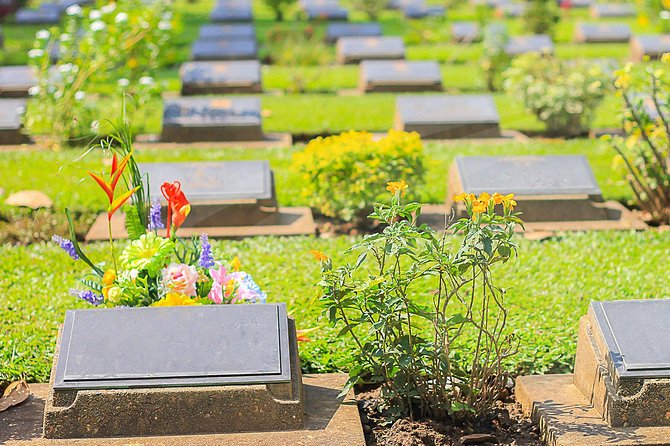
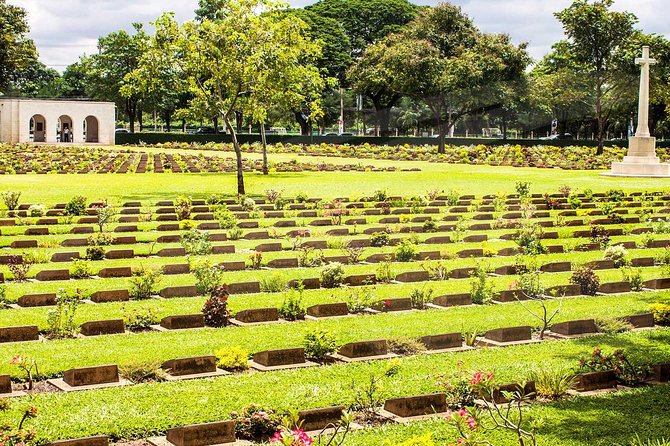
The first major stop is the Kanchanaburi War Cemetery, the main cemetery for Allied POWs who died during the construction of the Burma Railway. You have about 30 minutes here, with admission included.
This is the place to slow down. The carefully arranged graves and quiet grounds create a very different experience from the noise of Bangkok. You can walk among the rows, read names and dates, and think about the young men represented by the markers. Many people find this the most moving stop of the day.
Thirty minutes is enough for a respectful visit, but it is not a long time. If you want to linger over individual graves or spend time in reflection, the schedule may feel tight. I suggest keeping photographs discreet and making the cemetery a place of remembrance first.
The cemetery also gives the rest of the tour more weight. After seeing the names, the bridge is no longer just a famous film location or railway curiosity. It becomes part of a much larger story about wartime planning, forced labor, and the cost paid by people who had little control over what happened to them.
JEATH War Museum and the limits of a short visit
Next comes the JEATH War Museum, with about 20 minutes set aside. The museum uses historical photographs and paintings to explain how the Death Railway was built by POWs during World War II.
I like the museum’s role in the sequence. It gives you visual material after the cemetery and helps explain the engineering project before you see the bridge. The photographs and paintings can make the conditions more real than a brief spoken explanation alone.
The short visit is also the museum’s weakness. Twenty minutes does not allow much time for careful reading, and the displays may feel basic if you want a large collection or a modern museum presentation. Some people find it informative and suitably sobering, while others want more detail about the railway, the workers, and the wider war.
Treat this as an introduction, not the final word. The guide’s explanation matters here. Guides who, like Peter, Tiny, or Suki, explain the history in a clear and engaging way can add much more than the exhibits alone.
Same coastline, a completely different day out:
- From Bangkok: Ayutthaya Temples Guided Tour with Lunch
★ 4.7 · 10,535 reviews - From Bangkok: Ayutthaya & Ayothaya Floating Market Day Trip
★ 4.7 · 6,084 reviews - Bangkok Canal Tour: 2-Hour Longtail Boat Ride
★ 4.5 · 5,909 reviews - Bangkok: Muay Thai Boxing Tickets at Rajadamnern Stadium
★ 4.9 · 4,740 reviews
Approaching the River Kwai Bridge by long-tail boat
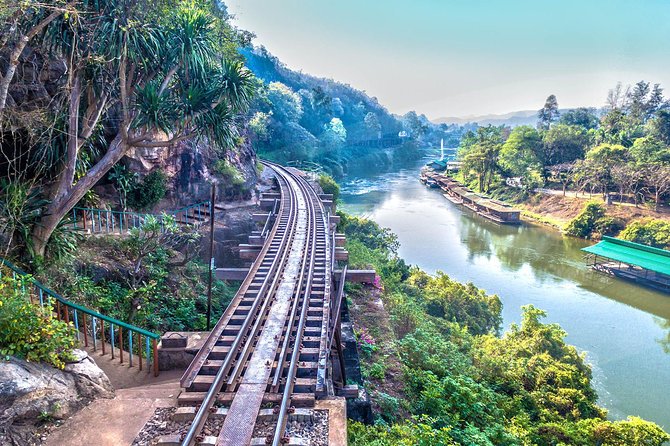
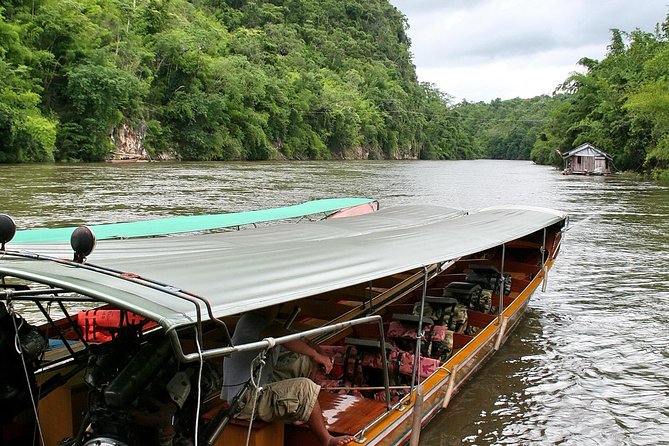
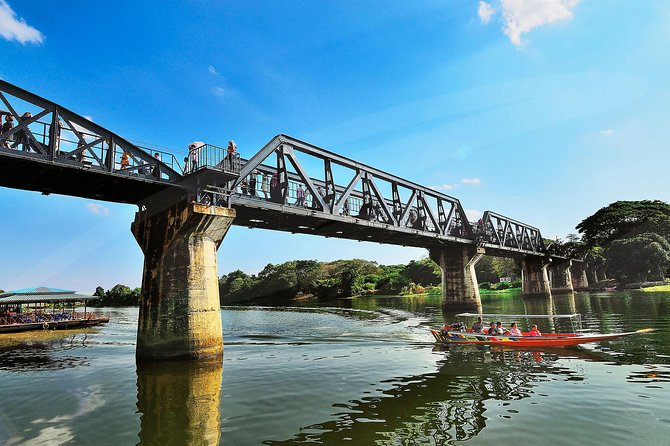
The tour then shifts mood with a long-tail speedboat ride on the Kwai River. The cruise lasts about 20 minutes and takes you beneath the River Kwai Bridge.
This is one of the tour’s most distinctive features. Approaching the bridge from the river gives you a better sense of its setting than arriving on a coach. The boat ride is lively and exhilarating, but the bridge and river still carry the weight of what you have just learned.
You have time to see the bridge and explore on your own. The schedule allows about 20 minutes at the bridge itself, which is enough to walk across, take photographs, and look at the railway structure. It is not enough for a long, unhurried visit, especially if the area is busy.
The boat ride can also be a practical way to avoid a dull road approach. It adds movement to a day that otherwise includes a lot of coach travel and museum time. You may find the contrast slightly strange: a thrilling boat ride followed by a solemn railway story. That contrast is part of the tour’s character.
Riding the Death Railway through rural Thailand
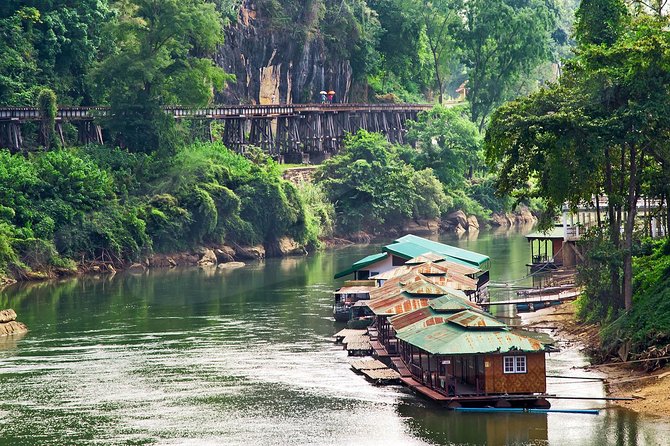
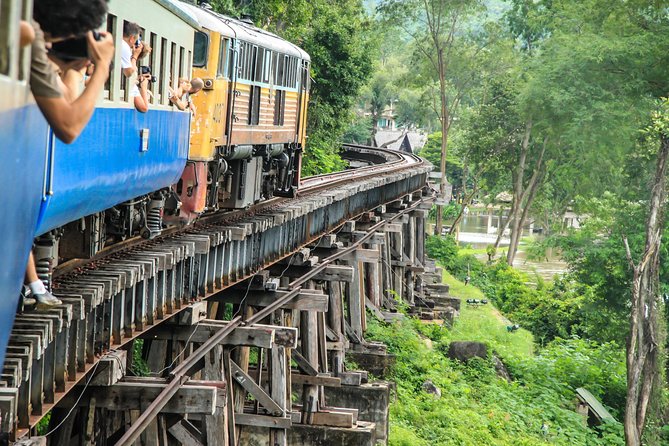
The rail journey is the day’s other major highlight. You board the Death Railway for about 90 minutes, traveling through the jungle and rural countryside in the Kanchanaburi region.
This is not a preserved museum train sitting still for photographs. You ride on an active railway route and see the terrain that made construction so difficult. The track curves through countryside and along sections where rock, hills, and river scenery remind you how demanding the work must have been.
You also get a different view of Thailand. From the coach window, rice fields and farmland replace Bangkok’s traffic and buildings. The ride is scenic, but its meaning remains serious. You are following a route connected to one of the war’s harshest construction projects.
Seats are first come, first served unless you pay for an optional upgrade. For about 200 baht, the upgrade guarantees a seat and includes a cold towel and drinking water. For about 300 baht, you get a guaranteed seat, tea or coffee, water, a cold towel, and a certificate.
The upgrade can be worthwhile if you want certainty after a long day. It is especially useful for anyone who does not want to compete for a preferred seat. Some accounts also mention first-class seating, drinks, sweets, and a certificate as part of the higher-priced option, but confirm the exact offering on the day.
The train is not luxury transport. Expect a working railway experience, not a polished sightseeing carriage. Dust can be an issue, and one guide thoughtfully provided masks for the train ride. Bring practical clothing and keep your expectations focused on the route, scenery, and historical meaning.
Lunch and the value of the package
Lunch is included, along with the air-conditioned vehicle, local guide, long-tail boat, train ride, entrance fees, and selected hotel pickup and drop-off. Beverages are not included.
At $108.17 per person, the tour is not the cheapest way to reach Kanchanaburi, but the price covers a full day of transport and several separate admissions. You would otherwise need to organize the long trip from Bangkok, arrange transport between the cemetery, museum, river, bridge, and railway station, and buy the train ticket yourself.
Lunch quality can shape how the day feels. Some meals take place in a pleasant restaurant, and one account specifically praised the food and setting. Dietary needs may be manageable, but you should explain them to the guide early. One guide arranged an alternate meal for a person with dietary restrictions, though you should not assume every departure will offer the same solution.
The biggest value is convenience. You get a single organized route with a guide, rather than spending your limited Bangkok time working out connections in Kanchanaburi. The tradeoff is less independence and a fixed schedule.
What the guides add to the experience
The guide can make or break a history-heavy day. Betty has been praised for explaining the bridge and helping with photographs. Luck was especially appreciated for her timing and command of the day. Tiny was noted for explaining Thailand and local customs, while Peter was described as entertaining as well as informative. Jenny and Suki also received praise for clear explanations and careful attention to comfort.
Those details point to what you should want from the guide: more than directions and meeting times. A good guide connects the cemetery, museum, bridge, and railway so the day feels like one story. A less communicative guide may leave you wondering what you are passing on the road or why a particular section of track matters.
The experience is conducted in English according to the supplied tour information and guest comments about English-speaking guides. Still, the amount of commentary can vary. If you want detailed historical discussion, ask questions during the coach ride and at the museum rather than waiting for information to appear on its own.
Comfort, pace, and who should book
You need a moderate level of physical fitness. The day includes coach transfers, walking through historic sites, a boat ride, time at the bridge, and boarding a train. Restroom facilities are available, but the schedule is long and early.
I would recommend this tour to you if you want a clear introduction to Kanchanaburi without arranging transport yourself. It suits people interested in military history, railways, World War II, and the human stories behind famous sights. It also works well if you want a day outside Bangkok that combines rural scenery with a serious historical purpose.
You may want another option if you dislike long coach rides, fixed group schedules, or short museum visits. The tour lasts about nine to ten hours, and the distance from Bangkok means the day can feel tiring. It is not designed for a slow, private exploration of each site.
Families and younger visitors can enjoy the boat and train, but the cemetery and wartime subject matter deserve a mature approach. The guide’s explanation can help, yet the tour does not turn the story into light entertainment. The best experience comes when you give the difficult parts proper attention.
Booking details that matter
The tour requires a minimum number of passengers. Even after confirmation, it can be canceled if that number is not reached. In that case, you should be offered another date or experience, or a full refund.
Free cancellation is available up to 24 hours before the start time. Cancellations made less than 24 hours before departure are not refunded, and changes inside that period are not accepted.
Hotel pickup is offered only at selected Bangkok hotels. Check this point before booking, and provide complete hotel details. The activity can accommodate up to 99 people, so ask about the expected group size if that affects your decision.
Should you book the River Kwai tour?
I would book this tour if you have one full day in Bangkok and want to understand why Kanchanaburi matters, not simply pose at the bridge. The cemetery, JEATH museum, river approach, and 90-minute train ride create a strong sequence, and lunch plus transport make the $108.17 price reasonable for a packaged day.
I would hesitate only if you need a relaxed pace or expect a detailed museum collection. The road journey is long, the museum visit is brief, and the train seating may require a small extra payment. For many people, though, the emotional weight of the cemetery and the chance to ride the actual railway make the distance worthwhile.
FAQ
How long does the Bridge on the River Kwai tour last?
The experience lasts approximately nine to ten hours, including the journey from Bangkok to Kanchanaburi and the return trip.
What time does the tour start?
The scheduled start time is 6:30 a.m.
Is hotel pickup included?
Hotel pickup and drop-off are included from selected Bangkok hotels. You must provide your hotel details when booking.
What sites are included?
The tour includes Kanchanaburi War Cemetery, the JEATH War Museum, the River Kwai, the River Khwae Bridge, and a ride on the Thailand-Burma Railway.
Is the train ride included?
Yes. A train ride along the Death Railway is included and lasts about one hour and 30 minutes.
Is the long-tail boat ride included?
Yes. The long-tail boat ride along the Kwai River is included and takes about 20 minutes.
Is lunch included?
Yes. Lunch is included, but beverages are not.
Do I need to pay extra for a train seat?
An optional upgrade costs about 200 baht for a guaranteed seat, drinking water, and a cold towel. An option costing about 300 baht adds tea or coffee and a certificate.
Can I cancel for a full refund?
Yes. You can cancel at least 24 hours before the experience starts for a full refund. Cancellations made less than 24 hours before the start time are not refunded.
Just added around Bangkok
- Damnoen Saduak Floating Market Small Group Tour★ 4.0 · 107 reviews
- Angkor Wat 2-Day Tour from Bangkok★ 5.0 · 8 reviews
- Arrival Private Airport Transfer : Bangkok Airport to Hotel in Bangkok★ 4.5 · 142 reviews
- Private Best of Bangkok Full Day Highlights City Tour★ 4.5 · 13 reviews
- Ancient Wonders of Ayutthaya with Return Scenic River Cruise★ 4.0 · 31 reviews
- Private Ancient city of Ayutthaya Shore Excursion★ 5.0 · 9 reviews
- Ancient City (Mueang Boran) Entrance Tickets With Hotel Transfer★ 4.5 · 14 reviews
- Ancient City Ayutthaya Private Guided Day Tour★ 5.0 · 49 reviews
Train Experiences, compared.
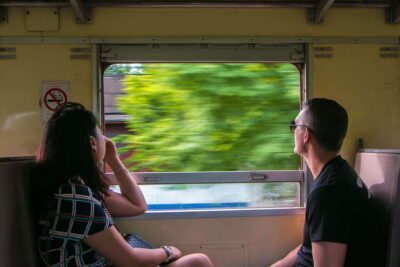
Damnoen Saduak Market and Maeklong Railway Market
Read our review →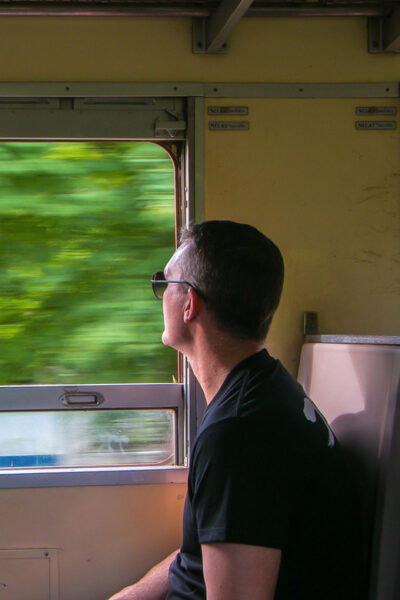
The Old Siam: Damnoen Saduak and Maeklong Railway Market
Read our review →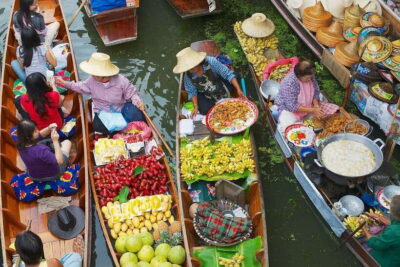
Train Market & Floating Market with Boat Ride
Read our review →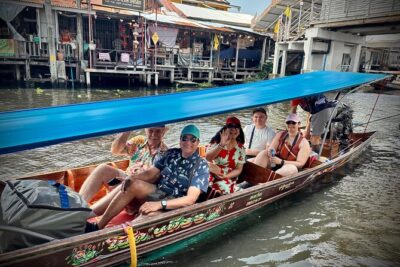
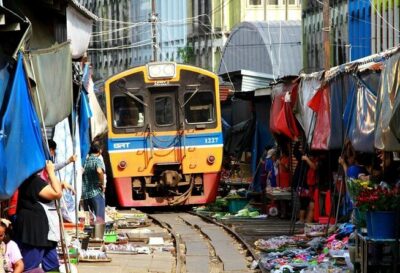
Half-Day Railway Market and Floating Market Tour in Thailand
Read our review →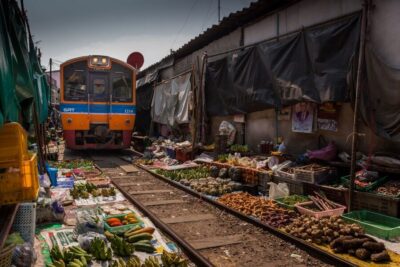
Damnoen Saduak, Train Market & Mahanakhon Day Trip
Read our review →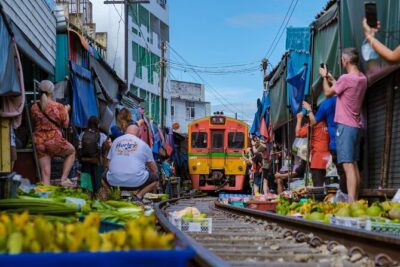
Damnoen Saduak Floating Market and Maeklong Railway Market Tour
Read our review →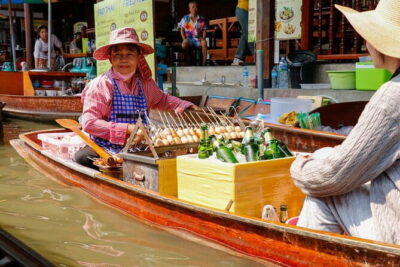
Day Trip to Bangkok Floating Market & Maeklong Railway
Read our review →Browse the lists this tour appears in