
Review · TEMPLE TOURS
Chiang Mai: Temple & City Tour Part II
Chiang Mai’s best temple experience may be the one that takes you beyond the usual postcard stops. This walking tour visits Wat Chiang Man, the city’s oldest temple, then moves through Shan and Burmese Buddhist traditions at Wat Chiang Yuen, Wat Pa Pao, and Wat Ku Tao. Guides including Katoon, Eddy, Son, and Big bring useful personal insight, with some able to explain Buddhism from years spent as monks.
I like two things right away: the route gives you a clearer picture of Chiang Mai’s mixed cultural past, and it leaves time for real questions about prayer, meditation, temple manners, and daily monastic life. The guides also take photographs, help you understand what you are seeing, and sometimes arrange access to quieter temple spaces. The catch is simple: you walk for hours, and the heat can wear you down, especially if you are not used to northern Thailand.
In This Review
- Key points to know before you book
- Why this four-temple walk is worth your morning
- Wat Chiang Man and the beginning of Chiang Mai
- Wat Chiang Yuen and the Shan chapter
- Wat Pa Pao and Shan Burmese design
- Wat Ku Tao and an unusual Burmese chedi
- The guides make the difference
- Buddhism, meditation, and temple manners
- Walking conditions and what to bring
- How it fits with Part One
- Price, group size, and flexibility
- Who should book this temple tour
- Should you book Chiang Mai Temple and City Tour Part II?
- FAQ
- What temples are included in the tour?
- What time does the tour start?
- How long is the experience?
- Is hotel pickup included?
- What languages are available?
- Is the tour private or shared?
- What should I bring?
Key points to know before you book
- Wat Chiang Man dates to 1296, making it the oldest temple in Chiang Mai.
- Wat Chiang Yuen and Wat Pa Pao reveal Shan influence, a side of the city many standard temple walks skip.
- Wat Ku Tao has an unusual chedi, linked to Prince Saravadi, the first Burmese overlord of Chiang Mai.
- Former monks guide some departures, adding practical insight into Buddhism, meditation, and monastic life.
- The route is easy to walk but not short, so bring water, an umbrella, and comfortable clothing.
- Private and small-group options are available, with English, Chinese, and Thai guiding.
Why this four-temple walk is worth your morning
At $31 per person, this is a reasonably priced way to spend a full day learning about Chiang Mai’s temples rather than simply checking them off a list. You are paying for a guide, a planned route, and interpretation that is difficult to get from signs or a quick visit alone.
I especially like the cultural range. The tour is not limited to the most famous temple buildings inside the old city. It connects the early Lanna kingdom with Shan communities and Burmese influence, then uses the temples as a way to explain Buddhism in everyday Thai life.
The listed start time is 8:20 am. That early beginning matters. Chiang Mai can become hot quickly, and a morning walk gives you a better chance of seeing the temples before the strongest heat. Still, the overall experience lasts long enough that you should expect a demanding outing rather than a gentle stroll between two nearby sights.
More Temple Tours in Chiang Mai
- Chiang Rai White Temple and Blue Temple Day Tour
★ 4.6 · 3,366 reviews - Chiang Mai: Doi Suthep and Wat Umong Enchanting Evening Tour
★ 4.6 · 1,811 reviews - Chiang Mai: Doi Suthep, Wat Umong, and Pha Lat Sunrise Tour
★ 4.7 · 1,425 reviews
Wat Chiang Man and the beginning of Chiang Mai
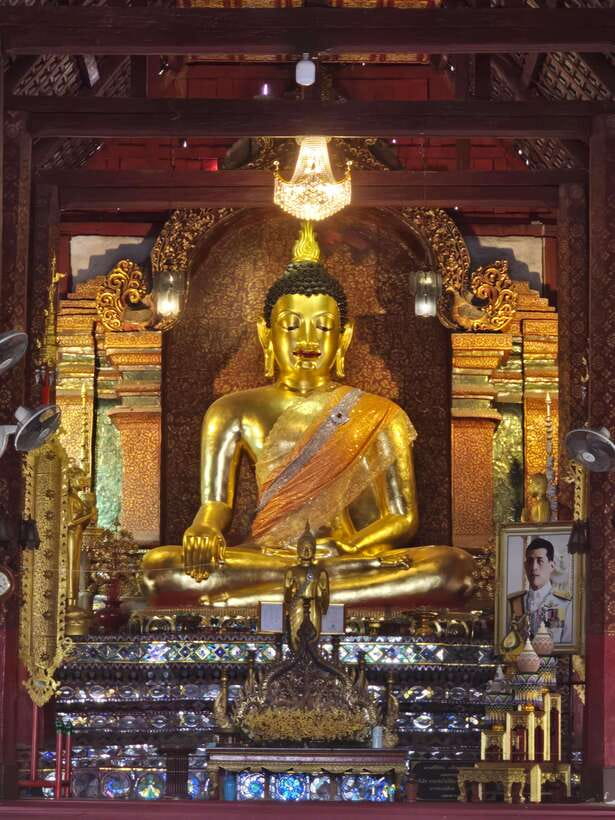
The first stop is Wat Chiang Man, built in 1296 by King Mengrai. It is identified as the oldest temple in Chiang Mai, so this is the right place to begin if you want to understand the city’s origins.
The temple is associated with a crystal Buddha statue, an object that gives the visit a useful focus. Your guide can explain the religious meaning of the image and how Buddhist objects are treated inside a temple. This is much more helpful than simply being told to look at an old statue.
You should also expect guidance on basic temple etiquette. One guide, Keith, described learning how to enter temple buildings properly and how to approach meditation in a simple, practical way. That kind of instruction can make the rest of your day more comfortable, particularly if you are unsure when to remove your shoes, how to dress, or how to behave near worshippers.
Wat Chiang Man is the most obvious historical stop on the route. It may also be the busiest or most familiar-feeling temple of the four, so do not expect every moment to be quiet. Its value is the strong connection to Chiang Mai’s founding period and the way it gives context to everything that follows.
Wat Chiang Yuen and the Shan chapter
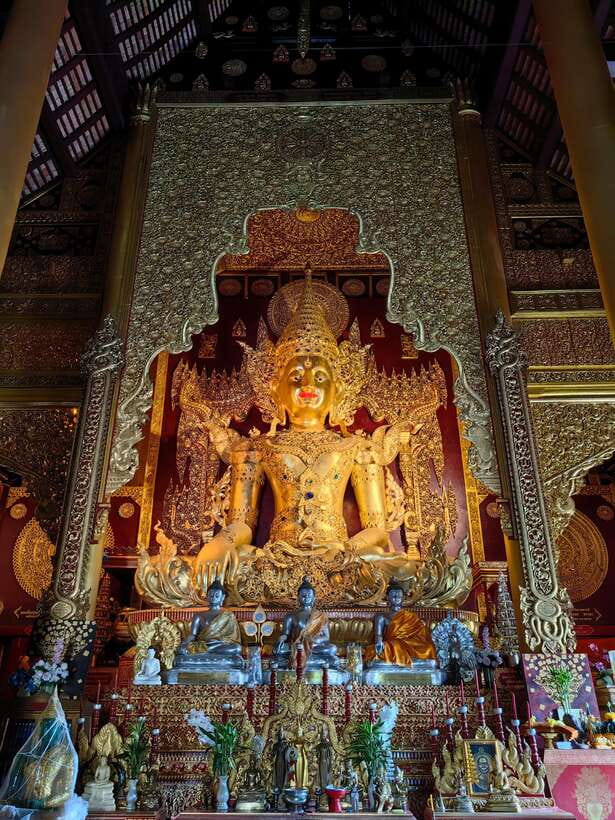
Wat Chiang Yuen offers a different angle. This 16th-century temple sits in an area that once served as a residential district for Shan people. That detail helps explain why Chiang Mai’s religious buildings cannot all be understood through Lanna Thai history alone.
The Shan are an important part of the region’s cultural story, and the temple gives your guide a place to discuss how communities, religious traditions, and political power overlapped. You are not only looking at architecture. You are seeing evidence of the people who lived in the city and shaped its religious life.
This is one reason I would choose a guided walk over visiting the four temples on your own. Without an explanation, Wat Chiang Yuen could look like another attractive Buddhist temple. With context, it becomes a clue to Chiang Mai’s connections with neighboring peoples and cultures.
The walk between stops also matters. You get a sense of the city at street level, rather than moving from one sight to another in an air-conditioned vehicle. That is good for anyone who wants a closer look at daily life, though you should prepare for sun, traffic, uneven walking conditions, and fatigue.
Wat Pa Pao and Shan Burmese design
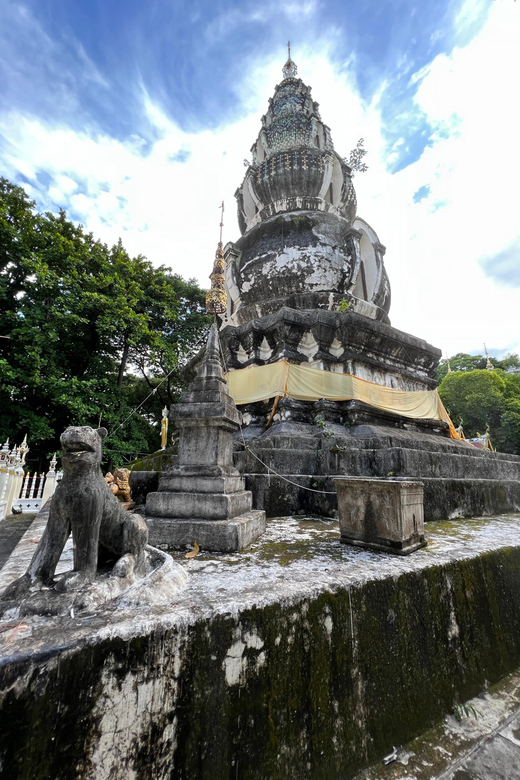
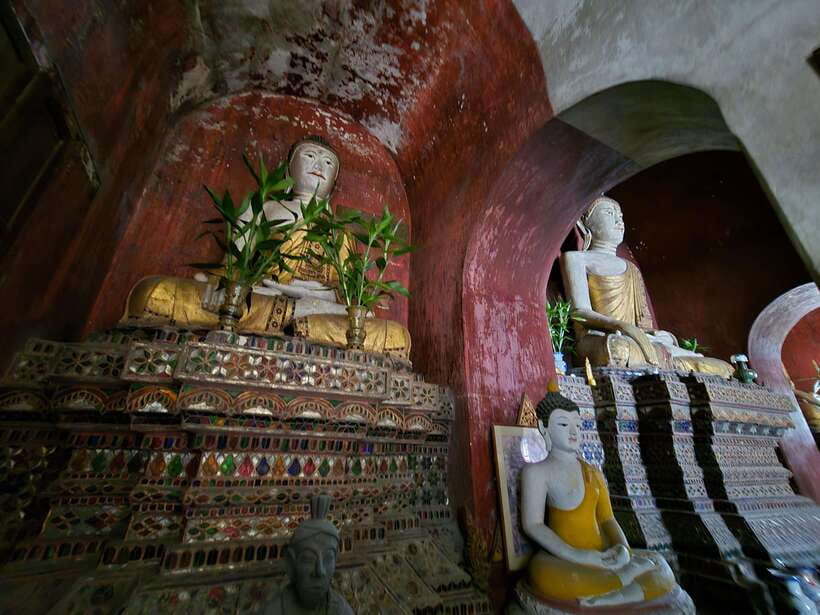
Wat Pa Pao is located outside Chiang Mai’s old city walls and moats. It is described as a Shan Burmese style temple, making it another important stop for understanding the city’s cultural mix.
The building style is the main reason to pay attention here. Your guide can point out details that separate Shan Burmese religious design from the forms you may have already seen at more familiar Thai temples. Those differences are easier to appreciate when someone explains what to look for.
Wat Pa Pao also helps break up the route. After the early Lanna focus at Wat Chiang Man and the community story at Wat Chiang Yuen, this temple shifts your attention toward regional connections. It shows that Chiang Mai was never an isolated mountain city with only one cultural identity.
The available information does not promise food or drink during the walk, and neither is included. Bring your own water and some cash. An umbrella is also a smart choice because it can help with both sun and sudden rain.
Same coastline, a completely different day out:
- Half-Day Thai Cooking Class at Organic Farm in Chiang Mai
★ 5.0 · 19,087 reviews - Chiang Mai: Elephant Sanctuary, Waterfall & Bamboo Rafting
★ 4.9 · 9,160 reviews - Chiang Mai: Doi Inthanon National Park Eco-Friendly Tour
★ 4.6 · 6,667 reviews - Chiang Mai: Elephant Sanctuary & Waterfall Group Tour
★ 4.9 · 5,780 reviews
Wat Ku Tao and an unusual Burmese chedi
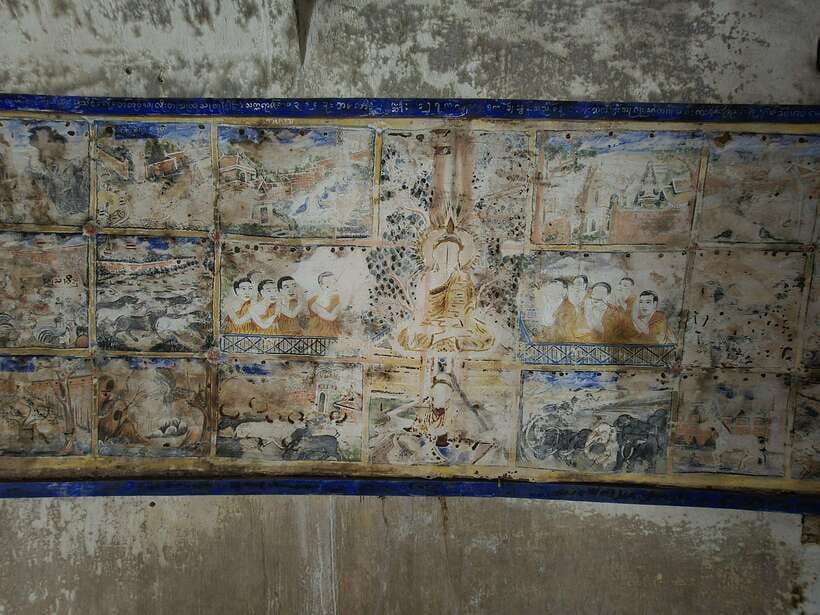
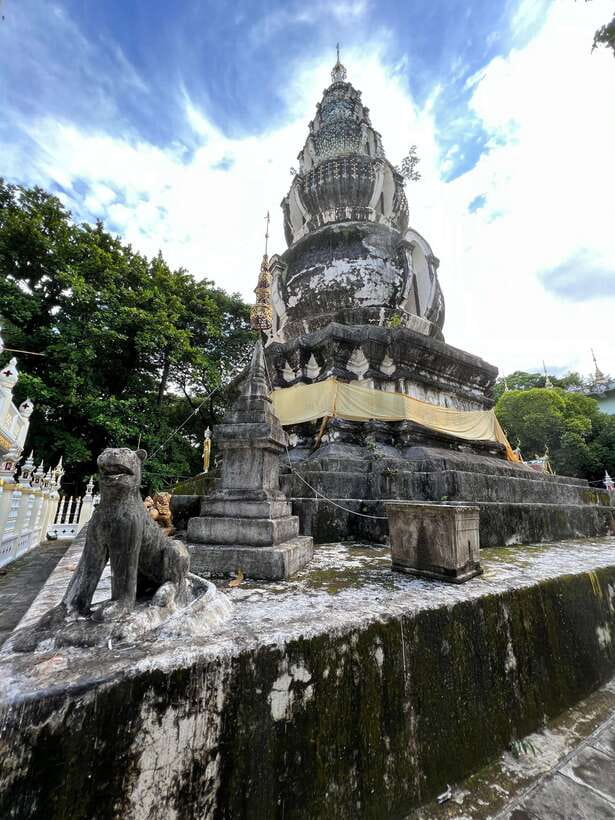
The final temple, Wat Ku Tao, has one of the most distinctive stories on the route. Its unusual chedi is thought to date to 1613 and is linked to the ashes of Prince Saravadi, who ruled as the first Burmese overlord of Chiang Mai.
This stop brings Burmese political influence into the story. It also gives your guide a chance to explain how Chiang Mai’s past involved changing rulers and close links across the region. The chedi’s unusual form makes the history easier to remember because you are connecting a political story to a visible structure.
I would save your questions for this part of the tour. Ask about the Burmese period, the purpose of a chedi, and how memorial structures function in Buddhist settings. The guides are praised for taking time with questions, and that personal exchange is one of the strongest parts of the experience.
Wat Ku Tao is also a good reminder that a temple visit is not only about a main prayer hall. A chedi, image, wall, or smaller shrine can carry much of the site’s meaning. Your guide helps you slow down and notice those pieces.
The guides make the difference
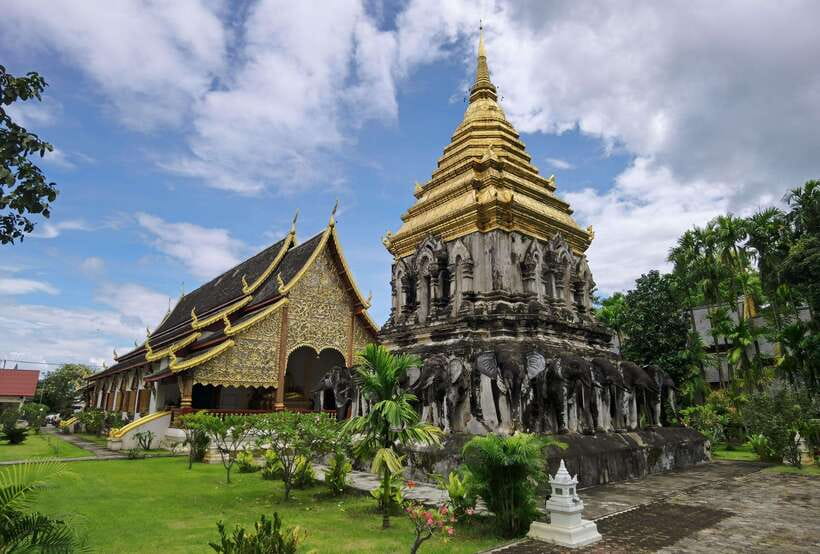
The strongest part of this experience is the guiding. Katoon is repeatedly singled out for his patient explanations of Buddhism, Thai history, Buddha stories, meditation, and monastic life. He spent years as a monk, which gives him personal experience to draw on when explaining how monks live, eat, pray, and study.
That does not mean every departure will have Katoon. Other named guides include Eddy, Son, Big, and Kartoon, and the guiding languages are English, Chinese, and Thai. Eddy is praised for taking photographs and adapting well to individual or group bookings. Son is described as relaxed and generous with his time. Big explains how to pray and discusses the lives of monks.
Guide quality can vary from one person to another, as it can on any guided activity. One note says Big was still working on his English, although his enthusiasm and background as a former monk added value. If precise English explanation is especially important to you, ask about the guide and language before booking.
Some departures remain small even when only one person books. That can turn the walk into a more personal lesson, with extra time for questions. Private and small-group formats are offered, so you can choose the level of attention that suits your budget and travel style.
Buddhism, meditation, and temple manners
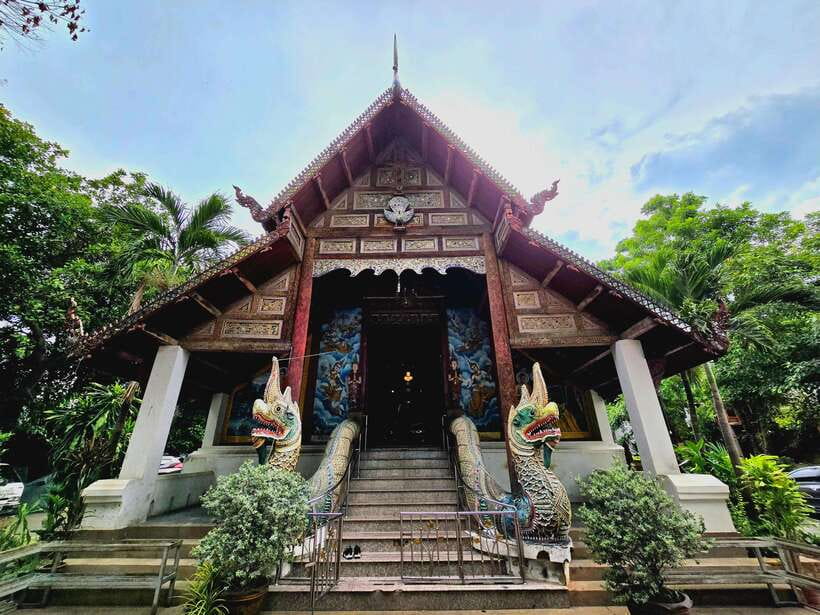
This is not simply an architecture walk. You can expect discussion of Buddhist beliefs and practice, along with explanations of local customs. The guides may show you how to pray, explain meditation, and discuss the stories shown in temple art.
For me, this is where the $31 price makes sense. A self-guided visit costs little, but it may leave you guessing about what people are doing and why. A guide can explain the difference between looking at a Buddha image as art and understanding its religious role.
The tour also seems well suited to curious beginners. You do not need a background in Buddhism to benefit. You can ask basic questions about offerings, monks, meditation, and temple behavior without feeling out of place.
The experience may be less satisfying if you want only quick photographs. Guides tend to spend time explaining the sites, and the point is to build understanding. That is valuable, but it means the day moves at the pace of a lesson rather than a rapid sightseeing circuit.
Walking conditions and what to bring
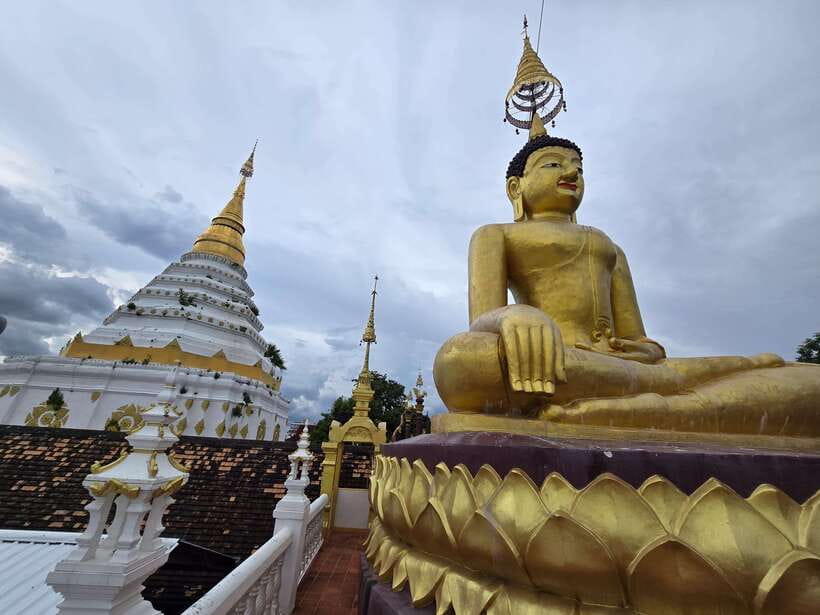
The route is described as relatively easy to walk, but easy does not mean effortless. One participant found the hours on foot difficult, especially after combining this part with the tour’s first part on the same day. Plan on several hours of walking, standing, and listening.
Chiang Mai’s heat is the main practical concern. Wear light clothing that still covers your shoulders and knees for temple visits. Short skirts are not allowed, and modest dress is essential at religious sites.
Bring:
- Water and any snacks you need
- An umbrella
- Cash
- Comfortable walking shoes
- Clothing suitable for entering temples
The activity is not suitable for children under two, babies under one, pregnant women, wheelchair users, or people using electric wheelchairs. Baby strollers are also not allowed. Pets, drones, smoking indoors, alcohol, drugs, weapons, and sharp objects are prohibited.
Hotel pickup and drop-off are included only when you select the private option. For other bookings, check the meeting point carefully. One booking group had trouble with a map code that was difficult for local people and taxi drivers to understand, so I would confirm the exact meeting location in advance rather than relying on a complicated plus code.
How it fits with Part One
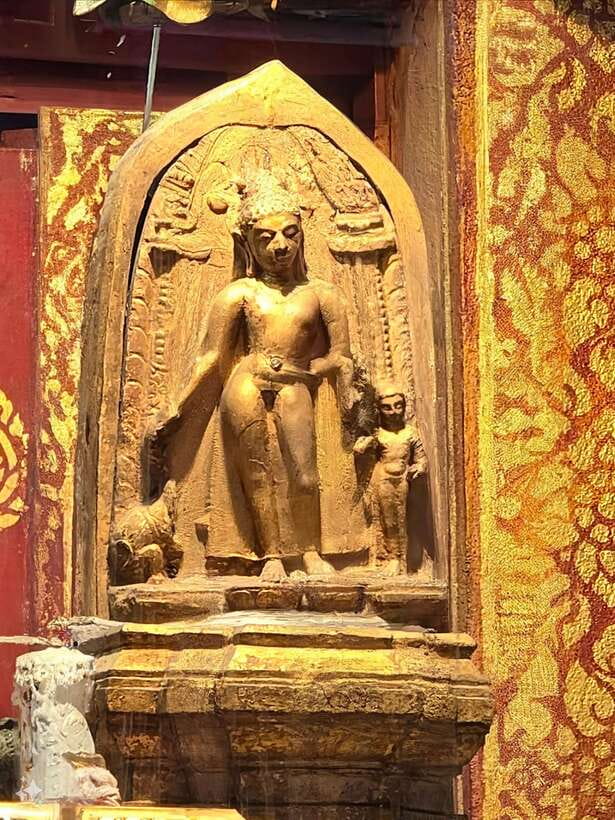
This experience works as a stand-alone temple day, but it can also be added to the provider’s first temple tour. Doing both in one day gives you more Buddhist sites and more time with the guide, but it also creates a serious stamina issue.
A participant who completed both parts in one day found the experience worthwhile but ended the day with very tired feet. I would split the tours across separate days if you want to absorb the explanations and enjoy the temples at a calm pace.
If you have only one day in Chiang Mai, this second part gives you a useful mix of famous origins, Shan culture, Burmese design, and a former ruling dynasty. If you have more time, spreading the walking out will make the experience easier and more rewarding.
Price, group size, and flexibility
At $31, the tour offers good value for a guided walking day, especially if you care about history, religion, and local culture. The price does not cover food or extra drinks, so budget a little more for refreshments.
Private and small-group choices give you flexibility. A private departure can be useful if you want hotel pickup, photographs, or a slower pace. A small group may offer a lower cost while still allowing questions.
Free cancellation is available up to 24 hours before the activity for a full refund, and you can reserve now and pay later. The activity is valid for one day, with starting times shown according to availability. These policies make it easier to fit the walk into a changing Chiang Mai schedule.
Who should book this temple tour
I would recommend it to you if you want more than a list of temple names. It suits first-time visitors who want an introduction to Buddhism, as well as repeat visitors who have already seen the standard sights and want less familiar places.
It is especially useful for:
- People interested in Thai, Shan, and Burmese culture
- Visitors who want direct explanations of Buddhist practice
- Solo visitors who value a small, personal group
- Photographers who appreciate help finding and framing temple details
- Anyone considering the first and second temple tours together
I would hesitate if you dislike walking in heat, need step-free access, or want a short sightseeing outing. It is also not the right choice for anyone hoping for included meals or drinks.
Should you book Chiang Mai Temple and City Tour Part II?
Book it if you want a thoughtful, educational walk that explains why these temples matter. The strongest reason to go is the guide, particularly if you are paired with someone such as Katoon, whose former monastic life adds a personal layer to discussions of Buddhism and Thai culture.
The route is also a smart choice for seeing parts of Chiang Mai’s Shan and Burmese past that are easy to miss. Bring water, dress properly, confirm the meeting point, and protect your morning from other strenuous plans. With those precautions, this $31 experience offers far more than four temple photographs.
FAQ
What temples are included in the tour?
The tour visits Wat Chiang Man, Wat Chiang Yuen, Wat Pa Pao, and Wat Ku Tao.
What time does the tour start?
The listed start time is 8:20 am. Available starting times should be checked when booking.
How long is the experience?
The activity lasts one day and involves several hours of walking between temple visits.
Is hotel pickup included?
Hotel pickup and drop-off are included if you select the private option.
What languages are available?
Guiding is available in English, Chinese, and Thai.
Is the tour private or shared?
Private and small-group options are available.
What should I bring?
Bring an umbrella, drinks, and cash. Comfortable clothing suitable for temple visits is also important.
Just added around Chiang Mai
- Taste of Chiang Mai: Michelin Guide & Street Food Tour★ 4.9 · 159 reviews
- Red, Blue, White Temples & Hot Spring Trip from Chiang Mai★ 4.4 · 143 reviews
- From Chiang Mai: Mae Taeng Valley and Waterfalls Cycle Tour★ 4.9 · 159 reviews
- Long Neck Village, Silver Temple & Chiang Mai Top Sites★ 4.7 · 17 reviews
- Chiang Mai: Local Northern Thai Cooking Class at Grandma’s★ 5.0 · 33 reviews
- Chiang Mai: Khum Khantoke Northern Thai Cuisine and Show★ 4.3 · 38 reviews
- Private : Sticky Waterfall & Secret Temple & Karen Village.★ 5.0 · 9 reviews
- Half-day with CHIANGMAI ELEPHANT CARE program (12pm-6pm.)★ 5.0 · 27 reviews
Temple Tours, compared.
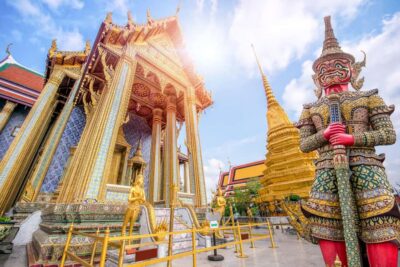
City Highlights Temple and Market Walking Tour
Read our review →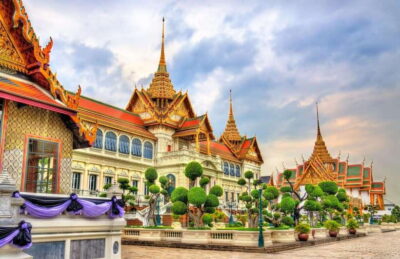
Grand Palace, Wat Pho, and Wat Arun Guided Tour
Read our review →
Tiger Cave Temple, Emerald Pool and Hot Springs Tour
Read our review →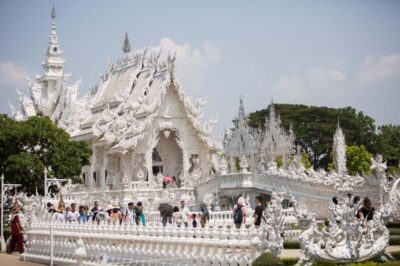
Chiang Rai White Temple and Blue Temple Day Tour
Read our review →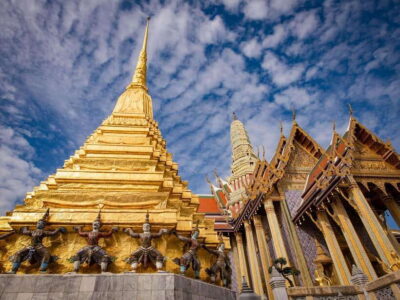
Grand Palace and Wat Phra Kaew Guided Walking Tour
Read our review →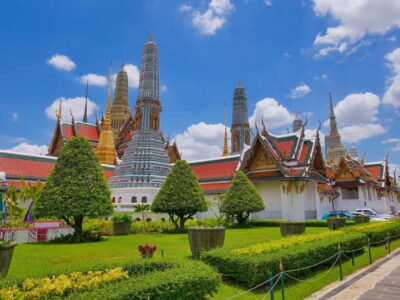
Grand Palace, Wat Pho, Wat Arun Sacred & Local Tour
Read our review →
Doi Suthep and Wat Umong Enchanting Evening Tour
Read our review →
Browse the lists this tour appears in