
Review · HISTORICAL TOURS
Old Town History and Culture Walking Tour at Chiang Mai
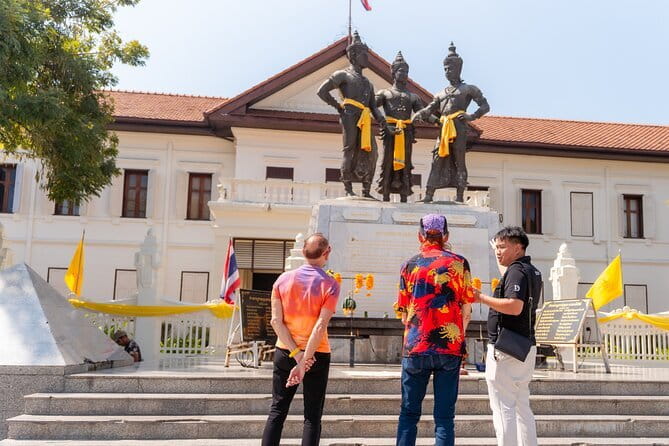
Chiang Mai’s old town makes the most sense on foot, and this compact tour gives you a clear route through its royal and religious center. You begin at the Three Kings Monument, then enter Wat Phra Singh and Wat Chedi Luang, two of the city’s most important temples.
I like the small maximum of eight people, which should make it easier to hear the guide and ask questions. I also like the thoughtful handling of religious customs, including asking before offering a monk’s blessing. The main concern is guide consistency: one poor review reported hard-to-understand English and repeated explanations, while other experiences praised guides such as Khun Bim for clear, warm instruction.
In This Review
- Key points
- A short walk through Chiang Mai’s Lanna past
- Starting at the Three Kings Monument
- Wat Phra Singh and the details of Lanna design
- Walking to Wat Chedi Luang
- Wat Chedi Luang’s ruined chedi and living traditions
- How much value do you get for $15?
- Guide quality matters more than the low price
- Who should book this old-town walk?
- Practical advice before you meet the guide
- Should you book the Chiang Mai walking tour?
- FAQ
- How long does the Old Town History and Culture Walking Tour last?
- Where does the tour begin?
- Where does the tour finish?
- Which temples are included?
- Is an English-speaking guide included?
- Are temple entrance fees included?
- Is transportation from my hotel included?
- How many people can join the tour?
- Is bottled water included?
- Can I cancel for a full refund?
Key points
- Three Kings Monument orientation: Learn why King Mangrai matters and how Chiang Mai began as the center of the Lanna Kingdom.
- Wat Phra Singh for one full hour: See Lanna architecture, the Lai Kam assembly hall, murals, and a pagoda linked with people born in the Year of the Dragon.
- Wat Chedi Luang up close: Explore a 14th-century temple complex known for its large ruined chedi and religious importance.
- Small-group format: The tour accepts no more than eight people, a useful size for temple explanations and questions.
- Cultural choices are respected: You may be offered a monk’s blessing, but the guide asks first rather than assuming you want to take part.
- Simple, useful inclusions: Entrance fees, bottled water, travel insurance, and, according to one detailed experience, a fried-banana snack are covered.
A short walk through Chiang Mai’s Lanna past
This is a history and culture walk rather than a broad city tour. In two and a half hours, you stay inside or close to Chiang Mai’s old town and focus on three linked places: the Three Kings Monument, Wat Phra Singh, and Wat Chedi Luang.
That focus works well for a first morning or afternoon in Chiang Mai. You get the basic story of the old kingdom, see two major temples, and finish with a better sense of why the old town remains the city’s cultural core.
The route is also easy to understand. You meet at the Three Kings Monument and finish at Wat Chedi Luang, with a short walk between the two temple stops. There is no hotel pickup or drop-off, so you need to make your own way to the starting point and arrange your onward transport after the tour.
The tour costs $15 per person. That is a modest price for a licensed-style sightseeing experience that includes temple admission, an English-speaking guide, water, and insurance. If you planned to visit both temples anyway, the main value comes from having someone explain the symbols, buildings, and local traditions as you go.
A few more Chiang Mai trips to weigh up
- Chiang Mai: Historic Temples and City Guided Walking Tour
★ 4.7 · 650 reviews - Chiang Mai: Historic Old City Bike Tour – Morning or Night
★ 4.7 · 263 reviews - Chiang Mai: Historic Old City Bike Tour – Morning or Night
★ 5.0 · 202 reviews
Starting at the Three Kings Monument
The Three Kings Monument is more than a meeting point. It gives the guide a useful place to explain the beginnings of Chiang Mai and the Lanna Kingdom before you enter the temples.
The monument presents three rulers, with King Mangrai in the middle. King Mangrai is identified as the first king of the Lanna Kingdom and the founder of Chiang Mai. That opening matters because the temples make more sense once you understand that Chiang Mai was built as the center of a northern Thai kingdom with its own artistic and religious traditions.
You spend about 30 minutes here. The guide provides a safety briefing, then introduces the monument and its meaning. This is a good time to ask practical questions about the walking route, temple etiquette, or anything you want to understand before entering the sacred sites.
The only caution is pacing. One experience found the opening explanation too long and repetitive, especially when communication with the guide was difficult. A strong guide should move from introductions to the first temple fairly quickly, since Wat Phra Singh is where the visual details become more engaging.
Still, this first stop gives the tour a useful frame. Instead of looking at isolated old buildings, you begin with the people and kingdom that shaped them.
Wat Phra Singh and the details of Lanna design
The first temple stop is Wat Phra Singh, described as the second most revered temple in Chiang Mai. It dates to 1346 and is presented as a fine example of Lanna architecture, the northern Thai style associated with the former kingdom.
You have about one hour here, and admission is included. That is enough time for the guide to point out the main buildings without forcing you into a hurried photo stop.
The Lai Kam assembly hall is a major reason to visit. Its murals are among the temple’s key artistic features, and your guide can give them context that is easy to miss when you walk through alone. You will also see the pagoda and the temple grounds, both of which connect the site to local beliefs and traditions.
The tour description gives special attention to people born in the Year of the Dragon. That detail adds a personal angle to the visit. If you were born under that zodiac sign, you may find the guide’s explanation especially interesting. Even if you were not, it shows how temples function as living religious places, not only as old monuments.
I like the amount of time assigned here. An hour allows you to look at the murals, architecture, and grounds while still keeping the tour moving. The drawback is that the stop may feel brief if you want quiet time for photography or private prayer. The group has another temple ahead, and this is a guided overview rather than an open-ended temple visit.
Dress and behavior matter at both temples. The provided information does not specify a formal dress code, but these are active religious sites, so modest clothing and respectful conduct are sensible. Listen to the guide’s instructions, especially around worship areas and any blessing ceremony.
Walking to Wat Chedi Luang
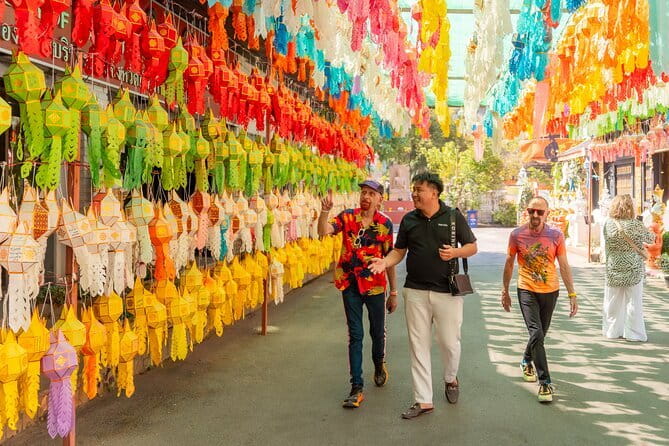
After Wat Phra Singh, the group takes a short walk to Wat Chedi Luang. This transition is part of the appeal. You are not being driven between disconnected attractions, and the route lets you experience the old town at street level.
The tour does not give a precise walking distance, so you should expect ordinary city walking rather than a long hike. The total program lasts about two and a half hours, with roughly 30 minutes at the monument and one hour at each temple. That leaves time for the walk, explanations, and the final cultural activity.
The small group size helps here. With a maximum of eight people, the guide can usually keep the group together without the shuffle of a large coach excursion. It also gives you a better chance to hear explanations while walking and to ask about buildings or customs along the way.
Because the route ends at Wat Chedi Luang, this is a useful tour to pair with other old-town plans afterward. You are not returned to your hotel, and no transfer is included. Check your map before booking so you know how you will reach the starting monument and where you want to go after the final stop.
Same coastline, a completely different day out:
- Half-Day Thai Cooking Class at Organic Farm in Chiang Mai
★ 5.0 · 19,087 reviews - Chiang Mai: Elephant Sanctuary, Waterfall & Bamboo Rafting
★ 4.9 · 9,160 reviews - Chiang Mai: Doi Inthanon National Park Eco-Friendly Tour
★ 4.6 · 6,667 reviews - Chiang Mai: Elephant Sanctuary & Waterfall Group Tour
★ 4.9 · 5,780 reviews
Wat Chedi Luang’s ruined chedi and living traditions
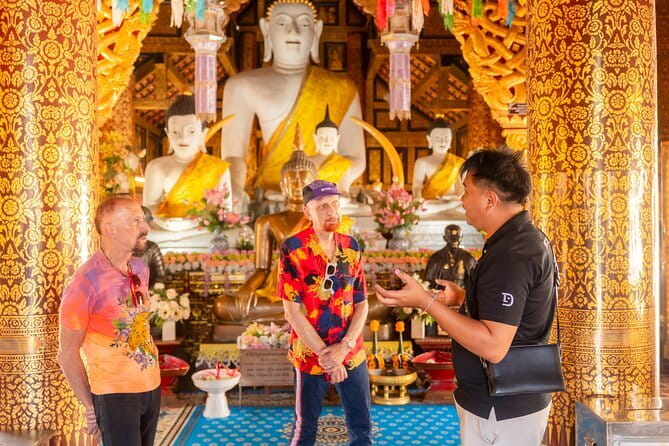
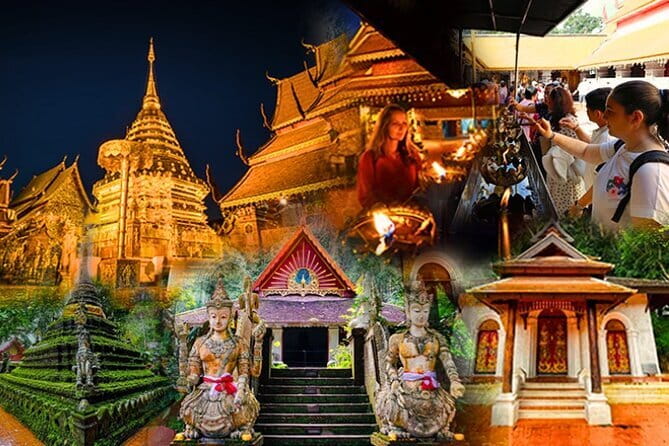
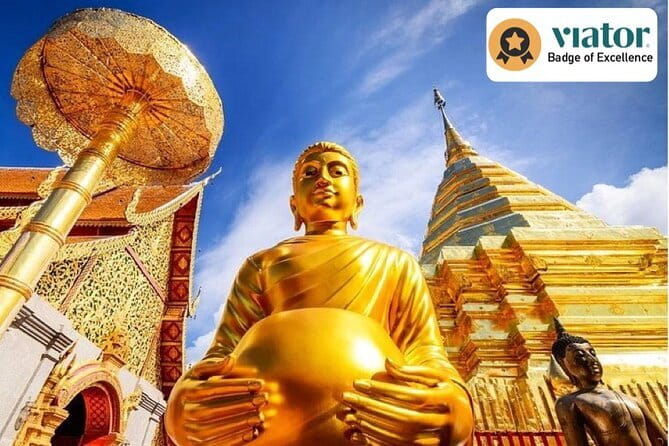
Wat Chedi Luang Varavihara is the final and longest stop, with about one hour inside the complex. The site dates to the 14th century and is known for the remains of a large chedi, giving the visit a different feel from Wat Phra Singh.
Wat Phra Singh is especially useful for Lanna design and murals. Wat Chedi Luang brings you closer to monumental ruins and the long changes that have shaped Chiang Mai’s religious buildings. The temple was restored by UNESCO in the 1990s, according to the tour information, and remains popular with both local people and international visitors.
The guide also provides an opportunity to listen to talks by monks. This is one of the strongest reasons to choose a guided visit instead of simply walking through the grounds alone. A monk can offer a perspective on Thai Theravada Buddhism that goes beyond architecture and dates.
One particularly thoughtful part of the experience is the option of receiving a monk’s blessing for luck. The guide asks if you want to take part, which respects the fact that not everyone wants to join a religious practice outside their own tradition. You can appreciate the explanation without participating.
A past guide named Khun Bim was praised for speaking excellent English and for explaining Thai Theravada Buddhism in a way that added something even to someone with many years of experience in another Buddhist tradition. That is the kind of guide-led detail that can turn a familiar temple visit into a more useful cultural lesson.
The temple is also where the tour ends, so you can take more time on your own afterward only if you make separate plans. The official two-hour stop allocation is part of the guided experience, not a promise of unlimited time inside the complex.
How much value do you get for $15?
At $15, this tour is priced for people who want a low-cost introduction rather than a private, highly tailored day. I see the value in the way the fee bundles several small costs: both temple entrance fees, an English-speaking guide, bottled water, and travel insurance.
One detailed experience also included donations and a fried-banana snack. Because that item is not listed among the standard inclusions, I would treat it as a possible extra rather than something to book solely for.
The strongest financial argument is the guide. Admission tickets alone are not the whole point of the tour. You are paying for a route, explanations, cultural context, and the chance to hear from monks. If you would otherwise enter both temples without understanding the murals, architecture, or Buddhist customs, the fee is sensible.
The price does not include hotel pickup or drop-off. That keeps the cost low, but it shifts the transport planning to you. The starting point is the Three Kings Monument on Prapokklao Road, and the finish is Wat Chedi Luang on the same road area in the old town.
The tour is usually booked about 15 days ahead. That suggests you should reserve early if your Chiang Mai dates are fixed, especially since the group limit is only eight people. Confirmation is provided at booking, and free cancellation is available if you cancel at least 24 hours before the start time.
Guide quality matters more than the low price
The experience depends heavily on the person leading it. Several guides have received strong praise for friendliness, clear English, cultural sensitivity, punctuality, and a comfortable pace.
Khun Bim is one name associated with especially strong Buddhist explanations. Another highly rated experience described a guide who started and finished on time, spoke English well, and kept the pace balanced so the group did not feel rushed or bored.
Kitty is another guide name connected with the tour, though one poor experience found the communication difficult and the opening explanations repetitive. The provider responded by noting the need to improve guide training, equipment, and preparation.
That mixed picture is worth taking seriously. A temple walk is not like a boat ride where the scenery carries most of the experience. You will spend much of the time listening, so clear speech and good organization matter.
The small group is a helpful safeguard, but it cannot guarantee that every guide will suit every ear. If detailed historical explanation is your main reason for booking, you may want to confirm the guide arrangements before paying, since the supplied information does not promise a particular guide.
Who should book this old-town walk?
I would choose this experience if you are visiting Chiang Mai for the first time and want a simple introduction to the old town without committing to a full-day program. The two-and-a-half-hour length leaves room for lunch, shopping, rest, or another activity.
It suits you especially well if you enjoy cultural explanation but do not want a large group. The maximum of eight people is a real advantage for questions and temple etiquette.
It also suits anyone curious about Buddhism. The monk talks and optional blessing give the final stop more meaning than a basic photo visit, while the guide’s explanation of Lanna culture adds local context.
Families and older participants may find the short route manageable, since most of the program stays within the old town. Still, the supplied information does not promise specific accessibility arrangements, so you should ask the provider directly if you need assistance with walking, steps, or temple surfaces.
I would be less keen if you have already spent several days studying Chiang Mai’s temples or strongly prefer exploring alone. The route is compact and focuses on two major temple complexes. You can visit them independently, and one past experience felt the tour added too little beyond a self-guided visit.
Practical advice before you meet the guide
Start by planning the arrival carefully. The meeting point is the Three Kings Monument, listed at QXRP+3WX, Prapokklao Road, in the Si Phum area of Chiang Mai. The tour ends at Wat Chedi Luang Varavihara, listed at 103 Prapokklao Road.
Bring a phone with your booking confirmation because the ticket is mobile. Bottled water is included, but you may still want additional water in warm weather. The tour takes place on foot, so comfortable shoes are more useful than anything formal.
Give yourself time to arrive. A late start can affect a small group more than a large one, and the first 30 minutes include the safety briefing and the opening story about King Mangrai.
Think about the religious parts before you arrive. You can listen to the monk talks and decide for yourself if you want a blessing. The guide’s practice of asking first is helpful, but you should still feel free to decline politely.
For cancellations, you receive a full refund if you cancel at least 24 hours before the local start time. Changes or cancellations inside that window are not accepted for a refund.
Should you book the Chiang Mai walking tour?
Book it if you want an affordable, focused introduction to Chiang Mai’s old town, especially if this is your first visit. The route is sensible, the temples are important, the group is capped at eight, and the cost covers the basic extras that can quietly add up.
I particularly like the contrast between Wat Phra Singh’s Lanna art and Wat Chedi Luang’s monumental ruins. The monk talks and optional blessing also give the experience a human and religious dimension that a simple self-guided stroll may miss.
The decision comes down to your expectations. If you want a polished, highly specialized guide every time, the uneven guide feedback is a reason to ask questions before booking. If you want two and a half hours of useful orientation for $15, with entrance fees included and no complicated transport between stops, this is a good-value choice.
FAQ
How long does the Old Town History and Culture Walking Tour last?
The tour lasts approximately 2 hours and 30 minutes.
Where does the tour begin?
It begins at the Three Kings Monument on Prapokklao Road in Chiang Mai’s Si Phum area.
Where does the tour finish?
The tour finishes at Wat Chedi Luang Varavihara.
Which temples are included?
The tour includes Wat Phra Singh and Wat Chedi Luang Varavihara.
Is an English-speaking guide included?
Yes. An English-speaking guide is included.
Are temple entrance fees included?
Yes. All entrance fees are included.
Is transportation from my hotel included?
No. Hotel pickup and drop-off are not included.
How many people can join the tour?
The tour has a maximum of eight travelers.
Is bottled water included?
Yes. Bottled water is included.
Can I cancel for a full refund?
Yes, if you cancel at least 24 hours before the experience starts. Cancellations made less than 24 hours before the start time are not refunded.
Just added around Chiang Mai
- Chiang Mai Zipline White Water Rafting and Elephant Sanctuary★ 4.0 · 11 reviews
- Chiang Mai Airport Private Transfer – Hotel or Airport★ 4.5 · 51 reviews
- Zipline Adventure at Skyline Jungle Luge Chiang Mai★ 5.0 · 102 reviews
- Trek to a Jungle Waterfall★ 5.0 · 14 reviews
- Long Neck Village, White & Blue Temple, Black House Day Tour From Chiang Mai★ 4.0 · 14 reviews
- 2 Hours Wow hatcha lanna package – Free transportation★ 5.0 · 31 reviews
- Zipline+Sticky waterfall+Long Neck Village Private Tour★ 5.0 · 22 reviews
- Authentic Thai Cooking Class and Farm Visit in Chiang Mai★ 5.0 · 66 reviews
Historical Tours, compared.
UNESCO’s Ayutthaya Historical Park: Full-Day Tour from Bangkok
Read our review →
Historical City of Ayutthaya – Unesco Full Day Tour From Bangkok
Read our review →
Private Excursion to Floating Market and Ayutthaya World Heritage
Read our review →
Private Excursion to Ayutthaya, UNESCO World Heritage site with Boat Tour
Read our review →Browse the lists this tour appears in