
Review · TRAIN EXPERIENCES
Private Historic River Kwai Death Railway, War Cemetery and Hellfire Pass Tour
The most powerful part of this day is Hellfire Pass, where a rough walking trail leads into a railway cutting made by Allied prisoners of war and Asian laborers during World War II. The visit is quiet, stark, and far more affecting than a quick look at a bridge could ever be.
I like the private setup, which gives you room to ask questions and adjust the pace. I also like that the day joins several important sites together, including the Kanchanaburi War Cemetery and Tham Kra Sae, rather than treating the famous bridge as the whole story. The drawback is the distance from Bangkok. With an early start and a long drive each way, this is a serious full-day outing.
In This Review
- Key points at a glance
- Why this 10-hour journey matters
- Kanchanaburi War Cemetery: a quiet first stop
- Hellfire Pass and the two-hour memorial trail
- The Death Railway Museum and Research Centre
- Tham Kra Sae Bridge and the POW camp cave
- Walking across the Bridge over the River Kwai
- What the private vehicle adds
- Lunch, cost, and the question of value
- Who should book this day trip?
- Useful planning details before you go
- Should you book the River Kwai tour?
- FAQ
- How long does the River Kwai Death Railway tour last?
- What time does the tour start?
- Is hotel pickup available?
- Is this a private tour?
- Is lunch included?
- Are entrance fees included?
- How much walking is involved?
- Is bottled water provided?
- Can I cancel for a full refund?
Key points at a glance
- Hellfire Pass takes about two hours, including the interpretive centre and memorial walking trail.
- The private vehicle and guide make the long journey from Bangkok more comfortable and personal.
- Nearly 7,000 Allied prisoners of war are buried at Kanchanaburi War Cemetery.
- Lunch, bottled water, entrance fees, and hotel transfers are included, so you do not need to organize much on the day.
- Guides such as Nan and Peter have been praised for making the history clear and keeping the day well organized.
- A moderate fitness level is needed, especially for the Hellfire Pass walking trail and the railway sections.
Why this 10-hour journey matters
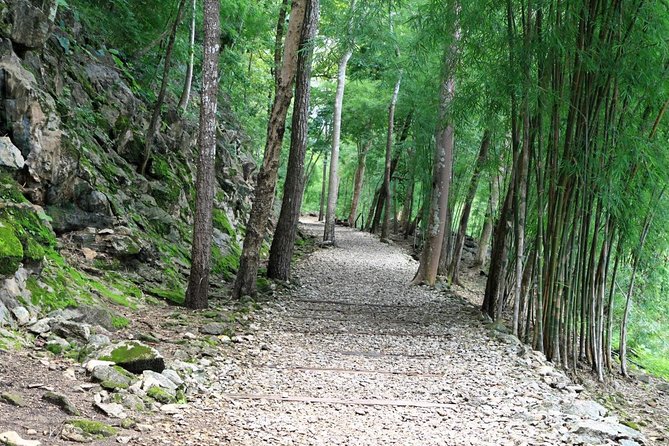
The River Kwai area is not just a scenic day trip from Bangkok. It is one of Thailand’s most important World War II sites, tied to the construction of the Thai-Burma Death Railway under brutal wartime conditions.
The railway was built by Allied POWs and large numbers of Asian laborers. The work caused enormous loss of life. This tour gives you several ways to understand that story: a cemetery, a museum, a memorial trail, a railway section, and two bridges connected with the project.
I appreciate that the order of the day moves from remembrance to physical evidence. You begin at the cemetery, walk through Hellfire Pass, then see pieces of the railway itself. By the time you reach the famous bridge, it feels less like a photo stop and more like one part of a much larger and darker story.
You leave Bangkok at about 6:30 am. That early departure is not glamorous, but it makes sense. Kanchanaburi is a long way from Bangkok, and the trip can take much of the day. One account of the outing described roughly three hours of driving each way, though traffic can affect the timing.
A few more Bangkok trips to weigh up
- Bangkok: Damnoen Saduak Market and Maeklong Railway Market
★ 4.5 · 26,723 reviews - The Old Siam: Damnoen Saduak and Maeklong Railway Market
★ 4.5 · 10,992 reviews - Bangkok: Train Market & Floating Market with Boat Ride
★ 4.7 · 9,547 reviews
Kanchanaburi War Cemetery: a quiet first stop
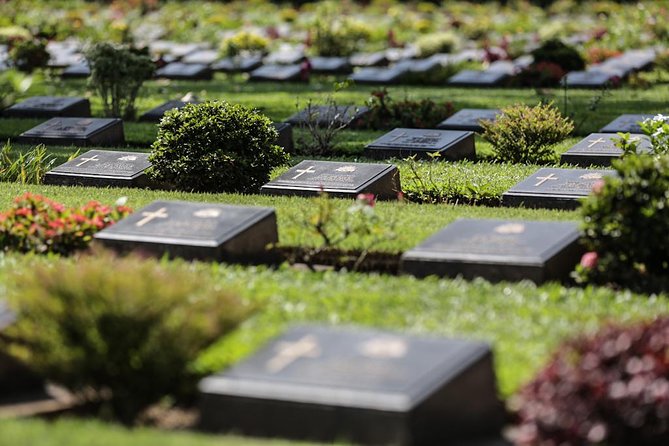
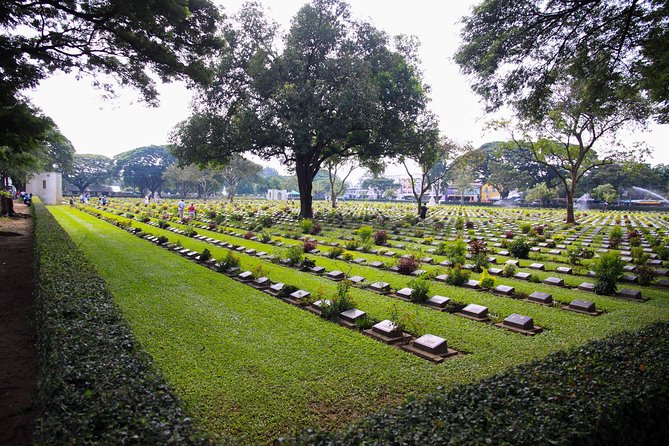
The Kanchanaburi War Cemetery contains the graves of 6,982 Allied POWs who died during construction of the Thai-Burma Death Railway. It is a carefully maintained memorial park, with rows of marked graves and a calm setting that encourages you to slow down.
Your visit here lasts about 30 minutes, with no separate admission charge. That may sound brief, but it is enough time to walk through the grounds, read the names, and absorb the scale of the loss before moving on.
I like beginning here because it puts people before engineering. The bridges, railway, and cutting are memorable physical sites, but the cemetery reminds you that every statistic represents an individual life. You will get more from the later stops if you give this first one your full attention.
The short stop may feel rushed if you want to read many inscriptions. Your private format helps somewhat, since your guide can respond to questions without waiting for a large group. Still, if you prefer long, unhurried museum visits, you should know that this is a packed day.
Hellfire Pass and the two-hour memorial trail
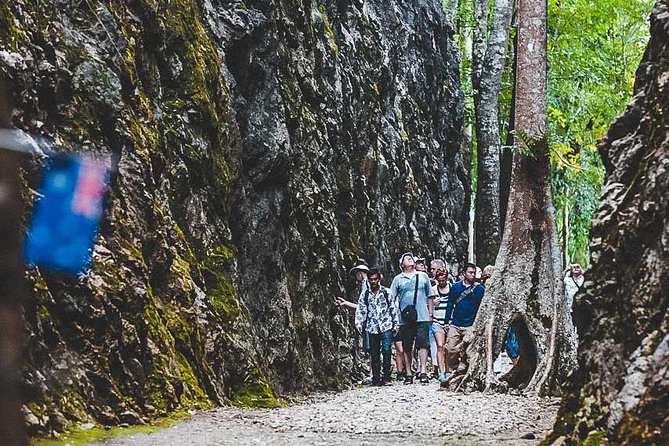
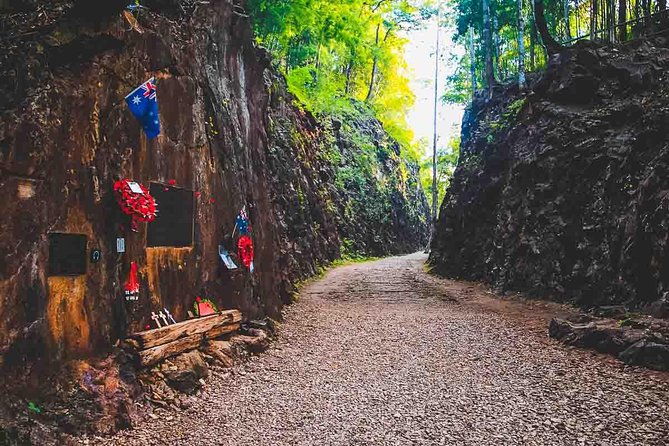
Hellfire Pass is the emotional center of the tour. Here, prisoners cut a railway passage through rock by hand and with limited tools during the war. The cutting cost the lives of more than 16,000 Allied prisoners, along with countless Asian laborers.
You spend about two hours at the Hellfire Pass Interpretive Centre and Memorial Walking Trail. The centre provides the historical background, while the trail takes you into the cutting itself. That combination is useful: first you learn what happened, then you see the physical conditions for yourself.
The walking section is not simply a pleasant stroll beside old railway lines. The ground can be uneven, and the tour information calls for a moderate fitness level. Wear practical shoes and expect to walk outdoors. Bottled water is included, which is helpful in Thailand’s heat, but you should still dress for a warm day.
The best part of Hellfire Pass is its scale. Photographs and written accounts can explain the work, but standing beside the rock cutting gives you a direct sense of how difficult the project was. The memorial trail also creates a quieter mood than the bridge stops later in the day.
Your guide’s role matters here. A good explanation can connect the cutting, the POW camps, the railway project, and the human cost. Nan was praised for making the visit informative and eye-opening, while Peter was described as both friendly and well organized. Guide quality can vary, but the private format gives you a better chance to ask for context instead of simply following a flag through the site.
The Death Railway Museum and Research Centre
The Death Railway Museum and Research Centre adds another layer of background after Hellfire Pass. You spend about 30 minutes here, and admission is included.
This stop is useful if you want names, dates, and an explanation of how the railway was planned and built. It also helps tie together the separate places you have already seen. Without that connection, the cemetery, cutting, cave, and bridges can feel like unrelated points on a long route.
The itinerary describes a walk connected with the notorious Death Railway. You should not expect a long railway trek here. The stop is short, so use the time to focus on the displays and ask your guide about details that were not clear at Hellfire Pass.
This is one reason the tour can be worth more than hiring a driver alone. You can reach the sites independently, and several stops have no separate entry fee. But a driver generally gets you from place to place without explaining how the locations fit together. If history is the reason you are making the journey, that difference matters.
Same coastline, a completely different day out:
- From Bangkok: Ayutthaya Temples Guided Tour with Lunch
★ 4.7 · 10,535 reviews - From Bangkok: Ayutthaya & Ayothaya Floating Market Day Trip
★ 4.7 · 6,084 reviews - Bangkok Canal Tour: 2-Hour Longtail Boat Ride
★ 4.5 · 5,909 reviews - Bangkok: Muay Thai Boxing Tickets at Rajadamnern Stadium
★ 4.9 · 4,740 reviews
Tham Kra Sae Bridge and the POW camp cave
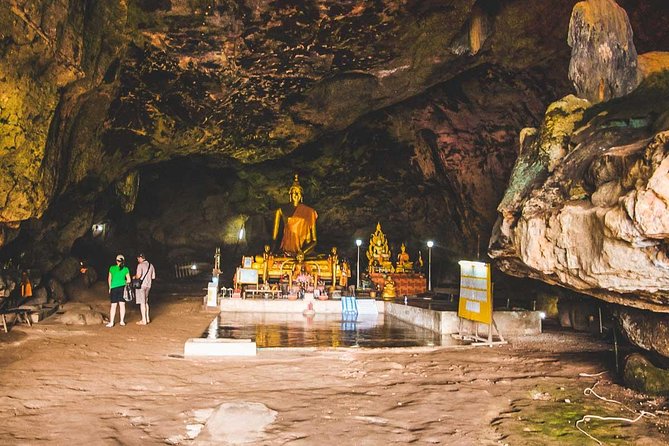
Tham Kra Sae is a brief 15-minute stop. The site includes a cave with a Buddha image inside, and the cave was formerly used as a POW camp during construction of the railway.
This is a compact visit, not a major museum stop. You will have time to see the cave and understand its connection to the railway project, but not to linger for a long spiritual or archaeological visit.
The location adds variety to the day. After the cemetery and the interpretive centre, you see a place connected with daily camp life and the railway route itself. It is a reminder that the project was not built in an empty wilderness. People lived and worked along these sections under terrible conditions.
The short timing is the main limitation. If you want a detailed explanation of the cave or a long walk along the railway, this tour does not promise that. Think of Tham Kra Sae as a concise historical stop within a much larger day.
Walking across the Bridge over the River Kwai
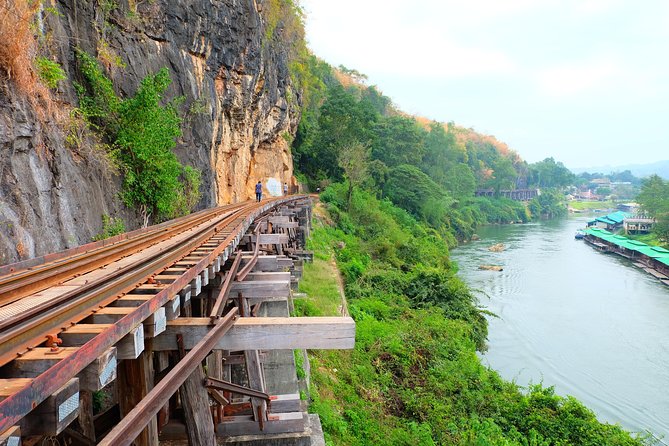
The final major stop is the famous River Khwae Bridge, also widely known as the Bridge over the River Kwai. You spend about one hour here, with time to walk along the iron bridge and take in its wartime connection.
This is the most recognizable stop, and it is likely to be the place where you take the most photographs. The bridge is worth seeing, but it can also be the easiest place to misunderstand the story. Its fame comes from the railway and the conflict surrounding it, not simply from its shape or river setting.
I like having the bridge at the end of the route. By this point, you have visited the cemetery and Hellfire Pass, so the bridge is no longer just a famous name. You understand that it represents one section of a railway built through severe suffering.
Allow yourself to walk slowly and listen to your guide. The bridge stop lasts an hour, which is longer than the cave visit and enough for a proper look. Even so, the experience depends on your expectations. If you want a dramatic preserved wartime structure with extensive original equipment, you may find the visit more modest than its reputation suggests.
What the private vehicle adds
The tour includes hotel transfers in an air-conditioned vehicle, private transportation, and a professional guide. For a 10-hour trip from Bangkok, this is a major practical benefit.
You do not have to find your own way to Kanchanaburi, arrange separate transfers, or manage several local rides between sites. Air conditioning also matters when you are moving between outdoor stops in Thailand’s heat.
The private setup is more than a comfort upgrade. You can ask questions as they arise, take a little more time at a place that interests you, and avoid the fixed rhythm of a large coach group. The tour is for your group alone, though the exact vehicle size is not specified.
There is also a simple traffic issue. Bangkok and the road to Kanchanaburi can make a 10-hour schedule feel longer. An experienced driver can help, and one account specifically praised the driver for handling Thai traffic well. Still, you should not book this expecting a relaxed half-day outing.
Lunch, cost, and the question of value
The price is $162.40 per person. That is not the cheapest way to see the area, especially because the War Cemetery, Death Railway Museum and Research Centre, Tham Kra Sae Bridge, and River Khwae Bridge are listed with no separate admission charge.
You could hire a driver for the day and visit several of the same places for less. That is a fair comparison, particularly if you are comfortable reading the site information yourself and arranging lunch independently.
The tour earns part of its price through convenience. You get hotel transfers, a private air-conditioned vehicle, a guide, lunch, bottled water, and included entrance fees. You also avoid the work of building a route across a large region. For one or two people, the per-person cost may feel high. For a small group splitting the private vehicle cost, the value improves.
The bigger question is how much interpretation you want. If your main aim is transport and photographs, a driver may be enough. If you want the sites explained as one connected historical experience, the guide is the reason to choose this tour.
Lunch is included, so you do not need to pack food. The exact meal is not specified, and personal expenses are not included. Bring money for anything outside the stated package.
Who should book this day trip?
I would recommend this experience to you if you are interested in World War II history and want more than the famous bridge. The cemetery and Hellfire Pass give the tour its purpose, while the railway and bridge provide the physical setting.
It also suits anyone who values privacy and direct transport. Families, couples, and small groups can ask questions without worrying about a larger group’s schedule. Guides named Nan and Peter have been singled out for being friendly, informative, and attentive, though you should not assume you will receive the same guide unless the operator confirms it.
You should think twice if you dislike early starts, long road journeys, or walking on uneven ground. The day lasts about 10 hours, and the trip can involve roughly three hours of driving each way. The moderate fitness requirement is important, especially at Hellfire Pass.
This is also not the best pick if your interest is only the bridge. You are paying for a full historical route, and the most meaningful stop is the one that requires the most attention and walking.
Useful planning details before you go
The start time is 6:30 am, with hotel pickup offered. Confirmation is normally provided when you book, although bookings made within two days of departure may be confirmed within 48 hours and remain subject to availability.
Wear comfortable walking shoes and clothing suitable for a warm outdoor day. The tour includes bottled water, but you should still prepare for several hours away from your hotel.
Free cancellation is available if you cancel at least 24 hours before the local start time. Cancellations or changes made within 24 hours are not accepted for a refund.
The tour is rated 4.6 from 12 ratings, with 92 percent recommending it. That is a positive signal, but the small number of ratings means I would treat it as useful guidance rather than a guarantee. The clearest pattern is that the tour works best when you want historical explanation, private transport, and a full day devoted to Kanchanaburi.
Should you book the River Kwai tour?
Book it if you want the full historical context, not just a quick bridge visit. Hellfire Pass and the War Cemetery are the heart of the day, and the private guide can help you connect the places in a way that a self-drive visit may not.
Skip it if your budget is tight, you prefer to explore independently, or you want a short outing from Bangkok. The attractions can be visited with a hired driver, and some have free admission, so the tour’s value depends heavily on how much you want the guide and all-in-one planning.
For most history-minded visitors, I think the private format is the sensible choice. It turns a long, complicated day into a clear route through Kanchanaburi’s most important World War II sites. Just start early, bring patience for the road, and give Hellfire Pass the time and respect it deserves.
FAQ
How long does the River Kwai Death Railway tour last?
The tour lasts approximately 10 hours.
What time does the tour start?
The stated start time is 6:30 am.
Is hotel pickup available?
Yes. Hotel transfers are offered in an air-conditioned vehicle.
Is this a private tour?
Yes. Only your group participates in the private tour or activity.
Is lunch included?
Yes. Lunch is included in the tour price.
Are entrance fees included?
Yes. Entrance fees are included. Several stops are also listed with no separate admission charge.
How much walking is involved?
The tour includes a walking trail at Hellfire Pass and walks along sections of the Death Railway and the River Khwae Bridge. A moderate level of physical fitness is recommended.
Is bottled water provided?
Yes. Bottled water is included.
Can I cancel for a full refund?
Yes, if you cancel at least 24 hours before the experience start time. Cancellations or changes made less than 24 hours in advance are not refunded or accepted.
Just added around Bangkok
- 1.5 – 2 hour afternoon SUP class for all ages and levels★ 5.0 · 35 reviews
- Erawan Waterfall & Train Tour from Kanchanaburi – Full Day★ 4.0 · 16 reviews
- Cycling in rural Kanchanaburi area★ 5.0 · 12 reviews
- Kanchanaburi Tour: Erawan Waterfall and Death Railway★ 5.0 · 13 reviews
- 1.5 – 2 hour morning SUP boarding class for all ages and levels★ 5.0 · 13 reviews
- Yoga in the Park Thailand★ 5.0 · 12 reviews
- re:leaf spa and massage★ 4.0 · 10 reviews
- Visit temples in and around Bangkok with a former monk of 10 years★ 5.0 · 30 reviews
Train Experiences, compared.

Damnoen Saduak Market and Maeklong Railway Market
Read our review →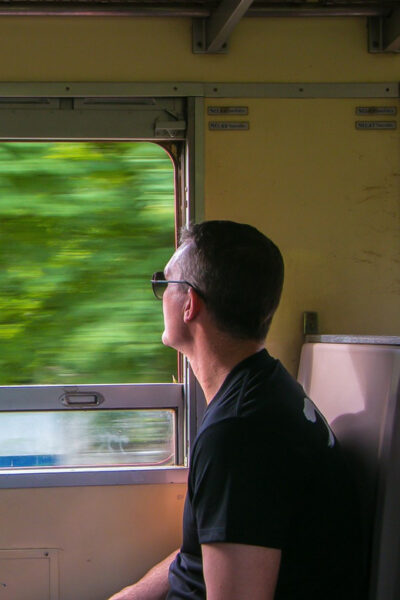
The Old Siam: Damnoen Saduak and Maeklong Railway Market
Read our review →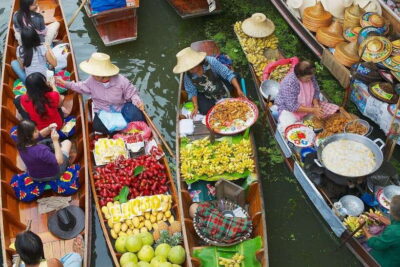
Train Market & Floating Market with Boat Ride
Read our review →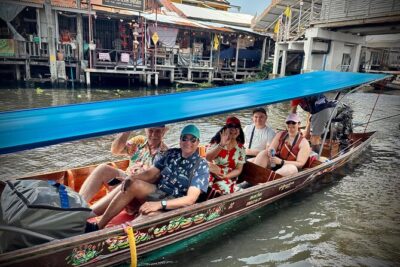
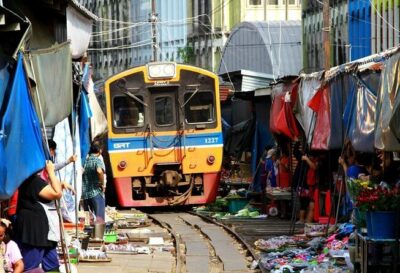
Half-Day Railway Market and Floating Market Tour in Thailand
Read our review →
Damnoen Saduak, Train Market & Mahanakhon Day Trip
Read our review →
Damnoen Saduak Floating Market and Maeklong Railway Market Tour
Read our review →
Day Trip to Bangkok Floating Market & Maeklong Railway
Read our review →Browse the lists this tour appears in