
Review · TRAIN EXPERIENCES
Private Tour: Thai–Burma Death Railway Bridge on the River Kwai from Bangkok
The most moving part of this River Kwai day trip is the way it links quiet graves, wartime photographs, the famous bridge, and a real train journey along the Death Railway. You are not simply stopping for a photo. You are following the route through Kanchanaburi that gives the story a human scale.
I like the private format, which gives you room to ask questions and adjust the pace at the stops. I also like the boat approach to the bridge, followed by the train ride through the countryside. The drawback is clear: this is a nine-hour day with roughly two and a half to three hours of driving each way, and Bangkok traffic can make the return even longer.
In This Review
- Key points to know before booking
- Why the River Kwai deserves a full day from Bangkok
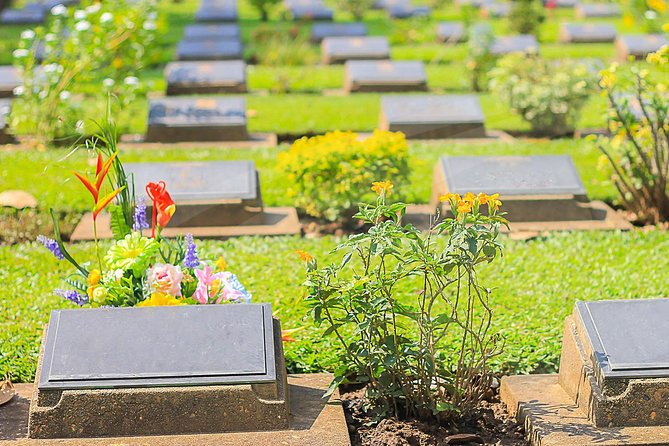
- A quiet beginning at Kanchanaburi War Cemetery
- JEATH War Museum and the human cost of the railway
- Approaching the bridge by long-tail boat
- Walking across the River Khwae Bridge
- Riding the Death Railway through the countryside
- Lunch after the train ride
- The private vehicle and the long road home
- How good is the guiding?
- Is $168.69 per person good value?
- Who should book this Kanchanaburi tour?
- Should you book it?
- FAQ
- How long does the tour last?
- What time does the tour start?
- Is hotel pickup included?
- Is this a private tour?
- What transport is provided?
- Is the train ride included?
- Are entrance fees included?
- Is lunch included?
- Are alcoholic drinks included?
- Can most people participate?
- Can I cancel for a full refund?
Key points to know before booking
- The day begins at 6:30 am, helping you get out of Bangkok before the worst traffic.
- The long-tail boat ride approaches the bridge from the water, a more memorable view than arriving only by road.
- The Kanchanaburi War Cemetery and JEATH War Museum give the train ride its proper historical setting.
- A train ride on the Death Railway is included, along with entrance fees, bottled water, and lunch.
- Private transport means only your party joins the tour, useful for families, couples, or small groups.
- The journey is long, so this suits you best if the history matters more than having a relaxed day.
Why the River Kwai deserves a full day from Bangkok
Kanchanaburi lies about 130 kilometers west of Bangkok, but the road time can feel much greater than the map suggests. Bangkok traffic is unpredictable, and the return journey has been reported at about three and a half hours on a difficult day.
That is the price of seeing this part of Thailand from Bangkok. You leave the city behind and pass through rural scenery with rice paddies, sugar cane, and pineapple fields. The countryside is a useful contrast to the dark subject ahead, and the early departure helps make the first leg more manageable.
The tour is built around remembrance rather than entertainment. The bridge is famous because of its place in wartime history and popular culture, but the cemetery and museum prevent the visit from becoming just a film location stop. I recommend giving yourself time to read, listen, and think at each place.
The overall rating is 4.4 from 172 reviews, which fits the experience well. The strongest parts are usually the guide, driver, boat ride, train ride, and careful handling of the history. The weaker points are the long road journey, occasional problems with spoken English, and lunch that may feel too adapted for international tastes.
A few more Bangkok trips to weigh up
- Bangkok: Damnoen Saduak Market and Maeklong Railway Market
★ 4.5 · 26,723 reviews - The Old Siam: Damnoen Saduak and Maeklong Railway Market
★ 4.5 · 10,992 reviews - Bangkok: Train Market & Floating Market with Boat Ride
★ 4.7 · 9,547 reviews
A quiet beginning at Kanchanaburi War Cemetery
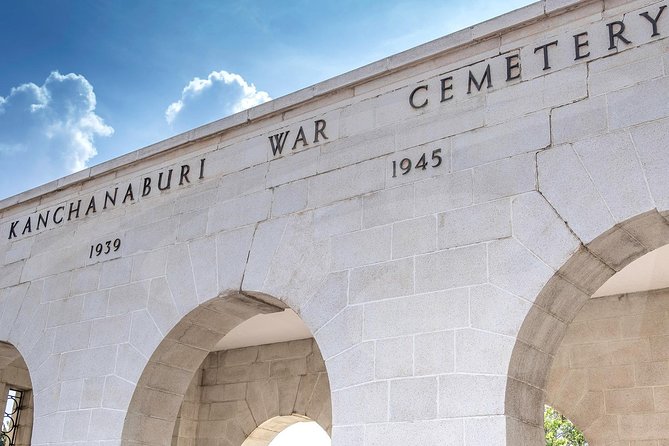
The first main stop is the Kanchanaburi War Cemetery, visited for about 30 minutes with admission included. This is the main prisoner of war cemetery for those who died during Japanese imprisonment and the construction of the Burma Railway in the Second World War.
The cemetery is a sober place. Rows of graves make the scale of the suffering easier to grasp than a general history lesson can. You can expect your guide to explain the connection between the cemetery, the railway, and the forced labor used to build it.
Thirty minutes is enough for a focused visit, but it is not a long, unhurried period. If you like reading every inscription or taking time alone, you may wish the stop were longer. Still, placing the cemetery first gives the whole day a serious purpose before you reach the bridge.
This is also where a good guide matters most. Guides such as Betty and Pearl were praised for explaining the cemetery and surrounding area clearly, while other experiences were held back by limited English. Since the tour is private, ask questions early and tell your guide what level of historical detail you want.
JEATH War Museum and the human cost of the railway
The JEATH War Museum follows the cemetery, with about 30 minutes set aside. Its focus is the construction of the Death Railway and the conditions faced by prisoners of war during the project.
The museum is small, so do not expect a huge national institution. Its value comes from the photographs and accounts that show what the railway meant for the people forced to build it. After the cemetery, the displays help connect names on graves with the daily reality of camps, labor, illness, and harsh treatment.
I would treat this stop as a compact introduction rather than the entire story. The timing is fairly tight, and the museum may feel limited if you already know a great deal about the railway. If you are new to the subject, though, it gives you useful background before the boat and train rides.
The order works well. First you see the resting place of those who died. Then you encounter material about how the railway was built. By the time you reach the bridge, you understand why it carries such emotional weight.
Approaching the bridge by long-tail boat
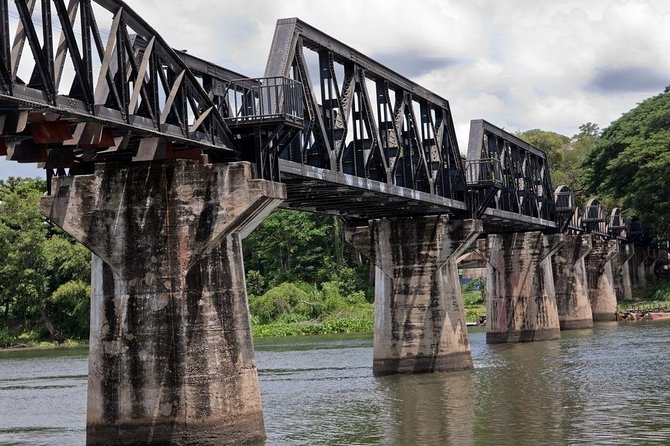
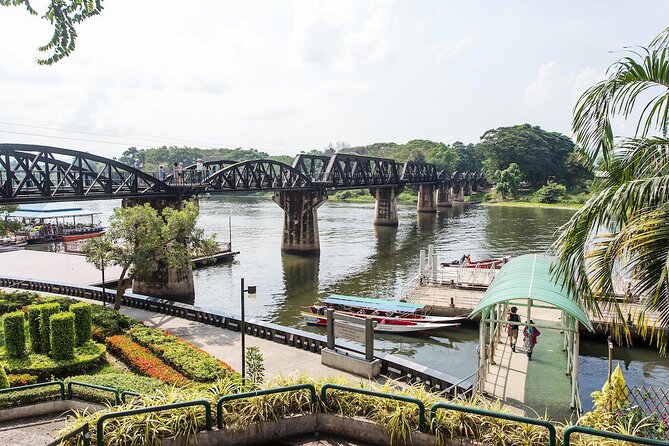
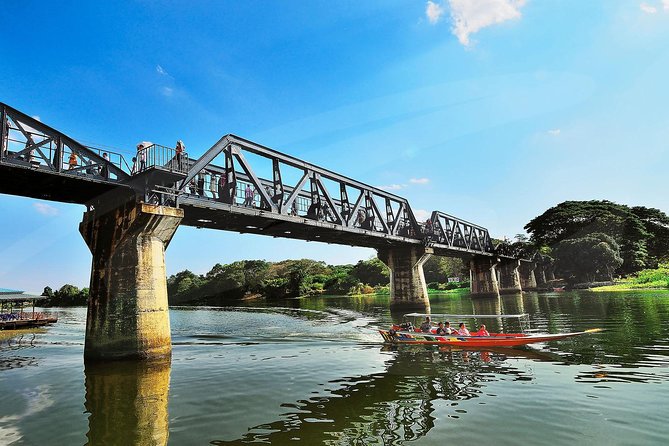
The 15-minute long-tail boat ride is one of the tour’s most distinctive features. Instead of arriving at the River Kwai Bridge only by car, you travel on the water and pass beneath the bridge.
The ride is brief, but the approach gives you a changing view. The bridge appears ahead as you move along the river, and you can see its structure from below before walking near it. For many people, this is the visual highlight of the day.
The boat is also a welcome change after the drive. You trade the enclosed vehicle for open water and a short, direct look at the bridge. Do not expect a long river cruise. This is a transfer and viewpoint, not a leisurely afternoon on the river.
Bring your camera, but remember why you are here. The bridge is photogenic, yet the cemetery and museum give the photographs meaning. The guide may continue explaining the site, or you may have some freedom to look around once you arrive.
Same coastline, a completely different day out:
- From Bangkok: Ayutthaya Temples Guided Tour with Lunch
★ 4.7 · 10,535 reviews - From Bangkok: Ayutthaya & Ayothaya Floating Market Day Trip
★ 4.7 · 6,084 reviews - Bangkok Canal Tour: 2-Hour Longtail Boat Ride
★ 4.5 · 5,909 reviews - Bangkok: Muay Thai Boxing Tickets at Rajadamnern Stadium
★ 4.9 · 4,740 reviews
Walking across the River Khwae Bridge
At the bridge, you have about 20 minutes. The structure is a poignant reminder of the prisoners of war and forced laborers who lost their lives during the railway’s construction.
You can walk on or near the bridge and take in the river from above. It is a simple experience, but that is part of its appeal. The bridge is not an elaborate attraction with a large visitor complex. Its power comes from its location, its wartime story, and the knowledge that trains still use the railway.
The name can cause confusion. In popular English usage, this is usually called the Bridge on the River Kwai, while the river is also written as Khwae. The tour uses both forms, so do not worry if you see slightly different spellings.
Twenty minutes should cover a walk and photographs, but you will not have unlimited time. If the bridge is crowded, be patient and follow the guide’s timing. The point is not to linger for hours, but to see the bridge in relation to the river and the wider railway route.
Riding the Death Railway through the countryside
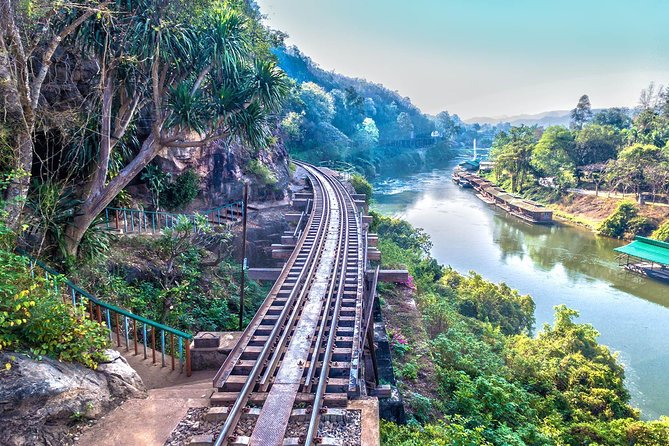
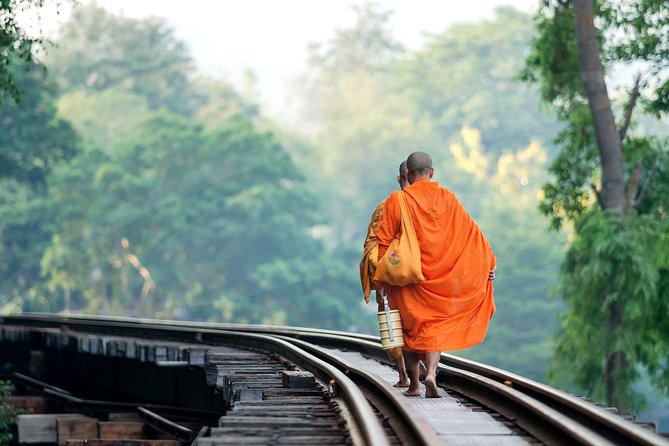
The train ride is the longest scheduled activity, at about one and a half hours including the railway experience. You board a train and travel along the Death Railway through the jungle and rural parts of the region.
This is more than a scenic rail trip. After the cemetery, museum, and bridge, the train helps you understand the physical challenge of the route. You are moving through the same broad region associated with the wartime railway, rather than viewing it only from a museum platform.
The train is a major reason to book this tour. Several people rated the ride as one of the best parts of the day, while one person felt that such a long drive was too much for a train trip. Both reactions make sense. If you love railways or wartime history, the ride adds real value. If you want a broad sightseeing tour of Kanchanaburi, you might prefer more time at other sites.
Your guide should continue pointing out facts and places of interest during the journey. Pearl was singled out for keeping the historical explanation going on both the road and train sections. The private setup can also help if you want to ask about the railway, the bridge, or the countryside without competing with a large group.
Lunch after the train ride
After the train, your guide takes you to a restaurant for a Thai meal. Lunch is included, as are admission fees and bottled water.
The amount of food can be generous, but the style may not satisfy everyone looking for strongly traditional Thai cooking. One assessment found the lunch too Westernized and basic, despite the pleasant setting and good service. Another found it very good, with plenty of food to choose from.
That difference is worth keeping in mind. Lunch is a useful, included break after the train ride, but it should not be the main reason you choose this experience. If you have dietary needs, tell the operator in advance. A guide made sure a gluten-free request was handled, which is encouraging, but the supplied information does not promise a particular menu.
Alcoholic drinks are not included. The tour does include bottled water, so you do not need to arrange that separately.
The private vehicle and the long road home
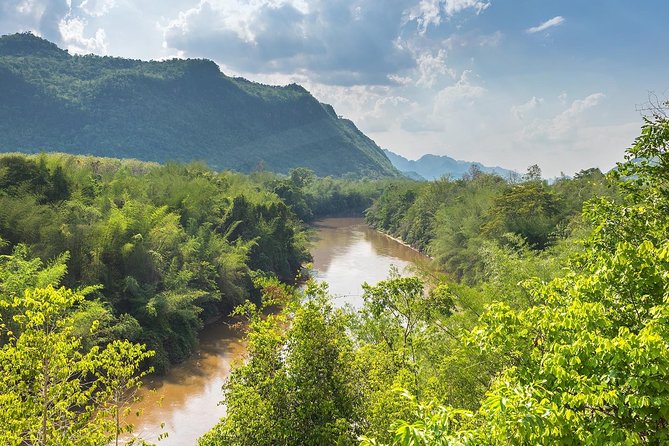
Pickup and drop-off are offered at selected Bangkok hotels. The vehicle is air-conditioned, and the driver is responsible for the substantial road sections between Bangkok and Kanchanaburi.
A private vehicle is a meaningful advantage here. You avoid collecting a busload of people from many hotels, and your group can travel with more personal space. A private tour also lets you ask for comfort stops when needed. One small group specifically appreciated being able to stop during the long journey.
The driver matters almost as much as the guide. Bangkok traffic can be difficult, especially on the way back, and several positive experiences praised drivers for being safe, prompt, and familiar with the roads. Early pickup is practical because traffic is often lighter at that hour.
Still, the vehicle is where you will spend much of the day. One unhappy assessment described the experience as roughly four hours of sightseeing and six hours in the car, mainly because of traffic. Bring water, keep expectations realistic, and consider downloading something to read or listen to for the return trip.
How good is the guiding?
The guide can make or break this tour. The best experiences involved guides who explained the cemetery, museum, bridge, and railway in clear English and kept conversation going during the long drive.
Names praised in individual accounts include Betty, Jenny, Luk, and Pearl. Pearl was especially noted for sharing facts throughout the journey, while Jenny was credited with helping make the river ride and lunch enjoyable. These examples show the level of service you should hope for, but guide assignments can vary.
There was also criticism of a guide whose English was difficult to understand and who offered little explanation during the drive. That is important because the historical interpretation is a central part of the tour, not an extra.
The private format gives you the best chance of getting useful answers. Ask direct questions, tell the guide if you want more commentary, and mention any food needs at the start. If the guide is strong, the long drive becomes part of the lesson. If communication is weak, the vehicle time feels much longer.
Is $168.69 per person good value?
At $168.69 per person, this is not a cheap Bangkok day trip. The value depends heavily on your group size and what you would otherwise need to arrange.
The price covers private hotel transport, an air-conditioned vehicle, a local English-speaking guide, the boat ride, train ride, lunch, bottled water, and admission fees. You are paying for convenience and a full package, not only for access to the bridge.
For a couple, the cost may feel high compared with a shared excursion. For a family or small group, the private vehicle and flexible attention can make the price more reasonable. A group discount is offered, which may improve the calculation for several people traveling together.
I would book it for the private service, the boat approach, and the included train ride. I would not book it expecting a relaxed day or a gourmet lunch. The strongest value is for people who want the history explained without having to manage Thai transport, railway tickets, entrance fees, and the return journey themselves.
Who should book this Kanchanaburi tour?
This experience suits you if you have a serious interest in Second World War history, railways, or the River Kwai story. It also works well for a small private group that wants its own guide and vehicle rather than a crowded coach.
It is a good choice if you are staying in Bangkok and do not plan to spend a night in Kanchanaburi. The itinerary gives you the major sites in one demanding day.
You may want to skip it if you dislike long road journeys, need a slow sightseeing pace, or have little interest in the railway’s history. The bridge alone is not enough to justify the travel time. The cemetery, museum, and historical explanation are what make the day worthwhile.
Most people can take part, and confirmation is provided when booking. Hotel pickup applies only to selected hotels, so check that point before paying. Free cancellation is available up to 24 hours before the start time. Changes or cancellations inside that period are not accepted for a refund.
Should you book it?
Book this private River Kwai tour if you want a focused, emotionally serious day with transport handled for you. The cemetery and museum provide the context, the boat gives you the best approach to the bridge, and the train ride turns the story into a physical experience.
Do not book it because the bridge is a quick must-see photo stop. You will spend many hours in the vehicle, and the quality of the day depends on traffic and your guide’s English. For history-minded visitors, small groups, and anyone who values private transport, the package is worth considering. For a more leisurely Kanchanaburi visit, stay overnight instead.
FAQ
How long does the tour last?
The tour lasts about nine hours, including travel between Bangkok and Kanchanaburi.
What time does the tour start?
The stated start time is 6:30 am.
Is hotel pickup included?
Hotel pickup and drop-off are included for selected Bangkok hotels only.
Is this a private tour?
Yes. Only your group participates in the private tour or activity.
What transport is provided?
You travel in an air-conditioned vehicle, take a long-tail boat on the River Kwai, and ride the Death Railway train.
Is the train ride included?
Yes. A train ride along the Death Railway is included in the tour.
Are entrance fees included?
Yes. The listed admission fees are included, including the Kanchanaburi War Cemetery, JEATH War Museum, boat ride, bridge visit, and Death Railway experience.
Is lunch included?
Yes. A Thai lunch is included after the train ride.
Are alcoholic drinks included?
No. Alcoholic beverages are not included.
Can most people participate?
The available information states that most travelers can participate. It does not provide a more specific accessibility description.
Can I cancel for a full refund?
Yes, if you cancel at least 24 hours before the experience start time. Cancellations or changes made less than 24 hours before the start time are not accepted for a refund.
Just added around Bangkok
- 1.5 – 2 hour afternoon SUP class for all ages and levels★ 5.0 · 35 reviews
- Erawan Waterfall & Train Tour from Kanchanaburi – Full Day★ 4.0 · 16 reviews
- Cycling in rural Kanchanaburi area★ 5.0 · 12 reviews
- Kanchanaburi Tour: Erawan Waterfall and Death Railway★ 5.0 · 13 reviews
- 1.5 – 2 hour morning SUP boarding class for all ages and levels★ 5.0 · 13 reviews
- Yoga in the Park Thailand★ 5.0 · 12 reviews
- re:leaf spa and massage★ 4.0 · 10 reviews
- Visit temples in and around Bangkok with a former monk of 10 years★ 5.0 · 30 reviews
Train Experiences, compared.
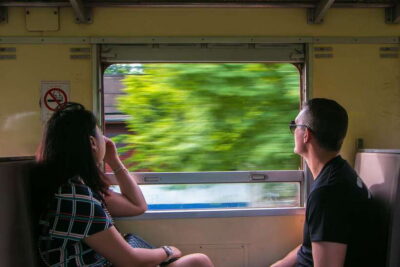
Damnoen Saduak Market and Maeklong Railway Market
Read our review →
The Old Siam: Damnoen Saduak and Maeklong Railway Market
Read our review →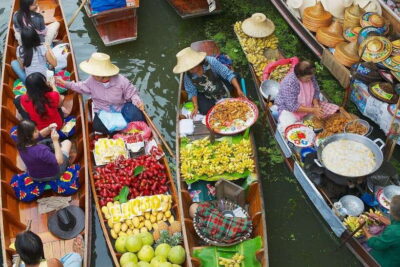
Train Market & Floating Market with Boat Ride
Read our review →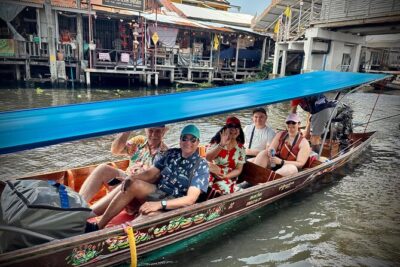
Half-Day Railway Market and Floating Market Tour in Thailand
Read our review →
Damnoen Saduak, Train Market & Mahanakhon Day Trip
Read our review →
Damnoen Saduak Floating Market and Maeklong Railway Market Tour
Read our review →
Day Trip to Bangkok Floating Market & Maeklong Railway
Read our review →Browse the lists this tour appears in