
Review · 2-DAY EXPERIENCES
River Kwai Jungle Rafts: 2-Day Kanchanaburi Escape from Bangkok
Kanchanaburi’s most memorable moment may come after the museums close, when a long-tail boat carries you upriver to a floating hotel with no electricity, Wi-Fi, or air-conditioning. You spend the night on the Kwai Noi River, surrounded by darkness, jungle sounds, and the quiet rhythm of the water.
I like this tour for two strong reasons: it combines the region’s most important World War II sites with experiences that are awkward to arrange alone, and it gives you time to slow down at the Jungle Rafts and Mon village. The main tradeoff is comfort. The raft rooms are clean and simple, but heat, humidity, bumpy roads, long drives, and repeated boat transfers are part of the deal.
In This Review
- Key points to know before booking
- Why this two-day Kanchanaburi trip works
- From Bangkok at 6:00 am to Kanchanaburi’s railway story
- The Bridge over the River Kwai and the first boat ride
- Lunch, Hellfire Pass, and the hardest part of the story
- A night at the Jungle Rafts without modern comforts
- Morning in the Mon village
- Downriver by boat, then across the Death Railway
- Guides, group size, and the value of expert explanation
- Who should book this Kanchanaburi escape?
- What to pack for two days on the river
- Should you book it?
- FAQ
- How long is the River Kwai Jungle Rafts tour?
- What time does the tour start?
- Is pickup available from Bangkok hotels?
- Is the tour private or shared?
- Is electricity available at the Jungle Rafts?
- What meals are included?
- Does the tour include a Death Railway train ride?
- Does the tour visit Hellfire Pass?
- Is the tour suitable for people with limited mobility?
Key points to know before booking
- The Jungle Rafts are genuinely off-grid: Expect fan-only or very basic rooms, no electricity, no Wi-Fi, and no warm water.
- Hellfire Pass adds emotional weight: The memorial area and interpretive centre explain the brutal conditions faced by POWs and Asian laborers.
- The train ride uses the actual Death Railway: You cross sections of track built by forced labor, not a staged tourist railway.
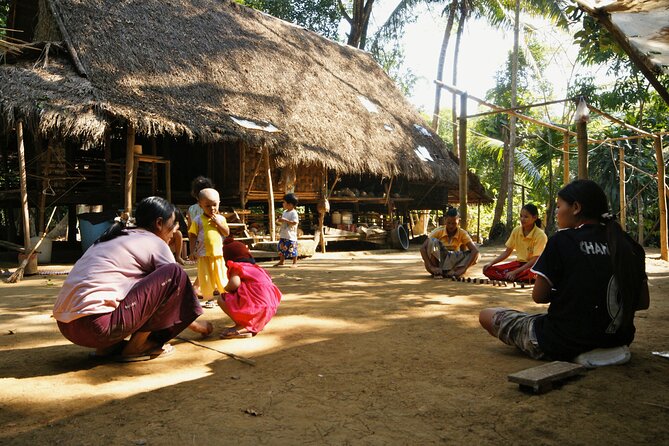
- The Mon village gives the trip a living cultural side: You visit the village, take a short jungle walk, and see a traditional dance performance.
- The early start saves you planning headaches: Pickup begins around 6:00 am, with transport, boats, meals, tickets, and accommodation arranged.
- The tour suits curious, reasonably mobile visitors: Long-tail boats, steps, uphill walking, uneven roads, and heat can be tiring.
Why this two-day Kanchanaburi trip works
At $209 per person, this is not the cheapest way to visit Kanchanaburi. You are paying for more than transport from Bangkok, though. The price covers an English-speaking guide, private or shared transportation, long-tail boats, meals listed in the program, entrance fees, a train ticket, one night at the Jungle Rafts, and the coordination needed to connect all those moving parts.
That coordination matters. Kanchanaburi’s sights are spread across a large area, and the floating accommodation is reached by boat. Trying to join the museum visits, Hellfire Pass, the Mon village, raft stay, and railway ride on your own would take careful planning and several separate bookings.
The tour has a maximum of 15 people, though it can also operate privately. A smaller group makes the boat transfers and historical visits more personal. On shared departures, the exact group size can change until close to departure, so do not expect the same arrangement as a private guide and car.
The strongest part of the program is its balance. You get serious history at the Thailand-Burma Railway Centre and Hellfire Pass, then time on the river and in the village. The experience is not just a checklist of wartime sites. It shows how the railway shaped the region and how people still live along the river today.
A few more Bangkok trips to weigh up
- 2-Day Angkor Wat Tour from Bangkok
★ 4.5 · 206 reviews - 2 Day Private Car with Driver from Laem Chabang to Bangkok & Ayutthaya
★ 5.0 · 27 reviews - 2-Day River Kwai and Kanchanaburi Tour from Bangkok
★ 5.0 · 11 reviews
From Bangkok at 6:00 am to Kanchanaburi’s railway story
The day begins early, generally around 6:00 am, with pickup from a main hotel in central Bangkok. The drive to Kanchanaburi takes time, so prepare for a substantial morning in a car, minivan, or coach.
The vehicle transport is practical rather than scenic sightseeing from start to finish. Some trips use newer, air-conditioned vehicles, but road conditions later become rougher. The tour includes uneven paths and off-road sections, so anyone with neck or back problems should think carefully before booking.
Your first major stop is the Thailand-Burma Railway Centre. This museum uses photographs, written accounts, displays, and models to explain the construction of the railway during World War II. It helps you understand the scale of the project before you see the track and river sites in person.
Give the museum your attention. The story is grim: POWs and Asian laborers endured disease, hunger, forced labor, and terrible working conditions while the railway was built in an astonishingly short period. The museum also has records connected with POWs. If your family has a connection to the railway, you may be able to ask about a specific name at the records desk.
A nearby war cemetery adds another serious pause to the morning. Rows of Allied graves make the human cost harder to treat as an abstract history lesson. This is one of the most meaningful parts of the visit, especially for anyone with a family connection to the POW camps or the railway.
The Bridge over the River Kwai and the first boat ride
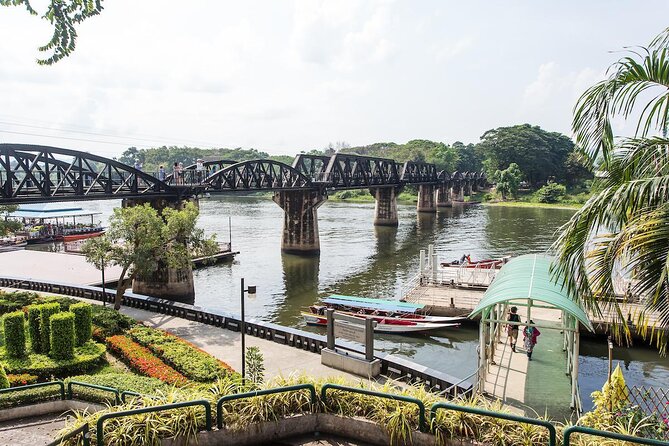
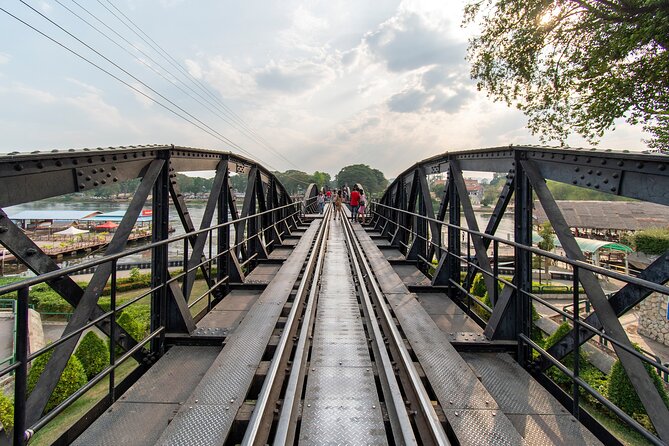
The famous bridge is a short stop, listed at about 30 minutes. You can take photographs, walk near the structure, and see the railway crossing associated with the River Kwai story.
The bridge is visually striking, but the short visit means you should not expect a long historical lecture on site. Your guide’s explanation and the earlier museum visit provide the needed context. Several guides have been praised for their historical understanding and care, including guides named Sam, Bligh, Lady, and others. English ability can vary, however, and some commentary may be difficult to follow.
From the bridge, you board a local long-tail boat. This is one of the tour’s most appealing changes of pace. The road disappears, the river becomes your route, and you begin to see why the overnight raft is the heart of the experience.
Boat boarding requires some care. The boats can be difficult to enter and leave, particularly if you have sore knees, are overweight, or are not steady on your feet. Protect your phone and camera in a waterproof bag. The operator specifically warns that water can damage electronic equipment, and you are responsible for protecting your belongings.
Lunch, Hellfire Pass, and the hardest part of the story
After reaching the floating accommodation area, you have lunch in the raft’s floating restaurant. Meals are generally generous, and food quality receives strong praise. Water may not be included with every meal, so carry cash and check what is covered before ordering extra drinks.
Hellfire Pass is reached by boat after lunch. The journey itself is part of the appeal, but the destination is the emotional centre of the trip. At the Hellfire Pass Interpretive Centre and memorial area, you learn how POWs cut a railway passage through solid rock using basic hand tools, explosives, and almost no proper nutrition or medical care.
The scale of the cutting is difficult to grasp from photographs alone. Walking through the memorial area brings you close to the physical work and the silence of the site. This is not a light sightseeing stop. You should expect a somber visit, with time for reflection as well as information.
The tour description allows about 90 minutes here. That gives you enough time to take in the centre and walk around the memorial area, though the amount of walking can feel demanding in heat.
One practical warning: Hellfire Pass has occasionally been closed for a public holiday or operational reason. In that case, a substitute site may be offered, but it may not carry the same emotional and historical force. If Hellfire Pass is the main reason you want this trip, check the operating status before departure if possible.
Same coastline, a completely different day out:
- Bangkok: Damnoen Saduak Market and Maeklong Railway Market
★ 4.5 · 26,723 reviews - The Old Siam: Damnoen Saduak and Maeklong Railway Market
★ 4.5 · 10,992 reviews - From Bangkok: Ayutthaya Temples Guided Tour with Lunch
★ 4.7 · 10,535 reviews - Bangkok: Train Market & Floating Market with Boat Ride
★ 4.7 · 9,547 reviews
A night at the Jungle Rafts without modern comforts
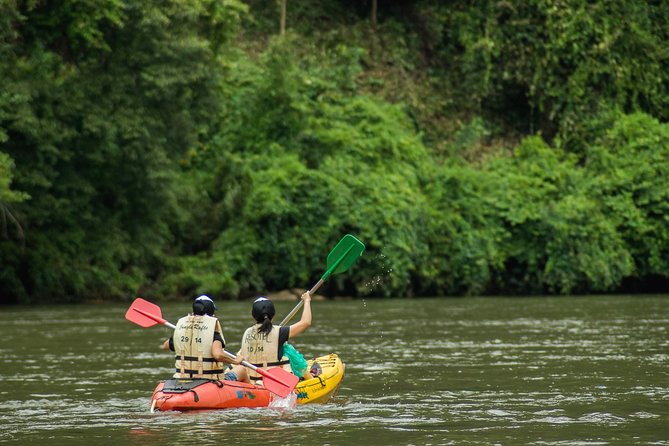
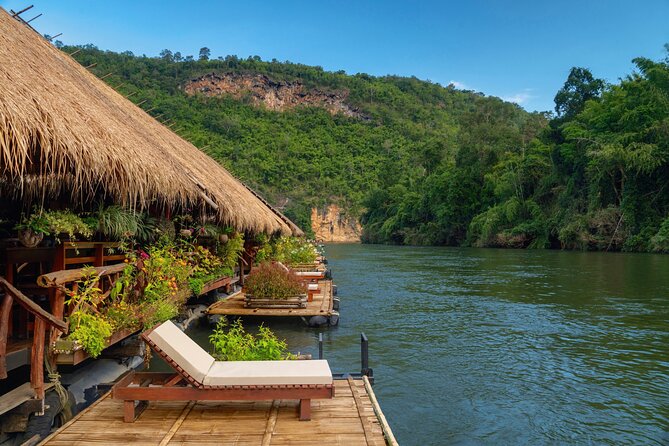
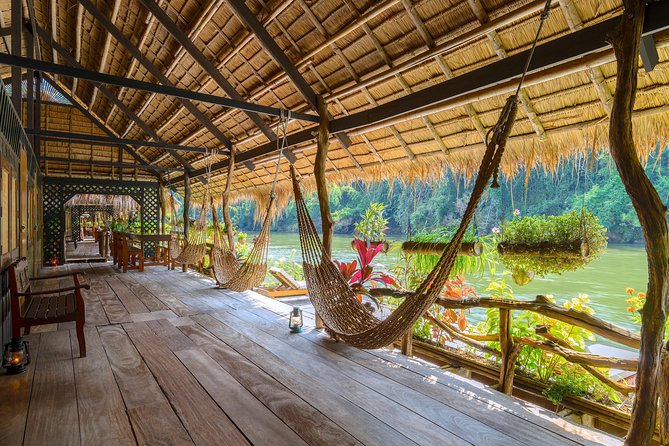
The overnight stay is simple by design. Rooms are shared twin or double accommodation on a floating raft, with basic amenities. There may be no electricity, Wi-Fi, air-conditioning, or warm water. Fan-only rooms can feel hot and humid, particularly during warmer months.
This is the part of the tour you should understand clearly before paying. If you need a cool room, reliable charging, and a strong internet connection, you may find the night uncomfortable. If you enjoy stepping away from screens and modern noise, the same limitations become the point.
Bring a fully charged phone or battery pack, but do not rely on charging at the raft. A headlamp is useful, though the supplied information does not promise one. Pack light, protect electronics from splashes, and keep cash in small notes. Larger bills can be difficult to change at the remote accommodation.
The raft’s setting is peaceful, and the staff are known for being friendly and helpful. Meals are included as stated in the program, and the food is often more generous than you might expect from such a basic property.
A traditional Mon dance performance takes place at the Jungle Rafts. It is a pleasant cultural presentation, but keep your expectations sensible. This is a short introduction rather than a full cultural study. The value comes from seeing the raft stay, village visit, and local community as part of the same river environment.
Morning in the Mon village
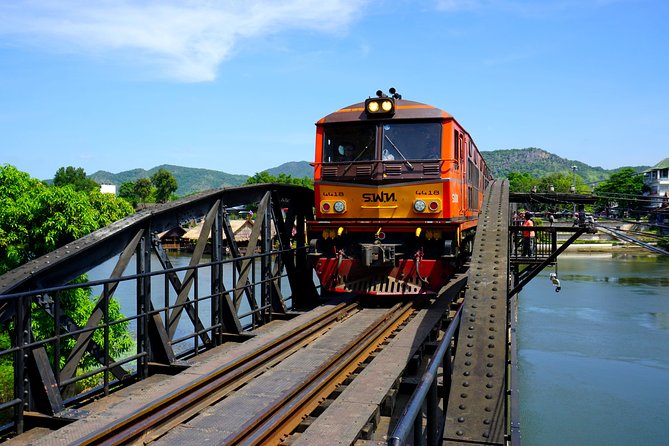
After breakfast, you visit a nearby Mon village. The Mon people have lived in the area for generations, and the stop gives the tour a human side beyond the wartime sites.
You take a short walk into the jungle and learn about village life and local culture from the guide. The setting is rural and quiet, with nature close around you. The visit is especially useful because it prevents the trip from becoming only a World War II memorial tour.
The village stop lasts about two hours. Wear shoes with a good grip, use sunblock, and carry water. You may encounter steps, uneven ground, and heat. A hat, sunglasses, and high-SPF sunscreen are specifically recommended.
Some itineraries have included an elephant ride, but it is not listed among the standard inclusions provided here. Do not assume it is part of your booking. The listed cultural experience is the village visit and the traditional Mon dance performance.
Downriver by boat, then across the Death Railway
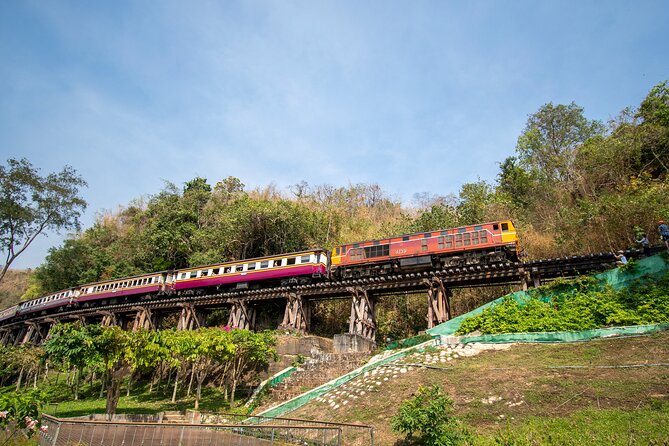
After checking out, you take another boat ride downstream before transferring to a local train. Long-tail boats are used several times during the trip, so the physical challenge adds up. If your knees or hips are sensitive, ask the operator what assistance is available and be prepared for awkward boarding.
The train ride is the finale. You travel along the Death Railway on track sections built during the war by POWs and Asian laborers. The ride lasts about 90 minutes and passes through countryside along the Kwai route.
The train is not simply a scenic ride. Its importance comes from the connection between the track beneath you and the history explained at the museum and Hellfire Pass. You can look out at the countryside while keeping in mind the suffering involved in constructing the line.
Some bookings may offer an upgrade for the train ride, according to one account of the experience. Ask what your fare includes before departure, since the standard program includes a train ticket but does not spell out every carriage or upgrade option.
After the railway journey, you return to your vehicle for the trip back to Bangkok. The second day can feel long, but the train breaks up the road journey and gives the program a strong ending.
Guides, group size, and the value of expert explanation
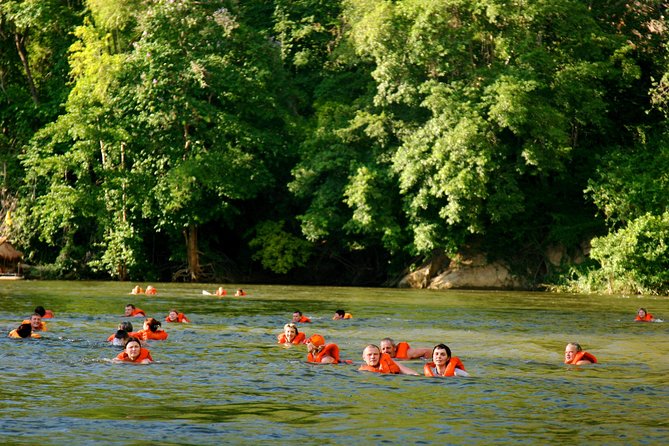
A good guide makes a major difference here. The sites carry complex military, colonial, and local history, and a short label at a museum cannot explain everything. Guides such as Sam and Bligh have been praised for clear historical commentary and care with small groups. Lady has also been singled out for sharing information throughout the journey and looking after individual needs.
English quality is not perfectly consistent. Some guides speak clearly and fluently, while others are harder to understand because English is their second language or because of unusual phrasing. On a shared tour, you may not know the exact guide or group arrangement until close to departure.
The maximum group size of 15 is reasonable for this kind of trip. A private departure should give you more control over timing and questions, but the shared option can offer better value if you are comfortable with a fixed schedule.
The tour provides snacks, drinks, and refreshments as indicated, plus breakfast, lunch, and other meals listed in the program. Still, bring some cash for drinks, tips, personal purchases, and small extras. Tips are not included.
Who should book this Kanchanaburi escape?
I would recommend this tour to you if you want a guided introduction to Kanchanaburi and prefer not to arrange several remote transfers yourself. It is particularly fitting for people interested in World War II history, family POW connections, railway history, local culture, and simple river accommodation.
It also suits visitors who like variety. In two days, you move from a museum to a cemetery, bridge, riverboat, memorial site, village, and train. The program is busy, but the overnight raft gives you a break from constant sightseeing.
You should think twice if you need accessible facilities or modern hotel comfort. The trip includes rough roads, uphill walking, steps, boat transfers, and a raft without standard electrical amenities. It is unsuitable for pregnant women and people with neck, back, or limited mobility concerns.
Pickup is limited to main hotels in central Bangkok. Areas such as Khao San Road, the airports, Nonthaburi, Thonburi, Minburi, Ratchadapisek, and upper Sukhumvit may require an extra charge or a meeting point. Private residences and apartment buildings may also require you to meet at a nearby hotel.
What to pack for two days on the river
Pack one suitcase and one piece of hand luggage per person because vehicle space is limited. A small bag makes the boat transfers easier.
Bring:
- Sunblock, sunglasses, and a hat
- Light clothing suited to heat and humidity
- Secure walking shoes
- Waterproof protection for phones and cameras
- Cash in small notes
- A charged power bank
- Any personal medication you need
- A light layer for air-conditioned road transport
Do not pack as if you are staying at a full-service hotel. The raft is clean and atmospheric, but basic. The lack of electricity is not an accidental inconvenience. It is part of the soft-adventure setup.
Should you book it?
Book this trip if you want Kanchanaburi’s history presented with context and you are willing to trade hotel comfort for a memorable night on the river. The museum, Hellfire Pass, Mon village, and Death Railway train form a strong two-day program, and the included transport removes much of the region’s awkward logistics.
At $209, the value is best for someone who would otherwise need separate transport, boat connections, museum tickets, accommodation, meals, and railway arrangements. It is less compelling if you only want the bridge or a quick museum visit, since much of the price and time goes toward the remote raft stay.
My practical advice is simple: confirm that Hellfire Pass is open, ask about pickup from your Bangkok hotel, pack for heat and water, and accept the raft’s lack of power before you go. If that sounds like part of the adventure rather than a problem, this is a thoughtful and memorable way to spend two days beyond Bangkok.
FAQ
How long is the River Kwai Jungle Rafts tour?
The tour lasts approximately two days, with one night at the floating Jungle Rafts accommodation.
What time does the tour start?
The stated start time is 6:00 am.
Is pickup available from Bangkok hotels?
Pickup is offered from main hotels in downtown Bangkok areas. Excluded areas and some private residences or apartment complexes may require a surcharge or a nearby meeting point.
Is the tour private or shared?
The tour operates on both private and shared seat-in-coach departures. Shared tours use an English-speaking guide and can have up to 15 participants.
Is electricity available at the Jungle Rafts?
The accommodation is basic and may have no electricity, Wi-Fi, or warm water. Rooms may use fans rather than air-conditioning.
What meals are included?
Breakfast, lunch, and other meals specified in the program are included. Personal meals, drinks, and other food not listed are not included.
Does the tour include a Death Railway train ride?
Yes. A train ticket for the Death Railway is included, and the train ride lasts about 90 minutes.
Does the tour visit Hellfire Pass?
Yes. The program includes a boat journey to Hellfire Pass and a visit of about 90 minutes to the interpretive centre and memorial area. Closure for a holiday or other operational reason is possible.
Is the tour suitable for people with limited mobility?
The tour includes uneven roads, off-road driving, uphill walking, steps, and several long-tail boat transfers. It is not suitable for people with limited mobility, and the operator also advises against participation for pregnant women and people with neck or back problems.
Just added around Bangkok
- Damnoen Saduak Floating Market Small Group Tour★ 4.0 · 107 reviews
- Arrival Private Airport Transfer : Bangkok Airport to Hotel in Bangkok★ 4.5 · 142 reviews
- Private Best of Bangkok Full Day Highlights City Tour★ 4.5 · 13 reviews
- Angkor Wat 2-Day Tour from Bangkok★ 5.0 · 8 reviews
- Ancient Wonders of Ayutthaya with Return Scenic River Cruise★ 4.0 · 31 reviews
- Private Ancient city of Ayutthaya Shore Excursion★ 5.0 · 9 reviews
- Ancient City Ayutthaya Private Guided Day Tour★ 5.0 · 49 reviews
- Ancient City Bangkok and Erawan Museum Tickets★ 4.5 · 8 reviews
2-Day Experiences, compared.
Advanced Adventurer – 2 days ( Advanced Open Water)
Read our review →
From Chiangrai: Slow Baot to Loas (Luangprabang) 2-Day Tour
Read our review →
2 Day Private Car with Driver from Laem Chabang to Bangkok & Ayutthaya
Read our review →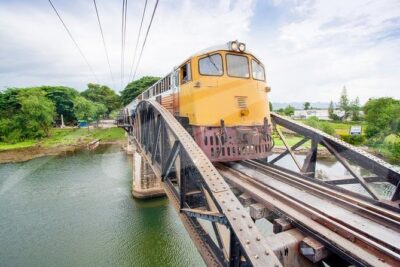
2-Day River Kwai and Kanchanaburi Tour from Bangkok
Read our review →
Browse the lists this tour appears in