
Review · 3-DAY EXPERIENCES
Angkor Wat 3-Day Tour from Bangkok
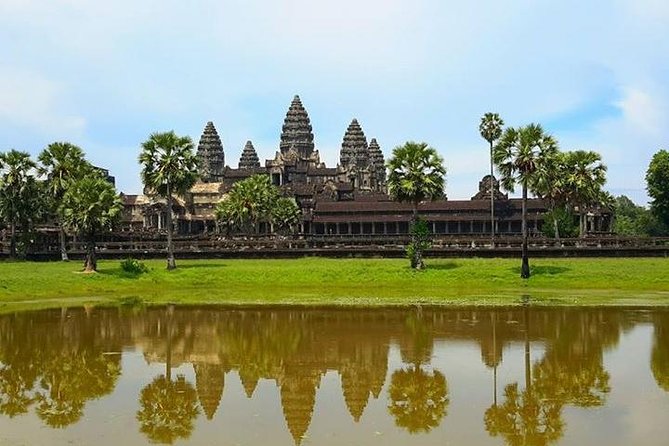
Angkor Wat is the prize here, but the real shape of this trip is a cross-border journey by road. You leave Bangkok early, cross into Cambodia at Poipet, spend two nights in Siem Reap, and use a full day to see Angkor Wat, Angkor Thom, Bayon, Preah Khan, and Ta Prohm. I like the private vehicle and guide, and I like having enough time for the temples without trying to force everything into one exhausting day.
I also like the Tonle Sap visit on arrival day. It gives you a look at life on the water before the grand stone monuments take over. Guides such as Sothy, Bun, Sava, Vithyea, and Saruon have earned warm praise for their history talks, humor, flexible pacing, and help with photographs. The main drawback is the Poipet border crossing: it can feel confusing, hot, slow, and poorly explained, especially on busy holidays.
In This Review
- Key points to know before you book
- Why this three-day route makes sense
- Day one: Bangkok to Poipet and onward to Siem Reap
- Tonle Sap and Chong Kneas in the afternoon
- Day two: Angkor Wat and the great temple circuit
- Angkor Wat
- Angkor Thom South Gate
- Bayon Temple
- Preah Khan
- Ta Prohm
- What the private format really gives you
- The return to Thailand on day three
- Small practical details that make a big difference
- Who should book this Angkor Wat trip
- Should you book it?
- FAQ
- How long is the tour?
- Is the tour private?
- What is included in the price?
- Is the Cambodian visa included?
- Does the tour include meals?
- Are temple tickets included?
Key points to know before you book
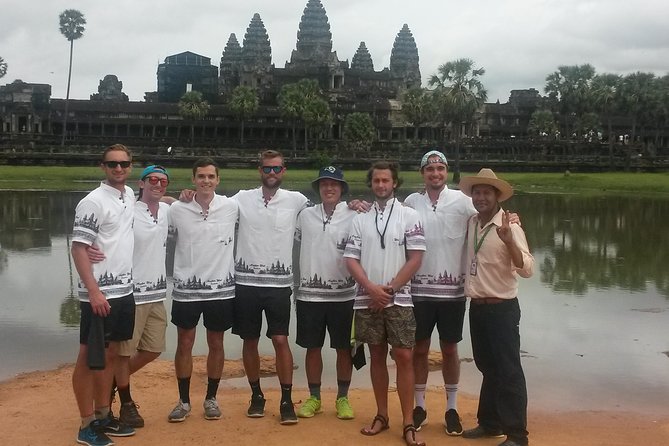
- A full day at five major Angkor sites: You see Angkor Wat, Angkor Thom’s South Gate, Bayon, Preah Khan, and Ta Prohm.
- Two nights in Siem Reap: Your $490 price includes a four-star hotel and breakfast, giving you an evening to visit Pub Street, restaurants, or the night market.
- Tonle Sap by private boat: The floating village visit takes place on the afternoon of day one and can include sunset views.
- Private transport for your party: The tour accepts one to 15 people, with an air-conditioned vehicle, hotel pickup, and return transport.
- Border costs and delays are separate: Cambodia’s visa is not included, and the return to Thailand can take much longer than planned.
- Temple clothing matters: Short clothing is not allowed at the temples, so pack something that covers your shoulders and knees.
Why this three-day route makes sense
At $490 per person, this is not a cheap quick excursion. It covers a great deal: private pickup and return, transportation in an air-conditioned vehicle, a licensed Cambodian guide, two hotel nights, breakfast, the floating-village boat ride, and temple tickets.
The value depends on how much you would pay to arrange those pieces yourself. A private road transfer from Bangkok to Siem Reap, a hotel, a guide, temple admission, and a boat trip can become a costly puzzle. Here, the main work is put together for you. The price is easier to justify for two or more people sharing private transport, though solo visitors should compare it carefully with flying to Siem Reap and arranging local visits there.
The three-day format is much better than a rushed overnight visit. Day one is mostly transport, but you still get Tonle Sap and an evening in Siem Reap. Day two is reserved for Angkor. Day three is the return. You are not trying to see the temples, cross the border, and drive back to Bangkok all in the same day.
That said, this is still a demanding trip. The drive from Bangkok to the Cambodian border begins around 6:30 a.m., and the total road journey to Siem Reap can take roughly five to six hours, depending on stops and the border. The return can be longer. Traffic and immigration queues have caused delays of two to three and a half hours, with some return journeys taking ten hours during major holidays.
A few more Bangkok trips to weigh up
- Open Water Course – Become certified diver in 3 days
★ 5.0 · 1,137 reviews - Padi open water diver course, become a diver in 3 days
★ 5.0 · 113 reviews - Become certified diver in 3 days – PADI Open Water Diver course on Koh Tao
★ 5.0 · 104 reviews
Day one: Bangkok to Poipet and onward to Siem Reap
Pickup is offered from hotels in Bangkok, Pattaya, or Koh Chang. The early start is practical, not glamorous. You spend much of the morning on the road, with a scheduled arrival at Poipet at about 10:30 a.m.
This section is not a guided sightseeing drive. It is a transfer through eastern Thailand and across the Cambodian border. If you enjoy seeing countryside from a car window, the road gives you that. If long drives wear you down, bring water, snacks, and something to read.
At Poipet, you leave Thailand through immigration, cross into Cambodia, and continue toward Siem Reap. The road distance from the border to Siem Reap is listed at about 152 kilometers, with roughly two hours of driving after departure. Vehicles and drivers may change at the border, so keep your phone charged and your luggage clearly marked.
The border process is the weakest part of the experience. Some departures have been smooth, especially when passengers had Cambodian e-visas ready. Other arrivals have involved walking several blocks, stairs, heat, luggage handling, and unclear directions. At times, a border representative has met the group and helped with Cambodian immigration. At other times, the handoff has felt less organized.
You should know exactly what to expect before you go. Cambodia’s visa is not included. You can apply online for an e-visa and print two copies, or apply for a visa on arrival with one original passport photo. Some nationalities have special requirements. ASEAN passport holders are listed as receiving a free 30-day Cambodian visa, while Mexican and Burmese passport holders need to check re-entry or multiple-entry rules for Thailand. Indian passport holders are advised to carry a hotel booking and proof of onward travel from Thailand.
Do not assume that a paid border shortcut will solve everything. Some people have paid an extra $10 for faster Cambodian processing, but the Thai exit and re-entry lines remain outside the operator’s control. Holiday periods, including Chinese New Year and Thai or Cambodian New Year, can create serious queues.
Tonle Sap and Chong Kneas in the afternoon
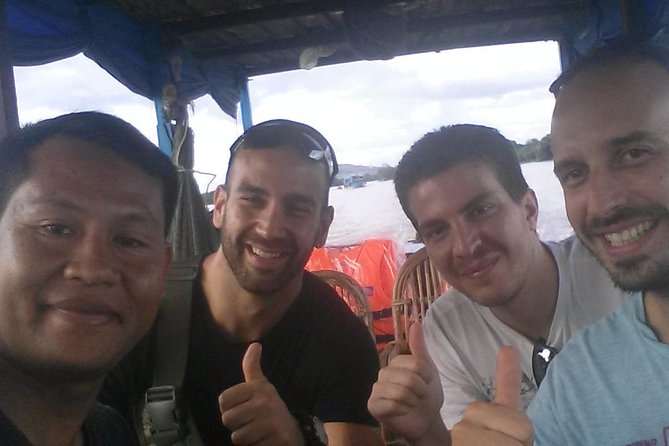
After reaching Siem Reap, you visit Tonle Sap Lake by private boat, usually from about 3:30 to 5:30 p.m. The stop focuses on Chong Kneas, a floating village where homes and daily activity are connected to the lake.
This visit changes the rhythm of the trip. Instead of looking at carved stone, you see boats, water-based homes, and a community shaped by the lake. It is not a substitute for Angkor, but it gives you a useful glimpse of present-day Cambodia. The timing may also bring soft afternoon light and sunset views.
The boat ride is included, which matters because add-on costs can otherwise accumulate on a short international trip. The visit lasts about three hours including transfers and the boat experience. If you are tired after the border crossing, you may find the timing challenging, but it is still a worthwhile use of the arrival afternoon.
You return to your hotel around 5:30 p.m. The evening is free. This is one of the better features of the three-day plan because you can walk around Siem Reap, eat at a restaurant, visit the night market, or spend time on Pub Street. You are not locked into another scheduled activity.
The hotel is described as four-star accommodation, with breakfast included for both mornings. The exact property can vary, so do not book this trip expecting a particular hotel unless the operator confirms it. Past stays have included comfortable properties with good breakfast buffets, pools, restaurants, and central locations. Room arrangements are one king bed for a couple or two beds for friends and families.
Day two: Angkor Wat and the great temple circuit
Day two is the heart of the trip. You visit Angkor Wat, Angkor Thom’s South Gate, Bayon, Preah Khan, and Ta Prohm, with about six hours assigned to the temple program. The vehicle remains close, giving you an air-conditioned place to cool down between walks.
The heat is not a small detail. One especially hot day can make the temples feel much farther apart than they look on a map. Carry water, use sun protection, and take advantage of the vehicle’s cool interior. Guides have also been praised for keeping water available and adjusting the pace to suit the group.
Same coastline, a completely different day out:
- Bangkok: Damnoen Saduak Market and Maeklong Railway Market
★ 4.5 · 26,723 reviews - The Old Siam: Damnoen Saduak and Maeklong Railway Market
★ 4.5 · 10,992 reviews - From Bangkok: Ayutthaya Temples Guided Tour with Lunch
★ 4.7 · 10,535 reviews - Bangkok: Train Market & Floating Market with Boat Ride
★ 4.7 · 9,547 reviews
Angkor Wat
Angkor Wat is the major attraction, and it deserves unhurried time. The complex covers a huge area and was built as a religious monument connected first with Hindu worship and later with Buddhism. Its towers, galleries, courtyards, and carved scenes reward slow looking.
A good guide makes a major difference here. Sothy, Bun, Sava, Saruon, and other guides have been praised for explaining dates, Hindu and Buddhist stories, architecture, and details in the carvings. Some guides also help with photos and short videos, which is useful when the scale of the site makes it hard to know where to look first.
An optional sunrise start is available according to the experience details and has been a favorite addition for some people. The sight of the temple towers in early light can be striking, but confirm the exact timing and any extra arrangements before booking. A sunrise start also means an earlier morning after your first day on the road.
Dress carefully. Short clothing is not permitted at the temples. Wear light clothes that cover your shoulders and knees, and choose shoes suited to uneven walking surfaces. Angkor Wat is not a quick photo stop. You need energy for stairs, courtyards, and long paths.
Angkor Thom South Gate
Angkor Thom was the last major capital of the Khmer Empire. The South Gate is a dramatic approach, with a causeway and large sculpted figures leading toward the fortified city.
Your guide can help connect the gate to the wider plan of Angkor Thom. Without that context, you may simply see a grand entrance. With an explanation, the gate becomes part of a much larger royal city and religious center.
The listed visit is about one hour. That gives you enough time for photographs and a short explanation, though the overall temple day moves at a steady pace. If you want long independent exploration at every stop, this schedule may feel tight.
Bayon Temple
Bayon is known for its enormous carved faces, which appear on the temple towers. The effect is memorable because the faces seem to watch over the maze of galleries and passages.
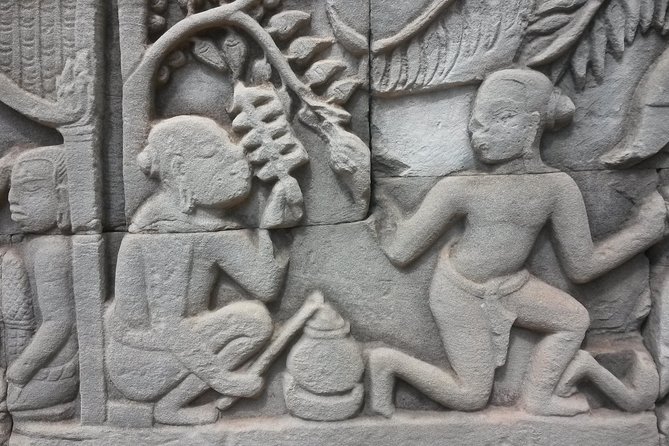
This is a place where a strong guide earns the fee. The carvings are not just decoration. They connect to the beliefs and royal power of the period, and the lower galleries include scenes of daily life and battle. Guides such as Bun and Sothy have been singled out for making these stories lively and easy to follow.
Allow about one hour. Bayon can be visually confusing at first, so listen to the meeting point and return-time instructions. The private vehicle is valuable here because you can walk without carrying every item all day.
Preah Khan
Preah Khan, or Royal Sword, was built in the 12th century for King Jayavarman VII in honor of his father. It is a large temple with long corridors, carved doorways, and areas where trees and stone have become closely linked.
The site tends to feel less instantly familiar than Angkor Wat or Ta Prohm, but I would not treat it as filler. Its scale and layered passageways show how extensive the Angkor complex really was. The hour assigned here lets you see a meaningful portion without turning the day into a march.
Ta Prohm
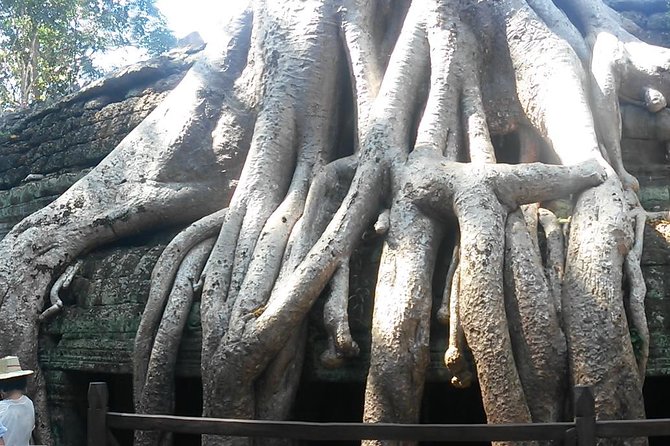
Ta Prohm is famous for the trees growing through and around its stone structures. The setting has made it one of the most photographed places at Angkor, but the temple is more than a backdrop.
Look for the carved details and the way the temple’s buildings fit together. The roots and damaged walls make the place visually dramatic, while the remaining galleries show the skill of the builders. Because Ta Prohm is so popular, your guide’s timing and meeting instructions matter.
The temple visit is about one hour. You should expect heat, uneven ground, and a steady flow of people. The private format helps because your own group can usually move at a comfortable pace rather than follow a large coach party.
What the private format really gives you
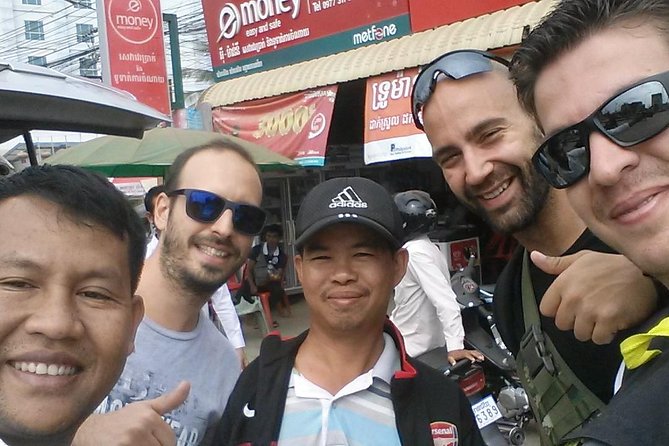
The tour accepts from one to 15 people, but the price is for a private activity. Only your party participates in the main tour. That gives you more control than a standard group excursion.
You can ask your guide to explain a carving again, pause for photographs, or slow down when the heat becomes tiring. Guides have been praised for adapting to the group, answering questions, arranging meals, and suggesting evening activities. Sava even arranged an Apsara show table and a birthday cake for one group, though special extras like that should not be assumed.
The Cambodian guide is generally the person who adds the most depth. Driver English may be limited, but that is less important once the temple guide takes over. The air-conditioned vehicle is also more than a convenience. After walking through hot temple grounds, a cool car can make the difference between enjoying the next stop and simply enduring it.
The private format does not eliminate all uncertainty. At the border, you may still be handed from Thai transport to Cambodian staff, and the walk between immigration points can be uncomfortable. Ask in advance for clear instructions about where to meet, who will carry or identify luggage, and what happens if the group becomes separated.
The return to Thailand on day three
After breakfast, you check out and begin the return trip to Bangkok, Pattaya, or Koh Chang. The listed driving time is about seven hours, but that is only a rough guide.
The Cambodian side of the drive may be straightforward. The unpredictable part is entering Thailand at Poipet. Immigration queues can move slowly, especially during public holidays. A three-hour wait is possible based on past departures, and the full journey may stretch to ten hours when traffic and border delays combine.
If you have a flight from Bangkok that evening, I would not treat this transfer as risk-free. The tour data specifically warns about border delays, and one departure involved a rushed connection after a long wait. A flight on the following day, or a later onward plan, gives you a much safer margin.
The return vehicle has not always been equally comfortable. Most transport feedback is positive, including private vans with reclining seats, but isolated departures have involved an older, dirty, smoke-smelling taxi. The operator has apologized for such problems, but you should still confirm the return vehicle and pickup plan before leaving Siem Reap.
Small practical details that make a big difference
Bring your passport, two printed copies of an e-visa if using one, and the required passport photo if applying at the border. Keep digital copies as backup, but do not rely only on your phone.
Carry Thai baht and US dollars. Cambodian riel is also used, and Siem Reap has ATMs that can dispense either riel or US dollars. Lunch and dinner are not included, so budget separately for meals, drinks, and personal spending.
The tour provides breakfast, but no lunch or dinner. Your guide may take you to a restaurant, and previous outings have included good meals, but the cost is your responsibility. An evening in Siem Reap is easy to fill with food, markets, and Pub Street.
Wear clothing that meets temple rules from the start of day two. Take water, sunglasses, sunscreen, and a hat. You should also have a small bag that is easy to carry during the border walk and temple visits.
Free cancellation is available up to 24 hours before the scheduled start time. Changes or cancellations made inside that window are not accepted for a refund.
Who should book this Angkor Wat trip
I would choose this tour if you are based in Bangkok and want a practical way to see Angkor without arranging several separate transfers. It suits couples, families, and small groups who value a private guide, hotel pickup, and a planned route.
It is also a good fit if you want more than the famous central temple. The combination of Tonle Sap, Angkor Wat, Bayon, Preah Khan, and Ta Prohm gives you both modern Cambodian life and major Khmer sites.
I would hesitate if you dislike long road journeys, border uncertainty, or early starts. Flying to Siem Reap may be a better use of your time, even if it means arranging the local sightseeing separately. Solo visitors should also compare the $490 cost against a flight and hotel package, since the private vehicle offers less shared-cost value for one person.
Should you book it?
Book this three-day trip if seeing Angkor Wat from Bangkok is a priority and you can accept that the border crossing is part of the adventure, not a polished airport-style transfer. The temples, Tonle Sap boat ride, hotel stay, and strong local guides can make the price worthwhile.
Before paying, confirm the visa plan, the border meeting instructions, the hotel name, the optional sunrise arrangement, and the return timing. If you build in a full day before any Bangkok flight, this is a sensible and rewarding way to reach Angkor. If your schedule is tight, the road and border delays make it a gamble.
FAQ
How long is the tour?
The experience lasts three days and includes two nights in Siem Reap. The first day runs from Bangkok, Pattaya, or Koh Chang to Cambodia, day two covers the Angkor temples, and day three returns you to Thailand.
Is the tour private?
Yes. The activity is private for your party, with a minimum of one person and a maximum of 15 people.
What is included in the price?
The price includes hotel pickup and drop-off, private transport in an air-conditioned vehicle, two nights in a four-star hotel, breakfast, a licensed guide, the Tonle Sap boat visit, and temple tickets.
Is the Cambodian visa included?
No. You must arrange and pay for the Cambodian visa separately. You can apply for an e-visa in advance or use visa on arrival where permitted.
Does the tour include meals?
Breakfast is included at the hotel. Lunch, dinner, and personal expenses are not included.
Are temple tickets included?
Yes. The temple ticket is included for the Angkor visits described in the tour.
Just added around Bangkok
- Damnoen Saduak Floating Market Small Group Tour★ 4.0 · 107 reviews
- Arrival Private Airport Transfer : Bangkok Airport to Hotel in Bangkok★ 4.5 · 142 reviews
- Private Best of Bangkok Full Day Highlights City Tour★ 4.5 · 13 reviews
- Angkor Wat 2-Day Tour from Bangkok★ 5.0 · 8 reviews
- Ancient Wonders of Ayutthaya with Return Scenic River Cruise★ 4.0 · 31 reviews
- Private Ancient city of Ayutthaya Shore Excursion★ 5.0 · 9 reviews
- Ancient City Ayutthaya Private Guided Day Tour★ 5.0 · 49 reviews
- Ancient City Bangkok and Erawan Museum Tickets★ 4.5 · 8 reviews
3-Day Experiences, compared.
Open Water Course – Become certified diver in 3 days
Read our review →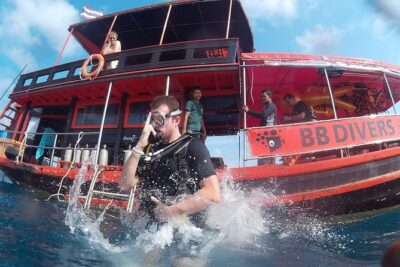
Padi open water diver course, become a diver in 3 days
Read our review →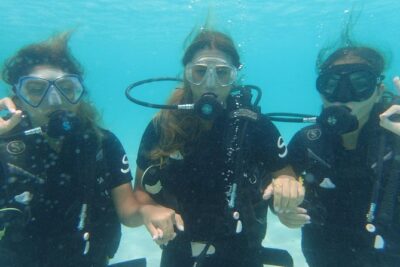
Become certified diver in 3 days – PADI Open Water Diver course on Koh Tao
Read our review →
Browse the lists this tour appears in