
Review · WALKING TOURS
Bangkok: Chinatown By Night Walking Tour
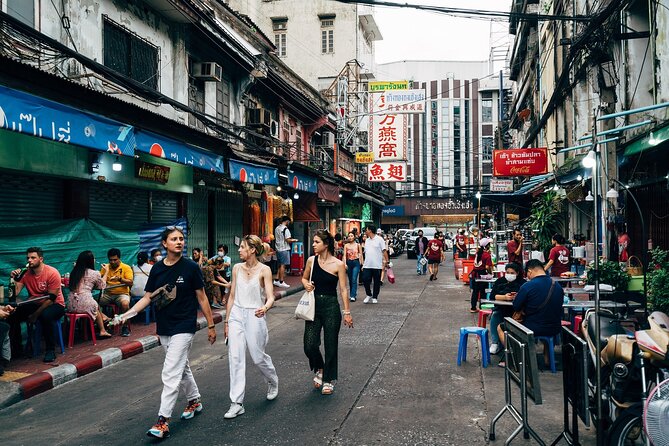
Bangkok’s Chinatown is at its best after sunset, when gold shops, food stalls, shrines, old lanes, and neon signs crowd together along Yaowarat Road. This two-hour walk takes you beyond the main road with a local guide, linking Chinese-Thai history to places such as Talat Kao market, Chareon Chai Community, and the old riverside shrines.
I especially like the small-community focus, including an old house turned into a museum and a European-style mosque. I also like the food angle: guides such as Jimmy, Tony, Bobby, Bass, and Den have led people to street stalls, traditional Chinese drinks, and dishes you might miss on your own.
The main drawback is the pace. Chinatown is crowded, the route covers several places, and two hours is not long enough for extended visits. Entry fees are not included, and you should bring some cash if you want to buy food rather than simply hear about it.
In This Review
- Key points to know before booking
- Why Chinatown works best after sunset
- Chareon Chai Community and its old house museum
- A European-style mosque in a Chinese-Thai district
- Talat Kao, Chinatown’s narrow old market
- The small riverside temple near the Marine Department
- Talat Noi and the So Heng Tai Mansion
- An Ayutthaya-era royal monastery
- Zhou Si Kong Shrine beside the Chao Phraya
- The food side of the walk
- Guides make the biggest difference
- Heat, crowds, and the two-hour limit
- What you get for $15
- Who should book this walk
- Should you book the Bangkok Chinatown night walk?
- FAQ
- How long is the Bangkok Chinatown night walking tour?
- What time does the tour start?
- Where does the tour begin?
- Where does the tour finish?
- Is food included in the price?
- Are attraction entrance fees included?
- Can I cancel for a full refund?
Key points to know before booking
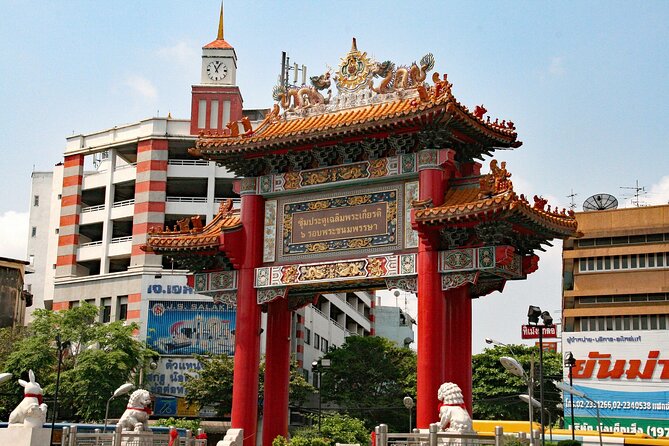
- Chinatown after dark: Start at 6:30 pm, when Yaowarat’s lights and food stalls become the main show.
- More than street food: The route connects markets, shrines, a mosque, a community museum, and old Chinese houses.
- Local guide quality matters: Nam, Jimmy, Tony, Bobby, Bass, Den, Dan, and Kim are among the guides named in the feedback.
- Food may cost extra: You can taste or buy street food, but the included list does not clearly promise a full meal.
- A short, active walk: Plan on about two hours, with crowds, heat, narrow lanes, and frequent stops.
- Low price, useful orientation: At $15 per person, the walk is good value if you want context before exploring Chinatown alone.
Why Chinatown works best after sunset
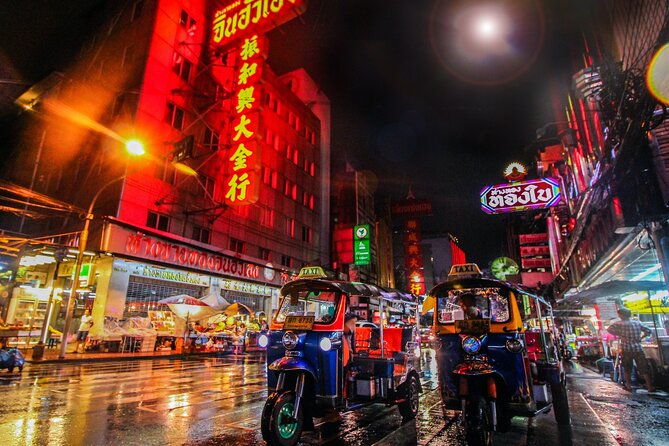
Bangkok’s Chinatown is not a polished attraction arranged for easy sightseeing. It is a working district, filled with gold merchants, family shops, shrines, market alleys, old homes, and food sellers. After dark, the main road takes on a different character, with bright signs and cooking smoke replacing the daytime traffic.
That setting gives this walk its appeal. You are not only looking at buildings. You are seeing how the district functions as a place of business, worship, family life, and eating. A guide can point out details that are easy to miss when you are busy avoiding scooters or choosing between unfamiliar dishes.
The meeting point is in the Hua Lamphong and Rong Muang area, with the walk beginning at 6:30 pm. The exact meeting instructions should be checked carefully on your mobile ticket, since the supplied information gives the area and address but not a detailed landmark beyond Hua Lamphong.
The tour returns to the meeting point. That makes it easier to continue your evening from the same area, though you should allow extra time if the walk runs close to its two-hour estimate.
A few more Bangkok trips to weigh up
- Bangkok: City Highlights Temple and Market Walking Tour
★ 4.5 · 3,990 reviews - Bangkok: Grand Palace and Wat Phra Kaew Guided Walking Tour
★ 4.4 · 2,417 reviews - Bangkok: Wat Pho and Wat Arun Guided Walking Tour
★ 4.6 · 1,720 reviews
Chareon Chai Community and its old house museum
One early stop is an old house converted into a community museum. Its purpose is to protect the story, customs, and everyday life of the Chareon Chai Community.
This is the kind of stop I value on a city walk. Grand temples tell you about religion and royal patronage, but a community museum can show how ordinary families lived and worked. It gives the surrounding streets a human scale, helping you understand that Chinatown is more than a restaurant strip.
Do not expect a large museum visit. The tour lasts about two hours and includes several stops, so the time inside may be limited. Entry to attractions is not included, and the supplied details do not promise a formal museum admission. Think of this as a short cultural stop within a walking route, not a dedicated museum tour.
A European-style mosque in a Chinese-Thai district
The route also includes an old mosque built in the style of a European villa. That unusual design is a useful reminder that Bangkok’s Chinatown is not culturally uniform.
The stop adds variety to the tour and helps break up the usual focus on Chinese temples and food. You get a glimpse of the area’s wider religious and architectural mix, all within a few streets of markets and gold shops.
The mosque is viewed as part of the walk. There is no indication that an interior visit is included, so dress and behave respectfully, and follow your guide’s instructions. As with the other religious sites, this is primarily a sightseeing and storytelling stop.
Talat Kao, Chinatown’s narrow old market
Talat Kao, also called Chinatown’s Old Market, occupies a long, narrow alley off Yaowarat Road. This is one of the more atmospheric sections of the walk, since it feels tighter and older than the main avenue.
A market alley tells you more through its layout than through a single landmark. You see how goods move through a compact neighborhood and how old shopfronts sit beside newer food businesses. Your guide can also explain what you are seeing instead of leaving you to guess at the signs, products, and cooking methods.
The practical issue is space. You may be walking close to other people, stopping suddenly, and moving at the group’s pace. Keep your bag secure and wear shoes suited to a two-hour city walk. If you want photographs, take them quickly and avoid blocking the passage.
Same coastline, a completely different day out:
- Bangkok: Damnoen Saduak Market and Maeklong Railway Market
★ 4.5 · 26,723 reviews - The Old Siam: Damnoen Saduak and Maeklong Railway Market
★ 4.5 · 10,992 reviews - From Bangkok: Ayutthaya Temples Guided Tour with Lunch
★ 4.7 · 10,535 reviews - Bangkok: Train Market & Floating Market with Boat Ride
★ 4.7 · 9,547 reviews
The small riverside temple near the Marine Department
Close to the Marine Department station on the Chao Phraya orange express line is a small temple visible from the riverside. It is included as another glimpse of the district’s religious life.
This stop is useful because it shifts your attention away from Yaowarat’s commercial energy. You get a sense of how the neighborhood connects to the river, Bangkok’s long-standing transport route and a major reason this part of the city developed as it did.
The information provided does not name the temple or promise a long interior visit. Expect your guide to identify and explain it during the walk rather than provide a full temple tour. That is still worthwhile if you want a broader picture of Chinatown’s setting.
Talat Noi and the So Heng Tai Mansion
The route reaches Talat Noi, a historic neighborhood beside the river, to see So Heng Tai Mansion. This nineteenth-century Chinese courtyard house offers a look at a different kind of old Bangkok architecture.
A courtyard house is not simply another attractive building. Its layout helps you picture how a Chinese family compound could organize living space around a central open area. The mansion also links Chinatown’s commercial streets with the older residential neighborhoods nearby.
The stop is one of the route’s strongest cultural details, but you should not assume that the ticket includes entry. Attraction admission is specifically excluded. Ask your guide what can be viewed on the day, and treat the exterior and explanation as the guaranteed part unless your confirmation says otherwise.
An Ayutthaya-era royal monastery
The walk also includes an old royal monastery established during the Ayutthaya era. That gives the evening a longer historical reach than a simple tour of modern Chinatown.
Bangkok’s Chinese-Thai identity developed across many periods, and a monastery from the Ayutthaya era helps place the neighborhood in that wider story. You are not looking at an isolated Chinese enclave. You are walking through a part of a much older Thai capital region, shaped by the river, royal institutions, trade, and migration.
Again, the tour format matters. A two-hour route with many stops cannot offer a full historical lecture at each site. If you want detailed architectural study or extended prayer time, you will need to return independently. The advantage here is the guide’s overview, which helps you decide which places deserve a longer visit later.
Zhou Si Kong Shrine beside the Chao Phraya
The Zhou Si Kong Shrine is an approximately 200-year-old shrine in Talat Noi, along the Chao Phraya River. It is associated with prayers for good luck, good health, strength, and freedom from illness.
Small shrines can be more revealing than famous monuments because they remain tied to daily worship. Your guide can explain what the shrine means to local people and how Chinese religious traditions continue within Bangkok’s Thai-Chinese communities.
This is another place where respectful conduct matters. The tour is not a private worship visit, and the supplied information does not say that any ritual or offering is included. You can observe, listen, and ask questions without treating the shrine as a photo prop.
The food side of the walk
Food is a major reason to book this experience. The tour description promises popular Thai street food along the way, with explanations of the dishes and cultural background. The guide may take you to food stalls, suggest places to eat, and introduce traditional Chinese herbal drinks.
The food experience seems to vary with the guide and the group. Jimmy is described as explaining Chinatown food, while Tony took a family to several stalls and gave them chances to buy and try dishes. Bobby led people to places with delicious food, and Den offered street food suggestions along with traditional Chinese herbal drinks.
I would plan on tasting rather than expecting dinner. The included services list covers the walking tour, local insights, storytelling, and three self-guided tours in the Vox City app, but it does not clearly list a meal or set number of tastings. Bring Thai baht for anything you want to purchase, and tell your guide about dietary needs at the start.
This approach is better for curious eaters than for anyone seeking a formal food tour with a fixed menu. You get the setting and guidance, but you may need to choose and pay for food yourself. That is also useful: you can spend little, sample one item, or buy more if something catches your eye.
Guides make the biggest difference
The strongest part of this experience is the guide’s ability to turn a crowded walk into a story. Names associated with the tour include Nam, Jimmy, Tony, Bobby, Bass, Den, Dan, and Kim.
Nam is described as passionate and engaging. Tony paid attention to a young participant struggling with the heat, which is a good sign for family groups. Bass was praised for making a solo participant feel safe and well guided, while Den combined historical details with practical food advice.
Dan was noted for leading people through smaller streets and drawing attention to signs that could otherwise be missed. Kim was appreciated for explaining Thailand’s past and the culture of Thai-Chinese communities.
Guide assignments can change, so you cannot book with a particular person unless the operator confirms it. Still, these details show what you should hope for: a guide who explains rather than simply marches, watches the group, and knows how to connect food, religion, architecture, and local life.
Heat, crowds, and the two-hour limit
Night brings cooler conditions than midday, but Bangkok can still feel hot. The walk includes busy streets and narrow passages, and the Chinatown atmosphere depends partly on the crowds. One family found the area very busy but felt the energy was part of the appeal.
I would wear light clothing, comfortable walking shoes, and carry water. Keep your phone and wallet secure in crowded areas. Families can take part, but a two-hour walk through packed streets may be tiring for younger children. A guide may adjust the pace when someone struggles, but the route still involves standing and walking.
The tour is listed for a maximum of 99 people, which is a large possible group for narrow Chinatown lanes. The actual group may be smaller, but you should be prepared for the possibility of a crowded meeting and less individual attention. Headphones are not included, so hearing the guide may be harder in noisy areas if the group is large.
What you get for $15
At $15 per person, this is a modestly priced introduction to Chinatown. You are paying mainly for a route, a guide, local explanations, and help finding the district’s less obvious cultural stops.
The value is strongest if you are new to Bangkok and want a quick orientation before returning on your own. The guide can show you the shape of the neighborhood, point out food areas, and explain why the old houses, shrines, mosque, and markets matter.
The price is less compelling if you already know Chinatown well or want long visits inside attractions. Admission is not included, food purchases may be extra, headphones are not provided, and the tour’s short duration limits depth.
Three self-guided tours are also included in the Vox City app. That adds some value for visitors who want to keep exploring independently, though the supplied details do not identify the subjects or routes of those app tours.
Who should book this walk
I would recommend it to first-time visitors who want Chinatown explained without committing to a full evening food tour. It also suits solo visitors who prefer a guide in crowded streets, couples interested in food and architecture, and families with older children who can manage the heat and pace.
It is a good fit for people who like a little history with their eating. You will see more than neon signs and restaurants, but you will not get a specialist architectural or religious tour.
I would hesitate if you need step-free certainty, a private group, a quiet walk, or a guaranteed meal. The supplied details say most people can participate, but they do not provide detailed accessibility information. Ask the operator before booking if you have mobility, hearing, or dietary concerns.
The booking terms are simple: cancellation is free up to 24 hours before the 6:30 pm start for a full refund. Inside that window, refunds and changes are not accepted.
Should you book the Bangkok Chinatown night walk?
Book it if you want an affordable first look at Bangkok’s Chinese-Thai neighborhoods, with street food guidance and a guide to explain what you are seeing. The combination of Talat Kao, Chareon Chai, Talat Noi, So Heng Tai Mansion, old temples, and Zhou Si Kong Shrine gives the walk more substance than a simple neon-and-noodles outing.
Go in with realistic expectations. This is a short group walk, not a private food feast or a series of full attraction visits. Bring water, wear good shoes, budget for food, and confirm the meeting instructions. For $15, it is a sensible way to get your bearings and find places worth revisiting on your own.
FAQ
How long is the Bangkok Chinatown night walking tour?
The tour lasts approximately two hours.
What time does the tour start?
The stated start time is 6:30 pm.
Where does the tour begin?
The meeting area is Hua Lamphong, Rong Muang, Pathum Wan, Bangkok 10330, Thailand. Check your mobile ticket for the exact meeting instructions.
Where does the tour finish?
The activity ends back at the meeting point.
Is food included in the price?
The tour includes street food experiences and explanations of dishes, but the included-services information does not clearly specify a meal or fixed number of tastings. Food purchases may be extra, so bring money if you want to eat along the route.
Are attraction entrance fees included?
No. Entry to attractions is not included.
Can I cancel for a full refund?
Yes. You can cancel at least 24 hours before the local start time for a full refund. Cancellations or changes made within 24 hours are not accepted and are not refunded.
Just added around Bangkok
- 1.5 – 2 hour afternoon SUP class for all ages and levels★ 5.0 · 35 reviews
- Erawan Waterfall & Train Tour from Kanchanaburi – Full Day★ 4.0 · 16 reviews
- Cycling in rural Kanchanaburi area★ 5.0 · 12 reviews
- Kanchanaburi Tour: Erawan Waterfall and Death Railway★ 5.0 · 13 reviews
- 1.5 – 2 hour morning SUP boarding class for all ages and levels★ 5.0 · 13 reviews
- Yoga in the Park Thailand★ 5.0 · 12 reviews
- re:leaf spa and massage★ 4.0 · 10 reviews
- Visit temples in and around Bangkok with a former monk of 10 years★ 5.0 · 30 reviews
Walking Tours, compared.
City Highlights Temple and Market Walking Tour
Read our review →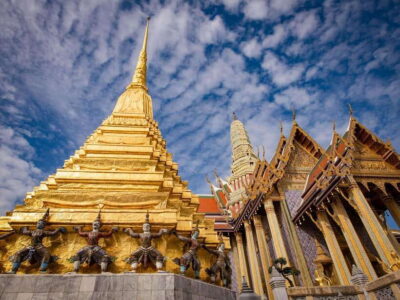
Grand Palace and Wat Phra Kaew Guided Walking Tour
Read our review →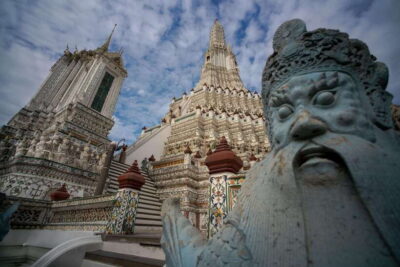
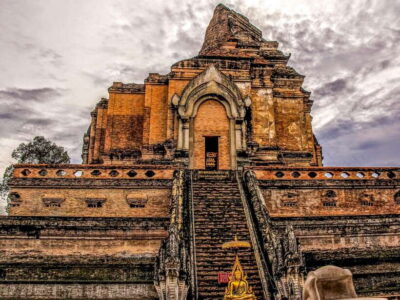
3 Hour Old City and Temples Guided Walking Tour
Read our review →
Beach walk with elephants, rain & care. 2.5 hours
Read our review →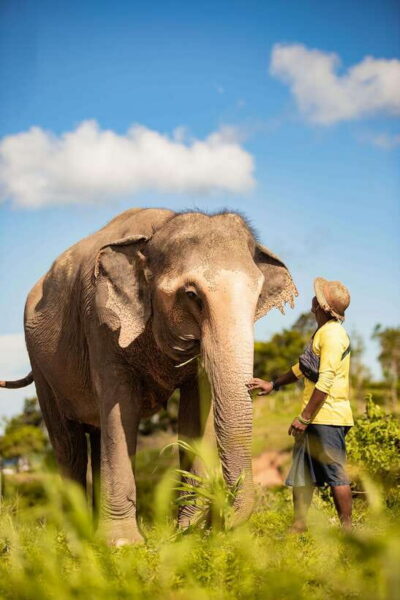
Bukit Elephant Park Sanctuary Walk and Feed Tour
Read our review →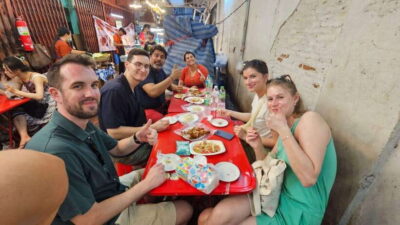
Bangkok Authentic Tasting Thai-Chinatown Walking Food Tour
Read our review →
Browse the lists this tour appears in