
Review · WALKING TOURS
Phuket:Beach walk with elephants, rain & care. 2.5 hours
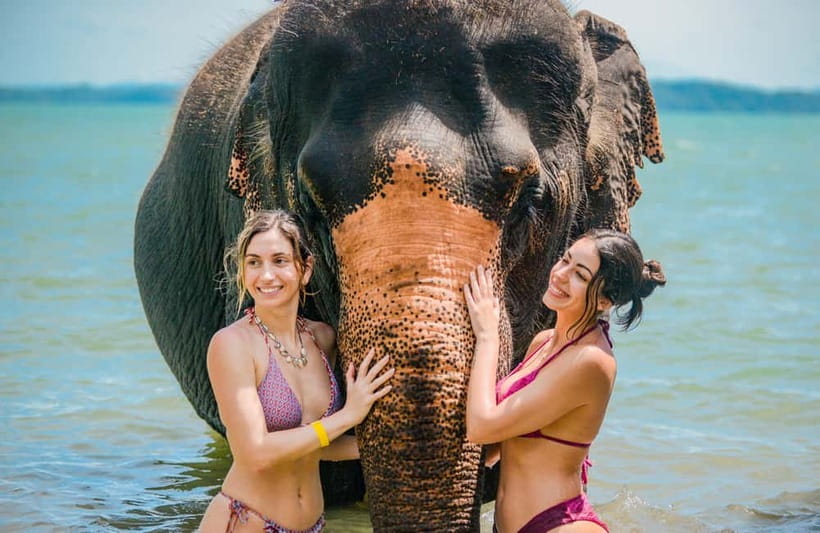
The unusual draw here is not just meeting elephants, but taking them to the sea. At Lily Elephant Camp, you feed the animals, walk with them through nature for about 15 to 20 minutes, then help bathe and brush them at a private beach before making herb vitamin balls for their care. I like the coastal setting and the clear focus on hands-on care rather than riding. I also like that the guides explain why these elephants need sanctuaries and how their past lives shaped their needs.
The main thing to consider is that a close elephant encounter is still an animal activity, not a wild-elephant sighting. The sea can have sharp rocks and sea urchins, so follow safety instructions carefully and wear suitable footwear unless a guide tells you otherwise. Optional transfers and professional photos can also raise the final cost.
In This Review
- At a glance: what makes this Phuket elephant visit different
- Arriving at Lily Elephant Camp in Yamu
- Meeting the elephants and learning the basics
- Feeding time: an easy way to begin
- The 15 to 20 minute walk through nature
- The private beach bath and elephant brushing
- Rain showers, sea views, and the messy fun
- Making herb vitamin balls for elephant care
- How ethical is the hands-on contact?
- What $59 includes, and what it does not
- Who will enjoy this most?
- What to pack and how to avoid a bad morning
- Should you book the Lily Elephant Camp experience?
- FAQ
- How long does the Lily Elephant Camp activity last?
- Where is Lily Elephant Camp located?
- What activities are included?
- Can I bathe with the elephants in the sea?
- Are hotel transfers included?
- What languages do the guides speak?
- What should I bring?
- Can I cancel or pay later?
At a glance: what makes this Phuket elephant visit different
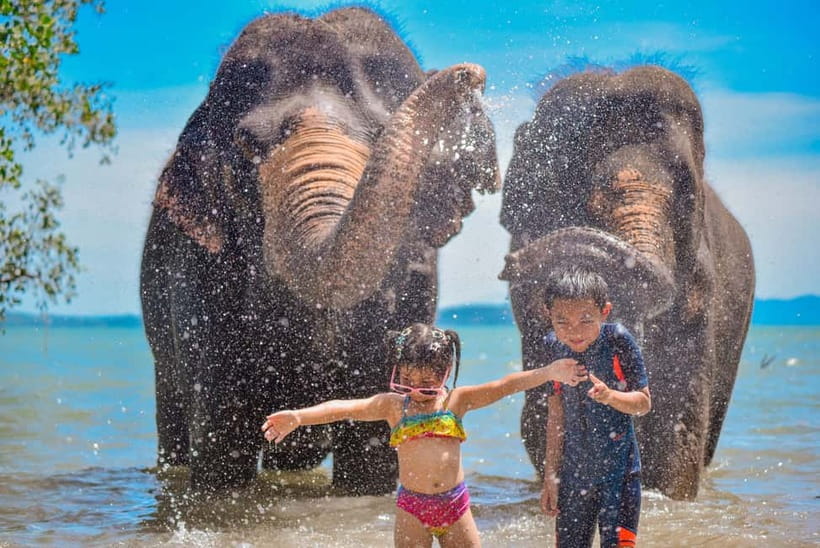
- Elephants go to a private beach: You help bathe and brush them beside the sea, a feature the camp presents as unique in Phuket.
- A full care routine: Feeding, a short jungle walk, a sea bath, a rain shower, and herb vitamin balls give you several ways to take part.
- No riding or chains in the advertised program: The camp says its elephants are free from riding, torture, and chains during their care.
- A relatively new coastal camp: Lily Elephant Camp opened in 2023 and moved from Siray Island to Yamu, Paklok, on a 20-acre natural site.
- Guides add useful context: English and Thai guides explain elephant conservation, behavior, and daily care. Kim is singled out by name in several especially warm accounts.
- Good practical facilities: Free coffee and juice, toilets, and clean showers make the wet part of the morning easier to manage.
Arriving at Lily Elephant Camp in Yamu
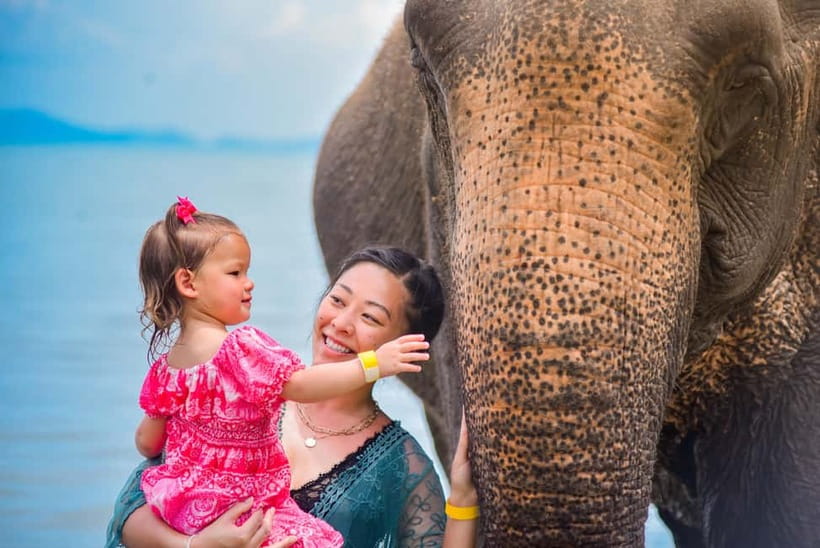
Lily Elephant Camp is in Yamu, Paklok, on Phuket’s northeastern side. The setting is a major part of the experience. This is a coastal sanctuary with a large 20-acre area, rather than a quick photo stop beside a busy road.
You can book the program with or without hotel transportation. Pickup and return are included only if you select a transport option covering Phuket City, Phuket Old Town, Kata, Karon, or Patong. For other areas, the camp lists a 300 THB per-person transfer charge for Panwa, Chalong, Rawai, Surin Beach, Mai Khao, Nai Yang, Nai Thon, Nai Harn, and Siray.
If you arrange a program without transport and later decide you want the shuttle, the stated on-demand fee is 750 THB per person. That makes it worth settling your ride before booking. For a self-arranged visit, search Google Maps or Grab for Lily Elephant Camp. One practical tip: contact the driver ahead of time for an approximate pickup hour, since the exact collection schedule can matter more than the advertised 150 minutes.
The activity itself lasts about 2 to 2.5 hours. Your total outing may be longer if you use a shared transfer. Pickup order can create a long day, especially if you are collected first and returned last. That is normal for a shared route, but it is worth knowing before you place this between two fixed plans.
A few more Phuket trips to weigh up
- Phuket: Bukit Elephant Park Sanctuary Walk and Feed Tour
★ 4.9 · 926 reviews - World B+ (Zipline 18 Platforms + Roller + Sky Walk with World Set Menu )
★ 5.0 · 218 reviews - Phuket Food Tour and City Walk by Jane
★ 5.0 · 109 reviews
Meeting the elephants and learning the basics
The visit begins with an introduction to elephant care and conservation. This short talk gives useful context before you get close to the animals. You learn that many sanctuary elephants in Thailand were previously used for labor or tourist activities, and some have injuries or long-term needs from their past.
That background matters. An elephant raised around people cannot simply be released into the forest and expected to cope. A responsible sanctuary must balance freedom, medical care, food, shelter, and human contact. Lily says its elephants are not used for riding and that the program is built around feeding, walking, bathing, and care.
I would pay close attention to the animal-handling instructions, even if you are excited and ready to start taking pictures. Elephants are calm-looking but powerful. The guides and mahouts decide how close you should stand, when to feed, and how to move around the animals.
The language options are English and Thai. Kim is one guide name that appears in the experience, praised for being funny, helpful, and good at explaining the animals. Guide quality can affect the whole visit, so an attentive explanation is more valuable than a rushed photo opportunity.
Feeding time: an easy way to begin
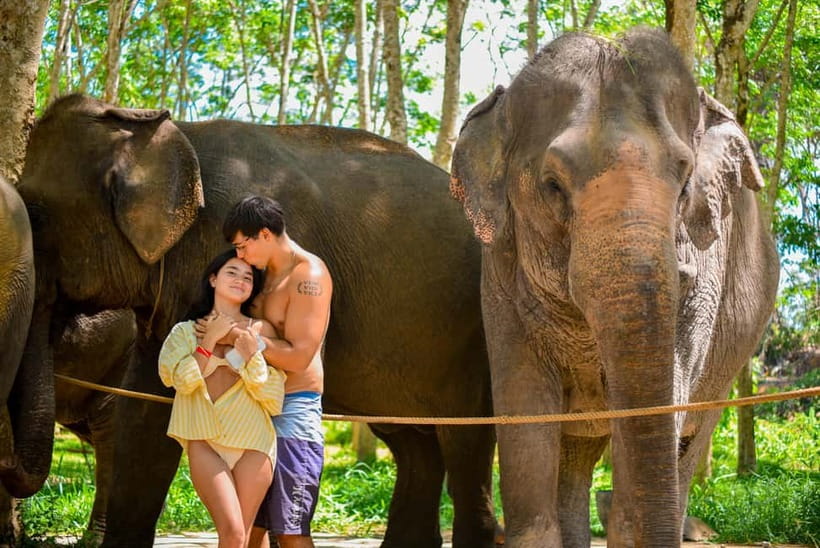
Feeding is the first simple point of contact. You receive elephant food and learn how to offer it safely. This lets you watch each animal’s personality before the more active parts begin.
The elephants may come close, reach with their trunks, and show clear preferences about food and attention. You should keep your movements steady and listen to the guide rather than treating the encounter like a petting zoo. The best moments often come when you pause and watch how the animals respond.
The camp says the elephants live in a natural habitat and are not forced to perform tricks. That is an important distinction, though you should still judge the setting by how staff manage contact. Look for calm handling, room for the elephants to move, and permission for an animal to step away. The advertised program describes feeding and bathing, not riding or shows.
Families can enjoy this part, but young children need close adult supervision. One family account describes a 3-year-old enjoying the experience, but age alone does not remove the need for care around a very large animal. Keep children beside you and let the guide set the pace.
The 15 to 20 minute walk through nature
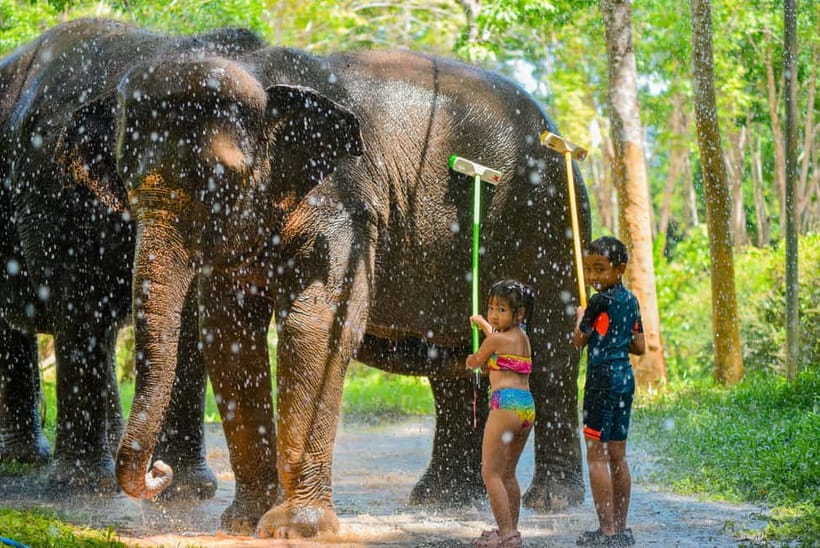
The walk with the elephants lasts roughly 15 to 20 minutes. It is not a long trek, which is good news if you want plenty of time for bathing and feeding without turning the outing into a strenuous hike.
You walk with the animals through the camp’s natural area toward the coast. This short section gives you a better sense of the elephants as animals moving from one place to another, rather than posing in one fixed spot. The beach destination also gives the walk a clear purpose.
Do not expect a remote wilderness encounter. Lily is a managed sanctuary, and the elephants are accustomed to human care. Still, the walk feels more meaningful than standing in a queue for a single photograph because you see the animals move, pause, and interact with their handlers.
Comfortable clothing and shoes are sensible. You will get wet later, and the ground can be uneven. Bring a change of clothes, a towel, sunscreen, biodegradable insect repellent, and a sun hat. Sunglasses are useful before the water activities, but keep track of them once the bathing begins.
Same coastline, a completely different day out:
- Phang Nga Bay Sea Cave Canoeing & James Bond Island by Big Boat
★ 5.0 · 4,666 reviews - Phuket: Elephant Jungle Sanctuary Ethical Feeding Experience
★ 4.8 · 4,359 reviews - From Phuket: Phang Nga Bay and Canoeing Tour by Big Boat
★ 4.7 · 3,528 reviews - Phi Phi Islands Adventure Day Trip w/ Seaview Lunch by V. Marine
★ 5.0 · 3,295 reviews
The private beach bath and elephant brushing
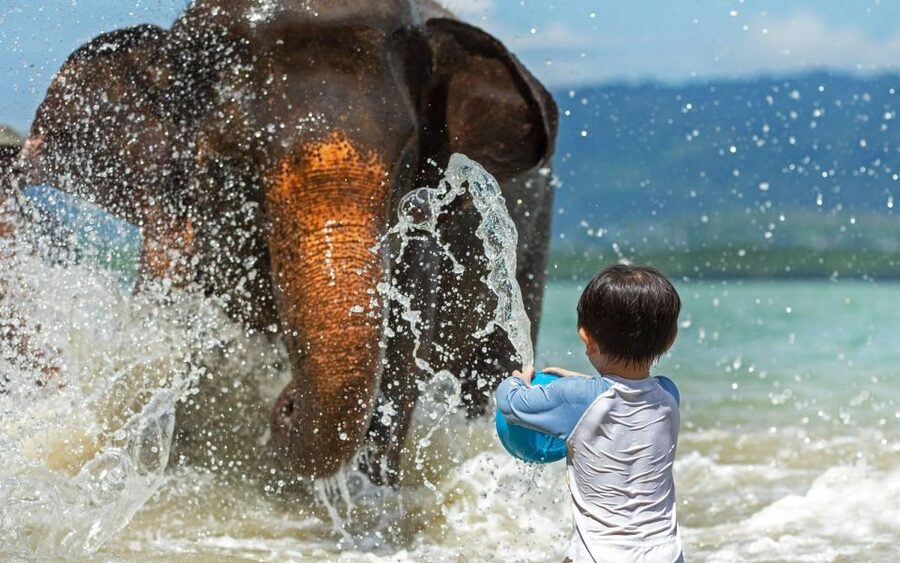
The beach is the signature section of the program. You help bathe and brush the elephants in the sea, with ocean views forming the backdrop. It is playful, messy, and far more physical than a standard sanctuary visit.
You may use water and brushes to give the elephants a kind of spa treatment. The guides help organize the activity so different people have time near the animals. The sea bath is also where the program feels most distinct from inland elephant camps in Phuket.
The camp describes the bathing as a respectful care activity, not a performance. That distinction is worth keeping in mind. Elephants may enjoy water, but they should not be treated as props. Follow the mahouts’ instructions, avoid crowding the animals, and do not assume that touching or hugging is always appropriate simply because it was allowed moments earlier.
The beach conditions deserve attention. A December account describes a visitor cutting a foot on sharp rocks and a sea urchin after removing rubber shoes. The safest approach is to ask exactly where you should walk, what footwear is suitable, and when shoes should come off. Do not remove water shoes automatically. If a guide’s instruction is unclear, ask another English-speaking staff member before entering the water.
This is also the point when your own shower begins. You may come out sandy, soaked, and smiling, so plan to change afterward rather than trying to remain dry. Clean showers and toilets at the camp make that easy.
Rain showers, sea views, and the messy fun
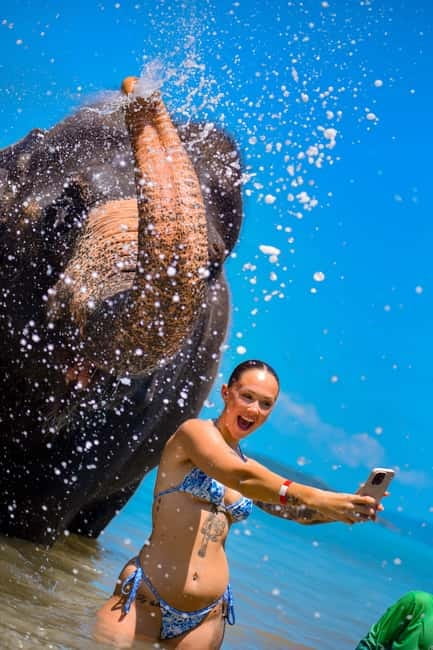
The advertised program includes a refreshing rain shower with the elephants. Depending on the weather and how staff run the session, this can blend into the sea-bathing routine. You shower the animals, get wet yourself, and take photographs against the coast.
That sounds lighthearted, but it also shows the practical side of elephant care. Washing an elephant is not just a quick splash for a picture. You are handling brushes, watching the animal’s reactions, and working under staff direction.
Bring biodegradable sunscreen and insect repellent. Regular products can wash into the water, so the biodegradable request is sensible. A camera or phone can capture good moments, but protect it from spray and saltwater. The camp also offers professional photography, with rates listed from 300 THB. Several accounts refer to a package of 10 digital photos costing 1,500 THB, so confirm the current price and package before buying.
The photos are optional. That matters because the bathing section can become awkward if you feel pressured to purchase pictures after the experience. The program information says photography is not included, and the extra service is separate. Bring your own camera if you prefer, and ask a guide to help take a picture when it is safe.
Making herb vitamin balls for elephant care
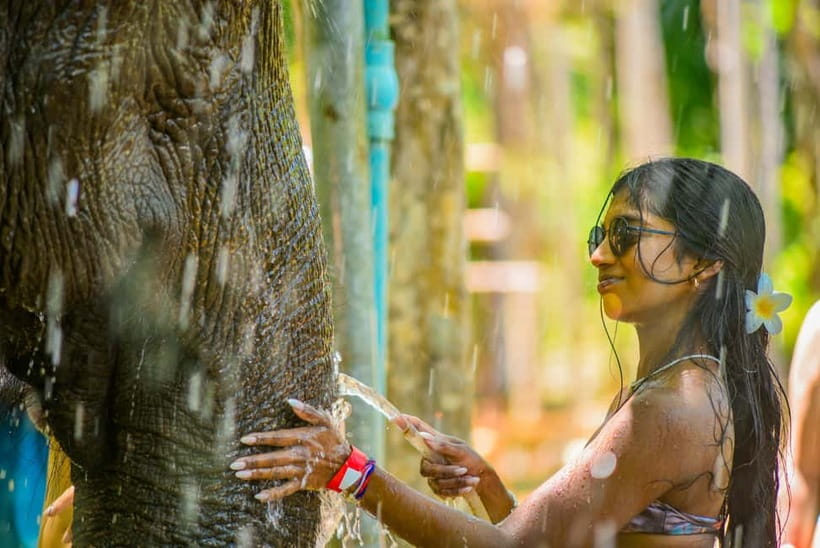
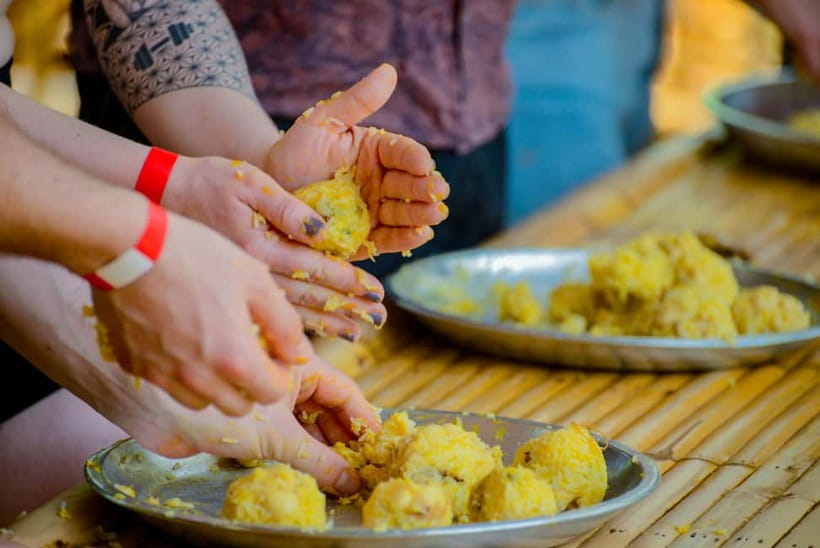
After the water activities, you prepare natural vitamin supplements, described as herb balls, for the elephants. This is a quieter finish and gives you something useful to do after the excitement of the beach.
The value of this activity is educational. You are not only feeding prepared fruit or snacks. You get a small look at the work involved in supporting an elephant’s health and daily diet. The camp says the supplements help maintain the animals’ well-being.
If you have food allergies or a medical condition, include that information in the booking remarks in advance. You should also tell staff directly when you arrive. This is especially important during an activity involving food, plants, and close contact with animals.
The order of activities may vary. The important arc is consistent: introduction, feeding, walk, beach care, showering, and food preparation within roughly 150 minutes. The schedule provides a lot of contact without requiring you to spend a full day at the sanctuary.
How ethical is the hands-on contact?
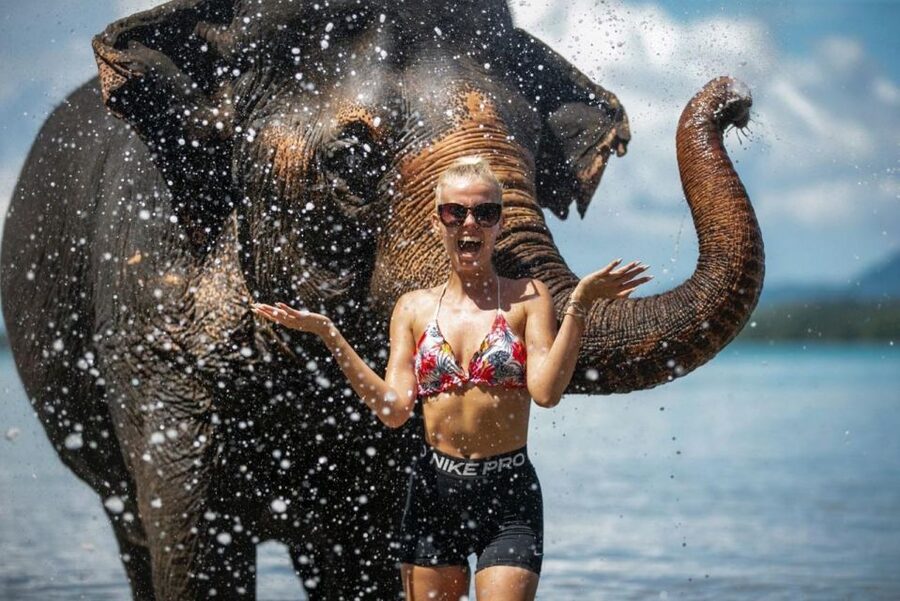
This is the question I would ask before booking any elephant activity in Thailand. The absence of riding is a good starting point. Lily also says its elephants are free from chains, torture, and forced performance in the program.
But bathing and brushing are still direct human interaction. Some people are comfortable with that when the animals are rescued, accustomed to people, and allowed to move freely. Others prefer observation-only sanctuaries, where visitors do not touch or bathe elephants.
The backstories provided by the camp matter here. These are described as elephants that previously worked for people, with some injured or unable to survive independently in the wild. For such animals, a well-run sanctuary can provide food, care, and a stable life. The ethical quality depends on daily standards, not only on a no-riding promise.
Watch how staff behave. Calm voices, no hitting, no forcing an elephant toward a group, and room for the animal to leave are all encouraging signs. You can also help by keeping your own contact brief and following instructions rather than demanding a particular pose.
One recent session had approximately 40 people and five elephants, though group size may change. That ratio still allowed individual interaction in that account, but a larger crowd can reduce quiet time. If close contact is important to you, ask the operator about the expected group size before booking.
What $59 includes, and what it does not
At $59 per person, the experience is not the cheapest elephant activity in Phuket. It does provide a full 2.5-hour program with food, feeding, the nature walk, sea bathing, rain showering, an English or Thai guide, and accident insurance.
The private beach setting gives the price a clear reason. You are paying for several activities in one visit, not simply transport to a camp and a single feeding session. Free coffee and juice, toilets, and showers also add practical value, especially for families or anyone arriving before a beach day.
Transport changes the calculation. Pickup and drop-off are included only with selected options and selected areas. Other zones carry a stated 300 THB per-person fee, while arranging the shuttle later can cost 750 THB per person. Compare the complete price, not just the headline figure.
Photography is another extra. The listed starting rate is 300 THB, while the 10-digital-photo price cited in the experience is 1,500 THB. That may be worthwhile if you want polished pictures, but it is not a small add-on. Decide in advance how much you value professional photos.
The flexible booking terms are useful. You can reserve now and pay later, and cancellation is free up to 24 hours before the activity for a full refund. The program is wheelchair accessible, though the beach, water, and uneven outdoor portions may still require you to confirm what level of assistance you need.
Who will enjoy this most?
I would recommend this for you if you want close contact with elephants and are comfortable with a managed sanctuary experience. It suits families, couples, first-time Phuket visitors, and anyone who wants feeding, walking, and bathing in one compact outing.
It is also a good fit if you care about the animals’ past. The introductory conservation talk and supplement-making activity add purpose beyond taking pictures. You get a clearer idea of why rescued elephants need long-term care.
You may prefer another type of sanctuary if you want to observe elephants from a distance without touching them. You should also think twice if you dislike getting wet, have trouble walking over beach surfaces, or want a quiet, small-group visit with no crowd at all.
For older children, the program offers plenty to do. For toddlers, the experience can work with close adult supervision, but the camp’s accessible status does not mean every beach activity will be effortless for every mobility level.
What to pack and how to avoid a bad morning
Bring swimwear, a towel, dry clothes, sunscreen, biodegradable sunscreen, insect repellent, a hat, sunglasses, and a camera. Cash is useful for extras. Drones are not allowed.
Wear something that can get muddy and wet. Protect phones and cameras from seawater, and do not leave valuables loose while you are in the water. Ask about footwear before entering the sea because the rocky bottom can cause injuries.
If you use hotel pickup, confirm the approximate time with the driver. Shared transfers can add several hours to the total day. If you drive or use Grab, search for Lily Elephant Camp rather than relying on a vague beach or village address.
Should you book the Lily Elephant Camp experience?
Book it if the idea of walking with elephants to the sea appeals to you, and if you want an active, hands-on visit without riding. The strongest parts are the coastal bath, the amount of contact across several activities, and the guides’ conservation briefing. Kim is a name to look out for, though your guide may be different.
Before paying, check the transport option, expected group size, photo prices, and water-safety instructions. At $59, the value is good when transfers are included and you use the full program. It is less attractive if you add expensive transport and professional photos without planning for them.
My call: this is a strong choice for a family-friendly Phuket elephant experience, with one important condition. Treat the animals as rescued elephants in human care, not as entertainment props, and let the staff control the contact. That approach gives you the fun beach memory while keeping the visit respectful.
FAQ
How long does the Lily Elephant Camp activity last?
The program lasts about 150 minutes, or 2.5 hours. The listed activity time is also described as approximately 2 to 2.5 hours.
Where is Lily Elephant Camp located?
The camp is in Yamu, Paklok, Phuket, on the Gulf of Thailand. It relocated there from Siray Island and operates across a 20-acre natural habitat.
What activities are included?
You can feed the elephants, walk with them in nature for about 15 to 20 minutes, bathe and brush them at the beach, shower them, and prepare herb vitamin balls.
Can I bathe with the elephants in the sea?
Yes. Sea bathing with the elephants is part of the program, along with brushing them and enjoying the coastal setting.
Are hotel transfers included?
Transfers are included only when you select a transport option during booking for the stated Phuket City, Old Town, Kata, Karon, and Patong areas. Other zones have additional fees.
What languages do the guides speak?
The live guides speak English and Thai.
What should I bring?
Bring swimwear, a towel, a change of clothes, sunscreen, biodegradable sunscreen, insect repellent, a hat, sunglasses, a camera, and cash.
Can I cancel or pay later?
You can reserve now and pay later. Free cancellation is available up to 24 hours before the activity for a full refund.
Just added around Phuket
- The Upside Down House: Phuket’s Must-See Attraction★ 4.7 · 13 reviews
- Simon Cabaret Phuket Show Included Tickets and Transfer★ 4.4 · 155 reviews
- Siam Niramit Phuket Admission Ticket with Transfer Option★ 4.6 · 49 reviews
- Phuket: Zipline Flying Higher than a Hawk with ATV Option★ 4.7 · 33 reviews
- Phuket: White Water Rafting, ATV, and Zipline Adventure★ 3.1 · 35 reviews
- Phuket: Big Buddha View Wat Chalong, Old Town Guided Tour★ 3.6 · 38 reviews
- Phuket: Fully Customized Night Market Tour★ 4.2 · 18 reviews
- Phuket:City Tour,Big Buddha, Forest Safari Tiger Park Canopy★ 3.6 · 15 reviews
Walking Tours, compared.
City Highlights Temple and Market Walking Tour
Read our review →
Grand Palace and Wat Phra Kaew Guided Walking Tour
Read our review →

3 Hour Old City and Temples Guided Walking Tour
Read our review →
Bukit Elephant Park Sanctuary Walk and Feed Tour
Read our review →
Bangkok Authentic Tasting Thai-Chinatown Walking Food Tour
Read our review →

Browse the lists this tour appears in