
Review · WALKING TOURS
Bangkok: Chinatown & Taladnoi Street Art Guided Walking Tour
Bangkok’s Chinatown is best understood on foot, and this tour takes you beyond Yaowarat’s bright signs and food stalls. You’ll visit Wat Mangkon Kamalawat, old Chinese charitable institutions, quiet temples, and the narrow lanes of Talad Noi, where the city’s past still turns up in surprising places.
I like the way the walk connects Thai-Chinese immigration and trade with ordinary streets, shrines, markets, and workshops. I also like the finish at the Chao Phraya River, where you can stop for lunch, browse River City Bangkok, or continue by boat. The main drawback is the heat: four hours on foot, much of it outdoors, can be tiring, especially around midday.
In This Review
- Key points
- Why this four-hour walk works
- Starting at Wat Mangkon Exit 3
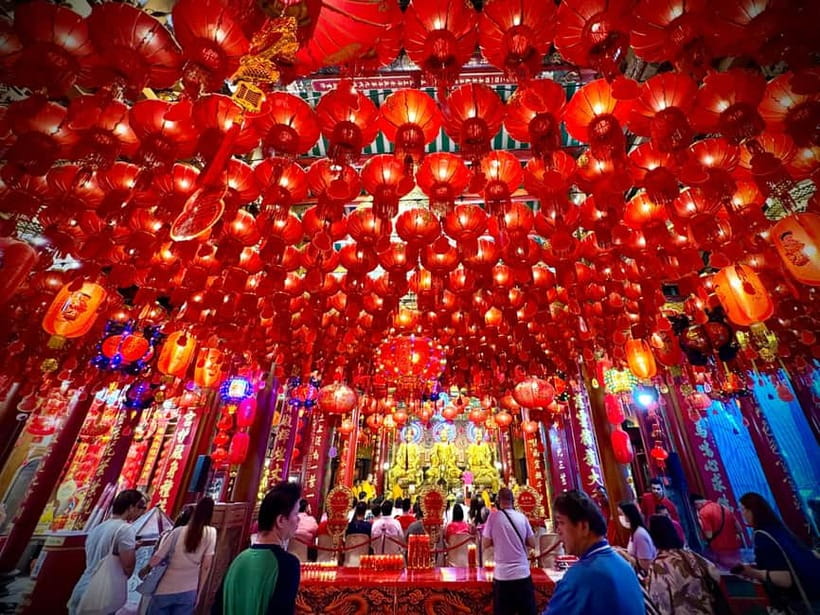
- Wat Mangkon and the Chinese spiritual quarter
- Tian Fah Foundation Hospital and the Golden Buddha story
- Wat Pathum Khongkha and quieter Bangkok
- Talad Noi’s old ironworking lanes
- Talad Noi Community Museum and neighborhood art
- Shrines between old buildings
- Reaching River City Bangkok
- Guide style and personal attention
- What the $19 price really buys
- Who should book this Chinatown walk
- Should you book it?
- FAQ
- Where does the tour start?
- Where does the tour finish?
- How long does the experience last?
- Is hotel pickup available?
- What language is the tour offered in?
- Are food and drinks included?
- What should I bring?
- Is the tour suitable for wheelchair users or pregnant women?
Key points
- Start at MRT Wat Mangkon Exit 3: A practical meeting point in the middle of Chinatown.
- See more than the main Yaowarat strip: The route includes temples, markets, charitable institutions, shrines, and side lanes.
- Learn how Chinese communities shaped Bangkok: Your guide explains immigration, commerce, religion, and local legends.
- Explore Talad Noi’s old ironworking district: Former craft lanes now mix aging buildings, small shrines, and street art.
- Finish at River City Bangkok: You have an easy place to eat, rest, shop, or reach the river.
- Expect a personal guiding style: Guides including Jenny, Nok, Mai, Jib, and Mariyah have been praised for patience, flexibility, and clear explanations.
Why this four-hour walk works
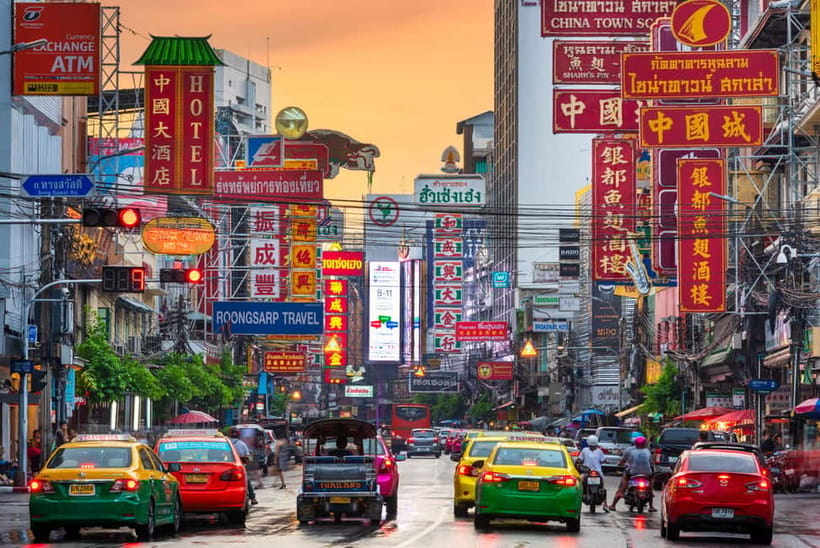
At $19 per person, this is a strong-value way to get your bearings in two of Bangkok’s most characterful districts. You are paying for a licensed English-speaking guide, local interpretation, and a bottle of water, not for meals, entrance extras, or private transport unless you choose the pickup option.
I see the value in the route itself. Chinatown and Talad Noi are easy to wander through, but the meaning of a shrine, hospital, temple, or old trading lane is not always obvious from the pavement. A guide gives those places a story and helps you notice details you could otherwise pass without a glance.
The advertised rating is 4.7 from 36 ratings, and the praise is notably consistent about the guides. Jenny is described as clear and patient, Nok as attentive and helpful, Mai as friendly and well informed, and Jib as especially polite and thorough. Guide assignments can change, but the pattern is useful: this experience depends heavily on the person leading it, and the guide quality appears to be one of its strongest features.
The tour is not designed for a slow, shaded, sit-down morning. You walk for about four hours, with Chinatown and Talad Noi each receiving roughly two and a half hours in the route description. Wear light clothes and solid walking shoes. A hat, sunscreen, and extra water are sensible in Bangkok’s sun.
Other Bangkok days people book alongside this one:
- Bangkok: Damnoen Saduak Market and Maeklong Railway Market
★ 4.5 · 26,723 reviews - The Old Siam: Damnoen Saduak and Maeklong Railway Market
★ 4.5 · 10,992 reviews - From Bangkok: Ayutthaya Temples Guided Tour with Lunch
★ 4.7 · 10,535 reviews
Starting at Wat Mangkon Exit 3
The walk begins at MRT Wat Mangkon Exit 3, a convenient place to meet before entering the heart of Chinatown. If you are staying elsewhere in Bangkok, the MRT makes this start much easier than arranging a taxi through crowded streets.
The meeting point also puts you in the right setting immediately. Wat Mangkon is not a distant introduction to Chinatown. It places you beside one of the city’s major centers of Chinese spiritual life, so the tour begins with the sights, sounds, and movement of the district rather than a long transfer.
An optional hotel pickup is available for an additional cost. If you choose it, you are asked to wait in your hotel lobby at least five minutes before the scheduled time. The guide will hold a sign with your name. One important practical note: pickup has not always been perfectly smooth. One booking involved a one-hour delay caused by a failed pickup, so the MRT meeting point is likely the simpler choice if you are comfortable reaching Chinatown yourself.
Wat Mangkon and the Chinese spiritual quarter
Wat Mangkon Kamalawat is an impressive first stop. The temple is a major focus of Chinese religious life in Bangkok, and your guide can explain how its practices fit into the Thai-Chinese character of the neighborhood.
This is the kind of place where a guide earns the fee. You will see religious objects, incense, and activity, but the visual details can blur together if you do not know what you are looking at. A good guide can separate local practice from tourist decoration and explain why the temple matters to the Chinese community.
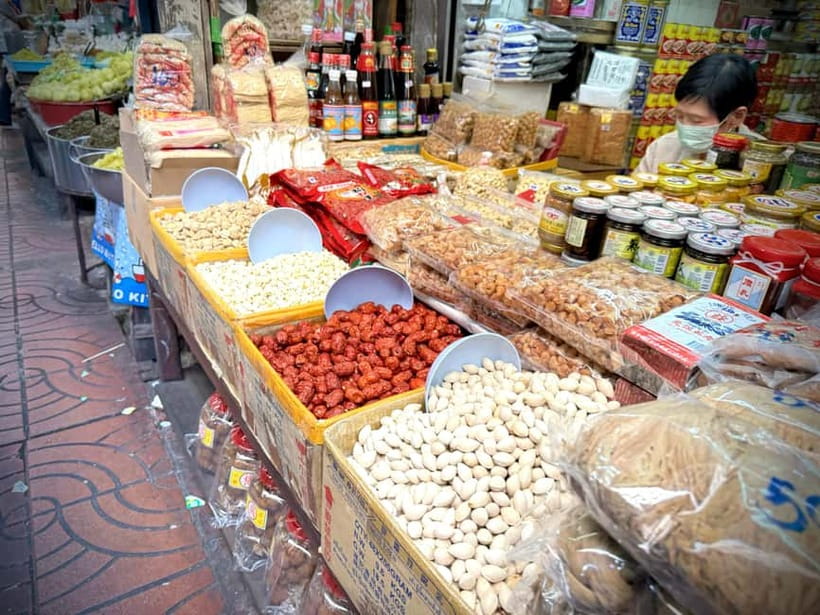
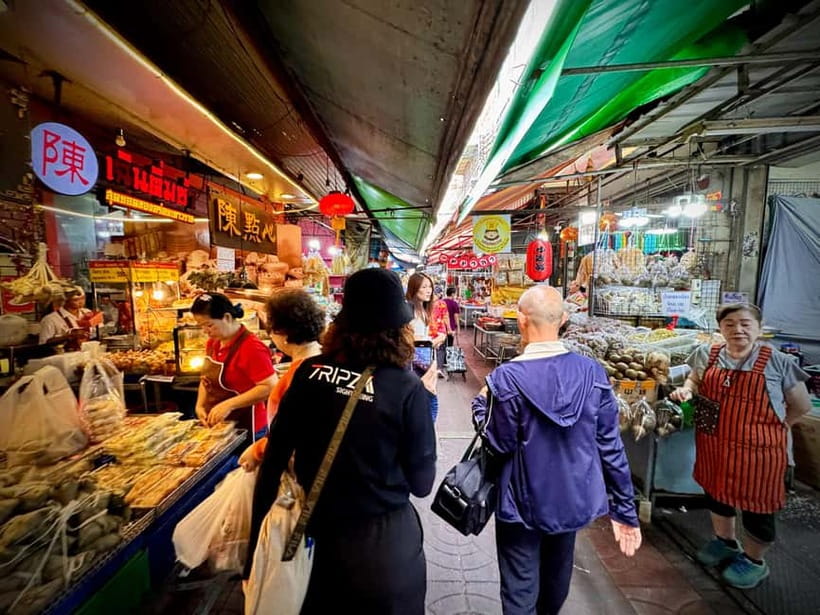
The tour then moves through a morning market. Expect a working market rather than a staged attraction, with street food, incense, shops, and residents handling daily errands. You may find this section more interesting than a standard sightseeing stop because it shows Chinatown as a living commercial district.
Keep your pace flexible here. Markets are narrow and active, and the route may involve stopping beside stalls rather than standing in a large open space. This is also a good time to ask your guide about foods or customs that catch your eye, though meals are not included in the tour price.
Tian Fah Foundation Hospital and the Golden Buddha story

The Tian Fah Foundation Hospital adds a different layer to the walk. It was Thailand’s first Chinese charitable hospital, linking the district’s religious life with its community networks and social support.
I appreciate this stop because it shifts the story away from temples alone. Chinatown was built through work, trade, donations, family ties, and mutual aid. A charitable hospital makes that history concrete. It shows how an immigrant community created institutions to care for its own people while becoming part of Bangkok.
The route also includes the story of the Golden Buddha at Wat Traimit. The tale is one of Bangkok’s best-known religious surprises, and it gives your guide a chance to explain how an important object can be overlooked, protected, and later recognized in a new way.
You should not treat this section as a museum visit with long indoor viewing time. It is primarily a guided walk with explanations along the route. The value comes from the account and the setting, so stay close enough to hear your guide when street noise rises.
A few more Bangkok trips to weigh up
- Bangkok: City Highlights Temple and Market Walking Tour
★ 4.5 · 3,990 reviews - Bangkok: Grand Palace and Wat Phra Kaew Guided Walking Tour
★ 4.4 · 2,417 reviews - Bangkok: Wat Pho and Wat Arun Guided Walking Tour
★ 4.6 · 1,720 reviews - Bangkok Authentic Tasting Thai-Chinatown Walking Food Tour
★ 4.9 · 852 reviews
Wat Pathum Khongkha and quieter Bangkok
Wat Pathum Khongkha provides a change in pace. After the market energy and busy Chinatown streets, this temple offers a more peaceful stop with royal associations.
That contrast is one of the pleasures of the route. Bangkok can change mood within a few minutes of walking. One street is packed with signs, food, and traffic. The next opens into a temple compound or a small lane where the noise drops away.
Your guide uses these shifts to connect the city’s different layers. The point is not simply to collect temple photographs. You are seeing how religious sites, trade routes, old homes, and modern businesses sit beside one another.
If you prefer a tour built around major landmarks with plenty of indoor time, this may feel too informal. If you like seeing how a district changes block by block, the contrast makes the walk worthwhile.
Talad Noi’s old ironworking lanes
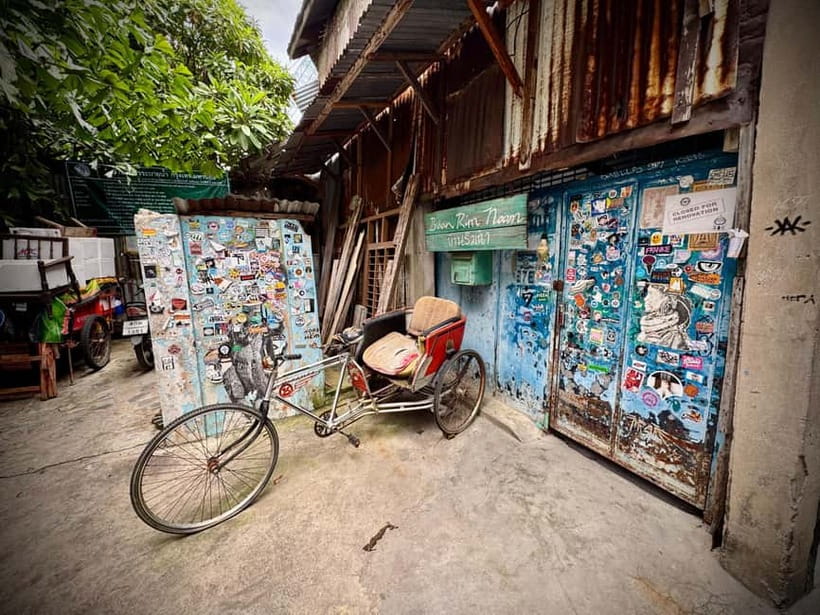
The route continues into Talad Noi, one of the most distinctive parts of the experience. The area is linked with Chinese craftsmen who once forged metal tools in its narrow alleys. That industrial past helps explain why the neighborhood feels different from the grander commercial streets of Yaowarat.
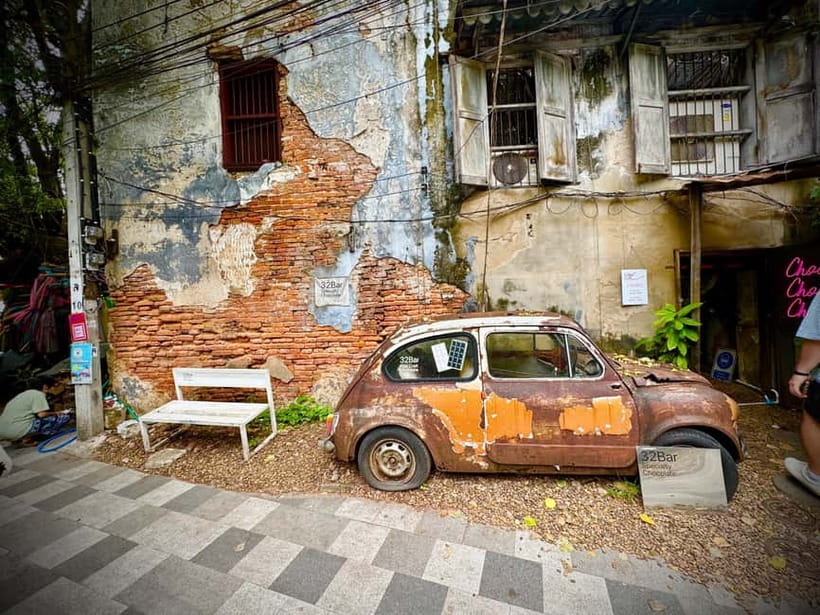
Talad Noi is not presented as a polished historic quarter. You walk through old buildings, working streets, small shrines, and lanes where traces of earlier trades remain part of the surroundings. The charm comes from the mixture of age and ordinary use.
I like this section because it gives you a clearer idea of how people made a living here. Trade and immigration are not abstract subjects when you are walking through an old craft district. The lanes show how skill, family businesses, and Chinese community networks helped shape Bangkok.
The route includes time for photographs and free exploration, but remember that this is still a guided walking tour. You will not have an entire afternoon to browse every lane. The guide keeps the group moving toward the riverside finish.
Talad Noi Community Museum and neighborhood art
The Talad Noi Community Museum adds local context to the street walk. It helps frame the district through its community story rather than viewing it only as a photo stop.
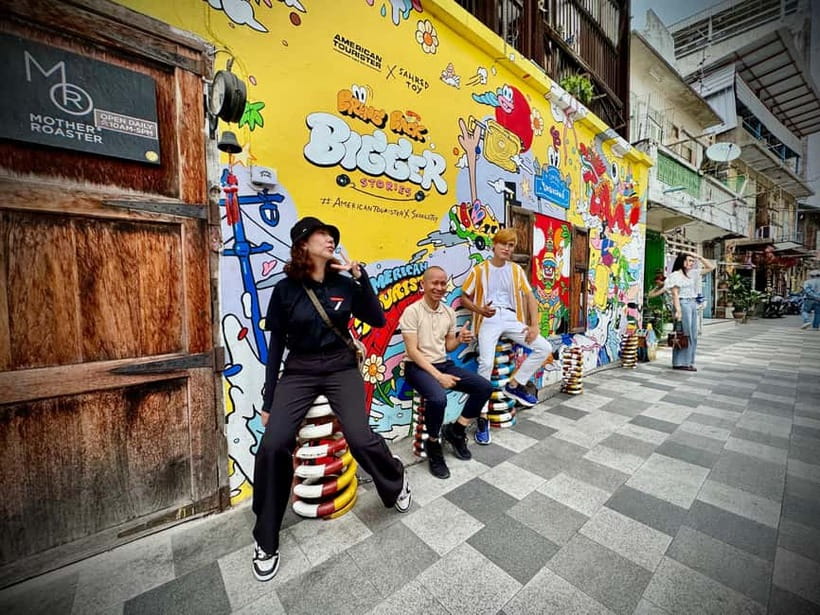
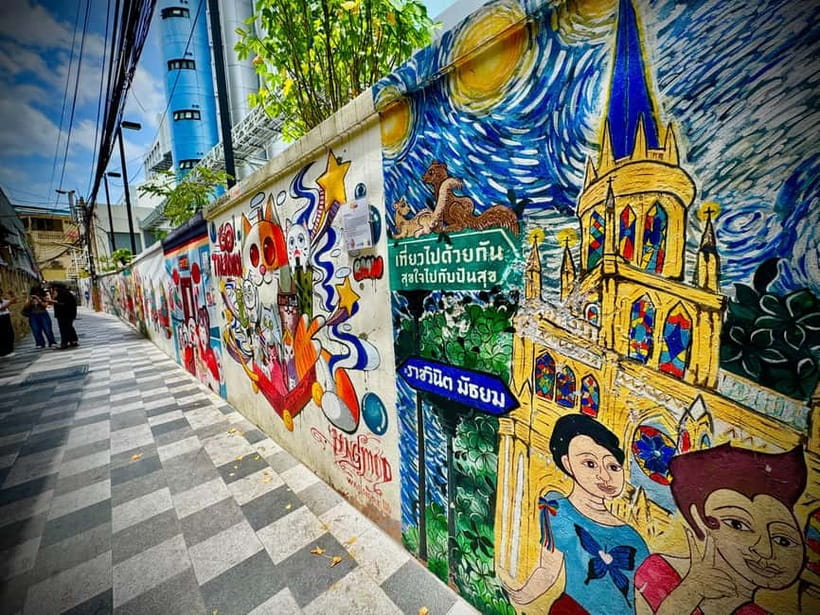
The nearby street art brings a younger, more visual note to the old neighborhood. Painted walls and colorful backstreets sit alongside aging buildings and traditional shrines. This mix is one reason Talad Noi has become popular with people who want more than Bangkok’s best-known monuments.
Your guide can help you read the area as more than a collection of attractive walls. The art becomes part of a changing neighborhood, while the old shrines and buildings point to earlier generations. That balance is useful because Talad Noi can easily be reduced to a quick social-media stop.
You should also expect small spaces and uneven walking conditions. The tour is specifically listed as unsuitable for wheelchair users, and it is not recommended for pregnant women. Anyone with limited mobility should think carefully before booking, since the route goes through alleys and active streets rather than broad, level paths.
Shrines between old buildings
One of the route’s best details is the attention to shrines tucked between older buildings. These small religious sites can be easy to miss when you are looking ahead for a famous temple or mural.
The guide brings out the local legends and community meaning attached to them. This is where the walk feels most personal. You are not just visiting official attractions. You are seeing the small places that residents maintain as part of neighborhood life.
The exact experience will depend on the guide and the day’s conditions. Guides such as Mai and Jib have been praised for adapting the walk to personal interests, and one private booking was adjusted around the participant’s preferences. If you have a strong interest in religion, architecture, food, or old trades, tell your guide early.
Reaching River City Bangkok
The tour ends at River City Bangkok on the Chao Phraya River. This is a useful finish because it leaves your afternoon open rather than returning you to the starting point.
You can stop for a riverside meal, continue your own sightseeing, browse the River City complex, or look into a scenic boat ride. The ending also makes practical sense if you want to combine the walk with other central Bangkok plans.
The tour does not include lunch, snacks, boat tickets, or personal purchases. That keeps the base price low, but plan for your own food and onward transport. The bottle of water is welcome, though I would still carry more for a hot day.
The one-way design is worth noting. You finish in a different area from where you began, so check your next destination before setting out. For many people, this is a benefit. You can keep moving along the river instead of retracing the same streets.
Guide style and personal attention
The strongest part of this experience is the human explanation. The guides named in the feedback, including Jenny, Nok, Mai, Jib, Ploy, Mariyah, and Toto, are repeatedly described as friendly, patient, clear, and flexible.
That matters in a neighborhood like this. The route includes many places that are visually interesting but not self-explanatory. A guide who can explain Thai-Chinese culture, trade, immigration, and local stories turns a walk into a connected experience.
You may also receive a more personal tour than expected if the group is small. One participant had a private walk, and another appreciated that the guide changed the route to suit personal preferences. Group size is not specified, so you should not book assuming a private experience, but the tour appears capable of feeling personal when numbers are low.
English is the only listed tour language. The guide is fully licensed and the tour includes a live English-speaking guide. If you need another language, this is not the right option based on the information provided.
What the $19 price really buys
At $19, the tour is priced below many half-day private city experiences, yet it covers a substantial route and four hours of guiding. The main value is interpretation, not included attractions or food.
I would book it for the stories and local orientation. You could walk through Chinatown and Talad Noi alone for free, but you would need to research the hospital, temples, Golden Buddha story, ironworking past, and shrines in advance. You would also spend time finding the less obvious lanes.
The price becomes less of a bargain if you want hotel transport, meals, or a private vehicle. Pickup costs extra, and personal expenses are not covered. Still, the standard meeting point is easy to reach by MRT, and the bottle of water is a useful inclusion.
Free cancellation up to 24 hours before the start and the option to reserve now and pay later give you useful flexibility. Check the available starting times when booking, since the tour is four hours and the supplied information does not set one fixed departure time.
Who should book this Chinatown walk
I would recommend it to first-time Bangkok visitors who want help reading the city rather than simply photographing it. It is also a good fit for repeat visitors who have already seen the main temples and want a closer look at Chinatown and Talad Noi.
Families can enjoy it, especially if children respond well to markets, colorful walls, temple details, and short local stories. A family booking described the guide as patient and clear with children of different personalities.
The tour suits you if you enjoy walking, street life, neighborhood history, and a changing pace. It is less suitable if you need air-conditioned transport, want a food tour with tastings included, or prefer a short list of major monuments.
Bring comfortable shoes, light clothing, a hat, sunscreen, and water. Plan on heat, outdoor walking, narrow lanes, and regular stops rather than a relaxed indoor schedule.
Should you book it?
Book this tour if you want Chinatown explained from the inside out, from Wat Mangkon’s religious life to Talad Noi’s old craft lanes and riverside finish. At $19, it offers good value for four hours, especially if you reach the MRT meeting point yourself.
Skip it if you dislike walking in heat, need wheelchair access, or want meals and transport included. For everyone else, the mix of temples, markets, charitable history, shrines, street art, and personal guiding makes this a useful way to spend a Bangkok morning or afternoon.
FAQ
Where does the tour start?
The standard meeting point is MRT Wat Mangkon Exit 3 in Bangkok’s Chinatown.
Where does the tour finish?
The tour ends at River City Bangkok beside the Chao Phraya River.
How long does the experience last?
The walking tour lasts four hours. The Chinatown and Talad Noi portions are each listed at roughly two and a half hours, including visits, guiding, walking, photo stops, and free time.
Is hotel pickup available?
Yes. Hotel pickup is an optional choice and costs extra. You should wait in your hotel lobby at least five minutes before the scheduled pickup, and the guide will hold a sign with your name.
What language is the tour offered in?
The tour is offered in English with a live English-speaking guide.
Are food and drinks included?
Meals and personal expenses are not included. One bottle of water is included.
What should I bring?
Wear comfortable shoes and light clothing. Bring a hat, sunscreen, and a water bottle to help manage the heat.
Is the tour suitable for wheelchair users or pregnant women?
No. The experience is listed as unsuitable for wheelchair users and pregnant women.
Just added around Bangkok
- Damnoen Saduak Floating Market Small Group Tour★ 4.0 · 107 reviews
- Angkor Wat 2-Day Tour from Bangkok★ 5.0 · 8 reviews
- Arrival Private Airport Transfer : Bangkok Airport to Hotel in Bangkok★ 4.5 · 142 reviews
- Private Best of Bangkok Full Day Highlights City Tour★ 4.5 · 13 reviews
- Ancient Wonders of Ayutthaya with Return Scenic River Cruise★ 4.0 · 31 reviews
- Private Ancient city of Ayutthaya Shore Excursion★ 5.0 · 9 reviews
- Ancient City Ayutthaya Private Guided Day Tour★ 5.0 · 49 reviews
- Ancient City Bangkok and Erawan Museum Tickets★ 4.5 · 8 reviews
Walking Tours, compared.
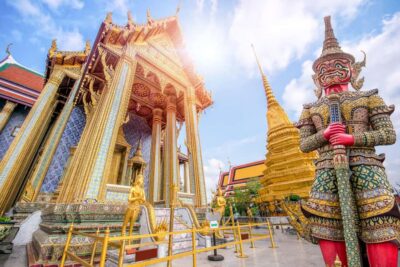
City Highlights Temple and Market Walking Tour
Read our review →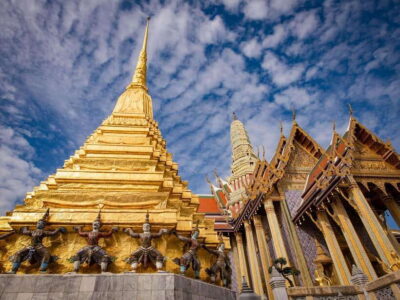
Grand Palace and Wat Phra Kaew Guided Walking Tour
Read our review →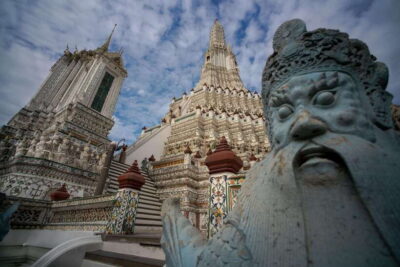

3 Hour Old City and Temples Guided Walking Tour
Read our review →
Beach walk with elephants, rain & care. 2.5 hours
Read our review →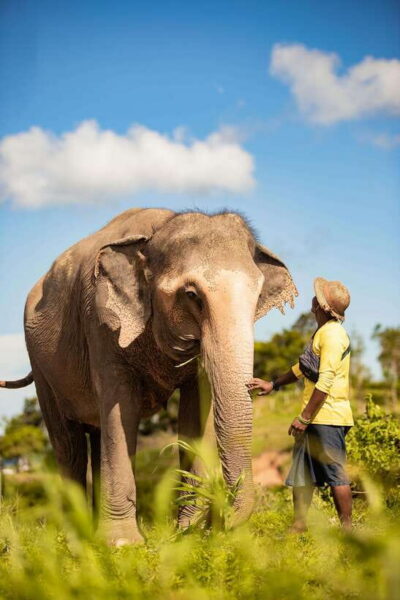
Bukit Elephant Park Sanctuary Walk and Feed Tour
Read our review →
Bangkok Authentic Tasting Thai-Chinatown Walking Food Tour
Read our review →
Browse the lists this tour appears in