Review · TOURS
Bangkok: Jim Thompson House and Baan Krua Community Tour
The most unusual part of this four-hour Bangkok outing comes after the famous house. You cross into Baan Krua, a canal-side Cham community where silk weaving still survives, though only a small number of looms remain. That gives the tour more purpose than a standard museum visit.
I like the easy hotel pickup and private air-conditioned transport, especially in Bangkok’s heat. I also like the link between Jim Thompson’s house, his silk business, and the family workshop where you can buy silk at its source. The main consideration is that the Baan Krua weaving tradition has greatly diminished, so you should not expect a large working village or a busy production center.
In This Review
- Key points at a glance
- Why Jim Thompson’s story begins in Baan Krua
- Inside the six teak houses at Jim Thompson House
- What the private guide adds
- Walking through Baan Krua Nhua beside the canal
- Meeting Uncle Aood’s silk-making family
- Is $55 a fair price?
- Who will enjoy this four-hour outing?
- Practical details before you book
- Should you book the Jim Thompson and Baan Krua tour?
- FAQ
- How long does the Jim Thompson House and Baan Krua tour last?
- What time does the tour start?
- Where does pickup take place?
- Is transportation included?
- Is admission to Jim Thompson House included?
- Is a guide included?
- Is lunch included?
- Can I buy Thai silk during the tour?
- Is Baan Krua still a large silk-making village?
- Can I cancel for a full refund?
Key points at a glance
- Jim Thompson’s 1959 teak house: See six traditional Thai-style houses brought together from different parts of Thailand.
- A canal-side community visit: Walk through Baan Krua Nhua beside Klong Saen Saeb and learn about its Cham fishermen and silk weavers.
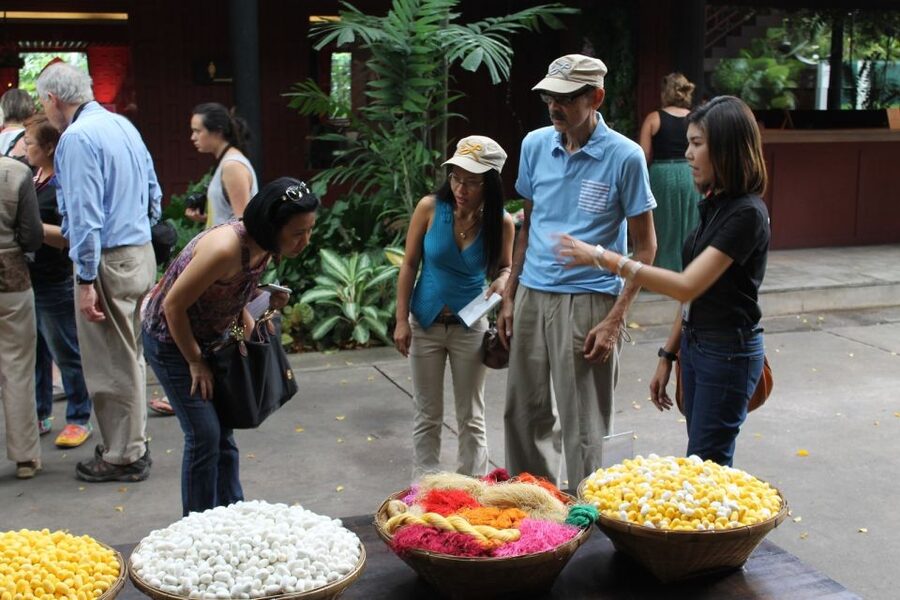
- A direct link to Thai silk: Visit Uncle Aood’s family, one of the last households in the community still making silk for a living.
- Private Bangkok transport: Travel from a central Bangkok hotel in an air-conditioned car with round-trip transfers included.
- A four-hour morning plan: The tour starts around 8:30 AM, leaving much of the afternoon free.
- A practical value question: At $55 per person, the price pays for private transport, a guide, and the community visit, not just museum entry.
Why Jim Thompson’s story begins in Baan Krua
Jim Thompson House is often treated as a stylish Bangkok museum, and it is certainly that. But the more interesting story reaches beyond the garden walls to Baan Krua, the community where Thompson found the silk-making tradition that helped build his famous brand.
Baan Krua Nhua sits along the Klong Saen Saeb River. The community has been home to Cham people since the reign of King Rama I. Traditionally, residents worked as fishermen and silk weavers. That combination of water, family craft, and neighborhood life gives the second half of the tour a human setting that a museum alone cannot provide.
The connection matters because Jim Thompson did not simply decorate his house with Thai objects. He became fascinated by Thai silk, supported the weaving community, and bought its cloth for his company. The brand later became known around the world, but this tour points you back to the local makers who helped make that success possible.
You should keep your expectations realistic. Baan Krua is not presented as a large-scale silk village with rows of active looms. The old trade has faded, and much of the production now takes place elsewhere. The special part is seeing what remains and meeting one family that continues the work.
Other Thailand days people book alongside this one:
- Bangkok: Damnoen Saduak Market and Maeklong Railway Market
★ 4.5 · 26,723 reviews - Half-Day Thai Cooking Class at Organic Farm in Chiang Mai
★ 5.0 · 19,087 reviews - The Old Siam: Damnoen Saduak and Maeklong Railway Market
★ 4.5 · 10,992 reviews
Inside the six teak houses at Jim Thompson House
Your guide meets you at your central Bangkok hotel at about 8:30 AM. From there, a private air-conditioned car takes you to Jim Thompson House. This arrangement is simple, but useful. Bangkok traffic and heat can make a short cross-town trip tiring, and you avoid spending time figuring out a taxi or public transport connection.
Before you enter, your tour guide gives you an introduction to the site. A Jim Thompson House guide then escorts you through the interior. That division of roles is worth knowing: your private guide helps frame the visit and manage the day, while the house’s own guide leads the tour inside.
The property is a complex of six traditional Thai-style houses, although the overall experience is sometimes described more broadly as a group of seven structures. The main buildings are teak houses purchased from several owners and moved from different parts of Thailand to this location. Construction finished in 1959.
That relocation is one of the house’s most striking features. You are not looking at a single local home that grew naturally over generations. You are seeing a carefully assembled group of traditional structures, placed together as a residence and social setting in central Bangkok.
Inside, you visit different sections of the house with the site guide. Since Jim Thompson disappeared in 1967, little has changed in the home. The rooms therefore offer more than polished architecture. They preserve the atmosphere of a residence that became one of Bangkok’s best-known social centers.
I like this part of the tour for its clear sense of place. The teak construction, traditional design, and collected buildings help you see how Thompson presented Thai culture to the world. At the same time, you should not expect an all-day museum visit. The house is the better-known stop, but the guided visit is only one part of a four-hour route.
What the private guide adds
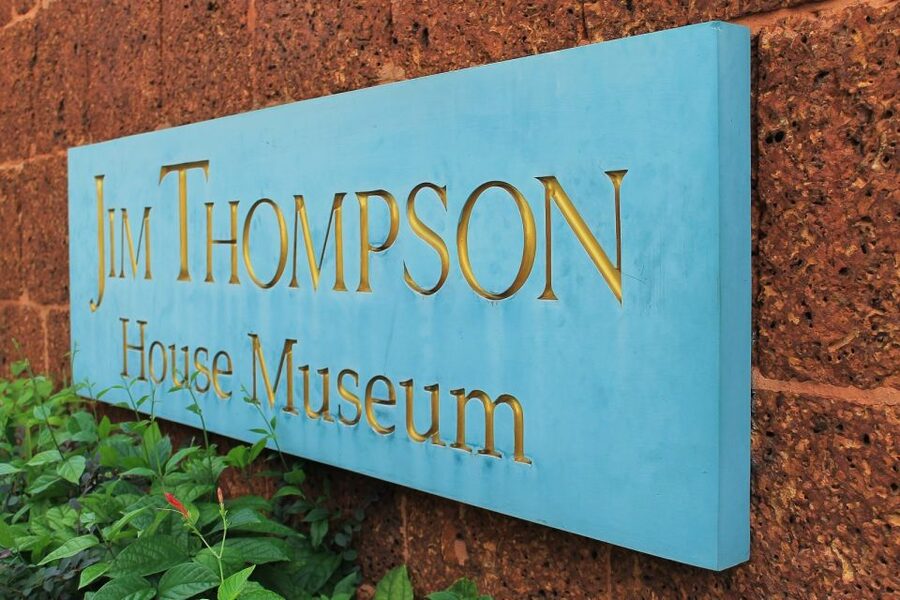
The Jim Thompson House has its own guided presentation, so you could visit the museum without booking this package. The extra value here comes from having someone connect the house to Baan Krua and take care of transport between the two places.
That wider explanation can make a real difference. Instead of viewing Jim Thompson as an isolated American collector, you get a clearer picture of his interest in silk and his relationship with the weaving community. Your Bangkok guide can also answer questions throughout the day rather than leaving you to piece together the connection yourself.
The guides speak English or Thai. One guide named Kiwi, with the name spelled differently in Thai, was praised for answering many questions, adding useful extras, and suggesting good shopping places based on personal interests. Another guide, Tum Tum, was noted for explaining the silk-making process and the history of the Jim Thompson area.
Those details suggest that the quality of your day depends partly on the individual guide. The strongest version of this tour is not just a transfer from one attraction to another. It is a conversation about how a local craft, a foreign businessman, and a Bangkok neighborhood became linked.
Walking through Baan Krua Nhua beside the canal
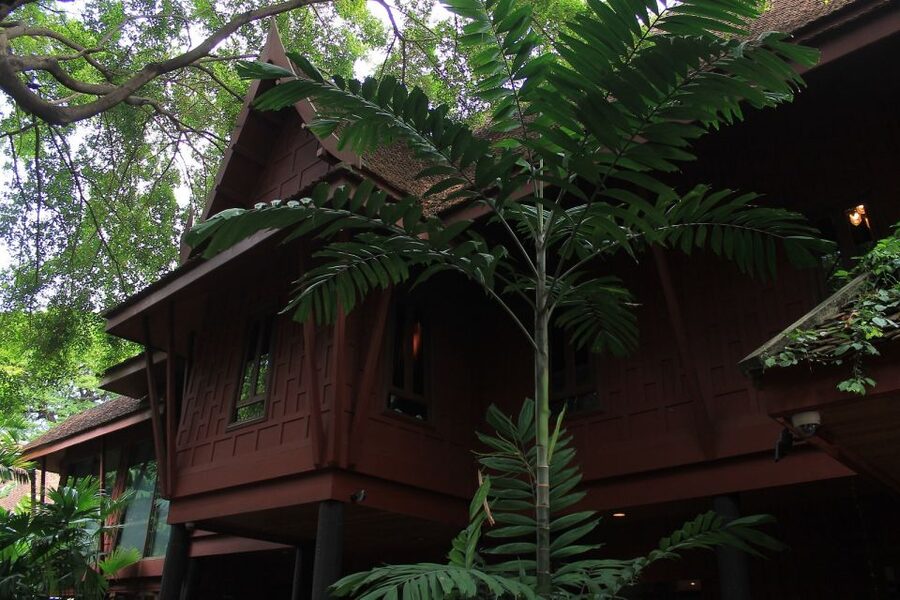
After Jim Thompson House, your guide takes you to Baan Krua Nhua, on the bank of Klong Saen Saeb. The change of setting is the point. You leave the formal house and enter a long-established neighborhood where the silk story has roots in daily life.
The Cham people have lived in this area since the time of King Rama I. Fishing and silk weaving shaped the community, and the canal remains an important visual part of the visit. You can expect to walk through the neighborhood rather than simply stop at a shop or showroom.
I like this section because it gives you a better sense of the people behind Thai silk. The quality of the fabric is linked to texture, color, and durability, but the craft also depends on family knowledge passed down over time. A neighborhood visit puts that work in context.
Still, this is the part most likely to disappoint if you picture a fully active silk village. The community now has only two looms making silk, and other production happens in a factory elsewhere. You might see only a small remnant of the old trade rather than a full working operation.
That change does not make the stop pointless. It does mean you should treat Baan Krua as a living historical community with a surviving family business, not as a large industrial demonstration. The walk, the canal setting, and the explanation of the area may be more valuable than the amount of weaving you actually see.
Same coastline, a completely different day out:
- From Bangkok: Ayutthaya Temples Guided Tour with Lunch
★ 4.7 · 10,535 reviews - Bangkok: Train Market & Floating Market with Boat Ride
★ 4.7 · 9,547 reviews - Chiang Mai: Elephant Sanctuary, Waterfall & Bamboo Rafting
★ 4.9 · 9,160 reviews - Chiang Mai: Doi Inthanon National Park Eco-Friendly Tour
★ 4.6 · 6,667 reviews
Meeting Uncle Aood’s silk-making family
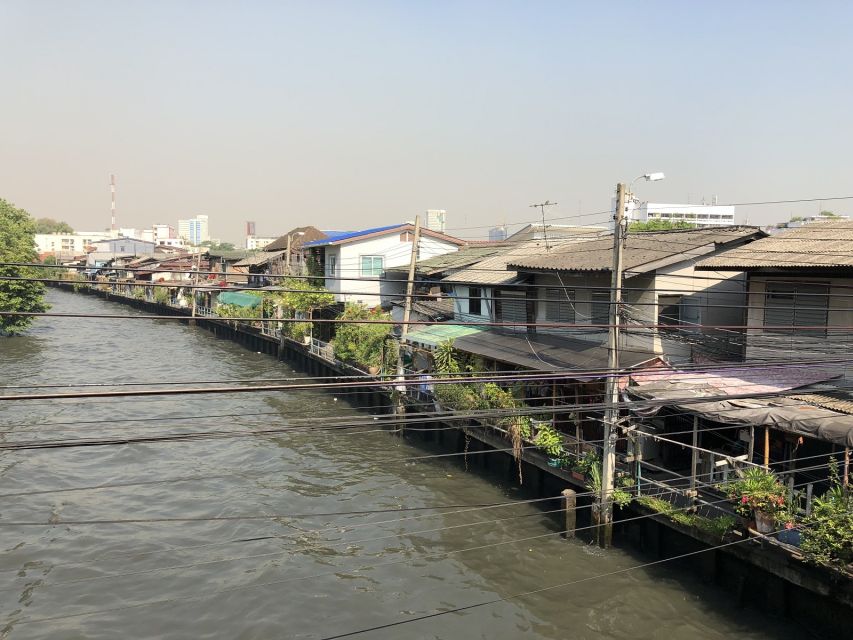
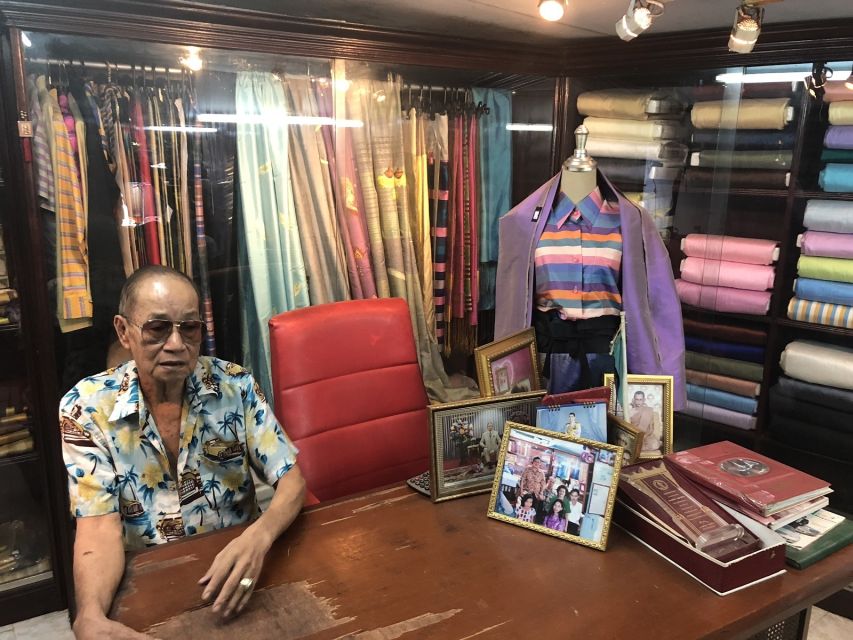
The tour includes a visit to Uncle Aood’s house. His family is described as the last family in the Baan Krua community still continuing the silk business as a livelihood. This is the most personal moment of the outing.
You have the chance to see how the silk tradition continues at household level and to buy original Thai silk directly from its source. Available items include quality silk products, and one person bought several ties during the visit.
Direct buying can be a good part of the experience, but approach it with clear eyes. The price may be higher than you expect, and one account felt that the guide received a cut from the loom owner. That does not prove anything improper, but it does show why you should ask the price before choosing an item and buy only what you genuinely want.
I would treat a purchase here as support for a surviving family craft, not as a guaranteed bargain. If you want a silk scarf, tie, or other product with a direct connection to Baan Krua, the extra cost may feel worthwhile. If your main goal is low-cost shopping, you may prefer to visit the house and community without buying.
The chance to purchase from the original place is still a meaningful feature. It keeps the money closer to the people who preserve the skill, and it gives you a tangible reminder of the connection between Baan Krua and the Jim Thompson name.
Is $55 a fair price?
The tour costs $55 per person. That is more than the cost of visiting Jim Thompson House alone, since the museum can be visited independently. The price makes more sense if you value the private round-trip transfer, an English-speaking guide, the second location, and the link between the two sites.
Your fee includes:
- Private round-trip transport from a hotel in central Bangkok
- An air-conditioned car
- Entrance to Jim Thompson House
- An English-speaking guide
- Taxes and fees
Lunch is not included, and personal purchases at Baan Krua cost extra. Since the activity lasts about four hours and begins around 8:30 AM, you can arrange lunch afterward rather than trying to fit a meal into the schedule.
For a solo visitor, couple, or small party that wants door-to-door service, the price is reasonable. You are paying for time saved and local guidance as much as for admission. If you are comfortable arranging Bangkok transport and visiting Jim Thompson House on your own, the value is weaker.
The private format also gives you more room to ask questions than a large group outing usually allows. The exact group size is not stated, so you should confirm it if that matters to you. The important point is that transfers are private from central Bangkok hotels, while the house interior has its own guided presentation.
Who will enjoy this four-hour outing?
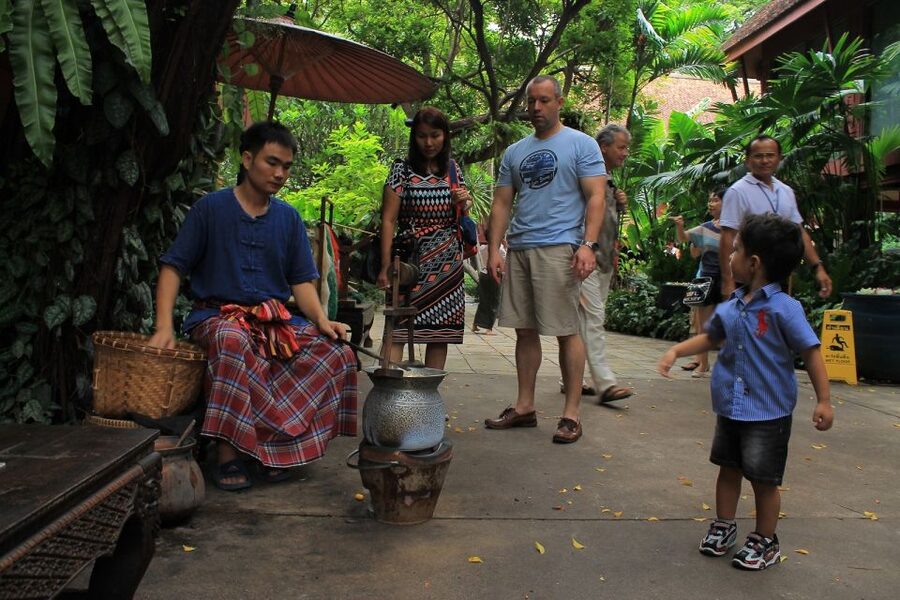
I would choose this experience if you are interested in architecture, Thai silk, local communities, or the story behind a famous Bangkok institution. It suits people who prefer a guided connection between places rather than a list of unrelated sights.
It is also a good fit for a first visit to Bangkok when you want a manageable morning. The hotel pickup removes much of the effort, and the afternoon remains open for lunch, shopping, or another attraction.
You may want to skip it if you have already visited Jim Thompson House and want a major silk-production demonstration. The Baan Krua portion is small, and the decline of local weaving means the visit cannot show the full scale of the old industry.
The tour is less suited to anyone looking only for a museum ticket or a shopping deal. Its value comes from the story, the transport, and the personal connection with a remaining silk-making family.
Practical details before you book
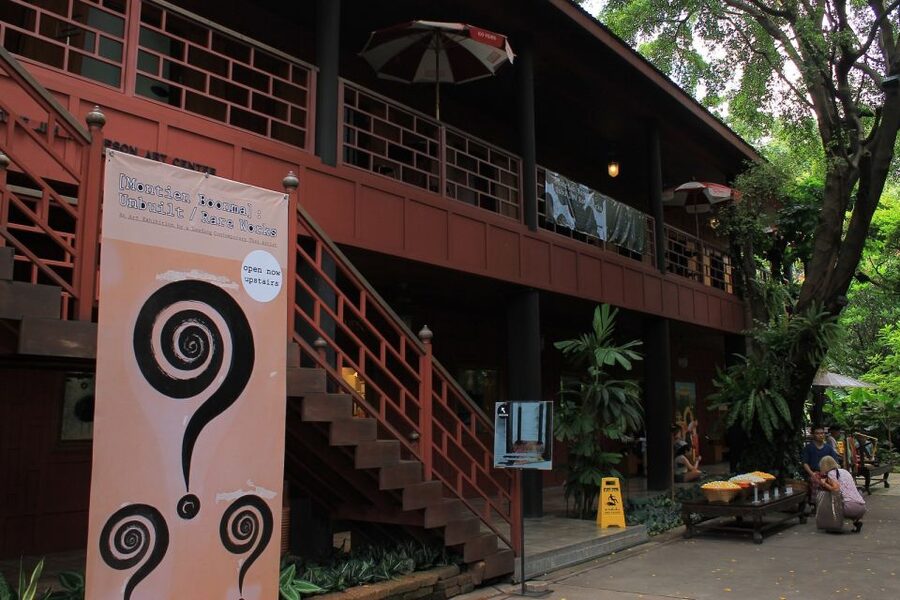
Pickup is available from hotels in central Bangkok. The stated meeting time is around 8:30 AM, but you need to check available starting times when booking.
The experience lasts four hours. Wear footwear suitable for walking through a residential neighborhood, though no special equipment is listed. Lunch is not included, so plan to eat after the tour or make your own arrangements before departure.
The activity offers free cancellation up to 24 hours in advance for a full refund. You can also reserve now and pay later, which is useful if your Bangkok plans are still changing.
English and Thai are available as tour languages. If you want the strongest possible experience, tell the operator that you are interested in silk production and local history. That gives your guide a clear idea of what you want explained.
Should you book the Jim Thompson and Baan Krua tour?
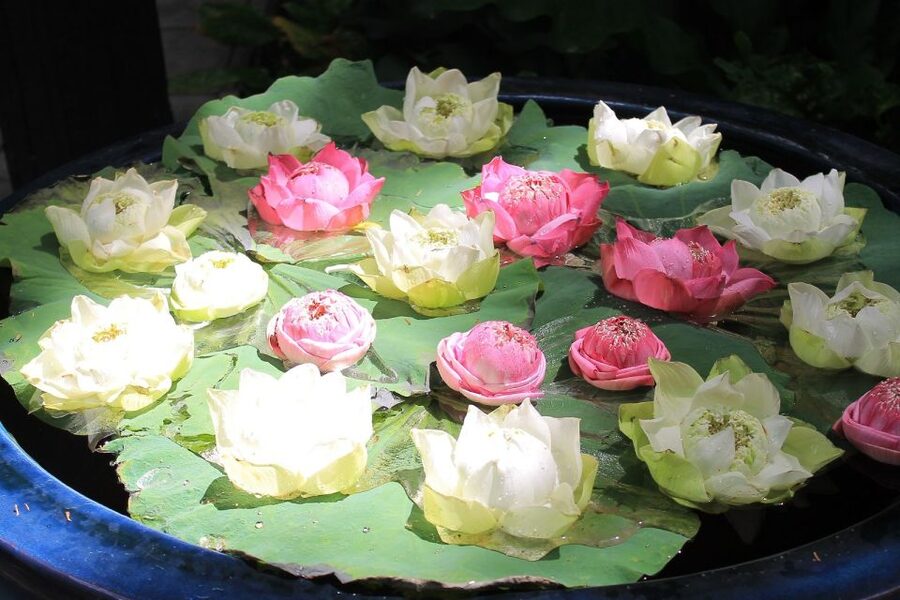
Book it if you want more than the Jim Thompson House itself. The house is the polished centerpiece, but Baan Krua explains where the silk story began and introduces you to one of the last families still making it.
I especially recommend it for anyone who values local craft and prefers private transport in Bangkok. Just remember that the community has only a small number of working looms left, and the silk may cost more than shop prices. If that sounds acceptable, $55 buys a thoughtful morning with a useful cultural link, not merely a museum transfer.
FAQ
How long does the Jim Thompson House and Baan Krua tour last?
The tour lasts four hours.
What time does the tour start?
The stated schedule begins around 8:30 AM. Starting times can vary, so check availability when booking.
Where does pickup take place?
Pickup is included from hotels in the central Bangkok area.
Is transportation included?
Yes. The experience includes private round-trip transfers in an air-conditioned car from a central Bangkok hotel.
Is admission to Jim Thompson House included?
Yes. The entrance ticket to Jim Thompson House is included in the price.
Is a guide included?
Yes. An English-speaking guide is included. English and Thai are listed as available tour languages.
Is lunch included?
No. Lunch is not included, and you should plan for your own meal.
Can I buy Thai silk during the tour?
Yes. You have an opportunity to buy silk products directly from Uncle Aood’s family in Baan Krua.
Is Baan Krua still a large silk-making village?
No. The community’s silk production has declined. Only two looms are making silk in the community, while other production takes place in a factory elsewhere.
Can I cancel for a full refund?
Yes. You can cancel up to 24 hours in advance for a full refund. Reserve now and pay later is also available.
Just added around Thailand
- Damnoen Saduak Floating Market Small Group Tour★ 4.0 · 107 reviews
- Angkor Wat 2-Day Tour from Bangkok★ 5.0 · 8 reviews
- Arrival Private Airport Transfer : Bangkok Airport to Hotel in Bangkok★ 4.5 · 142 reviews
- Private Best of Bangkok Full Day Highlights City Tour★ 4.5 · 13 reviews
- Ancient Wonders of Ayutthaya with Return Scenic River Cruise★ 4.0 · 31 reviews
- Private Ancient city of Ayutthaya Shore Excursion★ 5.0 · 9 reviews
- Ancient City (Mueang Boran) Entrance Tickets With Hotel Transfer★ 4.5 · 14 reviews
- Ancient City Ayutthaya Private Guided Day Tour★ 5.0 · 49 reviews
Tours, compared.
Bangkok Canal Tour: 2-Hour Longtail Boat Ride
Read our review →
Cooking Class, Market & Thai Herbs Garden Tour
Read our review →
Elephant Sanctuary Feeding Program Half-Day Tour
Read our review →
Bangkok by Private Guide: Full Day Tour In and Around
Read our review →
City Highlights Temple and Market Walking Tour
Read our review →