
Review · TEMPLE TOURS
Chiang Mai – Doi Suthep Temple & Wat Pha Lat Hike
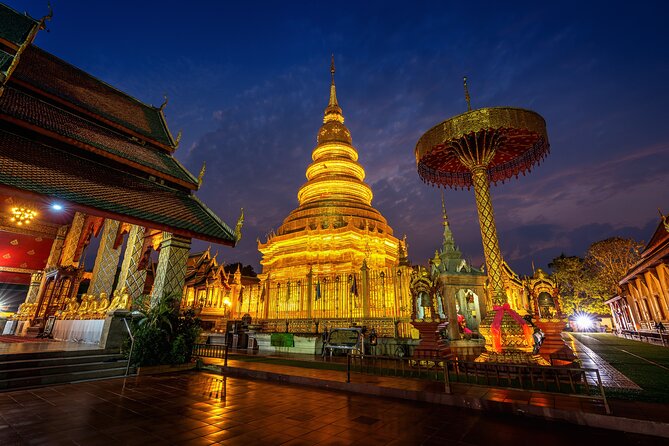
Doi Suthep is Chiang Mai’s great mountain showpiece, but the best part of this outing may be the quiet walk to Wat Pha Lat, a forest temple beside a waterfall. You then trade jungle shade for the gold stupa, prayer halls, and city views of Wat Phra That Doi Suthep. I like the contrast between the two temples, and I like the ride in a traditional red songthaew, which feels more local than a sealed tour bus.
I also like the choice of a 5:00 a.m. sunrise departure or a later visit for sunset and city lights. The main caution is the trail: it can be rocky, muddy, and slippery, especially after rain, and the tour may run late in evening traffic. At $25 per person, it is strong value, but remember to budget separately for temple admission, the cable car, and the THB 100 Monk’s Trail fee.
In This Review
- Key points at a glance
- Two temples, two very different moods
- The Monk’s Trail and the forest walk
- Wat Pha Lat, Chiang Mai’s quiet forest temple
- Wat Phra That Doi Suthep and the view over Chiang Mai
- Sunrise, sunset, or city lights
- Riding Chiang Mai’s red songthaew
- Guides who make the temple visit worthwhile
- What the $25 price really covers
- Clothes, fitness, and practical preparation
- Should you book this Doi Suthep tour?
- FAQ
- How long does the Doi Suthep and Wat Pha Lat tour last?
- What time does the sunrise tour start?
- Which temple do I visit first on the sunrise program?
- Is the hike uphill or downhill?
- How long is the walking section?
- Can I avoid the hike?
- Is the tour suitable for wheelchair users?
- What does the $25 price include?
- What extra fees should I expect?
- Where is pickup available?
Key points at a glance
- Wat Pha Lat comes first in spirit: This peaceful forest temple has statues, greenery, water, and a quieter feel than Doi Suthep.
- The sunrise option starts at 5:00 a.m.: You visit Doi Suthep first, watch dawn over Chiang Mai, then walk downhill from Wat Pha Lat.
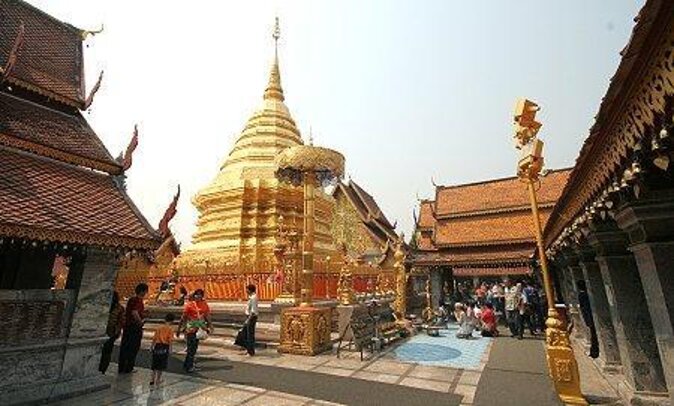
- Doi Suthep delivers the big views: Its golden stupa and mountain position make it Chiang Mai’s essential temple visit.
- The transport is a real songthaew: You ride in a converted pickup truck with open sides and bench seats.
- Guides add real value: Guides including Jane, Margaret, Saman, Nancy, and Bright have been praised for clear explanations and thoughtful help.
- The price is attractive but not all inclusive: Entrance charges, the cable car, and the THB 100 trail fee are extra.
Two temples, two very different moods
This four-hour tour works because it does not treat Doi Suthep as a quick photo stop. You see two temples with very different characters, linked by the forested slopes of Doi Suthep mountain.
Wat Pha Lat is the quiet half. It sits among trees and gardens, with statues, old temple features, and a waterfall nearby. The setting gives you room to slow down and notice the small details. You may see monks, temple dogs, or people carrying out daily religious routines. The forest sounds and shade make this stop feel far removed from Chiang Mai’s streets.
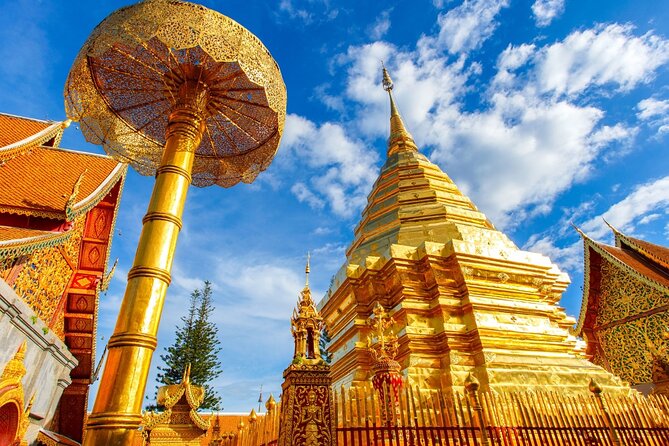
Wat Phra That Doi Suthep is the grand half. Here, the golden stupa, carved details, sacred spaces, and broad views make a strong visual impression. Your guide can explain Buddhist symbols and the meaning behind the carvings, which helps you see more than polished architecture.
I find the pairing much better than visiting Doi Suthep alone. One temple gives you quiet and nature. The other gives you ceremony, scale, and the famous view across the city.
More Temple Tours in Chiang Mai
- Chiang Rai White Temple and Blue Temple Day Tour
★ 4.6 · 3,366 reviews - Chiang Mai: Doi Suthep and Wat Umong Enchanting Evening Tour
★ 4.6 · 1,811 reviews - Chiang Mai: Doi Suthep, Wat Umong, and Pha Lat Sunrise Tour
★ 4.7 · 1,425 reviews
The Monk’s Trail and the forest walk
The walking section covers roughly 2 to 3 kilometers, based on the route described by past participants. It is not a long wilderness trek, but you should not treat it as a flat stroll through a park.
The trail includes rough ground, steps, rocks, and possible mud. After rain, parts can become slippery. Proper walking shoes matter more than stylish sandals here. One useful feature of the sunrise program is that you visit Doi Suthep first, then go to Wat Pha Lat and walk down the Monk’s Trail. That downhill route is easier for many people than climbing the mountain path at the end of a temple visit.
For the regular route, the walk may run uphill toward Wat Pha Lat. If you cannot manage the hike, you can go by songthaew instead. That makes the outing more flexible, but the walking section is still central to the experience, so anyone with limited mobility should confirm the practical details before booking. The activity is listed as wheelchair accessible, yet the natural trail itself includes uneven terrain. Those are two different things.
Allow for a slower pace if the ground is wet. You may also need insect repellent, since Wat Pha Lat is in a forest setting. Bring water, though one bottle is supplied.
Wat Pha Lat, Chiang Mai’s quiet forest temple
Wat Pha Lat is the stop that gives this tour its character. The temple is not presented as a grand city monument. Instead, you reach a peaceful place surrounded by trees, stonework, statues, and a small waterfall.
The setting is especially appealing in the early morning. The air is cooler, the forest is quieter, and the temple feels connected to the monks who use it as a place of retreat. At other times of day, the shade offers a welcome break from the sun.
You will have time to look around and take photographs, but this is a sacred place, not simply a scenic stop. Keep your voice low, dress respectfully, and follow your guide’s advice about where to walk and what to photograph. A few guides have also helped solo visitors take pictures, a small service that makes a difference when you are exploring alone.
The trail and temple are also where weather matters most. Rain can make the path difficult, while dry conditions make the walk much easier. Guides have adjusted the order of the visit during poor weather, sometimes using the rain to decide which temple to visit first. That kind of judgment is useful on a mountain tour.
Wat Phra That Doi Suthep and the view over Chiang Mai
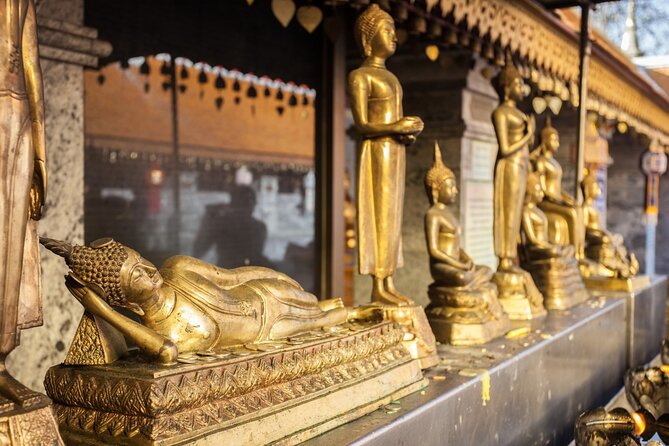
Wat Phra That Doi Suthep is the headline stop. Its golden stupa is one of northern Thailand’s most sacred religious sights, and the mountain setting gives you a view over Chiang Mai that you cannot get from the old city streets.
Expect time to admire the architecture, carvings, shrine areas, and the stupa. The tour is more rewarding when you listen to the explanation of Buddhist symbols rather than rushing from one photo point to the next. Guides such as Bright have explained the meaning of carvings and discussed aspects of Buddhist life, while other guides have covered the temple’s history and present importance.
The view depends on the weather. On a clear morning, you can see across Chiang Mai and toward the surrounding mountains. On a wet or cloudy day, the panorama may disappear. One sensible advantage of the early start is that you can sometimes arrive before the main crowds. A 5:00 a.m. visit may also let you hear monks chanting or observe the giving of alms, though participation or observation depends on what is taking place that morning.
You should behave carefully around religious activity. Dress with shoulders and knees covered, remove footwear where required, and avoid treating ceremonies as a performance. The guide can help you understand what is happening without interrupting it.
Same coastline, a completely different day out:
- Half-Day Thai Cooking Class at Organic Farm in Chiang Mai
★ 5.0 · 19,087 reviews - Chiang Mai: Elephant Sanctuary, Waterfall & Bamboo Rafting
★ 4.9 · 9,160 reviews - Chiang Mai: Doi Inthanon National Park Eco-Friendly Tour
★ 4.6 · 6,667 reviews - Chiang Mai: Elephant Sanctuary & Waterfall Group Tour
★ 4.9 · 5,780 reviews
Sunrise, sunset, or city lights
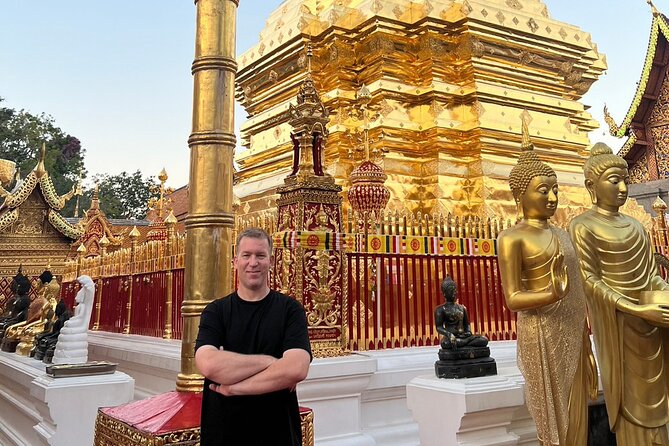
The sunrise program begins at 5:00 a.m. That is early, but it changes the entire mood of the visit. You reach Doi Suthep before the day becomes busy, watch the sun rise over Chiang Mai, and may hear chanting as the temple wakes up. After sunrise, you continue to Wat Pha Lat and walk down the Monk’s Trail.
This option suits you if you value quiet temples, cooler temperatures, and the best chance of seeing morning rituals. The drawback is simple: you lose sleep, and pickup may begin even earlier. Hotel pickups can start up to 45 minutes before the scheduled tour time.
Later departures offer a different reward. You might see the temple in afternoon light, catch sunset if timing and weather cooperate, or view Chiang Mai’s lights after dark. A late schedule can also be calmer than the busiest daytime period. But traffic on the return to the city can stretch the four-hour plan. One outing collected participants at 1:30 p.m. and returned after 6:00 p.m. because of evening traffic.
Choose the time that fits your priorities. Sunrise gives you atmosphere and a cooler walk. Afternoon and evening give you a gentler start and the possibility of sunset or city lights. Do not book the late option expecting a guaranteed sunset. Weather, temple timing, and road conditions all matter.
Riding Chiang Mai’s red songthaew

The tour uses a typical Thai songthaew, often called a red car or red truck. It is a converted pickup with two bench seats in the back, open sides, and no air conditioning.
I consider this part of the appeal. The ride up the mountain includes switchbacks and changing views toward Chiang Mai. You get a more authentic sense of local transport than you would in a private minibus, and the open sides let in mountain air.
It is not luxury transport. You may share the benches with other members of the group, and the ride can feel exposed in hot weather or rain. Bring a light layer for an early morning, and keep valuables secure. The small group size can vary, but one outing had six people, which is a comfortable number for a guide led walk.
Pickup is included only from hotels and accommodations in Chiang Mai’s old city or just outside the center. If you stay outside that zone, you meet in front of Burger King at Thapae Gate. Give the provider your accommodation name when booking so there is no confusion on the morning.
Guides who make the temple visit worthwhile
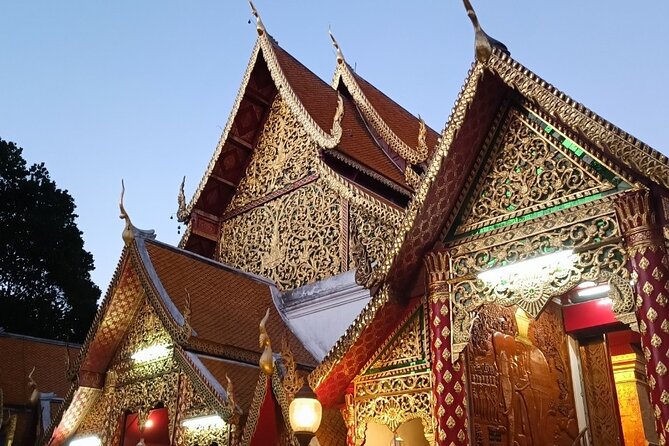
The guide is important here because the temples are much easier to understand with context. A good guide points out the meaning of carvings, explains Buddhist customs, and gives you enough free time to explore without turning the visit into a lecture.
Several guides have earned especially warm praise. Jane is described as clear, funny, and good at keeping a mixed English speaking group together. Margaret has been praised for detailed explanations, help with photographs, and extra care during rain. Saman has explained temple iconography and the monk way of life, while Nancy has been singled out for helping solo participants and making sure everyone felt included.
You may be assigned someone else, so do not book on the assumption that a particular guide will lead your departure. Still, the pattern is clear: guide quality is one of the tour’s main strengths. The English language service is designed for questions, not just announcements.
This matters at Doi Suthep. Without explanation, you see gold, stairs, statues, and a view. With context, you begin to understand how the temple connects religious belief, local identity, and daily practice.
What the $25 price really covers
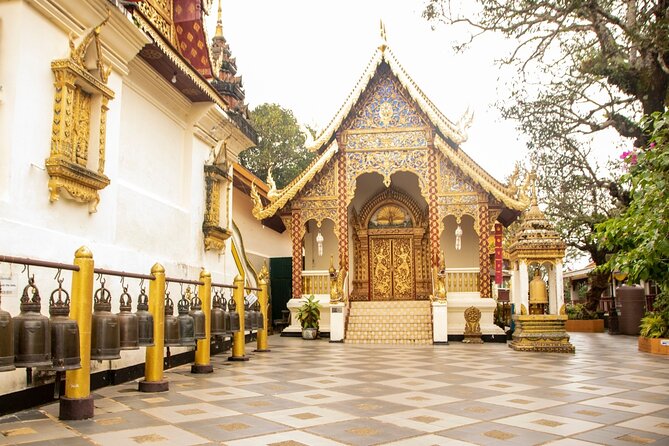
At $25 per person, the tour offers good value for a half day in Chiang Mai. The cost includes transport in the red songthaew, an English speaking guide, a bottle of drinking water, and pickup and drop off within the regular service area.
The price does not include:
- Entrance fees and the cable car at Wat Phra That Doi Suthep
- The THB 100 per person fee for the Wat Pha Lat Monk’s Trail
- Personal expenses
Carry cash. This is not the kind of outing where you should rely only on a card. The extra charges are not large compared with the overall cost, but they mean the advertised price is not your final spend.
The value is strongest if you want both transportation and interpretation. You could arrange a visit independently, but you would need to organize the mountain ride, decide how to connect the two temples, and find your own explanations. For a first visit to Chiang Mai, the convenience is worth paying for.
Clothes, fitness, and practical preparation
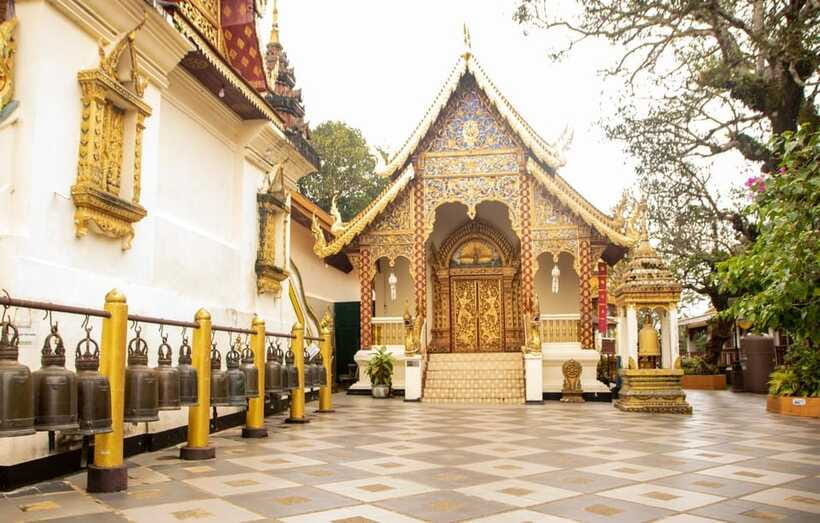
Temple rules are firm. Cover your shoulders and knees, and do not wear a sleeveless shirt. You can bring a cover up, but it is easier to start the day dressed appropriately.
Wear proper walking shoes with grip. Trainers may be enough in dry conditions, but muddy sections after rain call for extra care. Mosquito repellent is a sensible addition for the forest stop.
Bring cash, water if you prefer more than one bottle, and a small bag that does not get in the way on the trail. The tour is wheelchair accessible in its general arrangements, but the Monk’s Trail is rough and includes uneven ground. If you cannot hike, ask to use the songthaew route.
The activity suits solo visitors, couples, families with older children, and anyone who wants nature with their temple sightseeing. A family with a 2.5-year-old child completed the outing with help from the guide and the funicular, but every child and adult handles the trail differently. If you dislike early mornings, exposed truck rides, or uneven paths, choose the later departure and confirm the transport option.
Should you book this Doi Suthep tour?
I would book it if you want Chiang Mai’s famous temple without missing its quieter side. The combination of Wat Pha Lat, a short mountain walk, Doi Suthep, and a city panorama gives you more variety than a simple temple transfer.
Choose sunrise if you want chanting, cool air, and a chance to see Doi Suthep before the crowds. Choose a later time if you prefer sleep and the possibility of sunset or city lights. In either case, wear sensible shoes and allow extra time for traffic.
The tour is not ideal for anyone expecting a fully paved nature walk or a fixed, clockwork return. Rain can change the route, the trail can be slippery, and evening traffic can add time. For most visitors, though, the low price, local transport, flexible route, and strong guiding make this a worthwhile four-hour introduction to Chiang Mai’s mountain temples.
FAQ
How long does the Doi Suthep and Wat Pha Lat tour last?
The scheduled duration is four hours. A late tour can take longer to return if evening traffic slows the songthaew.
What time does the sunrise tour start?
The sunrise program starts at 5:00 a.m. Hotel pickup may begin up to 45 minutes before the scheduled start time.
Which temple do I visit first on the sunrise program?
You visit Wat Phra That Doi Suthep first. After sunrise, you continue to Wat Pha Lat and walk down the Monk’s Trail.
Is the hike uphill or downhill?
The sunrise program uses the trail downhill from Wat Pha Lat. Other departures may involve hiking up toward Wat Pha Lat. Ask the guide about the route for your selected time.
How long is the walking section?
The forest walk is roughly 2 to 3 kilometers. The route includes uneven ground and may be rocky or muddy.
Can I avoid the hike?
Yes. If you cannot hike up the mountain, you can use the songthaew to reach the temple instead.
Is the tour suitable for wheelchair users?
The activity is listed as wheelchair accessible, but the natural Monk’s Trail has rough and uneven sections. Confirm the practical arrangement before booking if you need wheelchair access throughout the outing.
What does the $25 price include?
It includes the Chiang Mai red songthaew, an English speaking guide, drinking water, and pickup and drop off in the stated service areas.
What extra fees should I expect?
Entrance fees and the cable car at Wat Phra That Doi Suthep are not included. The Wat Pha Lat Monk’s Trail fee is THB 100 per person, and personal expenses are also extra.
Where is pickup available?
Pickup is available from hotels and accommodations in Chiang Mai’s old city or just outside the city center. If you stay outside the pickup area, meet in front of Burger King at Thapae Gate.
More Hiking & Trekking in Chiang Mai
- 3-in-1: Doi Inthanon Tour, Elephant Sanctuary, and Trekking Trail
★ 5.0 · 1,087 reviews - Chiang Mai: Doi Inthanon Trip with Pha Dok Siew Guided Trek
★ 4.6 · 910 reviews - Chiang Mai: Doi Inthanon Park with Kew Mae Pan Hike Day Trip
★ 4.7 · 841 reviews - Chiang Mai: Doi Inthanon Park and Pha Dok Siew Trail Trek
★ 4.6 · 752 reviews
Just added around Chiang Mai
- Taste of Chiang Mai: Michelin Guide & Street Food Tour★ 4.9 · 159 reviews
- Red, Blue, White Temples & Hot Spring Trip from Chiang Mai★ 4.4 · 143 reviews
- From Chiang Mai: Mae Taeng Valley and Waterfalls Cycle Tour★ 4.9 · 159 reviews
- Long Neck Village, Silver Temple & Chiang Mai Top Sites★ 4.7 · 17 reviews
- Chiang Mai: Local Northern Thai Cooking Class at Grandma’s★ 5.0 · 33 reviews
- Chiang Mai: Khum Khantoke Northern Thai Cuisine and Show★ 4.3 · 38 reviews
- Private : Sticky Waterfall & Secret Temple & Karen Village.★ 5.0 · 9 reviews
- Meditation Retreat and Self-Care in Nature★ 5.0 · 46 reviews
Temple Tours, compared.
City Highlights Temple and Market Walking Tour
Read our review →
Grand Palace, Wat Pho, and Wat Arun Guided Tour
Read our review →
Tiger Cave Temple, Emerald Pool and Hot Springs Tour
Read our review →
Chiang Rai White Temple and Blue Temple Day Tour
Read our review →
Grand Palace and Wat Phra Kaew Guided Walking Tour
Read our review →
Grand Palace, Wat Pho, Wat Arun Sacred & Local Tour
Read our review →
Doi Suthep and Wat Umong Enchanting Evening Tour
Read our review →
Browse the lists this tour appears in