
Review · NATIONAL PARK TOURS
Chiang Mai: Doi Inthanon Park and Pha Dok Siew Trail Trek
Thailand’s highest mountain is the headline, but the Pha Dok Siew Nature Trail is the real heart of this day. You walk through cool forest, past streams and waterfalls, then reach terraced rice fields and a Karen village where coffee is made close to the source.
I like the strong mix of nature and local life, and I like that lunch, park admission, transport, a guide, and coffee tasting are included for $61. The main catch is time: this is a long, busy day, with up to four hours on the road and short visits at some stops. Rain can also bring mist at the summit and slippery sections on the trail.
In This Review
- Key points to know before booking
- Why Doi Inthanon works so well as a day trip
- Reaching 2,565 meters at Doi Inthanon Summit
- The King’s and Queen’s Pagodas
- A quick stop at the Hmong Market
- Walking the Pha Dok Siew Nature Trail
- Rice terraces and Karen farming traditions
- Lunch and coffee in Baan Mae Klang Luang
- Wachirathan Waterfall closes the day
- Transport, group size, and the shape of the day
- Is $61 good value?
- What to bring for the trail
- Who should book this Doi Inthanon tour?
- Should you book it?
- FAQ
- How long does the Doi Inthanon tour last?
- How long is the Pha Dok Siew Nature Trail walk?
- Is lunch included?
- Is hotel pickup available?
- What language does the guide speak?
- Is the tour suitable for people with mobility impairments?
Key points to know before booking
- Thailand’s highest point reaches 2,565 meters, with cooler air and a real chance of cloud or mist.
- Pha Dok Siew is usually a moderate, mostly downhill walk, lasting about two to three hours on narrow jungle paths.
- The forest walk is the day’s highlight, with waterfalls, streams, rice terraces, birds, and plant life along the route.
- Karen village visits add substance, including traditional terrace farming and locally made coffee.
- The small group is limited to 12 people, making it easier to stay with the guide and ask questions.
- Rain changes the experience, bringing stronger waterfalls but poorer views and muddier footing.
Why Doi Inthanon works so well as a day trip
Doi Inthanon National Park gives you several sides of northern Thailand in one outing. You get a mountain summit, royal pagodas, jungle, waterfalls, rice farming, a hill community, and coffee grown in the highlands.
That variety matters. A day focused only on the summit can be disappointing when clouds cover the view. Here, poor visibility at the top does not ruin the entire outing because the trail and village visits offer a second act.
The drive from Chiang Mai takes about two hours at the start, followed by roughly one and a half hours back to town. Add pickup stops, mountain roads, and time at each sight, and you should expect a full day that can run from around 7 in the morning to about 7 in the evening.
I would not book this as a quick side trip. It is better viewed as your main Chiang Mai day for nature and countryside.
More National Park Tours in Chiang Mai
- Chiang Mai: Doi Inthanon National Park Eco-Friendly Tour
★ 4.6 · 6,667 reviews - Doi Inthanon Waterfall and Royal Project Chiang Mai
★ 5.0 · 1,735 reviews - 3-in-1: Doi Inthanon Tour, Elephant Sanctuary, and Trekking Trail
★ 5.0 · 1,087 reviews
Reaching 2,565 meters at Doi Inthanon Summit
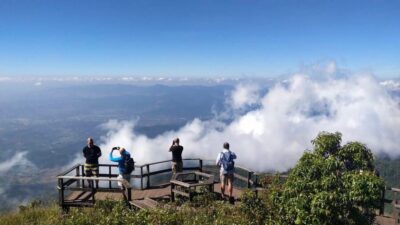
The first major stop is Doi Inthanon Summit, the highest point in Thailand at 2,565 meters above sea level. The visit is brief, around 15 minutes, but it gives you the satisfaction of reaching the top and a chance to feel the cooler mountain air.
Do not count on a clear view. Several outings have encountered cloud or mist at the summit, especially during rainy weather. That can hide the distant scenery, but it also gives the mountaintop a cool, atmospheric feel that is very different from Chiang Mai below.
Bring a light jacket or long-sleeve shirt. The temperature can drop at this altitude, and the change is noticeable after leaving the warm city.
The summit stop is more about altitude and setting than a long sightseeing session. If you want extensive viewpoints, you may find the 15 minutes too short. The tour makes up for that with more time in the forest.
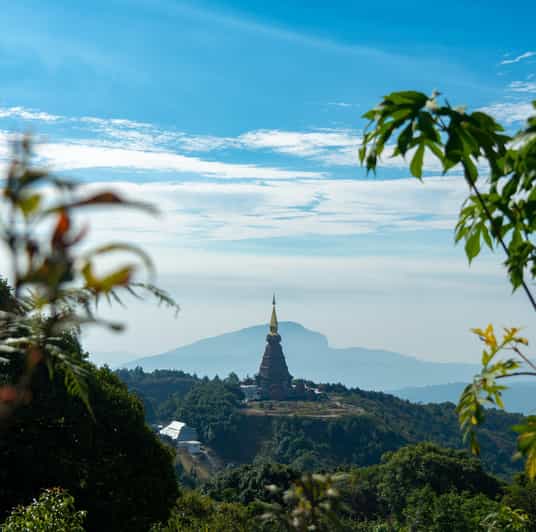
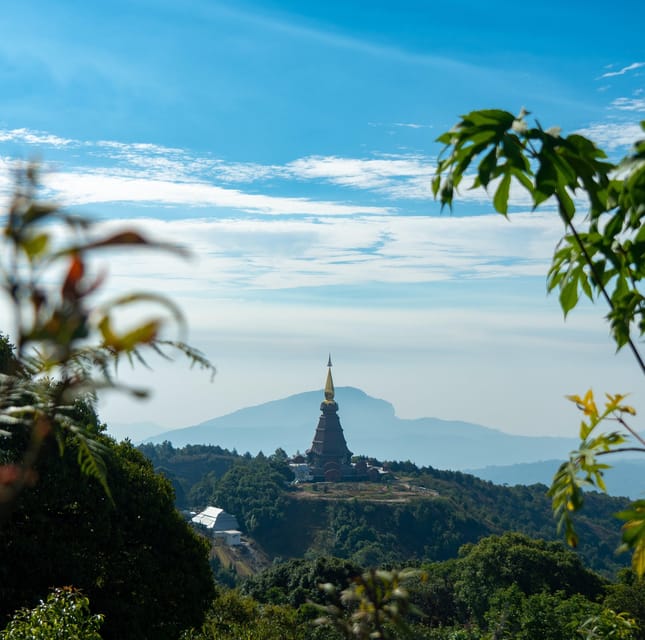
The King’s and Queen’s Pagodas
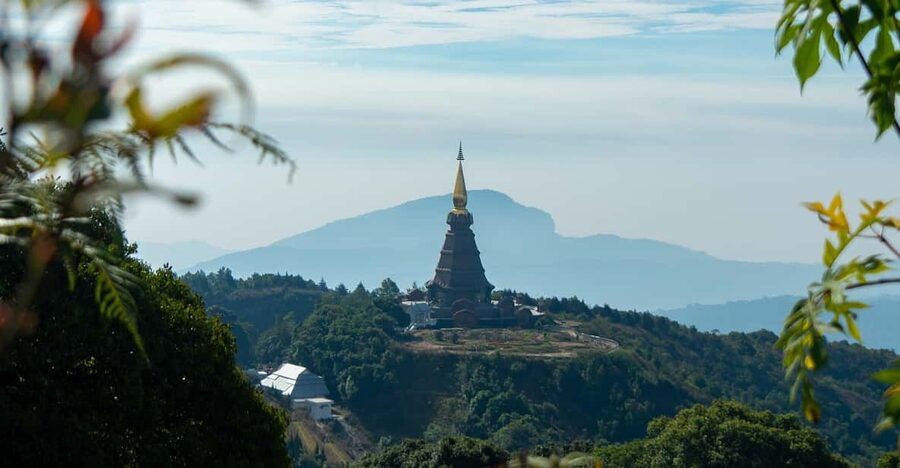
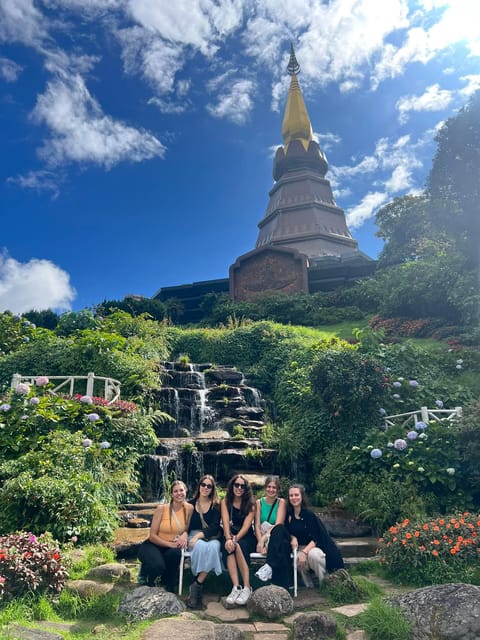
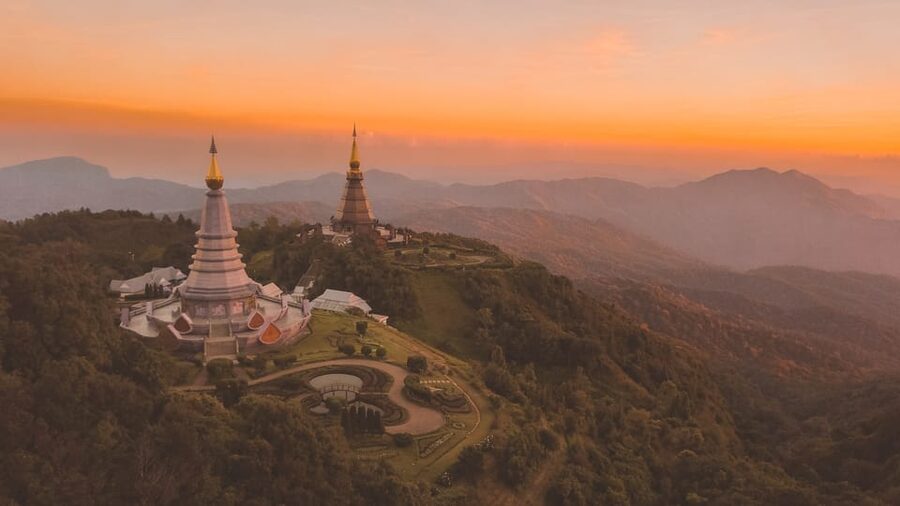
The twin pagodas honor the Thai monarchy and sit among carefully maintained gardens above the surrounding valley. They are among the most photogenic stops of the day when the weather cooperates.
Plan on about 30 minutes here. That is enough to see the pagodas, walk through part of the grounds, and take photographs, but not enough for a slow garden visit.
Cloud can hide the views and soften the colors of the buildings. On clearer days, the pagodas and their high mountain setting make a strong contrast with the rougher jungle trail later in the day.
Dress with temple etiquette in mind. A woman on the tour noted that it is useful to bring something to cover the legs for the pagoda visit. Comfortable clothes are fine for the hike, but a scarf or light covering can be practical.
The pagodas are a cultural stop, not a traditional working monastery, so keep your expectations in the right place. You are coming for the architecture, gardens, views, and royal symbolism rather than a long temple lesson.
A quick stop at the Hmong Market
The Hmong Market offers a short look at local produce and mountain-grown goods. You may see vegetables, seasonal fruit, and other products from nearby communities.
The stop lasts about 15 minutes, so think of it as a brief browse rather than a full market visit. You can look for snacks or small local products, but there may not be enough time for a relaxed shopping session.
This stop helps connect the park to the people who farm its highlands. The tour is not only about scenic viewpoints. It also shows how food production and tourism fit into life around Doi Inthanon.
I would carry a small amount of cash if you want to buy something, though the supplied details do not promise any particular payment method or product.
Same coastline, a completely different day out:
- Half-Day Thai Cooking Class at Organic Farm in Chiang Mai
★ 5.0 · 19,087 reviews - Chiang Mai: Elephant Sanctuary, Waterfall & Bamboo Rafting
★ 4.9 · 9,160 reviews - Chiang Mai: Elephant Sanctuary & Waterfall Group Tour
★ 4.9 · 5,780 reviews - Chiang Mai: Chiang Rai Temples, Karen Tribe and Hot Springs
★ 4.7 · 5,401 reviews
Walking the Pha Dok Siew Nature Trail
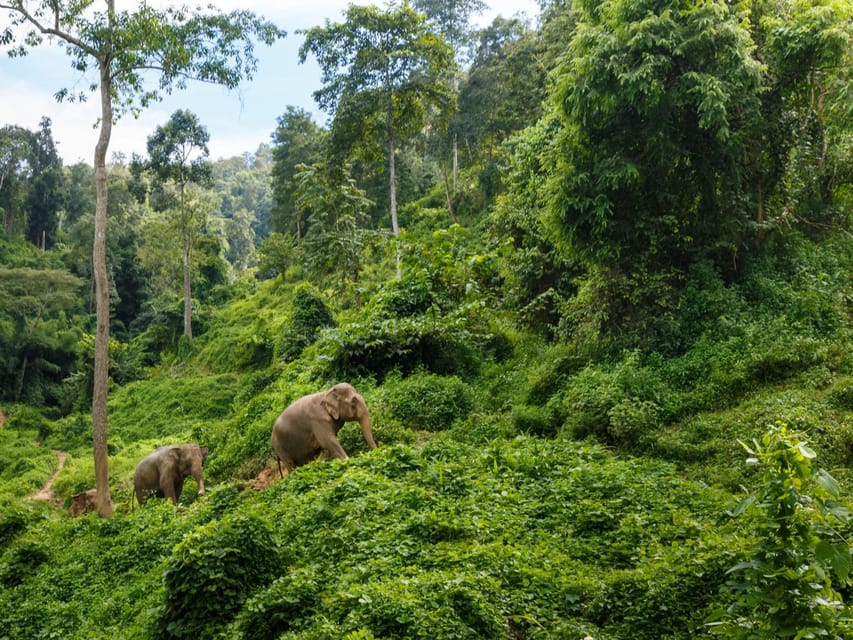
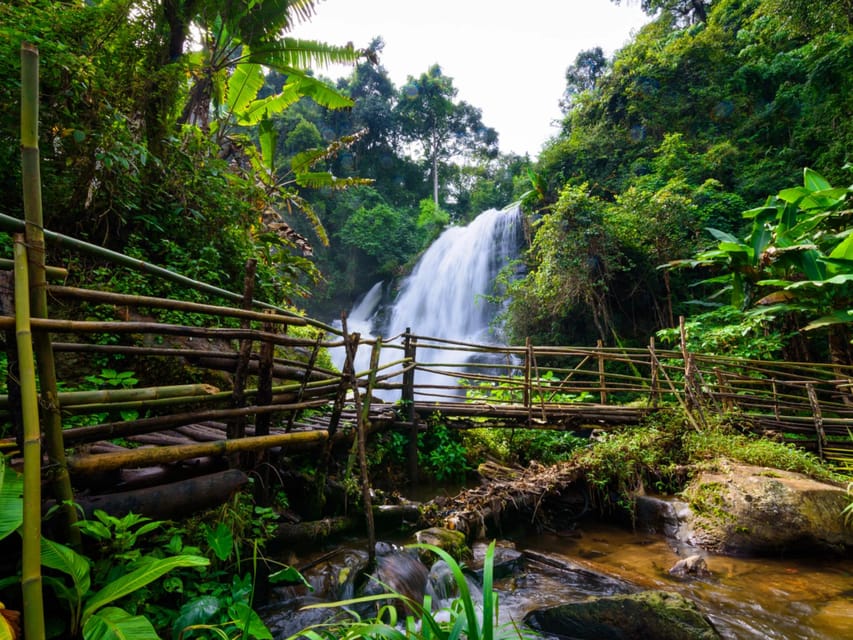
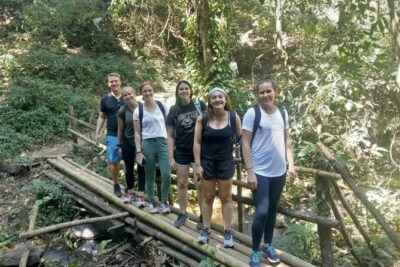
The two to three hour Pha Dok Siew walk is the main event. The path runs through jungle beneath tall trees, with streams, waterfalls, birds, plants, and changing views as you descend toward the villages.
Many people describe the route as moderate rather than strenuous. Parts of it are mostly downhill, which makes it manageable for reasonably fit walkers, but downhill does not mean effortless. Uneven ground, narrow paths, wet roots, and mud can still test your balance.
Rain makes the waterfalls more forceful and dramatic. It can also make the trail slippery, so hiking shoes or sturdy walking sandals are important. Avoid smooth-soled footwear.
The trail has a peaceful rhythm. You hear running water and birds, then reach openings with views of rice fields and mountain slopes. Your guide can point out local plants, wildlife, and the role of the communities that maintain the area.
Guides named May, Chai, Paul, Nine, Steve, and Pan have received especially warm praise for keeping groups together, explaining local culture, answering questions, and helping with photographs. The exact guide will vary, but the tour includes both a main English-speaking guide and, on the trail, a local village guide.
There is one practical limitation: popular routes can feel crowded. On busy days, more than one group may be on the trail, and it can be harder to hear the guide. Stay close to your group, especially at turns and narrow sections.
Some people may also find the walking time too short. The trail has many places where you will want to stop for photographs, and a quick pace can make the route feel rushed. If you prefer a long, quiet hike with plenty of time for nature observation, this is not that kind of outing.
Rice terraces and Karen farming traditions
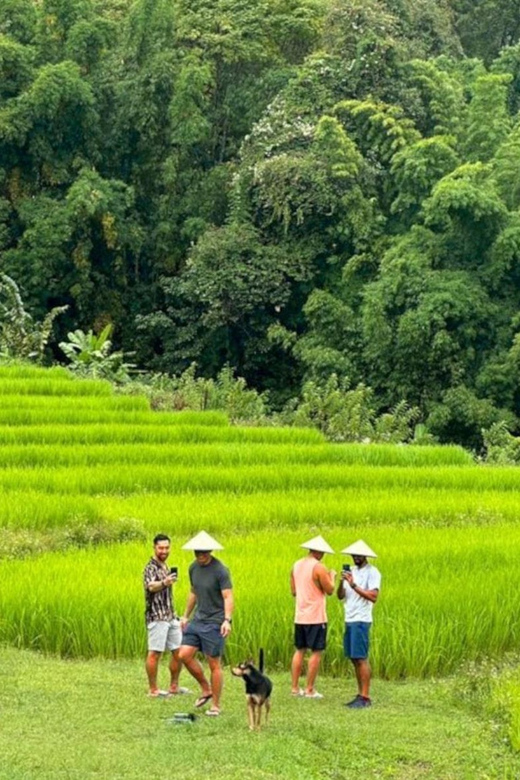
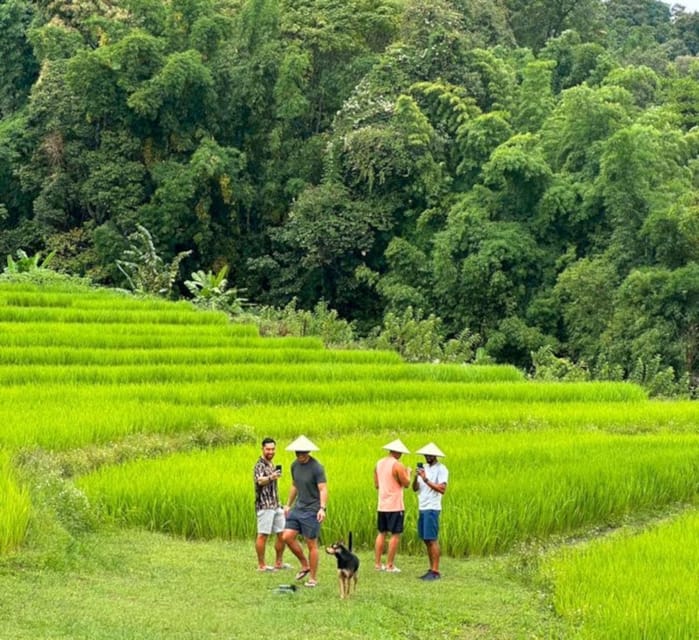
The trail ends near traditional farming areas, where you can see rice terraces shaped into the hillsides. These fields are not just pretty scenery. They show how local farmers use sloping ground to grow rice and manage water.
The visit to the Karen community offers a look at terrace farming and village life. The supplied information describes traditional farming methods, but you should treat this as a short cultural encounter rather than a full village tour.
The experience is strongest when your guide explains the connection between the forest, water, rice fields, and local income. Several guides have been praised for discussing how village communities preserve their identity through local partnerships and tourism.
This is a useful distinction for anyone comparing northern Thailand excursions. The visit is to a Karen village, not a long-neck attraction. It focuses on farming, food, coffee, and daily life rather than staged costume displays.
You should still approach the stop respectfully. Ask before taking close-up photographs, listen to the village guide, and remember that the community is a home as well as a tourism stop.
Lunch and coffee in Baan Mae Klang Luang
After the walk, you eat lunch in a traditional village setting. The meal is described as plentiful and tasty, with several dishes served so that the group has different options.
Vegetarian guests have been accommodated with tofu dishes when the guide asked about food preferences. Still, the supplied details do not list a fixed menu, so anyone with strict dietary needs should confirm arrangements when booking.
The timing can vary. Some outings take lunch before the trail, while others complete the waterfall and forest walk first. If your hike comes before lunch, carry a small snack and enough water. You may be hungry by the time you reach the village.
The coffee tasting at Baan Mae Klang Luang is short, around 15 minutes, but it adds a memorable local detail. You get to taste freshly brewed coffee and see how a village associated with mountain farming turns its crop into a drink for visitors.
Coffee fans will enjoy this more than people looking only for a quick caffeine stop. The value is the setting and the connection to local production, not a long workshop with extensive brewing instruction.
Tea and coffee may both appear in the village experience, but the included activity is specifically described as coffee tasting. Do not expect a full barista class.
Wachirathan Waterfall closes the day
Wachirathan Waterfall is a powerful final nature stop. Water drops in a broad cascade, and spray can fill the air around the viewing area.
The visit is scheduled for about 15 minutes. That is enough to see the falls and take photographs, but some people will wish for more time, particularly after a long drive to the park.
Rain can make Wachirathan especially impressive. Several outings during wet weather saw strong, full-flowing water, though the same conditions reduced visibility at the summit and pagodas.
Bring a camera, but protect it from spray and rain. A light waterproof layer can help too. You may also want to keep a change of clothes or clothes that can get dirty in your day bag, both of which are recommended for this tour.
The waterfall is an excellent reminder that weather is not simply good or bad here. Clear skies help the pagoda views. Rain makes the falls more dramatic. Mist may hide the mountain but give the forest a cooler, quieter mood.
Transport, group size, and the shape of the day
The tour uses a van and limits the group to 12 participants. That is a useful size for a mountain day, especially when the route includes narrow trails and several pickup points.
Pickup from Chiang Mai hotels is optional, usually between 7:00 and 7:30 in the morning. You can also meet at Baan Meesuk in Chiang Mai’s old town. The return includes Chiang Mai and Baan Meesuk as drop-off points.
The driver has a demanding day. The route includes city traffic, steep winding roads, and mountain sections. Past outings have praised drivers for handling tight streets and coordinating hotel pickups, though one person found the driving occasionally risky. You should expect a long road day, not a leisurely private transfer.
Traffic on the return to Chiang Mai can be heavy. Do not schedule a tight evening flight, train, or dinner reservation immediately after the estimated return.
The small group format also affects the pace. You have less flexibility than on a private trip, and the guide must keep everyone moving. In exchange, you get a fixed route with transport, admission, lunch, insurance, and an English-speaking guide handled for you.
Is $61 good value?
At $61 per person, the price is fair for a full-day trip from Chiang Mai. Park admission, hotel transport, lunch, coffee tasting, guide services, accident insurance, and the van are included.
The value is particularly good if you would otherwise need to hire a driver and arrange park entry yourself. You also avoid the hassle of planning the summit, pagodas, trail, village, lunch, and waterfall as separate stops.
The tradeoff is control. A private vehicle would let you linger longer at the waterfall, pagodas, or rice terraces. Here, visits are timed, and the route may reverse depending on conditions and group flow.
I would call this a strong package for a first visit to Doi Inthanon. It gives you more than a summit transfer, yet it does not pretend to be a wilderness expedition or a long trekking trip.
What to bring for the trail
Pack for two climates: warm Chiang Mai and cool, wet high country.
- Hiking shoes or sturdy sandals with good grip
- Light jacket or long-sleeve shirt
- Hat and sunglasses
- Sunscreen and insect repellent
- Water and, ideally, a small snack
- Camera
- Comfortable clothes that can get dirty
- A covering for the legs at the pagodas
- Rain protection if the forecast looks wet
The narrow jungle route is not suitable for people with mobility impairments. You should be comfortable walking for two to three hours over uneven ground, including downhill sections.
Who should book this Doi Inthanon tour?
I would choose this trip if you want a broad taste of northern Thailand in one day. It suits nature lovers, first-time visitors, couples, solo travelers, and reasonably fit walkers who want scenery without signing up for a hard mountain trek.
It is also a good pick if you care about local food and farming. The Karen village, rice terraces, market, and coffee tasting give the day more meaning than a simple waterfall circuit.
You may prefer another option if you want a serious hike, a private schedule, long time at each sight, or guaranteed mountain views. Cloud and rain are part of the deal, and the timetable leaves little room for lingering.
Should you book it?
Yes, if you want the most varied Doi Inthanon day for a reasonable price. I especially like the balance of the Pha Dok Siew forest walk, Karen farming culture, coffee tasting, and waterfall, because the day remains worthwhile even when the summit disappears into mist.
Book it with realistic expectations: the drive is long, the trail can be slippery, and some stops are brief. Bring a jacket, insect repellent, good footwear, water, and patience for the return traffic. If those details suit you, this is one of the better ways to reach Doi Inthanon from Chiang Mai without arranging the whole day yourself.
FAQ
How long does the Doi Inthanon tour last?
It is a full-day experience. The schedule includes about two hours driving to the park, around one and a half hours returning to Chiang Mai, and several sightseeing, meal, and walking stops.
How long is the Pha Dok Siew Nature Trail walk?
The trek takes about two to three hours. It follows narrow jungle paths and includes scenic views, streams, waterfalls, and rice terraces.
Is lunch included?
Yes. Lunch in a traditional village is included in the tour price. Several dishes are served, and vegetarian options have been provided when requested during the tour.
Is hotel pickup available?
Yes. Pickup is optional, generally between 7:00 and 7:30 AM from Chiang Mai hotels. You can also meet at Baan Meesuk in the old town.
What language does the guide speak?
The live tour guide speaks English. The group is limited to 12 participants.
Is the tour suitable for people with mobility impairments?
No. The Pha Dok Siew trail includes narrow, uneven jungle paths and is not suitable for people with mobility impairments.
More Hiking & Trekking in Chiang Mai
- Chiang Mai: Doi Inthanon Trip with Pha Dok Siew Guided Trek
★ 4.6 · 910 reviews - Chiang Mai: Doi Inthanon Park with Kew Mae Pan Hike Day Trip
★ 4.7 · 841 reviews - Chiang Mai – Doi Suthep Temple & Wat Pha Lat Hike
★ 4.6 · 740 reviews - Chiang Mai – Doi Suthep Temple & Wat Pha Lat Hike
★ 5.0 · 657 reviews
Just added around Chiang Mai
- Taste of Chiang Mai: Michelin Guide & Street Food Tour★ 4.9 · 159 reviews
- Red, Blue, White Temples & Hot Spring Trip from Chiang Mai★ 4.4 · 143 reviews
- From Chiang Mai: Mae Taeng Valley and Waterfalls Cycle Tour★ 4.9 · 159 reviews
- Long Neck Village, Silver Temple & Chiang Mai Top Sites★ 4.7 · 17 reviews
- Chiang Mai: Local Northern Thai Cooking Class at Grandma’s★ 5.0 · 33 reviews
- Chiang Mai: Khum Khantoke Northern Thai Cuisine and Show★ 4.3 · 38 reviews
- Private : Sticky Waterfall & Secret Temple & Karen Village.★ 5.0 · 9 reviews
- Half-day with CHIANGMAI ELEPHANT CARE program (12pm-6pm.)★ 5.0 · 27 reviews
National Park Tours, compared.
Doi Inthanon Waterfall and Royal Project Chiang Mai
Read our review →

3-in-1: Doi Inthanon Tour, Elephant Sanctuary, and Trekking Trail
Read our review →
Doi Inthanon Park with Kew Mae Pan Hike Day Trip
Read our review →
Doi Inthanon Private Tour with Trek & Lunch from Chiang Mai
Read our review →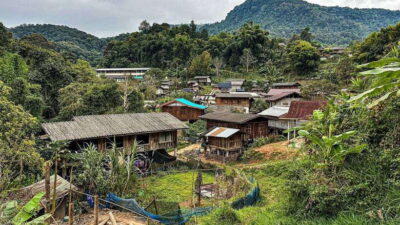
Doi Inthanon National Park and Pha Dok Siew Trek
Read our review →Browse the lists this tour appears in