
Review · FOOD
Cook Local Northern Thai Food in Traditional House
Northern Thai food is about more than recipes. This seven-hour cooking day takes you from a local market to an organic farm, then into hands-on work with charcoal, millstones, coconut graters, and five classic dishes. It feels closer to a food-and-culture lesson than a quick kitchen class.
I like the market stop, where you learn what the unfamiliar herbs and seasonings actually do, and the farm visit, where you pick vegetables and collect eggs. The small maximum of six people should also make it easier to get help at the stove.
The main drawback is the length. Seven hours is a full day, and the setting is a purpose-built cooking school rather than a real grandmother’s private kitchen. If you want a quick pad Thai lesson, this is far more involved than necessary.
In This Review
- Key points at a glance
- A full Northern Thai food day near Chiang Mai
- Starting at the local market
- Picking herbs and gathering eggs at the organic farm
- Five dishes that show the range of Lanna cooking
- Charcoal, stone milling, and hand-grated coconut
- Lunch, dessert, and the reward for doing the work
- What the $57.99 price covers
- Who will get the most from this class
- Practical details before you book
- Should you book Grandma’s Home Cooking School?
- FAQ
- How long does the Northern Thai cooking class last?
- What time does the class start?
- How many dishes will I cook?
- Is hotel transportation included?
- Does the class include food and drinks?
- Is the instruction in English?
- Can special dietary requirements be accommodated?
- What happens if I need to cancel?
Key points at a glance
- Five Northern Thai dishes: Prepare Northern Thai sausage, Nam Prik Ong or Nam Prik Num, Northern pork belly curry, curry with young jackfruit, and Thai coconut pancakes.
- Market before the kitchen: Learn about local ingredients and seasonings before cooking with them.
- Farm-to-table work: Pick herbs and vegetables at an organic farm and collect fresh eggs from the chicken coop.
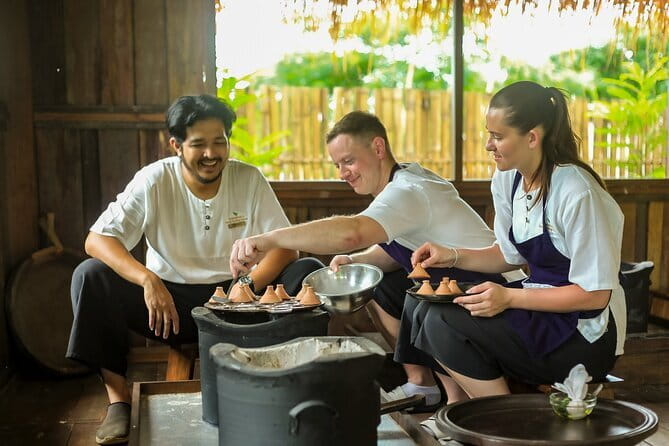
- Old-style techniques: Light a charcoal grill, mill flour with a traditional stone mill, and grate coconut by hand.
- Small class size: The activity accepts a maximum of six people, with English-speaking instruction.
- A full package: Hotel pickup and return, lunch, dessert, refreshments, and an e-recipe book are included.
A full Northern Thai food day near Chiang Mai
This class gives you a useful answer to a common holiday question: how can I learn about Northern Thailand without spending the whole day in a museum? Here, food does the teaching.
Northern cuisine has its own flavors, ingredients, and methods. The menu includes several dishes rather than one main recipe, so you get a wider view of the region’s cooking. You also handle the ingredients before they reach the cooking bench, which helps connect the finished plate to local farming and shopping.
The class runs for about seven hours and begins at 9:00 a.m. With hotel pickup and return included, you do not need to arrange your own transport to the school. That matters in Chiang Mai, where a full day with several stops can otherwise become a string of small taxi decisions.
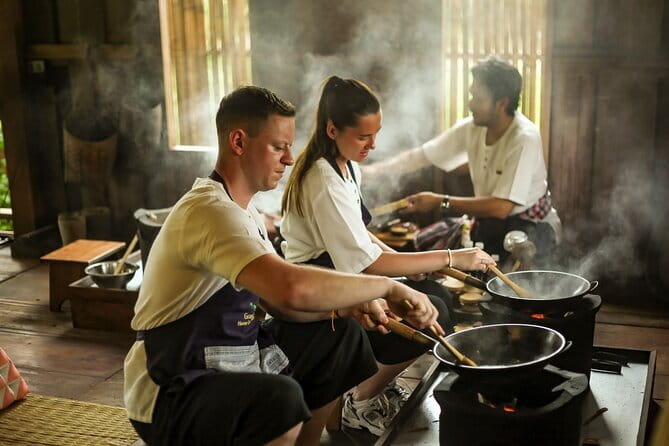
The course is limited to six people. I see that as one of its best practical features. A small group usually means more direct help when you are managing charcoal, grinding flour, or trying to keep several pans moving at once.
A few more Chiang Mai trips to weigh up
- Small-Group Chiang Mai Evening Street Food Tour
★ 4.5 · 826 reviews - Chiang Mai: Evening Local Street Food Market Tour
★ 4.8 · 604 reviews - Northern Flavours Chiang Mai Food Tour with 15+ Tastings
★ 5.0 · 513 reviews
Starting at the local market
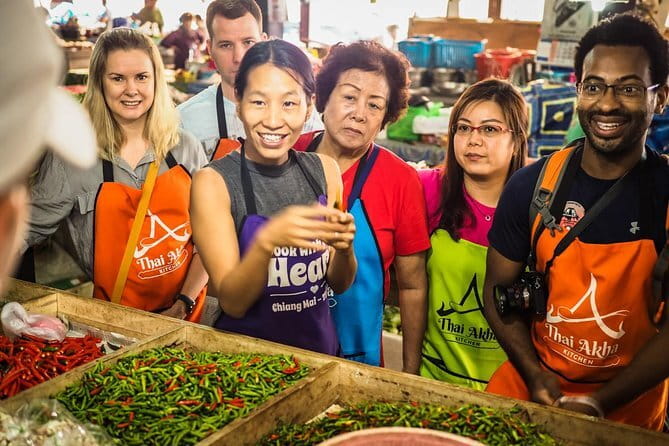
The first stop introduces you to the ingredients and seasonings used in Northern Thai cooking. This is not just a shopping errand. The instructor explains what you are seeing and how each item fits into the dishes later in the day.
That short lesson can make a big difference. Thai markets often contain herbs, vegetables, curry ingredients, and seasonings that are hard to identify from a recipe alone. Seeing them before cooking gives you a better chance of recognizing them later in Chiang Mai restaurants or shops.
The market portion also sets the tone for the class. You are not handed a premeasured box and told to follow steps. Instead, the day begins with the source of the food and the vocabulary of the cuisine.
There is one trade-off. The market stop is educational rather than a dedicated food tour, so you should not expect a long period of browsing or extensive free time. Its value comes from the instruction and the connection to the recipes.
Picking herbs and gathering eggs at the organic farm
After the market, you visit an organic farm. The instructor points out Thai herbs and vegetables, explains how they are used, and has you pick ingredients for the cooking session.
I like this part because it gives the class a physical sense of place. Northern Thai food is not treated as a list of abstract flavors. You see the plants, handle the produce, and learn that fresh cooking starts well before the wok or grill.
The visit also includes the chicken coop, where you collect eggs. That is a simple task, but it adds a useful link between the farm and the meal. You can see how an ingredient in the kitchen begins as part of a working food system.
Do not expect a large farm tour with a long agricultural lecture. The stated focus is on herbs, vegetables, and gathering ingredients for the class. That keeps the visit relevant, though people looking for a serious farming experience may find it fairly brief.
Five dishes that show the range of Lanna cooking
The class teaches five traditional Northern Thai dishes. The exact choice gives you a good spread of textures and methods:
- Northern Thai sausage
- Nam Prik Ong or Nam Prik Num
- Northern pork belly curry
- Curry with young jackfruit
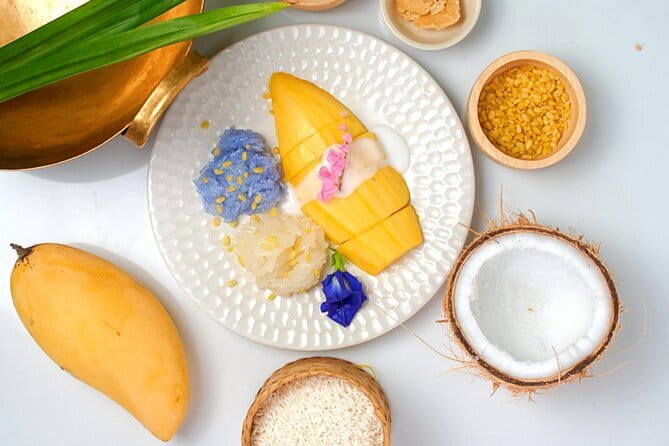
- Thai coconut pancakes
Northern Thai sausage gives you a chance to work with one of the region’s better-known specialties. The two Nam Prik options introduce a chili-based preparation, with the instructor showing you either Nam Prik Ong or Nam Prik Num.
The pork belly curry brings a heavier, savory dish to the table. Curry made with young jackfruit provides a different texture and shows how Northern cooking uses vegetables in substantial ways, not only as side dishes.
The coconut pancakes finish the cooking portion on a sweeter note. They are especially useful for anyone interested in traditional methods, since the class includes making flour and coconut milk rather than treating those items as invisible ingredients from a packet.
Five dishes in one day is a lot. That is a benefit if you want a broad introduction, but it also means the class is not designed to make you a specialist in one recipe. You will learn several preparations and techniques, then use the recipe book to repeat them at home.
Same coastline, a completely different day out:
- Half-Day Thai Cooking Class at Organic Farm in Chiang Mai
★ 5.0 · 19,087 reviews - Chiang Mai: Elephant Sanctuary, Waterfall & Bamboo Rafting
★ 4.9 · 9,160 reviews - Chiang Mai: Doi Inthanon National Park Eco-Friendly Tour
★ 4.6 · 6,667 reviews - Chiang Mai: Elephant Sanctuary & Waterfall Group Tour
★ 4.9 · 5,780 reviews
Charcoal, stone milling, and hand-grated coconut
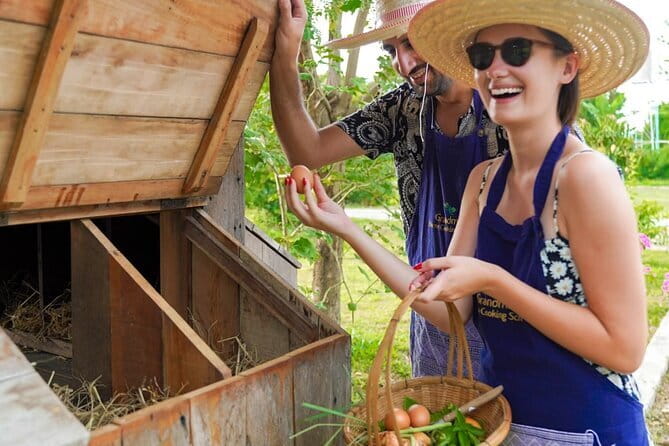
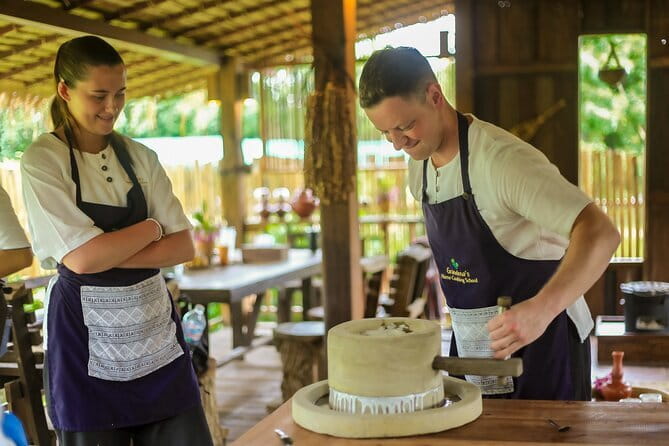
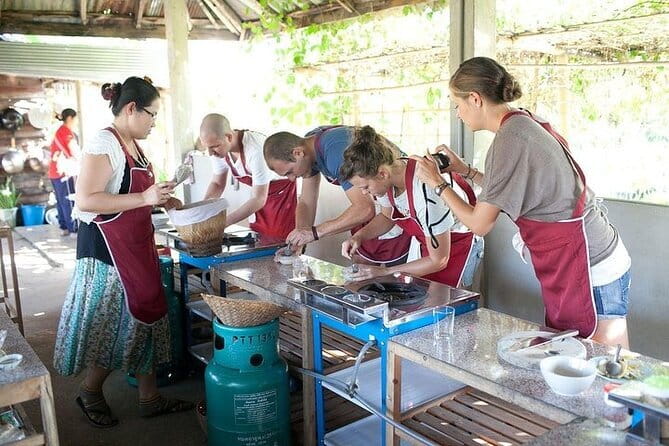
The most distinctive part of the day is the traditional equipment. You learn to light a charcoal grill, wash and prepare vegetables, mill flour with a traditional millstone, and grate coconut meat using a coconut grater.
These tasks slow the food down in a good way. Modern kitchens hide much of the work behind electric appliances and packaged ingredients. Here, you see how flour and coconut milk are made before they become part of a dish.
The charcoal grill is also more than a novelty. It introduces you to a different source of heat and requires attention in a way a standard electric burner does not. The millstone and coconut grater offer the clearest sense of old-style kitchen work.
A polished cooking school can make these methods safe and manageable, but they are still more physical than a demonstration. Wear practical clothing and expect to spend much of the day standing and handling food. The supplied details do not specify the exact facilities for every mobility need, so anyone with concerns should ask the operator before booking.
One previous assessment compared the experience to a cooking-class version of Disneyland, pointing to a clean, safe, fun, highly organized setup. That is useful praise, but it also explains the character of the place: this is a carefully run educational attraction, not an unplanned afternoon in someone’s family kitchen.
Lunch, dessert, and the reward for doing the work
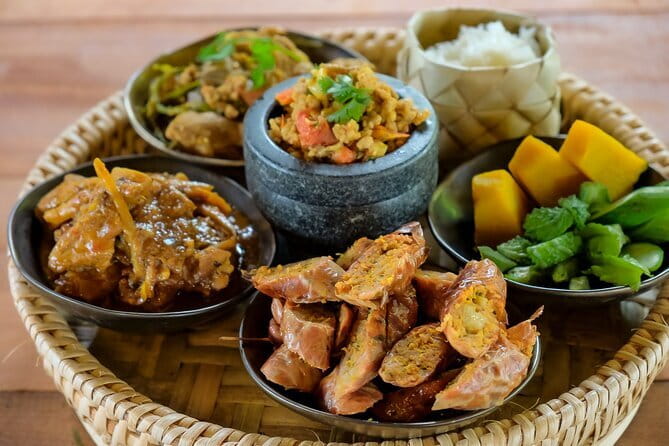
The class includes a lunch break where you eat the dishes you have prepared. That arrangement is practical. You are not cooking five recipes only to watch someone else serve the final meal.
Lunch also helps you judge the results while the techniques are still fresh. You can compare the dishes, notice how the curry differs from the chili relish, and see how the sausage and jackfruit preparations work as part of a meal.
After lunch comes a dessert and refreshment session. Thai coconut pancakes are part of the cooking program, and traditional Thai desserts are included in the later tasting. A welcome drink and snacks are provided on arrival as well.
Alcohol is not included. That will not matter to most people booking a daytime cooking class, but it is worth knowing if you were expecting drinks with lunch. The focus remains on food, instruction, and refreshments.
The strongest food praise associated with this class is unusually direct: one assessment called the dishes the best food of a three-week trip through Thailand. You should not treat that as a guarantee of your own taste, but it does point to the central strength of the experience. You cook a large amount of food from scratch, then eat it while the work is still fresh in your mind.
What the $57.99 price covers
At $57.99 per person, the cost is reasonable for a full-day activity if you use all the included elements. You are paying for a market visit, farm tour, ingredients, instruction, lunch, dessert, welcome snacks, refreshments, hotel transfers, and an electronic recipe book.
The transport adds real value. A half-day class near your hotel might be cheaper, but arranging transport for a morning market, farm, and cooking school could add both cost and hassle. Pickup and return also make the early 9:00 a.m. start easier.
The small group improves the value further. With no more than six people, the instructor can give more attention to each cooking station than in a large demonstration class. That matters most during hands-on steps such as charcoal cooking and preparing coconut.
The price is less attractive if you dislike long organized activities or already know Northern Thai cooking well. You may be paying for several cultural stops and traditional techniques that you do not need. For a first introduction, though, the package is broad and well filled.
The experience is often booked about 44 days ahead. That suggests you should not leave it until the last few days of a Chiang Mai visit, especially if you need a particular date or are traveling with a small party.
Who will get the most from this class
I would choose this for people who want food to be the main way they learn about a place. It suits couples, families with older children, and small groups of friends who enjoy working with their hands.
It is also a good fit for cooks who want more than a standard recipe lesson. The charcoal grill, stone mill, coconut grater, market, farm, and chicken coop give you details that a conventional kitchen class may skip.
Children under 12 are welcome as visitors, according to the activity details. That wording does not clearly say they take part in every cooking task, so families should confirm the arrangements before booking. Older children who can follow kitchen instructions may get more from the hands-on format.
People with special dietary requirements can be accommodated. You should provide those details when booking rather than waiting until the morning of the class. Alcohol is not included, and the seven-hour schedule may feel long if your main goal is one simple dish.
Practical details before you book
Hotel pickup and return are included, and the scheduled start time is 9:00 a.m. Confirmation is provided when you book, and the activity is near public transportation if you need another way to reach the area.
The class offers a mobile ticket, which is convenient if you are moving around Chiang Mai with only your phone. The maximum group size is six, and instruction is provided in English.
Free cancellation is available up to 24 hours before the start time for a full refund. Cancellations or changes made less than 24 hours before the start are not accepted for a refund, and the cutoff follows local time.
The class has a published rating of 5 out of 5, with a 100 percent recommendation rate from 15 ratings. Those numbers are encouraging, but the more useful point is what they reflect: people value the clean setup, the range of food, the traditional methods, and the fact that the day feels substantial rather than rushed.
Should you book Grandma’s Home Cooking School?
Book it if you want a full Northern Thai food day, not a quick cooking lesson. The market and farm add context, while the charcoal, stone milling, and hand-grated coconut make the class more memorable than a standard recipe demonstration.
I would skip it if you want a private family kitchen, a short class, or plenty of unscheduled time. The school is a polished, purpose-built setting, and the seven-hour program asks you to commit most of a day.
For most first-time visitors to Chiang Mai who care about food and local traditions, the $57.99 price is fair. The combination of small-group instruction, transport, lunch, dessert, and five recipes gives you both a day out and something useful to take home.
FAQ
How long does the Northern Thai cooking class last?
The experience lasts approximately seven hours.
What time does the class start?
The scheduled start time is 9:00 a.m.
How many dishes will I cook?
You will learn to cook five traditional Northern Thai dishes: Northern Thai sausage, Nam Prik Ong or Nam Prik Num, Northern pork belly curry, curry with young jackfruit, and Thai coconut pancakes.
Is hotel transportation included?
Yes. Round-trip transfers to and from your hotel are included.
Does the class include food and drinks?
Yes. The package includes welcome snacks, a refreshing drink, lunch made from your cooking, dessert, and refreshments. Alcoholic drinks are not included.
Is the instruction in English?
Yes. Hands-on instruction is provided by English-speaking instructors.
Can special dietary requirements be accommodated?
Yes. The activity can accommodate special dietary requirements.
What happens if I need to cancel?
You can cancel up to 24 hours before the experience begins for a full refund. Cancellations or changes made less than 24 hours before the start time are not accepted for a refund.
Just added around Chiang Mai
- Chiang Mai Zipline White Water Rafting and Elephant Sanctuary★ 4.0 · 11 reviews
- Chiang Mai Airport Private Transfer – Hotel or Airport★ 4.5 · 51 reviews
- Zipline Adventure at Skyline Jungle Luge Chiang Mai★ 5.0 · 102 reviews
- Trek to a Jungle Waterfall★ 5.0 · 14 reviews
- Long Neck Village, White & Blue Temple, Black House Day Tour From Chiang Mai★ 4.0 · 14 reviews
- 2 Hours Wow hatcha lanna package – Free transportation★ 5.0 · 31 reviews
- Zipline+Sticky waterfall+Long Neck Village Private Tour★ 5.0 · 22 reviews
- Authentic Thai Cooking Class and Farm Visit in Chiang Mai★ 5.0 · 66 reviews
Food, compared.
Bangkok by Night: Temples, Markets and Food Tuk-Tuk Tour
Read our review →


Southern Flavors Phuket Food Tour with 15+ Tastings
Read our review →Bangkok Backstreets Food Tour with 15+ Tastings
Read our review →
Bangkok Authentic Tasting Thai-Chinatown Walking Food Tour
Read our review →Browse the lists this tour appears in