
Review · STREET FOOD & TUK TUK TOURS
Northern Flavours Chiang Mai Food Tour with 15+ Tastings
Chiang Mai’s food is not simply a milder version of Bangkok cooking. It has its own character, shaped by Lanna traditions, jungle plants, neighboring Burma, and generations of market cooks. This tour gives you a fast, filling way to taste that difference, with 15 or more small dishes served around the city.
I like the dedicated red songthaew, called a rod daeng, because it saves your feet and lets the group reach several food stops in one evening. I also like the guides’ focus on where dishes come from, especially the Burmese influence and Lanna background. The main drawback is the food policy: this is a poor fit for vegetarians, pescatarians, people avoiding pork, or anyone with severe shellfish or peanut allergies.
In This Review
- Key points at a glance
- Why Northern Thai food deserves its own evening
- Starting at Wat Lok Moli
- Riding the rod daeng between food stops
- The first wave: dips, spices, and Northern flavors
- Markets and family-run food stalls
- What you may taste along the way
- Burmese influence and Lanna food culture
- Finishing near Warorot Market and the Ping River
- Is $59 a fair price?
- Who should book this food tour?
- Practical tips for a better evening
- Should you book the Northern Flavours tour?
- FAQ
- How long does the Northern Flavours Chiang Mai Food Tour last?
- How many tastings are included?
- What transportation is used during the tour?
- What is the maximum group size?
- Are drinks included?
- Is the tour suitable for vegetarians or people avoiding pork?
- Where does the tour start?
Key points at a glance
- 15-plus tastings: Expect noodles, dips, curries, spicy salads, fruit, pork, snacks, and possibly less familiar bites.
- Small groups of eight: The size allows your guide to explain dishes and answer questions without turning the meal into a lecture.
- A private red truck: You ride between markets, street stalls, and local eateries instead of spending the whole tour on foot.
- Northern Thai focus: Look beyond pad Thai and green curry to food shaped by Lanna culture and Burmese connections.
- Guides with local insight: Depending on the date, you may meet Aim, Moui, Muoy, Tree, Indy, or Mau.
- Come very hungry: Portions are not merely symbolic tastes, and several diners report leaving extremely full.
Why Northern Thai food deserves its own evening
This four-hour outing works because it treats Chiang Mai as a food region, not just another stop on a general Thailand menu. You will not spend the night ticking off pad Thai and green curry. Those dishes belong more to central Thai cooking, while Northern Thai food leans into fermented flavors, herbs, dips, pork, noodles, jungle greens, and ingredients that reflect the hills and forests around the city.
I like that the food comes with context. Your guide explains how recipes developed and how outside cultures helped shape them. Burmese influence is a major thread, and the tour also brings in Lanna history, local vendors, and the way certain foods are eaten.
The format is social but not unwieldy. With a maximum of eight people, you can hear the guide at a market stall, ask what an unfamiliar ingredient is, and decide how much heat you want to face. The small group also matters when everyone is hungry and moving through several crowded food areas.
More Street Food & Tuk Tuk Tours in Chiang Mai
- Small-Group Chiang Mai Evening Street Food Tour
★ 4.5 · 826 reviews - Chiang Mai: Evening Local Street Food Market Tour
★ 4.8 · 604 reviews - The 10 Tastings of Chiang Mai With Locals: Private Street Food Tour
★ 5.0 · 216 reviews
Starting at Wat Lok Moli
The meeting point is Wat Lok Moli, at 298/1 Manee Nopparat Road in Chiang Mai. This gives you a clear landmark and places the beginning near the old city, with public transportation available nearby.
The opening part of the tour is not just a quick snack before the real event. It sets the tone for the meal ahead. Your guide introduces the food traditions of Chiang Mai and prepares you for flavors that may not be familiar. You might hear about the region’s plant life, Lanna cooking, and the influence of neighboring cultures before the first serious round of tasting begins.
I suggest arriving ready to eat but not stuffed. The total amount can be surprisingly large. Several stops may offer modest portions, but 15 or more tastes add up quickly, especially when dishes include rice, noodles, pork, or fried foods.
Riding the rod daeng between food stops
The red songthaew is one of the tour’s practical strengths. Rather than walking from one side of Chiang Mai to another, you ride in a dedicated truck between markets, restaurants, and street stalls. The itinerary covers roughly four hours, with around two hours devoted to moving through multiple food areas and another hour at the opening and closing stages.
This transport changes the feel of the evening. You can cover more ground and sample food from different parts of the city instead of eating at one central market. It also gives you a break between tastings, which becomes useful once the food begins to pile up.
There is some light walking, but this is not a long walking tour. You will still need to stand, move around stalls, and manage uneven or busy areas. Wear shoes that are easy to walk in, and bring an umbrella during the rainy season. The tour runs in all weather, so a wet evening is not automatically a reason for cancellation.
Bottled water and local soft drinks are included. Water is especially welcome when spicy dishes arrive one after another. Alcohol is not included, so plan to buy it separately only if the location and timing allow.
The first wave: dips, spices, and Northern flavors
The opening tastings introduce the range of the cuisine rather than focusing on one famous dish. Expect a mixture of spices, dips, curries, noodles, and greens. The food is designed to show contrasts: creamy beside sour, crisp beside soft, herbal beside hot.
This is where the guide becomes important. A dip can look ordinary until you learn what vegetables, herbs, or seasoning are meant to accompany it. A plate of greens can tell you more about Northern cooking than another familiar noodle dish. You are not simply eating; you are learning what to notice.
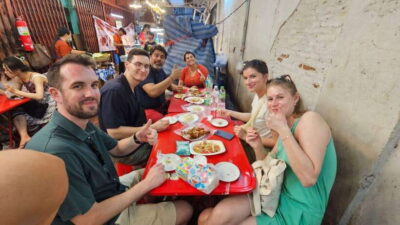
The portions are generally tasting sizes, but do not assume that means tiny samples. One well-fed group counted somewhere between 15 and 18 items, while another reached about 20. Pace yourself from the first stop. If you treat every early plate as a full meal, the final markets will be difficult.
Same coastline, a completely different day out:
- Half-Day Thai Cooking Class at Organic Farm in Chiang Mai
★ 5.0 · 19,087 reviews - Chiang Mai: Elephant Sanctuary, Waterfall & Bamboo Rafting
★ 4.9 · 9,160 reviews - Chiang Mai: Doi Inthanon National Park Eco-Friendly Tour
★ 4.6 · 6,667 reviews - Chiang Mai: Elephant Sanctuary & Waterfall Group Tour
★ 4.9 · 5,780 reviews
Markets and family-run food stalls
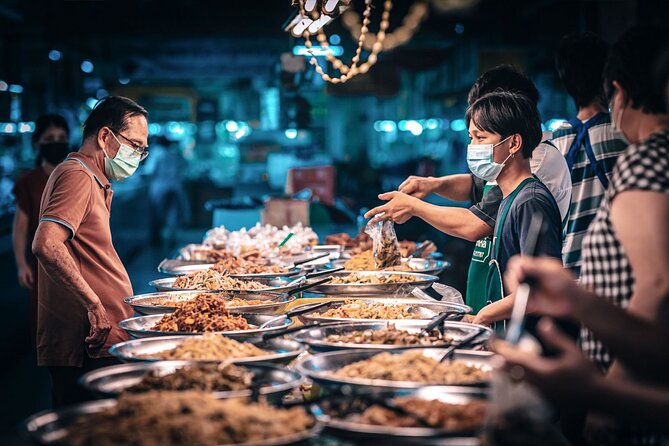
The middle of the tour moves through fresh markets and tucked-away eateries. This is the part I find most useful for a first visit because the stops are places you might not choose on your own. Menus can be hard to read, dishes may have unfamiliar names, and a busy stall does not always explain what is being served.
Your guide handles that barrier. Guides such as Aim have been praised for keeping the group organized, carrying wipes and sanitizer, pointing out bathrooms, and explaining each plate before you eat. That practical care matters during a food tour with many stops.
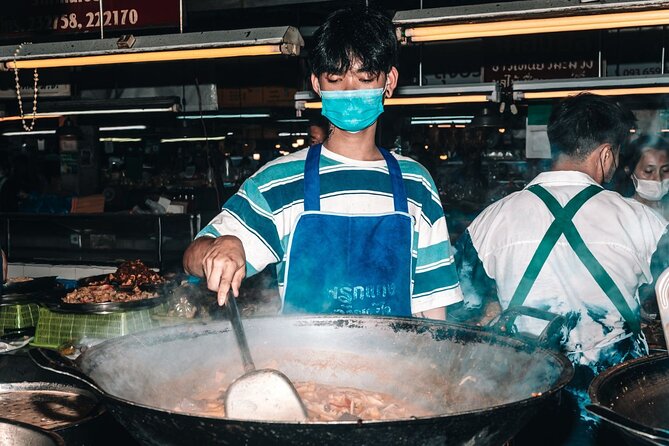
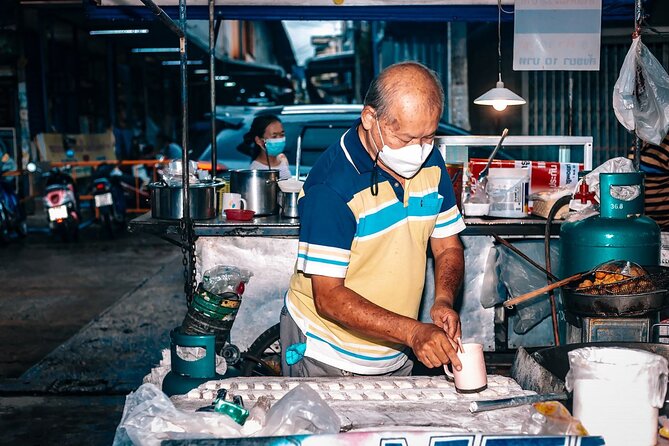
The stops also show how food is connected to people. Some vendors come from families that have worked in the same trade for generations. That background gives a dish more meaning than a simple list of ingredients. You begin to see the market as a working part of Chiang Mai life, not just a place arranged for visitors.
The downside is that street food is not a controlled restaurant tasting. Menus are limited, substitutions may not be possible, and the exact selection can change. If you need every dish to match a strict diet, this is not the right format.
What you may taste along the way
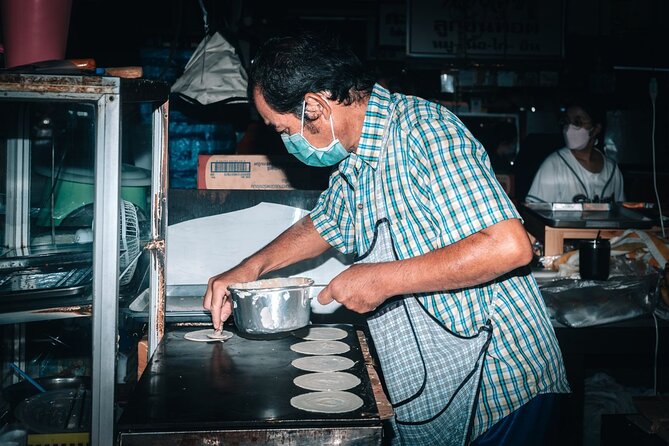
The exact menu is not fixed in the supplied details, and that is normal for a street-food tour. Still, the tastings can include a broad spread of Northern Thai food and local produce.
You might encounter:
- Northern-style dips with vegetables
- Curries and herb-heavy dishes
- Noodles and savory street snacks
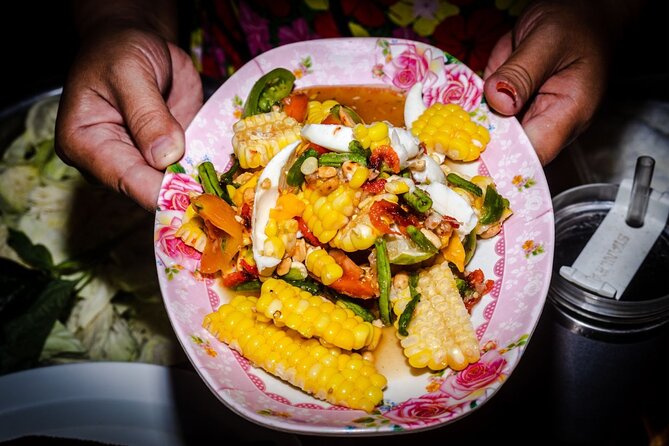
- Jungle greens and corn salad
- Crispy pork belly
- Mangosteen and other local fruit
- Less familiar foods such as silkworm or grasshopper
The crispy pork belly, mangosteen, and corn salad have been singled out as especially memorable. Fruit gives your palate a needed rest from salt and spice, while the unusual insect tastings are optional in spirit, even if the wider food selection is not designed around personal substitutions.
I appreciate the range. You may not love every bite, and that is part of the point. The tour encourages you to try things you might not order from a menu, while your guide explains how the food is used and where it fits into local cooking.
Spice levels can vary. One guide may explain the heat of a dish before you try it, but you should still tell the guide if you are concerned. Do not expect a fully customized menu if you cannot eat particular ingredients.
Burmese influence and Lanna food culture
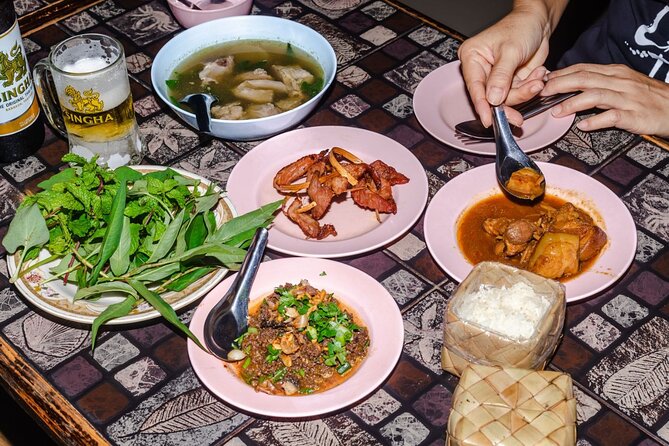
The cultural teaching is one of the tour’s strongest features. Northern Thailand has long been connected to areas beyond the modern national border, and Chiang Mai’s cooking reflects that. Burmese influence appears in ingredients, techniques, and dishes that differ from central Thai food.
Your guide may also explain Lanna culture, the older Northern Thai identity that gives the region much of its culinary character. This makes the food easier to understand. Sourness, bitterness, fermented notes, herbs, and local greens are not random surprises. They reflect what grows nearby and what people have cooked over time.
Guides have included Aim, Moui, Muoy, Tree, Indy, and Mau. The guide on your date will vary, but the experience depends heavily on that person’s ability to connect food with place. Tree, who grew up in Chiang Mai, has offered particularly local insight, while Aim is known for a funny, organized approach and clear explanations.
I would ask questions throughout the evening. Ask how a dish is eaten, what ingredient gives it heat, and whether the food is usually served at home or at a market. You will get more from the tour if you treat it as a conversation rather than a parade of plates.
Finishing near Warorot Market and the Ping River
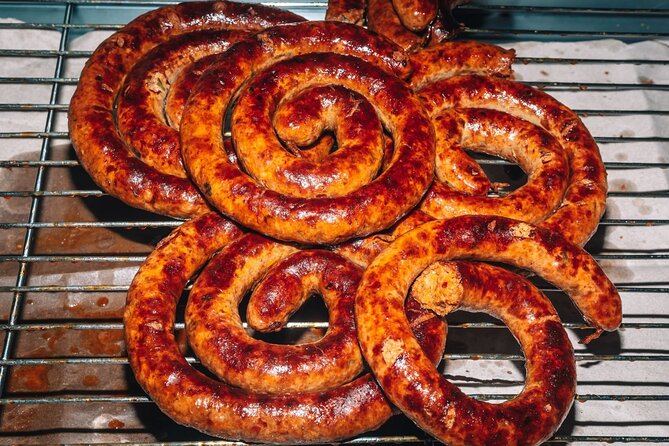
The final stage brings you to Warorot Market, close to the Ping River. This is a fitting place to finish because it connects the prepared tastings with the wider food shopping culture of Chiang Mai.
By this point, you should have enough background to continue exploring on your own. You will know more about Northern dips, noodles, greens, fruit, and snacks, and you will have a better sense of how to identify dishes that are not standard central Thai fare.
There is one practical detail to clarify when booking: the description identifies Warorot Market as the conclusion, while the meeting-point information says the activity ends back at the meeting point. Confirm the final drop-off arrangement for your date, especially if you have an evening reservation or transport to catch.
Is $59 a fair price?
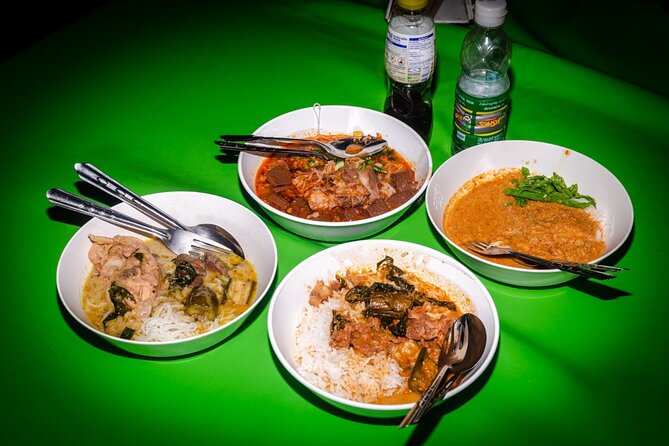
At $59 per person, this is not the cheapest way to eat in Chiang Mai. You could buy individual street dishes for far less. The value comes from the quantity, transport, interpretation, and access to places you might otherwise pass by.
You are paying for at least 15 tastings, bottled water, local soft drinks, a dedicated songthaew, and a guide who organizes the evening. You also avoid spending time guessing at menus or trying to connect distant food stops yourself.
For a first or second day in Chiang Mai, I think the price is easier to justify. You can discover dishes and restaurants to revisit later. One diner returned to several stops during the rest of the stay, which is exactly how I would use this experience: let the tour serve as an edible map for later meals.
The value is weaker if you already know Northern Thai food well, dislike sharing, or want a slow dinner at one restaurant. This is a high-volume tasting route, not a leisurely fine-dining meal.
Who should book this food tour?
I would recommend it most strongly to curious eaters who want a broad introduction to Chiang Mai. It suits people who enjoy trying unfamiliar dishes, learning the story behind food, and eating enough to replace dinner.
It also works well for a small group of friends or couples. The eight-person limit keeps the ride and tastings manageable, and the shared meal makes it easy to compare reactions to unfamiliar flavors.
You should think twice if you are vegetarian, pescatarian, or avoiding pork. The street vendors have limited menus, so the tour is not designed for those diets. It is also unsuitable for shellfish or peanut allergies and severe allergies generally, because cross-contact and limited control are part of street-food eating.
People with other dietary restrictions may need to skip some dishes. Ask before booking if food safety is a serious concern.
Practical tips for a better evening
Arrive hungry, but leave room for the last few stops. The early tastings can seem small, yet the total may reach 20 items.
Wear light clothing and comfortable shoes. The tour operates in all weather, and an umbrella is useful during Chiang Mai’s rainy season.
Bring patience for market conditions. A local stall is not a polished dining room, and the pace may depend on food preparation, traffic, and the size of the group.
Use the guide as your bridge into unfamiliar food. Aim, Moui, Muoy, Tree, Indy, and Mau have each brought different personalities to the route, but your best experience will come from asking questions and tasting with an open mind.
The meeting point is near public transportation, but hotel pickup and drop-off are not included. Plan your route to Wat Lok Moli before the start time, and check the end point if you need to make onward plans.
Free cancellation is available up to 24 hours before the start time for a full refund. Changes or cancellations inside that window are not accepted for a refund.
Should you book the Northern Flavours tour?
Book it if you want a generous, practical introduction to Northern Thai cooking and do not mind eating a lot. The combination of 15-plus tastings, a red songthaew, small groups, and local food history gives you far more range than a single restaurant meal.
Skip it if you need a dependable vegetarian or allergy-safe menu, dislike pork, or prefer to choose every dish yourself. For everyone else, this is a smart early-trip choice. You will leave full, better informed, and armed with a list of Chiang Mai foods and stalls worth seeking out again.
FAQ
How long does the Northern Flavours Chiang Mai Food Tour last?
The tour lasts approximately four hours.
How many tastings are included?
At least 15 food tastings are included. The total may reach 15 to 20 items, depending on the route and available food.
What transportation is used during the tour?
You travel between food stops in a private red songthaew truck, locally called a rod daeng.
What is the maximum group size?
The tour allows a maximum of eight people.
Are drinks included?
Bottled water and local soft drinks are included. Alcoholic drinks are not included.
Is the tour suitable for vegetarians or people avoiding pork?
No. The tour is not suitable for vegetarians, pescatarians, or people following a no-pork diet because the street vendors have limited menus.
Where does the tour start?
The meeting point is Wat Lok Moli, 298/1 Manee Nopparat Road, Si Phum, Chiang Mai. The description identifies Warorot Market near the Ping River as the final stop, while the meeting-point information says the activity ends back at the meeting point, so confirm the final arrangement when booking.
More Food in Chiang Mai
- Chiang Mai: Evening Sightseeing and Local Food Guided Tour
★ 4.9 · 46 reviews - Chiang Mai: Walking Food Tour
★ 4.8 · 15 reviews - Chiang Mai: History & Mouth Watering Food Tour
★ 4.8 · 12 reviews - Bangkok by Night: Temples, Markets and Food Tuk-Tuk Tour
★ 5.0 · 3,752 reviews
More Food & Drink in Chiang Mai
- Chiang Mai: Local Food and Markets Guided Walking Tour
★ 4.3 · 175 reviews - Taste of Chiang Mai: Michelin Guide & Street Food Tour
★ 4.9 · 159 reviews - Chiang Mai: Food Tour by Songtheaw Truck with 15+ Tastings
★ 4.9 · 157 reviews - Chiang Mai: Temples and Street Food Night Tour by Tuk Tuk
★ 4.3 · 81 reviews
Just added around Chiang Mai
- Taste of Chiang Mai: Michelin Guide & Street Food Tour★ 4.9 · 159 reviews
- Red, Blue, White Temples & Hot Spring Trip from Chiang Mai★ 4.4 · 143 reviews
- From Chiang Mai: Mae Taeng Valley and Waterfalls Cycle Tour★ 4.9 · 159 reviews
- Long Neck Village, Silver Temple & Chiang Mai Top Sites★ 4.7 · 17 reviews
- Chiang Mai: Local Northern Thai Cooking Class at Grandma’s★ 5.0 · 33 reviews
- Chiang Mai: Khum Khantoke Northern Thai Cuisine and Show★ 4.3 · 38 reviews
- Private : Sticky Waterfall & Secret Temple & Karen Village.★ 5.0 · 9 reviews
- Half-day with CHIANGMAI ELEPHANT CARE program (12pm-6pm.)★ 5.0 · 27 reviews
Street Food & Tuk Tuk Tours, compared.


Southern Flavors Phuket Food Tour with 15+ Tastings
Read our review →Bangkok Backstreets Food Tour with 15+ Tastings
Read our review →
Bangkok Authentic Tasting Thai-Chinatown Walking Food Tour
Read our review →Browse the lists this tour appears in