
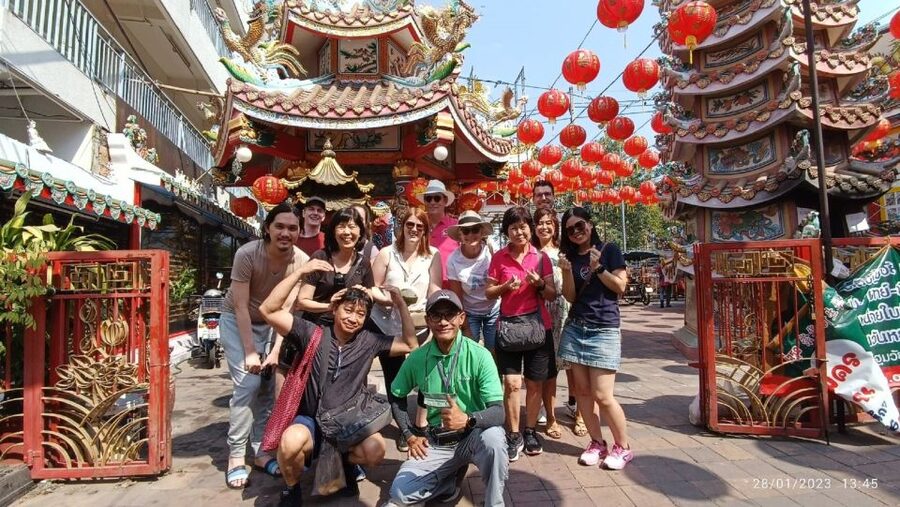
Review · WALKING TOURS
Chiang Mai: Local Food and Markets Guided Walking Tour
Chiang Mai’s best food lesson may begin with a peanut-filled steamed dumpling and end with a bowl of Hakka noodles. This 150-minute walking tour links small food stops with Ton Lamyai Flower Market and Warorot Market, giving you a quick, tasty look at how locals shop and snack.
I like the way a local guide such as Koi, Nom, Patty, or Banana does more than point at a stall. You get help ordering, explanations of customs and ingredients, and access to places that are easy to miss alone. I also like the flexible start times and same-day booking potential.
The main catch is that the food is not included in the $48 price, and the walk can feel quick. The 2:30 pm departure may also miss some listed restaurants, so choose a morning time if the full food route matters to you.
In This Review
- Key points at a glance
- A food walk that gives Chiang Mai context
- Meeting the guide near Khua Khaek
- Lung Khajohn Wat Ket and the first sweet bite
- Ton Lamyai Flower Market adds color to the walk
- Go Neng and the playful pa thong ko
- Warorot Market, the tour’s main food lesson
- Thana Ocha and the final Hakka bowl
- Why the start time matters
- What the $48 price really covers
- Who will enjoy this route most
- Final verdict: book it for guidance, not sheer quantity
- FAQ
- How long does the Chiang Mai food walking tour last?
- Where does the tour meet?
- Is hotel pickup included?
- Is food included in the $48 price?
- Which foods might I taste?
- Is there a vegan option?
- Which departure time should I choose?
Key points at a glance
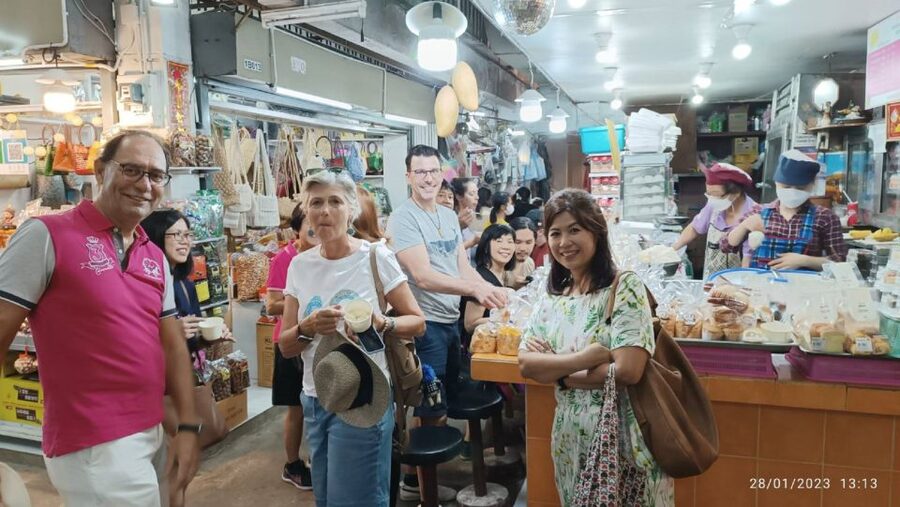
- Start with Khao Kriab Pak Moh: Try sweet steamed rice skin dumplings filled with peanuts at Lung Khajohn Wat Ket.
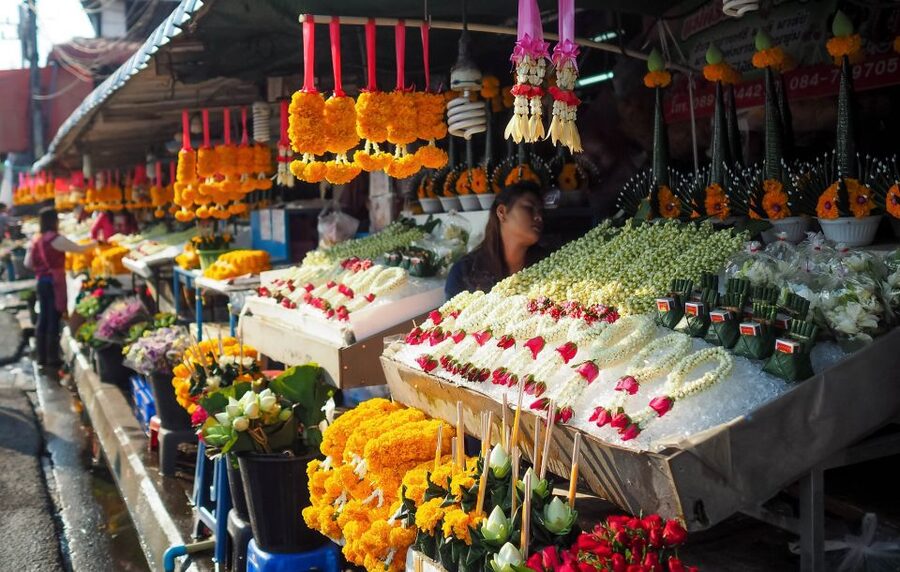
- See Chiang Mai’s flower trade: Walk through Ton Lamyai Flower Market, where fresh flowers and herbs add color and fragrance to the route.
- Try the dinosaur snack: Go Neng serves pa thong ko, Chinese-style fried dough with an amusing shape and local appeal.
- Shop through Warorot Market: Browse snacks, produce, clothing, and other everyday goods while your guide explains what you are seeing.
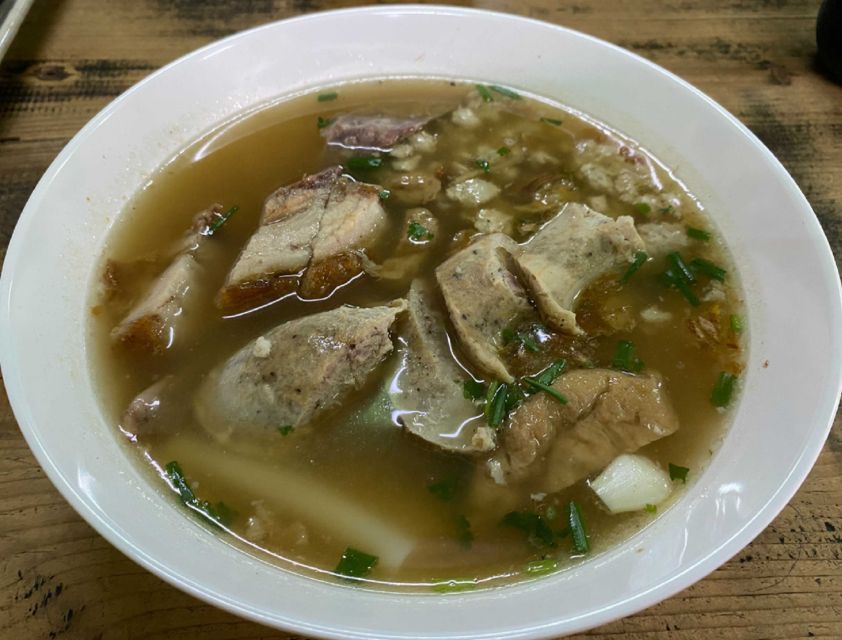
- Finish with Hakka noodles: Thana Ocha serves noodles with stuffed tofu, fish sausage, and wontons.
- Plan for a morning: Afternoon alternatives are possible, but several restaurants close early.
A food walk that gives Chiang Mai context
This is not a sit-down cooking class or a long restaurant crawl. It is a short route through the Chansom Memorial Bridge area, Ton Lamyai Flower Market, and Warorot Market, with food stops fitted into the walk.
That format works well on your first day in Chiang Mai. You can learn what local snacks look like, find out how dishes are eaten, and collect ideas for later meals. Several guides also add comments about nearby buildings, temples, customs, and the mix of Thai and Chinese influences in this part of town.
I would treat the tour as a guided introduction rather than a grand food feast. You may stop at four or five main places, with extra market browsing and explanations along the way. Some people will find that ideal. If you want ten or more tastings, you may prefer a longer food tour.
The route is on foot, and one person covered about 2.5 miles. Wear shoes that can handle warm pavement and a brisk pace. The markets are working places, not just displays for visitors, so you will encounter narrow paths, food stalls, shoppers, and changing conditions.
A few more Chiang Mai trips to weigh up
- Small-Group Chiang Mai Evening Street Food Tour
★ 4.5 · 826 reviews - Chiang Mai: Evening Local Street Food Market Tour
★ 4.8 · 604 reviews - Northern Flavours Chiang Mai Food Tour with 15+ Tastings
★ 5.0 · 513 reviews
Meeting the guide near Khua Khaek
The meeting point is Chansom Memorial Bridge, locally called Khua Khaek, opposite Ton Lamyai Flower Market. The tour information also refers to Praisanee Road as the starting location, so check the final message from TripGuru carefully. The company sends the confirmed meeting time and point the evening before.
Your guide carries a TripGuru sign. Arrive 10 minutes early, especially in the morning, when road traffic can slow taxis and local transport. The guide can wait only 10 minutes after the scheduled time, and hotel pickup is not included.
English and Thai tours are available. The guides named in the feedback include Koi, Nom, Patty, Banana, Nancy, Sunny, Lana, Maggie, Mia Nana, and Pimpi. Names may vary by date, but the repeated pattern is clear: the guide is central to the experience. The best guides order food, find seats, explain what you are eating, and adjust when a stall is closed or crowded.
One especially useful feature is the help with ordering. If you do not read Thai, a guide can make the process far less awkward. Some guides have also helped with photographs, shopping bags, and recommendations for later restaurants and night markets.
Lung Khajohn Wat Ket and the first sweet bite
The first food stop is Lung Khajohn Wat Ket, known for Khao Kriab Pak Moh. These are sweet steamed rice skin dumplings, commonly filled with peanuts. The texture and preparation differ from the fried snacks many people first associate with Thai street food, so this opening taste sets the tone nicely.
This stop is valuable because your guide can explain how the dumpling is made and how it fits into local snack culture. It is also a small serving, which is helpful at the beginning of a route with several more tastes ahead.
Food stalls can change their hours or availability. The tour notes that the route may shift because of weather, restaurant schedules, and other conditions. A good guide should offer a similar local snack if the planned stop is unavailable, but you should not assume every dish will appear exactly as listed.
Ton Lamyai Flower Market adds color to the walk
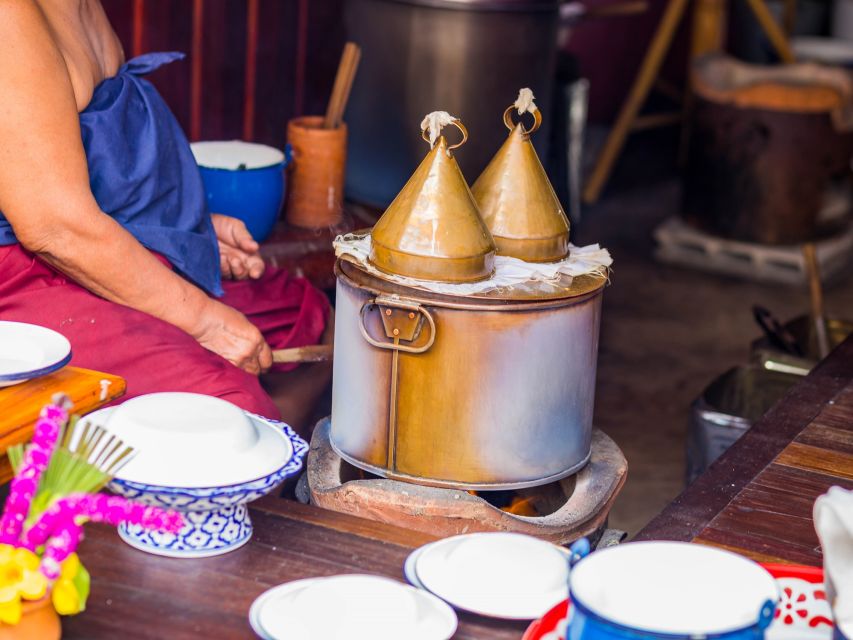
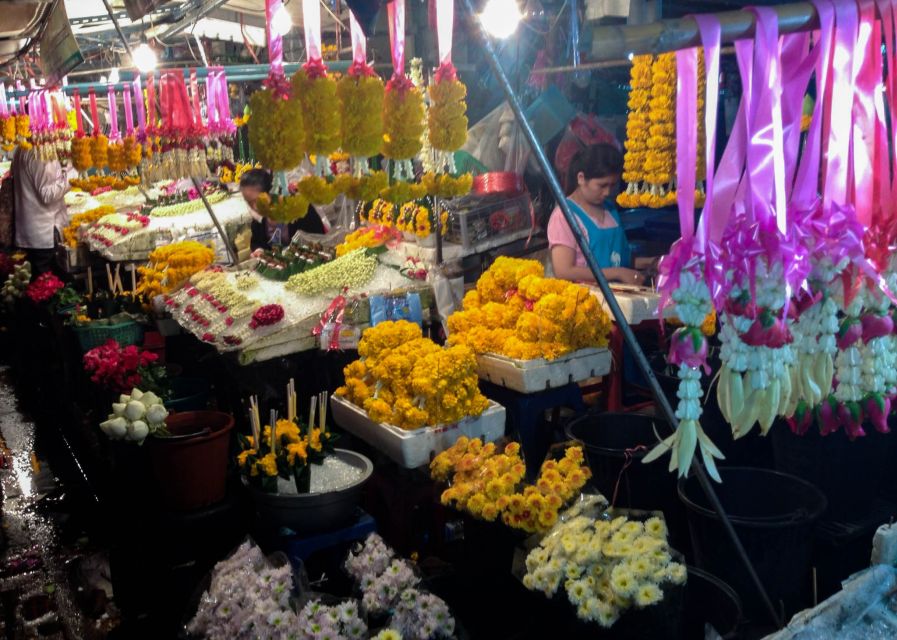
After the dumplings, you pass through Ton Lamyai Flower Market. This is not simply a photo stop. It is part of Chiang Mai’s everyday market life, with flowers and herbs moving through the area.
The market gives the tour a useful change of pace. After focusing on taste and texture, you get to look at the ingredients and decorative plants that help shape local food and daily rituals. Bring a camera if you like taking pictures, but keep in mind that this is a working market. Move aside when people are carrying goods and avoid blocking stall entrances.
The market is also right near the meeting area, so it helps you get your bearings before the route moves deeper toward Warorot. If you enjoy markets more than formal attractions, this may be one of the most memorable parts of the walk.
Same coastline, a completely different day out:
- Half-Day Thai Cooking Class at Organic Farm in Chiang Mai
★ 5.0 · 19,087 reviews - Chiang Mai: Elephant Sanctuary, Waterfall & Bamboo Rafting
★ 4.9 · 9,160 reviews - Chiang Mai: Doi Inthanon National Park Eco-Friendly Tour
★ 4.6 · 6,667 reviews - Chiang Mai: Elephant Sanctuary & Waterfall Group Tour
★ 4.9 · 5,780 reviews
Go Neng and the playful pa thong ko
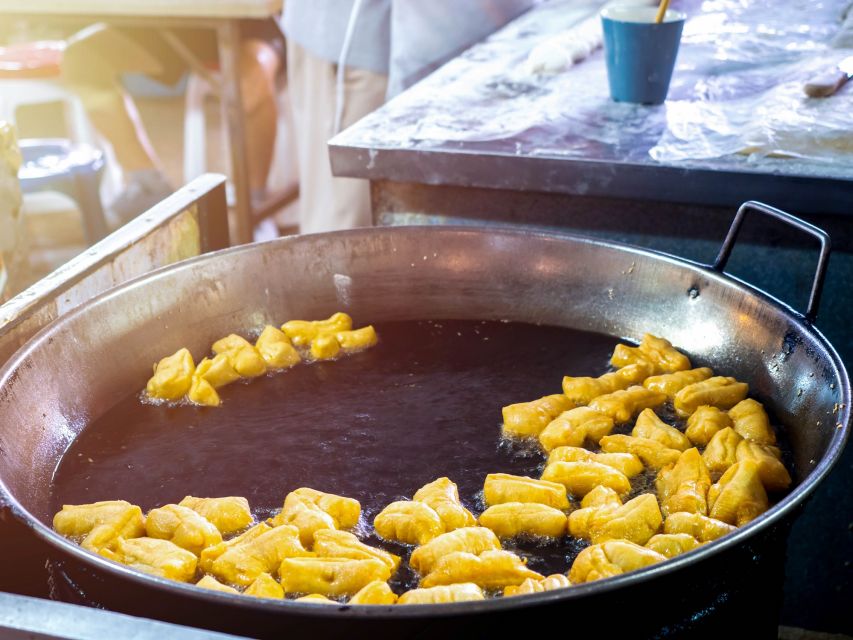
At Go Neng, you try pa thong ko, deep-fried dough that is shaped in unusual forms. Some pieces look like dinosaurs, which explains the snack’s comic appeal. It is a Chinese specialty and a popular local bite, not just a novelty made for photographs.
The dough is simple, fried, and filling. That matters because the tour includes both sweet and savory dishes, and the portions can add up quickly. Go easy at the early stops if you want to enjoy the noodles at the end.
This is also a good example of how Chiang Mai food reflects different cultural threads. Your guide can explain the dish, how it is served, and why it is familiar to local people. The value here comes less from the price of the dough and more from understanding what you are seeing at the stall.
Warorot Market, the tour’s main food lesson
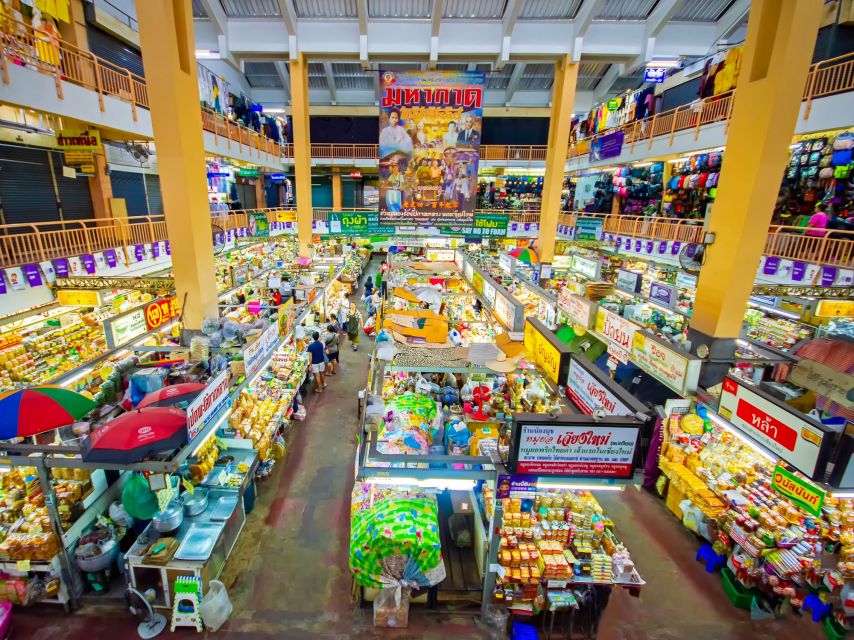
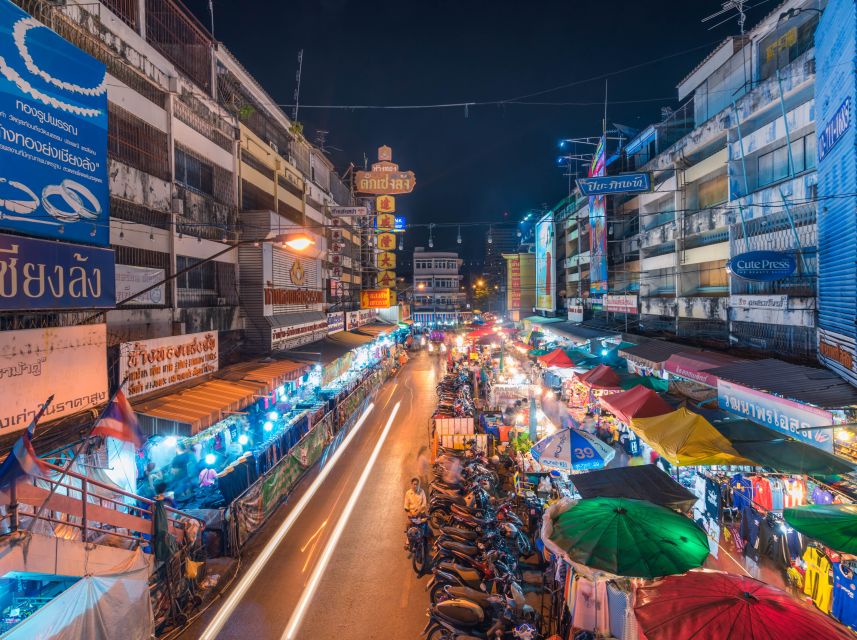
Warorot Market is the largest and most varied stop on the route. You can find snacks, produce, clothing, and other goods, so this is where the walking portion feels most like a look at ordinary shopping rather than a string of restaurant visits.
Your guide leads you through the stalls and explains unfamiliar foods. That makes a difference. Alone, you might recognize a few fruits or packaged snacks but miss the ingredients, customs, and local favorites that give the market its character.
The market can also be busy, and the walk may move quickly. Stay close to your guide and keep your belongings secure in crowded sections. If you want time to shop, ask how much time is available before buying anything large or fragile.
The planned sweet treat here is mango sticky rice. You hunt down a particular stall for this famous combination of ripe mango, sticky rice, and coconut-based sauce. It is a familiar Thai dessert, but eating it in a market setting gives you a better sense of how it fits into daily food culture.
There is one practical nuisance: you pay for your own tastings. You will need cash and may take out your wallet at several stops. That lets you choose how much to eat, but some people will prefer a single all-inclusive price. If you are traveling with children or have a picky eater, this pay-as-you-go system can be useful because you are not paying for unwanted portions.
Thana Ocha and the final Hakka bowl
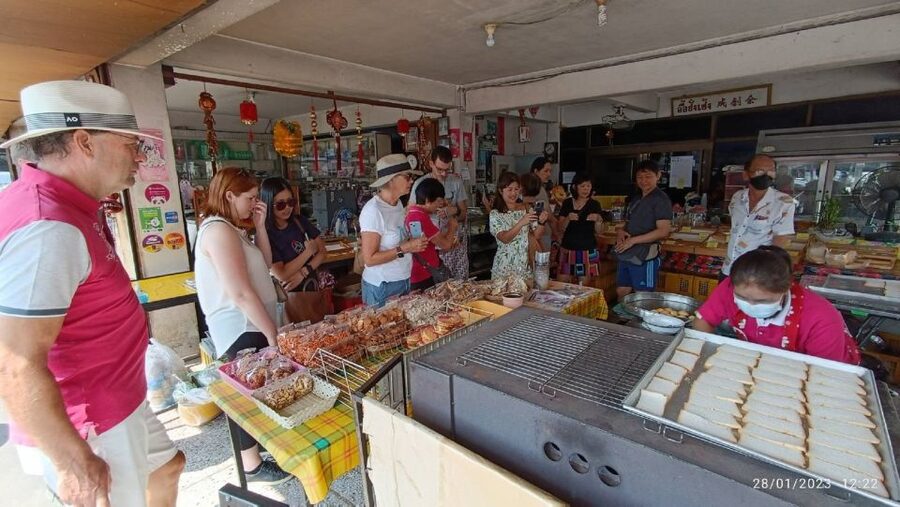
The last planned stop is Thana Ocha, where you finish with Hakka-style noodles. The bowl may include Hakka stuffed tofu, fish sausage, and wontons, giving you a savory finish after the dumplings, fried dough, and mango sticky rice.
This was one of the strongest parts of the route for me on paper because it turns the food walk into a proper meal. The noodles also show the Chinese influence that appears in Chiang Mai’s food traditions. If you arrive very hungry, this is the stop you will be waiting for.
The order of the food makes sense: light sweet dumpling, fried snack, dessert, then a substantial savory dish. Still, you should not arrive after a huge breakfast. Several people finished the route feeling very full, and the guide may offer more food than you expect in a short period.
Why the start time matters
The tour offers multiple departure times, but they are not equally good for this itinerary. Morning departures are the safest choice if you want the named restaurants and stalls, since several close by early afternoon.
The 2:30 pm slot can still work. If a listed restaurant has closed, the guide can take you to alternative street-food stalls. That gives you flexibility, but the route may feel more improvised and rushed. One person specifically found that late timing was tight because restaurants were closing around 4 pm.
I would choose an early slot for three reasons:
- You have a better chance of finding the planned stops open.
- Markets are easier to explore before the strongest midday heat.
- You have the rest of the day to return to a food stall or market you liked.
If your schedule only allows 2:30 pm, book it with realistic expectations. You are paying for a guided local food walk, not a promise that every named dish will be available.
What the $48 price really covers
At $48 per person, the tour is not the cheapest way to buy a few snacks. Food and tasting costs are extra, and the walk lasts 150 minutes. You are paying mainly for the guide’s time, local interpretation, ordering help, route planning, and the confidence to try unfamiliar places.
That can be good value if this is your first visit to Chiang Mai or if you are nervous about ordering at local stalls. The guide can save you from spending your limited holiday time guessing what to eat. Several guides also offer useful restaurant and night market suggestions for later in your stay.
The value is weaker if you already know Chiang Mai’s markets and can comfortably order food on your own. You may find the number of stops modest for the price. The tour does not include hotel transport, and the walking route is not designed for people who need mobility assistance.
The carbon offset credits and GSTC-certified approach may also matter to you. The operator describes the experience as a low-impact way to explore, with carbon emissions offset for each tour. That does not remove every environmental impact, but walking instead of using a vehicle for the route is a sensible part of the design.
Who will enjoy this route most
I would recommend it to first-time visitors, curious eaters, couples, and small groups who want a simple start to Chiang Mai’s food scene. It is also useful if you like markets but do not want to navigate them alone.
Families can enjoy it, though children may tire from the walking and the quick sequence of tastings. One guide was especially flexible with a five-year-old, but that kind of adjustment depends on the guide and the group. Tell the guide about your needs at the start.
This is not suitable for vegans because no vegan option is available. The tour is also listed as unsuitable for pregnant women and people with mobility, heart, or respiratory problems. Bring sunscreen, a hat, sunglasses, insect repellent, comfortable shoes, a camera, and cash.
Food allergies and dietary restrictions are not covered in the supplied details, so you should contact the operator before booking if ingredients are a serious concern. Hakka noodles may include fish sausage, and the menu can change.
Final verdict: book it for guidance, not sheer quantity
Book this Chiang Mai food walk if you want a friendly local guide to handle the confusing parts: choosing stalls, ordering food, explaining customs, and moving you through markets without guesswork. Choose a morning departure, arrive hungry but not stuffed, and carry cash for the separate tasting costs.
Skip it if you want an all-inclusive price, a slow restaurant meal, or a long list of stops. At $48, the strongest value is the local guidance and cultural context, not the amount of food alone. For a first taste of Chiang Mai’s markets, the mix of dumplings, flower stalls, fried dough, mango sticky rice, and Hakka noodles makes a well-planned introduction.
FAQ
How long does the Chiang Mai food walking tour last?
The activity lasts 150 minutes, or two and a half hours.
Where does the tour meet?
Meet at Chansom Memorial Bridge, also called Khua Khaek, opposite Ton Lamyai Flower Market. The operator confirms the final meeting details by email the evening before.
Is hotel pickup included?
No. Hotel pickup and drop-off are not included, so you need to make your own way to the meeting point.
Is food included in the $48 price?
No. Food and tasting expenses are paid separately at the stops. Bring cash so you can pay for the dishes you choose.
Which foods might I taste?
Possible choices include Hakka-style noodles, mango sticky rice, pa thong ko deep-fried dough sticks, and Khao Kriab Pak Moh steamed rice skin dumplings. The exact route can change with restaurant hours, weather, and availability.
Is there a vegan option?
No vegan option is available, so the tour is not suitable for vegans.
Which departure time should I choose?
Morning departures are recommended if you want the planned restaurants, since several close by early afternoon. The 2:30 pm departure may use alternative street-food stalls if listed restaurants are no longer open.
More Walking Tours in Chiang Mai
- Chiang Mai: 3 Hour Old City and Temples Guided Walking Tour
★ 4.6 · 1,568 reviews - Chiang Mai: Historic Temples and City Guided Walking Tour
★ 4.7 · 650 reviews - Chiang Mai: Temple And City Walking Tour Part I
★ 4.7 · 244 reviews - Chiang Mai Untouched Elephant: Nature Walk & Waterfall Trek
★ 4.7 · 77 reviews
Just added around Chiang Mai
- Taste of Chiang Mai: Michelin Guide & Street Food Tour★ 4.9 · 159 reviews
- Red, Blue, White Temples & Hot Spring Trip from Chiang Mai★ 4.4 · 143 reviews
- From Chiang Mai: Mae Taeng Valley and Waterfalls Cycle Tour★ 4.9 · 159 reviews
- Long Neck Village, Silver Temple & Chiang Mai Top Sites★ 4.7 · 17 reviews
- Chiang Mai: Local Northern Thai Cooking Class at Grandma’s★ 5.0 · 33 reviews
- Chiang Mai: Khum Khantoke Northern Thai Cuisine and Show★ 4.3 · 38 reviews
- Private : Sticky Waterfall & Secret Temple & Karen Village.★ 5.0 · 9 reviews
- Half-day with CHIANGMAI ELEPHANT CARE program (12pm-6pm.)★ 5.0 · 27 reviews
Walking Tours, compared.
City Highlights Temple and Market Walking Tour
Read our review →
Grand Palace and Wat Phra Kaew Guided Walking Tour
Read our review →

3 Hour Old City and Temples Guided Walking Tour
Read our review →
Beach walk with elephants, rain & care. 2.5 hours
Read our review →
Bukit Elephant Park Sanctuary Walk and Feed Tour
Read our review →
Bangkok Authentic Tasting Thai-Chinatown Walking Food Tour
Read our review →
Browse the lists this tour appears in