
Review · CHIANG RAI TOURS
From Chiang Rai: 3 Temples, Golden Triangle Tour, Tea Plantation
Chiang Rai’s best-known sights are scattered across northern Thailand, and this 10-hour minibus tour links them in one long, well-filled day. You see the dazzling White Temple, richly colored Blue Temple, unusual Black House, the Golden Triangle, a tea plantation, and two cultural stops without arranging separate taxis or day trips.
I like the small maximum group of 12, included lunch, and hotel pickup in Chiang Rai. Guides such as Ping, Fido, Yolk, and M have been praised for friendly explanations and extra care, including help through WhatsApp for guests with limited English. The tradeoff is simple: this is a busy day with roughly an hour at each stop, plus long stretches on the road and mountain travel.
In This Review
- Key points to know before booking
- Why this Chiang Rai day tour works
- Wat Rong Khun, Chiang Rai’s White Temple
- The Hall of Opium and the Golden Triangle
- Long Neck Karen village and the question of responsible visits
- Wat Rong Suea Ten, the Blue Temple
- Baan Dam, the Black House
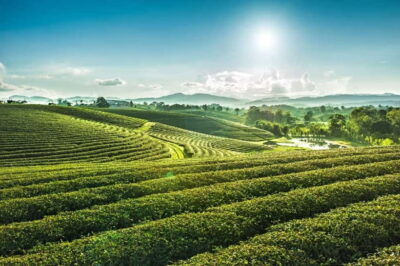
- Chui Fong Tea Plantation and the mountain road
- Lunch, transport, and the shape of the day
- Who should book this Chiang Rai tour?
- Should you book it?
- FAQ
- Where does the tour start and finish?
- Is this a private tour?
- How long does the experience last?
- What is included in the price?
- Is the Golden Triangle boat ride included?
- Is admission to the Black House included?
- What happens if the weather is poor?
Key points to know before booking
- Three very different temple and art stops: White Temple, Blue Temple, and the Black House each offer a distinct visual style.
- A full northern Thailand circuit: You visit the Golden Triangle, Hall of Opium, Long Neck Karen village, and Chui Fong Tea Plantation in the same day.
- Small shared group: The vehicle holds a maximum of 12 people, making the trip more personal than a large coach outing.
- Lunch and entrance fees included: The package covers a buffet lunch, standard admission tickets, drinking water, insurance, and an English-speaking guide.
- Boat ride costs extra: A boat trip at the Golden Triangle is optional and costs THB 300 per person.
- Expect a fast pace: The tour lasts about 10 hours, with about one hour scheduled at each main stop.
Why this Chiang Rai day tour works
I see this as a sightseeing sampler rather than a slow cultural day. It gives you a broad look at Chiang Rai and the far north in one outing, which is especially useful if you have only a short stay in town.
The route brings together places that feel quite unlike one another. The White Temple is polished and theatrical. The Blue Temple uses strong color and expressive decoration. The Black House is an art complex rather than a conventional temple. Then the mood changes again at the Golden Triangle and tea plantation.
That variety is the main reason to book. You are not spending ten hours looking at similar buildings. You move between religious art, modern museum displays, ethnic culture, river views, and mountain scenery.
The price is $82.61 per person. For that amount, you receive transport, a guide, lunch, water, insurance, and standard entry tickets. The value is strongest if you want convenience and plan to visit several paid attractions. Booking every transfer and admission separately would take time, and reaching the Golden Triangle and tea plantation without a vehicle can be awkward.
Still, do not expect a private tour. You share the vehicle with other people, and the day follows a set route. The small group helps, but the schedule remains tight.
Other Chiang Rai days people book alongside this one:
- Chiang Rai: Guided Highlights Guided Tour with Buffet Lunch
★ 4.9 · 1,532 reviews - Chiang Rai: Iconic Temples & 7 Major Sites—River View Buffet
★ 4.9 · 692 reviews - Chiang Rai: White, Blue, Red Temples, Long Neck Tour
★ 4.8 · 652 reviews
Wat Rong Khun, Chiang Rai’s White Temple
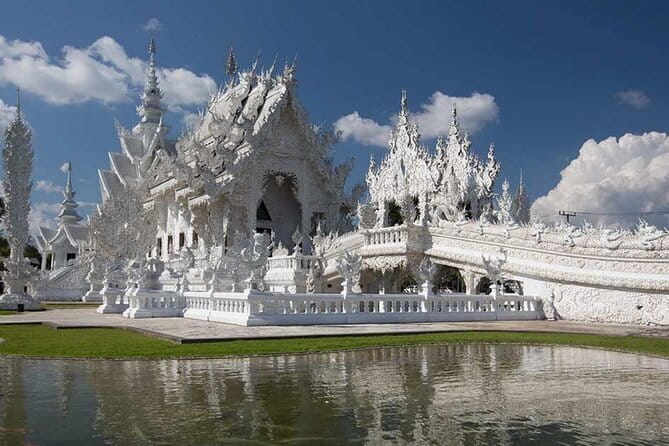
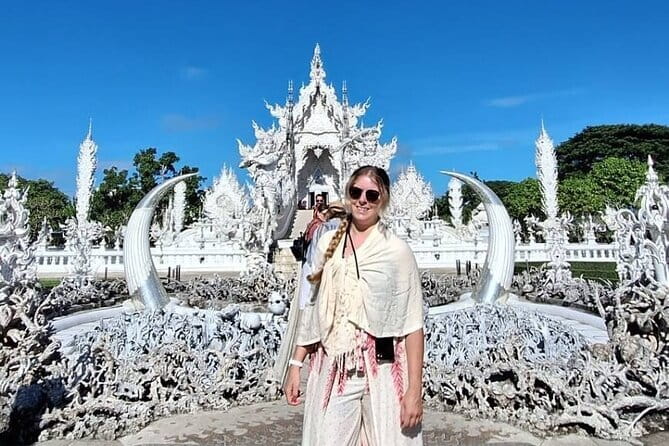
The White Temple is the morning showpiece. Its official name is Wat Rong Khun, and it sits in Pa O Don Chai in Chiang Rai province.
The building is famous for its bright white finish and detailed decoration. It looks unlike the older, more restrained temple compounds you may see elsewhere in Thailand. The stop gives you about an hour, enough to look around, take photographs, and hear the guide explain the site.
I like beginning here because it immediately shows you that Chiang Rai has its own artistic character. This is not simply another golden-roofed temple. The design is bold, highly finished, and made to catch your eye from a distance.
Your guide matters at this stop. Without explanation, you may mainly see an impressive white structure and a series of striking details. A guide can give the visit more shape, pointing out what makes the temple different from the temples of southern Thailand.
The limitation is time. One hour lets you see the main areas, but not linger over every detail. If the White Temple is your central reason for visiting Chiang Rai, a dedicated visit would give you more freedom. On this tour, it is one part of a much larger day.
The Hall of Opium and the Golden Triangle
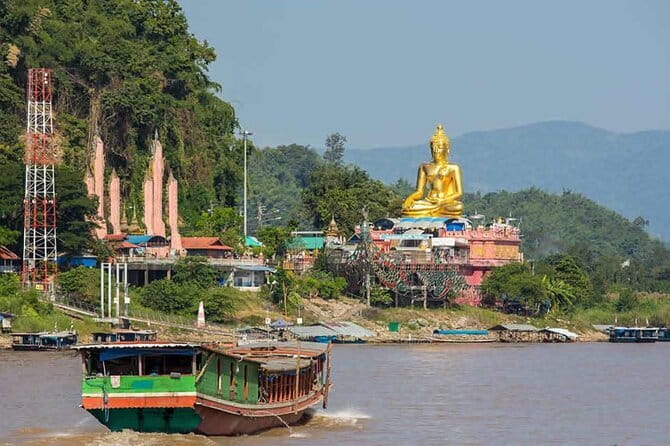
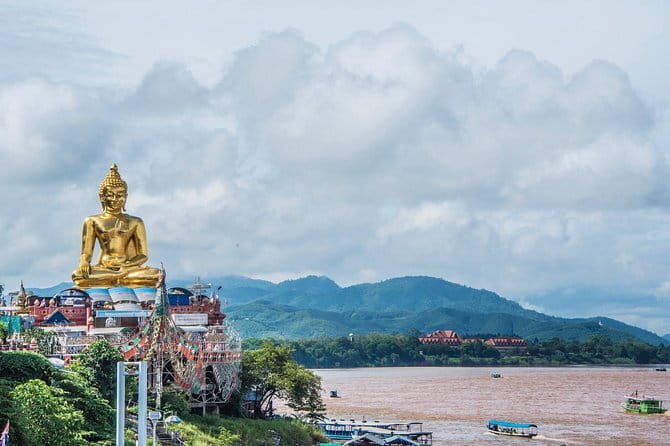
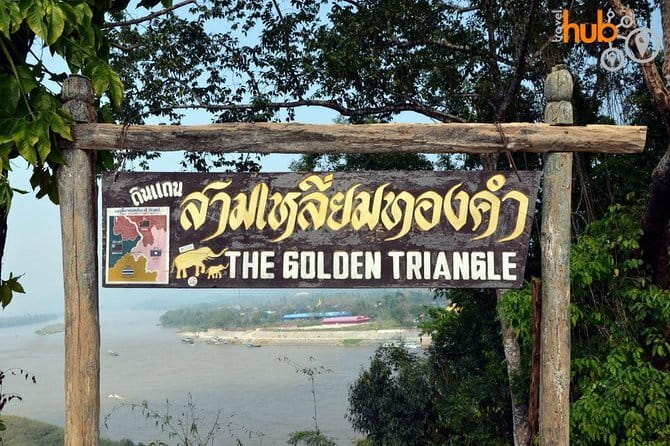
The tour then heads toward the Golden Triangle, the border area where Thailand, Myanmar, and Laos meet around the Mekong River. The main viewpoint is at Sop Ruak, about nine kilometers north of Chiang Saen along the riverside road.
The Golden Triangle is visually appealing, but its importance is not only geographic. The area is closely linked to the opium trade, and the Hall of Opium helps explain that past through exhibitions and multimedia displays.
You have about an hour at the museum. This is one of the more substantial stops because it gives context to the region instead of offering only a photo opportunity. I would pay close attention here, especially if you want to understand why this border area became internationally known.
The nearby Golden Triangle viewpoint gives you the classic three-country photo. You can look across the meeting point of the Mekong and Ruak rivers and see the border region from the Thai side.
A boat ride is available for THB 300 per person, but it is not included. That extra charge is worth considering before you set out. The tour already includes the main sightseeing, so you can simply stay on land if you want to keep costs down. If you like being on the river and want a closer look at the border area, the boat adds another angle, but it also uses some of your limited time.
The Golden Triangle stop is best understood as a combination of viewpoint and regional history. The view alone is brief. The museum makes the stop more worthwhile.
Long Neck Karen village and the question of responsible visits
The Long Neck Karen village is scheduled for about an hour. The Karen people featured here are also known as the Padaung, and the community has links to Yunnan in China according to the historical information provided at the site.
This stop introduces you to one of the ethnic communities associated with northern Thailand. It can be an important chance to learn about migration, identity, and the way hilltribe communities are presented to visitors.
At the same time, I suggest approaching the visit with care. A village visit can feel quite different from a temple or museum. You should observe respectfully, listen to your guide, and remember that this is also a tourism setting. The tour description does not provide detailed information about the village’s operating model, photography rules, or how money is distributed, so you should avoid making assumptions.
The one-hour allocation gives you a short introduction rather than a full social or cultural exchange. If this is the most important part of your Chiang Rai plans, you may want a more focused experience. If you see it as one element of a broad regional tour, it adds a perspective that the temples cannot provide.
Same coastline, a completely different day out:
- Sightseeing Join Tour Chiang Rai / PICK UP ONLY IN CHIANG RAI
★ 4.5 · 398 reviews - Chiang Rai Must-See Tour – 7 Icons, Lunch & Small Group(9pp)
★ 4.7 · 395 reviews - Chiang Rai Guide: Popular 7places 3Colors ,Golden Triangle
★ 4.9 · 285 reviews - Chiang Rai: Private Tour with Driver and Custom Itinerary
★ 4.9 · 208 reviews
Wat Rong Suea Ten, the Blue Temple
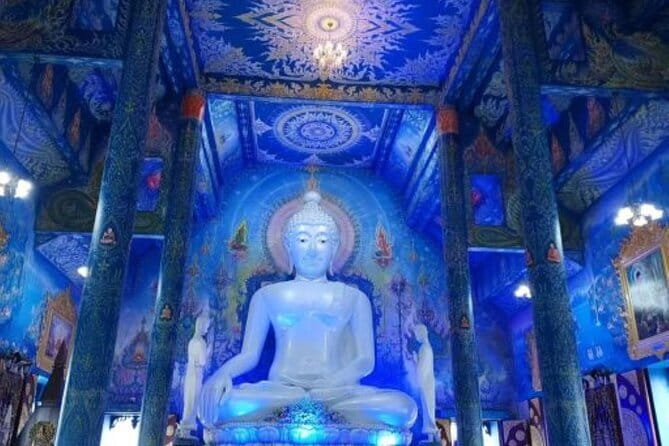
Wat Rong Suea Ten, usually called the Blue Temple, is in the Rong Suea Ten community in the Rim Kok area. Local artist Phutta Kabkaew, also known as Sala Nok, restored the temple. He was a student of Chiang Rai artist Chalermchai Kositpipat, associated with the White Temple.
That connection helps explain why the Blue Temple feels like part of Chiang Rai’s modern artistic movement. It is not simply a traditional religious building with a fresh coat of paint. The design uses saturated blue tones and elaborate decoration to create a very different mood from the White Temple.
You get about an hour here. I would use the time to compare the two temples rather than treating them as interchangeable photo stops. The White Temple is light and pale. The Blue Temple is darker, stronger, and more dramatic.
Several people who have taken this route found both temples more interesting than expected, even after seeing many temples elsewhere in Thailand. That makes sense. Chiang Rai’s major temple sights have a more contemporary and art-focused look than many classic temple complexes in the south.
Again, the guide adds value. Names such as Ping and Fido have been praised for combining clear information with humor and a warm manner. The guide can help you notice the artistic links between the sites instead of seeing each building as an isolated attraction.
Baan Dam, the Black House
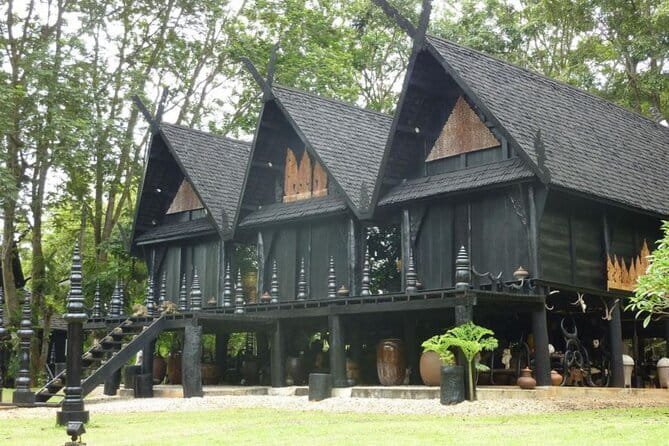
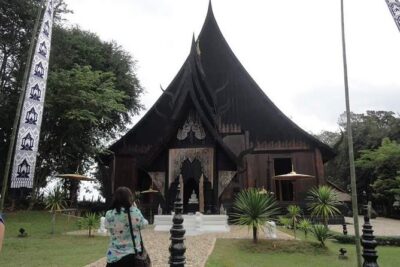
Baan Dam Museum, known as the Black House, is one of the most unusual stops of the day. It is a complex of about 40 buildings, many made from dark teak, set among gardens.
This is not a standard temple visit. The buildings hold a collection of art and objects, and the overall effect is darker and more unconventional than the White and Blue temples. The contrast is useful. Chiang Rai’s art scene is not limited to bright religious decoration.
You have about an hour here, which gives you time to walk among the buildings and take in the setting. The Black House is especially good for visitors who enjoy unusual design, contemporary art, and places that do not fit a familiar tourist category.
Admission is listed as not included, unlike the other main stops. That is an important detail to confirm when planning your spending. The package includes standard tickets for several attractions, but you should allow for the Black House entry separately.
I would not skip this stop simply because it is not a temple. It may be the most memorable place on the route for you, though its darker style will not appeal to everyone. The tour works well here because the Black House provides a strong visual break after the Blue Temple.
Chui Fong Tea Plantation and the mountain road
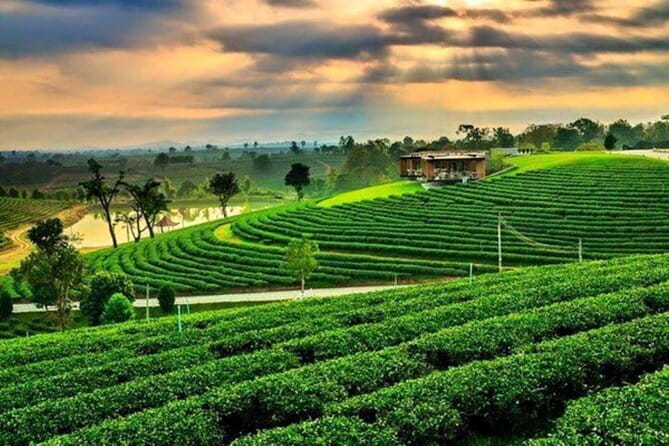
The final major stop is the tea plantation. Chui Fong Tea Plantation is one of northern Thailand’s popular attractions, especially around the end of the rainy season and the start of winter.
This is the quieter part of the day. After museums, temples, and border sightseeing, the plantation gives you open mountain scenery and a chance to slow down for a moment. The tea fields are also a welcome change for photography.
The tour information notes that part of the remaining duration is spent going up and down the mountain. That wording matters. The plantation is not a quick roadside stop in the center of Chiang Rai, and the route involves travel on higher ground. If you are prone to motion sickness or dislike winding mountain journeys, prepare accordingly.
You have around an hour at the plantation. That is enough to see the main area and enjoy the views, but not enough for an extended agricultural visit. The attraction is presented as a scenic stop, not a detailed tea-making workshop.
Timing can affect the experience. The plantation is said to be particularly attractive after the rainy season and at the beginning of winter, but the tour runs in all seasons subject to weather. The stop is included in the broad route, so you do not need to arrange a separate visit.
Lunch, transport, and the shape of the day
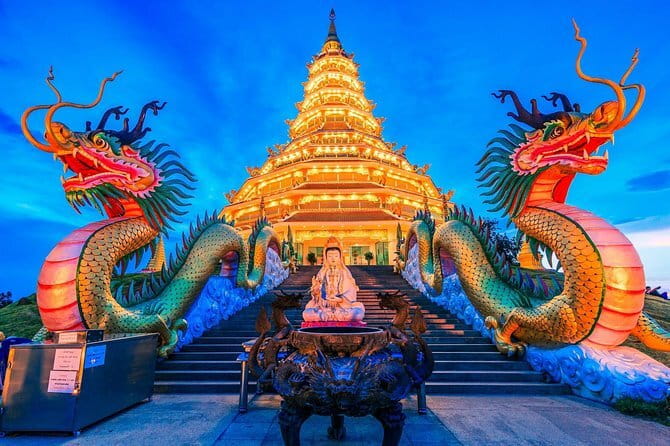
The tour starts at about 8:00 a.m. and returns to your Chiang Rai hotel after the full circuit. Pickup is offered, and the air-conditioned vehicle is a major part of the value. This is a lot of ground to cover, and private transport between every stop would quickly become expensive.
Lunch is included as a buffet. The food received good marks for taste and the meal was served in a pleasant setting. You also receive drinking water, insurance, and an English-speaking professional guide.
The maximum group size is 12. That is small enough for a guide to keep track of the group and answer questions, though the actual number may vary. One account describes a minibus with nine people, while another describes a group of three, so you should expect a shared experience rather than a fixed group size.
The day is long but well paced for the number of sights. Each attraction receives about an hour, with driving time between them. I would wear comfortable shoes, bring sun protection, and keep your expectations realistic. This is a survey of the area, not a slow retreat from one beautiful site.
Guides are one of the strongest parts of the experience. Ping is described as organized, friendly, and good at making a small group feel comfortable. Fido is praised for humor, energy, practical help, and clear information. Yolk is noted for a positive attitude and extra effort, including a visit to Laos for one group. Another guide, M, was described as a great source of information.
Those individual names cannot guarantee who will lead your departure, but they show the kind of guiding style you can expect from the operation: personal, active, and involved rather than simply reading prepared facts.
Who should book this Chiang Rai tour?
I would choose this tour if you are visiting Chiang Rai for the first time and want to cover the main sights without renting a car or sorting out regional transport. It is also a strong fit if you have only one free day and want variety.
You will get the most from it if you enjoy taking photographs, comparing different forms of art, and seeing several sides of northern Thailand in quick succession. The combination of temples, museum displays, a border viewpoint, a hilltribe village, and tea fields keeps the day from feeling repetitive.
This is less suitable if you want long, quiet visits at each attraction. It is also not the best choice for someone seeking a private itinerary or complete control over departure and stop times.
The English-speaking guide is useful, but one booking involved guests who spoke little English and received extra information through WhatsApp. That suggests the team may try to help with communication, but you should still book an English tour only if you can manage basic spoken English.
At $82.61, the tour offers solid value for a full day. Transport, lunch, water, insurance, a guide, and most standard tickets are bundled together. Add THB 300 only if you want the optional boat ride, and remember that the Black House admission is not included.
Should you book it?
Book this tour if you want an efficient first look at Chiang Rai and prefer having a guide, vehicle, lunch, and entrance fees handled in one package. The White Temple, Blue Temple, Black House, Golden Triangle, and tea plantation create a varied day, and the small group keeps it from feeling like a mass excursion.
Skip it if you prefer a private trip, dislike long driving days, or want to spend half a day at one temple. For most first-time visitors with limited time, I think the mix and included services justify the price. Just start early, expect a full schedule, and treat the Golden Triangle boat ride as an optional extra rather than a required part of the tour.
Free cancellation is available up to 24 hours before the 8:00 a.m. start time. Changes made within 24 hours are not accepted, and poor weather can lead to a new date or a full refund.
FAQ
Where does the tour start and finish?
The tour starts at about 8:00 a.m. with pickup from your Chiang Rai hotel and returns to your hotel in Chiang Rai.
Is this a private tour?
No. This is a shared tour with a maximum group size of 12 people.
How long does the experience last?
The tour lasts approximately 10 hours, including travel between the stops and the return journey to Chiang Rai.
What is included in the price?
The price includes a buffet lunch, air-conditioned vehicle, insurance, drinking water, professional English-speaking guide, and standard fees or tickets.
Is the Golden Triangle boat ride included?
No. The optional boat ride costs THB 300 per person.
Is admission to the Black House included?
No. The Black House admission is listed separately from the included standard tickets.
What happens if the weather is poor?
The experience requires good weather. If it is canceled because of poor weather, you will be offered a different date or a full refund.
Just added around Chiang Rai
- Trekking with Lunch cooked by Bamboo in the Chiang Rai jungle★ 5.0 · 12 reviews
- Half-Day Thai Cooking Class with organic ingredients★ 5.0 · 96 reviews
- Private Choui Fong and Golden Triangle Explorer from Chiang Rai★ 4.0 · 27 reviews
- Chiang Rai White and Black and Blue Temple★ 5.0 · 15 reviews
- Full Day Group Tour in Chiang Rai★ 5.0 · 112 reviews
- Half Day Cycling Tour to the White temple★ 5.0 · 61 reviews
- Full Day Cycling Amazing Chiangrai countryside and the White temple★ 5.0 · 53 reviews
- Golden Triangle , Old City, National Park : One Day Join Tour★ 5.0 · 15 reviews
Chiang Rai Tours, compared.
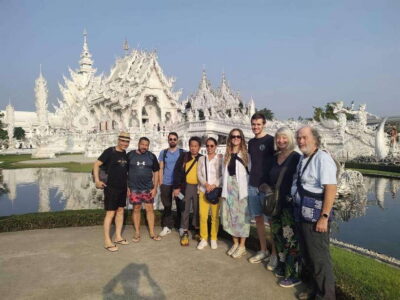
Guided Highlights Guided Tour with Buffet Lunch
Read our review →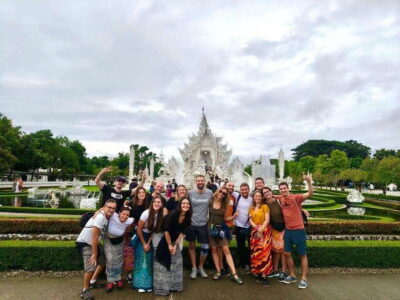
Iconic Temples & 7 Major Sites—River View Buffet
Read our review →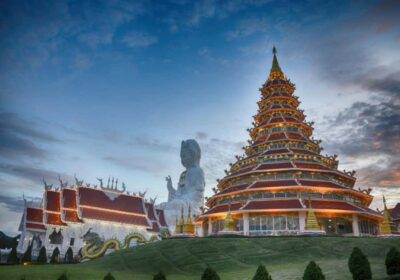
Sightseeing Join Tour Chiang Rai / PICK UP ONLY IN CHIANG RAI
Read our review →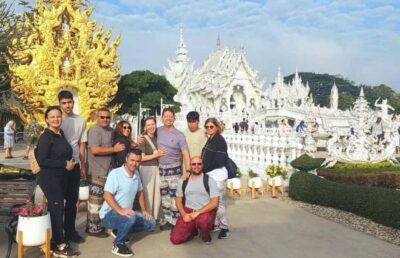
Chiang Rai Must-See Tour – 7 Icons, Lunch & Small Group(9pp)
Read our review →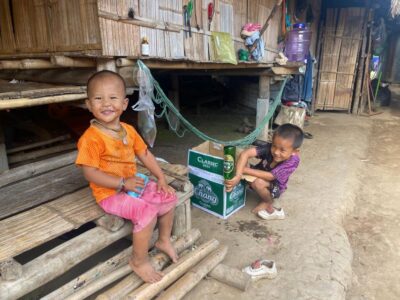
Chiang Rai Guide: Popular 7places 3Colors ,Golden Triangle
Read our review →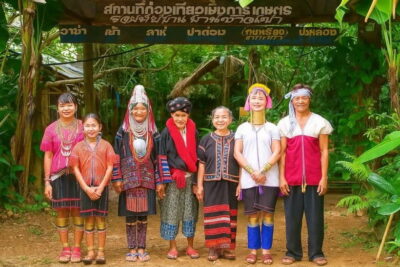
Browse the lists this tour appears in