
Review · CITY TOURS
Guided Chiang Mai City Night Tour by EV Tram
Chiang Mai changes after sunset. This small-group EV tram tour lets you see old gates, temple roofs, food stalls, and ordinary neighborhoods without the racket of a petrol vehicle. You get a short ride, several walks, and plenty of local context in roughly two hours.
I like the calm pace and the useful route. You see both famous places such as Wat Chedi Luang and less-visited temples tied to Tai Yai and Burmese-Shan communities. I also like the market stop, where snacks and drinks are included and you can watch evening food culture unfold. The main drawback is that the schedule is full, so some temple visits are brief.
In This Review
- Key points to know before booking
- Why an electric tram works well after dark
- Starting at Three Kings Monument and Wat Inthakin
- Wat Chiang Man and the city’s earliest temple tradition
- Wat Lok Molee and a quieter northern temple
- Chang Puek Gate, Wat Pa Pao, and Wat Nong Kham
- Warorot Market and everyday Chiang Mai
- Tha Phae Gate and the city’s public stage
- Chiang Mai Gate Night Market and included snacks
- Wat Chedi Luang and a major old-city landmark
- Wat Phra Singh and the route’s final temple note
- What the $27.43 price really covers
- Who will get the most from this evening
- Should you book the Chiang Mai EV tram tour?
- FAQ
- Where does the Chiang Mai EV tram tour start?
- What time does the tour begin?
- How long does the tour last?
- Where does the tour finish?
- Is hotel pickup included?
- What is included in the price?
- Is the tour suitable for children?
- How many people can join the tour?
- What should I wear?
- Can I cancel for a full refund?
Key points to know before booking
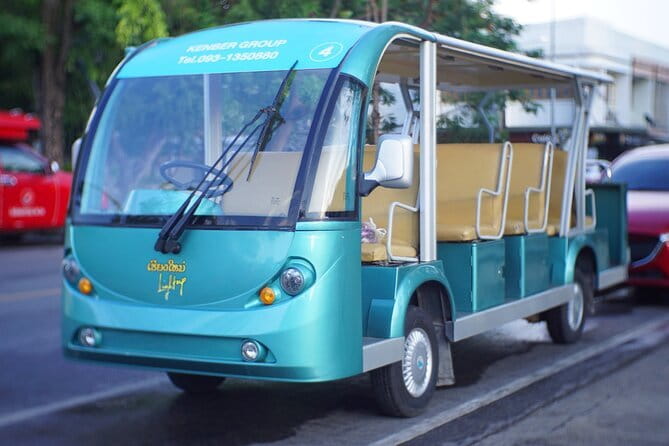
- Quiet electric transport: The EV tram cuts down on traffic noise and makes the evening route feel more relaxed.
- A strong first-night orientation: The tour links Chiang Mai’s old city, gates, temples, markets, and public spaces in one compact outing.
- Small group of up to 12: You should have a better chance to hear the guide and ask questions than on a large coach tour.
- Local market time included: Chiang Mai Gate Night Market provides a chance to try snacks and see where people eat after work.
- No hotel transport in the base price: Pickup and return cost THB 500 per way per group for locations within 5 kilometers of the city center.
- Plan for smart casual clothing: Temple visits require a respectful dress standard, and comfortable shoes will help with the walking sections.
Why an electric tram works well after dark
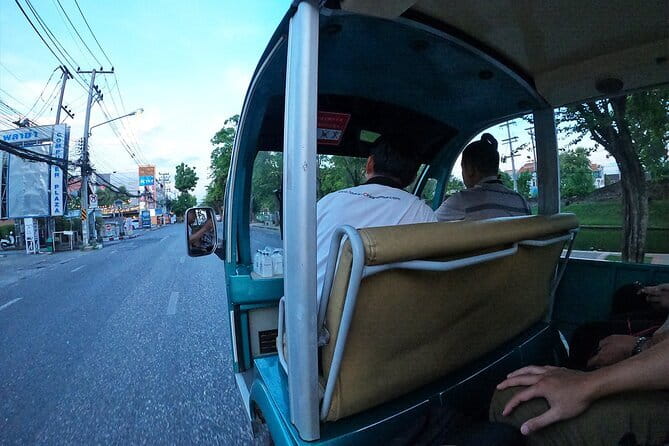
An electric tram is a sensible match for Chiang Mai’s old center. You are not sealed inside a bus, yet you also avoid the noise and exhaust of a conventional sightseeing vehicle. The open, easygoing format helps you notice details as you move between temples and city gates.
This is not a tour built around racing from one major attraction to the next. It gives you an outline of the city: where the old center begins, how the gates relate to one another, where markets serve local residents, and how different Buddhist traditions have shaped Chiang Mai.
The tram is useful between stops, but you should expect to get out and walk. The route includes temple grounds, market areas, and short stretches around the old city. The pace is generally gentle, though the number of stops means you will not have a long time at every site.
The maximum group size is 12 people. That is small enough to keep the guide’s explanations personal without making the price feel like a private tour. The tour starts at 6 pm, a practical time for avoiding the strongest daytime heat and seeing the city as shops and food stalls shift into their evening rhythm.
A few more Chiang Mai trips to weigh up
- Chiang Mai: Doi Suthep and Wat Umong Enchanting Evening Tour
★ 4.6 · 1,811 reviews - Small-Group Chiang Mai Evening Street Food Tour
★ 4.5 · 826 reviews - Chiang Mai: Evening Cooking Class and Local Market Visit
★ 4.9 · 648 reviews
Starting at Three Kings Monument and Wat Inthakin
Meet at Three Kings Monument on Prapokklao Road. This is a central and easy-to-recognize starting point in the old city, and it gives the guide a natural place to explain Chiang Mai’s beginnings before the tram starts moving.
The first stop includes a short walk to Wat Inthakin Sadeu Muang. According to local tradition, this area is linked to the city pillar, called Inthakin, said to have been established in 1296 by King Mangrai. That detail matters because it connects the physical city around you with the beliefs that helped protect and define it.
You spend about 15 minutes here. That is enough for a basic introduction and a look around, but not enough for a careful architectural visit. Think of this stop as an orientation lesson rather than a full temple tour.
The opening explanation is one of the most useful parts of the evening. If you have just arrived in Chiang Mai, it gives you names and reference points that make later independent exploring easier.
Wat Chiang Man and the city’s earliest temple tradition
Wat Chiang Man is listed as a brief five-minute stop. It is associated with Chiang Mai’s early Lanna period and is known for a chedi supported by rows of elephant-shaped buttresses.
Five minutes is short, so you should not expect a detailed examination of the temple complex. Still, the stop gives you a quick look at one of the city’s oldest religious sites and a distinctive architectural feature that is easy to recognize.
This is a good example of how the tour works. You are shown several important pieces of Chiang Mai’s past, but the guide has to keep the group moving. If Wat Chiang Man is high on your personal list, return during daylight or arrange separate time for it.
Wat Lok Molee and a quieter northern temple
The tram continues to Wat Lok Molee, where the visit lasts about 20 minutes. This is one of the longer temple stops and gives you more time to look around.
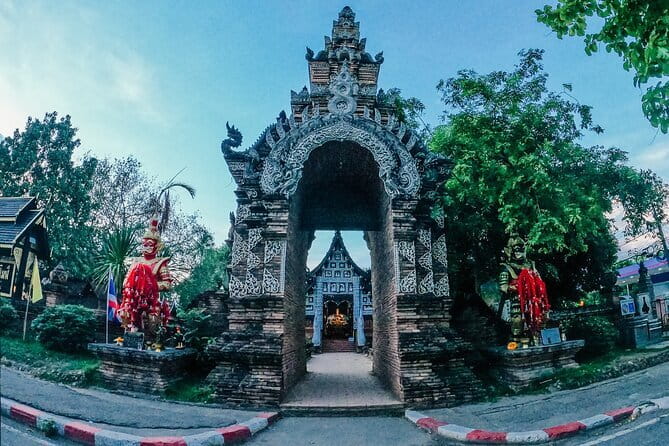
The complex is known for its wooden buildings and terracotta figures. It sits outside the old city walls and is associated with monks from Burma, with origins thought to reach back to the 14th century. The Burmese connection adds another layer to Chiang Mai’s story, which is not limited to one architectural style or one cultural influence.
Evening light can make temple details especially appealing, and the calmer setting suits the tour’s slow approach. You will want to keep your camera ready, but remember that the visit is also about listening. The guide’s explanation helps you see why this temple looks different from the more familiar Lanna-style sites.
Same coastline, a completely different day out:
- Half-Day Thai Cooking Class at Organic Farm in Chiang Mai
★ 5.0 · 19,087 reviews - Chiang Mai: Elephant Sanctuary, Waterfall & Bamboo Rafting
★ 4.9 · 9,160 reviews - Chiang Mai: Doi Inthanon National Park Eco-Friendly Tour
★ 4.6 · 6,667 reviews - Chiang Mai: Elephant Sanctuary & Waterfall Group Tour
★ 4.9 · 5,780 reviews
Chang Puek Gate, Wat Pa Pao, and Wat Nong Kham
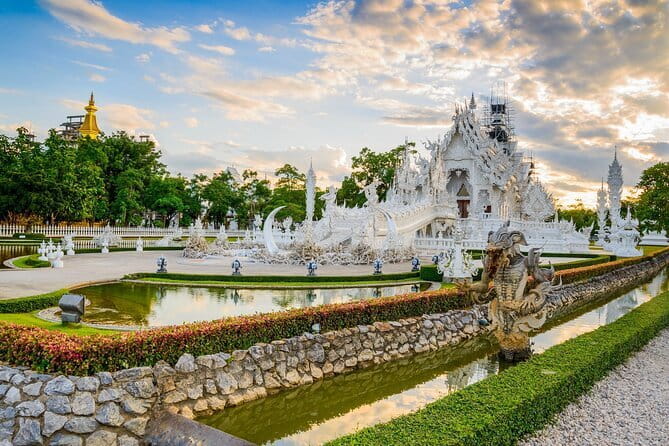
Chang Puek Gate marks the northern entrance to the old city. The area includes remains of the city wall and is also associated with evening street food. The tour uses this stop to connect old defensive structures with present-day city life.
That contrast is worth noticing. Chiang Mai’s gates are not only historical markers. They remain part of the city’s daily movement, with food and activity gathering around them after dark.
Wat Pa Pao is identified as Chiang Mai’s first temple connected with the Ngiaw, or Tai Yai, community. The visit lasts about 15 minutes. This is a useful stop for understanding that northern Thailand’s religious life has been shaped by communities from across the region.
Wat Nong Kham adds another example of Burmese-Shan temple design. The stop is especially worthwhile if you want more than the standard old-city highlights. You may find the brief visit less satisfying if you prefer long periods for photography, but the range of traditions makes the route more substantial than a simple temple checklist.
Warorot Market and everyday Chiang Mai
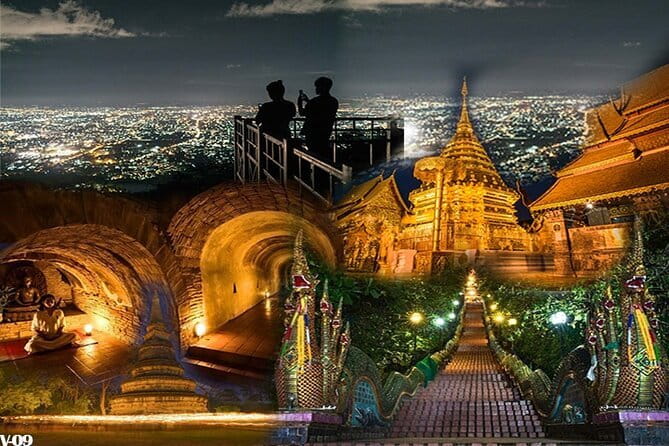
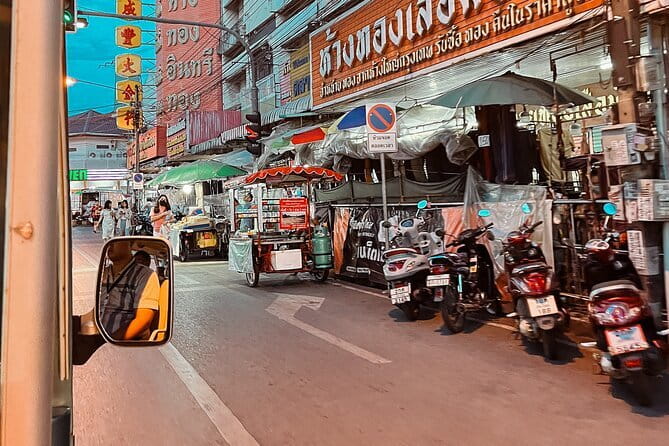
Warorot Market is described as Chiang Mai’s largest local fresh market. Here you can look at food and other goods sold for local use, rather than seeing only tourist-focused stalls.
Market visits can be more revealing than another grand monument. You get a sense of what people buy, eat, and carry home. The route does not promise a long guided tasting session at Warorot, so treat it as a chance to look around and absorb the setting.
The market is one of the places where the tour’s stated aim becomes clearest. You are not just shown an old building. You are placed in a working part of the city, where Chiang Mai’s present-day routines continue alongside its temples and walls.
Tha Phae Gate and the city’s public stage
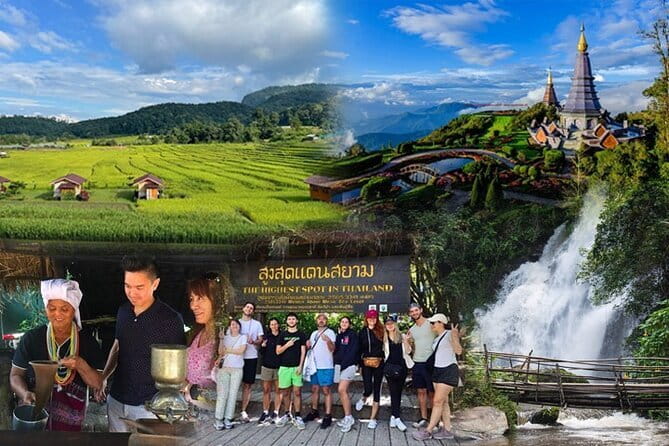
Tha Phae Gate is a central gathering point for public activities and festivals. It is one of the best places on the route for seeing how a historic part of Chiang Mai functions as a modern civic space.
The guide can help connect the gate’s past role with its use today. You may find this stop most useful as a visual reference for later exploring, since Tha Phae Gate is a natural landmark within the old city.
As with the other short visits, do not expect a long pause here. The strength is the overall sequence: Three Kings Monument, the gates, markets, and temples begin to make sense as parts of one compact urban area.
Chiang Mai Gate Night Market and included snacks
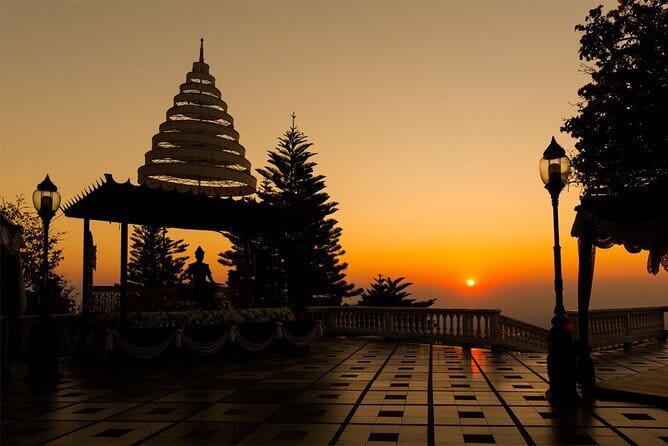
The Chiang Mai Gate Night Market is the main food-focused stop. You spend about 25 minutes here with a local foodie, and some snacks and drinks are included. Bottled water is also provided during the tour.
Twenty-five minutes is enough to sample a few items and watch the market operate, but it is not a full dinner. Extra food and drinks cost more, and alcohol is not included. If you want a substantial meal, plan to eat before or after the tour, or budget for additional purchases at the market.
This stop is a strong part of the value. A temple tour can feel abstract if it never shows you how people spend an ordinary evening. Here, food provides a direct connection to daily life. You can ask about what you are tasting, see the range of stalls, and get a practical introduction to Chiang Mai’s street-food culture without having to choose everything on your own.
The market may also be the liveliest part of the route. Keep your belongings close and stay aware of the meeting time, especially if you stop to look at several stalls.
Wat Chedi Luang and a major old-city landmark
Wat Chedi Luang is one of the best-known sites on the tour. Its large stupa is the centerpiece, and the temple is also associated with the city pillar and Buddhist scriptures.
The visit lasts about 10 minutes. That is enough to see the main architecture and hear the basic explanation, but it is not a substitute for a slow visit in daylight. The scale of the chedi makes an impression even on a short stop, and the evening setting can give the complex a quieter character.
You should dress respectfully at every temple. Smart casual clothing is required, and covering shoulders and knees is the safer choice for temple visits. Comfortable shoes are also sensible because you will move in and out of the tram several times.
Wat Phra Singh and the route’s final temple note
Wat Phra Singh is included as another example of northern Thai architecture, especially its chapel. The supplied schedule does not give a separate duration for this stop, so you should regard it as part of the final temple portion rather than count on a long independent visit.
Its inclusion rounds out the architectural story. Earlier stops introduce Burmese-Shan and Tai Yai influences, while Wat Phra Singh brings attention back to northern Thai design. You leave with a broader sense of Chiang Mai’s religious buildings, not just a list of famous names.
The activity returns to the starting point at Three Kings Monument. That makes the evening easier to manage because you are not left at a distant final stop arranging your own way back.
What the $27.43 price really covers
At $27.43 per person, the tour is priced as a guided introduction rather than a private sightseeing service. The fee includes the EV tram, an English-speaking professional guide, listed admission fees, snacks and drinks during the food stop, bottled water, and travel accident insurance.
The value is strongest if you want context and a simple route. You would need to organize several temple visits, transport between them, and a market stop on your own to reproduce the evening. The small group and food component also make the cost more reasonable than a basic ride with no guide.
The value is weaker if you already know Chiang Mai well or want extended time at each temple. You are paying for a connected overview, not deep study at individual sites. Group discounts may help families or larger parties, but a minimum of two adults is required per booking. A child rate applies only when the child shares with two paying adults.
Hotel pickup is not part of the standard price. Optional pickup and return within 5 kilometers of the city center costs THB 500 per way per group. Since the meeting point is central, many people may prefer to reach Three Kings Monument independently and avoid that extra fee.
Who will get the most from this evening
I would recommend this tour most strongly for a first evening in Chiang Mai. It gives you a clear map of the old city, introduces important temple styles, and shows you where to find markets and public gathering places.
It also suits you if you prefer a quieter form of sightseeing. The electric vehicle keeps the transport gentle, while the group limit of 12 avoids the feel of a large coach excursion.
Food-curious visitors should also find the route useful, especially if you want help at your first night market. Families may appreciate the short duration and included refreshments, though children still need to meet the booking rules.
I would hesitate to recommend it as your only temple experience if you want extensive time for prayer, photography, or architectural study. The schedule is broad, and the five-minute and ten-minute stops are necessarily quick. Use this outing to get oriented, then return independently to the places that catch your attention.
The tour has a free-cancellation policy up to 24 hours before the 6 pm start. Changes or cancellations made inside that window are not accepted for a refund, so keep the cutoff in mind when your plans are uncertain.
Should you book the Chiang Mai EV tram tour?
Book it if you want a calm, well-organized first look at Chiang Mai after dark, with temples, city gates, markets, and local food in one evening. The route offers more cultural range than a simple landmark ride, and the electric tram is a practical, quieter way to cover ground.
Skip it if you prefer to spend an hour or more at each major temple, or if you already know the old city and would rather build your own food tour. For most first-time visitors, though, the combination of a small group, an English-speaking guide, included snacks, and a return to the starting point makes this a useful opening chapter to a Chiang Mai stay.
FAQ
Where does the Chiang Mai EV tram tour start?
The tour starts at Three Kings Monument, at QXRP+3WX, Prapokklao Road, Tambon Si Phum, Mueang Chiang Mai, Chiang Mai 50200, Thailand.
What time does the tour begin?
The scheduled start time is 6 pm.
How long does the tour last?
The advertised duration is approximately two hours. You should allow a little extra flexibility, as the outing may run longer depending on the pace of the group and the stops.
Where does the tour finish?
The activity ends back at the meeting point at Three Kings Monument.
Is hotel pickup included?
No. Pickup and drop-off are optional and cost THB 500 per way per group for locations within 5 kilometers of the city center.
What is included in the price?
The price includes the EV tram, a professional English-speaking guide, listed admission fees, some snacks and drinks during the food stop, bottled water, and travel accident insurance.
Is the tour suitable for children?
Most people can participate. A child rate applies only when the child shares with two paying adults, and a minimum of two adults per booking is required.
How many people can join the tour?
The maximum group size is 12 people.
What should I wear?
Smart casual clothing is required. Since the route includes Buddhist temples, respectful clothing that covers the shoulders and knees is the safest choice.
Can I cancel for a full refund?
Yes. You can cancel at least 24 hours before the experience starts for a full refund. Cancellations or changes made less than 24 hours before the 6 pm start are not accepted for a refund.
Just added around Chiang Mai
- Chiang Mai Zipline White Water Rafting and Elephant Sanctuary★ 4.0 · 11 reviews
- Chiang Mai Airport Private Transfer – Hotel or Airport★ 4.5 · 51 reviews
- Zipline Adventure at Skyline Jungle Luge Chiang Mai★ 5.0 · 102 reviews
- Trek to a Jungle Waterfall★ 5.0 · 14 reviews
- Long Neck Village, White & Blue Temple, Black House Day Tour From Chiang Mai★ 4.0 · 14 reviews
- 2 Hours Wow hatcha lanna package – Free transportation★ 5.0 · 31 reviews
- Zipline+Sticky waterfall+Long Neck Village Private Tour★ 5.0 · 22 reviews
- Authentic Thai Cooking Class and Farm Visit in Chiang Mai★ 5.0 · 66 reviews
City Tours, compared.
City Highlights Temple and Market Walking Tour
Read our review →
Guided Tour of Phuket City with Hotel Transfers
Read our review →
3 Hour Old City and Temples Guided Walking Tour
Read our review →
Phuket City Tour with Wat Chalong, Big Buddha & Famous Viewpoints
Read our review →
Travstore Original Phuket Discovery Tour – Shared Half Day City Tour
Read our review →
Historical City of Ayutthaya – Unesco Full Day Tour From Bangkok
Read our review →
Half-Day City Highlights and Viewpoints Group Tour
Read our review →Browse the lists this tour appears in