
Review · THAI COOKING CLASSES
Chiang Mai: Evening Cooking Class and Local Market Visit
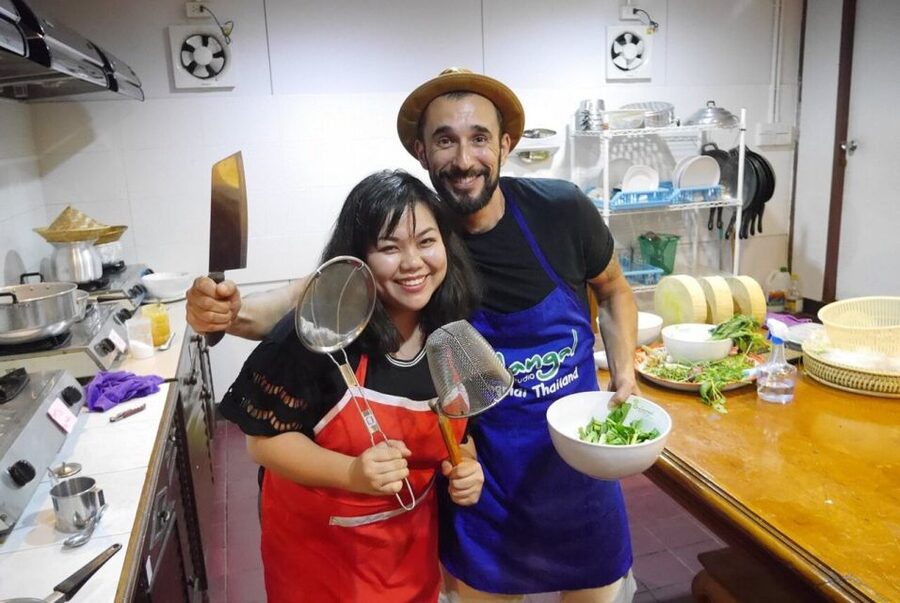
The best part of this Chiang Mai cooking class is that it starts with the ingredients, not a recipe sheet. You visit a local market and organic garden, choose dishes with help from your instructor, then cook and eat a full Thai meal. New and Aoy are especially good names to look for when booking, as their warm, clear teaching has shaped many excellent classes.
I like the choice of dishes, which includes Pad Thai, khao soi, green curry, tom yum, som tam, and vegetarian options. I also like the practical hotel pickup and drop-off, a real help during Chiang Mai’s busy evening traffic. The main consideration is the long food session: you prepare four meal dishes, plus curry paste, so arrive hungry and expect to finish very full.
In This Review
- Key points to know before booking
- Starting with Chiang Mai’s market ingredients
- A short walk through the organic garden
- Choosing Pad Thai, khao soi, or curry
- Making curry paste by hand
- Eating in an air-conditioned kitchen
- Dietary requests and cooking comfort
- The $28 price and what it covers
- Who will enjoy this five-hour evening
- Practical tips for a smoother class
- Should you book Galangal Cooking Studio?
- FAQ
- How long does the Chiang Mai cooking class last?
- What time is hotel pickup?
- Which areas have hotel pickup?
- What dishes can I choose?
- Can people with dietary restrictions join?
- What is included in the $28 price?
Key points to know before booking
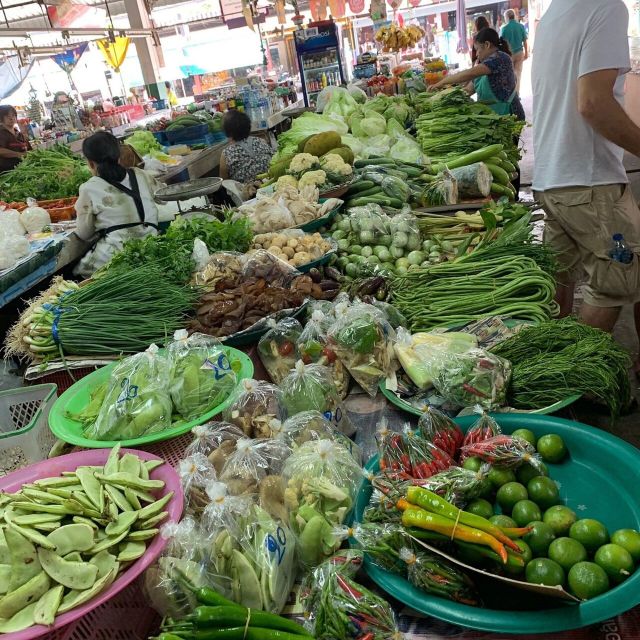
- Four dishes plus curry paste: Choose one dish from each cooking group, then prepare a curry paste for the curry course.
- Market and garden first: See Thai vegetables, herbs, and other ingredients before cooking with them.
- Friendly English instruction: New, Aoy, Oi, and other instructors explain each step and help adjust recipes.
- Strong dietary flexibility: Vegan, vegetarian, halal, gluten-free, and allergy-related requests can be accommodated.
- Convenient evening timing: Pickup is generally between 3:15 and 3:45 PM, with class times shaped by group size.
- Good value at $28: Transport, ingredients, equipment, drinks, instruction, dinner, and a recipe PDF are included.
Starting with Chiang Mai’s market ingredients
Your afternoon begins with hotel pickup in central Chiang Mai, usually between 3:15 and 3:45 PM. You need to wait in the lobby 5 to 10 minutes before the scheduled time. The driver may arrive earlier because evening traffic can be slow, and the vehicle will wait no longer than five minutes after the agreed pickup time.
The pickup area covers hotels in the old city, Santitham, and much of Huay Keaw Road, from Kad Suan Kaew toward Maya Shopping Mall. Some parts of Nimman, Sirimongkrajan Road, Wat Ket, Chang Phueak, Chang Khlan, and Chang Moi are also included, but not every address in these districts qualifies.
That detail matters. Chiang Mai’s central neighborhoods can look close on a map, yet evening traffic changes the journey. Check your hotel address before booking. If it falls outside the service area, you will need to make your own way to the school or market.
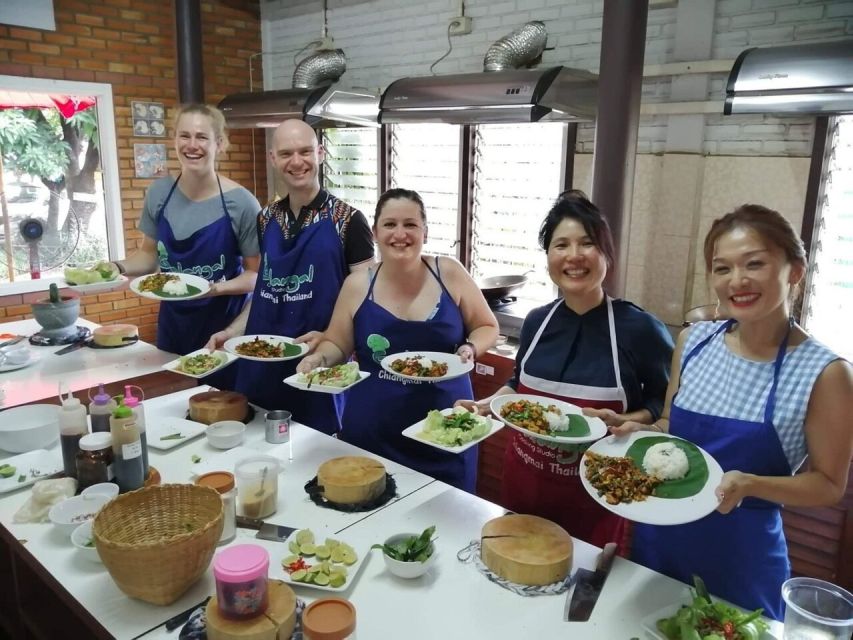
The evening normally includes a stop at a local market. This is not just a quick photo stop. Your instructor uses the visit to explain the vegetables, herbs, curry ingredients, and other items that later appear on your cooking table. You have some time to look around, though the length of the market visit can depend on interest and the group.
I like this opening because it gives you a useful food vocabulary before the chopping begins. Thai cooking can seem mysterious when you meet a bundle of herbs or a pile of unfamiliar vegetables, but seeing the raw ingredients first makes the later instructions easier to follow.
The market stop is also the less predictable part of the outing. It is listed as depending on interest, and the amount of wandering time may vary. If you want a long market tour, this may feel brief. If you prefer to spend most of your time cooking, the short visit keeps the evening moving.
More Thai Cooking Classes in Chiang Mai
- Half-Day Thai Cooking Class at Organic Farm in Chiang Mai
★ 5.0 · 19,087 reviews - Chiang Mai: Cooking Class, Market & Thai Herbs Garden Tour
★ 4.9 · 4,824 reviews - Chiang Mai: Authentic Cooking Class with Market & Farm Visit
★ 4.9 · 4,546 reviews
A short walk through the organic garden
After the market, you visit an organic garden and stroll among cultivated herbs and vegetables. The garden helps connect the food on your plate with the plants used in Thai kitchens, rather than treating ingredients as anonymous items from a shopping list.
This stop is especially useful for first-time visitors to Thailand. You might recognize basil, chilies, or lemongrass, but Thai cooking often uses several related herbs with different flavors. A guide can point out how ingredients are grown and explain why they are used in certain dishes.
Do not expect a long farm tour. The garden visit is one part of a five-hour evening, and the main focus remains the kitchen. Think of it as a short, hands-on introduction to Thai produce, not a separate agricultural excursion.
The market and garden also give the class a local feel without adding a full day of sightseeing. You spend time looking at ordinary food ingredients, then use them almost immediately. That makes the visit more useful than a decorative stop with little connection to the rest of the activity.
Choosing Pad Thai, khao soi, or curry
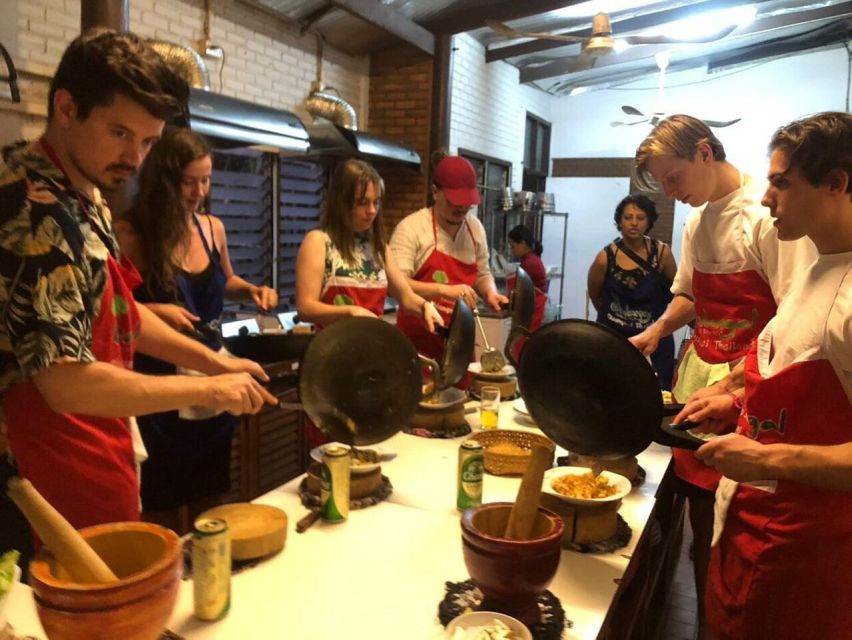
At the cooking school, you choose one dish from each category. The available choices give you a good spread of central and northern Thai cooking.
For the stir-fried course, you can select:
- Pad Thai
- Pad See Ew with chicken and fresh noodles
- Chicken with cashew nuts
- Minced chicken with holy basil
The soup choices include tom yum kung with prawns, tom kha kai with chicken and coconut milk, vegetarian or vegan tom kha, and hot and sour chicken soup.
For an appetizer, you can make som tam, spring rolls, larb kai, or glass noodle salad. The curry section includes Massaman, green curry, Panang, khao soi, red curry, yellow curry, and dry red curry.
That list is one of the class’s biggest strengths. You are not locked into a single standard menu, so you can focus on dishes you actually want to eat and recreate later. If khao soi has become your favorite northern Thai dish, you can choose it. If you already know Pad Thai, you can try a curry or soup instead.
There is one wording point worth clearing up. The activity describes five Thai dishes, organized as stir-fry, soup, appetizer, curry, and curry paste. In practice, the meal is generally presented as four prepared dishes, one from each main food category, with curry paste made as part of the curry course. Several class descriptions also refer to four dishes. Either way, this is a substantial amount of food for one evening.
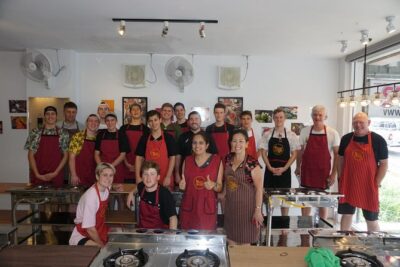
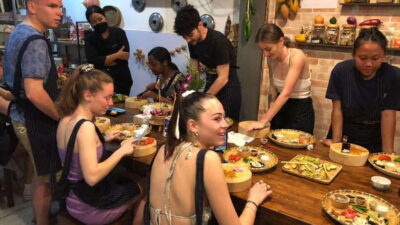
The instructors do not simply put ingredients in front of you and walk away. New, Aoy, Oi, and other teachers guide the preparation, explain the ingredients, and keep the group moving. The cooking is suitable for beginners, and you do not need advanced kitchen skills to take part.
Making curry paste by hand
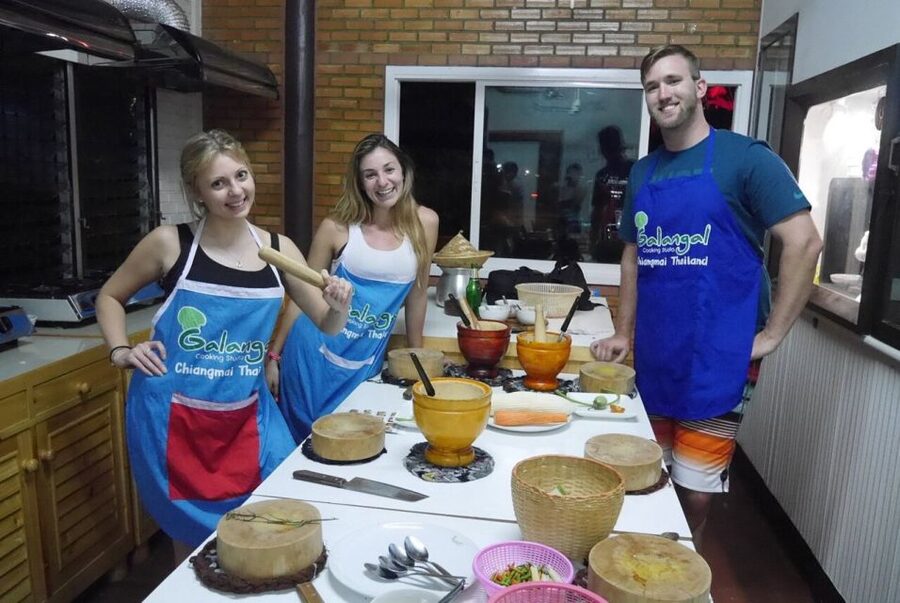
The curry paste is likely to be the most useful lesson to take home. Prepared curry paste is easy to buy in Thailand and in many overseas shops, but making it yourself shows how the flavor is built.
You work with the ingredients and follow the cooking instructions under guidance from the teacher. The class does not treat curry as a packet mixed with coconut milk. It shows you the paste as a separate part of the dish, which helps explain why fresh herbs and spices matter so much.
The recipes are designed to be manageable at home. One useful lesson from the class is that Thai food can look complex on a restaurant menu but become quite straightforward when the ingredients are organized and the steps are explained clearly.
The recipes are sent as a PDF, and cooking instructions are included. That is more useful than a souvenir apron or a single printed card because you can search the file later and make the dishes again for friends and family.
You may also be able to take leftovers with you. This is not guaranteed as a formal takeaway service, but the class has packed extra food for participants when there was enough remaining. With four dishes, leftovers are a reasonable possibility, especially if you are part of a small group.
Same coastline, a completely different day out:
- Chiang Mai: Elephant Sanctuary, Waterfall & Bamboo Rafting
★ 4.9 · 9,160 reviews - Chiang Mai: Doi Inthanon National Park Eco-Friendly Tour
★ 4.6 · 6,667 reviews - Chiang Mai: Elephant Sanctuary & Waterfall Group Tour
★ 4.9 · 5,780 reviews - Chiang Mai: Chiang Rai Temples, Karen Tribe and Hot Springs
★ 4.7 · 5,401 reviews
Eating in an air-conditioned kitchen
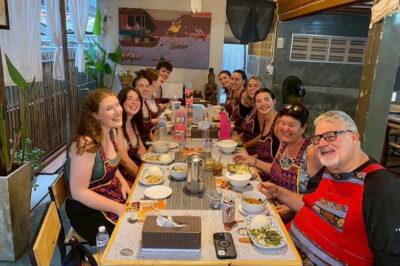
Once the cooking is finished, you sit down and eat the food you made. The dining room is indoors and air-conditioned, a welcome feature in Chiang Mai’s warm climate and after several hours of cooking.
The meal is not a small tasting menu. You make enough food to leave many people completely full, so the advice to arrive with an empty stomach is worth taking seriously. Thai dinner often starts around 4 or 5 PM, which explains the early pickup and the class’s evening schedule.
The setup lets you taste the results while the instructions are still fresh. You can remember how much heat you used, how the soup came together, and how the curry paste changed the final dish. That connection between cooking and eating is the point of the experience.
The group atmosphere can add to the evening. Larger sessions may have 10 to 12 people or more, while smaller bookings can finish earlier. A group class gives you a social dinner with other people, but it also means the pace is shared. If one person needs extra help or the group is large, not every moment will feel private.
Small groups can be more personal. One participant was able to continue with a one-to-one class when no one else was booked for the same session. That kind of flexibility may depend on the day and the school’s schedule, so I would not book expecting a private lesson, but it is a pleasant possibility.
Dietary requests and cooking comfort
This class is a strong option if food restrictions usually make group meals difficult. Vegan, vegetarian, halal, gluten-free, and allergy-related needs are accepted, and the instructor can adjust dishes and ingredients.
The substitutions are not treated as an afterthought. For example, seafood can be replaced for someone who cannot eat it, and vegetarian participants can receive alternative ingredients. Still, you should tell the operator about your needs in advance so the right ingredients can be prepared.
You also control much of the menu. That matters for people who avoid seafood, meat, or very spicy food. The choices include vegetarian and vegan soup, and the broad menu makes it easier to build a meal that suits you.
The school is wheelchair and stroller accessible, near public transportation, and infant seats are available for the pickup service. Smoking indoors, alcohol, and drugs are not allowed. Personal medication is the only item specifically listed under what to bring.
One odd restriction says the activity is not suitable for people with altitude sickness. Chiang Mai’s elevation is not usually the deciding issue for a cooking class, but the restriction is part of the booking information. If it applies to you, ask the operator before reserving.
The $28 price and what it covers
At $28 per person, this is a good-value evening for anyone who wants more than a restaurant meal. You receive hotel transport, a market visit, the garden stop, ingredients, kitchen equipment, water, tea, coffee, instruction, dinner, and a recipe PDF.
The comparison is simple. A meal at a Chiang Mai restaurant may cost less, especially if you choose street food, but it will not teach you how to make the curry paste or explain the ingredients. Other cooking schools may cost more while offering a similar format. Here, the combination of dinner and instruction makes the fee reasonable.
The included transport adds value, but only if your hotel is inside the service zone. Pickup is highly rated, yet traffic can still cause delays, especially with several hotel stops. Keep your lobby wait flexible and do not schedule a tight appointment immediately afterward.
Cancellation is free up to 24 hours before the activity, and you can reserve without paying at once. Those terms help if your Chiang Mai plans are still shifting, though the pickup area and start time should be checked before you commit.
Who will enjoy this five-hour evening
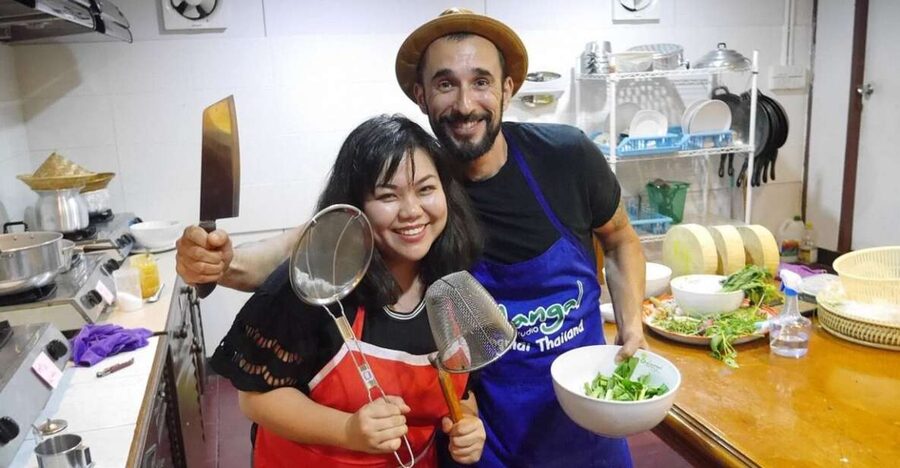
I would choose this class for first-time Thai cooks, couples, families with older children, and anyone who wants northern Thai food explained in plain English. It also suits people who want a social evening rather than another temple visit or restaurant meal.
Families can take part, including children and adults. The hands-on format gives young cooks something to do, but the five-hour length and large amount of food may be tiring for very small children.
You should also book it if you are curious about ingredients. The market and garden are brief, but they add context that a kitchen-only class would miss. You see where the food begins before learning how it reaches the plate.
I would be more cautious if you dislike group activities, want a quiet private lesson, or prefer to choose every cooking step yourself. The class follows a set structure, and larger groups can have a shared pace. It is practical and friendly rather than a chef-level training session.
This is also not the right pick if you want a long evening market tour. The market visit supports the cooking lesson. It is not designed as a major shopping or street-food excursion.
Practical tips for a smoother class
Arrive hungry. Four dishes can be a lot, even for people who usually enjoy a large dinner.
Tell the operator about allergies and dietary restrictions before the class, not only after reaching the kitchen. The staff can make substitutions, but advance notice gives them more room to prepare.
Keep your hotel lobby timing in mind. Be ready before 3:15 PM, and allow for traffic delays. If your accommodation is outside the covered districts, arrange transport to the school or market ahead of time.
Choose at least one dish you genuinely want to cook at home. Pad Thai is familiar and easy to recognize, while khao soi or curry paste may give you a more distinctive Chiang Mai lesson.
Ask for clarification about the four versus five dish wording when booking if the exact menu matters to you. The practical format is four main dishes, plus curry paste work, but group size and the chosen menu can affect the evening.
Finally, save the recipe PDF somewhere easy to find. The class is most valuable when it continues after you leave Thailand.
Should you book Galangal Cooking Studio?
Book it if you want a hands-on Thai dinner, clear English instruction, and a useful introduction to local ingredients at a moderate price. The teachers, especially New, Aoy, and Oi, receive repeated praise for being patient, friendly, organized, and attentive. The food quantity, menu choices, and dietary flexibility make the class easy to recommend.
Skip it if your main goal is an extended market tour, a private chef lesson, or a short activity. Five hours is a real commitment, and the evening can finish earlier for small groups or later for larger ones. For most visitors, though, the mix of market, garden, cooking, and dinner offers a satisfying way to spend an evening in Chiang Mai.
FAQ
How long does the Chiang Mai cooking class last?
The advertised duration is five hours. A large group of 10 to 12 people or more may use the full evening schedule, while a smaller group may finish earlier.
What time is hotel pickup?
Pickup is offered between 3:15 and 3:45 PM. You should wait in your hotel lobby 5 to 10 minutes before the scheduled time, and the driver may arrive earlier because of evening traffic.
Which areas have hotel pickup?
Pickup is offered in the old city, Santitham, and along Huay Keaw Road from Kad Suan Kaew toward Maya Shopping Mall. Some addresses in Nimman, Sirimongkrajan Road, Wat Ket Road, Chang Phueak, Chang Khlan, and Chang Moi are also covered.
What dishes can I choose?
You can choose one dish from the stir-fried, soup, appetizer, and curry categories. Options include Pad Thai, Pad See Ew, tom yum, tom kha, som tam, spring rolls, green curry, red curry, Massaman curry, Panang curry, and khao soi.
Can people with dietary restrictions join?
Yes. The class is available for vegan, vegetarian, halal, gluten-free, and allergy-related requirements. Tell the operator about your needs so substitutions can be arranged.
What is included in the $28 price?
The price includes hotel pickup and drop-off, the market tour, all ingredients and equipment, cooking instruction, water, tea, coffee, the meal you prepare, and a PDF recipe book. Observer adults pay 500 THB, and observer children aged 6 to 12 pay 350 THB.
More Shopping Tours in Chiang Mai
- Chiang Mai: Elephants, Sticky Waterfalls, Market and Temple
★ 4.9 · 227 reviews - Half-Day Cooking Class with Market Tour
★ 5.0 · 163 reviews - Chiang Mai: Traditional Thai Cooking Class with Market Tour
★ 4.8 · 137 reviews - Chiang Mai: Morning Cooking Class with Market Visit
★ 4.9 · 81 reviews
More Markets in Chiang Mai
- Chiang Mai: Cooking Class with Market and Pickup
★ 4.9 · 1,365 reviews - Chiang Mai: Evening Local Street Food Market Tour
★ 4.8 · 604 reviews - Chiang Mai: Kalare Night Bazaar Boxing Stadium Muay Thai
★ 4.7 · 507 reviews - Evening Cooking Class in Organic Farm with Local Market Tour
★ 5.0 · 394 reviews
Just added around Chiang Mai
- Taste of Chiang Mai: Michelin Guide & Street Food Tour★ 4.9 · 159 reviews
- Red, Blue, White Temples & Hot Spring Trip from Chiang Mai★ 4.4 · 143 reviews
- From Chiang Mai: Mae Taeng Valley and Waterfalls Cycle Tour★ 4.9 · 159 reviews
- Long Neck Village, Silver Temple & Chiang Mai Top Sites★ 4.7 · 17 reviews
- Chiang Mai: Local Northern Thai Cooking Class at Grandma’s★ 5.0 · 33 reviews
- Chiang Mai: Khum Khantoke Northern Thai Cuisine and Show★ 4.3 · 38 reviews
- Private : Sticky Waterfall & Secret Temple & Karen Village.★ 5.0 · 9 reviews
- Half-day with CHIANGMAI ELEPHANT CARE program (12pm-6pm.)★ 5.0 · 27 reviews
Thai Cooking Classes, compared.
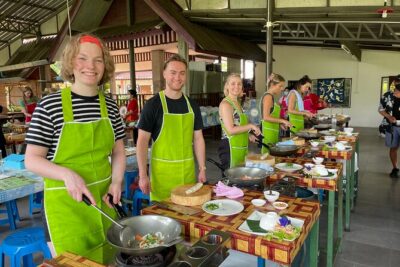
Half-Day Thai Cooking Class at Organic Farm in Chiang Mai
Read our review →
Cooking Class, Market & Thai Herbs Garden Tour
Read our review →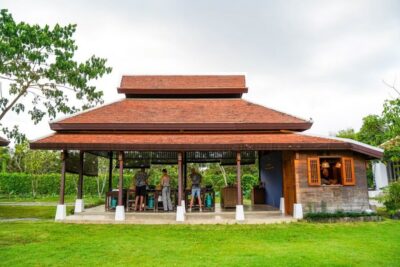
Authentic Cooking Class with Market & Farm Visit
Read our review →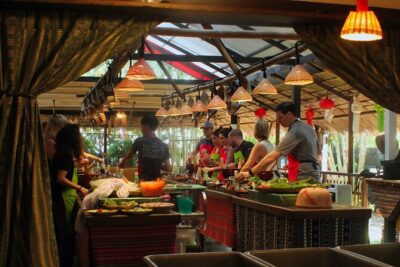
Phuket Thai Cooking Class with Market Tour Option
Read our review →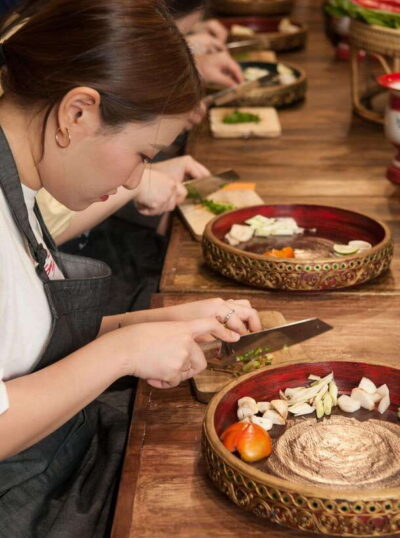
Tingly Thai Cooking School Half-Day Cooking Class
Read our review →Browse the lists this tour appears in