
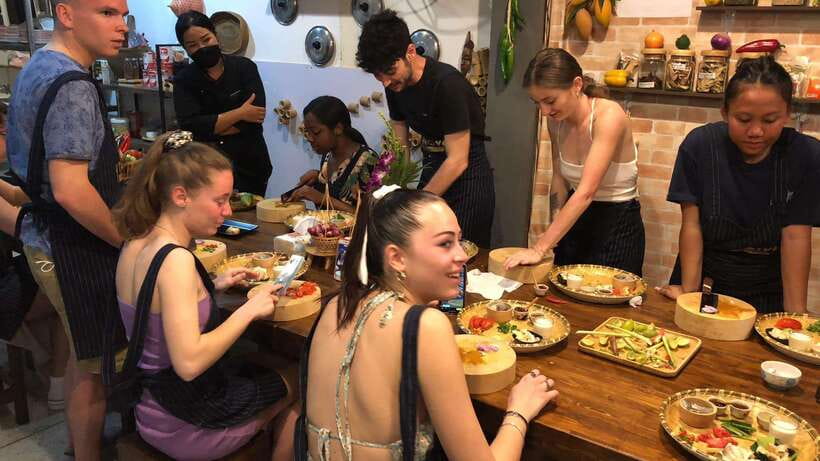
Review · THAI COOKING CLASSES
Bangkok: Tingly Thai Cooking School Half-Day Cooking Class
The best part of this Bangkok cooking class is that you make the curry paste yourself. Before you cook, the morning session takes you through a local market to see the ingredients in their natural setting, then you return to the school and turn them into four Thai dishes.
I like the market visit, which gives unfamiliar herbs and vegetables some context, and I like the way the class builds toward a full meal rather than a single recipe. The instructors, including Song, Cho, Nam, and Naam, are praised for clear teaching, humor, and care with food allergies. The main consideration is timing: the market visit is only part of the morning class, and it closes by about 10 a.m.
In This Review
- Key points to know
- Meeting the class opposite the Marriott Hotel
- Why the morning market visit is worth choosing
- Four dishes that teach the basics of Thai flavor
- The curry paste lesson is the heart of the class
- A structured kitchen session, not a cooking show
- Eating what you cooked
- Food allergies and vegetarian choices
- Recipes you can use after Bangkok
- Is $41 good value for three hours?
- Who should book this cooking class?
- Should you book Tingly Thai Cooking School?
- FAQ
- Where does the Tingly Thai Cooking School class meet?
- How long does the cooking class last?
- Does the morning class include a market visit?
- Which dishes will I cook?
- Are vegetarian options available?
- Are hotel transfers or drinks included?
Key points to know
- Make curry paste from scratch: Learn how Thai flavors are built instead of relying only on a ready-made paste.
- Choose the morning class for the market: Your guide explains local ingredients and helps select produce before cooking begins.
- Cook four dishes in three hours: Tom Yum Kung, Pad Thai Kung, mango sticky rice, and a curry form the core menu.
- The curry changes by weekday: Green curry appears Monday and Friday, red curry Tuesday and Saturday, Panaeng Wednesday and Sunday, and Massaman Thursday.
- Bring your appetite: You eat the meal you prepare, and the portions are substantial enough that breakfast may be unnecessary.
- Take home the recipes: The recipe booklet lets you repeat the dishes after your holiday.
Meeting the class opposite the Marriott Hotel
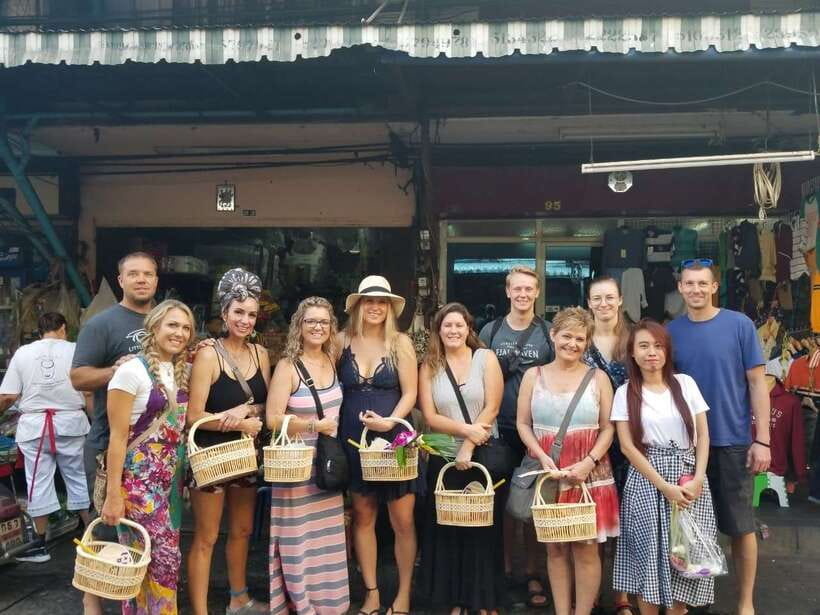
Tingly Thai Cooking School is opposite the Marriott Hotel Surawong in central Bangkok. You meet your English-speaking instructor there, get set up, and begin the three-hour session.
That central meeting point is useful if you are staying in the Silom or Surawong area. Hotel pickup and drop-off are not included, so you need to make your own way to the school. Keep the meeting point handy on your phone, since a familiar hotel landmark can make finding the school easier.
The class is taught in English. The teaching style is practical rather than formal. Your instructor demonstrates each step, explains the ingredients, and then guides you as you work. You do not need to arrive as an experienced cook. Several classes have included people who rarely cook, and the process is designed to keep beginners involved.
The tone matters here. Instructors such as Cho and Song are known for high energy, while Nam and Naam are praised for making people feel comfortable and included. That lively approach can make the three hours pass quickly, though anyone hoping for a quiet, private lesson should expect a social group activity.
More Thai Cooking Classes in Bangkok
- Bangkok: Hands-on Thai Cooking Class and Market Tour
★ 4.9 · 1,614 reviews - Bangkok: Maliwan Thai Cooking Class with Market Tour
★ 4.9 · 1,133 reviews - Hands on Thai Cooking Class and Market Tour
★ 5.0 · 660 reviews
Why the morning market visit is worth choosing
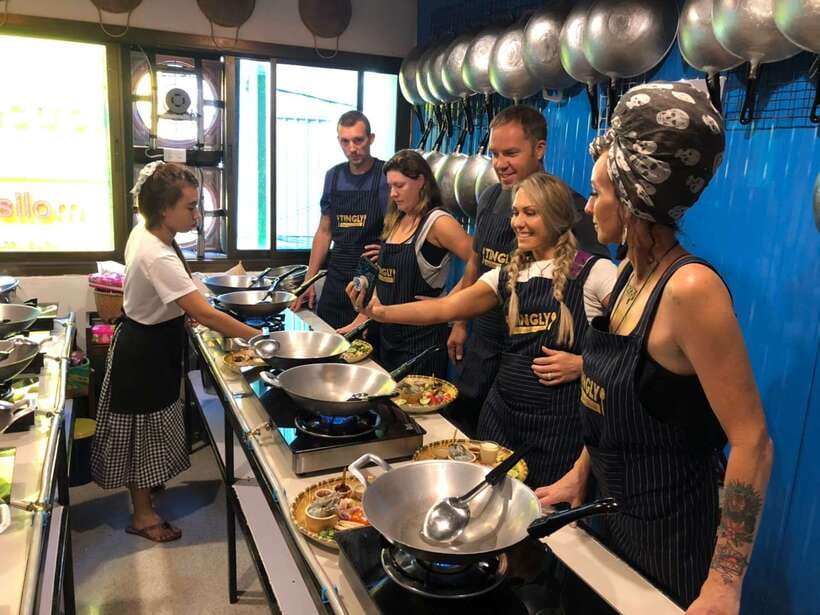
The morning option begins with a walk through a local market. Your guide points out ingredients used in Thai cooking and helps you choose what the class will need.
This is more than a shopping errand. Thai recipes often use ingredients that can look alike if you have never cooked with them. A guided look helps connect the names, colors, smells, and textures to the finished dishes. You get a better sense of why fresh herbs, curry ingredients, prawns, noodles, and sticky rice matter before you start chopping.
I recommend the morning class if your schedule allows it. The market closes by around 10 a.m., so the later class does not include this part. The morning visit also sets a natural rhythm for the day: market first, preparation next, meal at the end.
The tradeoff is an earlier start. If you have spent the previous night enjoying Bangkok, the morning option requires some discipline. Still, the market visit is the one part of the class you cannot add later, while the cooking itself is available in both morning and afternoon sessions.
The market is not presented as a major sightseeing stop, and you should not expect a long food tour. Think of it as a useful introduction to Thai ingredients led by someone who can answer questions. That short format works well because it leaves most of the three hours for cooking.
Four dishes that teach the basics of Thai flavor
Every class includes Tom Yum Kung, Pad Thai Kung, and mango sticky rice. The fourth dish is a chicken curry that depends on the day.
Tom Yum Kung is a hot and sour prawn soup. It teaches you how Thai cooking balances strong flavors rather than softening them into one general taste. You learn how the ingredients work together to produce the soup’s sharp, fragrant character.
Pad Thai Kung is the familiar Thai-style fried noodle dish with prawns. It is a useful home cooking lesson because the ingredients are easier to find after you return home, and the method shows how noodles, sauce, prawns, and other components come together in a hot pan.
Khao Neeaw Mamuang, or mango with sticky rice, gives the class a sweet finish. It also provides a welcome change of pace after the spicy soup and curry. By the end, you have made a full meal with contrasting tastes and textures rather than four versions of the same dish.
The rotating curry menu gives repeat visitors a reason to come back. It also matters when choosing your date:
- Monday and Friday: green curry with chicken
- Tuesday and Saturday: red curry with chicken
- Wednesday and Sunday: Panaeng chicken curry
- Thursday: Massaman curry with chicken
If you have a favorite, check the weekday before booking. Panaeng curry has been especially popular with some class participants, while Massaman offers a milder, more warming style than the sharper curries. The information provided does not specify the exact spice level of each class, but the cooking format allows adjustments, and the teaching includes guidance on flavor balance.
The curry paste lesson is the heart of the class
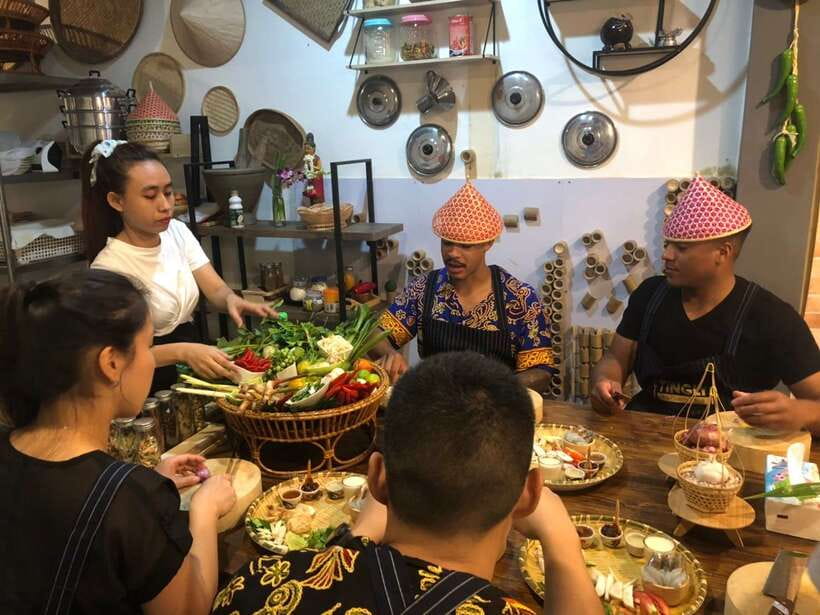
Many Thai cooking demonstrations skip straight to a prepared paste. Tingly Thai Cooking School has you make curry paste from scratch.
This is the most useful lesson if you want to understand Thai food rather than simply copy a recipe. You see the ingredients before they are blended into the base of the curry, then learn how that paste shapes the final dish.
The work is hands-on, but it is not left to guesswork. Your instructor leads the preparation and explains the purpose of the ingredients. The method is broken into manageable steps, which helps if you are not used to Thai herbs, spices, or cooking terms.
The class also covers how to store Thai food. That small detail has real value. A recipe can taste good in class and still be hard to repeat at home if you do not know how to handle the ingredients or leftovers. Storage guidance gives you a better chance of making the food again without wasting what you buy.
Same coastline, a completely different day out:
- Bangkok: Damnoen Saduak Market and Maeklong Railway Market
★ 4.5 · 26,723 reviews - The Old Siam: Damnoen Saduak and Maeklong Railway Market
★ 4.5 · 10,992 reviews - From Bangkok: Ayutthaya Temples Guided Tour with Lunch
★ 4.7 · 10,535 reviews - Bangkok: Train Market & Floating Market with Boat Ride
★ 4.7 · 9,547 reviews
A structured kitchen session, not a cooking show
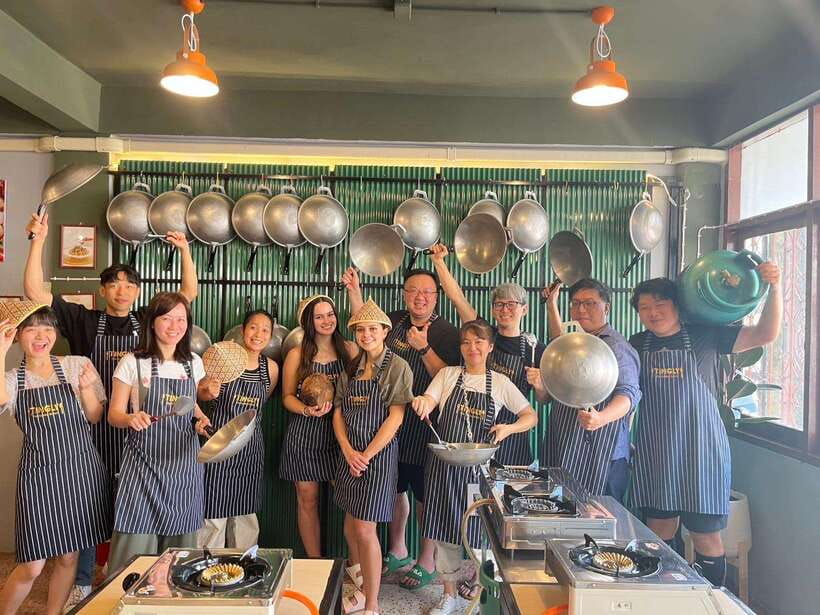
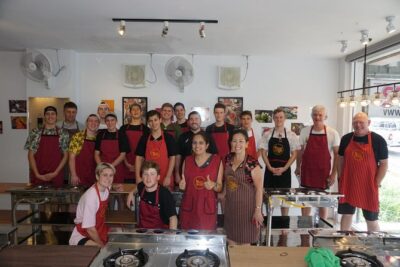
Back at the school, the ingredients are prepared for the four-course meal. Cooking equipment and all ingredients are included, so you do not need to bring a knife, pan, mortar, or shopping bag.
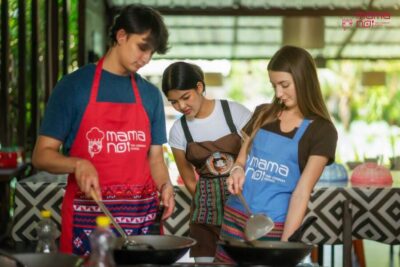
The session moves dish by dish. You prepare ingredients, follow the demonstration, cook under guidance, and then set the finished food aside for the meal. Some preparation is shared as a group, while other steps let you work more directly with your own portion.
That mix is worth noting. A group class is not the same as a private chef lesson, and you may not perform every single task alone from start to finish. The advantage is that you can watch the instructor closely, compare your results with the group, and meet other people without the pressure of cooking an entire menu independently.
The school is described as clean, well organized, and easy to follow. The equipment is laid out for the dishes, which keeps the class moving. You are not spending the session hunting for ingredients or waiting for a cooking surface.
Instructors are a large part of the experience. Song is praised for making the steps simple and direct. Cho is known for a playful, energetic manner. Nam and Naam are noted for patience, humor, and attention to the whole group. Individual instructors vary, but the pattern is clear: expect an upbeat class with frequent explanation and encouragement.
Eating what you cooked
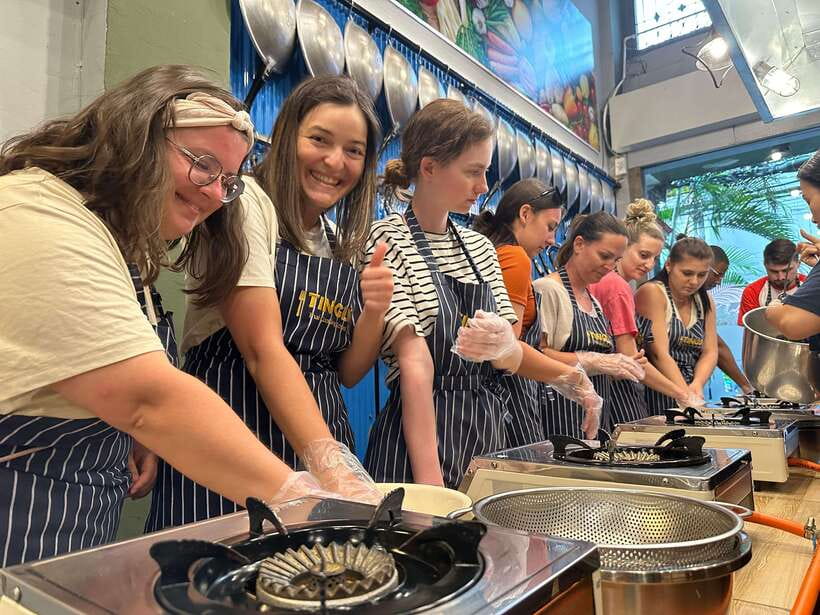
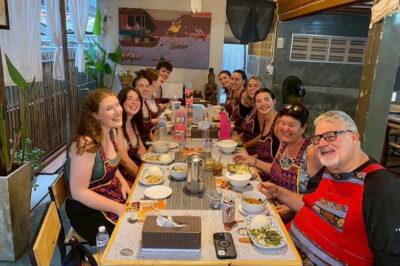
After the cooking is finished, you sit down and eat the dishes. This is not just a final tasting. You get a proper four-course meal made from the ingredients you prepared.
The meal gives you a useful test of your work. The soup should show the balance of hot and sour flavors. The curry reveals whether the paste and seasoning have come together. Pad Thai offers a familiar comparison point, while mango sticky rice closes the meal on a sweet note.
Come hungry. The portions are generous enough that many people advise skipping breakfast, especially for the morning class. That advice is practical, not dramatic. You are preparing several dishes and then eating them, so this is one Bangkok activity where arriving with a full stomach works against you.
The shared meal also adds a social side to the class. Solo visitors can meet people easily, and families can work on a project together. A 12-year-old has taken part successfully, and families with children aged 11 and 13 have enjoyed the class. The formal restrictions are that children under 3 and babies under 1 are not suitable for the activity.
Food allergies and vegetarian choices
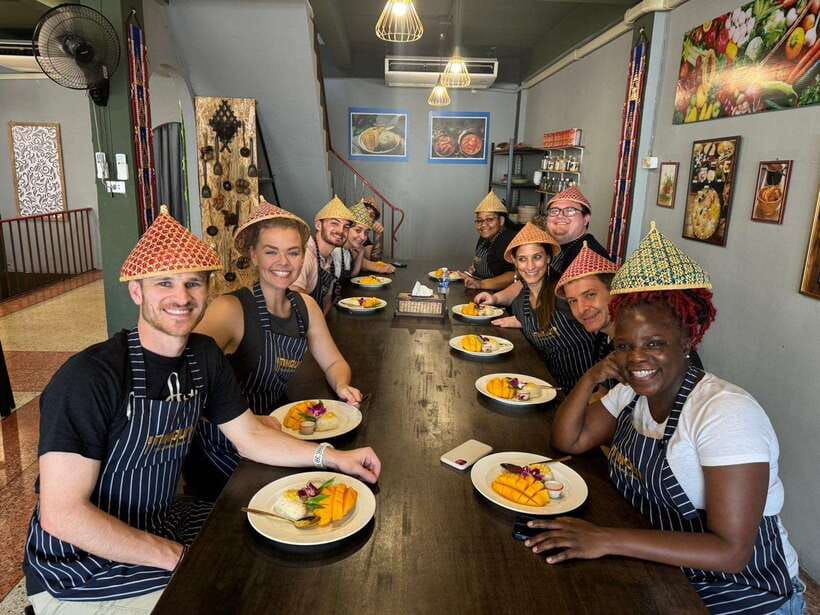
Vegetarian options are available, and the instructors have accommodated food allergies by changing ingredients when needed. Tell the school about your needs as early as possible rather than waiting until the cooking starts.
The class can adjust dishes, but the exact substitutions are not listed. That means you should ask what can be changed if your restriction is serious or medically important. The cooking is hands-on, so you also need to be comfortable with the ingredients being handled in a shared kitchen.
The clear advantage is that the instructors do not treat dietary needs as an afterthought. They have taken care to adjust ingredients during several classes and keep participants involved. Still, no cooking class can promise that every recipe will be identical after substitutions, so set realistic expectations.
Recipes you can use after Bangkok
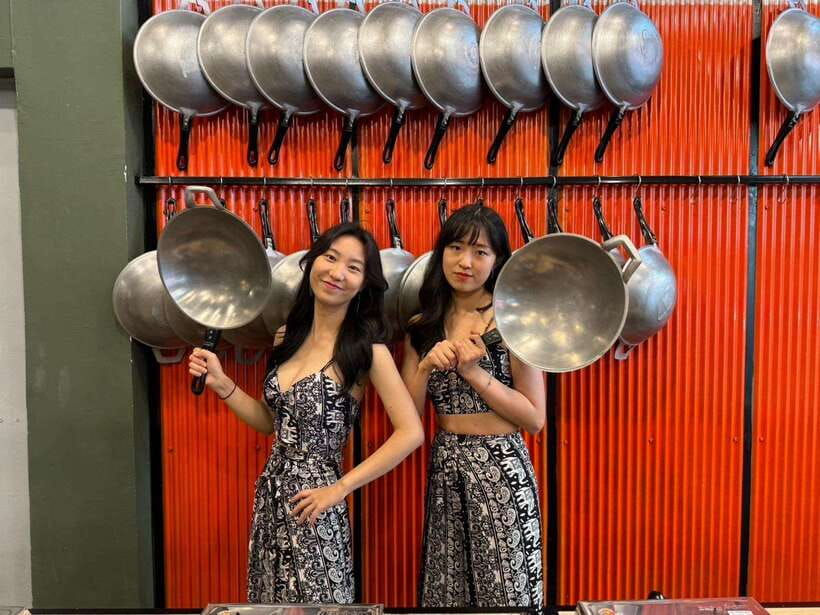
You receive the recipes to take home. Some participants also receive a small recipe booklet and complimentary chopsticks, though the confirmed inclusion is the recipes.
This is one of the strongest reasons to choose a class over a meal at a restaurant. You are not only eating Thai food for one afternoon. You are leaving with written instructions for Tom Yum Kung, Pad Thai Kung, mango sticky rice, and the curry taught on your chosen day.
The recipes also help solve a common problem with cooking classes: remembering what happened after the holiday. Thai cooking involves several ingredients and quick steps, so written guidance is far more useful than relying on memory or a few photographs.
You may need to adapt ingredients when cooking at home, especially if your local shops do not carry every Thai item. The class does not promise that every ingredient will be available in your home country. It does give you a clear starting point and a better feel for the flavor balance.
Is $41 good value for three hours?
At $41 per person, the price includes a four-course meal, equipment, ingredients, drinking water, recipes, and the market tour if you choose the morning class. Alcohol is not included, though it can be purchased.
I consider that good value if you want more than a meal. You are getting a guided market introduction, practical instruction, a full lunch or dinner, and recipes for future use. Buying four comparable dishes in central Bangkok could cost less or more depending on the restaurant, but it would not teach you how to make curry paste or explain the ingredients.
The value is strongest for solo visitors, couples, families, and anyone who wants a social activity with a clear result. It is less useful if you already cook Thai food confidently or prefer a sightseeing tour with many different stops.
The three-hour length is well judged. A shorter session would likely rush the paste and the four dishes. A much longer class might test the patience of children or people with limited time in Bangkok. You should still allow extra time around the activity if you have a tight sightseeing plan, since the stated duration covers the class itself.
Free cancellation is available up to 24 hours before the activity for a full refund. You can also reserve and pay later, which helps if your Bangkok schedule is still changing.
Who should book this cooking class?
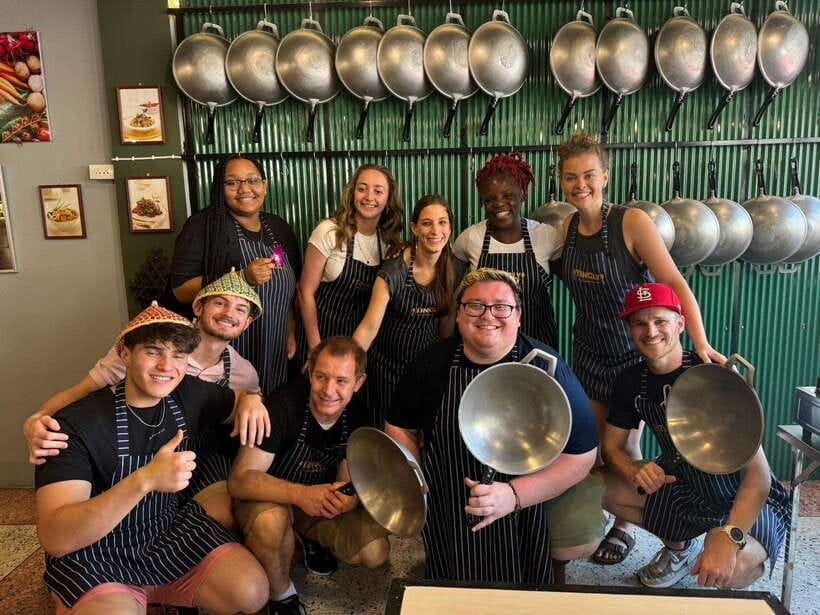
I would choose Tingly Thai Cooking School for a first Thai cooking class, especially if you are not a confident cook. The instructions are broken into simple steps, and the energetic teaching style keeps the session from feeling technical.
It also suits families with school-age children, provided they can take part safely and follow directions. The class gives children a task to focus on, and the meal at the end makes the lesson feel worthwhile.
Solo visitors should consider it too. You are placed in a shared cooking setting, which makes conversation easy without forcing you into a formal group tour.
The class may be less suitable if you need a fully private experience, have severe dietary restrictions that require exact control of every ingredient, or want a quiet restaurant-style meal. Alcohol is not included, and the market visit is limited to the morning option.
Should you book Tingly Thai Cooking School?
Yes, if you want to understand Thai food by making it with your own hands. The combination of a local market, homemade curry paste, four dishes, a full meal, and take-home recipes gives the class more lasting value than a simple cooking demonstration.
Choose the morning session if the market matters to you, and check the weekday if you want a particular curry. Arrive hungry, mention allergies in advance, and expect an energetic group lesson rather than a private kitchen.
At $41, this is a sensible Bangkok splurge for people who like food, practical learning, and a friendly social setting. You leave full, with new recipes and a better idea of how Thai cooks balance hot, sour, sweet, salty, and fragrant flavors.
FAQ
Where does the Tingly Thai Cooking School class meet?
Meet at Tingly Thai Cooking School, opposite the Marriott Hotel Surawong in Bangkok.
How long does the cooking class last?
The class lasts three hours. Starting times depend on availability when you book.
Does the morning class include a market visit?
Yes. The morning class includes a guided visit to a local market where you learn about the ingredients and help select fresh produce. The market closes by about 10 a.m.
Which dishes will I cook?
Every class includes Tom Yum Kung, Pad Thai Kung, and mango sticky rice. The chicken curry changes by weekday: green curry on Mondays and Fridays, red curry on Tuesdays and Saturdays, Panaeng curry on Wednesdays and Sundays, and Massaman curry on Thursdays.
Are vegetarian options available?
Yes. Vegetarian options are available. The instructors can also accommodate food allergies, so tell them about your needs before cooking begins.
Are hotel transfers or drinks included?
Hotel pickup and drop-off are not included. Drinking water is included, while alcoholic drinks are available for purchase.
More Half-Day in Bangkok
- Half-Day Railway Market and Floating Market Tour in Thailand
★ 4.5 · 3,924 reviews - Choose 5 Dishes: Half-Day Cooking Class in Sukhumvit with Market Tour
★ 5.0 · 281 reviews - Bangkok: Grand Palace and Emerald Buddha Half-Day Tour
★ 4.4 · 267 reviews - Half-Day Bangkok Bike Tour Including Lunch
★ 5.0 · 257 reviews
More Workshops in Bangkok
- Tingly Thai Cooking Class with Morning Market Tour
★ 5.0 · 589 reviews - Hands-on Thai Cooking Class & Market Tour in Sukhumvit
★ 5.0 · 571 reviews - Pink Chili – Thai Cooking Class and Market Tour in Bangkok
★ 5.0 · 416 reviews - Bangkok: Muay Thai Boxing Introduction Class for Beginners
★ 4.8 · 394 reviews
Just added around Bangkok
- Damnoen Saduak Floating Market Small Group Tour★ 4.0 · 107 reviews
- Angkor Wat 2-Day Tour from Bangkok★ 5.0 · 8 reviews
- Arrival Private Airport Transfer : Bangkok Airport to Hotel in Bangkok★ 4.5 · 142 reviews
- Private Best of Bangkok Full Day Highlights City Tour★ 4.5 · 13 reviews
- Ancient Wonders of Ayutthaya with Return Scenic River Cruise★ 4.0 · 31 reviews
- Private Ancient city of Ayutthaya Shore Excursion★ 5.0 · 9 reviews
- Ancient City Ayutthaya Private Guided Day Tour★ 5.0 · 49 reviews
- Ancient City Bangkok and Erawan Museum Tickets★ 4.5 · 8 reviews
Thai Cooking Classes, compared.
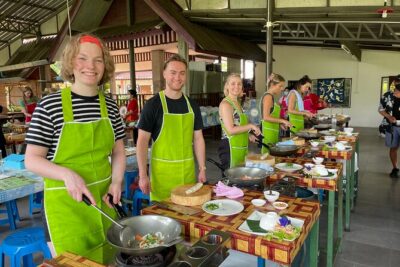
Half-Day Thai Cooking Class at Organic Farm in Chiang Mai
Read our review →
Cooking Class, Market & Thai Herbs Garden Tour
Read our review →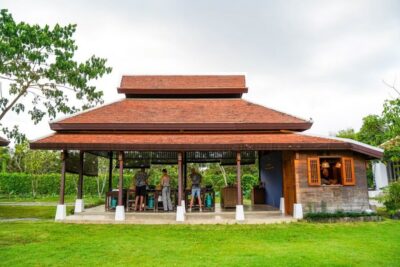
Authentic Cooking Class with Market & Farm Visit
Read our review →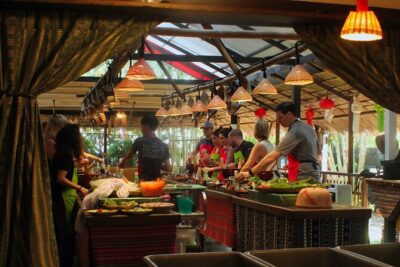
Phuket Thai Cooking Class with Market Tour Option
Read our review →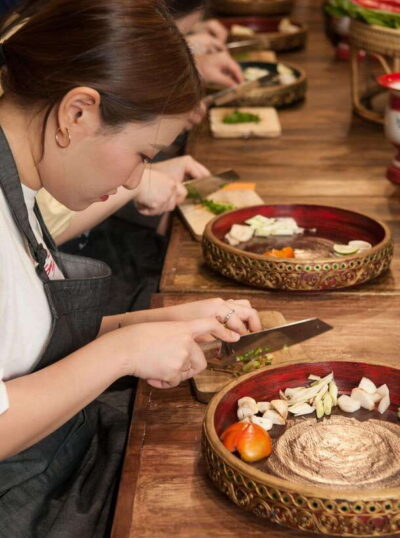
Browse the lists this tour appears in