
Review · THAI COOKING CLASSES
Hands-on Thai Cooking Class & Market Tour in Sukhumvit
The best part of this Bangkok class is that you do not simply watch a chef stir a curry. You make four dishes from scratch, including curry paste and coconut milk, then eat each course while it is hot. April and Peach are among the instructors named in class feedback, and both are praised for clear, patient teaching.
I like the small-market start on morning sessions and the individual cooking stations, which let you prepare the food you will eat instead of standing around a shared wok. The main drawback is the location: you may need a 10 to 15-minute walk from the BTS area, and the entrance can be easy to miss behind the market. The class also has a strict non-refundable policy.
In This Review
- Key things to know before booking
- Starting at House of Taste on Sukhumvit 4
- The morning market and the afternoon fruit lesson
- Four dishes, cooked one at a time
- Monday and Friday menus
- Tuesday and Saturday menus
- Wednesday and Sunday menus
- Thursday’s menu
- Why the from-scratch approach matters
- Your own station and a social meal
- What the food and drink arrangements are like
- Dietary requests and family considerations
- Is the $45.66 price good value?
- Picking the right date and instructor
- Who should book this Sukhumvit cooking class?
- Should you book it?
- FAQ
- How long does the Thai cooking class last?
- Where does the class begin and end?
- Does every session include a market tour?
- How many dishes will I prepare?
- Are vegetarian, halal, and kosher options available?
- Are drinks included?
- Is hotel pickup included?
Key things to know before booking
- You cook four complete Thai dishes: The menu includes a salad or starter, a stir-fry or noodle dish, curry, and mango sticky rice.
- Morning means market shopping: You walk through a local market and learn about the ingredients before cooking.
- Afternoon means fruit carving: This replaces the market visit and adds a decorative skill to the session.
- Curry paste is made by hand: Expect pounding and chopping rather than opening a jar.
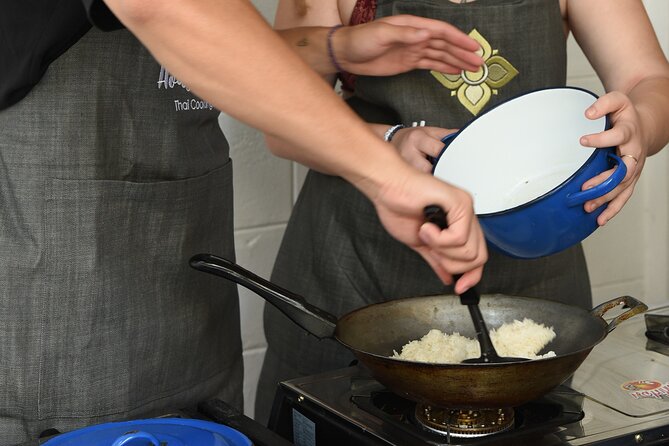
- You eat as you go: Each dish is prepared and served fresh, course by course.
- The class is capped at 18 people: You get a social setting without the scale of a large food demonstration.
Starting at House of Taste on Sukhumvit 4
The class begins at House of Taste Thai Cooking School, at Sukhumvit 4 in Bangkok’s Khlong Toei district. The meeting point is near public transportation, but the final approach may take some attention. GPS can bring you to the right street without making the school entrance obvious.
The school is reached by walking through a market toward a house farther back. If you are standing on the street and cannot spot the cooking school, do not assume you are lost. Look for the route through the market. Staff have also helped participants find the entrance by WhatsApp when needed.
Allow extra time before the start. Bangkok heat, traffic, and the short walk from the BTS area can turn a simple arrival into a sweaty dash. Comfortable shoes are a good idea, since the experience includes a small amount of walking and, on morning sessions, a market visit.
The class lasts about three and a half hours and ends back at the school. Hotel pickup and drop-off are not included, so you arrange your own way there and back.
More Thai Cooking Classes in Bangkok
- Bangkok: Hands-on Thai Cooking Class and Market Tour
★ 4.9 · 1,614 reviews - Bangkok: Tingly Thai Cooking School Half-Day Cooking Class
★ 4.9 · 1,191 reviews - Bangkok: Maliwan Thai Cooking Class with Market Tour
★ 4.9 · 1,133 reviews
The morning market and the afternoon fruit lesson
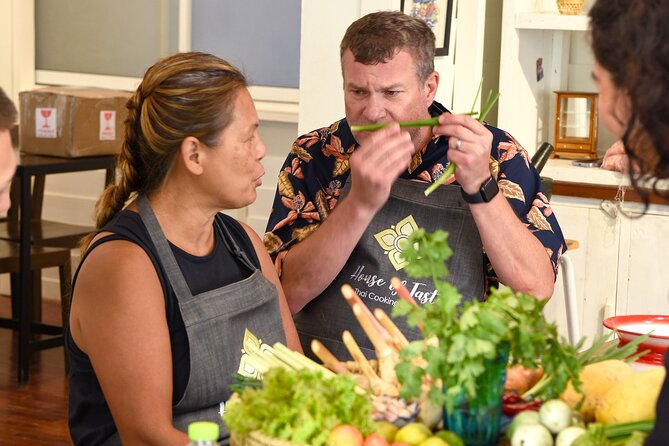
Choose a morning class if you want the market portion. You start by walking through a local market and shopping for fresh ingredients with the chef. This gives the cooking lesson a useful beginning: you see the herbs, vegetables, spices, and other products before they are chopped and cooked.
The market visit is not just a sightseeing stop. Thai cooking depends on balance, and ingredients such as chilies, herbs, coconut products, and curry spices are easier to understand when you see them in their everyday setting. You can ask what an ingredient is, how it is used, and what might replace it at home.
The morning market also adds a local touch that a classroom-only lesson cannot provide. The tradeoff is that the market is part of an active neighborhood, not a polished food hall. Expect a practical shopping walk rather than a carefully staged attraction.
Afternoon classes skip the market and focus on fruit carving. You may learn to shape fruit into a flower, a small but memorable Thai presentation skill. This option suits you if you prefer a later start or like the idea of taking home a decorative technique along with the recipes.
The two session types are not identical, so check the start time before booking. If ingredient shopping is your priority, select the morning. If you want fruit carving and a more direct route into the kitchen, choose the afternoon.
Four dishes, cooked one at a time
The class is built around four dishes, but the exact menu depends on the day. That matters because you can choose a date that matches the foods you most want to learn.
Monday and Friday menus
On Monday, you prepare Som Tum, Pad Thai, green curry, and mango sticky rice. Friday offers Som Tum, Pad Krapow Gai, red curry, and mango sticky rice.
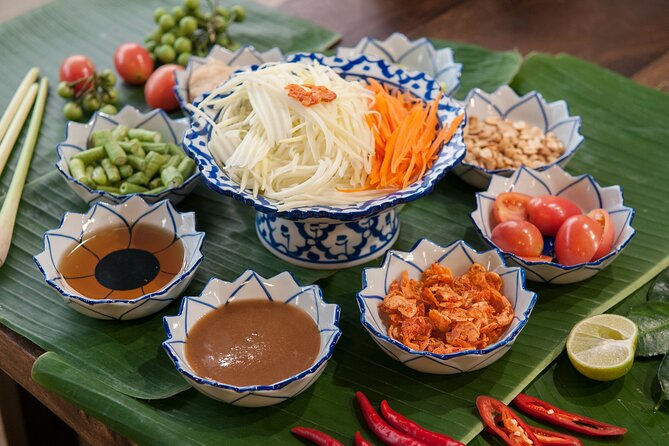
Som Tum gives you a lesson in pounding and balancing sharp, salty, sweet, and spicy flavors. Pad Thai is familiar to many people, but making it yourself helps explain how the noodles, sauce, vegetables, and other ingredients come together.
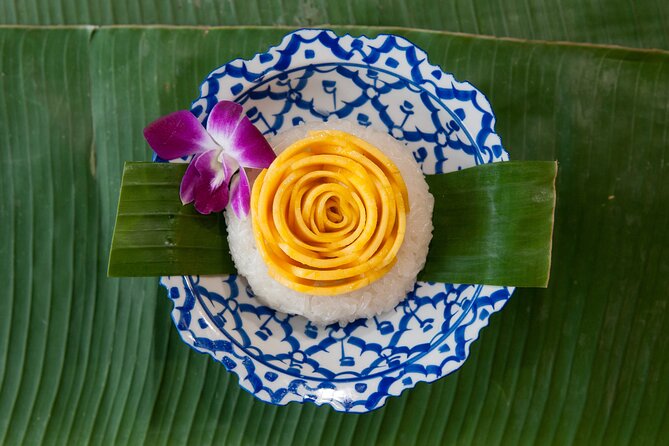
Pad Krapow Gai is a useful home-cooking choice because it is direct, fragrant, and suited to a quick meal. The curry course adds a slower lesson in paste, coconut milk, and seasoning. Both days finish with mango sticky rice, the dependable sweet ending to the class.
Same coastline, a completely different day out:
- Bangkok: Damnoen Saduak Market and Maeklong Railway Market
★ 4.5 · 26,723 reviews - The Old Siam: Damnoen Saduak and Maeklong Railway Market
★ 4.5 · 10,992 reviews - From Bangkok: Ayutthaya Temples Guided Tour with Lunch
★ 4.7 · 10,535 reviews - Bangkok: Train Market & Floating Market with Boat Ride
★ 4.7 · 9,547 reviews
Tuesday and Saturday menus
Tuesday features Tom Kha Gai, Pad Krapow Gai, red curry, and mango sticky rice. Saturday has Tom Kha Gai, Pad Thai, green curry, and mango sticky rice.
Tom Kha Gai introduces a coconut-based soup with a different character from the hot and sour Tom Yum served on other days. Pairing it with Pad Krapow Gai or Pad Thai gives you a useful contrast between soup and stir-fry.
Saturday is a strong pick if you want the familiar combination of Tom Kha Gai, Pad Thai, and green curry. Tuesday is better if red curry and basil-forward Pad Krapow Gai are higher on your list.
Wednesday and Sunday menus
Wednesday includes Tom Yum Goong, Pad See Ew, green curry, and mango sticky rice. Sunday offers Tom Yum Goong, Pad See Ew, Panang curry, and mango sticky rice.
Tom Yum Goong brings shrimp and the hot, sour profile associated with one of Thailand’s best-known soups. Pad See Ew gives you a broader noodle option than Pad Thai, with a heartier, darker flavor.
The curry choice is the key difference. Wednesday teaches green curry, while Sunday uses Panang curry. Check the menu before you commit, especially if you have a favorite Thai dish or want to avoid seafood.
Thursday’s menu
Thursday includes Larb Gai, Pad Thai, Panang curry, and mango sticky rice. Larb Gai gives the class a minced chicken dish with herbs and a sharper, salad-like character.
This is a good day if you want a menu with variety rather than two soup-based courses. You still get Pad Thai and curry, but Larb Gai changes the texture and style of the meal.
Why the from-scratch approach matters
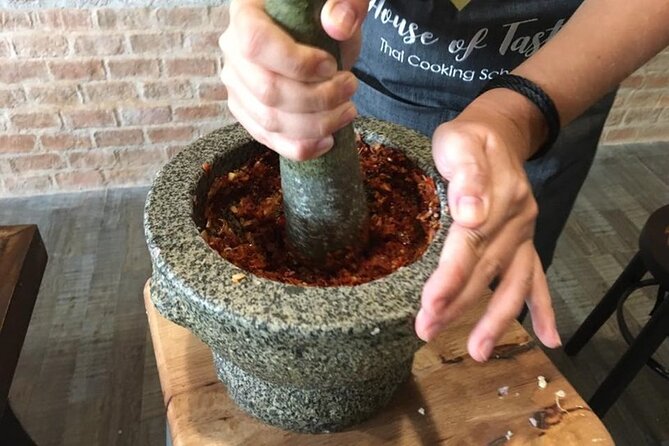
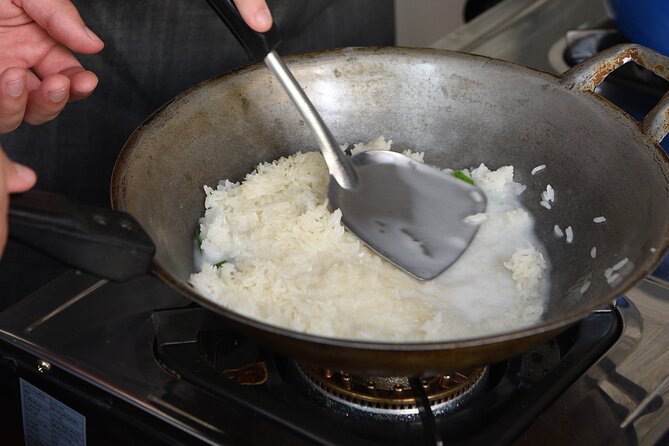
The strongest feature of this class is the work behind the food. You learn about Thai ingredients and prepare coconut milk and curry paste yourself. That means you are not just copying a recipe. You are seeing how the flavor base is built.
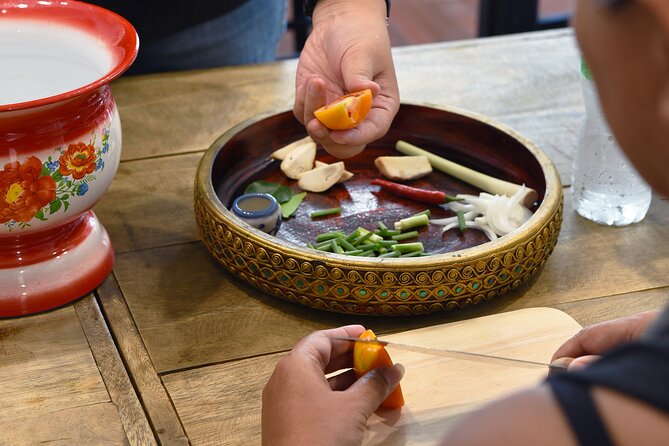
Pounding, chopping, and sizzling are simple verbs, but they describe the useful part of the lesson. Thai food can look effortless when it arrives at a restaurant. Here, you get a clearer sense of the preparation behind the finished bowl or plate.
Several details make the class practical for home cooks. You prepare one dish, eat it while it is fresh, then move on to the next. That pace gives you time to taste the result and ask questions before starting again.
The class also provides a standard recipe set to take home. This is important because the real value comes later, when you try to repeat the meal in your own kitchen. You will need to adapt to the ingredients available at home, but the recipes give you a starting point.
Your own station and a social meal
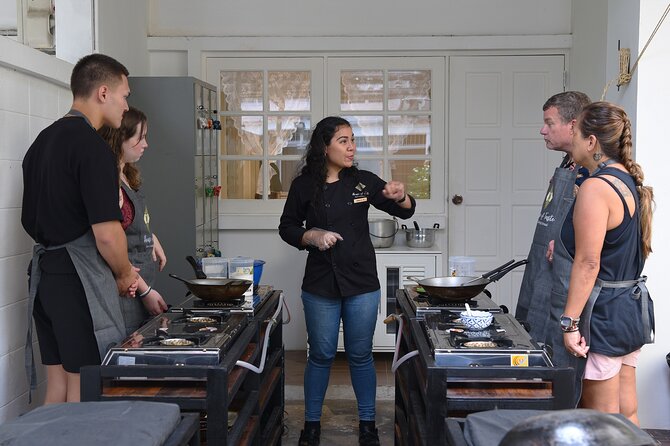
The cooking setup is designed so you can prepare your own food at your own station rather than sharing one cooking space with two or three other people. That gives you more control and makes the lesson more hands-on.
It also means you will notice your own mistakes. If your curry is too thick or your stir-fry moves too slowly, you are part of the process instead of watching someone else fix it. A professional chef supervises the work and explains the steps, but you remain active.
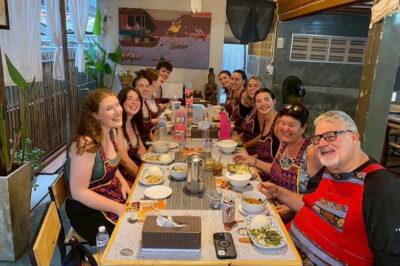
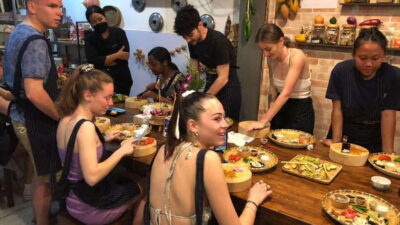
The class is limited to a maximum of 18 people. That is large enough to meet people from different places, but not so large that the meal becomes a stage show. The social side is part of the appeal. You sit down with the group and eat the dishes you have made.
Air conditioning is another practical advantage in Bangkok’s heat. Cooking over heat can be tiring in a warm city, so a cool classroom makes the long session more comfortable. You still need comfortable clothing and shoes, especially for the market walk.
What the food and drink arrangements are like
Meals are included according to the class schedule, along with cold and hot drinking water. Alcohol is not included, but alcoholic drinks are available to buy.
You eat the dishes individually while they are hot and fresh. This is better than placing all four plates on a table at once, since each course gets its own moment and you can follow the cooking sequence.
Do not expect hotel pickup, a shopping transfer, or a separate restaurant meal. The meal is the food you prepare in class. That is exactly why the experience offers more than a standard lunch, but it also means you should book it because you want to cook, not simply be served.
Dietary requests and family considerations
Vegetarian, halal, and kosher options are available, but you must request them when booking. The same applies to allergies and other dietary needs. Do not wait until you arrive, since the menu and preparation need to be arranged in advance.
Children under seven must be accompanied by an adult. A child rate is available only when the child shares with two paying adults. The maximum group size of 18 makes the class suitable for families who want a shared activity, but young children may find three and a half hours of chopping, cooking, and sitting down for food a long stretch.
The menu changes by day and some dishes include shrimp or chicken. If you avoid seafood or meat, provide clear details when you book and confirm that the selected menu can be adjusted.
Is the $45.66 price good value?
At $45.66 per person, this is not the cheapest meal you can buy in Bangkok. It is a fair price for a three-and-a-half-hour activity that includes a market visit on morning sessions, four dishes, instruction from a professional chef, ingredients, recipes, water, and the meal itself.
The value is strongest if you want a skill you can carry home. A restaurant meal gives you the finished food. This class gives you the food, the process, and a recipe sheet. The chance to make curry paste and coconut milk from scratch adds more substance than a lesson built around preprepared sauces.
The individual stations also matter. If you share every cooking task, you may leave knowing what someone else did. Here, you get more direct practice. For a first Thai cooking class, that makes the price easier to justify.
The value is weaker if you dislike group activities, have no interest in cooking, or simply want a quick meal. You also need to pay separately for any alcoholic drinks and arrange your own transportation.
Picking the right date and instructor
The menu is the first thing to check. Sunday and Wednesday suit soup and noodle fans, Monday and Friday offer Som Tum, and Thursday gives you Larb Gai with Panang curry. Tuesday and Saturday focus on Tom Kha Gai, with Saturday adding Pad Thai and green curry.
April is praised for making the lesson clear, relaxed, and easy to follow. Peach is also singled out as a strong teacher who explains techniques in a way you can use at home. The cooking school may assign another chef, so treat those names as useful possibilities rather than a guarantee for every date.
The teaching style appears to favor a steady rhythm: prepare one dish, enjoy it, then begin the next. That pace is helpful for beginners and leaves room for questions. One class was described as less warm and somewhat curt, so the experience can vary with the instructor’s mood and the group.
Who should book this Sukhumvit cooking class?
I would choose this class if you want more than a demonstration. It is a strong match for first-time Thai cooks, couples, friends, families with older children, and anyone who likes bringing practical skills home from a trip.
It is especially good for you if you want to understand the building blocks of Thai food. Making curry paste, handling fresh herbs, and tasting each dish as you go will give you a better feel for Thai cooking than simply collecting restaurant recommendations.
Morning sessions suit food-focused visitors who want the market walk. Afternoon sessions work better if you prefer fruit carving or do not want to start with a market visit. The class also works well as a Bangkok activity during very hot weather because the main cooking portion takes place in an air-conditioned classroom.
I would be more cautious if your schedule is tight. The activity lasts about three and a half hours, and you need to allow time to find the school. The non-refundable policy also means you should book only when your plans are firm.
Should you book it?
Book this experience if you want to cook four recognizable Thai dishes, eat them fresh, and learn techniques you can repeat at home. The from-scratch curry paste, individual stations, market option, and recipe handout give it real substance for the price.
Choose your day carefully, state dietary needs when booking, and leave extra time to find the entrance through the market. Skip it if you want a short restaurant-style meal or cannot accept a fixed, non-refundable booking.
FAQ
How long does the Thai cooking class last?
The experience lasts approximately three hours and 30 minutes.
Where does the class begin and end?
It begins at House of Taste Thai Cooking School at Sukhumvit 4 in Bangkok and ends back at the same meeting point.
Does every session include a market tour?
No. Morning sessions include a market tour. Afternoon sessions feature fruit carving instead.
How many dishes will I prepare?
You will prepare four Thai dishes from scratch. The menu changes according to the day of the week.
Are vegetarian, halal, and kosher options available?
Yes. Vegetarian, halal, and kosher options are available, but you must request them when booking. You should also provide details about allergies or other dietary needs at that time.
Are drinks included?
Cold and hot drinking water are included. Alcoholic drinks are not included, but they are available to purchase.
Is hotel pickup included?
No. Hotel pickup and drop-off are not included. You need to make your own way to the school, which is near public transportation.
More Shopping Tours in Bangkok
- From Bangkok: Damnoen Saduak Floating Market Guided Tour
★ 4.4 · 2,020 reviews - Damnoen Saduak Floating Market and Maeklong Railway Market Tour
★ 4.5 · 1,588 reviews - Day Trip to Bangkok Floating Market & Maeklong Railway
★ 5.0 · 1,528 reviews - Bangkok: Railway and Floating Market Tour with Dragon Temple
★ 4.6 · 1,225 reviews
More Markets in Bangkok
- From Bangkok: Ayutthaya & Ayothaya Floating Market Day Trip
★ 4.7 · 6,084 reviews - Bangkok: City Highlights Temple and Market Walking Tour
★ 4.5 · 3,990 reviews - Half-Day Railway Market and Floating Market Tour in Thailand
★ 4.5 · 3,924 reviews - Bangkok: Damnoen Saduak, Train Market & Mahanakhon Day Trip
★ 4.7 · 2,162 reviews
Just added around Bangkok
- Damnoen Saduak Floating Market Small Group Tour★ 4.0 · 107 reviews
- Angkor Wat 2-Day Tour from Bangkok★ 5.0 · 8 reviews
- Arrival Private Airport Transfer : Bangkok Airport to Hotel in Bangkok★ 4.5 · 142 reviews
- Private Best of Bangkok Full Day Highlights City Tour★ 4.5 · 13 reviews
- Ancient Wonders of Ayutthaya with Return Scenic River Cruise★ 4.0 · 31 reviews
- Private Ancient city of Ayutthaya Shore Excursion★ 5.0 · 9 reviews
- Ancient City Ayutthaya Private Guided Day Tour★ 5.0 · 49 reviews
- Ancient City Bangkok and Erawan Museum Tickets★ 4.5 · 8 reviews
Thai Cooking Classes, compared.
Half-Day Thai Cooking Class at Organic Farm in Chiang Mai
Read our review →
Cooking Class, Market & Thai Herbs Garden Tour
Read our review →
Authentic Cooking Class with Market & Farm Visit
Read our review →
Phuket Thai Cooking Class with Market Tour Option
Read our review →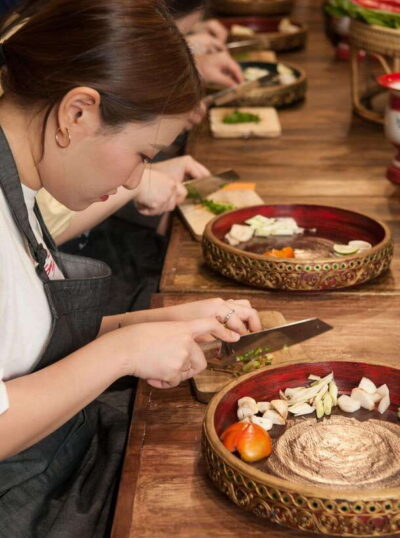
Tingly Thai Cooking School Half-Day Cooking Class
Read our review →Browse the lists this tour appears in