
Review · THAI COOKING CLASSES
Thai and Akha Cooking Class in Chiang Mai
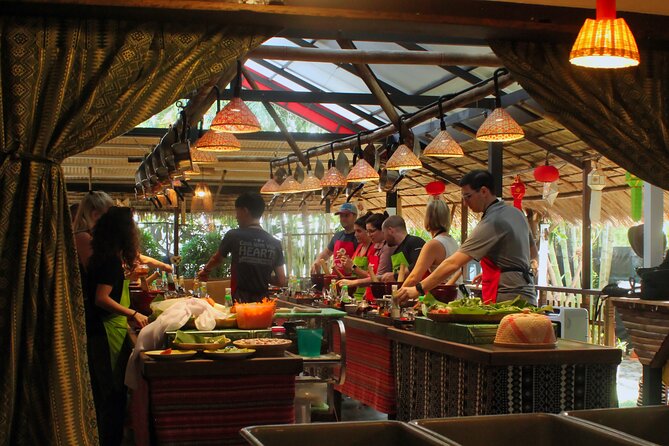
Thai Akha Kitchen turns lunch or dinner into a full food lesson, not just a quick pad Thai demonstration. You visit a local market in the morning session, then cook a long menu of Thai and Akha dishes at your own station with close help from instructors such as On, Niti, Jasmine, Rita, and Ano.
I like the small class size, capped at 12, and the spotless, well-organized kitchen. I also like the chance to learn Akha recipes that you are unlikely to encounter in a standard Thai cooking lesson. The main consideration is time: at roughly six hours, this is a full half-day and includes a lot of food.
In This Review
- Key points to know before booking
- Why this Chiang Mai cooking class feels different
- Choosing between the morning and afternoon sessions
- What happens at the local market
- Cooking at your own station
- The Thai dishes and the Akha menu
- Eating the meal you have just made
- The cookbook makes the lesson useful later
- Transfers, group size, and practical details
- Who will get the most from this experience
- Is the six-hour schedule worth it?
- Booking, cancellation, and final advice
- Should you book Thai and Akha Cooking Class?
- FAQ
- How long does the Thai and Akha cooking class last?
- What is the price per person?
- Is hotel pickup included?
- Does every session include a market visit?
- What can I expect to cook?
- Do I get my own cooking station?
- Is coffee included?
- Are alcoholic drinks included?
- How many people can join the class?
- What is the cancellation policy?
Key points to know before booking
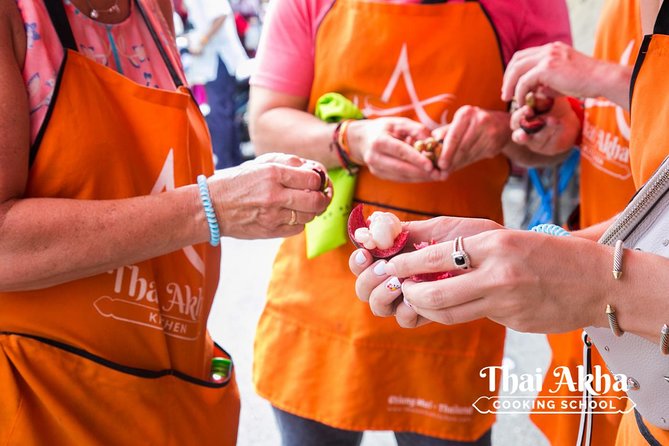
- The morning session adds a local market visit: You see and taste ingredients before using them in class.
- You cook at an individual station: This gives you hands-on work instead of watching an instructor do everything.
- The menu reaches well beyond pad Thai: Expect Thai appetizers, soup, curry, stir-fry, desserts, and Akha dishes.
- Akha food gets proper attention: Akha salad, Akha soup, and sapi thuong, a tomato dipping sauce, are part of the lesson.
- The class is generous with food: Arrive hungry, since you may prepare and eat close to 10 dishes.
- You leave with useful take-home tools: A full-color cookbook, plus Akha hill tribe coffee during the class.
Why this Chiang Mai cooking class feels different
Many Thai cooking classes focus on a familiar set of dishes. This one adds an introduction to Akha food and culture, making the lesson more distinctive. The Akha people are one of Thailand’s hill-tribe communities, and the class uses food to explain some of their ingredients and cooking traditions.
That extra layer matters. You are not simply learning how to balance lime, chili, fish sauce, and sugar. You also get a look at a northern Thai food tradition that may be new to you. Dishes such as Akha salad, Akha soup, and sapi thuong give the class its character.
The format is practical. You work at an individual cooking station, with an instructor and assistants moving around the room to check each stage. Instructors named in the class experience include On, Niti, Jasmine, Rita, and Ano. Their teaching style is described as clear, warm, humorous, and easy to follow, which is useful when several dishes are being prepared at once.
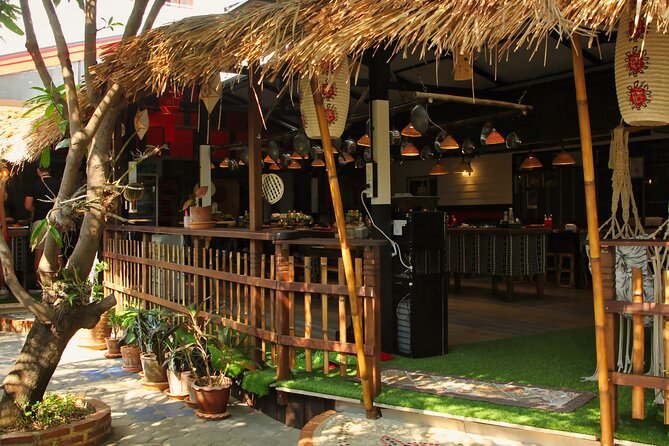
The school itself is bright, clean, and well laid out. Stations are stocked without feeling crowded, and hygiene is taken seriously. That may sound like a small point, but it makes a difference when you are handling several ingredients, hot pans, curry paste, and a long sequence of recipes.
More Thai Cooking Classes in Chiang Mai
- Half-Day Thai Cooking Class at Organic Farm in Chiang Mai
★ 5.0 · 19,087 reviews - Chiang Mai: Cooking Class, Market & Thai Herbs Garden Tour
★ 4.9 · 4,824 reviews - Chiang Mai: Authentic Cooking Class with Market & Farm Visit
★ 4.9 · 4,546 reviews
Choosing between the morning and afternoon sessions
Both sessions begin with pickup from a central Chiang Mai hotel and continue at the cooking school. The morning option includes a visit to a local market, so it is the better choice if you want the broader food experience.
At the market, you see the produce, herbs, spices, and other ingredients before they reach the cooking station. This helps you understand what you are working with later. You may also get to try local foods and snacks during the visit, adding a useful taste of everyday Chiang Mai life.
The market stop is not just shopping for show. It gives the instructor a chance to explain ingredients in their natural setting. If you have ever stood in a Thai supermarket wondering which basil, eggplant, chili, or herb to buy, this kind of introduction can make the food easier to understand.
The afternoon class skips the market and goes directly to the school. That makes sense if you have already visited a market, prefer a later start, or want to save your morning for temples and the old city. You still receive the full cooking lesson and meal.
The trade-off is simple. Choose morning for the market and a longer food-focused day. Choose afternoon for a more direct class. Either way, plan around six hours and do not eat a large meal beforehand.
What happens at the local market
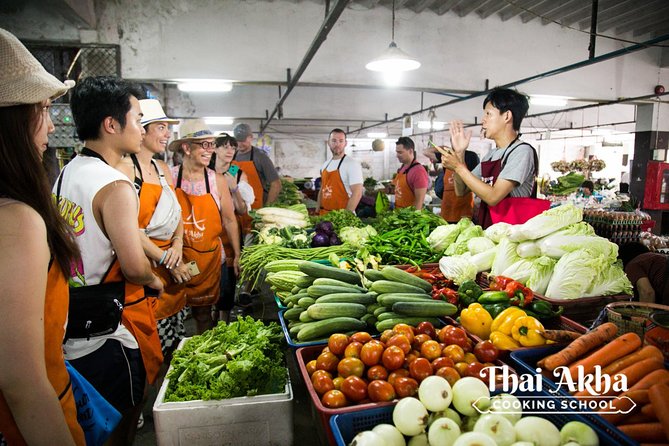
The market visit belongs only to the morning class, and it is one of the strongest reasons to choose that time. You walk through a local Chiang Mai food market with your instructor, looking at the ingredients needed for the day’s recipes.
This is where the class becomes more than a cooking demonstration. You can see how Thai cooks shop for fresh produce and seasonings, and you begin to recognize the smells and shapes that can be hard to identify from a printed recipe.
The market also gives you a small look at daily life in Chiang Mai. It is not presented as a major sightseeing stop, and that is part of its value. You are there to understand food, not to tick off another attraction.
Come prepared for a lively food setting and an early start. If you are sensitive to strong smells or prefer a quiet, polished food tour, this may feel busy. For most food-minded visitors, though, the market gives the recipes useful context.
Cooking at your own station
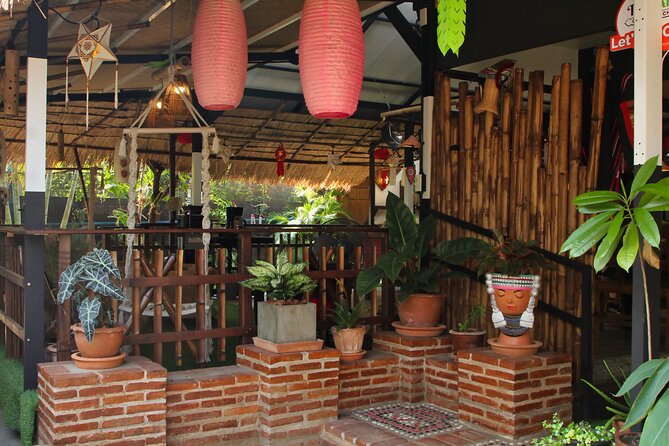
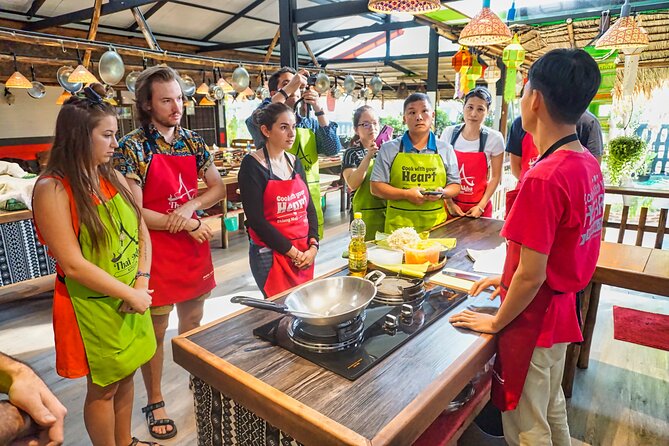
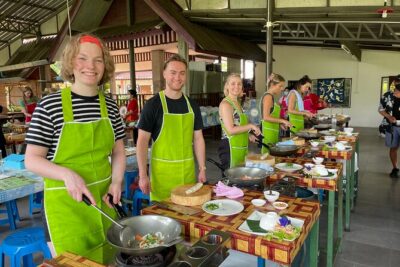
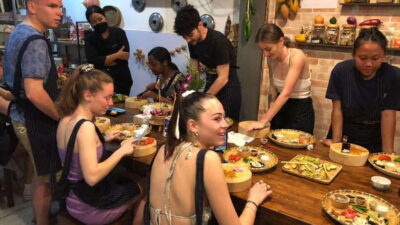
Once you reach the school at 14/10 Soi Rat Chiang Saen 2, the class moves into the main event. Each person has an individual cooking station, so you get to chop, pound, stir, season, and cook rather than standing behind someone else.
The instruction follows a sensible progression. You learn the ingredients and methods as you move through appetizers, soup, curry paste, curry, stir-fry-style dishes, Akha specialties, and desserts. The exact choices can vary, but the class covers a large menu.
You may prepare two appetizers, a soup, a curry paste and curry, two desserts, and several Akha-style dishes. The central dishes you work on yourself can include soup, curry, and a stir-fry, with choices available for some courses.
This choice-based setup is helpful for repeat visitors and picky eaters. You are not forced to make the same dish as every other person in the room. It also means the instructors must keep track of several recipes at once, so the small group limit matters.
The class is hands-on, but you are not left to guess. Instructors demonstrate the steps, explain useful substitutions, and watch how you are doing. One practical example is using cucumber in place of green papaya when recreating a papaya salad at home. Tips like that make the recipes more realistic for cooks outside Thailand.
Same coastline, a completely different day out:
- Chiang Mai: Elephant Sanctuary, Waterfall & Bamboo Rafting
★ 4.9 · 9,160 reviews - Chiang Mai: Doi Inthanon National Park Eco-Friendly Tour
★ 4.6 · 6,667 reviews - Chiang Mai: Elephant Sanctuary & Waterfall Group Tour
★ 4.9 · 5,780 reviews - Chiang Mai: Chiang Rai Temples, Karen Tribe and Hot Springs
★ 4.7 · 5,401 reviews
The Thai dishes and the Akha menu
The Thai portion gives you a useful base in familiar flavors. Curry paste teaches you how much work and freshness go into a dish that often arrives at the table as a quick restaurant order. Soup shows how herbs and seasoning build flavor in stages. Dessert rounds out the lesson and keeps the menu from becoming an endless parade of spicy food.
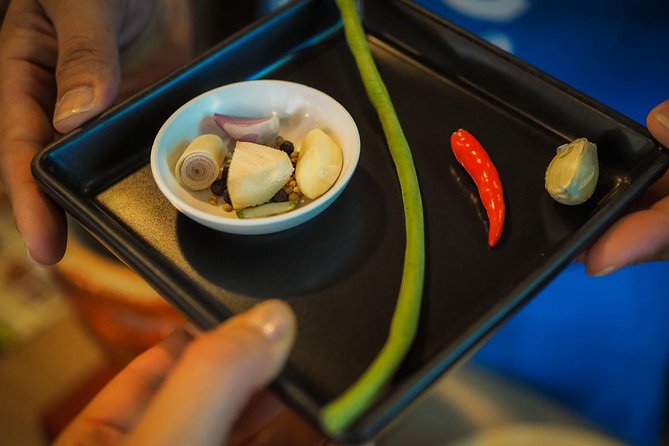
The Akha dishes are the main reason to book this class instead of a standard Thai cooking course. Akha salad and Akha soup introduce different combinations of ingredients and seasoning. Sapi thuong, a tomato dipping sauce, is another distinctive addition and gives you something unusual to serve at home.
You also learn about Akha ingredients and culture during the session. The focus is not an academic lecture. It is woven into the cooking, which keeps the cultural information connected to something you can see, smell, and eat.
The large menu is both a strength and a possible weakness. If you want to learn one or two recipes in great depth, six hours and nearly 10 dishes may feel excessive. If you want a broad introduction and a very full meal, the variety is excellent.
Eating the meal you have just made
After the cooking, you sit down and eat the dishes prepared during the session. This is not a token tasting. The menu is large enough that you should arrive with an empty stomach.
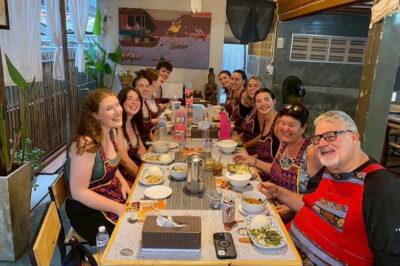
The shared meal also gives the group time to relax. Classes can include people from several countries, and the cooking format naturally encourages conversation. You work side by side, compare dishes, and then eat together.
Coffee is included, specifically Akha hill tribe coffee. Alcoholic drinks are available to buy, but they are not part of the $42 price. If you want beer or another drink with the meal, bring extra money.
The food is the clearest measure of the class’s value. You are not paying only for a demonstration or a market walk. You receive instruction, ingredients, a substantial meal, coffee, transport within the stated area, and a cookbook. At $42 per person, that is a strong package for anyone who plans to cook Thai food after returning home.
The cookbook makes the lesson useful later
The full-color cookbook is more important than it may first appear. Cooking classes can be enjoyable in the moment, then fade quickly once you leave Thailand. A printed set of recipes gives you a way to repeat the dishes while the techniques are still fresh.
The recipes cover the Thai and Akha dishes prepared during your session. You may also receive a spice packet, depending on the class arrangements. The instructors explain substitutions for ingredients that may be difficult to find at home, which improves your chances of actually using the book.
Take notes if you have a particular favorite. With so many dishes, it can be easy to remember the meal but forget which curry paste, herb, or seasoning made a certain dish work.
Transfers, group size, and practical details
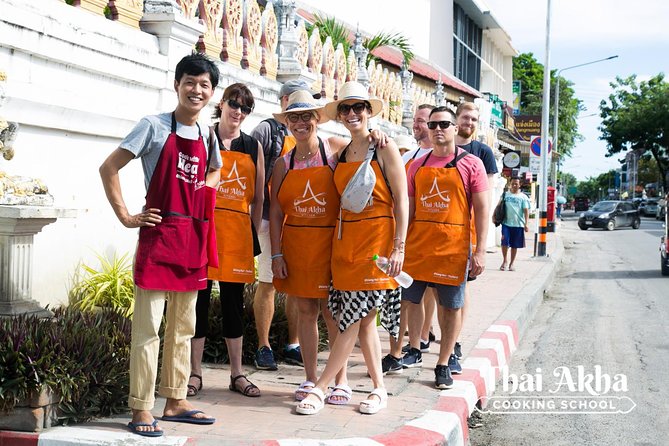
Pickup and drop-off are included for hotels within 3 kilometers of Chiang Mai’s city area. If your hotel is farther away, check the meeting arrangements before booking. The stated meeting location is Thai Akha Cooking School at 14/10 Soi Rat Chiang Saen 2, Tambon Hai Ya, Chiang Mai 50000.
The activity begins and ends at the meeting point, with the included transfer applying only within the specified central area. The school is near public transportation, so the location is not isolated if you need to make your own way there.
The maximum group size is 12. That is small enough for individual attention but not necessarily private. Some sessions may be much smaller, including family groups, while others can include a full mix of international participants.
Wear something comfortable for cooking and plan for a long food session. The most useful tip is the simplest one: come hungry. The class is not ideal immediately after a large breakfast or lunch.
You should also tell the provider about any dietary needs before the class if possible. The supplied information does not specify a formal dietary menu, so do not assume every restriction can be handled on the day.
Who will get the most from this experience
I would choose this for anyone who wants to connect Chiang Mai with its food. The class suits first-time Thai cooks because the instructions are step by step, and it also works well for experienced home cooks who want Akha recipes and northern Thai ideas.
Families can enjoy it too. Children and teenagers have taken part, and the hands-on format gives younger cooks a job to do. The long duration is the main issue for families, especially if someone loses interest after several hours.
It is also a good choice for solo visitors. The shared stations and group meal make it easy to meet other people without needing to arrange a separate social activity.
You may want to skip it if you dislike cooking, have little interest in eating a large meal, or prefer a short cultural stop. The class is busy and food-heavy. It is not a quick ninety-minute demonstration.
Is the six-hour schedule worth it?
For many people, yes. The schedule gives the class room to include the market, cultural explanation, multiple dishes, a sit-down meal, and practical cooking advice. You do not need to rush from one recipe to the next.
Still, the length should be taken seriously. One person may find the class a little long even while enjoying it. The amount of food and the repeated cooking stages can be tiring, particularly in a full group.
I see the duration as a good value if you treat the class as one of your main Chiang Mai activities for the day. It is less appealing if you are trying to squeeze in several temples, museums, and evening plans around it.
Booking, cancellation, and final advice
The price is $42 per person, and free cancellation is available when you cancel at least 24 hours before the start time. Changes or cancellations made within 24 hours are not accepted for a refund, based on local time.
You should book the morning session if the market matters to you. Pick the afternoon session if you want the same broad cooking lesson without the market stop. Confirm that your hotel falls within the 3-kilometer pickup area, and keep the class free for roughly six hours.
Should you book Thai and Akha Cooking Class?
Book it if you want a substantial, hands-on food experience rather than a short recipe lesson. The strongest reasons are the small group, individual stations, unusually broad menu, clean kitchen, and real attention given to Akha food.
The class is especially good value for food lovers, families, solo visitors, and anyone who wants recipes to use at home. I would hesitate only if six hours sounds too long or if you prefer to focus on one dish instead of making a full spread.
For most visitors with an appetite and an interest in northern Thai culture, this is one of the better ways to spend a half-day in Chiang Mai.
FAQ
How long does the Thai and Akha cooking class last?
The class lasts approximately six hours.
What is the price per person?
The price is $42 per person.
Is hotel pickup included?
Pickup and drop-off are included for hotels within 3 kilometers of Chiang Mai’s city area.
Does every session include a market visit?
No. The local market tour is included only with the morning session.
What can I expect to cook?
The menu includes two appetizers, soup, curry paste and curry, two desserts, and Akha dishes such as Akha salad, Akha soup, and sapi thuong, a tomato dipping sauce.
Do I get my own cooking station?
Yes. An individual cooking station is included.
Is coffee included?
Yes. Akha hill tribe coffee is included.
Are alcoholic drinks included?
No. Alcoholic drinks are available to purchase separately.
How many people can join the class?
The maximum group size is 12 travelers.
What is the cancellation policy?
You can cancel for a full refund up to 24 hours before the experience starts. Cancellations or changes made less than 24 hours before the start time are not accepted for a refund.
More Workshops in Chiang Mai
- Chiang Mai: Cooking Class with Market and Pickup
★ 4.9 · 1,365 reviews - Chiang Mai: Cooking Class with Organic Farm at Mama Noi
★ 4.9 · 1,151 reviews - Chiang Mai: Evening Cooking Class and Local Market Visit
★ 4.9 · 648 reviews - Cooking Class with Organic Farm in Chiang Mai at Mama Noi
★ 5.0 · 502 reviews
Just added around Chiang Mai
- Taste of Chiang Mai: Michelin Guide & Street Food Tour★ 4.9 · 159 reviews
- Red, Blue, White Temples & Hot Spring Trip from Chiang Mai★ 4.4 · 143 reviews
- From Chiang Mai: Mae Taeng Valley and Waterfalls Cycle Tour★ 4.9 · 159 reviews
- Long Neck Village, Silver Temple & Chiang Mai Top Sites★ 4.7 · 17 reviews
- Chiang Mai: Local Northern Thai Cooking Class at Grandma’s★ 5.0 · 33 reviews
- Chiang Mai: Khum Khantoke Northern Thai Cuisine and Show★ 4.3 · 38 reviews
- Private : Sticky Waterfall & Secret Temple & Karen Village.★ 5.0 · 9 reviews
- Half-day with CHIANGMAI ELEPHANT CARE program (12pm-6pm.)★ 5.0 · 27 reviews
Thai Cooking Classes, compared.
Half-Day Thai Cooking Class at Organic Farm in Chiang Mai
Read our review →
Cooking Class, Market & Thai Herbs Garden Tour
Read our review →
Authentic Cooking Class with Market & Farm Visit
Read our review →
Phuket Thai Cooking Class with Market Tour Option
Read our review →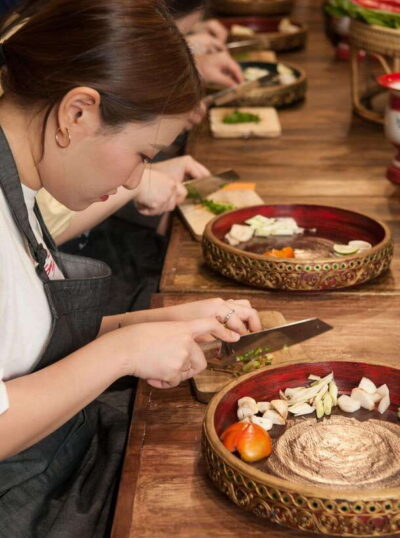
Tingly Thai Cooking School Half-Day Cooking Class
Read our review →
Browse the lists this tour appears in