
Review · MARKETS
Cooking Evening Class Chiang Mai Visit Organic Garden and Market
The best part of this Chiang Mai cooking class happens before you reach the stove. You visit a local market and an organic garden with your instructor, then use fresh herbs and produce to cook six Thai dishes of your choice. It is a good way to connect the food on your plate with the ingredients sold around town.
I like the one person per wok setup, since you actually cook your own food rather than watch a teacher prepare one shared meal. I also like the freedom to choose your menu, spice level, and dietary options. The main thing to consider is that much of the chopping and early preparation is done for you, so this suits a fun, efficient introduction more than a serious knife-skills course.
In This Review
- Key points to know before booking
- A six-dish Thai menu for $13.04
- 2:30 p.m. pickup and the ride out
- The local market at about 3:30 p.m.
- The organic garden and Thai herbs
- Cooking begins at 4:30 p.m.
- How much actual cooking will you do?
- Choosing spice, meat, and dietary options
- Eating what you cook, or taking it away
- Who will get the most from this Chiang Mai class?
- Booking, timing, and cancellation notes
- Should you book this cooking class?
- FAQ
- What time does the evening cooking class start?
- How long does the cooking experience last?
- Is hotel pickup included?
- How many dishes will I cook?
- Do I cook with my own wok?
- Can I choose vegetarian or vegan dishes?
- Can I choose how spicy my food is?
- Are drinks and ingredients included?
- Can I take my cooked food away?
Key points to know before booking
- Six dishes instead of one shared recipe: Choose one appetizer, curry paste, curry, stir-fry, soup, and dessert.
- A market and garden come first: Learn about Thai produce, herbs, rice, and other ingredients before cooking.
- Your own wok and mortar: Each person prepares food separately and makes their own curry paste.
- Pick your heat level: Meat, vegetarian, vegan, gluten-free, allergy-friendly, spicy, and mild choices are available.
- Comfort after the cooking: Eat in an air-conditioned Chiang Mai-style dining room or outside in a Thai pavilion.
- Strong value at $13.04: Transport, ingredients, drinks, cooking, food, and an online recipe book are included.
A six-dish Thai menu for $13.04
At $13.04 per person, this is one of the more budget-friendly cooking classes in Chiang Mai. The price covers far more than the lesson itself: hotel transport within Chiang Mai Old Town, fresh ingredients, tea, coffee, drinking water, the garden and market visits, six cooking selections, and a full-color online recipe book.
The number of dishes is the main reason the class offers good value. You choose one dish from each of six groups:
- An appetizer
- A curry paste
- A curry
- A stir-fried dish
- A soup
- A dessert
The menu gives you a broad sample of Thai cooking. You might finish with the basics of curry paste, a soup such as tom yum, a stir-fry, and mango sticky rice. The dessert lesson also includes how to cook glutinous rice for the sticky rice, which is a useful detail if you hope to repeat the meal at home.
You should not expect six full restaurant-sized plates. The food is portioned as a class meal, but the combined result can still be very filling. One person described cooking five mini meals and feeling full by the end. If you are cooking with a child, splitting the work or taking some food away may be sensible.
The low price does come with a trade-off. To move a group through six dishes in one afternoon, ingredients are prepared ahead of time. You may chop a cabbage into pieces or slice an onion, but you are not likely to debone chicken, peel every shrimp, or start each recipe from an untouched pile of produce.
I see this as a fair exchange for the price and menu size. If you want to cook six different dishes in about five hours, preparation must be organized. If your goal is to master every step from market cleaning to final seasoning, choose a smaller class with a narrower menu instead.
A few more Chiang Mai trips to weigh up
- Chiang Mai: Cooking Class, Market & Thai Herbs Garden Tour
★ 4.9 · 4,824 reviews - Chiang Mai: Authentic Cooking Class with Market & Farm Visit
★ 4.9 · 4,546 reviews - Chiang Mai: Cooking Class with Market and Pickup
★ 4.9 · 1,365 reviews
2:30 p.m. pickup and the ride out
The afternoon course begins with pickup between 2:30 and 3 p.m. Transport to and from the hotel is included for hotels in Chiang Mai Old Town. If your hotel is outside the pickup zone, you may need to meet the vehicle at a central point in the city.
That detail matters. One participant had a hotel beyond the service area and used a pickup point inside the city center. Check your hotel location before booking so the first part of the afternoon does not become a scramble.
The class is advertised as roughly four and a half hours, with a schedule running from 2:30 to 7:30 p.m. The stated finish can be earlier or later depending on the group. Plan your evening with some breathing room rather than booking a tight dinner reservation or show immediately afterward.
The drive to the school may feel long, particularly if you are staying close to the Old Town and expecting a short transfer. On the other hand, the class is held away from the center, in a garden setting that provides more room for cooking and eating. You are trading a little road time for a more relaxed school environment.
The local market at about 3:30 p.m.
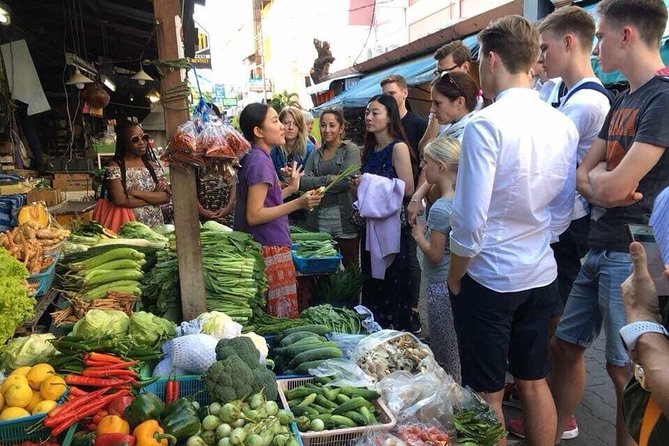
The first stop is a local market, reached at around 3:30 p.m. This is not simply a shopping stop for ingredients. The purpose is to learn what common Thai ingredients look like before you begin cooking.
Your instructor can point out produce, rice, fruit, herbs, and other food items used in Thai kitchens. This makes the later cooking easier to follow. Galangal, curry ingredients, Thai herbs, and different types of rice can look unfamiliar when you first see them on a recipe card. Seeing them in their everyday market setting gives them a place in your memory.
The market visit is fairly short. If you enjoy food shopping and want time to compare every ingredient, you may wish it lasted longer. The class has a lot to cover, so the market works best as an introduction rather than a full guided food tour.
Pay attention to the ingredients you might not find easily at home. Several dishes are built around Thai herbs and seasonings, and the recipe book can help you identify possible substitutes later. The useful question to ask is not only what an ingredient is, but what it contributes: heat, sourness, fragrance, sweetness, or texture.
The organic garden and Thai herbs
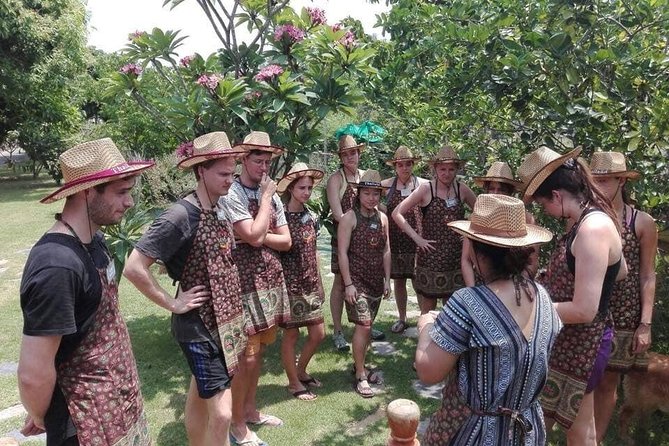
Around 4 p.m., you arrive at Siam Garden Cooking School and visit the organic garden. The garden includes herbs and plants used in Thai cooking, giving you a chance to see ingredients before they are chopped and mixed.
This is one of the more valuable parts of the experience for anyone who cooks at home. A recipe can tell you to add an herb, but a garden visit helps you connect the name, shape, smell, and flavor. The setting also gives the afternoon a pleasant pause before the cooking starts.
The garden has been a favorite part of the experience for many people, but keep your expectations realistic. This is a short ingredient lesson, not a formal farming tour. The focus is on the plants that support the menu and on helping you recognize Thai ingredients.
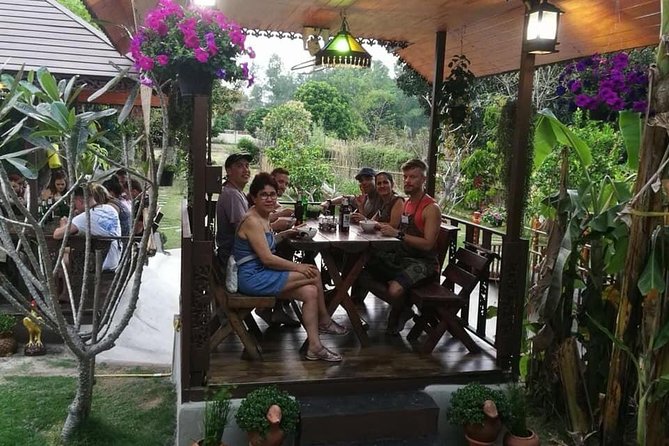
You can also choose where to eat later. The school offers a Chiang Mai-style dining room with air conditioning, or an open-air Thai pavilion by the garden. The air-conditioned room is a real advantage on a hot afternoon. The pavilion gives you a more traditional setting, but the choice lets you match the meal to the weather and your comfort.
Same coastline, a completely different day out:
- Half-Day Thai Cooking Class at Organic Farm in Chiang Mai
★ 5.0 · 19,087 reviews - Chiang Mai: Elephant Sanctuary, Waterfall & Bamboo Rafting
★ 4.9 · 9,160 reviews - Chiang Mai: Doi Inthanon National Park Eco-Friendly Tour
★ 4.6 · 6,667 reviews - Chiang Mai: Elephant Sanctuary & Waterfall Group Tour
★ 4.9 · 5,780 reviews
Cooking begins at 4:30 p.m.
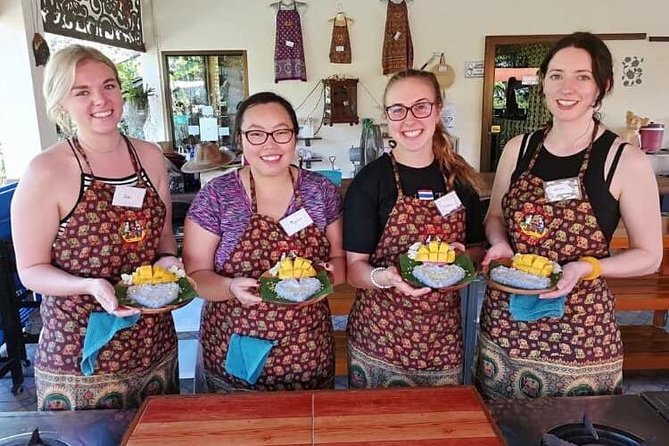
The hands-on cooking starts at about 4:30 p.m. The instructors explain each dish, guide you through the process, and help you adjust the seasoning. Staff members named Gift, Fon, Tukta, Mint, Dao, and Ploy have been involved in classes, though the instructor assigned to your session may vary.
Gift is frequently named as the main cooking teacher, while Fon is known for adding plenty of humor to the session. The style is friendly and active, with staff moving around to assist at each station. You do not need previous cooking experience, and the class is designed for both adults and children who are old enough to participate.
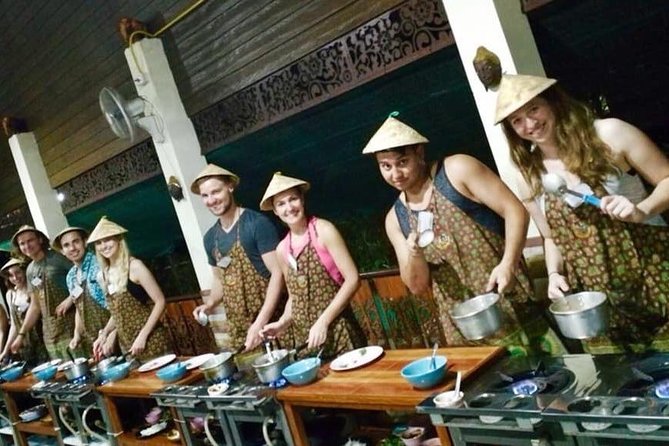
The one-person-per-wok arrangement is a major benefit. You can control the oil, heat, spice, and final taste of your own dish. You are not merely watching a demonstration or waiting for a shared pan to come around.
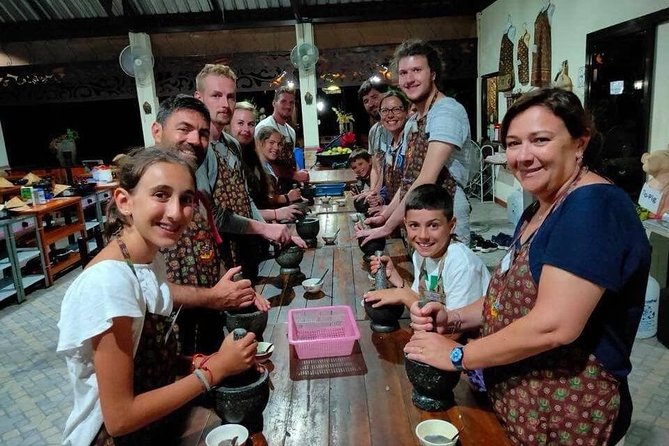
You also get one mortar for your own curry paste. This is a hands-on part of the lesson and helps you understand how the paste becomes the base of a curry. Making it yourself is more useful than receiving a pre-mixed spoonful, even though other ingredients may already be measured or prepared.
The class moves quickly. Six menu categories create variety, but they also mean a lot happens in a short period. Listen closely when the instructor explains cooking order and seasoning, then use the staff when you need help. The system is built for steady progress rather than long, detailed discussions at every stage.
How much actual cooking will you do?
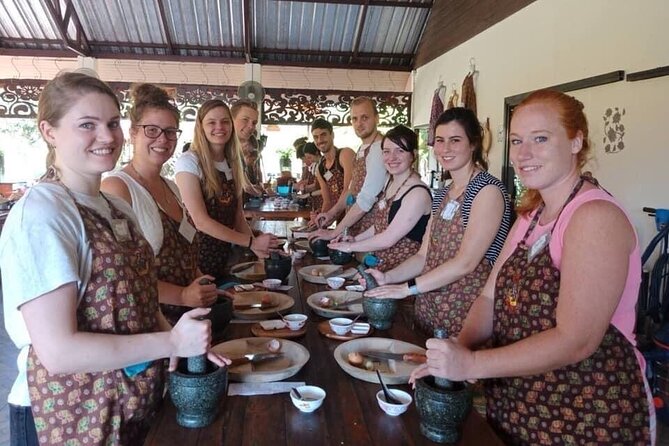
This is the most important point for choosing the class. You will cook your own selected dishes, but the school prepares many ingredients in advance so the group can finish on time.
That means you get the fun parts: mixing, pounding curry paste, cooking in the wok, adding seasoning, and seeing a dish come together. You get less of the slow preparation that a professional cook may want, such as peeling shrimp, cutting meat, or finely chopping every vegetable.
I would recommend this format to a beginner, a family, or anyone who wants a lively afternoon and a lot of food. It is also useful if you want to learn the general shape of Thai recipes without spending an entire day at the school.
I would be more cautious if you already cook often and want detailed technique. The class offers plenty of recipes and tasting practice, but not extensive instruction on knife work or the fine points of each ingredient. The efficient format can feel a little mass-produced when several menus are being prepared at once.
The published maximum is 15 participants, which is small enough for staff to move between stations. The pace still depends on the group and the number of menus selected. A smaller session can feel more personal, while a fuller class may be livelier and more hectic.
Choosing spice, meat, and dietary options
You choose your own menu on the day of the class. You can also tell the staff how hot you want the food. This is useful for mixed groups, since one person can request a mild dish while another asks for more heat.
Other meat choices are available, along with vegetarian, vegan, gluten-free, and allergy-related options. Tell the staff during menu selection, not after the cooking has begun. The school can then match ingredients to your needs.
Dietary flexibility adds real value for families and groups with different eating habits. One person can cook a meat curry while another chooses a plant-based version without giving up the shared experience.
Still, anyone with a serious allergy should explain it clearly before the class starts and confirm what can be prepared safely. The available information confirms that allergy options are offered, but it does not provide a detailed cross-contamination policy.
Eating what you cook, or taking it away

After cooking, you sit down to eat your food. You can choose the air-conditioned dining room or the open-air pavilion in the garden. Tea, coffee, and drinking water are included, while alcoholic drinks can be purchased separately.
Eating your own work is the payoff. You can taste the difference between a mild and spicy version, see how the curry paste affects the final dish, and notice which recipes you would like to make again.
The school also lets you take your food away. That is helpful if six dishes prove too much for one sitting, or if you want to share some food later. The information provided does not specify the type of takeaway container, so it is wise to ask the staff on the day if this matters to you.
Free Wi-Fi and an online photo album are included. A full-color online recipe book is also provided, with ingredient lists and photos. That makes the experience more useful after you leave Chiang Mai, since you can refer back to the recipes instead of relying on memory.
Who will get the most from this Chiang Mai class?
I would pick this experience if you want a low-cost food activity with plenty to eat. It gives you market context, a garden visit, cooking practice, and a meal in one afternoon.
It suits:
- First-time Thai cooks
- Families with older children
- Couples and small groups
- People who want several recipes rather than one detailed lesson
- Vegetarians, vegans, and people needing gluten-free choices
- Anyone staying in Chiang Mai Old Town who values hotel pickup
It may not suit you if you want a quiet, highly technical workshop. The pre-prepared ingredients reduce the amount of chopping and raw preparation, and six dishes can make the session feel busy.
The class is not available for visitors who do not take part in cooking. Infants are also not accepted as participants, and fees apply to non-participating children under six or accompanying visitors. Check these rules carefully if you are booking for a family group.
Booking, timing, and cancellation notes
The class starts at 2:30 p.m. and ends back at the meeting point after the cooking session. Confirmation is issued at booking, and the activity requires a minimum number of participants. If that minimum is not reached, the school offers another date or experience, or a full refund.
You can cancel for a full refund up to 24 hours before the local start time. Cancellations or changes inside that 24-hour window are not refunded or accepted. The class also depends on good weather, so poor conditions can lead to a different date or a full refund.
Should you book this cooking class?
I would book it if you want an affordable, social introduction to Thai food and like the idea of cooking several dishes in one afternoon. The market and organic garden add useful context, while the separate wok and mortar keep you involved. Gift, Fon, and the other instructors bring a friendly, playful tone to a class that could otherwise feel like a production line.
I would skip it only if you want to prepare every ingredient from scratch or study Thai cooking techniques in depth. For most people, the balance is strong: six dishes, fresh ingredients, transport, drinks, a recipe book, and a satisfying meal for $13.04. Allow extra time for the transfer and class finish, choose your spice level carefully, and you should come away with both a full stomach and recipes you can try at home.
FAQ
What time does the evening cooking class start?
The evening course starts at 2:30 p.m. Pickup takes place between 2:30 and 3 p.m., depending on the pickup arrangements.
How long does the cooking experience last?
The experience is listed as approximately four hours and 30 minutes. The schedule runs from 2:30 to 7:30 p.m., and the class may finish earlier or later depending on the group.
Is hotel pickup included?
Yes. Transport to and from hotels in Chiang Mai Old Town is included. Hotels outside the pickup area may require a pickup at a central city location.
How many dishes will I cook?
You choose six dishes: one appetizer, one curry paste, one curry, one stir-fried dish, one soup, and one dessert.
Do I cook with my own wok?
Yes. The class provides one wok per person. Each participant also makes their own curry paste with one mortar.
Can I choose vegetarian or vegan dishes?
Yes. Vegetarian and vegan menus are available. Meat alternatives, gluten-free choices, and allergy options are also offered.
Can I choose how spicy my food is?
Yes. You can request mild food or increase the spice level when choosing your menu.
Are drinks and ingredients included?
Fresh cooking ingredients, tea, coffee, and drinking water are included. Alcoholic beverages are available to purchase separately.
Can I take my cooked food away?
Yes. You may eat the food you prepare or take it away.
More Evening Experiences in Chiang Mai
- Chiang Mai: Doi Suthep and Wat Umong Enchanting Evening Tour
★ 4.6 · 1,811 reviews - Small-Group Chiang Mai Evening Street Food Tour
★ 4.5 · 826 reviews - Chiang Mai: Evening Local Street Food Market Tour
★ 4.8 · 604 reviews - Chiang Mai: Kalare Night Bazaar Boxing Stadium Muay Thai
★ 4.7 · 507 reviews
More Workshops in Chiang Mai
- Thai and Akha Cooking Class in Chiang Mai
★ 5.0 · 4,358 reviews - Chiang Mai: Cooking Class with Organic Farm at Mama Noi
★ 4.9 · 1,151 reviews - Chiang Mai: Evening Cooking Class and Local Market Visit
★ 4.9 · 648 reviews - Cooking Class with Organic Farm in Chiang Mai at Mama Noi
★ 5.0 · 502 reviews
Just added around Chiang Mai
- Chiang Mai Zipline White Water Rafting and Elephant Sanctuary★ 4.0 · 11 reviews
- Chiang Mai Airport Private Transfer – Hotel or Airport★ 4.5 · 51 reviews
- Zipline Adventure at Skyline Jungle Luge Chiang Mai★ 5.0 · 102 reviews
- Trek to a Jungle Waterfall★ 5.0 · 14 reviews
- Long Neck Village, White & Blue Temple, Black House Day Tour From Chiang Mai★ 4.0 · 14 reviews
- 2 Hours Wow hatcha lanna package – Free transportation★ 5.0 · 31 reviews
- Zipline+Sticky waterfall+Long Neck Village Private Tour★ 5.0 · 22 reviews
- Authentic Thai Cooking Class and Farm Visit in Chiang Mai★ 5.0 · 66 reviews
Markets, compared.

Damnoen Saduak Market and Maeklong Railway Market
Read our review →
The Old Siam: Damnoen Saduak and Maeklong Railway Market
Read our review →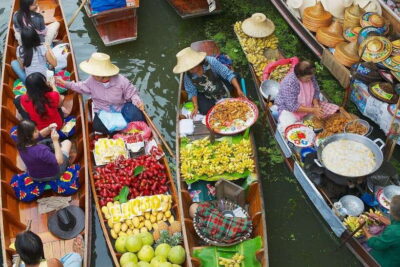
Train Market & Floating Market with Boat Ride
Read our review →
Ayutthaya & Ayothaya Floating Market Day Trip
Read our review →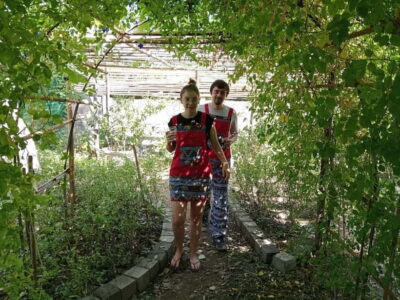
Cooking Class, Market & Thai Herbs Garden Tour
Read our review →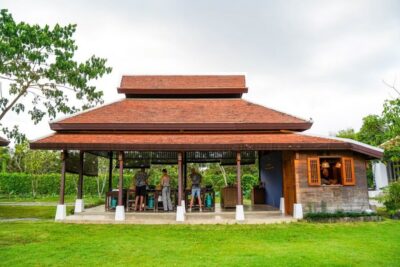
Authentic Cooking Class with Market & Farm Visit
Read our review →

City Highlights Temple and Market Walking Tour
Read our review →Browse the lists this tour appears in