
Review · WALKING TOURS
Small-Group: Unseen Bangkok’s Chinatown Walking Tour
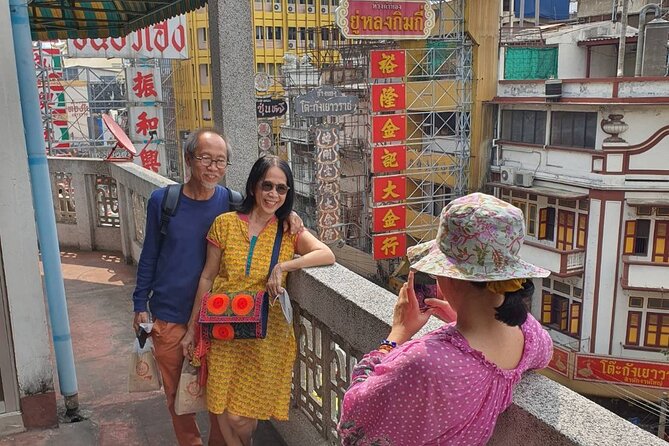
Bangkok’s Chinatown is at its best away from the main road, where narrow market lanes, old Chinese shrines, and working neighborhood shops tell a more useful story than a quick stroll along Yaowarat Road. This tour takes you into those quieter corners, with stops at a Chinese shrine, an old house, a fresh market, and a former red-light district.
I like two things here: the small format, usually no more than eight people in the main tour description, and the food woven into the walk rather than tacked on at the end. Guides such as Bobby, Aom, Mai, Eng, and Pat have been praised for clear storytelling and friendly company. The main consideration is that the tour is a walking experience first, not a dedicated shopping trip, and the physical pace may not suit everyone.
In This Review
- Key points at a glance
- Why this Chinatown walk feels different
- Starting at Hua Lamphong at 10:00 a.m.
- Old temples, a shrine, and Chinatown’s older buildings
- Street art and community life in the small lanes
- Sampeng Market and the art of looking before buying
- A 150-year-old fresh market
- Street snacks, local coffee, and a proper lunch
- The guide makes the three hours work
- Price, group size, and physical effort
- Who should book this Chinatown experience
- Should you book the Unseen Bangkok Chinatown Walk?
- FAQ
- Where does the Chinatown walking tour begin?
- What time does the tour start?
- How long does the Chinatown tour last?
- What food is included?
- Is transportation included?
- How many people can join the tour?
- Can I cancel for a full refund?
Key points at a glance
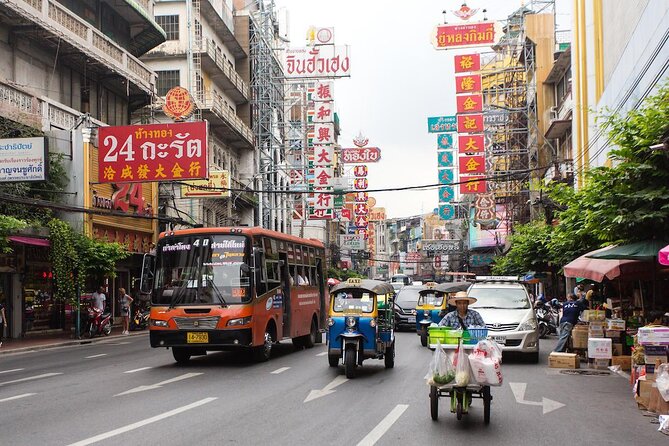
- Sampeng Market’s tight lanes: Browse wholesale shops and bargain stalls where the shopping is part of everyday local trade.
- Chinatown beyond Yaowarat Road: See old buildings, a Chinese shrine, a former red-light district, and a 150-year-old fresh market.
- Food built into the route: Try Chinese street snacks, local coffee or drinks, and a Thai-Chinese lunch at a restaurant open for 30 years.
- Small group setting: The tour is designed for a personal feel, with the main description promising no more than eight people, though the additional information lists a maximum of 10.
- Guides who add local color: Bobby, Aom, Mai, Eng, Gee, George, Pat, and Buoy are praised for explaining neighborhood life, culture, and history.
- A practical morning outing: Meet at 10:00 a.m. near MRT Hua Lamphong and finish back at the starting point after about three to four hours.
Why this Chinatown walk feels different
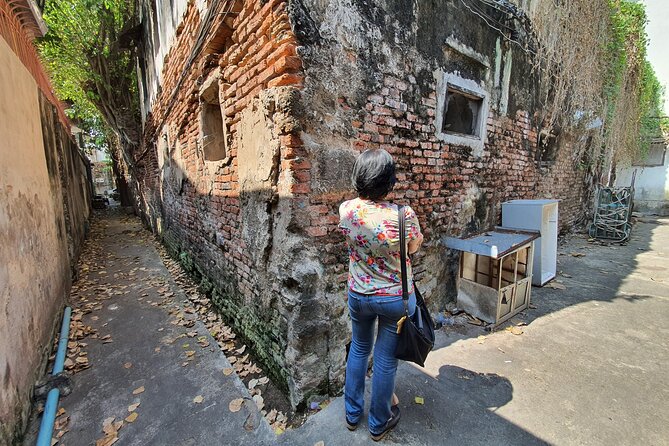
Many first visits to Bangkok’s Chinatown stay on Yaowarat Road, where signs, food stalls, traffic, and crowds compete for your attention. This experience uses that famous district as a starting point, then turns into smaller lanes and local corners where the city feels less arranged for sightseeing.
That change matters. You get to see shops that serve the neighborhood, old buildings with stories attached to them, and places that are easy to miss if you are simply following a map. The tour also brings you into contact with the Chinese community in Bangkok, not only its restaurants and decorations.
The guide is central to the experience. The route itself is useful, but the context makes it meaningful. Bobby has been singled out for his storytelling, photographs, and willingness to spend extra time. Aom is noted for setting a comfortable pace and explaining Thailand more broadly. Mai, Eng, Gee, George, Pat, and Buoy are also praised for their warmth and command of the area.
That range of guide experiences means the tone may vary from one departure to another. Still, the strongest pattern is clear: you are booking a local walk led by a person, not a scripted sightseeing circuit.
A few more Bangkok trips to weigh up
- Bangkok: City Highlights Temple and Market Walking Tour
★ 4.5 · 3,990 reviews - Bangkok: Grand Palace and Wat Phra Kaew Guided Walking Tour
★ 4.4 · 2,417 reviews - Bangkok: Wat Pho and Wat Arun Guided Walking Tour
★ 4.6 · 1,720 reviews
Starting at Hua Lamphong at 10:00 a.m.
The meeting point is Better Coffee Building, 320 TangHuaPak on Rama IV Road, near MRT Hua Lamphong Station Exit 1. You meet the guide at street level at 10:00 a.m., so the location is practical if you are staying near the metro or can reach the station without a long taxi ride.
The coffee shop setting is useful. If you arrive early, you have a clear place to wait, and the walk itself includes a stop at a local coffee shop. Coffee and other drinks are not necessarily covered beyond the stated samples, so bring some Thai baht for refreshments and lunch drinks.
The tour includes local transportation fees during the trip. That is a small but helpful detail because Chinatown walks can involve short hops between districts or transport links. Hotel pickup and drop-off are not included, and the activity ends back at the meeting point.
Wear shoes you can walk in for several hours. You will be moving through uneven, crowded lanes, markets, and busy streets. The tour operates in all weather, so a light rain layer and sun protection are sensible choices.
Old temples, a shrine, and Chinatown’s older buildings
Early in the walk, the guide takes you to ancient Chinese temples, a shrine, and old buildings in the area. You may also see a former school and hear how the neighborhood developed around Chinese settlement, trade, worship, and family life.
The Chinese shrine is one of the more useful stops for understanding the district. It gives you a place to see local religious practice rather than simply looking at a temple as an architectural object. A guide can explain what you are seeing and why such sites continue to matter to the community.
The route includes the oldest Chinese house in Bangkok, according to the tour details. This is a particularly appealing stop for visitors interested in architecture and neighborhood change. The value is not just the age of the building. It is the chance to compare a surviving house with the shops, markets, and newer commercial activity around it.
One point to keep in mind is that the level of temple explanation may depend on your guide. The tour is praised for local stories and cultural background, but one person wanted more detailed commentary about the major temples. If your main goal is formal religious or architectural analysis, a temple-focused tour may suit you better.
Street art and community life in the small lanes
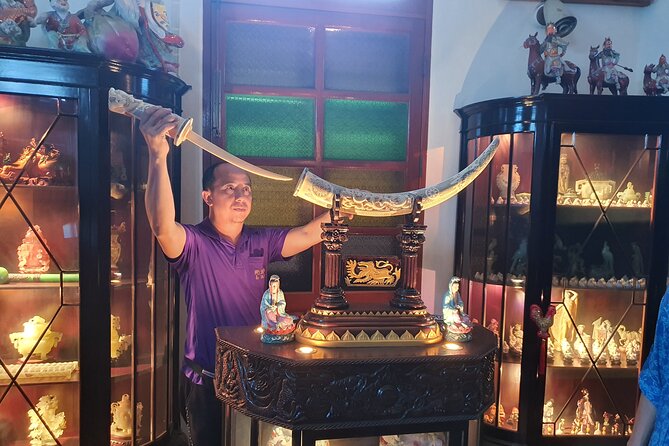
The walk continues toward a street art area and through parts of Chinatown where local people still live and work. This is where the experience earns its unseen Bangkok label. You are not only looking at famous sights. You are watching the ordinary flow of a community.
The narrow roads are part of the point. Sampeng and the surrounding lanes can be confusing on your own, with wholesale stores, small entrances, side paths, and goods packed into limited space. A guide helps you read the area rather than simply pass through it.
The tour also visits a former red-light district. The stop is short, listed at about 15 minutes, but it adds another layer to the neighborhood story. Chinatown is not just a food quarter or a temple district. Its past includes entertainment, commerce, migration, and changing social use.
I like this part because it gives the walk some texture. You see a district with several identities rather than one polished image. The tradeoff is that some stops are brief. If you want long visits inside each building or extensive time for photographs, the three-hour schedule may feel quick.
Same coastline, a completely different day out:
- Bangkok: Damnoen Saduak Market and Maeklong Railway Market
★ 4.5 · 26,723 reviews - The Old Siam: Damnoen Saduak and Maeklong Railway Market
★ 4.5 · 10,992 reviews - From Bangkok: Ayutthaya Temples Guided Tour with Lunch
★ 4.7 · 10,535 reviews - Bangkok: Train Market & Floating Market with Boat Ride
★ 4.7 · 9,547 reviews
Sampeng Market and the art of looking before buying
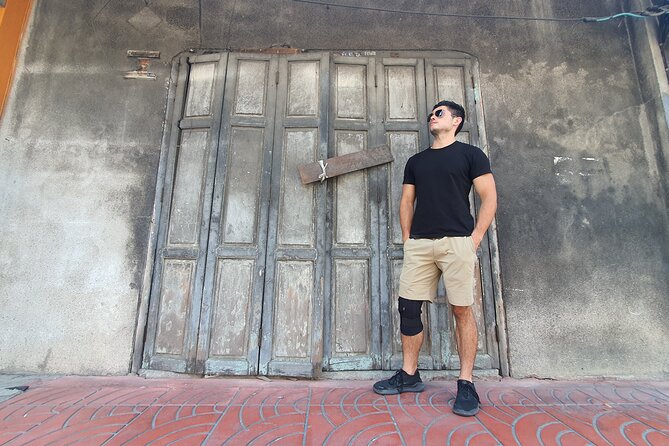
Sampeng Market is one of the tour’s practical highlights. Its lanes are packed with wholesale shops and bargain goods, and the guide helps you move through a setting that can be hard to understand at first glance.
The market is not presented as a simple souvenir stop. It is a place to watch local commerce at close range. You can browse, look for bargains, and see how merchandise moves through one of Bangkok’s old trading areas.
Shopping here requires a little patience. The lanes are small, the market can be crowded, and wholesale stores may not be arranged for leisurely browsing. You might find something worth buying, but the stronger reason to visit is to see the market at work.
This point is important because one dissatisfied participant expected a shopping-centered Chinatown tour. The experience is better suited to you if shopping is one ingredient, not the whole meal. The description includes Sampeng Market, but the overall route is mainly about neighborhood history, local life, temples, and food.
A 150-year-old fresh market
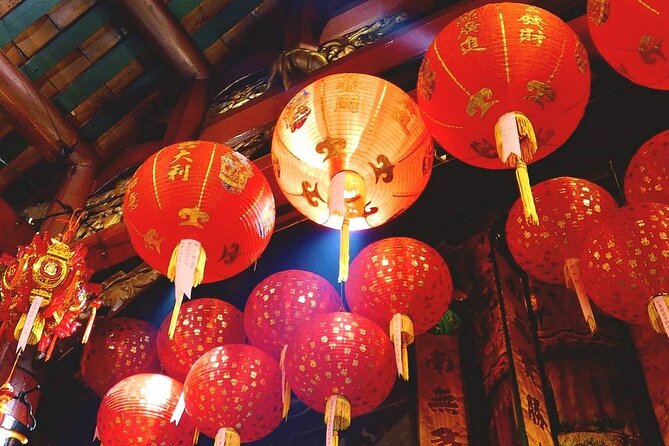
Another stop is a fresh market described as 150 years old. This gives you a look at a more functional side of Chinatown, where food and supplies serve residents as well as restaurants and visitors.
Fresh markets can be more revealing than grand attractions. They show what people buy, how food is displayed, and how a neighborhood feeds itself. Your guide can help identify what you are seeing and explain the link between market trade and the Chinese community.
The visit is listed at about 10 minutes, so think of it as a focused stop rather than a long market tour. You will have time to take in the atmosphere and ask questions, but not necessarily time to examine every stall.
If you are sensitive to heat, smells, or crowded passages, this is one area where preparation helps. Keep your belongings secure and stay close to the guide. The route is designed for a small group, but Chinatown’s lanes remain Chinatown’s lanes.
Street snacks, local coffee, and a proper lunch
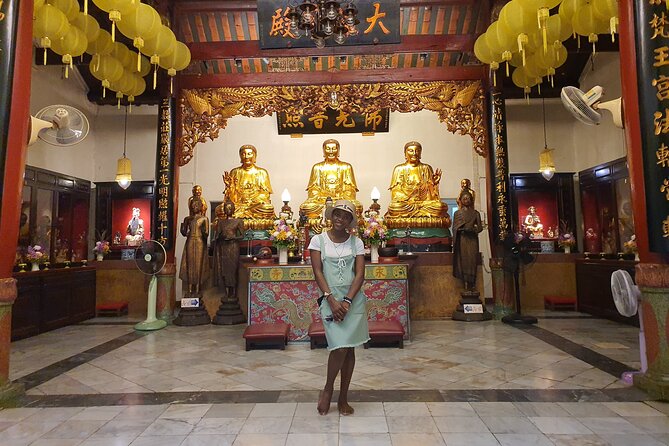
Food is one of the tour’s strongest features because it appears throughout the route. You receive Chinese street vendor snacks, stop at a local coffee shop, and finish with a sit-down lunch of typical Thai-Chinese dishes.
The coffee break gives the walk a welcome pause. Guides and participants have specifically enjoyed Thai coffee and iced tea, and the stop helps break up the heat and movement. Drinks are available for purchase, and alcoholic beverages are not included.
The food samples let you try small bites without committing to a full meal at every stop. That is useful if you want to taste unfamiliar items but still have room for lunch. Let your guide know about dietary restrictions before the tour if you have them, since the supplied information does not promise vegetarian, vegan, halal, or allergy-specific arrangements.
Lunch takes place at a restaurant that has been open for 30 years. The meal is made up of typical Thai-Chinese dishes, and drinks are available for purchase. The tour includes food and drink samples, but the details do not clearly promise that every drink or all lunch beverages are covered, so budget for extras.
A meal with the guide can be one of the most sociable parts of the experience. You can ask about the district, compare food traditions, and get suggestions for places to return later. George’s tour, for example, included iced tea, coffee, and noodle soup, while Pat’s route included a local food stop and fried oysters at a Michelin-recommended street food shop. Exact dishes vary, so treat these as examples rather than a fixed menu.
The guide makes the three hours work
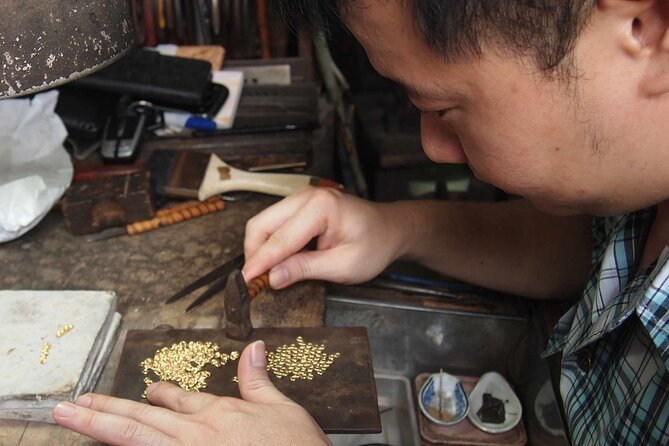
A good Chinatown walk needs someone who can handle both movement and explanation. The streets change quickly, and the difference between a routine stroll and a memorable one often comes down to whether the guide connects the sights.
Bobby is praised for clear explanations, personal attention, photographs, and staying longer than three hours. Aom is associated with a comfortable pace and broad explanations about Thailand. Mai is described as professional and kind, while Eng is praised for knowing the area, allowing breaks, and combining temples, markets, coffee, and lunch.
Other guides have added different strengths. Gee is noted for explaining local culture and daily life in the Talat Noi area. George is praised for facts about Thailand and a friendly manner. Pat’s route included ferry travel, an old school, temples, a shrine above a police station, markets, and food. Buoy is described as a strong storyteller with a great deal of local information.
You should not expect every tour to follow exactly the same conversational style. That is the nature of a small, guide-led walk. The upside is flexibility. One person who was alone on the tour received a route adjusted to suit their interests and even continued exploring Chinatown afterward with the guide’s suggestions.
Price, group size, and physical effort
At $52.14 per person, this is not Bangkok’s cheapest way to see Chinatown. You are paying for a local guide, a planned route, food and drink samples, local transportation fees, and a small group rather than simply joining a free self-guided walk.
The value is strongest if you care about access and context. You could walk along Yaowarat Road without paying, but you might miss the old Chinese house, the former red-light district, the community corners, the fresh market, and the practical route through Sampeng. You would also need to choose food stops and handle directions yourself.
The group size deserves a quick note. The highlights describe a maximum of eight people, while the additional information lists a maximum of 10 travelers. If group size is a deciding factor, confirm the expected number when booking. Either figure is still modest compared with a large coach tour.
The activity requires moderate physical fitness. Expect roughly three to four hours, with walking through alleys, markets, and city streets. Breaks for coffee and food help, and one guide was praised for keeping a comfortable pace, but you should still be ready to walk in Bangkok heat and all-weather conditions.
Who should book this Chinatown experience
I would choose this tour for a first or second visit to Bangkok if you want more than the best-known food street. It suits you if you enjoy local markets, neighborhood stories, small religious sites, old buildings, and casual conversation with a guide.
It is also a good fit for solo visitors and couples. A solo participant received a more flexible experience, and the small format makes it easier to ask questions than on a large group tour.
Families with older children may enjoy the snacks, market lanes, and visual variety, provided everyone can manage the walking. The tour is less suitable for anyone who wants a slow architectural tour, a full shopping expedition, or a carefully fixed list of major temples.
The mobile ticket is convenient, and confirmation is provided at booking. Free cancellation is available if you cancel at least 24 hours before the 10:00 a.m. start time. Changes or cancellations made inside that window are not accepted for a refund.
Should you book the Unseen Bangkok Chinatown Walk?
Book it if you want Chinatown explained by a local guide while you eat, walk, and look into places you could easily miss alone. The strongest reasons are the small group, the mix of temples and working markets, and the food stops that make the route feel connected to daily life.
Think twice if you mainly want hours of shopping or detailed temple lectures. For most curious visitors, though, $52.14 is reasonable when you value a personal route, included tastings, local transport fees, and a sit-down Thai-Chinese meal. I would reserve it for a morning when you can walk at an easy pace and leave room afterward to return to the food stalls or shops that caught your eye.
FAQ
Where does the Chinatown walking tour begin?
You meet the guide at Better Coffee Building, 320 TangHuaPak on Rama IV Road, at street level near MRT Hua Lamphong Station Exit 1.
What time does the tour start?
The tour starts at 10:00 a.m.
How long does the Chinatown tour last?
The walk lasts about three hours, with the overall activity described as approximately three to four hours.
What food is included?
The tour includes food and drink samples, Chinese street vendor snacks, and lunch featuring typical Thai-Chinese dishes. Drinks are available for purchase, and alcoholic beverages are not included.
Is transportation included?
Local transportation fees during the tour are included. Hotel pickup and drop-off are not included.
How many people can join the tour?
The main tour details describe a small group limited to eight people. The additional information lists a maximum of 10 travelers, so confirm the expected group size if this matters to you.
Can I cancel for a full refund?
Yes. You can cancel at least 24 hours before the local start time for a full refund. Cancellations or changes made less than 24 hours before the start are not accepted for a refund.
Just added around Bangkok
- 1.5 – 2 hour afternoon SUP class for all ages and levels★ 5.0 · 35 reviews
- Erawan Waterfall & Train Tour from Kanchanaburi – Full Day★ 4.0 · 16 reviews
- Kanchanaburi Tour: Erawan Waterfall and Death Railway★ 5.0 · 13 reviews
- 1.5 – 2 hour morning SUP boarding class for all ages and levels★ 5.0 · 13 reviews
- Cycling in rural Kanchanaburi area★ 5.0 · 12 reviews
- Yoga in the Park Thailand★ 5.0 · 12 reviews
- re:leaf spa and massage★ 4.0 · 10 reviews
- Visit temples in and around Bangkok with a former monk of 10 years★ 5.0 · 30 reviews
Walking Tours, compared.
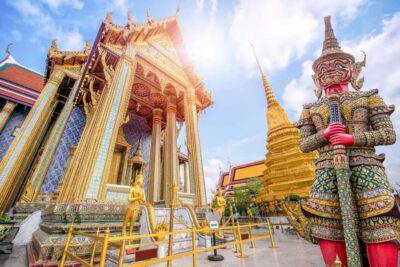
City Highlights Temple and Market Walking Tour
Read our review →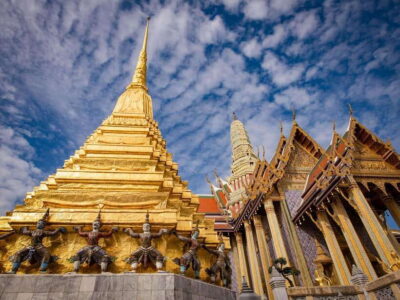
Grand Palace and Wat Phra Kaew Guided Walking Tour
Read our review →
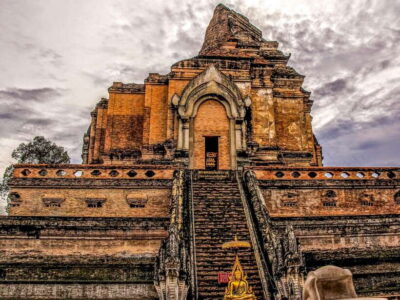
3 Hour Old City and Temples Guided Walking Tour
Read our review →
Beach walk with elephants, rain & care. 2.5 hours
Read our review →
Bukit Elephant Park Sanctuary Walk and Feed Tour
Read our review →
Bangkok Authentic Tasting Thai-Chinatown Walking Food Tour
Read our review →
Browse the lists this tour appears in