
Review · CYCLING TOURS
Sukhothai: Historical Park & Countryside Cycling Tour
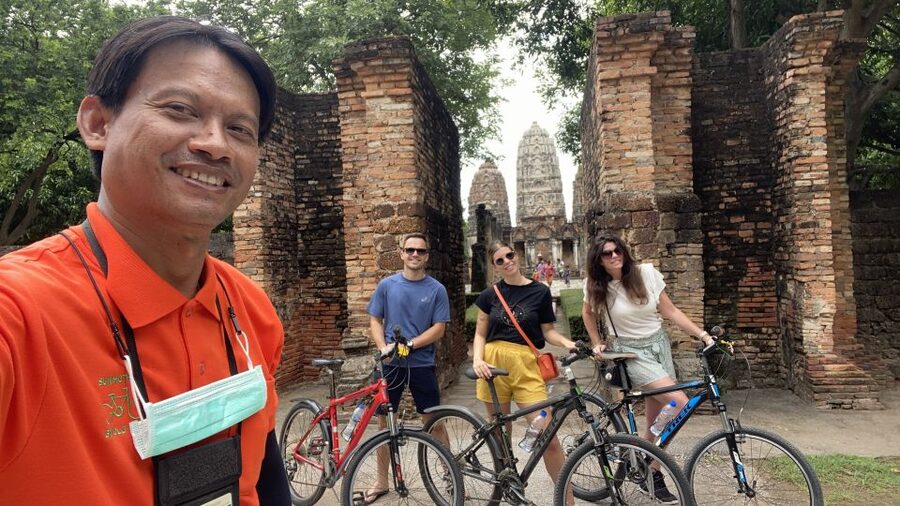
Sukhothai is best understood from a bicycle seat. This seven-hour trip links quiet village roads and rice paddies with the grand ruins of the old capital, so you see both present-day rural life and Thailand’s Golden Era in one day. Guides such as Miaow, Jib, and Chip add local stories that a quick temple visit cannot provide.
I like the easy pace, good bikes, frequent drinks, and the chance to stop at a working furniture shop or meet people along the canals. I also like the thoughtful food arrangement: local snacks during the ride and a full Thai lunch are included. The main drawback is the heat. Even on flat roads, seven hours outdoors can feel long in the hotter months.
In This Review
- Key points at a glance
- Why cycling gives Sukhothai more meaning
- Ban Khuai and the rural roads outside Sukhothai
- The wood furniture workshop and Klong Mae Lampan
- Entering Sukhothai through the Eastern Gate
- What the ruins offer, and what they do not
- Lunch, snacks, and the details that make the day work
- Bikes, safety, and the seven-hour schedule
- Is $53 a fair price?
- Who should book this cycling tour?
- My verdict on the Sukhothai Bicycle Tour
- FAQ
- How long does the Sukhothai cycling tour last?
- What time does hotel pickup usually happen?
- Is hotel pickup included?
- What kind of bicycle is provided?
- Is lunch included?
- Does the tour include the historical park entrance fee?
- What language does the guide speak?
- How large is the group?
- Is the cycling route difficult?
- What should I bring?
- Is the tour suitable for pregnant people or anyone with mobility problems?
- Can I cancel the booking?
Key points at a glance
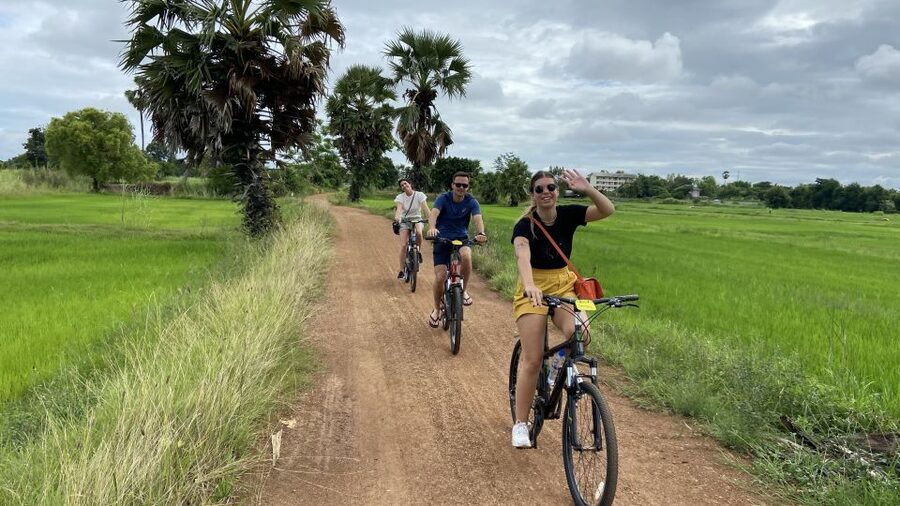
- Rice-field cycling with Kao Laung Mountain views: Ride dirt tracks through open farmland and quiet villages outside Sukhothai.
- Local life before ancient ruins: Visit a wood furniture workshop, see irrigation canals, and learn about farming and village work.
- A guide who brings the temples to life: Miaow, Jib, Chip, and other English-speaking guides explain Buddhism, architecture, and Sukhothai’s past.
- Comfortable support throughout the day: You get a 24-gear mountain bike, helmet, water, soft drinks, snacks, and local accident insurance.
- Lunch at a Thai restaurant: The meal is more than a quick break, with tasty local food and time to cool off.
- Small-group value: The group is limited to 12 people, and solo departures may still operate in quieter periods.
Why cycling gives Sukhothai more meaning
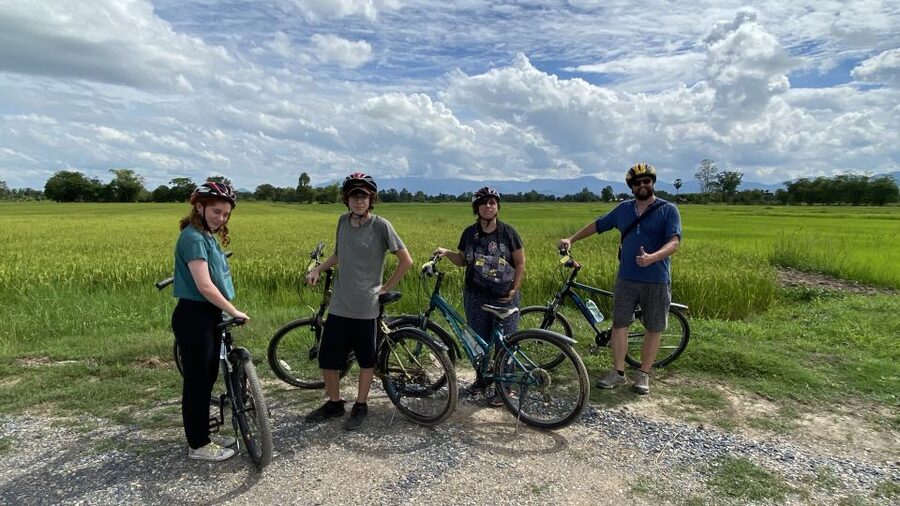
Sukhothai Historical Park covers a broad area, and bicycles make practical sense here. You can cover more ground than on foot without turning the visit into a rushed vehicle tour. The ride also keeps you close to the small roads, canals, fields, and homes that surround the old city.
The route begins around 8:15 AM with hotel pickup, then moves to Ban Khuai, a small village on Sukhothai’s outskirts. That opening matters. You do not start with a grand temple and a guide talking over a crowd. You begin with ordinary roads and rural scenery, which gives the later ruins a clearer place in the story of the region.
The countryside is mostly flat, and the pace is described as comfortable rather than athletic. Stops are built into the day for explanations, photographs, drinks, snacks, and short rests. One person in their mid-50s with medium fitness found the ride manageable, while another rider with limited cycling experience said they felt comfortable throughout.
Still, you should be able to ride a bicycle confidently for several hours. The route includes dirt roads and off-road sections, and the weather can be very hot. This is not a sightseeing bus with a token ten-minute cycle. The bike ride is the main way you move between the sights.
A few more Surat Thani trips to weigh up
- Sukhothai: Full-Day Historical Park Cycling Tour with Lunch
★ 4.9 · 55 reviews - Sukhothai: 2.5-Hours Guided Countryside Sunset Bike Tour
★ 5.0 · 49 reviews - Sukhothai: Half-Day Countryside Bike Tour
★ 5.0 · 36 reviews
Ban Khuai and the rural roads outside Sukhothai
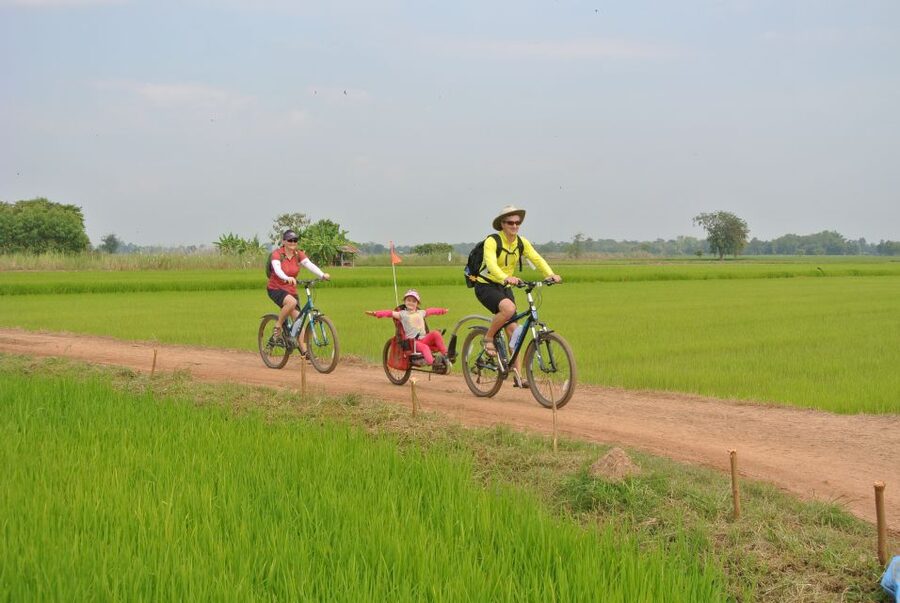
From Ban Khuai, you pedal through a quiet village before reaching dirt roads through rice paddies. This is the most distinctive part of the day for anyone curious about modern Thailand. Instead of seeing only monuments, you get a look at farming areas, homes, canals, and the daily work that continues around the old capital.
The rice fields open up the views toward Kao Laung Mountain. Depending on the season and weather, the fields may look very different, but the route offers a broad rural setting and plenty of space away from city traffic. You might see people working with crops, and the guide may arrange a chance to take part in planting the next season’s crops when conditions allow. That opportunity is not guaranteed, but it shows the kind of contact this tour aims for.
The strongest part of the countryside ride is the interpretation. Miaow, who grew up locally, is known for explaining how people live in the villages, how farmers work, and what other jobs support rural families. That context turns a pleasant bike ride into something more useful. A house, field, workshop, or canal becomes part of the area’s present-day story.
You should not expect a staged cultural show. The interaction depends on the people you meet and what is happening that day. That is a strength, but it also means the experience is less predictable than a fixed museum visit.
The wood furniture workshop and Klong Mae Lampan
A stop at a wood furniture factory gives the route a practical local detail. You can watch a carpenter produce furniture and see an alternative source of income in a farming community. It is a brief stop, but it helps explain that rural life is not limited to rice cultivation.
The route then follows small irrigation canals known as Klong Mae Lampan through more villages. Canals are part of the working structure of the countryside, not just pretty scenery. Your guide can connect them to farming and local routines while you ride beside the water.
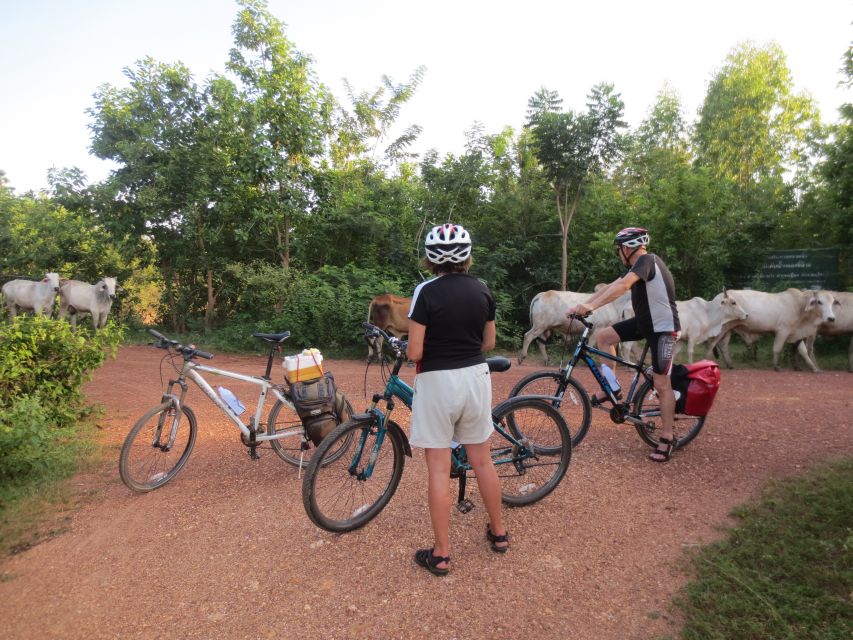
This section also lets the small group move at a human pace. You can wave to people, ask questions, and pause without the fuss of unloading a bus. The operator uses support staff on some departures, with one person riding at the front and another at the back. That arrangement helps on roads and at crossings, especially for a mixed-ability group.
The ride is not completely free of practical concerns. Rural roads can be dusty, uneven, or affected by rain. One rider found that rain from the previous day added a little adventure. Wear clothes and shoes you do not mind getting dusty, and bring sunscreen, sunglasses, and a hat.
Entering Sukhothai through the Eastern Gate
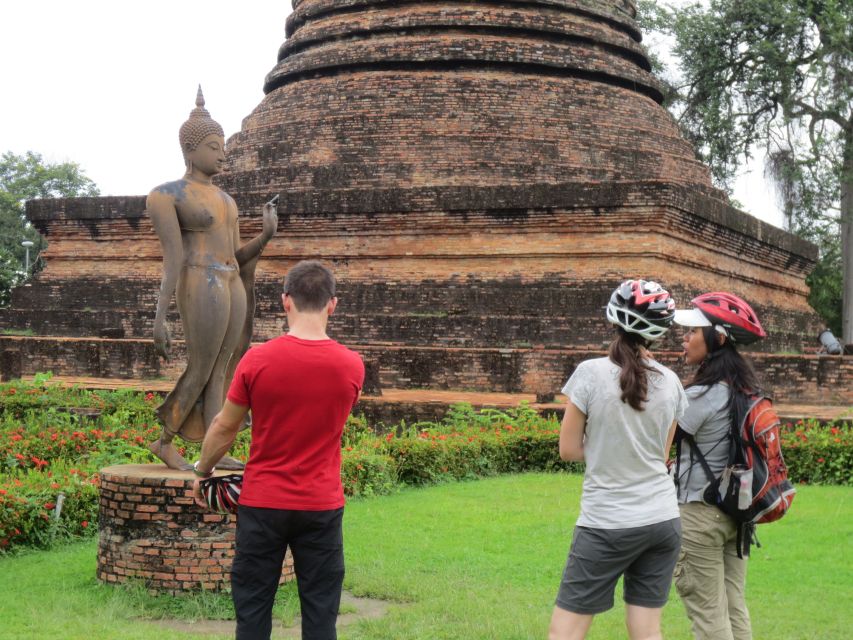
The transition from the countryside to the ancient city is one of the day’s best moments. You arrive at Sukhothai’s Eastern Gate by bicycle, after seeing the modern communities that still occupy the surrounding area. The ruins then feel less like a disconnected archaeological park and more like the historic center of a living province.
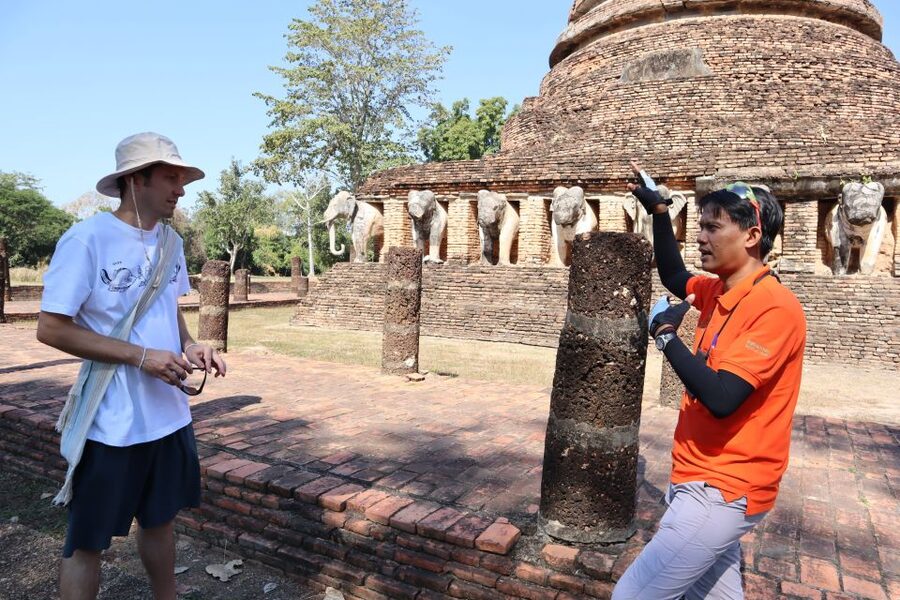
Inside the park, the guide focuses on Buddhist and Hindu architecture, temple design, craftsmanship, and the story of Buddhism in Thailand. This is where the guide makes a major difference. Stone figures and brick towers can look impressive on their own, but explanations about religious ideas, building styles, and the old kingdom’s role help you understand what you are seeing.
Miaow is particularly praised for clear English, warm humor, and detailed explanations. Jib, Chip, Jib, and other members of the local team also lead departures. Guide names and spellings can vary, but the important point is that the tour uses English-speaking local guides rather than relying on a generic audio explanation.
You visit key temples and the southern area of the park, with additional sites outside the central square possible on some routes. The exact sequence can change. One repeat rider was shown a different route, which suggests the team can adapt the day rather than repeat a rigid script.
You also get time to look around and take photographs independently. That is important because some guided ruin visits feel like a lecture followed by an immediate march to the next stop. Here, the usual pattern is explanation, exploration, and a ride onward.
Same coastline, a completely different day out:
- Koh Samui: Phetch Buncha Boxing Stadium Muay Thai Ticket
★ 4.8 · 789 reviews - Samui Zipline FLY & Fun Tree Bridge Jungle Cafe & Waterfall
★ 4.8 · 686 reviews - Koh Samui: 4×4 Sightseeing Safari & Elephant Sanctuary Tour
★ 4.5 · 364 reviews - Khao Sok: Ethical Elephant Sanctuary Visit
★ 4.9 · 109 reviews
What the ruins offer, and what they do not
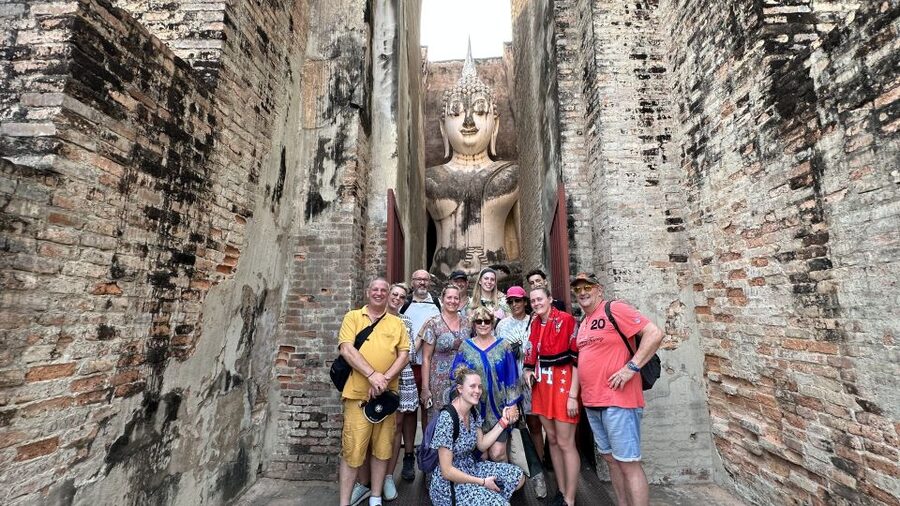
Sukhothai’s temples are the visual center of the tour. The park is well maintained, and the combination of open grounds, old brickwork, Buddhist images, and carefully placed temple remains makes it a rewarding place to explore by bike.
The ruins are not intact palace rooms or fully roofed monuments. Much of what you see consists of foundations, columns, stupas, Buddha images, and partial walls. If you want a complete architectural building you can walk through, this is not that kind of site. The appeal comes from scale, setting, craftsmanship, and the guide’s explanation of how the pieces fit together.
Cycling also changes the rhythm of the visit. You are not stuck inside one central cluster. You ride between areas, which gives your eyes a break from temple detail and keeps the day active. For many people, that is easier than walking across the entire park in the heat.
The tradeoff is that cycling adds sun exposure. Even if the route is not strenuous, you need to treat the day as an outdoor activity. Take advantage of the water, soft drinks, snacks, and cooling towels provided by the team, but do not rely on refreshments alone. Apply sunscreen before pickup and bring a hat.
Lunch, snacks, and the details that make the day work
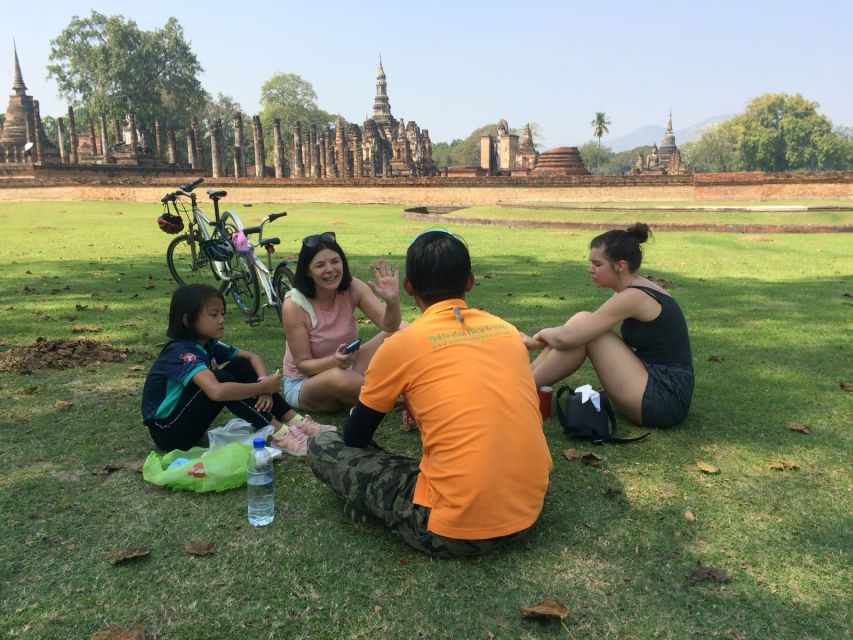
Food is a real part of the experience, not an afterthought. You receive local snacks during the ride, along with drinking water and a soft drink, then stop at a local Thai restaurant for lunch. The meal is included, and the menu can offer a choice of dishes. Some meals include a starter, main dish, drink, and water.
The restaurant stop gives you a proper break from the saddle and the heat. It also supports a local business rather than sending the group to a standardized chain. Several meals were described as especially tasty, and one local restaurant was praised for using ingredients from its own farm.
Small touches help here. The team may provide cold towels, turn the bikes around in the direction of travel while you visit a site, and keep checking that everyone is comfortable. Those details do not change the ruins, but they reduce the minor annoyances that can wear you down during a long hot day.
Food preferences and allergies are not specified in the information provided, so you should raise them when booking. Do not assume every dish will suit you simply because lunch is included.
Bikes, safety, and the seven-hour schedule
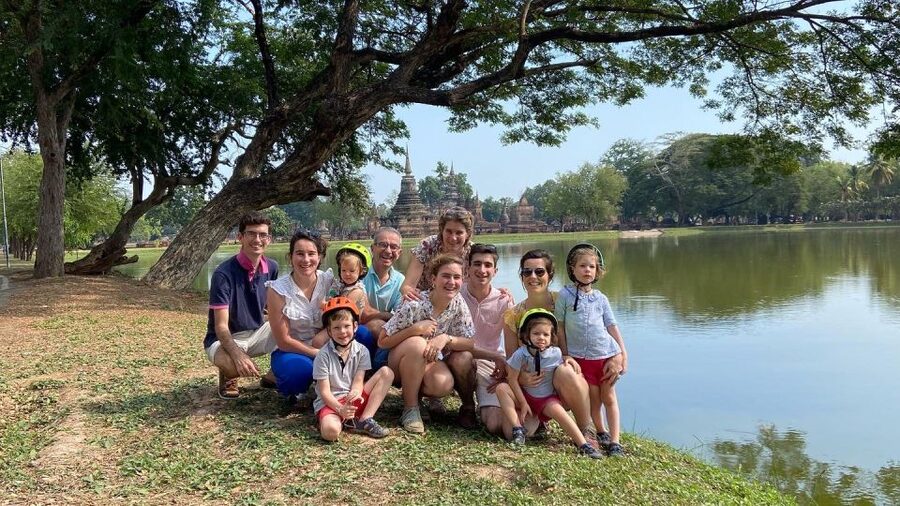
The supplied bicycle is a mountain bike with 24 gears and front suspension. The equipment has received consistently strong praise for being comfortable, well maintained, and suitable for both paved stretches and dirt roads. A helmet is included.
Local accident insurance is also included. The support team may ride ahead and behind the group, with a red flag used to help at larger road crossings. This is useful reassurance, but normal cycling caution still applies. You remain responsible for riding within your ability and following the guide’s instructions.
The day lasts about seven hours, including transfers, countryside stops, temple visits, food, and breaks. Pickup is usually around 8:15 AM, with return to your hotel after the southern section of the park. Be ready in the lobby ten minutes before the scheduled pickup.
The group limit is 12 people. That is small enough for questions and a flexible pace, while still giving the operator a practical group to support. In low season, the group may be very small, and the tour has operated for a solo participant.
The schedule can feel full, but the frequent stops keep it from becoming a nonstop pedal. If you dislike organized activities, the presence of a guide and set route may feel restrictive. If you want to understand the place rather than simply collect photographs, the structure is useful.
Is $53 a fair price?
At $53 per person, this is not the cheapest way to see Sukhothai. You could rent a bicycle and visit the park independently for less. That option makes sense if you already know the site, are comfortable navigating rural roads, and only want transport between temples.
The tour earns its price through the added pieces: hotel transfers, a quality mountain bike, helmet, entrance fees, accident insurance, an English-speaking guide, drinks, snacks, and lunch. You also get a full route through the surrounding countryside, not just a bicycle inside the historic park.
I see the strongest value in the guide and the route design. The temples are accessible without a tour, but the connection between village life, farming, Buddhism, architecture, and the old capital is harder to create on your own in a single day.
A 5.0 rating from 276 reviews and a 99 percent perfect-score rate indicate very strong satisfaction, but you should still match the activity to your interests. You are paying for a full outdoor day. Someone wanting a short, air-conditioned temple visit should choose another format.
Who should book this cycling tour?
I would choose this for you if you want an active introduction to Sukhothai and enjoy learning through conversation. It suits couples, solo riders, families with older children who can cycle, and anyone who wants modern rural life included alongside the monuments.
It is also a good choice for first-time visitors to the park. The guide helps you understand what you are looking at, and the bicycle handles the distances between temple areas without making you walk under the sun all day.
You should think twice if you are pregnant, have back problems, or have a mobility impairment, since the activity is not considered suitable for those conditions. Strong heat is another concern. Book an early or cooler-season date if you have a choice, and dress for sun rather than fashion.
At booking, provide the full names, heights, nationalities, and passport numbers of everyone in your group. These details are requested for insurance. Transfers cover hotels within 15 kilometers of Sukhothai city center only, so check your address before paying.
My verdict on the Sukhothai Bicycle Tour
I would book this tour for the combination of local countryside and carefully explained ruins. The old temples are the headline attraction, but the rice fields, canals, furniture workshop, food, and village conversations give the day its character.
The best guides, especially Miaow and Jib, appear to treat the area as home rather than merely a route. That local connection comes through in the stories about farming, religion, family life, and the people who greet the group along the way.
You should skip it only if seven hours on a bicycle sounds unpleasant or if you need a fully accessible, low-effort itinerary. For most reasonably fit riders who want more than a quick look at the historic park, $53 buys a well-supported day with strong cultural value.
FAQ
How long does the Sukhothai cycling tour last?
The activity lasts about seven hours, including countryside cycling, historical park visits, lunch, breaks, and hotel transfers.
What time does hotel pickup usually happen?
The English-speaking guide usually picks you up at around 8:15 AM. You should wait in your hotel lobby ten minutes before the scheduled pickup time.
Is hotel pickup included?
Yes. Pickup and drop-off are included for hotels within 15 kilometers, or 9.3 miles, of Sukhothai city center.
What kind of bicycle is provided?
You receive a mountain bike with 24 gears and front suspension, along with a helmet.
Is lunch included?
Yes. Lunch at a local Thai restaurant is included, along with snacks, a soft drink, and drinking water.
Does the tour include the historical park entrance fee?
Yes. Entrance fees to Sukhothai Historical Park are included in the price.
What language does the guide speak?
The live guide speaks English.
How large is the group?
The tour is limited to 12 participants.
Is the cycling route difficult?
The route is described as mostly flat and paced with regular stops. It includes village roads, dirt roads, rice paddies, canals, and the historical park, so you should be comfortable riding for several hours.
What should I bring?
Bring comfortable clothes and shoes, preferably cycling shoes, along with sunglasses, a sun hat, and sunscreen. The weather can become very hot during the day.
Is the tour suitable for pregnant people or anyone with mobility problems?
No. The activity is not suitable for pregnant women, people with back problems, or people with mobility impairments.
Can I cancel the booking?
You can cancel up to 24 hours in advance for a full refund. The reserve-now, pay-later option also allows you to keep your plans flexible.
Just added around Surat Thani
- Temple Tour Around Koh Samui Full Day Excursion★ 5.0 · 11 reviews
- Sukhothai: Half-Day Countryside Bike Tour★ 5.0 · 36 reviews
- Sukhothai: 2.5-Hours Guided Countryside Sunset Bike Tour★ 5.0 · 49 reviews
- Samui Go-Karting Experience – Sodikart RT10 Outdoor Race★ 4.1 · 24 reviews
- Koh Samui: Zipline Adventure with Hotel Transfer★ 4.5 · 10 reviews
- Koh Samui Jungle Adventure: 4×4 Off-Road Safari & Lunch★ 4.4 · 32 reviews
- Koh Samui Day and Night Fishing Experience★ 4.4 · 37 reviews
- Khao Sok: Ethical Elephant Sanctuary Visit★ 4.9 · 109 reviews
Cycling Tours, compared.

Night Bike Tour with Temples & Flower Market Visit
Read our review →
Bangkok Jungle Bike Tour – Hotel-pickup & Lunch
Read our review →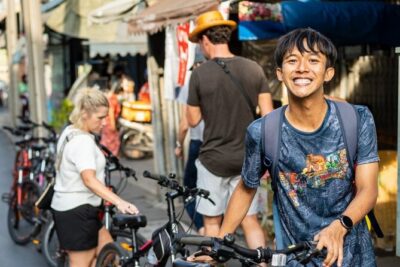
Browse the lists this tour appears in