
Review · THAI COOKING CLASSES
Backstreet Bangkok Exploring the Cradle of Thai Cooking
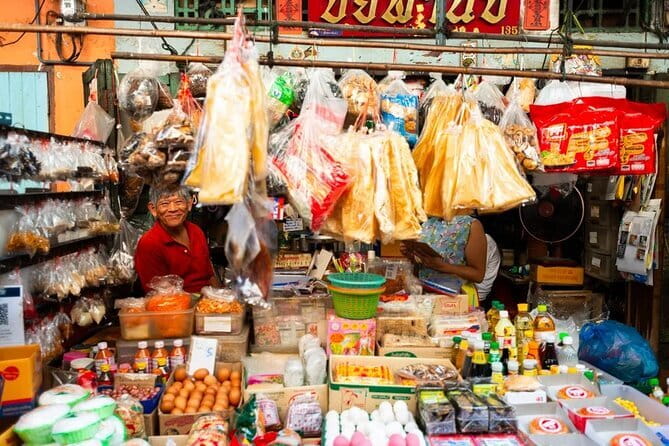
Bangkok’s food story begins long before the famous restaurant districts. This five-hour walk follows its roots through old neighborhoods, markets, temples, factories, food stalls, and a mall. You are not simply tasting dishes. You are seeing how Thai cooking grew from Chinese, Indian, and local traditions.
I like the small group limit of seven, which gives your guide room to explain unfamiliar foods and adjust the pace. I also like that dinner, snacks, bottled water, and alcoholic drinks are included, so the $125 price covers more than a guided stroll. The main drawback is the lack of private transportation, and the published schedule needs checking because the start time is listed as 9:00 am while the description refers to an afternoon-to-evening outing.
In This Review
- Key points to know before booking
- Why this is more than a standard food walk
- Starting at Wat Ratchaburana near Wang Burapha
- Rattanakosin and the old center of Bangkok
- Phahurat Market, Bangkok’s Little India
- Sampeng Market and the narrow lanes of Chinatown
- Expect several kinds of food stops
- What $125 gets you
- Group size, timing, and walking demands
- The guide can shape the whole day
- Who should book Backstreet Bangkok
- Should you book it?
- FAQ
- How long does Backstreet Bangkok last?
- What time does the tour start?
- Where does the tour begin?
- Where does the tour end?
- What neighborhoods are included?
- Is transportation included?
- Is food included in the price?
- How large is the group?
- Can I cancel for a refund?
Key points to know before booking
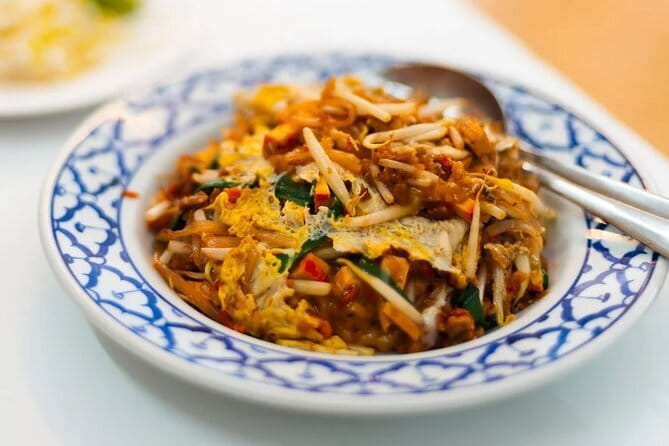
- Food and history share equal billing: You visit temples, old districts, markets, restaurants, factories, and food stalls rather than spending five hours only at a table.
- The group is capped at seven: This is a personal format, not a large coach excursion.
- Guides make the difference: Lek, Anna, and Annie are named in the tour material, with Lek praised for his long connection to Bangkok and Thai family background.
- Several Bangkok districts appear in one outing: Wang Burapha, Rattanakosin, Phahurat, Sampeng, and nearby Yaowarat all feature in the route.
- Dinner and drinks are included: Snacks, bottled water, alcoholic beverages, and dinner are part of the package.
- You must get to the meeting point yourself: The tour begins and ends at Sam Yot MRT station, with no private transport included.
Why this is more than a standard food walk
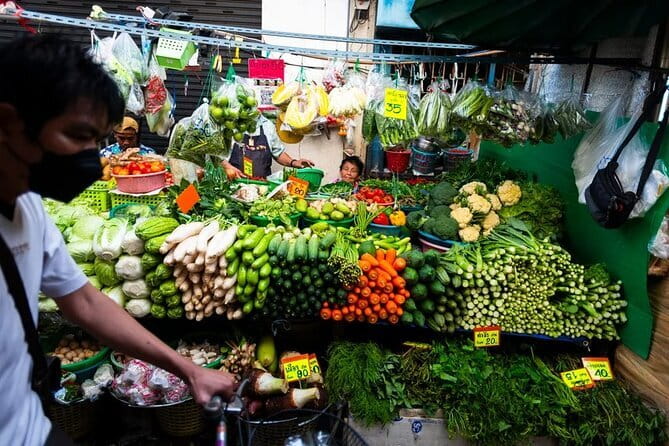
I like food tours best when the meal has a setting and a story. This one uses Bangkok’s oldest quarters as the classroom. You may pass from a temple courtyard to a market lane, then from a textile district to a Chinatown alley, with each stop adding another piece to the city’s cooking traditions.
The route is especially useful if you have already eaten your way through the usual Bangkok favorites. One past participant had visited Bangkok many times and still found unfamiliar places and foods. That is a good sign for repeat visitors who want something beyond the standard pad Thai and curry circuit.
The tour also has a personal feel because the group is limited to seven. Guides named Lek, Anna, and Annie have led this experience, and the strongest praise centers on their warmth, care, and command of Bangkok’s food culture. Lek is described as a long-time Bangkok resident with Thai family roots, while Anna is known for encouraging people to keep eating. That sounds generous, but pace yourself. Five hours of tasting can catch up with you.
More Thai Cooking Classes in Bangkok
- Bangkok: Hands-on Thai Cooking Class and Market Tour
★ 4.9 · 1,614 reviews - Bangkok: Tingly Thai Cooking School Half-Day Cooking Class
★ 4.9 · 1,191 reviews - Bangkok: Maliwan Thai Cooking Class with Market Tour
★ 4.9 · 1,133 reviews
Starting at Wat Ratchaburana near Wang Burapha
The meeting point is Sam Yot MRT station, Exit 3, on Thanon Unakan in Wang Burapha Phirom. From there, the first listed stop is Wat Ratchaburana Ratchaworawihan, an ancient temple dating to the 15th century.
This opening gives the food walk some needed context. The temple sits near Wang Burapha, an old part of Bangkok where the route begins, and its architecture helps place you in the city’s long past before the tasting starts in earnest. Admission is listed as free, so you are paying for the guide’s interpretation rather than a bundled entry ticket.
You should dress and behave respectfully at the temple. The supplied information does not specify a formal dress code, but this is an active religious site, not merely a photo stop. Comfortable shoes are also sensible because the experience links several districts on foot.
The temple stop is scheduled for about an hour. That is enough time for your guide to explain why the area matters, but it also means the morning or afternoon will not be devoted entirely to eating. If your ideal food tour is a nonstop parade of dishes, this slower beginning may feel like a tradeoff. I see it as one of the tour’s strengths, since the food makes more sense when you understand its surroundings.
Rattanakosin and the old center of Bangkok
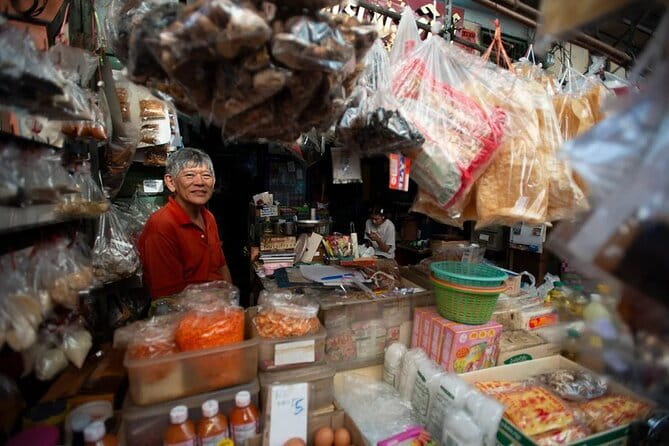
The next listed area is Rattanakosin Island, Bangkok’s historic central district. It includes major landmarks such as the Grand Palace, Wat Phra Kaew, and Wat Pho, though the tour details do not say that admission to those attractions is included or that the route enters them.
That distinction matters. You should expect a neighborhood and cultural-history stop, not a full Grand Palace visit folded into the $125 price. The published description says the walk visits places that add background to Bangkok’s old stories and important sites. Your guide may point out the wider setting, but you should not book this as a palace tour.
Rattanakosin works well in a culinary route because it connects food with migration, trade, religion, and royal-era Bangkok. The city’s cooking did not develop in isolation. Old central districts brought together ingredients, techniques, and communities, and this tour aims to show those links as you move through the streets.
The stop is listed at about an hour. That is a substantial portion of the day, so plan for a walking experience with cultural explanation, not just a quick landmark photograph. You will get more from it if you are curious about why Bangkok eats the way it does.
Phahurat Market, Bangkok’s Little India
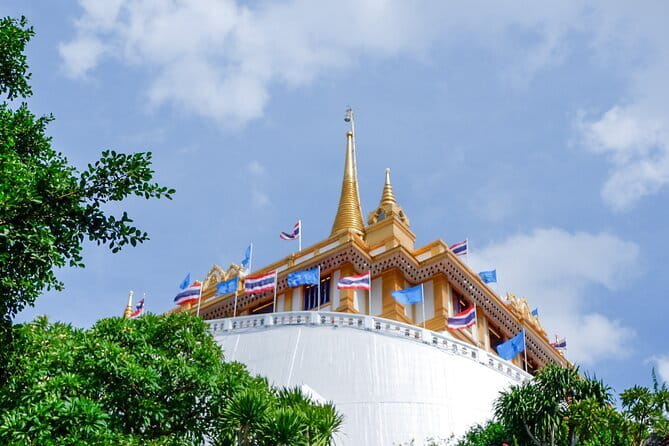
Phahurat Market is often called Little India. Here, the focus shifts toward Indian culture, with textiles, jewelry, and food forming the main points of interest.
This is one of the most useful stops for understanding Bangkok as a meeting place. You are not confined to a single national food tradition. The market helps show how communities from outside Thailand became part of the city’s daily life and cooking.
The scheduled hour gives your guide time to explain the area rather than hurry you through a few stalls. The available details do not list individual dishes, vendors, or tastings, so I would avoid arriving with a fixed expectation of one famous snack. The experience is designed around the area as a whole, with food set alongside shops, streets, and cultural background.
Phahurat may also be a good place to ask questions about ingredients you do not recognize. A small group makes that easier. You can point to something, ask what it is used for, and get a direct answer instead of trying to keep up with a large crowd.
Same coastline, a completely different day out:
- Bangkok: Damnoen Saduak Market and Maeklong Railway Market
★ 4.5 · 26,723 reviews - The Old Siam: Damnoen Saduak and Maeklong Railway Market
★ 4.5 · 10,992 reviews - From Bangkok: Ayutthaya Temples Guided Tour with Lunch
★ 4.7 · 10,535 reviews - Bangkok: Train Market & Floating Market with Boat Ride
★ 4.7 · 9,547 reviews
Sampeng Market and the narrow lanes of Chinatown
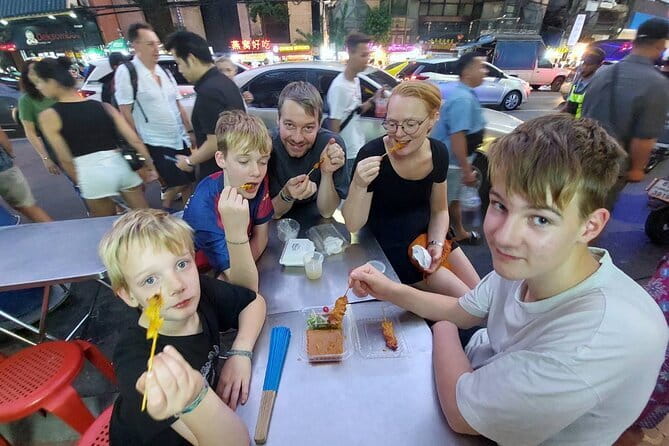
Sampeng Market occupies a narrow alley in the Chinatown market area. Its goods range from textiles to electronics, and it has a long connection to Bangkok’s commercial life.
This is a different kind of food stop. It is less about sitting down to a meal and more about seeing the trade and street activity that surround Chinatown’s kitchens and food sellers. The half-hour timing suggests a brisk visit, so keep your belongings close and stay with the group in the tight passageways.
Sampeng is also where the tour’s title makes the most sense. Backstreet Bangkok is not a polished restaurant district. It is a walk through working market lanes, old commercial areas, and places where everyday buying and selling still shape the atmosphere.
The route also identifies nearby Yaowarat, one of Bangkok’s busiest areas for street food, markets, and cultural attractions. The description does not assign a separate duration to Yaowarat, so the exact balance between Sampeng, Yaowarat, and other stops may vary. Ask your guide at the start how the day is arranged, especially if you have a particular interest in Chinatown.
Expect several kinds of food stops
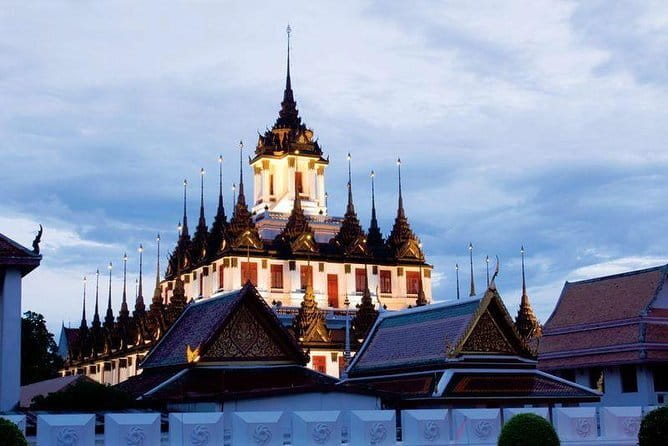
The experience promises stops at a market, food stalls, restaurants, factories, a mall, and other local places. That range is important. You are not tasting one style of cooking in one setting. You are looking at food as part of production, shopping, neighborhood life, and dining.
Dinner and snacks are included, as are bottled water and alcoholic beverages. The material does not provide a dish-by-dish menu, so you should treat the menu as part of the day’s discovery rather than a guaranteed checklist. If you have dietary restrictions, confirm them before booking because no specific accommodation policy is supplied.
The food quantity may be generous. Anna is praised for showing people a great deal and encouraging them to eat more. That can be a pleasure if you arrive hungry, but you should not fill up before the tour. At the same time, do not assume that you must accept every serving. A good guide should help you manage the pace, particularly when the walk lasts around five hours.
Alcohol is included, which adds value but also makes pacing sensible. Bangkok’s heat, walking, and multiple tastings can make drinks feel stronger than expected. Bottled water is supplied, but drink it regularly.
What $125 gets you
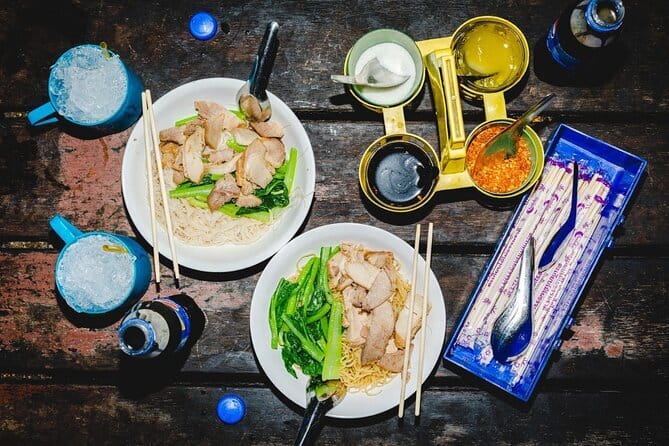
At $125 per person, this is not a budget street-food crawl. The value comes from the combination of a licensed guide, a very small group, dinner, snacks, bottled water, alcohol, and a route that covers several historic districts.
You are also paying for access to places you might not choose on your own. One of the clearest benefits of a guide is confidence. You can try foods and visit restaurants that would be difficult to identify from a standard sightseeing map, while also learning why the neighborhoods matter.
The price looks strongest for first-time visitors who want a structured introduction to Bangkok’s food and culture in one outing. It can also work well for repeat visitors. A person who had been to Bangkok many times still found new places and foods through this route, which suggests the experience goes beyond the most familiar tourist circuit.
The value is less clear if you want a cheap meal or a purely culinary class. There is no mention of a cooking lesson, recipe booklet, or hands-on preparation. Private transportation is not included, so you must also handle your own journey to and from Sam Yot MRT station.
Group size, timing, and walking demands
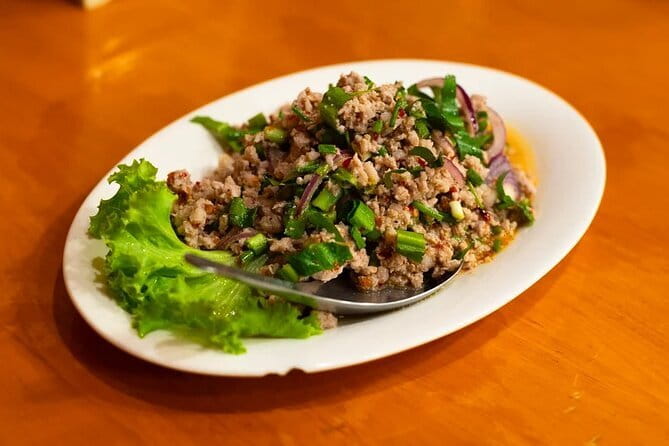
The maximum group size is seven. That is small enough for conversation and practical food guidance, while still allowing the tour to run as a shared experience. On some dates, the group may be even smaller. One booking became a private tour when only one party joined, but that should be treated as a possibility, not a promise.
The tour lasts about five hours and returns to the meeting point. The listed start time is 9:00 am, yet the main description calls it an afternoon-into-evening tour. That is a real planning issue. Confirm the current start time before arranging temple visits, hotel transport, or dinner plans.
You should also plan for walking in markets and older neighborhoods. The information says most people can participate and that the meeting point is near public transportation. It does not give a distance, step count, or detailed accessibility information, so ask before booking if you have mobility concerns.
Because no private vehicle is supplied, public transportation or your own taxi arrangement will be needed. Sam Yot MRT station is the clear anchor point, and the activity ends there as well.
The guide can shape the whole day
The food is important, but the guide is likely to determine how satisfying the route feels. The strongest praise is aimed at guides who explain Bangkok’s history and food together, introduce unfamiliar dishes, and make people feel looked after.
Lek is associated with a long personal connection to Bangkok and Thai heritage. Anna is described as enthusiastic and generous with the food. Annie has also led the experience, including an early Bangkok edition alongside Lek. These details suggest a tour that depends on the person leading it, so the exact tone may vary by date.
You should use the small group to ask questions. Ask where an ingredient comes from, why a market is located in that district, or how Indian and Chinese influences appear in Thai cooking. This is not a lecture with a fixed script. The more curious you are, the more useful the walk becomes.
Who should book Backstreet Bangkok
I would recommend this experience to you if you want food tied to place, history, and daily city life. It suits first-time Bangkok visitors who want more than landmark sightseeing, as well as repeat visitors looking for new neighborhoods and dishes.
It is also a good fit for solo visitors or couples who value a small group. The seven-person limit gives you a better chance to speak with the guide and avoid the anonymous feel of a large tour.
You may want to skip it if you dislike walking, prefer a precise published menu, or want private transportation. It may also disappoint if your main goal is a cooking lesson or a full visit inside Bangkok’s major temples and palaces. This is a food-and-culture walk through districts, markets, and local stops.
Free cancellation is available up to 24 hours before the start time for a full refund. Changes or cancellations inside that window are not accepted, and the tour can be rescheduled or refunded if its minimum group size is not met.
Should you book it?
Book this tour if you want Bangkok explained through the places where people shop, trade, worship, and eat. The strongest reasons are the small group, the broad mix of districts, and the inclusion of dinner, snacks, drinks, and water.
Before paying, confirm the start time and ask about dietary needs. If you are ready for a long tasting walk with cultural stops rather than a simple street-food snack run, Backstreet Bangkok offers a useful and unusually broad look at how the city’s cooking took shape.
FAQ
How long does Backstreet Bangkok last?
The experience lasts about five hours.
What time does the tour start?
The listed start time is 9:00 am. The main description also refers to an afternoon-to-evening schedule, so confirm the current timing before booking.
Where does the tour begin?
It begins at Sam Yot MRT station, Exit 3, at 111 Thanon Unakan in Wang Burapha Phirom, Phra Nakhon, Bangkok.
Where does the tour end?
The activity ends back at the meeting point at Sam Yot MRT station.
What neighborhoods are included?
The route includes Wang Burapha, Rattanakosin Island, Phahurat Market, and Sampeng Market. Nearby Yaowarat is also part of the area covered by the experience.
Is transportation included?
Private transportation is not included. The meeting point is near public transportation.
Is food included in the price?
Yes. Dinner and snacks are included, along with bottled water and alcoholic beverages.
How large is the group?
The activity has a maximum of seven participants.
Can I cancel for a refund?
You can cancel at least 24 hours before the local start time for a full refund. Cancellations or changes made less than 24 hours in advance are not accepted, and the minimum group requirement may affect whether a date operates.
Just added around Bangkok
- 1.5 – 2 hour afternoon SUP class for all ages and levels★ 5.0 · 35 reviews
- Erawan Waterfall & Train Tour from Kanchanaburi – Full Day★ 4.0 · 16 reviews
- Cycling in rural Kanchanaburi area★ 5.0 · 12 reviews
- Kanchanaburi Tour: Erawan Waterfall and Death Railway★ 5.0 · 13 reviews
- 1.5 – 2 hour morning SUP boarding class for all ages and levels★ 5.0 · 13 reviews
- Yoga in the Park Thailand★ 5.0 · 12 reviews
- re:leaf spa and massage★ 4.0 · 10 reviews
- Visit temples in and around Bangkok with a former monk of 10 years★ 5.0 · 30 reviews
Thai Cooking Classes, compared.
Half-Day Thai Cooking Class at Organic Farm in Chiang Mai
Read our review →
Cooking Class, Market & Thai Herbs Garden Tour
Read our review →
Authentic Cooking Class with Market & Farm Visit
Read our review →
Phuket Thai Cooking Class with Market Tour Option
Read our review →
Tingly Thai Cooking School Half-Day Cooking Class
Read our review →Browse the lists this tour appears in