Review · THAI COOKING CLASSES
Bangkok: Cooking Class with Market Visit & Tuk Tuk Ride
Bangkok’s cooking lesson begins before you touch a wok. You’ll meet at Queen Sirikit National Convention Centre MRT, visit a large fresh market, then take a tuk-tuk to Sabieng Thai Cooking near Sukhumvit 22. That market-to-kitchen route gives the class a useful local shape, not just a string of recipes.
I like the small groups of 8 to 12 and the chance to make curry paste from scratch. I also like the practical setup: air-conditioning, individual cooking stations, digital recipes, and food choices for vegetarian, halal, kosher, and allergy needs.
The main catch is that this is aimed at beginners. Some ingredients are prepared before class, so you may do more chopping and wok cooking than full kitchen prep. The short tuk-tuk ride can also be slow in traffic, and arriving more than 10 minutes late means missing the market visit.
In This Review
- Key points at a glance
- Starting at Queen Sirikit MRT, not the convention center
- Bangkok’s market sets the lesson in motion
- The tuk-tuk ride adds Bangkok flavor, with a traffic warning
- Four Thai dishes, with the focus on cooking and eating
- Instruction from certified chefs and a MasterChef finalist
- A clean, cool kitchen helps in Bangkok’s heat
- Dietary choices need advance planning
- What the $48 price really buys you
- Morning or afternoon: choosing the better session
- Who will enjoy Sabieng Thai Cooking most
- Should you book this Bangkok cooking class?
- FAQ
- Where does the cooking class meet?
- How long does the activity last?
- What happens during the market visit?
- Is the tuk-tuk ride included?
- How many dishes will I prepare?
- Is the class taught in English?
- Can the class accommodate food allergies or dietary restrictions?
- Are kosher ingredients and equipment included?
- What happens if I arrive late?
Key points at a glance
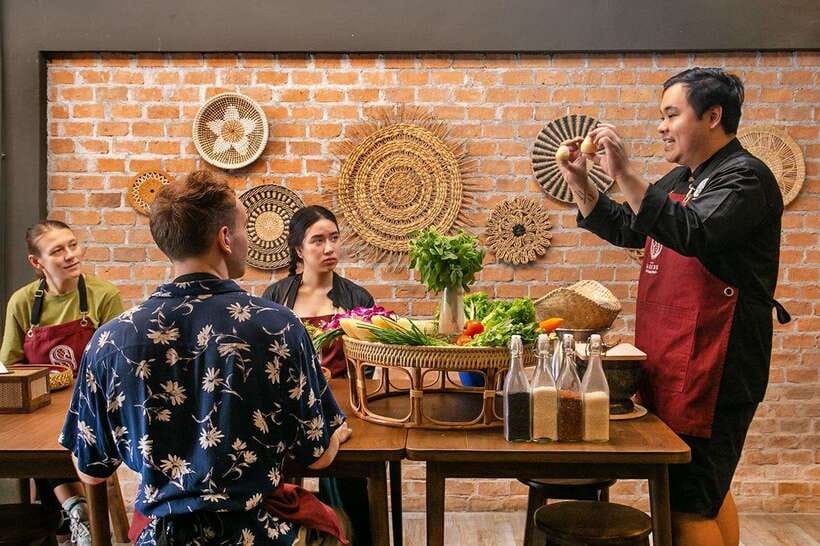
- The market comes first: Shop for ingredients and see how Thai cooks use fresh produce before class.
- A tuk-tuk connects the two halves: The ride back to the school covers about 2 kilometers, though traffic can make it less exciting than expected.
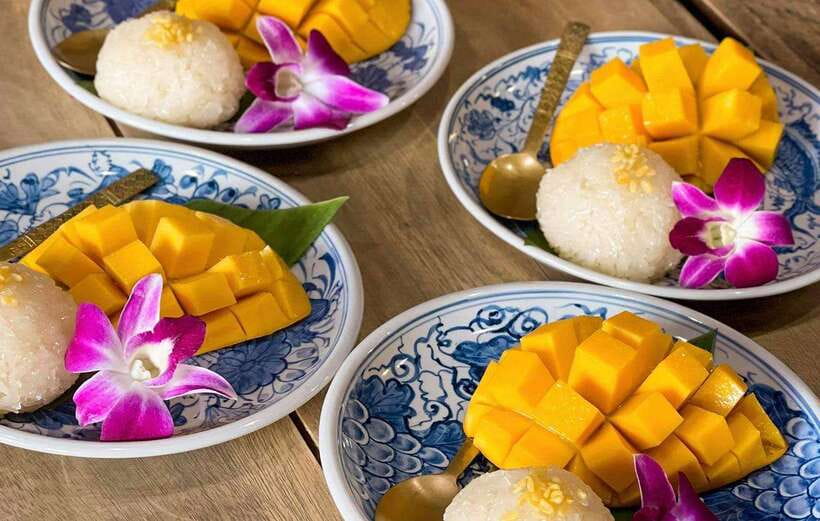
- Four dishes fill the session: The meal includes one starter, two main dishes, and a dessert.
- MasterChef experience is part of the teaching team: Instruction includes help from a MasterChef Thailand Season 3 finalist and chefs with more than a decade of professional work.
- Dietary requests are possible: Vegetarian, vegan, halal, kosher, and food-allergy arrangements are available, with advance notice needed for allergies and possible extra charges for kosher supplies.
Starting at Queen Sirikit MRT, not the convention center
Your meeting point is Queen Sirikit National Convention Centre MRT station, Exit 1, at street level. Pay close attention to that wording. You are meeting outside the underground exit, not inside the convention center with the same name.
This is a sensible central Bangkok starting point, but give yourself enough time to find the correct exit. The class runs on a fixed schedule, and the market visit is the first major part of the experience. If you arrive more than 10 minutes late, you should go directly to Sabieng Thai Cooking School and accept that the market stop is gone. After an hour, you are marked as a no-show, with no refund or rescheduling.
You can choose a morning or afternoon class. The total duration is 210 minutes, or three and a half hours. That is long enough for a market visit, transport, cooking, and a full meal, without taking over your whole Bangkok day.
There is no hotel pickup or drop-off. Plan your own route to the MRT meeting point and back from the cooking school.
More Street Food & Tuk Tuk Tours in Bangkok
- Bangkok: Backstreets Food Tour with 15+ Tastings
★ 4.9 · 2,880 reviews - Bangkok Midnight Food Tuk Tuk Tour
★ 5.0 · 2,542 reviews - Bangkok Backstreets Food Tour with 15+ Tastings
★ 5.0 · 1,926 reviews
Bangkok’s market sets the lesson in motion
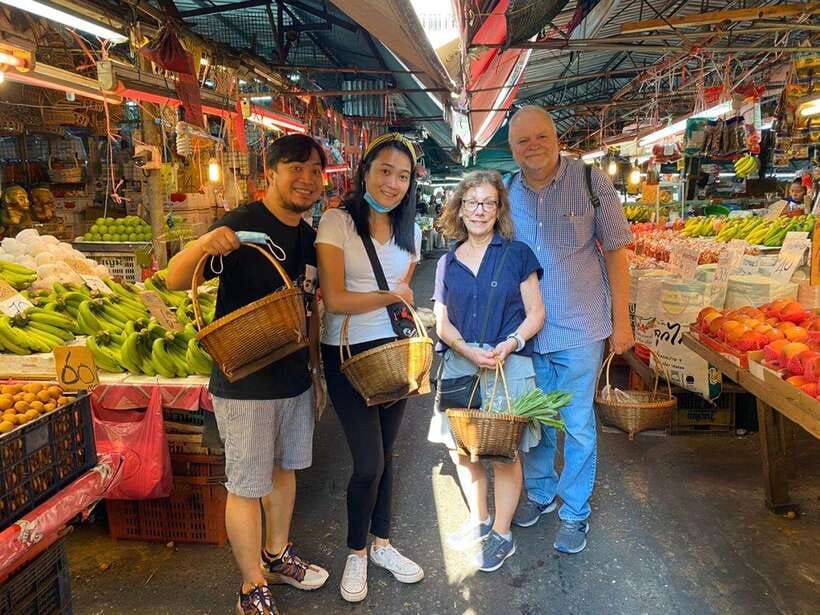
The guided market visit is more than a shopping errand. It lets you see the raw materials before they appear in prepared bowls at the cooking school. You’ll encounter the fresh ingredients used in Thai cooking and get an introduction to the city’s food culture in a working market.
This is especially useful if Thai produce is unfamiliar to you. The class can explain what ingredients are needed for the dishes and how they fit into the recipes. You get a visual reference that a printed recipe cannot provide.
Keep your expectations in check, though. This is a guided orientation rather than a full market apprenticeship. The market portion may not include much direct interaction with individual sellers, and you should not expect an extended lesson on judging the quality of every item. If you want detailed advice on selecting, smelling, comparing, and bargaining for produce, this class may feel light.
Still, I see value in the order of events. You first see the ingredients in their natural setting, then use them in the kitchen. That makes the food easier to remember when you try the recipes at home.
The tuk-tuk ride adds Bangkok flavor, with a traffic warning
After the market, you ride a tuk-tuk to the school. The route is about 2 kilometers, so this is a short transfer rather than a city tour. It gives the experience a distinctly Bangkok touch, but it is not a major sightseeing segment.
Traffic can slow the ride. On a congested day, the tuk-tuk may feel like a practical way to move a short distance rather than an exciting burst of speed. I would treat it as a fun connection between the market and the cooking class, not a reason by itself to book.
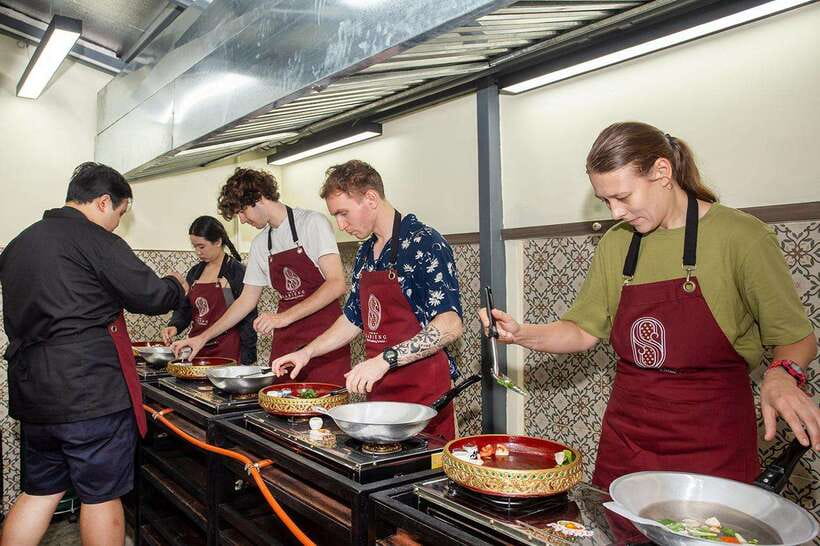
The school is in the Sukhumvit 22 area. Once inside, you leave the street noise behind for an air-conditioned facility with professional cooking stations and modern equipment. That change matters in Bangkok’s heat, especially during an afternoon session.
Oversize luggage, weapons, sharp objects, baby strollers, non-folding wheelchairs, non-folding strollers, and baby carriages are not allowed. Pack light and bring only what you need for the class.
Four Thai dishes, with the focus on cooking and eating
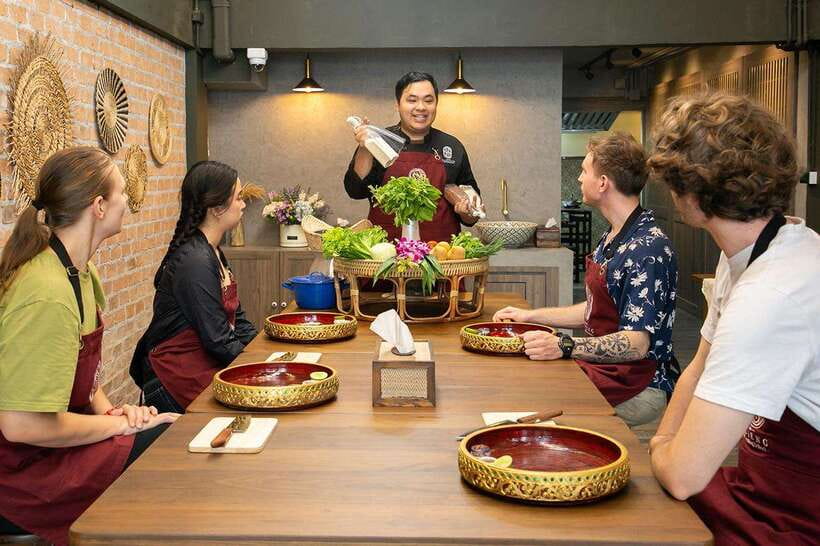
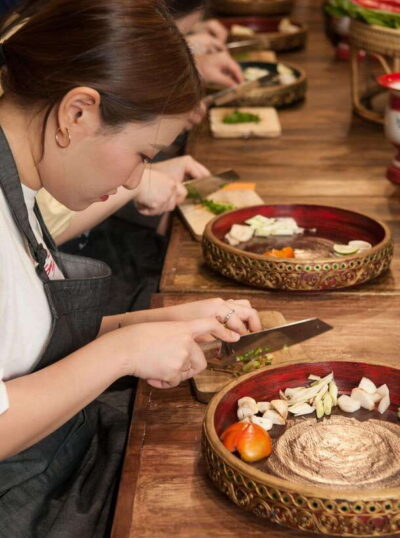
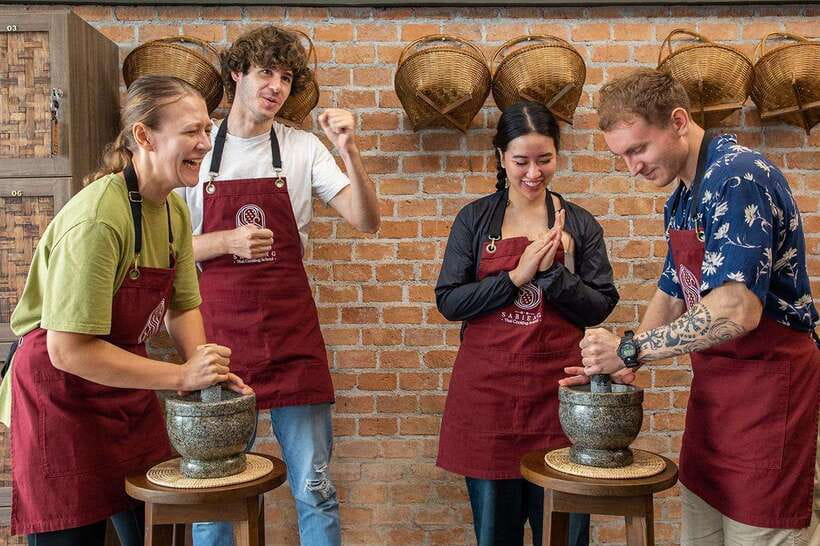
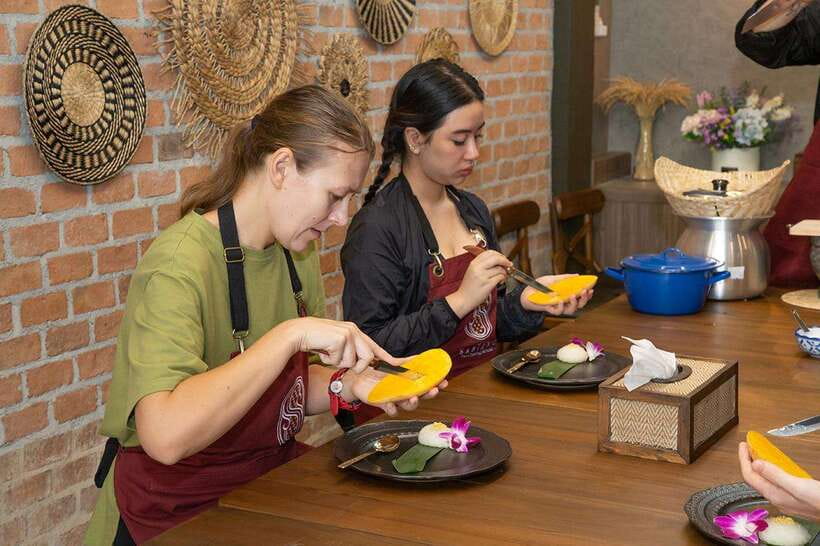
The central activity is preparing four classic Thai dishes. The meal structure includes one starter, two main dishes, and one dessert. You also make curry paste from scratch, which is one of the more useful skills to take home.
The instruction covers ingredient selection, preparation, seasoning, and cooking methods. The chefs can adjust the spice level, so you can request a milder version if you are not comfortable with strong heat. That is an important detail in a Thai class, since a dish that is too hot can hide the balance of sweet, sour, salty, and spicy flavors.
This class is not designed as a professional kitchen course. Some ingredients are prepared ahead of time, which keeps the schedule moving and makes the session easier for beginners. The tradeoff is that you may not do every stage yourself. You might spend less time grinding, slicing, or making basic stock than you would in a longer, more technical workshop.
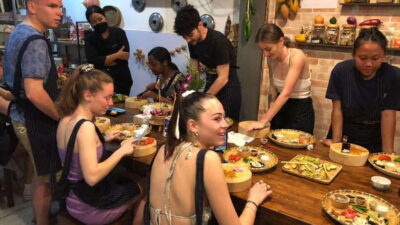
The cooking areas are compact. You may not have a large private worktable or spend the whole session standing at your own full-size station. Instead, the setup favors clear demonstrations, shared progress, and a meal that reaches the table within the three-and-a-half-hour limit.
That format suits you if your main goal is to learn a few dishes and enjoy lunch or dinner with the group. It may disappoint you if you want intensive knife training, restaurant-level technique, or control over every ingredient from beginning to end.
More Thai Cooking Classes in Bangkok
- Bangkok: Hands-on Thai Cooking Class and Market Tour
★ 4.9 · 1,614 reviews - Bangkok: Tingly Thai Cooking School Half-Day Cooking Class
★ 4.9 · 1,191 reviews - Bangkok: Maliwan Thai Cooking Class with Market Tour
★ 4.9 · 1,133 reviews - Hands on Thai Cooking Class and Market Tour
★ 5.0 · 660 reviews
Instruction from certified chefs and a MasterChef finalist
Sabieng Thai Cooking uses certified, experienced chefs, including a finalist from MasterChef Thailand Season 3. The teaching team is described as having more than 10 years of professional experience and international culinary work.
The practical benefit is not celebrity recognition. It is the chance to receive structured help while you cook, especially if you are new to Thai ingredients or wok cooking. In a small group, the instructor can watch your progress and help with seasoning, heat, and timing.
The class is taught mainly in English. Chinese, Thai, and Korean translation is available, but English is the listed main language. If you need translation support, confirm how it will be provided before booking so you know what to expect during demonstrations and hands-on work.
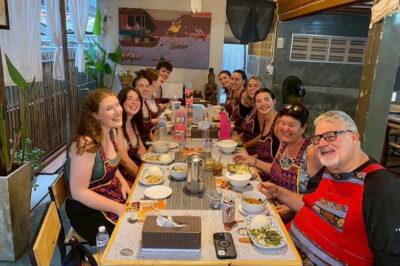
The group size is limited to 10 participants in the activity details, while the broader class description gives a range of 8 to 12 students. Either way, this is intended to be a small-group class rather than a large demonstration where you watch from the back of a room.
A clean, cool kitchen helps in Bangkok’s heat
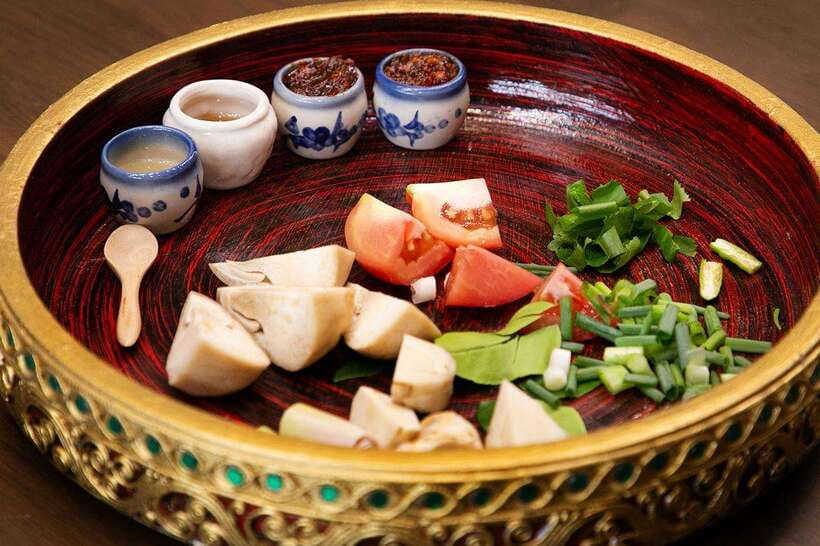
The school’s air-conditioned, modern setting is a strong practical feature. Bangkok’s outdoor markets can be hot and crowded, and a long cooking lesson without cooling would become tiring quickly.
You receive the ingredients and equipment needed for the four dishes. Unlimited drinking water and welcome seasonal fruit are included. Alcohol is not included, so you should not expect wine or beer with the meal.
The school is presented as hygienic and professional, which matters when you are handling raw ingredients and sharing a cooking space. The class also includes digital recipes, allowing you to recreate the dishes after returning home. A special souvenir is included as well, according to the activity details.
Bring an appetite. Four dishes make this both a lesson and a substantial meal. One useful tip is to arrive hungry rather than scheduling a heavy meal beforehand.
Dietary choices need advance planning
The class can accommodate regular, vegetarian, vegan, halal, kosher, and food-allergy requests. For food allergies, notify the provider at least 24 hours in advance. Do not wait until you arrive, since ingredients and preparation need to be arranged ahead of time.
Kosher participation requires extra planning. Kosher ingredients may cost more, and new kosher equipment carries an additional charge. You keep that new equipment afterward. Ask for the exact arrangement and price before booking if kosher preparation is essential.
Dietary flexibility is valuable, but it does not mean every dish will be identical to the standard menu. Alternative ingredients may change the flavor or preparation. The safest approach is to state your needs clearly when reserving and confirm that the requested option is available for your chosen class time.
People with colds, babies under one year, mobility impairments, or wheelchair users are listed as unsuitable for this activity. The school does not accept non-folding wheelchairs or strollers.
What the $48 price really buys you
At $48 per person, this is not the cheapest way to eat Thai food in Bangkok. You could buy several local meals for less. The value comes from the combination of instruction, ingredients, equipment, market visit, tuk-tuk transfer, four dishes, drinking water, recipes, and a souvenir.
I would call it a fair price for a first-time cooking class in a comfortable central location, especially if you value a small group and want a structured activity that ends with a full meal. The price also removes several small costs that can add up, such as ingredients, kitchen use, transport between the market and school, and recipe materials.
The value is weaker if you are an experienced cook looking for advanced technique. Since some preparation is done in advance and the class is built for novices, you may feel you are paying for a polished introduction rather than serious culinary training.
The 3.5-hour length helps the calculation. You are not buying only a short demonstration. You get a market visit, transport, cooking, and eating in one compact experience. Still, the market and tuk-tuk sections are brief, so most of the price should be judged by the quality of the cooking instruction and the four-course meal.
Morning or afternoon: choosing the better session

The morning and afternoon classes include the market visit and tuk-tuk ride. Choose based on your Bangkok plans rather than assuming one is better.
A morning class can work well if you want a substantial midday meal and a free afternoon for sightseeing. An afternoon class may suit you if you prefer a slower start or want to explore elsewhere before cooking.
Because the market is an important part of the experience, arrive early for either session. A late start does not simply shorten the activity. More than 10 minutes late can mean missing the market, and an hour late means losing the whole booking without a refund or new date.
Free cancellation is available up to 24 hours before the activity for a full refund. You can also reserve now and pay later, which is useful if your Bangkok schedule is still changing.
Who will enjoy Sabieng Thai Cooking most
I would recommend this class to:
- First-time visitors who want a food activity tied to Bangkok rather than a restaurant meal
- Beginner cooks who prefer clear instruction and prepared ingredients
- Couples, families with older children, and small groups looking for a shared activity
- People who want to learn curry paste and four familiar Thai dishes
- Diners who need vegetarian, vegan, halal, kosher, or allergy adjustments and can plan ahead
- Anyone who values an air-conditioned kitchen and a fixed three-and-a-half-hour schedule
I would think twice if you want a serious chef-training session. You may prefer a longer workshop with extensive knife work, full ingredient preparation, and more space at the cooking station.
I would also avoid booking if mobility is a concern. The activity is specifically not suitable for wheelchair users or people with mobility impairments. The market, tuk-tuk, and kitchen setup require you to manage the movement between several parts of the experience.
Should you book this Bangkok cooking class?
Book it if you want a friendly introduction to Thai food, a market visit, four dishes, and a full meal in one well-organized outing. The small group, cool kitchen, flexible spice level, and curry-paste lesson give it real practical value.
Skip it if the market is your main reason for going. The visit offers context, but not a long session on buying and assessing produce. Also skip it if the tuk-tuk ride must be a major Bangkok attraction, since the short route can be slowed by traffic.
For most beginners, the $48 cost is reasonable because you receive food, instruction, transport between the two activity points, and recipes. Go hungry, arrive early at the correct MRT exit, notify the school about dietary needs at least a day ahead, and expect a guided introduction rather than an advanced culinary course.
FAQ
Where does the cooking class meet?
Meet at Queen Sirikit National Convention Centre MRT station, Exit 1, outside the underground exit at street level. Do not go to the convention center itself.
How long does the activity last?
The full activity lasts 210 minutes, or three and a half hours.
What happens during the market visit?
You visit Bangkok’s largest fresh market with a guide and learn about the local ingredients used for the cooking session.
Is the tuk-tuk ride included?
Yes. A tuk-tuk ride from the market to Sabieng Thai Cooking School is included.
How many dishes will I prepare?
You will prepare four Thai dishes. The meal includes one starter, two main dishes, and one dessert.
Is the class taught in English?
English is the main language of instruction. Chinese, Thai, and Korean translation is available.
Can the class accommodate food allergies or dietary restrictions?
Vegetarian, vegan, halal, kosher, and food-allergy options are available. Tell the provider about food allergies at least 24 hours in advance.
Are kosher ingredients and equipment included?
Kosher ingredients may involve an extra charge. New kosher equipment also costs extra, and you keep that equipment afterward.
What happens if I arrive late?
If you are more than 10 minutes late, go directly to Sabieng Thai Cooking School, but you will miss the market visit. An arrival one hour late is treated as a no-show, with no refund or rescheduling.
More Markets in Bangkok
- Bangkok: Damnoen Saduak Market and Maeklong Railway Market
★ 4.5 · 26,723 reviews - The Old Siam: Damnoen Saduak and Maeklong Railway Market
★ 4.5 · 10,992 reviews - Bangkok: Train Market & Floating Market with Boat Ride
★ 4.7 · 9,547 reviews - From Bangkok: Ayutthaya & Ayothaya Floating Market Day Trip
★ 4.7 · 6,084 reviews
More Tuk-Tuks in Bangkok
- Bangkok by Night: Temples, Markets and Food Tuk-Tuk Tour
★ 5.0 · 3,752 reviews - Bangkok: Michelin Guide Street Food Tour by Tuk Tuk
★ 4.4 · 1,274 reviews - Bangkok: Guided Tour in a Typical Thai Tuk-Tuk
★ 4.7 · 830 reviews - Bangkok: Tuk Tuk Adventure Chinatown Michelin Food & Temples
★ 4.3 · 725 reviews
Just added around Bangkok
- Damnoen Saduak Floating Market Small Group Tour★ 4.0 · 107 reviews
- Angkor Wat 2-Day Tour from Bangkok★ 5.0 · 8 reviews
- Arrival Private Airport Transfer : Bangkok Airport to Hotel in Bangkok★ 4.5 · 142 reviews
- Private Best of Bangkok Full Day Highlights City Tour★ 4.5 · 13 reviews
- Ancient Wonders of Ayutthaya with Return Scenic River Cruise★ 4.0 · 31 reviews
- Private Ancient city of Ayutthaya Shore Excursion★ 5.0 · 9 reviews
- Ancient City Ayutthaya Private Guided Day Tour★ 5.0 · 49 reviews
- Ancient City Bangkok and Erawan Museum Tickets★ 4.5 · 8 reviews
Thai Cooking Classes, compared.
Half-Day Thai Cooking Class at Organic Farm in Chiang Mai
Read our review →
Cooking Class, Market & Thai Herbs Garden Tour
Read our review →
Authentic Cooking Class with Market & Farm Visit
Read our review →
Phuket Thai Cooking Class with Market Tour Option
Read our review →