
Review · THAI COOKING CLASSES
Chiang Mai Lanna Northern Thai Cooking Experience with Locals
The best part of this Chiang Mai cooking class starts before you reach the stove. Your local host takes you to a fresh market and village garden, then brings those ingredients to a countryside home surrounded by rice fields, fruit orchards, and an organic farm. You see where Lanna cooking begins, not just how it lands on a plate.
I like the hands-on pace, especially the chopping, slicing, pounding, and measuring. I also like the small group limit of six people, which gives Lyn time to adjust the pace, explain each step, and let you taste as spices are added. The main consideration is the long 6.5-hour schedule and countryside setting, so this suits curious food lovers more than anyone seeking a quick city-center class.
In This Review
- Key points at a glance
- Why this class feels different from a standard cooking lesson
- The 8:30 am pickup and trip to the market
- A village garden before the kitchen
- Cooking four Northern Thai dishes over charcoal
- Lyn’s teaching style and the value of a small group
- Sharing the meal with a local family
- What you can realistically learn to make at home
- Is the $109.71 price fair?
- Choosing the lunch or dinner schedule
- Who should book this Chiang Mai cooking experience?
- Should you book it?
- FAQ
- How long does the Chiang Mai Lanna cooking experience last?
- Is pickup included?
- How many people can join the class?
- What dishes will I cook?
- Are vegetarian requests accepted?
- What is included in the price?
Key points at a glance
- Start with a local market: Shop for the ingredients before cooking, with your host explaining what goes into Northern Thai food.
- Visit a village organic garden: The countryside setting adds context to the dishes and shows a quieter side of Chiang Mai.
- Cook four Lanna dishes: The menu can include Khao Soi, Kaeng Hung Lay, banana-leaf-wrapped minced pork, Chiang Mai sausage, and dessert.
- Use traditional cooking methods: Food is prepared with a charcoal stove and clay pot, rather than only modern kitchen equipment.
- Eat with the host family: The final meal is made up of your own dishes, shared in the local style.
- Keep cooking after Chiang Mai: All ingredients and tools are supplied, and a recipe book goes home with you.
Why this class feels different from a standard cooking lesson
Many cooking classes begin with pre-measured ingredients lined up on a counter. This one begins closer to daily life. Your host picks you up, takes you to a local market, and continues to the house by local transport or private car. That first stop helps you connect a finished dish with the produce, herbs, meats, and seasonings that make it work.
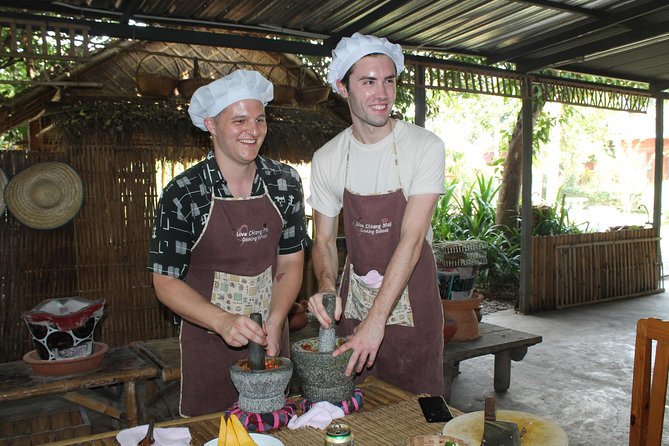
You are not simply watching a demonstration. You chop, slice, pound, measure, and cook. That matters with Northern Thai food, where the balance of spices can change quickly. One especially useful feature is the chance to taste the food as seasonings are added, so you can understand how each ingredient affects the final flavor.
The setting also changes the mood. After the market, you visit a local village and organic garden before cooking in the countryside. Rice fields, fruit orchards, and a farm surround the home. The setting is not a sightseeing stop with a long list of monuments, but it gives you a look at how food and family life connect outside central Chiang Mai.
More Thai Cooking Classes in Chiang Mai
- Half-Day Thai Cooking Class at Organic Farm in Chiang Mai
★ 5.0 · 19,087 reviews - Chiang Mai: Cooking Class, Market & Thai Herbs Garden Tour
★ 4.9 · 4,824 reviews - Chiang Mai: Authentic Cooking Class with Market & Farm Visit
★ 4.9 · 4,546 reviews
The 8:30 am pickup and trip to the market
The daytime program begins at 8:30 am and runs until about 3 pm. Your host handles the pickup, then takes you to a local market. The exact transport may be local transport or a private car, so you should be ready for a short transfer rather than expecting to walk straight into a cooking studio.
The market visit is one of the most useful parts of the day. You can see the ingredients before they are cleaned and arranged for class. Your host can explain what is used in Lanna cooking, and you get a practical sense of the ingredients you might later look for in Chiang Mai or at home.
This stop also gives the class a better pace. You begin with food in its everyday setting, then move from shopping to gardening to cooking. If you prefer a quick lesson with no time spent getting around, this may feel long. If you want to understand Northern Thai food beyond a list of recipes, the extra time earns its place.
A village garden before the kitchen
From the market, the outing continues to a local village and organic garden. The garden is part of the experience, not a separate major attraction, but it adds an important layer to the meal. You see the kind of countryside setting that supplies and surrounds a family kitchen.
The program takes place near rice fields, fruit orchards, and an organic farm. You should not expect a formal farm tour with a detailed schedule. Instead, this is a chance to connect the cooking with the land and with local routines.
I like this part because it keeps the class from becoming a restaurant lesson in disguise. You are not only told that the food is local. You spend time in the village setting where the host family lives and cooks. That makes the later meal feel more personal.
Cooking four Northern Thai dishes over charcoal
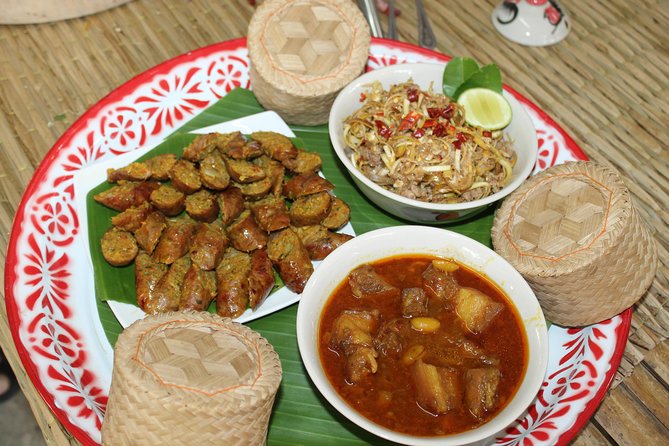
The main lesson focuses on four dishes, including dessert. Sample dishes include Khao Soi, the famous Chiang Mai noodle dish; Kaeng Hung Lay, a Northern Thai curry; Abb Moo, minced pork wrapped in banana leaves; and Sai Aou, Chiang Mai sausage.
The exact menu may vary, so you should treat these as examples rather than a guaranteed list. Still, the selection shows the range of Lanna food. Khao Soi gives you noodles and curry, Hung Lay brings a different curry style, banana-leaf-wrapped pork shows a simple local cooking method, and sausage adds another familiar Northern Thai flavor.
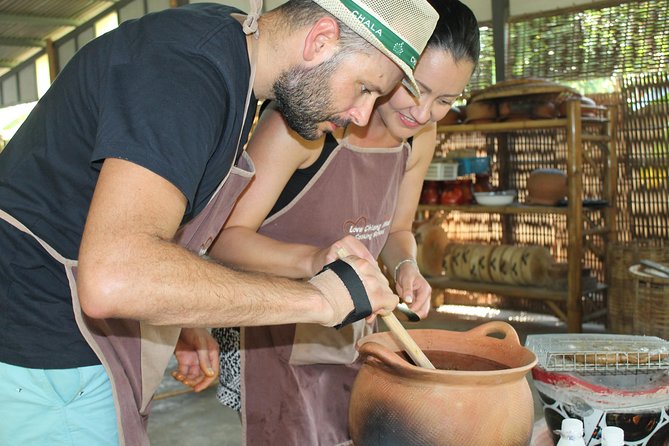
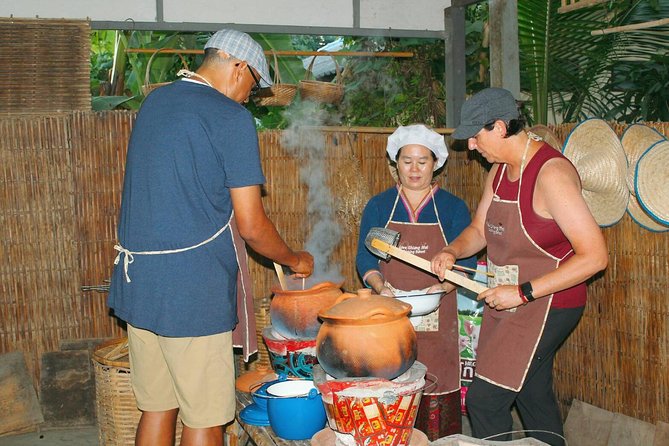
The food is cooked with a charcoal stove and clay pot. That is a meaningful detail for anyone hoping to learn how Northern Thai food is traditionally prepared. It also means the class may feel less controlled than a modern kitchen lesson. Heat from charcoal requires attention, and the pace can be more hands-on.
All tools and ingredients are included, so you do not need to buy equipment before class. The value here is not just the meal. You learn techniques that can be repeated at home, although you may need to adapt them if you do not have a charcoal stove or clay pot.
Same coastline, a completely different day out:
- Chiang Mai: Elephant Sanctuary, Waterfall & Bamboo Rafting
★ 4.9 · 9,160 reviews - Chiang Mai: Doi Inthanon National Park Eco-Friendly Tour
★ 4.6 · 6,667 reviews - Chiang Mai: Elephant Sanctuary & Waterfall Group Tour
★ 4.9 · 5,780 reviews - Chiang Mai: Chiang Rai Temples, Karen Tribe and Hot Springs
★ 4.7 · 5,401 reviews
Lyn’s teaching style and the value of a small group
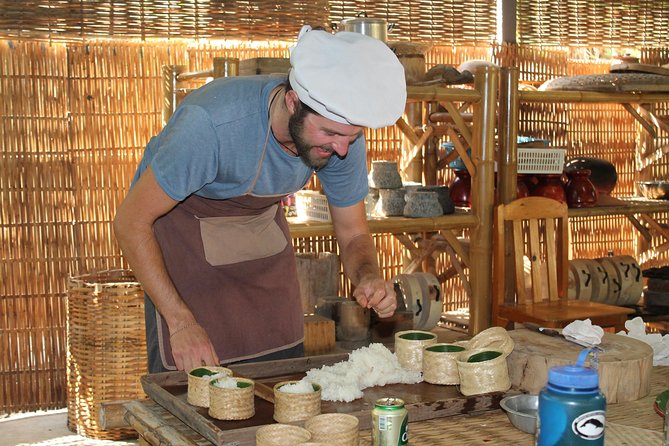
The group is capped at six people. That is small enough for the host to watch your technique, answer questions, and help when a recipe gets busy. It also gives you room to cook rather than standing at the back of a demonstration.
Lyn is named as one of the hosts, and her teaching style suits people who want clear guidance. She adjusts the pace to the students, explains steps carefully, and gives help without taking over. That is important in a class with several dishes, since not everyone chops or cooks at the same speed.
You also get time to taste the food during preparation. I consider this one of the strongest features of the class. Instead of waiting until the final meal to discover that a curry is too salty or a spice is too strong, you learn how flavors build as ingredients are added.
The small group does not guarantee a private class. Other people may join you, and the host must still divide attention. But six is a sensible limit for a practical lesson, especially when several dishes are cooking at once.
Sharing the meal with a local family
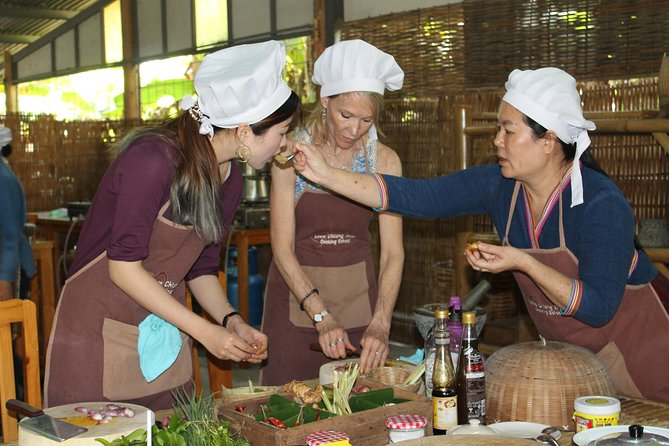
After cooking, you sit down and eat what you made. Coffee, tea, water, and seasonal fruit are included, along with the main meal. The food is shared with the host family in the local style, which gives the class a social finish rather than ending as soon as the last dish leaves the stove.
You may eat a lot. Four dishes plus dessert can make for a substantial midday or evening meal, particularly after several hours of preparation. The schedule allows enough time to cook, talk, and eat, rather than forcing the meal into a short closing slot.
The family setting is the point. You get conversation and a chance to share experiences with your hosts. Since the home is in the countryside, the meal also offers a look at local life away from the main tourist areas.
That said, the experience is not designed as a formal cultural lecture. The cultural learning comes through the market, garden, cooking methods, and time at the family home. If you want structured historical background on Lanna cuisine, you may need to ask questions during the day.
What you can realistically learn to make at home
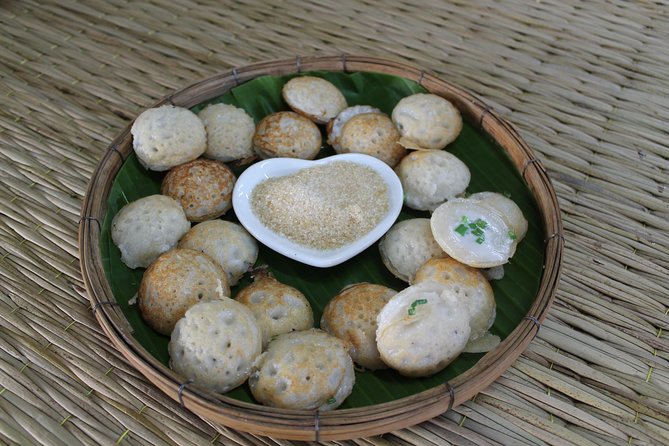
The class provides a recipe book at no extra cost. That makes a difference because cooking by sight and taste is useful in the moment, but written instructions help once you return home.
The hands-on method also gives you more than a printed recipe. You practice the physical work behind the food: pounding, slicing, measuring, wrapping, and adjusting seasonings. These are the steps that are easy to skip when a demonstration is already finished for you.
Still, you should be realistic about recreating every dish. Ingredients for Khao Soi, Hung Lay, Sai Aou, and other Northern Thai foods may not be easy to find everywhere. The recipe book gives you a starting point, but local ingredients and cooking equipment can affect the result.
Vegetarian requests are welcome, so tell the provider when booking. The information does not specify the exact vegetarian menu, so ask what substitutions are available if you need a fully vegetarian meal.
Is the $109.71 price fair?
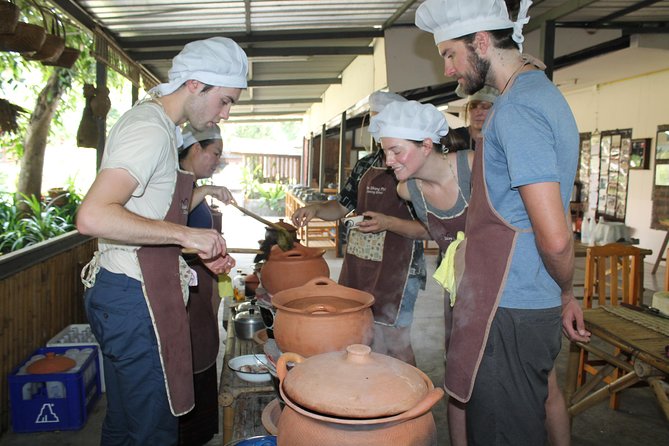
At $109.71 per person, this is not Chiang Mai’s cheapest cooking class. The price makes more sense when you count the full day: pickup, market visit, village and garden visit, all ingredients, kitchen tools, four dishes, dessert, the shared meal, drinks, seasonal fruit, recipe book, and travel insurance required under Thailand tourism rules.
You are also paying for a small group and a host-led visit to a private countryside home. A short city cooking lesson may cost less, but it may not include the same amount of personal instruction or the market and garden visits.
The value is strongest if you want food and local contact together. It is less compelling if your only goal is to learn one famous dish as quickly as possible. You should also remember that personal items and souvenirs are not included.
Children under 12 and followers pay 50 percent of the adult price. That can make the outing more practical for families, though six people is the maximum group size, including the children and any non-cooking companions.
Choosing the lunch or dinner schedule
The daytime program runs from 8:30 am to 3 pm. This is the better choice if you want the rest of the evening free or prefer to cook before the day becomes too tiring. It also lets you enjoy the meal as lunch after the market and garden visits.
The dinner program runs from 3:30 pm to 10 pm. That schedule may suit you if mornings are difficult or if you want your main meal at the end of the experience. It is a long evening, however, and the cooking portion may finish late.
The provided meeting information lists an 8:30 am start, so confirm the correct session when booking. Pickup is offered, but the exact pickup details should be checked with the provider after confirmation.
Confirmation arrives within 48 hours, subject to availability. Since the experience is often booked about 24 days ahead, reserve early if your Chiang Mai dates are fixed. Free cancellation is available when you cancel at least 24 hours before the local start time. Changes or cancellations inside that window are not accepted for a refund.
Who should book this Chiang Mai cooking experience?
I would choose this class if you want to understand Northern Thai food through ingredients, technique, and family life. It is especially suitable for people who prefer doing the work themselves, since you will not spend the day watching someone else cook.
It is also a good fit for repeat visitors to Chiang Mai who have already seen the main city sights and want time in the countryside. The village, garden, rice fields, and family meal give the day a different focus.
Families can consider it too, since children under 12 pay half price and vegetarian requests are accepted. The long schedule may be tiring for younger children, and the provider does not give a specific minimum age, so ask before booking.
I would think twice if you dislike long meals, shared cooking, rural transfers, or traditional charcoal cooking. This is not a polished restaurant workshop with a predictable city-center setup. Its appeal comes from the slower pace and the chance to cook as a family would.
Should you book it?
Book it if you want more than a Khao Soi demonstration. The market visit, organic garden, charcoal stove, clay pot, small group, and shared meal create a full picture of Lanna food and daily life.
Skip it if you want a short, highly structured class or need a guaranteed menu. For most food-focused visitors who have half a day to spare, the $109.71 cost is justified by the length, personal instruction, included meal, and countryside setting. Lyn’s careful explanations and willingness to adjust the pace are useful bonuses for anyone who wants to leave Chiang Mai with skills, not just photographs.
FAQ
How long does the Chiang Mai Lanna cooking experience last?
The experience lasts approximately 6 hours and 30 minutes. The lunch schedule runs from 8:30 am to 3 pm, while the dinner schedule runs from 3:30 pm to 10 pm.
Is pickup included?
Yes. Pickup is offered, and the host takes you to the local market before continuing to the house by local transport or private car.
How many people can join the class?
The maximum group size is six travelers. The small group allows the host to provide personal help during preparation and cooking.
What dishes will I cook?
You will cook four dishes, including dessert. Examples include Khao Soi, Kaeng Hung Lay, Abb Moo, and Sai Aou. The exact menu may vary.
Are vegetarian requests accepted?
Yes. Vegetarian requests are welcome. Contact the provider when booking to discuss the suitable menu.
What is included in the price?
The price includes cooking ingredients, kitchen tools, coffee or tea, water, seasonal fruit, a recipe book, travel insurance, and the meal made during the class. Personal items such as souvenirs are not included.
Just added around Chiang Mai
- Chiang Mai Zipline White Water Rafting and Elephant Sanctuary★ 4.0 · 11 reviews
- Chiang Mai Airport Private Transfer – Hotel or Airport★ 4.5 · 51 reviews
- Zipline Adventure at Skyline Jungle Luge Chiang Mai★ 5.0 · 102 reviews
- Trek to a Jungle Waterfall★ 5.0 · 14 reviews
- Long Neck Village, White & Blue Temple, Black House Day Tour From Chiang Mai★ 4.0 · 14 reviews
- 2 Hours Wow hatcha lanna package – Free transportation★ 5.0 · 31 reviews
- Zipline+Sticky waterfall+Long Neck Village Private Tour★ 5.0 · 22 reviews
- Authentic Thai Cooking Class and Farm Visit in Chiang Mai★ 5.0 · 66 reviews
Thai Cooking Classes, compared.
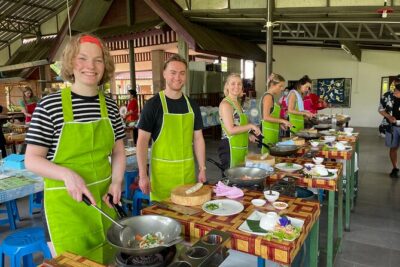
Half-Day Thai Cooking Class at Organic Farm in Chiang Mai
Read our review →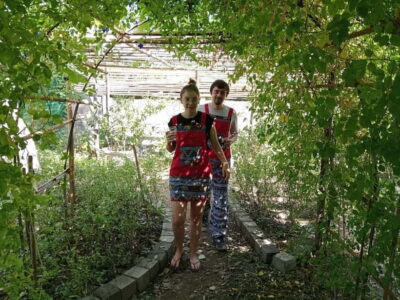
Cooking Class, Market & Thai Herbs Garden Tour
Read our review →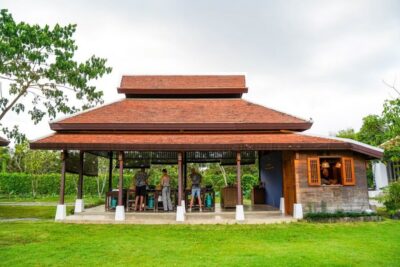
Authentic Cooking Class with Market & Farm Visit
Read our review →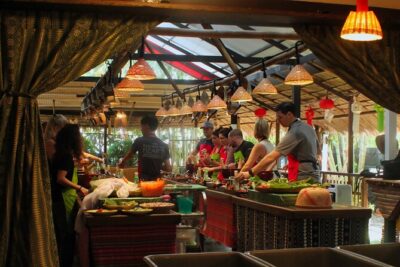
Phuket Thai Cooking Class with Market Tour Option
Read our review →
Tingly Thai Cooking School Half-Day Cooking Class
Read our review →Browse the lists this tour appears in