
Review · CHIANG MAI TOURS
Chiang Mai: Thai Buffalo and Rice Planting Experience
Thai buffalo, muddy rice paddies, and a plate of green curry make this one of Chiang Mai’s more hands-on farm visits. At Hang Tueng farm, you do not just watch rural life from the edge of a field. You cut grass with a sickle, feed the buffalo, learn how rice seedlings are handled, and step into the mud to plant rice.
I like the small groups of up to 10, which gives the English-speaking guide time to explain the tools, animals, and farming cycle. I also like the practical touches: farmer clothing, boots, a place to wash off, and lunch with curry, a herbal drink, and mango sticky rice.
The main consideration is price. At $57 per person, it is not a cheap farm outing, and hotel pickup is not included. You meet at Hang Tueng farm, about 20 minutes from Chiang Mai’s historic center, though the red-taxi service takes you to and from the traditional farm during the activity.
In This Review
- Key points to know before you book
- Why this farm visit feels more hands-on than a normal excursion
- Reaching Hang Tueng farm from Chiang Mai
- Cutting grass before meeting the buffalo
- Learning how rice seedlings become a meal
- Borrowed boots, farmer clothes, and muddy feet
- Lunch: green curry, herbal drink, and mango sticky rice
- Group size, pace, and the guide
- Is $57 a fair price?
- Who will get the most from this experience?
- What to bring and how to prepare
- Should you book the Hang Tueng farm experience?
- FAQ
- Where does the Thai buffalo and rice planting experience take place?
- How long does the experience last?
- Is transportation included?
- What food is included?
- Do I need to bring boots or farmer clothing?
- Can I cancel or pay later?
Key points to know before you book
- Cut grass for the buffalo: You use a sickle to harvest and gather fresh feed before meeting the animals.
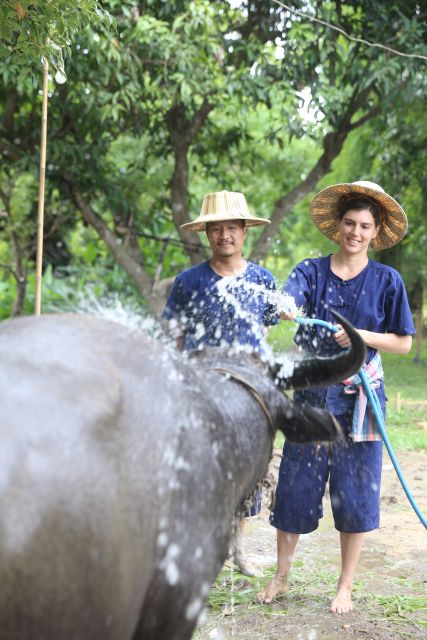
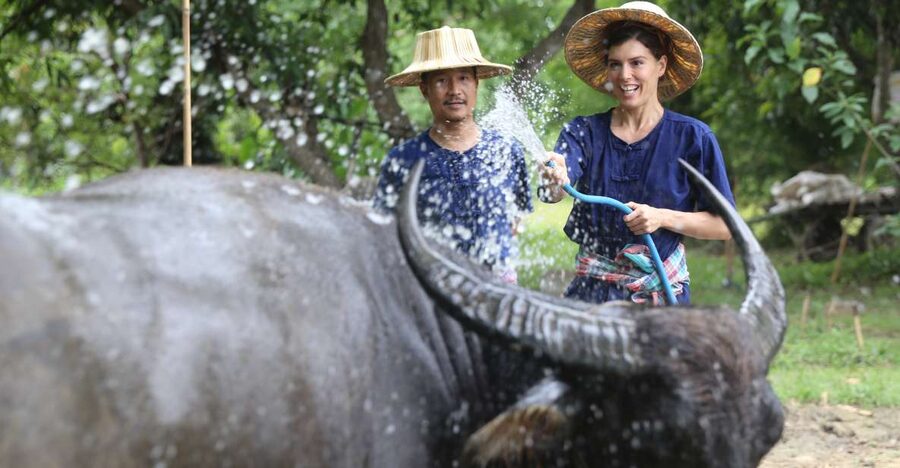
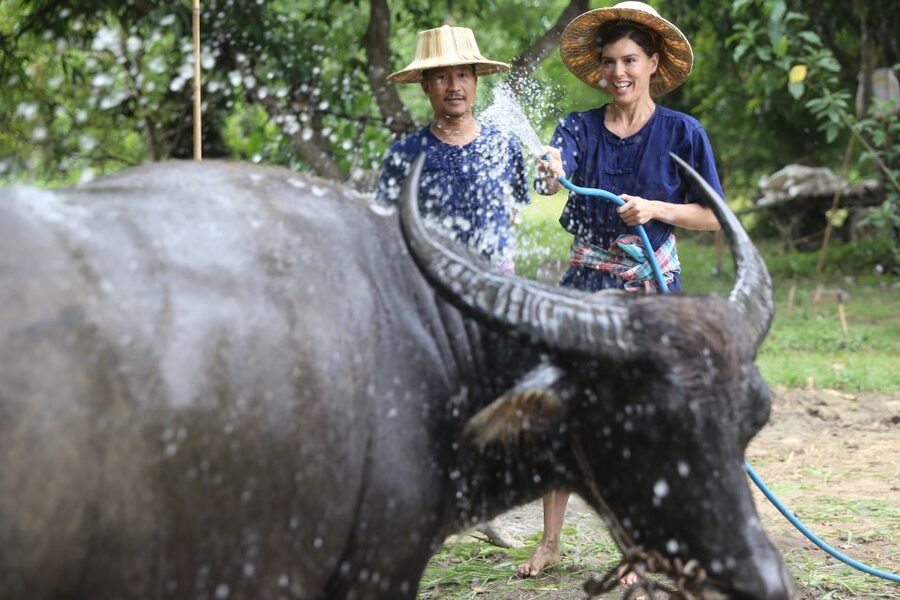
- Feed and bathe Thai buffalo: The buffalo eat grass and fruit, and you may be able to pour water over them as they relax.
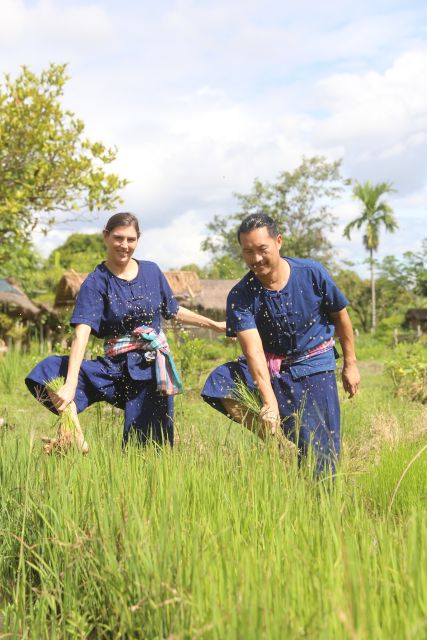
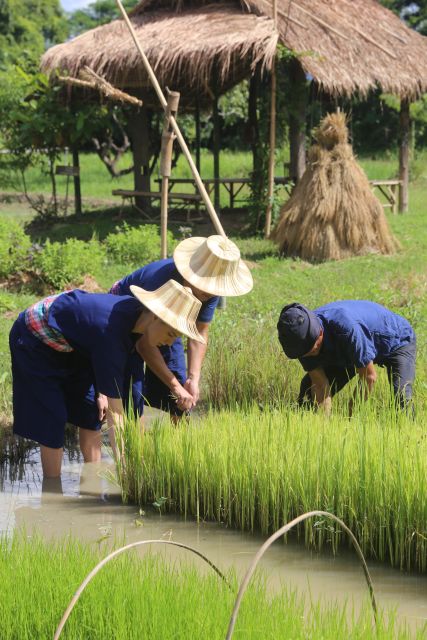
- Plant rice in the traditional way: You learn how to remove seedlings from a nursery and place them in muddy soil.
- Change into farm clothes: Traditional farmer costumes and boots are supplied, which helps keep your own clothes clean.
- Eat a full local lunch: Green chicken curry, rice, a herbal drink, and mango sticky rice are included.
- Allow time to wash off: Rice planting involves bare feet and mud on your lower legs, so sandals are useful afterward.
Why this farm visit feels more hands-on than a normal excursion
Many rural visits near Chiang Mai let you look at fields, take photos, and listen to a short talk. Hang Tueng asks you to do the work in a small, manageable way. You cut grass, carry it to the buffalo, handle rice seedlings, and plant them in the paddy.
That difference matters. You get a clearer idea of how much effort sits behind two ordinary parts of a Thai meal: the rice and the farm animals that have long helped rural families work the fields. The activity is not a full day of labor. It gives you a short taste of the tasks, then lets you clean up and eat.
I especially like the balance between explanation and action. The guide covers the animals, the buffalo’s care, the rice-growing cycle, and the traditional tools before you try the work yourself. The instruction is available in English and Thai, and the current rating of 4.7 from 24 ratings suggests that the format is working well for most people.
The farm also functions as an education center. That gives the visit a purpose beyond entertaining visitors. You are shown how the work is done, but the setting remains connected to actual farming rather than being only a staged photo stop.
Other Chiang Mai days people book alongside this one:
- Half-Day Thai Cooking Class at Organic Farm in Chiang Mai
★ 5.0 · 19,087 reviews - Chiang Mai: Elephant Sanctuary, Waterfall & Bamboo Rafting
★ 4.9 · 9,160 reviews - Chiang Mai: Doi Inthanon National Park Eco-Friendly Tour
★ 4.6 · 6,667 reviews
Reaching Hang Tueng farm from Chiang Mai
Your meeting point is Hang Tueng farm stay and workshop Chiang Mai. Search Google Maps for Hang Tueng farm stay & workshop Chiang Mai before setting out, since the name can appear in both English and Thai.
The farm is about 20 minutes by road from Chiang Mai’s historic center. During the activity, a red taxi provides transport to and from the old farm. This is handy once you are at the meeting point, but it is important to read the arrangement correctly: hotel pickup and drop-off are listed as included in the experience, while the practical meeting information directs you to Hang Tueng farm. Confirm the exact pickup details when booking so you know where your morning begins.
The short ride helps keep the outing compact. The advertised duration is 150 minutes, with the farm program itself often described as roughly three hours when breaks and free time are included. Either way, this is a half-day-style activity rather than a full rural tour.
Cutting grass before meeting the buffalo
The first task gives you an immediate connection to the animals. With a sickle, you cut and gather grass to use as buffalo feed. It is a simple job, but it helps you understand that caring for farm animals begins long before the feeding moment.
The buffalo live in a natural farm setting, and the guide explains how to feed and care for them. Grass is their main food in this activity, though fruit may also be offered. You are not simply handed a basket and told to pose beside an animal. You learn where the food comes from and then give it to the buffalo yourself.
The animal encounter is likely to be a highlight for children. The buffalo are large, calm-looking working animals, and their slow movements make the experience approachable. One especially appealing part is giving a buffalo water. The animal may lie down and enjoy the bath, which turns an ordinary care task into a memorable moment.
This is still an animal activity, so you should follow the guide’s instructions closely. The supplied information does not promise a private animal encounter or a particular number of buffalo. Think of it as a supervised farm lesson, not a guaranteed photo session.
Learning how rice seedlings become a meal
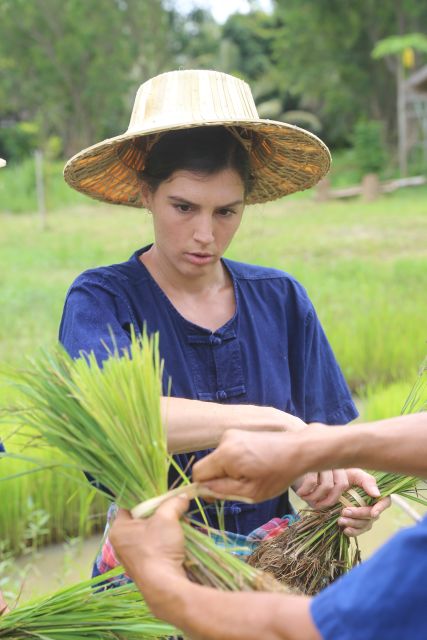
The rice lesson moves from the nursery to the paddy. You learn how to pull up young rice plants, then remove mud from the seedlings in the traditional way before planting them.
The process is more physical than it looks. You step into the rice field, work with your hands, and place seedlings into wet soil. The mud usually reaches the lower legs, and the field section is done barefoot. That direct contact is exactly what makes the lesson memorable, though it also means you should prepare to get dirty.
You do not need to be an experienced farmer. The planting portion is limited in time and quantity, making it suitable for many children and adults who want to try the work without spending a whole day bent over in a field. The goal is to understand the method and feel the conditions, not to plant an entire harvest.
The rice cycle explanation adds useful context. You see that rice production involves nursery work, pulling seedlings, cleaning them, and setting them into the paddy at the right stage. A basic demonstration can make the meal at the end feel more connected to the work you have just done.
Same coastline, a completely different day out:
- Chiang Mai: Elephant Sanctuary & Waterfall Group Tour
★ 4.9 · 5,780 reviews - Chiang Mai: Chiang Rai Temples, Karen Tribe and Hot Springs
★ 4.7 · 5,401 reviews - Chiang Mai: Cooking Class, Market & Thai Herbs Garden Tour
★ 4.9 · 4,824 reviews - Chiang Mai: Authentic Cooking Class with Market & Farm Visit
★ 4.9 · 4,546 reviews
Borrowed boots, farmer clothes, and muddy feet
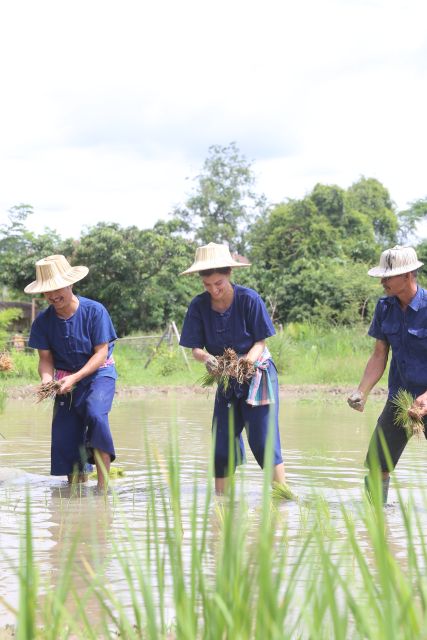
Traditional farmer costumes and boots are included. This is a welcome practical detail because rice planting is not a clean activity. You can change at the farm, so wear clothing that is easy to remove and put back on.
The boots help during the grass-cutting and farm portions, but the rice field itself is done barefoot. A shower or washing area is available afterward for muddy lower legs. Bring sandals or another easy-to-wear pair of shoes for the cleanup and return journey.
I would avoid complicated clothing, tight trousers, or anything that takes a long time to change. You are not dressing for a formal cultural demonstration. You are getting ready to work around animals and mud, then changing back into dry clothes.
The supplied clothing also makes the activity more family-friendly. You do not have to sacrifice a favorite outfit to the paddy, and children can take part without parents worrying quite so much about dirty clothes. Still, mud can travel, so a small bag for damp items is sensible.
Lunch: green curry, herbal drink, and mango sticky rice
The meal gives the outing a pleasant finish. You sit down to rice with green chicken curry, a herbal drink, and mango sticky rice. That is more than a quick snack, and it lets you taste a familiar Thai meal after learning how rice is grown.
The green curry has received especially strong praise, and it is one of the parts I would look forward to most. Mango sticky rice provides a sweet ending, while the herbal drink adds a local touch without making the meal feel formal.
The food arrangement can also suit families. One family reported that fried rice was prepared for children, but this is not listed as a standard inclusion, so do not assume it is guaranteed for every booking. If you have dietary needs, ask in advance rather than relying on substitutions at the farm.
Lunch also helps explain the value of the price. You are paying for instruction, transport during the experience, clothing, boots, hands-on activities, and a proper meal. At $57, it remains more expensive than simply visiting a market or temple, but it offers a longer, more active program with direct teaching.
Group size, pace, and the guide
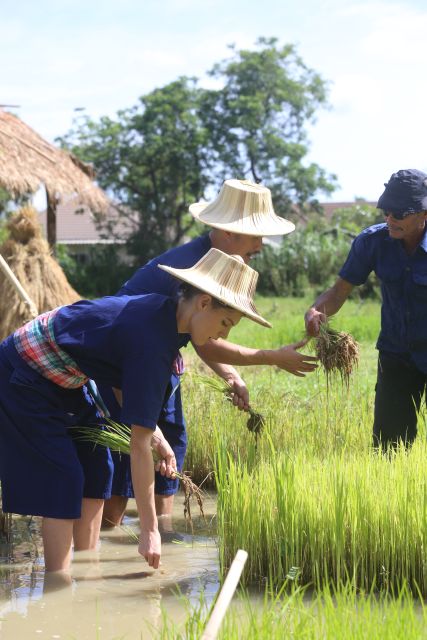
The group is limited to 10 people, and that size should make it easier to hear instructions and ask questions. A private booking is not promised, but small groups can sometimes feel personal. One booking had only one party present, which allowed the guide to spend plenty of time explaining details.
The instructors speak English and Thai. The teaching covers the farm animals, buffalo care, the Thai rice-planting cycle, and traditional tools. The exact guide’s name is not provided, so you should not expect to book a specific named guide.
The pace is another strength. The program includes time to visit, walk, learn, work, eat, and clean up, but it is not designed as an endurance challenge. Parents can bring children who are curious about animals and mud, while adults who want a serious agricultural course should keep expectations modest. You receive an introduction to farming, not professional training.
The experience is also weather-sensitive in a practical way. Rice planting is outdoors, and you will be in a field, so check the forecast and bring any personal sun or rain protection you normally use. The supplied details do not promise shade, special weather arrangements, or a change of activity in poor conditions.
Is $57 a fair price?
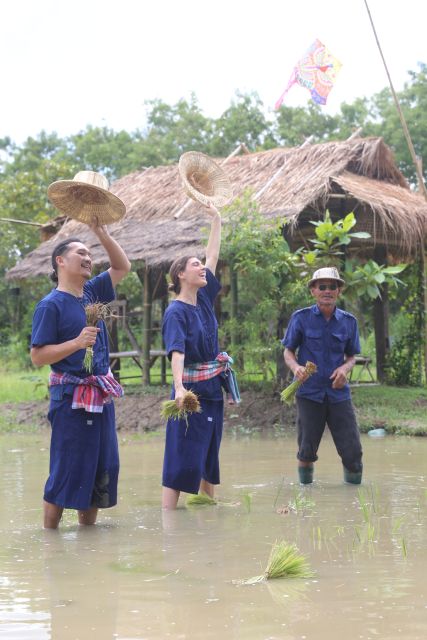
For a simple buffalo feeding session, $57 would be hard to justify. This program includes much more: red-taxi transport during the visit, a guide, farm clothing, boots, rice planting, buffalo care, and lunch.
The strongest value comes if you take part in every section. Feed the animals, ask questions, try the rice work, use the wash area, and stay for the meal. If you only want photographs with buffalo, you may find the price high.
Hotel transport is the clearest cost issue. One person found the experience too expensive and felt that hotel pickup should be included. Since the meeting point is outside the old center, check whether you need to arrange your own way to Hang Tueng. That extra ride can affect the final cost.
The free cancellation policy allows you to cancel up to 24 hours before the activity for a full refund. You can also reserve now and pay later, which helps if your Chiang Mai schedule is still shifting.
Who will get the most from this experience?
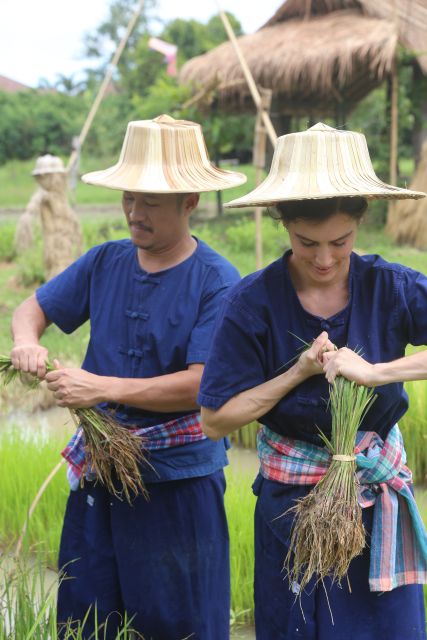
I would choose this for families, couples, and solo visitors who want a practical cultural activity rather than another sightseeing stop. Children can cut grass, feed buffalo, and plant a small amount of rice, while adults get a useful look at rural work and Thai food production.
It is a good fit if you like learning by doing. You should be comfortable with mud, changing clothes, bare feet in a rice field, and a short amount of physical work. If you dislike getting dirty or want a polished indoor cooking class, choose something else.
The visit also works well for people with only a few days in Chiang Mai. In about 150 minutes, you cover animals, farming, food, and transport without giving up an entire day. The farm’s location about 20 minutes from the historic center keeps the outing practical.
I would be more cautious about booking it for anyone who needs guaranteed accessibility details. The available information does not explain field access, surfaces, seating, or adaptations. Ask the provider before paying if those points matter to you.
What to bring and how to prepare
Wear clothing that is easy to change, and bring sandals for after the rice planting. The farm provides costumes and boots, but you will still want comfortable personal clothes for the ride and lunch.
Plan for mud on your lower legs. The farm provides a place to wash, yet a small towel, spare clothes, and a bag for damp items would make the return easier. These are practical suggestions rather than listed inclusions.
Use the Google Maps meeting point and allow enough time to reach Hang Tueng farm. Since the experience is limited to 10 participants and starting times vary, check availability before building the rest of your day around it.
Should you book the Hang Tueng farm experience?
Book it if you want a short, active introduction to Thai farming, especially if you are traveling with children or enjoy animal care and local food. The strongest parts are the clear teaching, the chance to cut buffalo feed yourself, the gentle rice-planting lesson, and the excellent lunch.
Skip it if $57 feels too high for a half-day activity, if you only want to see buffalo, or if getting muddy sounds unpleasant. Also confirm transport to the meeting point, since hotel pickup is the main point that can reduce the value.
For the right visitor, Hang Tueng offers something more memorable than a quick farm photo. You leave with a better sense of the work behind a bowl of rice, a few muddy memories, and a good Thai meal in your stomach.
FAQ
Where does the Thai buffalo and rice planting experience take place?
The experience begins at Hang Tueng farm stay and workshop Chiang Mai in Chiang Mai Province, Thailand. You can search Google Maps for Hang Tueng farm stay & workshop Chiang Mai.
How long does the experience last?
The listed duration is 150 minutes. The farm schedule also allows time for visits, walking, breaks, learning, and lunch.
Is transportation included?
Pickup and drop-off are included as part of the activity, with a red taxi service taking you in and out of the old farm. The meeting information directs you to Hang Tueng farm, so confirm the exact pickup arrangement before you go.
What food is included?
Lunch includes rice with green chicken curry, a herbal drink, and mango sticky rice. Fried rice was prepared for one child in a family group, but that should not be treated as a guaranteed menu item.
Do I need to bring boots or farmer clothing?
No. Traditional farmer costumes and boots are included. You will change into the supplied clothing before taking part in the farm activities.
Can I cancel or pay later?
You can cancel up to 24 hours in advance for a full refund. The activity also offers reserve now and pay later booking, so you do not have to pay on the day you reserve.
Just added around Chiang Mai
- Taste of Chiang Mai: Michelin Guide & Street Food Tour★ 4.9 · 159 reviews
- Red, Blue, White Temples & Hot Spring Trip from Chiang Mai★ 4.4 · 143 reviews
- From Chiang Mai: Mae Taeng Valley and Waterfalls Cycle Tour★ 4.9 · 159 reviews
- Long Neck Village, Silver Temple & Chiang Mai Top Sites★ 4.7 · 17 reviews
- Chiang Mai: Local Northern Thai Cooking Class at Grandma’s★ 5.0 · 33 reviews
- Chiang Mai: Khum Khantoke Northern Thai Cuisine and Show★ 4.3 · 38 reviews
- Private : Sticky Waterfall & Secret Temple & Karen Village.★ 5.0 · 9 reviews
- Half-day with CHIANGMAI ELEPHANT CARE program (12pm-6pm.)★ 5.0 · 27 reviews
Chiang Mai Tours, compared.
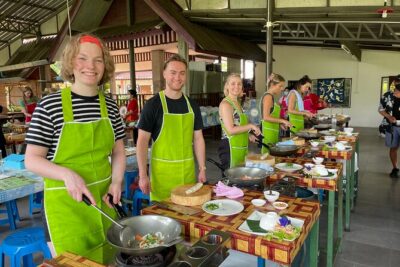
Half-Day Thai Cooking Class at Organic Farm in Chiang Mai
Read our review →
Elephant Sanctuary, Waterfall & Bamboo Rafting
Read our review →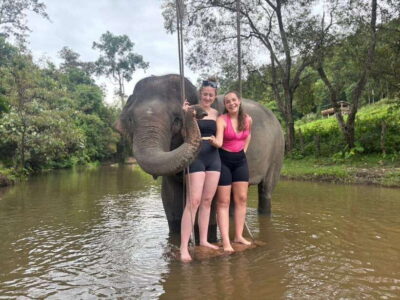

Chiang Rai Temples, Karen Tribe and Hot Springs
Read our review →
Cooking Class, Market & Thai Herbs Garden Tour
Read our review →
Authentic Cooking Class with Market & Farm Visit
Read our review →
Elephant Sanctuary Feeding Program Half-Day Tour
Read our review →
Browse the lists this tour appears in