
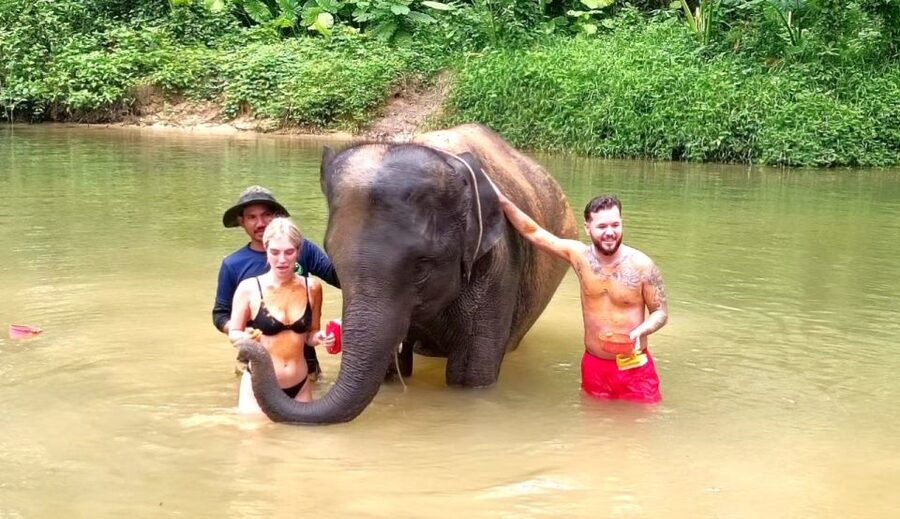
Review · ELEPHANT SANCTUARY TOURS
Ethical Elephant Sanctuary Experience in Khao Lak
The most important feature here is the observation-only elephant policy. You do not ride, wash, lead, or pose with the elephants. Instead, you watch rescued domestic elephants move at their own pace while mahouts explain their past and daily care. Guides such as Didi, Winnie, Lala, and Bond have been praised for making the visit clear, friendly, and relaxed.
I like two things in particular: the calm elephant-led format, and the fact that the three-hour visit includes Thai cultural activities rather than padding the day with more elephant contact. The herbal supplement, Ya Dom inhaler, and Khanom Krok coconut pancakes give you a better feel for local life.
The main consideration is that some online descriptions and past experiences mention feeding, washing, or bathing elephants, while the current program information says no touching and no bathing. Confirm the exact format when you book, and choose this outing only if quiet observation suits you.
In This Review
- Key points at a glance
- A better kind of elephant encounter in Khao Lak
- The 30-minute ride from your Khao Lak hotel
- Start with Thailand’s elephant story
- Prepare an herbal supplement for the elephants
- Meet elephants as individuals
- Follow the 105-minute observation program
- Watch for mud and water from the platform
- Make a Ya Dom herbal inhaler
- Cook Khanom Krok coconut pancakes
- What the $56 price really covers
- Who should choose this sanctuary?
- Should you book the Khao Lak elephant experience?
- FAQ
- How long does the Khao Lak elephant sanctuary experience last?
- Is hotel pickup included?
- Can I ride or bathe the elephants?
- Will I see the elephants bathe?
- What language is the tour conducted in?
- Is food included?
- What should I bring?
Key points at a glance
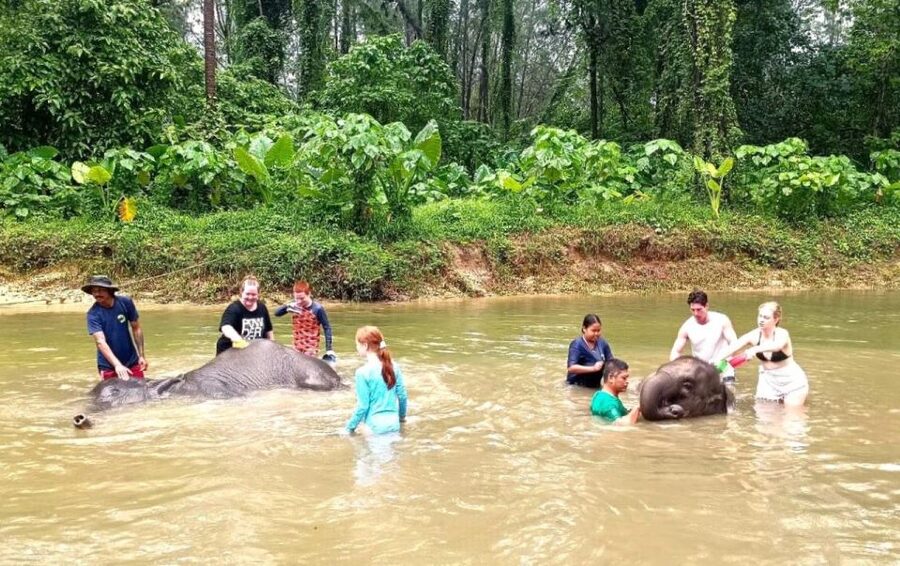
- Elephants set the pace: Follow behind them without riding, leading, or forcing contact.
- Rescued domestic elephants: Learn each elephant’s background and care routine from the mahouts.
- A viewing platform by the creek: Bathing and mud play may happen, but only if the elephants choose it.
- Three activities beyond elephants: Prepare an herbal supplement, make Ya Dom, and cook Khanom Krok.
- Simple half-day timing: Allow about 30 minutes each way for the air-conditioned hotel transfer and 105 minutes at the conservation center.
- Strong value at $56: Transport, admission, guidance, activities, drinks, and accident insurance are included, but not a meal.
A better kind of elephant encounter in Khao Lak
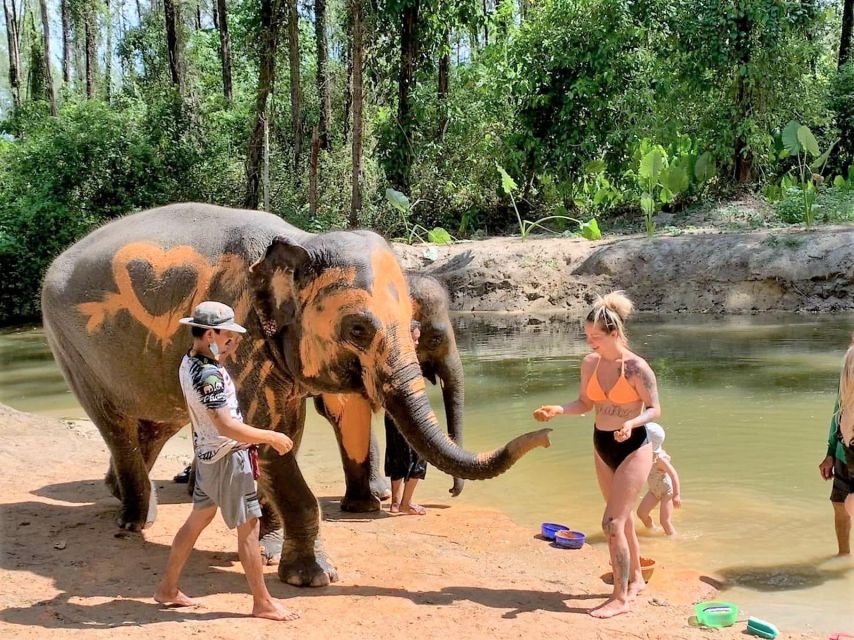
Elephant tourism in Thailand asks you to make a choice. Do you want close contact and dramatic photographs, or do you want to support a program that gives animals more control over what happens around them?
This Khao Lak experience chooses the second path. The elephants are rescued domestic animals, not wild elephants, and the visit is built around watching them behave naturally within a defined area. That distinction matters. An elephant standing still for a photograph may look peaceful, but a program that lets an elephant walk away, ignore an activity, or choose whether to enter water gives you a more responsible way to spend your money.
You are not promised a performance. There is no scheduled bathing session, no riding, and no forced interaction. If an elephant heads toward mud or water, you may see that behavior from a designated platform. If the animal is more interested in walking, feeding, or resting, that is what you watch.
I find this approach more honest than a tightly managed show. It can also feel less dramatic at first. You may not get the guaranteed close-up moment found at a hands-on camp. What you gain is a clearer lesson in elephant welfare and a chance to observe animals making their own choices.
More Elephant Sanctuary Tours in Khao Lak
- Khaolak: Elephant Sanctuary Guided Tour with Hotel Transfers
★ 4.7 · 226 reviews - 2-Hour Guided Eco-Tour & Transfer to Khaolak Elephant Sanctuary
★ 5.0 · 91 reviews - Khaolak: Elephant Sanctuary Guided Tour with Hotel Transfers
★ 4.8 · 56 reviews
The 30-minute ride from your Khao Lak hotel
Pickup is included within the designated Khao Lak area. You should wait in your hotel lobby 10 minutes before the arranged time, and show your mobile confirmation when the guide arrives. The driver waits no longer than five minutes after pickup time, so do not wander off for coffee at the last moment.
The transfer takes about 30 minutes in an air-conditioned vehicle. That short ride is useful because the sanctuary visit is outside the main hotel strip, yet you do not lose half a day to transportation. Several guides, including Didi and Winnie, have made the drive part of the welcome by sharing information about the sanctuary and local sights.
Transport quality has also scored well, with 89 percent of the published ratings giving it a perfect score. That is worth noting if you dislike arranging taxis or negotiating a ride in Khao Lak. You get door-to-door transport rather than having to find the conservation center yourself.
The tour runs in rain or sun. Bring a sun hat, sunscreen, insect repellent, and a change of clothes. A towel is also listed, although the observation-only format means you should not assume you will enter the water.
Start with Thailand’s elephant story
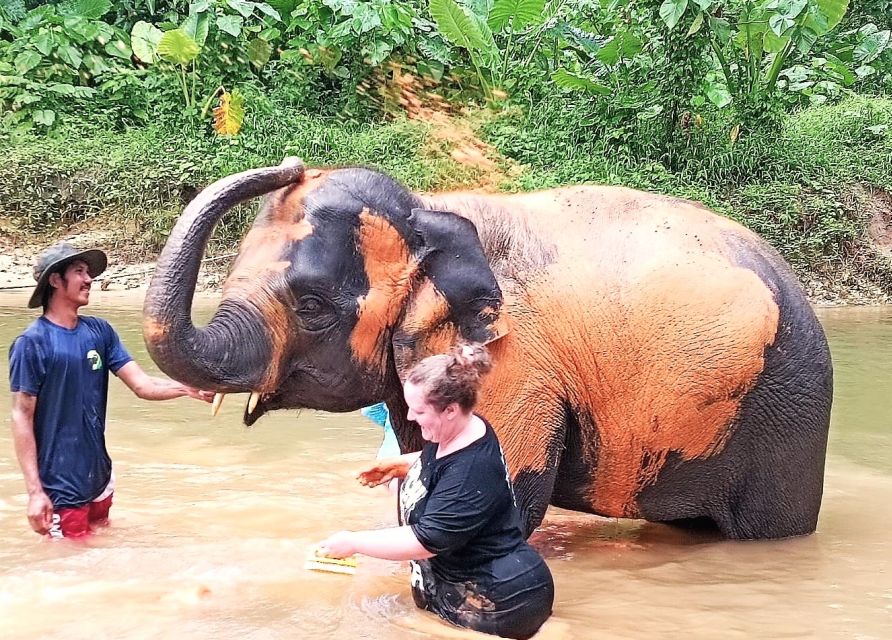
At Khao Lak Elephant Conservation, you begin with a visual and audio introduction. It covers the cultural role of elephants in Thailand, the problems facing domestic elephants today, and the sanctuary’s approach to responsible tourism.
The recorded material is available in 40 languages, while the live tour guide speaks English. This is a useful combination for mixed-language groups or for anyone who wants the basic facts explained before meeting the animals. The introduction also gives the visit a purpose. You are not simply arriving, taking pictures, and leaving. You learn why rescued domestic elephants need long-term care and why modern elephant tourism is changing.
I would pay attention here, even if you are eager to get outside. Once you meet the elephants, the information about their age, personality, background, and relationship with their mahout gives the encounter more meaning.
The center also provides coffee, tea, water, cola, and welcome refreshments. These are modest touches, but they help the pace feel unhurried.
Prepare an herbal supplement for the elephants
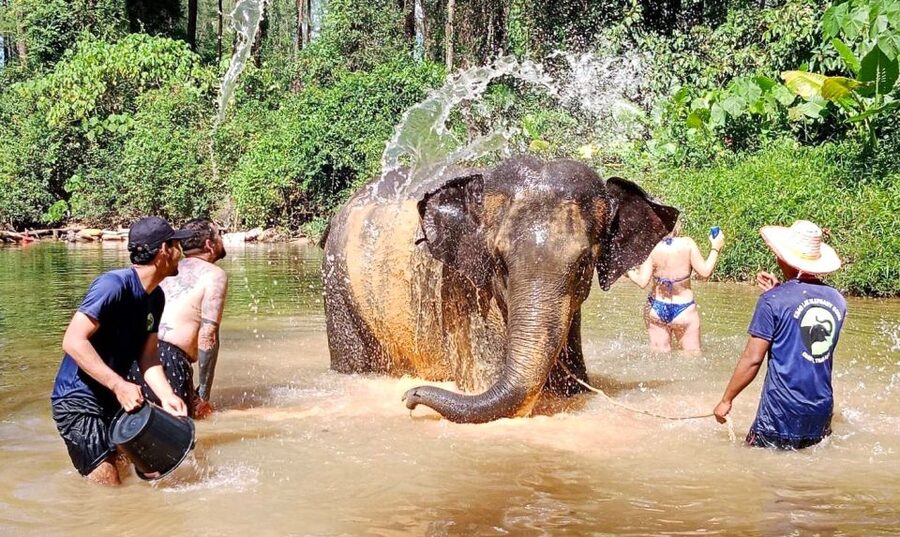
Before the observation walk, you take part in preparing a traditional herbal health supplement for the elephants. The sanctuary later offers it through the caretakers, following its feeding practices.
This is one of the smarter parts of the program. It gives you a hands-on activity without making the elephant perform for you. You contribute to the care routine, then watch the mahouts decide how and when the supplement is offered.
The precise ingredients are not specified, so do not expect a detailed cooking lesson about every herb. Think of it as a simple cultural and care activity. You get to do something practical, and the elephants do not have to tolerate handling in exchange.
Some past descriptions of the experience refer to making protein balls and feeding elephants. Since the current information stresses observation only, I would treat direct feeding as something to confirm before booking rather than something guaranteed.
Same coastline, a completely different day out:
- Thai Cooking Class in Khao Lak by Amazon Prime Series Chef
★ 5.0 · 661 reviews - Khaolak: Bamboo Rafting, Waterfalls, and Turtle Conservation
★ 4.7 · 622 reviews - Khao Lak: Elephant Bathing and Turtle Center Visit
★ 4.9 · 490 reviews - Khao Lak: Little Amazon Canoe Ride & Tam Nang Waterfall Tour
★ 4.5 · 442 reviews
Meet elephants as individuals
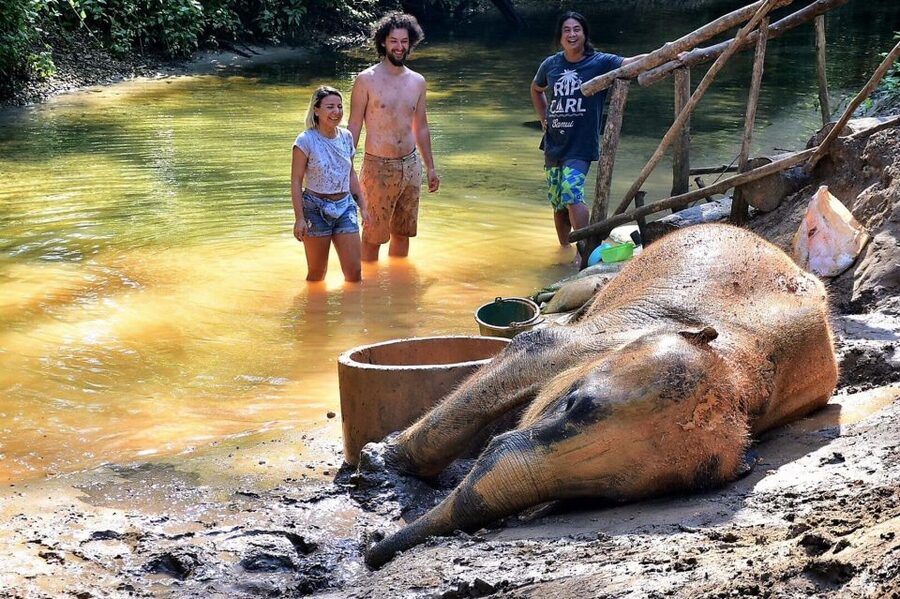
The heart of the visit is the introduction to the elephants. The mahouts explain where the animals came from, how they are looked after, and what life at the center involves.
The word individuals is important. You learn about their ages, characters, and habits rather than being shown a line of interchangeable animals. One might be curious, another quiet, and another interested in mud or water. Their behavior becomes the focus of the visit.
Experienced mahouts supervise the encounter. Their role is not simply to make the elephants obey. They help keep a safe distance, interpret behavior, and explain the relationship between each elephant and its caretaker.
You should listen to instructions and avoid reaching out, calling an elephant over, or trying to improve a photograph by moving closer. The best pictures may come from patience. Guides have sometimes helped take photos and videos for visitors, but that should never involve pushing the animals into position.
Follow the 105-minute observation program
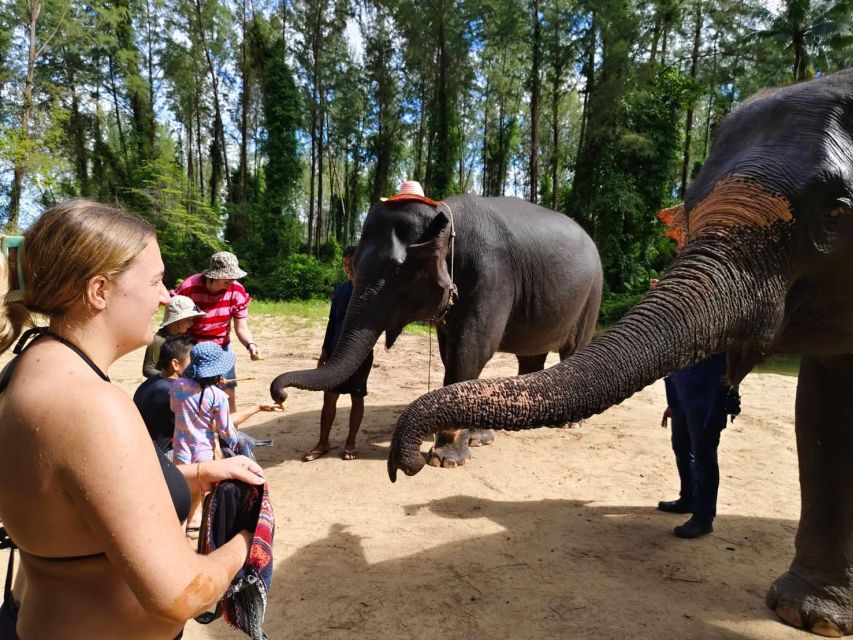
The main walk takes place inside a defined sanctuary area. You follow behind the elephants while they walk, feed, rest, or explore under mahout supervision.
This is not a long jungle trek. The overall sanctuary visit lasts about 105 minutes, including the introduction, activities, refreshments, and elephant observation. That makes the program manageable for families and for anyone fitting it between a beach morning and an evening meal.
I like the length. Three hours door to door is enough to feel worthwhile without turning a single animal encounter into an all-day commitment. A family with children aged six and 11 has found the timing especially workable, though the program is not suitable for people with mobility impairments or pregnant women.
Expect the pace to change according to the elephants. You may spend several minutes watching one animal move slowly, pause, or ignore the group. That is not wasted time. It is the point of an elephant-led program.
Watch for mud and water from the platform
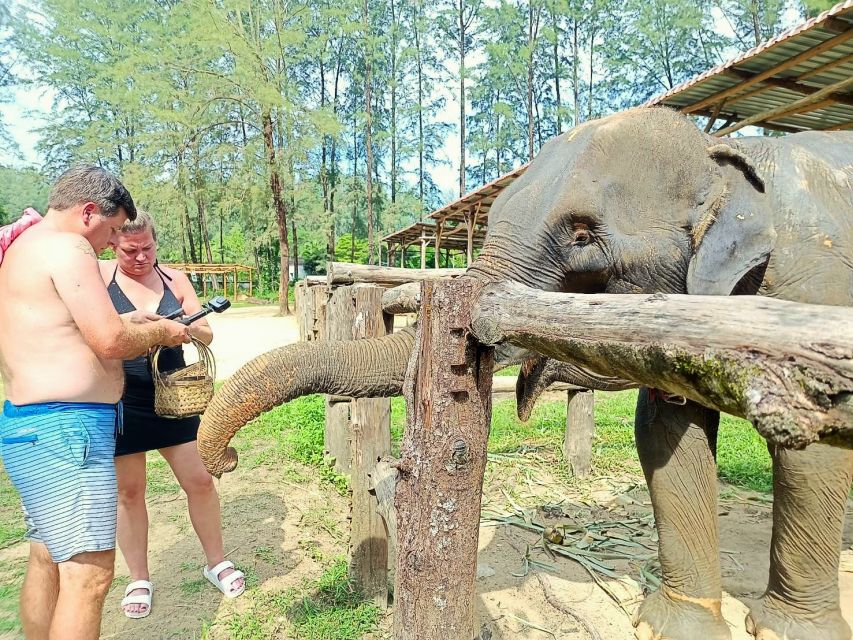
The walk pauses at a viewing platform near a natural creek. If the elephants choose to bathe or play in mud, you can watch from there.
There is no bathing timetable. An elephant may enter the water, roll in mud, splash, or do nothing at all. The uncertainty can be frustrating if you have booked mainly for a bathing photograph, but it is also the clearest sign that the animals are not being directed for entertainment.
Here you need to understand the difference between observing a bath and bathing an elephant yourself. The current description includes the first and rules out the second. Several older activity descriptions refer to visitors washing or bathing elephants, and some experiences have included water contact. Because the supplied details conflict, contact the operator before payment if this point affects your decision.
For an ethical visit, I would choose the version where you stay on the platform. A quiet elephant rolling in mud because it wants to is more satisfying than a scheduled bath arranged for a camera.
Make a Ya Dom herbal inhaler
After the elephant portion, the cultural side of the visit continues with a Ya Dom workshop. Ya Dom is a traditional Thai herbal inhaler used in everyday life.
You make one to take home, giving you a small souvenir with more local meaning than a generic elephant magnet. The activity also changes the mood. After standing quietly and watching large animals, you get to sit down and work with a familiar Thai wellness item.
The workshop is simple and approachable. You do not need special skills, and the guide can explain how the inhaler is used. It is a good part of the program for anyone who wants the outing to include Thai culture rather than focus only on wildlife tourism.
Cook Khanom Krok coconut pancakes
The final activity is making Khanom Krok, a popular Thai street snack often described as coconut pancakes. You prepare them in a friendly, relaxed setting and eat them with a drink.
This is not advertised as a full meal. A meal is excluded, so plan lunch or dinner separately. The snack is welcome, but it should not replace proper food if you are hungry.
I like the choice of Khanom Krok because it connects the visit to ordinary Thai food culture. You are not just watching a demonstration. You get to take part in making something associated with street stalls and home cooking.
The pace is deliberately easy. Some past visits have also included fruit or watermelon, but the dependable inclusions are the snack activity, water, cola, and welcome refreshments.
What the $56 price really covers
At $56 per person, this is not the cheapest elephant activity in Khao Lak. It is also not a bare admission ticket.
Your price includes hotel pickup and drop-off in the designated area, a 30-minute air-conditioned transfer each way, entrance, the observation program, mahout guidance, the recorded introduction, the elephant herbal supplement activity, Ya Dom making, Khanom Krok preparation, drinks, English-speaking staff assistance, and accident insurance.
That package makes the cost reasonable if you value convenience and responsible standards. You do not need to arrange a taxi, pay a separate entrance fee, or book several small cultural activities. The transport alone saves planning time.
The value is weaker if your main goal is hands-on contact. The current program does not include riding, elephant bathing, or forced interaction, and a meal is not included. Some past descriptions mention optional extra fruit feeding for a few hundred baht, but treat that as a possible extra, not part of the $56 package.
The cancellation terms also help with planning. You can cancel up to 24 hours ahead for a full refund, and reserve now while paying later. Starting times depend on availability.
Who should choose this sanctuary?
I would recommend this tour to you if you want to see rescued domestic elephants while keeping physical distance, and if you care about how your money supports animal care. It also suits families looking for a shorter outing, couples who prefer a calm activity, and visitors who want Thai culture built into the same morning or afternoon.
It is a good choice if you dislike noisy shows, riding, or staged animal behavior. The guide’s role is central, so an English-speaking guide such as Didi, Winnie, Lala, or Bond can make the welfare message and elephant stories easier to follow.
I would hesitate if you need guaranteed bathing, swimming, touching, or feeding. The information supplied for the current format does not promise those things. I would also avoid it if walking on sanctuary ground is difficult, since the activity is not suitable for people with mobility impairments.
Bring a hat, sunscreen, insect repellent, a towel, and spare clothes. Carry a passport or identity card, though a copy is accepted. Wear something comfortable that can handle heat and possible splashes near the creek.
Should you book the Khao Lak elephant experience?
I would book this for the quiet observation and welfare focus, not for a guaranteed close-contact photo. The best part is the restraint: elephants remain in charge, mahouts explain their lives, and your day includes useful Thai activities instead of a staged show.
Before booking, ask one clear question: Does this departure follow the current no-touching, no-bathing policy? That removes the confusion created by older descriptions of washing and feeding.
If the answer matches the stated program, $56 is fair for the transport, guidance, entrance, refreshments, and three-part cultural workshop. Choose it when you want to leave Khao Lak having learned something, not simply having collected a photograph.
FAQ
How long does the Khao Lak elephant sanctuary experience last?
The full activity lasts three hours. The van ride takes about 30 minutes each way, and the sanctuary program takes about 105 minutes.
Is hotel pickup included?
Yes. Pickup and drop-off are included for hotels within the designated Khao Lak area. Wait in the hotel lobby 10 minutes before the scheduled pickup time.
Can I ride or bathe the elephants?
No. The current program is observation-only and does not include riding, bathing, touching, leading, or forced interaction.
Will I see the elephants bathe?
You may see elephants bathe or play in mud from a designated viewing platform, but there is no bathing schedule. The behavior depends entirely on what the elephants choose to do.
What language is the tour conducted in?
The live tour guide speaks English. The visual and audio introduction about Thailand’s domestic elephants is prerecorded and available in 40 languages.
Is food included?
A full meal is not included. You do make Khanom Krok coconut pancakes and receive beverages such as water and cola, along with welcome refreshments.
What should I bring?
Bring a sun hat, change of clothes, towel, sunscreen, and insect repellent. You must also bring a passport or identity card, although a copy is accepted.
Just added around Khao Lak
- Khao Lak’s Best: Elephant Sanctuary,Rubber Tapping&Waterfall★ 4.7 · 10 reviews
- Khao Lak Pui’s Authentic Thai Cooking Class★ 5.0 · 17 reviews
- Khaolak Half Day: Phang Nga Bay, Tapu Island & Panyi Village★ 4.9 · 19 reviews
- Khao Lak: Waterfall,Sea Turtle,Elephant Care,Meal & Transfer★ 4.6 · 52 reviews
- Khao Lak: ATV Park Quad-Bike Tour★ 4.2 · 56 reviews
- Khao Lak Guided Nature Walk & Elephant Experience★ 4.7 · 19 reviews
- Khao Lak: 1.5-Hour Small Group Surfing Experience★ 4.8 · 11 reviews
- Khaolak: Sunset Elephant Walk with Complimentary Cocktail★ 4.8 · 16 reviews
Elephant Sanctuary Tours, compared.
Elephant Sanctuary, Waterfall & Bamboo Rafting
Read our review →
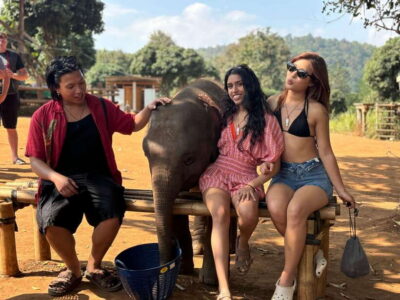
Elephant Sanctuary Feeding Program Half-Day Tour
Read our review →
Elephant Jungle Sanctuary Ethical Feeding Experience
Read our review →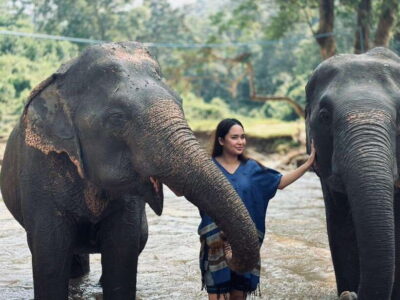
Elephant Sanctuary, Long Neck & Sticky Waterfall
Read our review →
Elephant Sanctuary Guided Tour with Hotel Transfers
Read our review →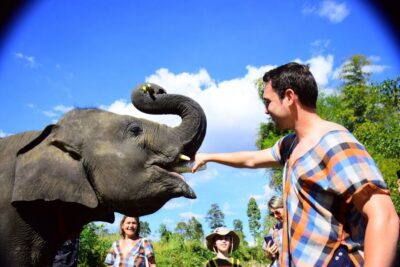

A Morning with the Elephants at Phuket Elephant Sanctuary
Read our review →Browse the lists this tour appears in