
Review · WORKSHOPS
Koh Tao: Yoga Class In Paradise – All Levels Welcome!
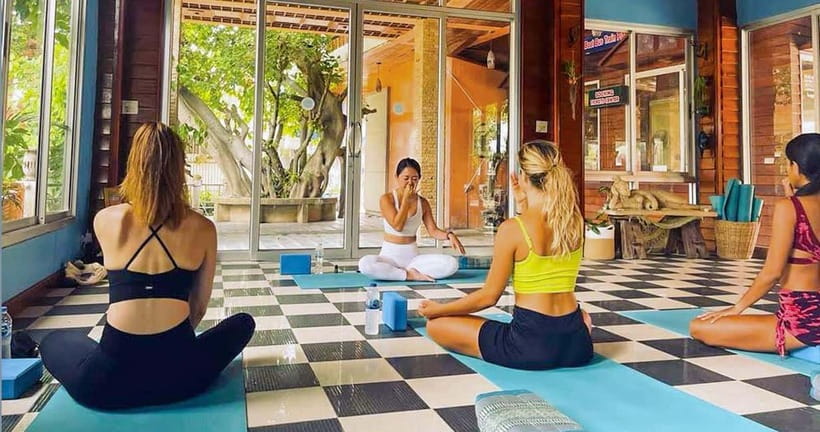
Koh Tao’s $11 yoga class keeps things simple: walk into a studio near the 7/11 and currency exchange, take a mat, and spend an hour moving, stretching, or holding still. You can choose from Vinyasa Flow, Hatha Flow, and Yin Yoga, so the class can match your mood rather than force you into one pace.
I like the all-equipment-included setup, especially for visitors who do not want to pack a yoga mat. I also like the range of styles, from energetic breath-linked movement to long, quiet Yin holds. The main caution is heat: one recent class felt difficult in a warm room cooled by fans rather than air conditioning, so complete beginners should ask about the day’s pace and bring a towel.
In This Review
- Key points
- A one-hour reset near Koh Tao’s blue roof
- Choosing between Vinyasa, Hatha, and Yin
- Vinyasa Flow for movement and heat
- Hatha Flow for a measured pace
- Yin Yoga for stillness and recovery
- What the studio setup means for your packing list
- How beginner-friendly is the class?
- The setting is central, not remote
- Is $11 good value for Koh Tao?
- What an hour in class may feel like
- Who should book this class?
- Useful details before you go
- Should you book Koh Tao Yoga Class in Paradise?
- FAQ
- How long is the Koh Tao yoga class?
- What yoga styles are available?
- Is the class suitable for beginners?
- What equipment is provided?
- Where do I meet the instructor?
- Is hotel pickup included?
Key points
- Three distinct yoga styles: Choose Vinyasa Flow, Hatha Flow, or Yin Yoga according to your energy and flexibility.
- A practical central meeting point: Find the studio near the 7/11, currency exchange, and blue roof.
- Beginner-friendly format: Classes welcome first-timers as well as regular practitioners.
- No need to pack bulky gear: Mats, props, water, and the instructor are included.
- One focused hour: The short session fits neatly into a Koh Tao beach, snorkelling, or sightseeing day.
- Franny brings a warm teaching style: Her approach is described as patient and kind, a useful sign for people new to yoga.
A one-hour reset near Koh Tao’s blue roof
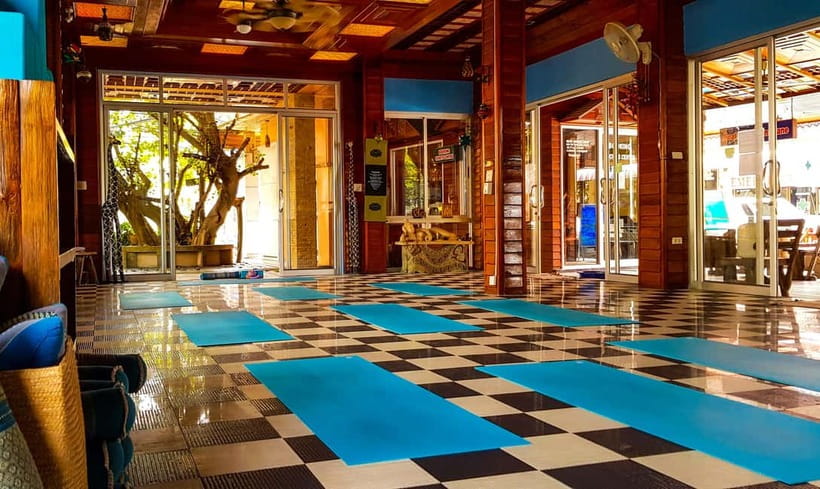
This class is not a grand wellness retreat with a long transfer or a full day of spa treatments. It is more useful than that for many island visitors: a compact hour of guided movement in a central studio.
The location is easy to identify. You will meet at the yoga studio near a 7/11 and the currency exchange, beneath the blue roof. That gives you a clear landmark in an unfamiliar part of Koh Tao, though there is no pickup service. You need to make your own way there.
The one-hour format works well in a holiday schedule. You can attend before a day out, use it to loosen up after time on the beach, or choose a slower class when you want a break from the island’s usual activity. Since starting times vary, check the available session when you book.
Arrive five to ten minutes early. That small buffer lets you find the studio, settle on your mat, and tell the instructor if you are new to yoga or have concerns about the pace. It also keeps you from rushing into a quiet class after it has begun.
A few more Ko Tao trips to weigh up
- Half-Day Thai Cooking Class at Organic Farm in Chiang Mai
★ 5.0 · 19,087 reviews - Chiang Mai: Cooking Class, Market & Thai Herbs Garden Tour
★ 4.9 · 4,824 reviews - Chiang Mai: Authentic Cooking Class with Market & Farm Visit
★ 4.9 · 4,546 reviews
Choosing between Vinyasa, Hatha, and Yin
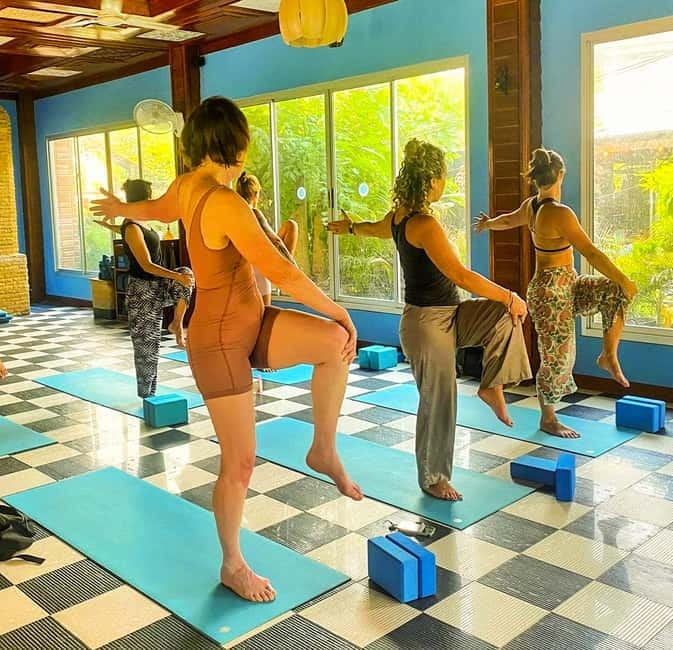
The real strength of this experience is the choice of three styles. They are not simply different names for the same class. Each one asks something different of your body and attention.
Vinyasa Flow for movement and heat
Vinyasa is the most active option. You connect movement to breath and move through a creative sequence designed to build heat, strength, and flexibility.
I would choose this class if you like a fluid workout and want to leave feeling physically awake. The pace can be more demanding than a gentle stretch session, particularly in Koh Tao’s warm climate. If you are brand new to yoga, tell the instructor at the start and work at your own level.
The benefit of Vinyasa is that the practice gives your mind a clear job. You follow the breath, move from one posture to the next, and spend less time thinking about the rest of your day. The possible drawback is that a one-hour flow may feel quick if you are still learning basic positions.
Hatha Flow for a measured pace
Hatha Flow combines gentle movement, intentional breathing, and mindful posture holds. It also includes flowing transitions, but the emphasis is on alignment and body awareness rather than constant motion.
This is probably the safest first choice for many beginners, especially if you want instruction without a hard workout. It gives you more time to notice how your body feels in each posture. Regular practitioners may also prefer it on a tired day or after a full schedule outdoors.
Hatha Flow is not simply a class for people who cannot manage Vinyasa. Its slower rhythm can make small details easier to notice. You have more room to adjust your position, follow your breath, and understand what the instructor is asking.
Same coastline, a completely different day out:
- Koh Tao: Islands Snorkeling Highlights Day Tour & Lunch
★ 4.7 · 3,742 reviews - Koh Tao: Koh Nangyuan & Hidden Bays Snorkeling Tour w/ Lunch
★ 4.6 · 912 reviews - Ko Tao: Tao-Nangyuan Snorkeling Day Trip with Meals & Sunset
★ 4.6 · 711 reviews - Koh Tao: Snorkeling Trip to Nang Yuan Island & Hidden Bays
★ 4.8 · 646 reviews
Yin Yoga for stillness and recovery
Yin is the quietest and slowest option. You hold postures for roughly two to five minutes, with attention on connective tissue, joints, and fascia.
This style can be a good match if you want stress relief or gentle recovery. The long holds may look easy from the outside, but patience is part of the work. You are asked to remain present rather than chase a larger range of motion.
I would not choose Yin if you want a brisk exercise class. It can feel still and demanding in a different way, particularly when a posture is held for several minutes. For many people, that is precisely the point. You get time to release tension and let the body settle.
What the studio setup means for your packing list
The studio supplies a yoga mat, props, water, and all equipment needed for the session. That matters on a short island holiday, where luggage space is limited and bringing your own mat may not be practical.
You should still bring a towel for personal use. Wear comfortable clothing that allows you to stretch and move without restriction. The supplied water is useful, but the warm room noted in one account makes hydration and a towel especially sensible.
The room uses fans rather than air conditioning. That detail deserves attention. A warm studio may suit a gentle Yin session, but it can make Vinyasa feel much harder. Heat can also affect beginners who are not used to exercising in Thailand’s climate.
I would choose light, breathable clothes and arrive hydrated. You can also ask which style is scheduled before class if you are trying to avoid a more strenuous session.
How beginner-friendly is the class?
The studio welcomes all levels, including first-timers. That is important, but all-levels language does not mean every class will feel equally easy.
Vinyasa naturally asks for more continuous movement. Yin asks for patience with long holds. Hatha Flow often offers the most balanced entry point, though the instructor and the class pace still matter.
The best way to make the session work for you is to be direct. Tell the instructor that you are new, ask for modifications when needed, and do not treat the person beside you as a target to match. Yoga is not improved by forcing a posture.
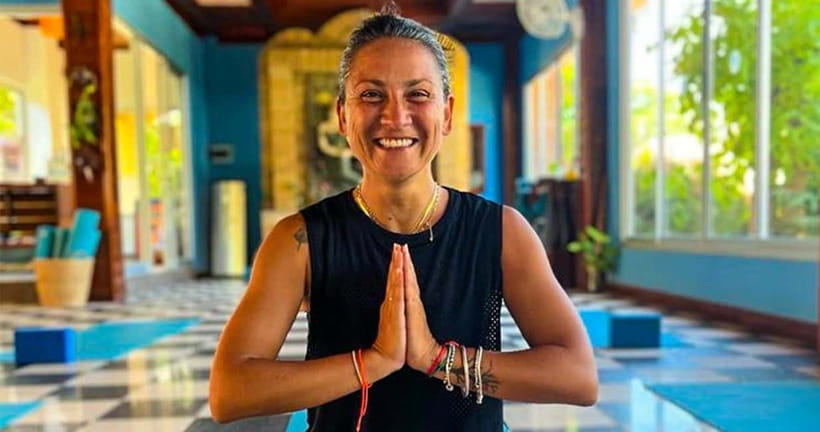
Franny receives particularly warm praise for being pedagogical and kind. If she leads your class, that combination should be reassuring for a first session. The wider team is described as friendly and inclusive, which fits the studio’s all-level approach.
You should also keep expectations realistic. A class described as suitable for all levels can still feel tricky if you have no yoga experience, if the room is hot, or if you choose Vinyasa without knowing its pace. Hatha Flow is the sensible starting point when in doubt.
The setting is central, not remote
This is a studio experience in a central Koh Tao location, not an outdoor class on the sand or a secluded hillside session. The appeal is convenience and a clear meeting point rather than a scenic view during practice.
The blue roof, 7/11, and currency exchange make the studio easier to locate. You will not receive hotel pickup, so allow enough time to reach the meeting point under your own arrangements.
That tradeoff is worth understanding before booking. If you want yoga with an ocean panorama, this may not match the picture in your head. If you want a reliable class that fits between other plans, the central location is a practical advantage.
The setting also makes this easy to add to a day on Koh Tao. You can keep the class separate from your main sightseeing plans and avoid giving up a full morning or afternoon.
Is $11 good value for Koh Tao?
At $11 per person, this is a reasonably priced way to try a structured yoga class on the island. The fee covers the instructor, mat, props, water, and a full one-hour session.
The included equipment improves the value. You are not paying a low entry price and then renting a mat or buying water separately. You also have three class styles available across the studio schedule, giving you a better chance of finding one that fits your needs.
The value is strongest for people who would otherwise need to buy or borrow equipment. It is also useful if you want a single class rather than a multi-day package. A regular yoga practitioner might compare it with local drop-in prices, but the clear meeting point and equipment provision still make the cost easy to understand.
You are paying for a studio class, not transport or a longer wellness program. Since pickup is not included and the session lasts one hour, the experience makes the most sense if you are already near the central Koh Tao area or can reach it without trouble.
What an hour in class may feel like
The class begins with you settling onto a supplied mat and getting familiar with the room. Since you are asked to arrive early, you should have time to prepare rather than enter during the opening breathing work.
From there, the session depends on the style. Vinyasa links breath with flowing movement and builds toward a more active practice. Hatha Flow uses slower transitions and posture holds, with more attention to alignment. Yin uses long-held postures and a quieter pace.
The instructor teaches in English. That makes the class accessible to English-speaking visitors, though the physical nature of yoga means you will also learn by watching and following demonstrations.
The final part of the class is not specified in detail, so I would not promise a particular meditation, relaxation sequence, or closing ritual. What you can count on is a one-hour class built around the selected yoga style, with equipment and water provided.
The experience is likely to feel personal in a way that a hotel gym session does not. You have an instructor guiding the class, rather than simply following a video. At the same time, the class format means you should expect to share the room with other people and adjust your own effort to your comfort.
Who should book this class?
I would recommend it to:
- First-time yoga participants who want a guided introduction
- Regular practitioners who want a short island class
- People looking for gentle movement after a busy day
- Visitors who want to try different styles without carrying equipment
- Anyone who prefers an English-language class in a friendly studio
- Couples or friends who want an easy, low-cost activity together
Hatha Flow is likely the most comfortable starting point for a beginner. Yin suits recovery and quiet reflection. Vinyasa fits people who want more energy and physical movement.
I would be more cautious if you dislike warm indoor exercise or expect a fully air-conditioned room. The studio uses fans, and one class felt hot and difficult for a newcomer. That does not make the experience a poor choice, but it does mean you should pick your style carefully and pace yourself.
Useful details before you go
Book with enough flexibility to choose the class style and starting time that suit your day. You can cancel up to 24 hours before the session for a full refund, and the reserve-now, pay-later option lets you hold a place without paying immediately.
Wear comfortable clothing and bring a towel. The studio provides water, but your own bottle may still be useful if you prefer to drink more during or after class.
The meeting point is the yoga studio near the 7/11 and currency exchange, under the blue roof. There is no pickup service, so do not wait for transport to your accommodation.
The class lasts one hour. That is long enough to feel like a real practice, while short enough to fit around the rest of a Koh Tao day. Check the available start times because the exact schedule is not fixed in the information provided.
Should you book Koh Tao Yoga Class in Paradise?
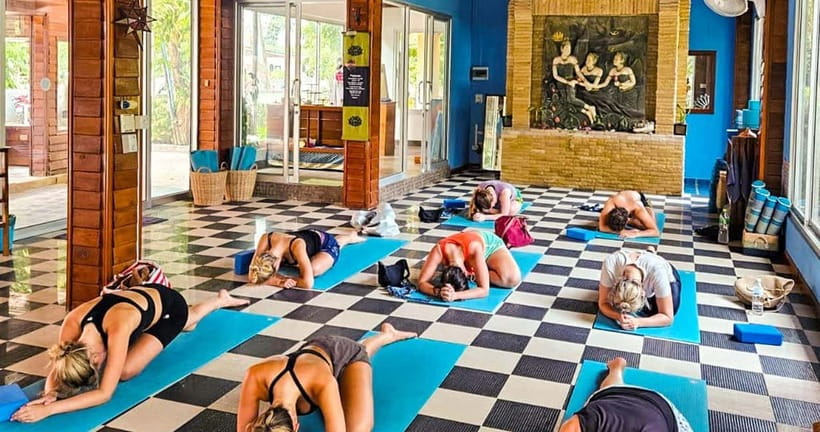
Book it if you want an affordable, equipment-included yoga class with a choice of styles and an easy central meeting point. The friendly teaching approach, especially the praise for Franny’s patient instruction, makes it appealing to newcomers, while Vinyasa and Yin give regular practitioners useful alternatives.
Choose Hatha Flow for the gentlest first step, Yin for recovery or stress relief, and Vinyasa for a more active hour. If you are sensitive to heat, ask about the class style and prepare for a room cooled by fans rather than air conditioning.
At $11, this is a sensible add-on to a Koh Tao stay. It does not offer transport or an outdoor setting, but it delivers a focused hour, useful equipment, English instruction, and the freedom to match the practice to your energy.
FAQ
How long is the Koh Tao yoga class?
The class lasts one hour.
What yoga styles are available?
The studio offers Vinyasa Flow, Hatha Flow, and Yin Yoga.
Is the class suitable for beginners?
Yes. All levels are welcome, including people attending yoga for the first time.
What equipment is provided?
The studio provides yoga mats, props, water, and all equipment needed for the session.
Where do I meet the instructor?
Meet at the yoga studio near the 7/11 and currency exchange, under the blue roof.
Is hotel pickup included?
No. Pickup service is not included, so you need to make your own way to the studio.
Just added around Ko Tao
- Snorkeling Tour with meals and BBQs – Cocktail – Sunset⭐⭐⭐⭐⭐★ 5.0 · 105 reviews
- Koh Tao: Snorkeling and Sunset Tour★ 4.8 · 118 reviews
- Koh Tao: Golden Hour Getaway – Your Late Start to Paradise★ 4.7 · 13 reviews
- Koh Tao: Premium Snorkel Tour to Koh Nangyuan Bays by Oxygen★ 4.8 · 146 reviews
- Koh Tao: First Light Snorkel Adventure with Oxygen Tours★ 4.7 · 38 reviews
- Ko Tao: Morning Trip to Ko Nangyuan’s Serene Oasis by Oxygen★ 4.9 · 18 reviews
- Ko Tao: Late Riser Snorkeling Tour with Lunch and Photos★ 4.6 · 135 reviews
- Koh Tao: Koh Nangyuan and the Hidden Bays Trip by the Oxygen★ 4.7 · 305 reviews
Workshops, compared.
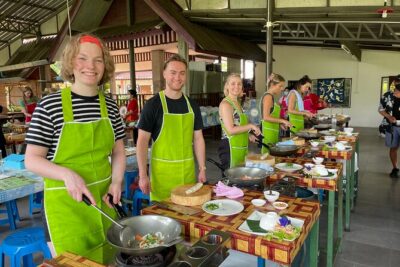
Half-Day Thai Cooking Class at Organic Farm in Chiang Mai
Read our review →
Cooking Class, Market & Thai Herbs Garden Tour
Read our review →
Authentic Cooking Class with Market & Farm Visit
Read our review →
Phuket Thai Cooking Class with Market Tour Option
Read our review →

Tingly Thai Cooking School Half-Day Cooking Class
Read our review →Browse the lists this tour appears in