
Review · THAI COOKING CLASSES
We Cook Thai Home Garden Cooking School
The best part of We Cook Thai Home Garden Cooking School is that it begins before the cooking. Mam takes you through a local market, where you can see, smell, and handle the herbs, vegetables, spices, and sauces that make Thai food taste like Thai food. Then you return to her home garden and cook at your own wok.
I like the small, friendly teaching style and the fact that you do the work yourself, rather than simply watching a demonstration. I also like the generous meal, recipe book, certificate, and useful market lesson included for about $32. The one thing to consider is the amount of food: several courses can leave even hungry diners stuffed, so arrive ready to eat and do not plan a heavy meal afterward.
In This Review
- Key points to know
- A Chiang Mai cooking class that starts at the market
- From market basket to home garden kitchen
- Six categories, one wok per person
- Mam’s teaching style makes the difference
- The meal is the reward, and it is a large one
- Morning or evening: choosing the better session
- How much value do you get for $32?
- Who will enjoy this class most?
- Practical details worth knowing before you book
- Should you book We Cook Thai Home Garden Cooking School?
- FAQ
- How long does the cooking class last?
- Is the class available in the morning and evening?
- How many dishes will I cook?
- Do I get my own cooking station?
- Is vegetarian cooking available?
- Is transportation included?
- Can children join the cooking class?
Key points to know
- Local market first: Mam explains Thai herbs, vegetables, fruits, spices, and flavorings before you cook with them.
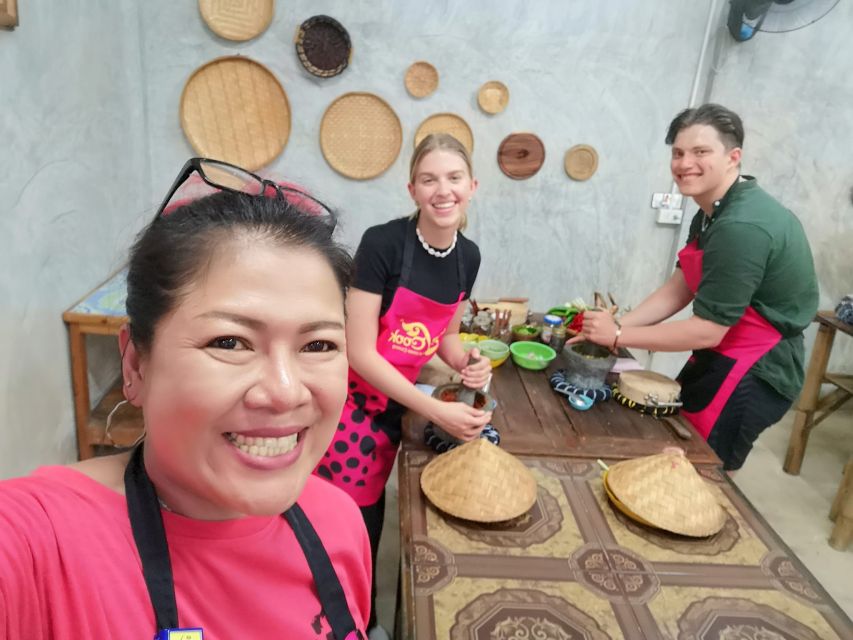
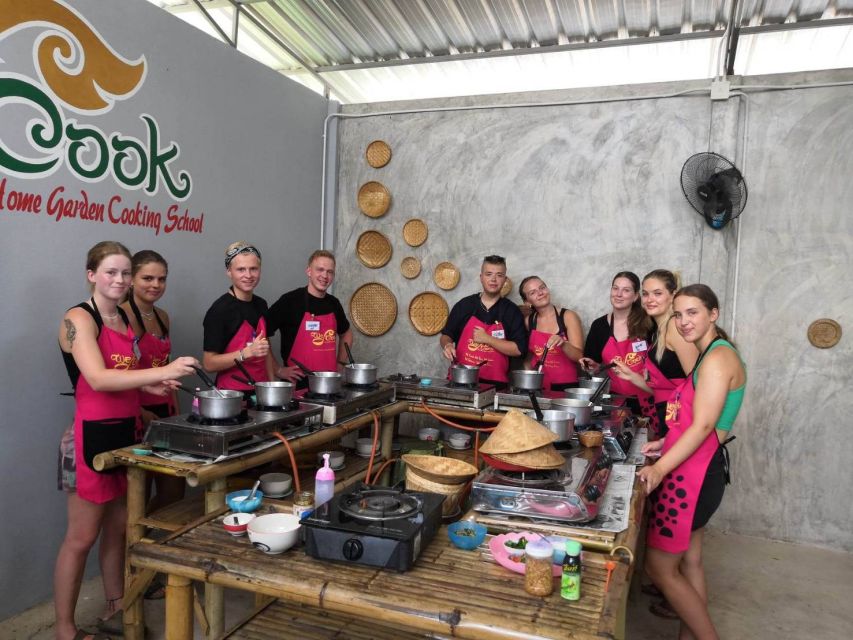
- Your own cooking station: Each participant gets one wok and cooks the dishes personally, with guidance at every step.
- A choice-based menu: Pick dishes from six categories, with the exact number and menu mix varying by session.
- A home garden setting: Cooking takes place at Mam’s clean home kitchen, followed by a sit-down meal outdoors.
- Good for beginners: You do not need cooking experience, and Mam works patiently with different skill levels.
- A very filling half-day: Morning and evening classes last roughly four and a half to five hours, including the market visit.
A Chiang Mai cooking class that starts at the market
Many cooking classes rush straight to the stove. This one takes a better route. You first visit a local market with Mam, the owner and English-speaking instructor, then use what you have seen and discussed in the kitchen.
That market stop gives the class a useful sense of place. Thai ingredients can be confusing when they are reduced to a line in a recipe. A basil leaf, eggplant, curry paste, or unfamiliar herb may look entirely different from the ingredients sold in a Western supermarket. Mam explains what you are looking at and how those ingredients affect taste.
You can expect to learn about fruits, vegetables, rice, herbs, spices, and sauces. The market visit is not just a shopping errand. It helps you connect the finished dish with the raw ingredients, growing conditions, and everyday food culture of Chiang Mai.
I especially like this approach for first-time visitors to Thailand. You get a practical introduction to the building blocks of Thai cooking without needing to know their names beforehand. You may also see ingredients that are not needed for your chosen dishes, which makes the tour feel more like a local food lesson than a tightly scripted shopping list.
The market can be busy, and the experience is about looking and learning rather than taking a long food tour. If you want a market visit with extensive tastings, this may feel brief. If you want to understand what you are about to cook, it is a smart use of the first part of the class.
More Thai Cooking Classes in Chiang Mai
- Half-Day Thai Cooking Class at Organic Farm in Chiang Mai
★ 5.0 · 19,087 reviews - Chiang Mai: Cooking Class, Market & Thai Herbs Garden Tour
★ 4.9 · 4,824 reviews - Chiang Mai: Authentic Cooking Class with Market & Farm Visit
★ 4.9 · 4,546 reviews
From market basket to home garden kitchen
After the market, you go to Mam’s home, where the cooking school is set in a garden. The setting gives the class a personal feel without giving up the useful features of a proper cooking lesson.
The kitchen area is described as clean and well organized, with a separate dining space. That separation matters. You can focus on cooking at the workstations, then sit down properly afterward instead of eating while standing beside the stove.
The garden setting also gives the meal a pleasant finish. One detail that comes up often is the fish pond, which adds a little charm while you eat. It is not a sightseeing attraction, but it helps make the class feel like a visit to a local home rather than a restaurant kitchen.
You should expect a hands-on format. Mam demonstrates each step, then helps you carry it out. She explains what to look for as food cooks, not only how many minutes to leave it in the wok. That is a valuable distinction because Thai cooking often depends on smell, texture, color, and balance.
This makes the class useful after your holiday. A recipe can tell you to cook something for three minutes, but your stove, pan, and ingredients at home may behave differently. Learning the signs of doneness gives you a better chance of repeating the dish successfully.
Six categories, one wok per person
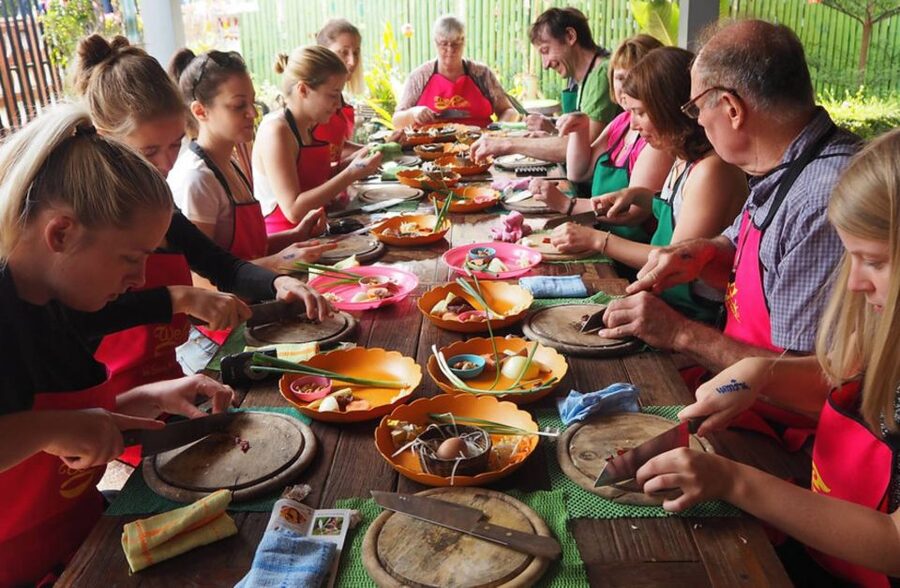
The central feature is the menu. You choose one dish from each category, creating a meal with several different styles of Thai food. The activity information describes six categories and six dishes in total, while some sessions described by participants included five dishes. Menus can change, so check the available choices when you book or ask Mam to confirm the current format.
The categories can include selections such as:
- A starter
- A soup
- A curry
- A main dish
- A stir-fried or noodle dish
- A dessert
The range of dishes mentioned includes pad Thai, khao soi, tom yum, papaya salad, Massaman curry, fried rice, vegetable spring rolls, noodle soup, and mango sticky rice. You are not forced into a single fixed menu, which is a major advantage for repeat visitors and anyone with a favorite Thai dish in mind.
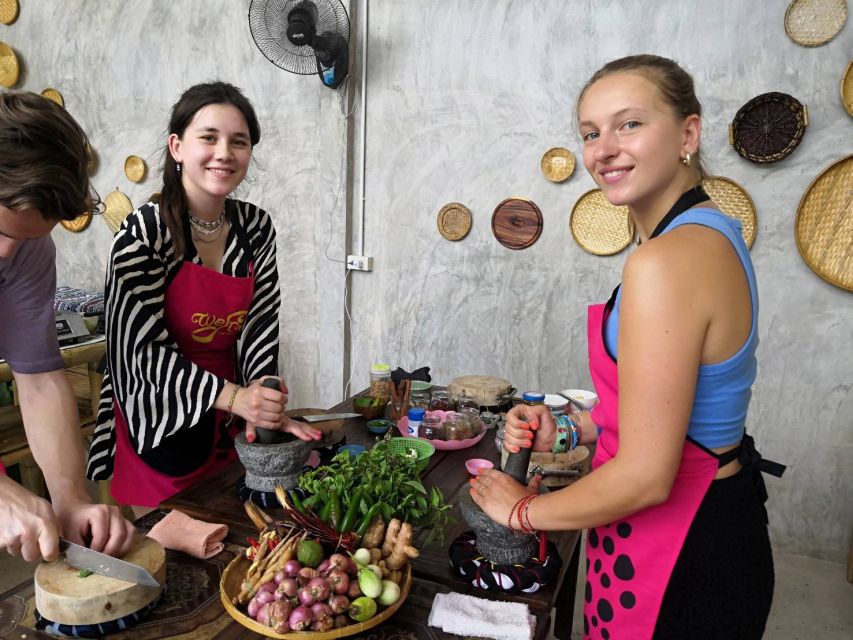
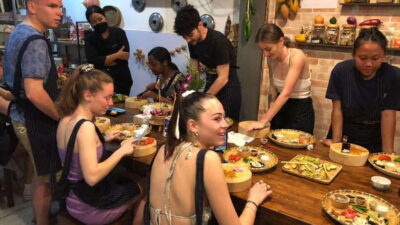
Each participant gets a separate wok and the ingredients needed for cooking. You are not simply helping one instructor prepare a group meal. You make your own choices, follow the method, and eat the results.
That format suits beginners because Mam can guide you through the process one step at a time. It also gives experienced cooks room to ask about substitutions, spice levels, sauces, and technique.
The lesson is not designed as a professional chef course. It is a friendly home-style class, and that is its strength. You learn how Thai dishes are put together in a practical setting, without the pressure of performing for a restaurant kitchen.
Mam’s teaching style makes the difference
The instructor is the heart of this activity. Mam is described as warm, patient, energetic, and funny, with a clear interest in Thai food. She makes a point of involving everyone, including people who have never cooked before.
That matters in a mixed group. One participant may be comfortable chopping and frying, while another may be cooking for the first time. A patient teacher can keep the class moving without making less confident cooks feel awkward.
The class is also suitable for older children and adults who meet the minimum height requirement. One family found that a parent in their seventies who had never cooked still enjoyed the lesson. A family with three teenagers also used the class to make a shared meal.
Mam’s method appears to focus on understanding rather than copying. She can show you how to judge texture and flavor by sight, smell, and feel. That is more useful than memorizing a rigid sequence, especially when you try to make the dishes in another country with different ingredients.
The class is taught in English. If you have food allergies, dietary restrictions, or special food preferences, tell the provider in advance. Vegetarian cooking is available, and the information provided indicates that Mam has accommodated food issues and offered ingredient alternatives.
Same coastline, a completely different day out:
- Chiang Mai: Elephant Sanctuary, Waterfall & Bamboo Rafting
★ 4.9 · 9,160 reviews - Chiang Mai: Doi Inthanon National Park Eco-Friendly Tour
★ 4.6 · 6,667 reviews - Chiang Mai: Elephant Sanctuary & Waterfall Group Tour
★ 4.9 · 5,780 reviews - Chiang Mai: Chiang Rai Temples, Karen Tribe and Hot Springs
★ 4.7 · 5,401 reviews
The meal is the reward, and it is a large one
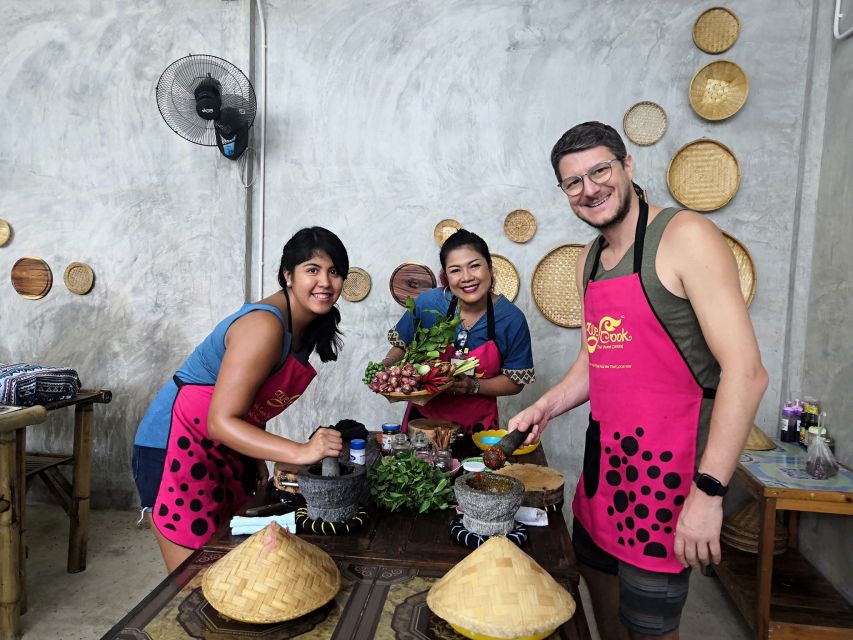
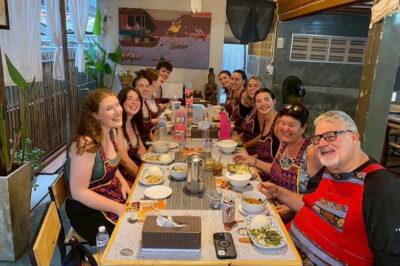
Once the cooking is finished, you sit down to eat what you have made. This is not a small sample plate. You prepare several dishes, and the combined meal can be surprisingly large.
For that reason, I would skip breakfast before the morning class or keep it very light. Several people found the food difficult to finish, especially when the session ended around midday. The same advice applies to the evening class: do not schedule a major dinner immediately afterward.
Leftovers are not treated as a problem. Boxes may be available for food you cannot finish, and mango sticky rice is one dish that people have taken away. Still, plan to eat the food while it is fresh and hot, since that is part of the pleasure of the class.
The meal also lets you compare the flavors of different dishes. Thai food is not one single taste. A sour soup, a fragrant curry, a salty stir-fry, and a sweet dessert show how different elements work together.
If you are sensitive to chili, tell Mam before you begin. The provided information does not promise a fixed spice level, so it is sensible to discuss your preferences early rather than wait until the food is in the wok.
Morning or evening: choosing the better session
You can choose a morning or evening class. The total duration is listed as 270 minutes to five hours, depending on the session and schedule.
A morning class is a good fit if you want the rest of the day free. It may also suit you if you prefer to cook while fresh and hungry. The downside is obvious: a five-course or six-course meal before lunch is a lot of food.
The evening class may be easier for anyone who prefers a slower start. Pickup is specifically included for the evening course, with pickup generally scheduled between 4:00 and 4:30 p.m. Free transportation is available to and from residences within a 3 km radius of central Chiang Mai. Confirm the exact pickup details when booking, especially for a morning session or an accommodation outside that radius.
The timing includes more than cooking. Allow room for transport, the market visit, demonstrations, preparation, cooking, and the final meal. This is not a quick two-hour lesson you can squeeze between temple visits.
I would schedule it on a day with few other commitments. The class is long enough to be a main activity, and its relaxed pace is part of its appeal.
How much value do you get for $32?
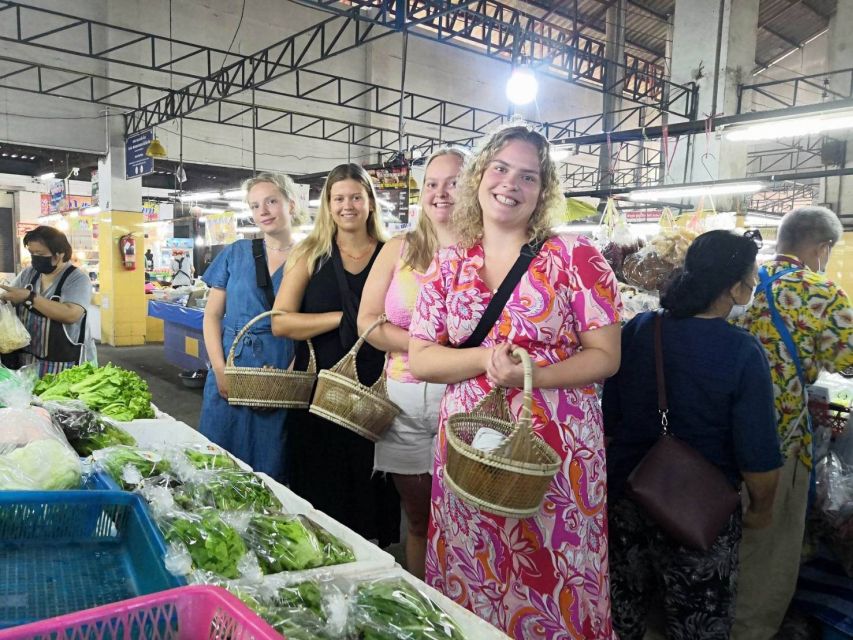
At about $32 per person, this is strong value for a half-day food experience. The price includes an English-speaking guide, the market tour, a welcome snack or seasonal fruit, all cooking ingredients, your own wok, the meal, a cookbook, a completion certificate, and transportation within the stated Chiang Mai pickup area.
The cookbook gives the class value beyond the day itself. You can use it to rebuild the dishes at home, though you may need to find substitutes for Thai ingredients. The certificate is a nice keepsake, but the recipes and practical cooking skills are the more useful takeaways.
The price also compares well with the amount of food included. You are not paying only for instruction. You are buying ingredients, several cooked dishes, market guidance, and time with a local host in a home setting.
The main value depends on what you want from a cooking class. If your goal is a formal culinary qualification or advanced knife and wok training, this is not that. If you want an approachable introduction to Thai food and enough practice to cook familiar dishes later, the package makes sense.
Transportation adds value for people staying near central Chiang Mai. If you are outside the 3 km radius, you may need to arrange your own way to the meeting point, so factor that into the total cost.
Who will enjoy this class most?
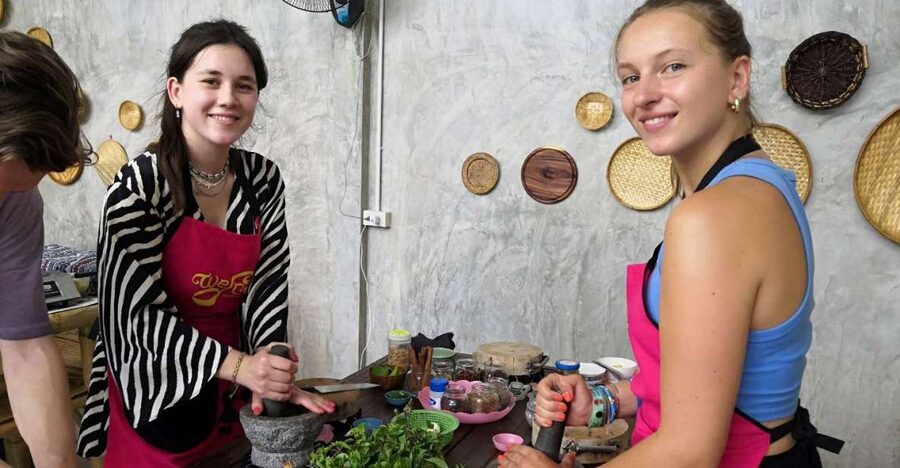
I would recommend it to first-time Thai cooks, food-focused visitors, couples, families with taller children, and anyone who wants a personal activity rather than another standard sightseeing stop.
It is also a good choice for repeat visitors. The market lesson and menu choices can help you explore dishes you did not try on an earlier trip. You can choose familiar favorites such as pad Thai, or use the class to tackle something less familiar such as khao soi or Massaman curry.
The class works well for mixed ability groups. Confident cooks can ask about flavor and technique, while beginners receive direct help. Mam’s patient manner is especially useful when several people in one group have different comfort levels.
Vegetarians should find a workable option, but you should state your needs before the class. People with allergies or strict dietary rules should also ask for confirmation about ingredients and possible substitutions.
This is not suitable as a participating cooking class for anyone under 120 cm tall. The height rule relates to the wok and safety. A child under that height, or a parent who wants to accompany a child, can join as a visitor for THB300 per person and receive two dishes during one cooking course, according to the supplied conditions.
Wheelchair access is listed as available. You should still confirm the exact transport and home-kitchen arrangements for your particular needs before booking.
Practical details worth knowing before you book
The activity has a rating of 4.9 from 378 reviews, with especially strong praise for Mam’s teaching, the market visit, the quantity and quality of food, and the friendly atmosphere. Those are the parts I would give the most weight to when deciding.
Book with enough appetite. A light breakfast or lunch is wise, and you may want to keep your evening open after a morning session.
Wear something comfortable for several hours of cooking. Specific clothing rules are not provided, so use normal practical kitchen judgment and avoid anything you would worry about around food and cooking heat.
Tell Mam your preferred dishes, vegetarian needs, and food issues as early as possible. The menu offers choice, but the exact selection may depend on the current class and available ingredients.
Cancellation is flexible: you can cancel up to 24 hours before the activity for a full refund. You can also reserve and pay later, which helps if your Chiang Mai schedule is still changing.
Should you book We Cook Thai Home Garden Cooking School?
Yes, if you want to understand Thai food by handling the ingredients, cooking the dishes yourself, and eating a full meal in a local home garden. The market visit gives the class cultural context, while the one-wok-per-person format keeps you involved.
I would choose it over a demonstration-only class, especially at the $32 price. Just confirm the current number of dishes, arrive hungry, allow five hours, and check transport if you are staying outside central Chiang Mai.
FAQ
How long does the cooking class last?
The activity lasts between 270 minutes and five hours, depending on the session and schedule. This includes the market visit, cooking lesson, and meal.
Is the class available in the morning and evening?
Yes. You can choose a morning or evening class. Evening pickup is listed between 4:00 and 4:30 p.m.
How many dishes will I cook?
The activity describes six categories with one dish selected from each category, for six dishes total. Some sessions have included five dishes, so confirm the current menu and number when booking.
Do I get my own cooking station?
Yes. Each participant receives one wok and the ingredients needed for the cooking lesson.
Is vegetarian cooking available?
Yes. A vegetarian option is available. Tell the provider about your dietary needs before the class.
Is transportation included?
Free transportation to and from your residence is included within a 3 km radius of downtown Chiang Mai. Pickup is specifically listed for the evening course, so confirm arrangements for a morning class.
Can children join the cooking class?
Participants must be at least 120 cm tall because of the wok height and safety. Anyone under 120 cm, or an accompanying parent, can join as a visitor for THB300 per person and receive two dishes during one cooking course.
Just added around Chiang Mai
- Taste of Chiang Mai: Michelin Guide & Street Food Tour★ 4.9 · 159 reviews
- Red, Blue, White Temples & Hot Spring Trip from Chiang Mai★ 4.4 · 143 reviews
- From Chiang Mai: Mae Taeng Valley and Waterfalls Cycle Tour★ 4.9 · 159 reviews
- Long Neck Village, Silver Temple & Chiang Mai Top Sites★ 4.7 · 17 reviews
- Chiang Mai: Local Northern Thai Cooking Class at Grandma’s★ 5.0 · 33 reviews
- Chiang Mai: Khum Khantoke Northern Thai Cuisine and Show★ 4.3 · 38 reviews
- Private : Sticky Waterfall & Secret Temple & Karen Village.★ 5.0 · 9 reviews
- Meditation Retreat and Self-Care in Nature★ 5.0 · 46 reviews
Thai Cooking Classes, compared.
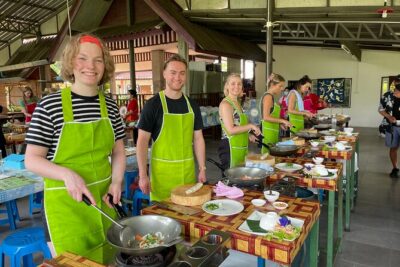
Half-Day Thai Cooking Class at Organic Farm in Chiang Mai
Read our review →
Cooking Class, Market & Thai Herbs Garden Tour
Read our review →
Authentic Cooking Class with Market & Farm Visit
Read our review →
Phuket Thai Cooking Class with Market Tour Option
Read our review →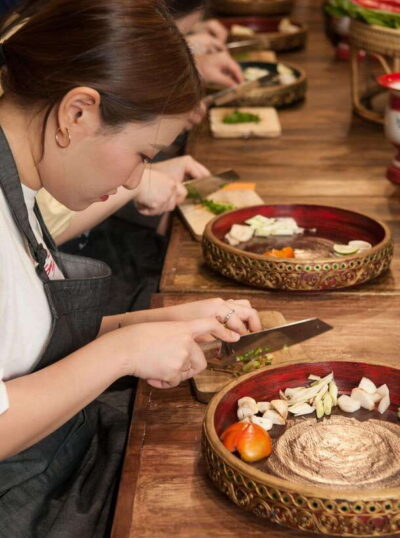
Tingly Thai Cooking School Half-Day Cooking Class
Read our review →Browse the lists this tour appears in