
Review · HIKING & TREKKING
Authentic trek only walk in Chiang Rai jungle
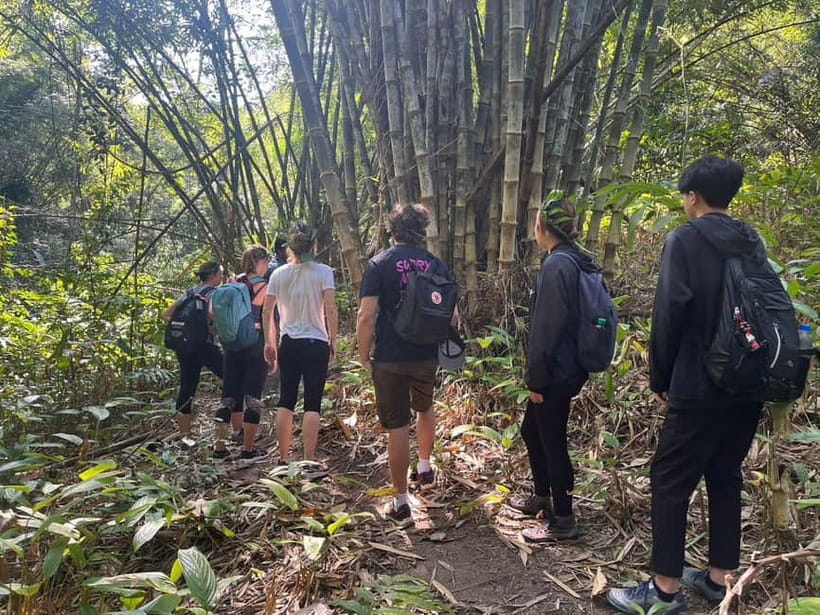
Chiang Rai’s best outdoor day is not a quick stroll through a landscaped park. This is a proper jungle hike, with steep climbs, fallen bamboo, rocky ground, tea plantations, village paths, and a cool waterfall at the end. The bamboo-cooked lunch, prepared during the day, gives the outing a useful local twist rather than just another scenic stop.
I like the way the tour links several hill communities with the forest instead of treating nature and culture as separate attractions. I also like the guides’ hands-on approach. James, Wat, Tee, and Sammy are named by participants as funny, attentive leaders who explain the area and help make small bamboo souvenirs.
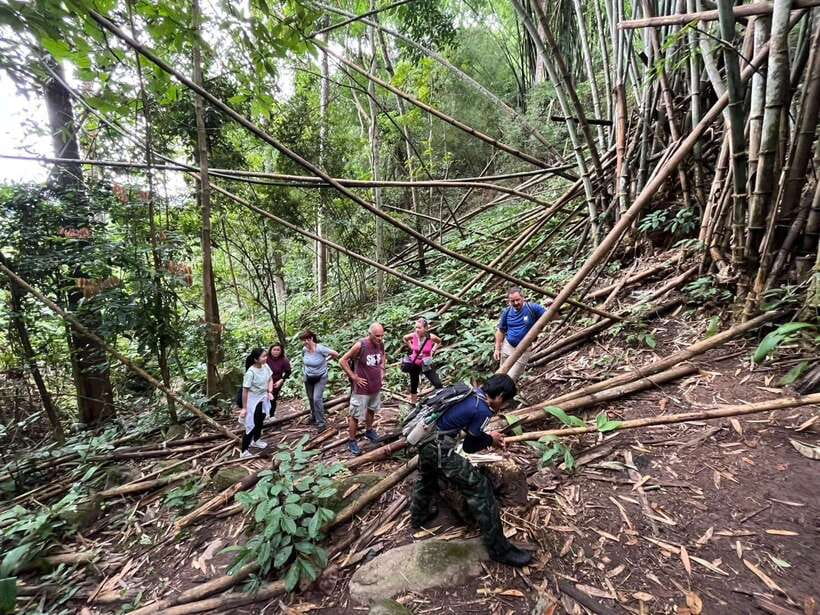
The catch is simple: the advertised moderate fitness level may feel too gentle for some people. Expect steep ascents, slippery or uneven sections, and moments when you duck under bamboo or use your hands to climb. If your knees, balance, or stamina are limited, this is not the Chiang Rai outing to choose.
In This Review
- Key points to know before you book
- Why this Chiang Rai trek feels different
- The 9 am pickup and ride from Chiang Rai
- Lisu and Chinese villages at the start
- Tea plantations and changing views
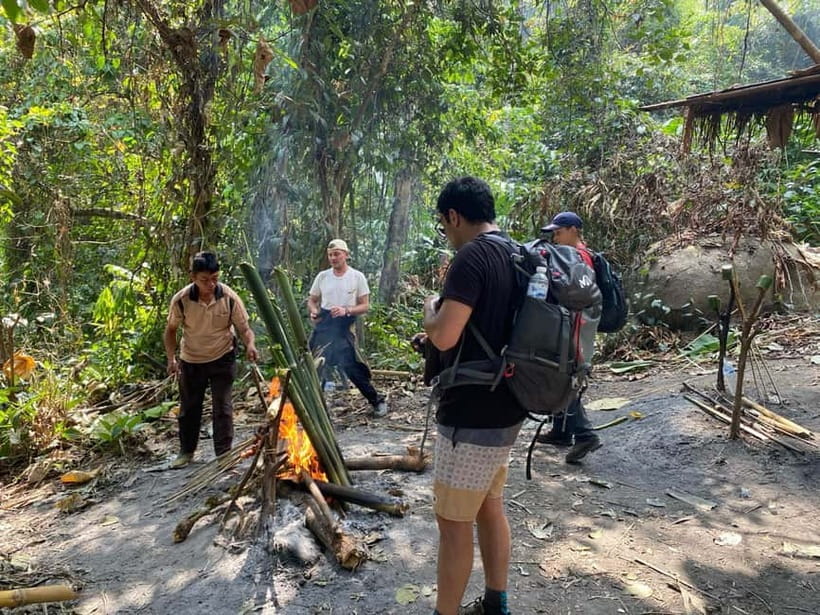
- Cooking lunch in bamboo
- The waterfall after the hardest walking
- Akkha and Lahu villages deeper in the forest
- How hard is the hike really?
- Is $57 good value for nine hours?
- Who should book this Chiang Rai day?
- FAQ
- What time does the Chiang Rai jungle trek start?
- How long does the experience last?
- What is included in the price?
- Is the trek suitable for beginners?
- Can I swim during the trek?
- What languages do the guides speak?
- Should you book it?
Key points to know before you book
- A real jungle walk: Plan for several hours on steep, uneven trails, not a flat nature stroll.
- Bamboo cooking is the star activity: You help prepare a Thai lunch using bamboo and banana leaves.
- Four communities add cultural depth: The route includes Lisu, Chinese, Akkha, and Lahu villages.
- Waterfall swimming rewards the effort: Bring swimwear and a towel for a refreshing stop after the harder hiking.
- Guides shape the day: James, Wat, Tee, and Sammy are praised for humor, care, and clear explanations.
- The $57 price covers the essentials: Hotel transport, a TAT guide, and lunch are included, while drinks beyond water cost extra.
Why this Chiang Rai trek feels different
Many northern Thailand tours offer a short jungle walk as one item on a long sightseeing day. This experience puts the walk at the center. You spend about nine hours out from Chiang Rai, with pickup scheduled for 9 am, and the route includes enough climbing to feel like an actual trek.
That matters if you want time in the forest rather than a string of quick photo stops. The scenery changes as you go: village areas give way to tea fields, then thicker jungle, then a waterfall and more remote hill-community visits. It is a full day, but not a rushed one.
I also like that lunch is part of the activity, not just a boxed meal handed over at a roadside stop. You use bamboo from the jungle and banana leaves as part of the preparation. The exact dishes are not specified, but the meal is described as traditional Thai food, and the cooking itself is one of the day’s main attractions.
The outing has a stated focus on nature, local communities, and sustainability. That does not mean you should expect a formal lecture on conservation. Instead, the value is in spending time with the setting and seeing food, materials, and daily life used in a direct, practical way.
A few more Chiang Rai trips to weigh up
- 1 Day Trekking in Chiang Rai forest (walk only)
★ 4.9 · 95 reviews - 1 Day trekking : Chiang Rai popular activity,Fun in Nature.
★ 4.8 · 18 reviews - 3-in-1: Doi Inthanon Tour, Elephant Sanctuary, and Trekking Trail
★ 5.0 · 1,087 reviews
The 9 am pickup and ride from Chiang Rai
Hotel pickup and drop-off are included, so you do not need to arrange your own way to the trailhead. Wait in your hotel lobby about 10 minutes before the scheduled pickup time. The day returns to Chiang Rai after the route is complete.
Transport is useful here because the experience covers villages, plantations, forest, and waterfall areas outside the city. One practical warning: a participant reported a strong diesel smell in the vehicle that caused some passengers to feel sick. That may not happen on every departure, but it is worth knowing if you are sensitive to fumes.
The tour is led in English and Thai. Guides named in the feedback include James, Wat, Tee, and Sammy. James is also known for carving small bamboo ornaments for the group, giving you a simple keepsake tied to the day rather than a shop-bought souvenir.
The available information does not give a fixed group size. Some departures may feel small, especially during quieter periods, but you should not book on the assumption that every outing is private. One booking became a private trek during the rainy season, but that was a particular circumstance, not a stated guarantee.
Lisu and Chinese villages at the start
The first cultural stops are a Lisu village and a Chinese village. These visits give you a look at two different communities in the Chiang Rai area before the walk moves farther into the forest.
The Lisu village is presented as a chance to see local traditions and ordinary village life. The Chinese village adds another layer to the region’s mix of cultures. This is useful context: northern Thailand is not culturally uniform, and the communities around Chiang Rai have their own customs and backgrounds.
Keep your expectations sensible. The information does not promise a staged performance, museum, or formal demonstration at either village. Think of these stops as part of the route, with sightseeing, walking, and opportunities for photos. Be respectful with cameras and avoid treating homes and residents as scenery.
There is also a shopping element listed during the sightseeing portion. No specific products or required purchases are given, so bring only the spending money you actually want to use. The main value of these stops is the setting and human contact, not a shopping opportunity.
Tea plantations and changing views
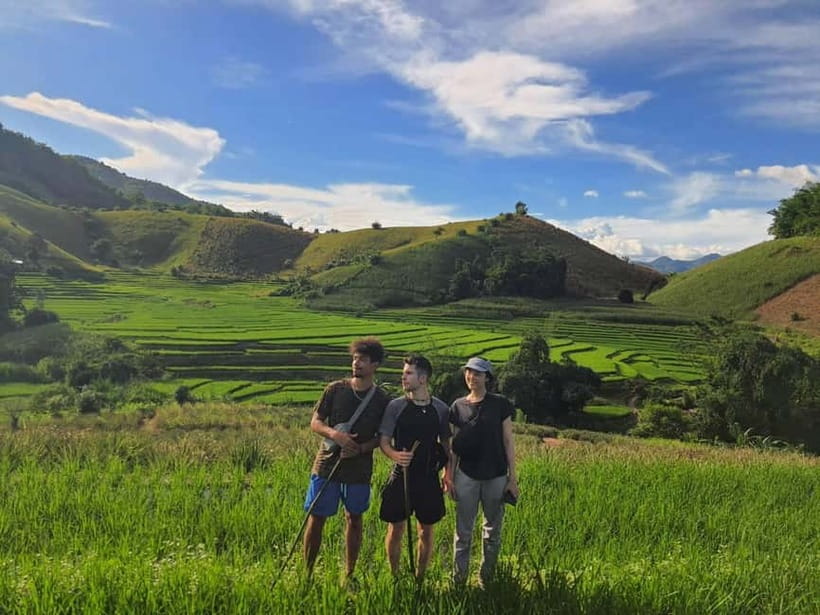
The trail passes through tea plantations, where you can smell and see freshly grown tea leaves. This is one of the more distinctive parts of the route because it breaks up the forest with cultivated hills and open views.
Tea is closely linked with northern Thailand’s upland setting, and walking through the plants gives you a more grounded sense of the area than viewing a plantation from a vehicle. The path also provides good photo opportunities, although the quality of the views will depend on weather and seasonal conditions.
The route includes scenic viewpoints along the way, but it is not presented as a gentle walk from one viewpoint to the next. You may need to work for the scenery. Previous departures have included steep climbs, heat, and rocky areas, while the rainy season can make the trail more difficult.
Wear shoes with solid grip. Hiking shoes are specifically recommended, and one useful tip from the day is to keep your hands free. You may need them for balance, for moving around fallen bamboo, or for handling the trail on steeper sections. A small backpack is more practical than a loose shoulder bag.
Same coastline, a completely different day out:
- Chiang Rai: Guided Highlights Guided Tour with Buffet Lunch
★ 4.9 · 1,532 reviews - Chiang Rai: Iconic Temples & 7 Major Sites—River View Buffet
★ 4.9 · 692 reviews - Chiang Rai: White, Blue, Red Temples, Long Neck Tour
★ 4.8 · 652 reviews - Sightseeing Join Tour Chiang Rai / PICK UP ONLY IN CHIANG RAI
★ 4.5 · 398 reviews
Cooking lunch in bamboo
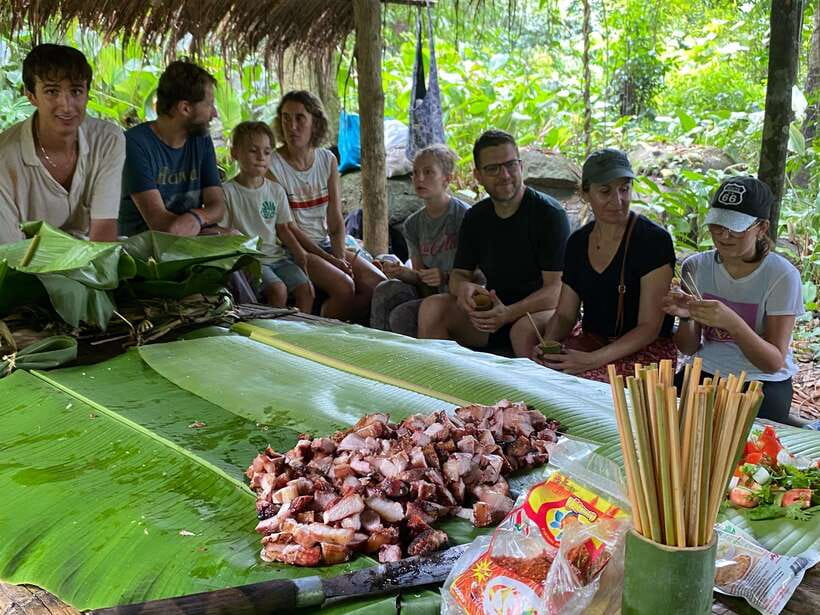
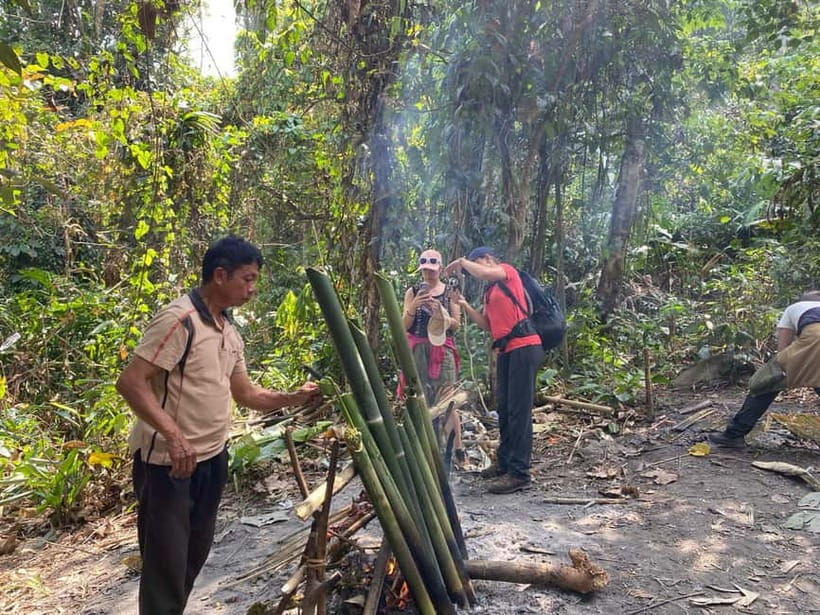
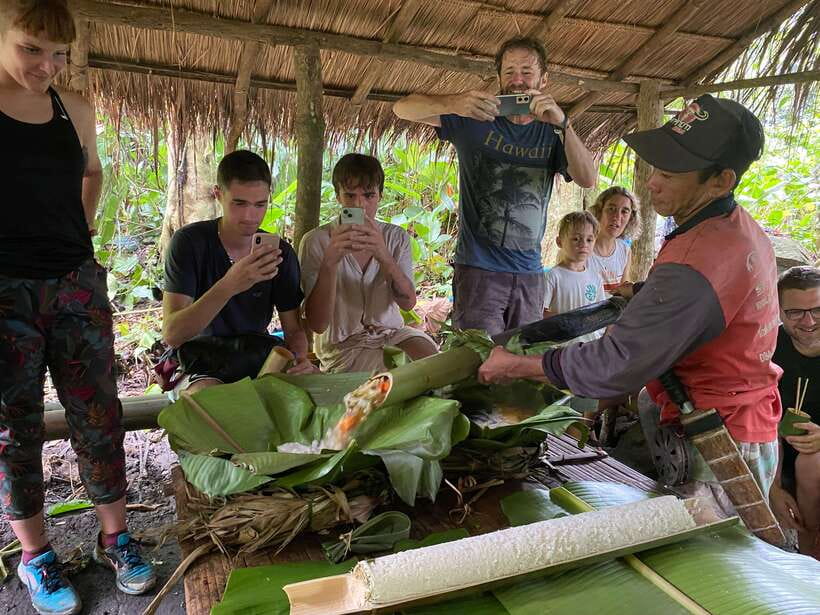
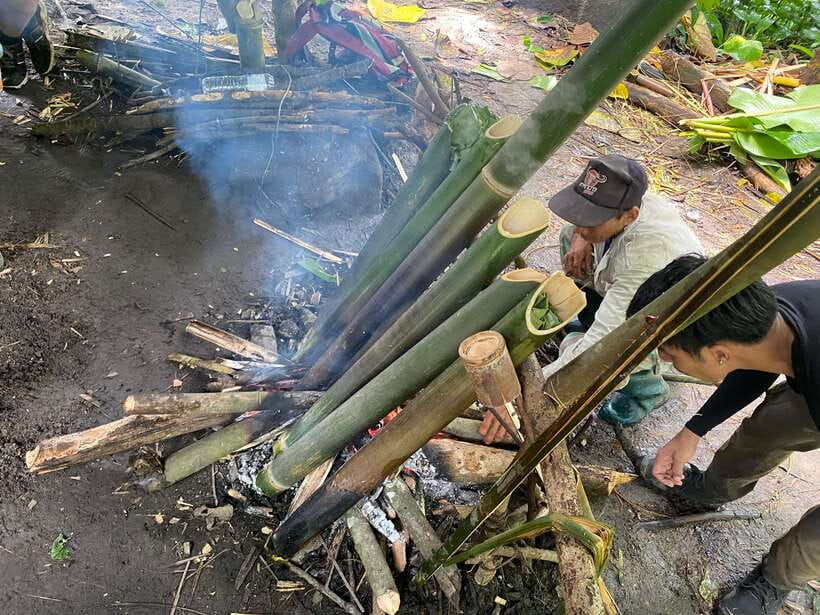
The bamboo cooking session is the tour’s most memorable cultural activity. Rather than stopping at a restaurant, you help prepare lunch in the jungle using bamboo and banana leaves. The bamboo acts as a cooking vessel, turning a basic meal into a lesson in local materials and outdoor technique.
This is also a smart break in the day. A long hike can become repetitive, but preparing food gives you something active to do before the trail continues. You get to eat what you helped make, and the meal is included in the $57 price.
Food is repeatedly praised for its flavor, but you should notify the operator about dietary restrictions before booking. The tour does not list a fixed menu, vegetarian option, allergy policy, or substitute meal. Asking in advance is the safest way to avoid a problem.
Drinks other than water are not included. Carry enough water for a long, warm hike, since the provided inclusions only specify lunch and water as the included drink. Sunscreen, a sun hat, and insect repellent are all sensible additions, even though one departure encountered almost no bugs.
Do not expect polished restaurant service. This is outdoor cooking, and part of its appeal is the simple method. You may eat in a basic jungle setting, with the surroundings and preparation doing much of the work.
The waterfall after the hardest walking
After lunch, the route continues through thicker foliage toward a waterfall. The water offers a chance to cool off after the climbs, so pack swimwear and a towel in an accessible place.
The waterfall is not just a photo stop. Swimming is part of the experience, and the clear water gives the day a welcome change of pace. You move from heat and exertion to a short period of rest and refreshment before continuing.
Water conditions can change with weather, especially in the rainy season. The supplied information does not state how deep the pool is, whether changing facilities are available, or whether swimming is always possible. Follow the guide’s safety instructions and avoid assuming that every part of the pool is suitable for jumping or extended swimming.
The route’s physical demands are important here. Several participants describe the hike as challenging or strenuous, with steep sections and rough ground. The waterfall feels rewarding partly because you have worked to reach it. If you want an easy swim with little walking, a dedicated waterfall excursion would suit you better.
Akkha and Lahu villages deeper in the forest
The later village visits bring you to Akkha and Lahu communities. By this point, you have already seen a Lisu village and a Chinese village, so the route presents several distinct groups rather than one generic idea of a hill tribe.
These stops are intended to show customs and daily life. The jungle setting adds to the sense that you are seeing communities connected to the surrounding terrain, although the information does not specify a formal cultural presentation or a particular household visit.
Your attitude matters. Walk quietly, ask before taking close-up photos, and treat the villages as living communities. The purpose is to learn about different ways of life, not to collect snapshots.
The changing surroundings also make the day feel varied. You move between jungle sounds, open tea areas, village paths, and waterfall terrain. The route does not rely on a single grand attraction, which is why it suits people who enjoy a day built from many small encounters.
How hard is the hike really?
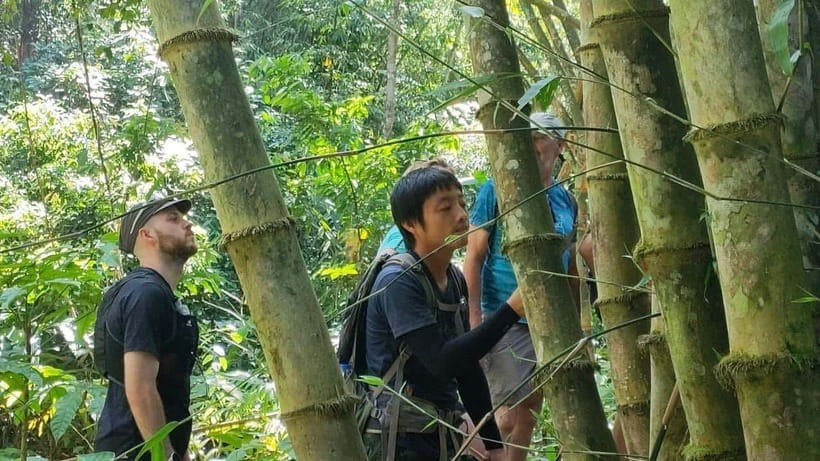
This is the most important booking question. The official guidance calls for moderate physical fitness, but the practical description from the route is tougher: steep slopes, rocky sections, fallen bamboo, and places where you may need to clamber up or down.
One older participant had to leave near the beginning. That does not mean the tour is unsafe or unsuitable for everyone over a certain age. It does mean you should judge yourself by mobility and fitness, not by age alone. You need enough stamina for several hours of varied walking and enough balance for uneven jungle trails.
Rain can make the ground more difficult. Hot weather can also make the climbs feel harder, while the waterfall provides only a temporary break. Good grip matters more than stylish footwear, and open sandals are a poor choice for this route.
Bring:
- Hiking shoes with good traction
- Sun hat and sunscreen
- Insect repellent
- Swimwear and towel
- Camera
- Water
- Any required medication
Tell the operator about medical conditions and dietary restrictions before the trip. The guide provides a safety briefing, but you are responsible for being honest about what you can manage.
Is $57 good value for nine hours?
At $57 per person, this is a strong value if you want transport, a full-day guide, and lunch without arranging several separate activities. You are paying for a long route with multiple villages, tea plantations, jungle walking, bamboo cooking, and waterfall swimming.
The price makes less sense if you mainly want a short cultural visit or an easy nature outing. A large part of the value comes from the length and effort involved. You get more than a quick stop at a waterfall, but you also have to be willing to spend much of the day walking.
Hotel pickup and drop-off remove the cost and hassle of finding transport to remote areas. Lunch is included, and the bamboo cooking session adds an activity that would be difficult to arrange independently. Drinks beyond water are extra, so budget for those if needed.
Free cancellation up to 24 hours before the start and a reserve-now, pay-later option make the booking less rigid. Starting times should still be checked when you choose a date, although the standard pickup is listed as 9 am.
Who should book this Chiang Rai day?
I would choose this trek if you want a proper outdoor day and enjoy meeting local guides through shared activities. It works well for people who like walking, swimming, simple food preparation, village visits, and changing scenery.
It is also a good match if you have already seen Chiang Rai’s major temples and want something less polished and more active. The guides’ humor is a real part of the experience, and the route seems suited to people who enjoy a lively group atmosphere rather than a quiet private walk.
I would not choose it for anyone with mobility difficulties, poor balance, or a dislike of heat and uneven ground. Families should assess each person carefully, since the physical level may be more demanding than the word moderate suggests.
English and Thai are available, and guides such as James and Wat are praised for keeping the group informed and entertained. Still, the trail itself is the main challenge, so good communication cannot remove the need for fitness.
FAQ
What time does the Chiang Rai jungle trek start?
Hotel pickup is scheduled daily at 9 am. You should wait in your hotel lobby 10 minutes before the scheduled pickup time.
How long does the experience last?
The full experience lasts nine hours, including pickup, village visits, hiking, bamboo cooking, waterfall time, and the return to Chiang Rai.
What is included in the price?
The $57 price includes hotel pickup and drop-off, a TAT guide, and lunch. Drinks other than water are not included.
Is the trek suitable for beginners?
The route requires a moderate level of fitness, but the practical conditions can be strenuous. Expect steep slopes, uneven ground, rocky areas, and fallen bamboo, so it may not suit people with mobility difficulties.
Can I swim during the trek?
Yes. The route includes a waterfall where you can cool off in the water. Bring swimwear and a towel.
What languages do the guides speak?
Live guiding is available in English and Thai. Guides named for this experience include James, Wat, Tee, and Sammy.
Should you book it?
Book this tour if the words jungle hike sound better to you than scenic drive. The strongest parts are the hands-on bamboo lunch, the varied village visits, the tea plantations, and the waterfall that breaks up a demanding route.
Skip it if you need a gentle walk, fixed comfort, or a clearly accessible trail. For fit visitors who want a full day away from Chiang Rai’s usual sights, $57 buys a substantial experience, not just a few hours of sightseeing. Bring grippy shoes, water, swimwear, and a willingness to sweat, and you will be prepared for what this trek actually asks of you.
Just added around Chiang Rai
- From Chiang Mai : 3 Temples & Golden Triangle with Lunch★ 4.5 · 17 reviews
- Explore the Chiang Rai and the Golden Triangle★ 4.6 · 18 reviews
- Chiang Rai: Discover 7 Must-See Spots & Lunch Included★ 4.7 · 26 reviews
- Chiangrai Full day: Popular 7 Locations with Thai buffet★ 4.8 · 16 reviews
- Chiang Rai:Lanna Home Cooking Class at Give Green Farm House★ 5.0 · 61 reviews
- From Chiang Rai: Famous Temples and Golden Triangle Day Tour★ 4.7 · 115 reviews
- Chiang Rai: Top Temples & Signature Attractions ~Free Buffet★ 4.7 · 10 reviews
- Chiang Rai:3D2N Transfer to Luang Prabang by Slow Boat★ 3.4 · 15 reviews
Hiking & Trekking, compared.

3-in-1: Doi Inthanon Tour, Elephant Sanctuary, and Trekking Trail
Read our review →
Doi Inthanon Park with Kew Mae Pan Hike Day Trip
Read our review →

Doi Inthanon Private Tour with Trek & Lunch from Chiang Mai
Read our review →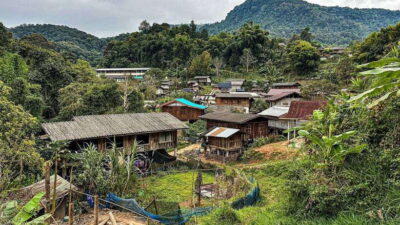
Doi Inthanon National Park and Pha Dok Siew Trek
Read our review →Browse the lists this tour appears in