
Review · THAI COOKING CLASSES
Chiang Mai: Traditional Thai Cooking Class with Market Tour
Thai cooking makes more sense when you see the ingredients before they reach the wok. This four-hour class starts at a local market near Chiang Mai Gate, then moves to a traditional Lanna home where you prepare six Thai dishes, including curry paste made from scratch.
I like the hands-on format and the chance to eat what you cook. I also like the small-group feel, which lets the chef help at each station. The one drawback is transport: some departures use a hot, bumpy jeep rather than an air-conditioned minivan, and the market visit can feel brief.
In This Review
- Key points at a glance
- A market lesson near Chiang Mai Gate
- Cooking inside a traditional Lanna home
- Making curry paste the old-fashioned way
- Six dishes, sticky rice, and a lot to eat
- What the four hours feel like
- Hotel pickup and the transport tradeoff
- Is $32 good value?
- Who will enjoy this class most
- Small details that make the class work
- Should you book it?
- FAQ
- How long does the Chiang Mai cooking class last?
- How much does the cooking class cost?
- Is hotel pickup included?
- How early should I wait for pickup?
- What language is the class taught in?
- How many dishes will I cook?
- Will I make curry paste from scratch?
- Is sticky rice with mango included?
- Can young children join the activity?
Key points at a glance
- Market first, cooking second: Learn to identify Thai herbs, spices, and vegetables before using them in the kitchen.
- Curry paste from scratch: Pound and combine the ingredients yourself instead of starting with a ready-made jar.
- Six dishes in one class: The menu offers several dishes to prepare and eat, with some choices that are not heavily spicy.
- Lanna home setting: Cook in a traditional home close to Chiang Mai’s old city and Chiang Mai Gate Market.
- Good value at $32: Hotel pickup, ingredients, instruction, a meal, and a recipe book are included.
- Friendly named instructors: Chefs and guides such as Tuu, Flook, Wave, Balloon, Mew, Gataii, and Kat have received strong praise for their humor and patient teaching.
A market lesson near Chiang Mai Gate
The class begins with hotel pickup, usually 15 to 30 minutes before the scheduled time. You need to provide your hotel name or location when booking, since the included transportation depends on that information.
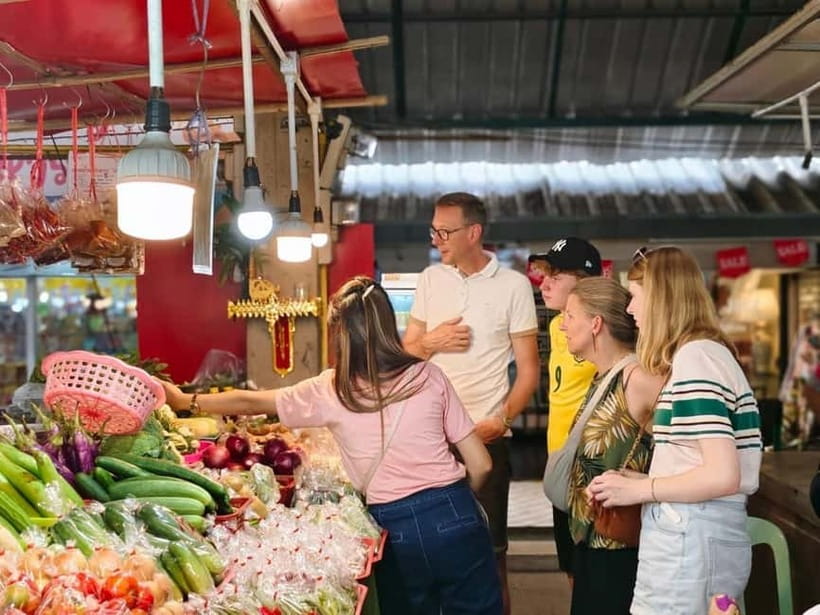
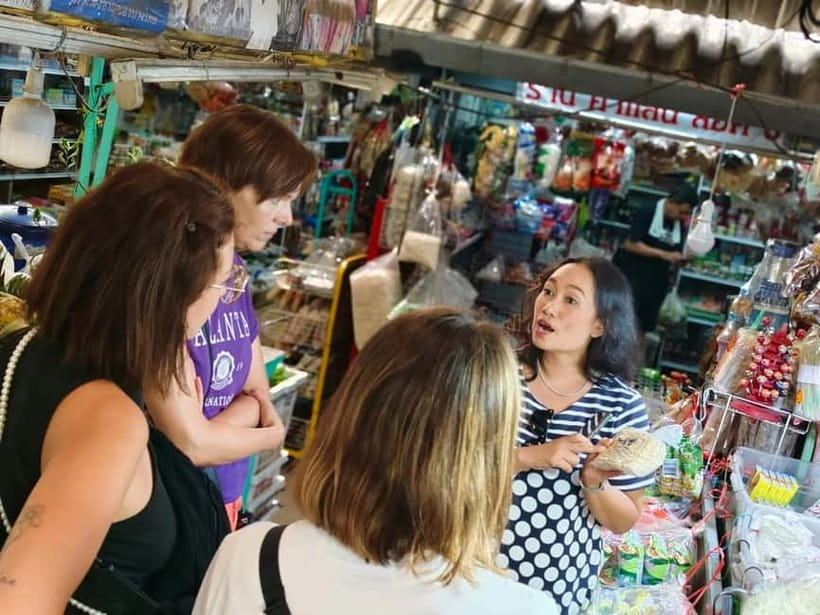
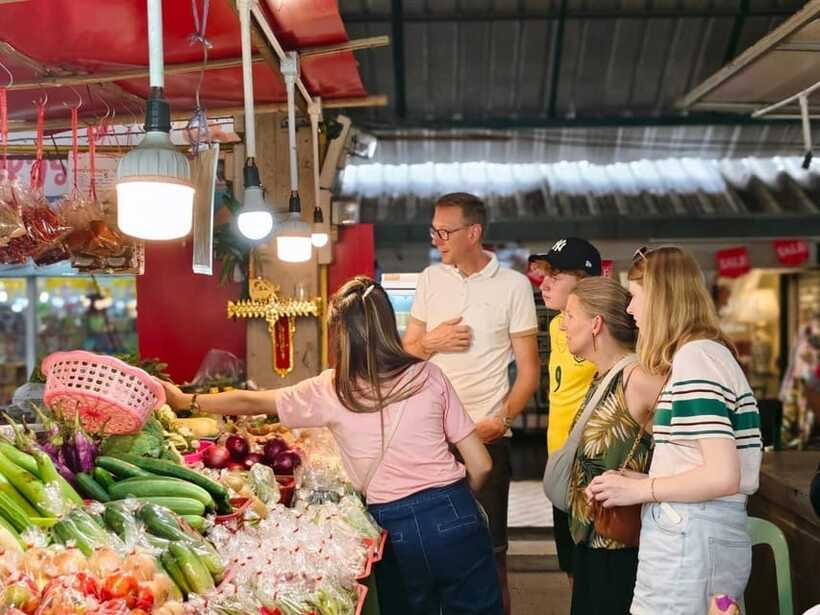
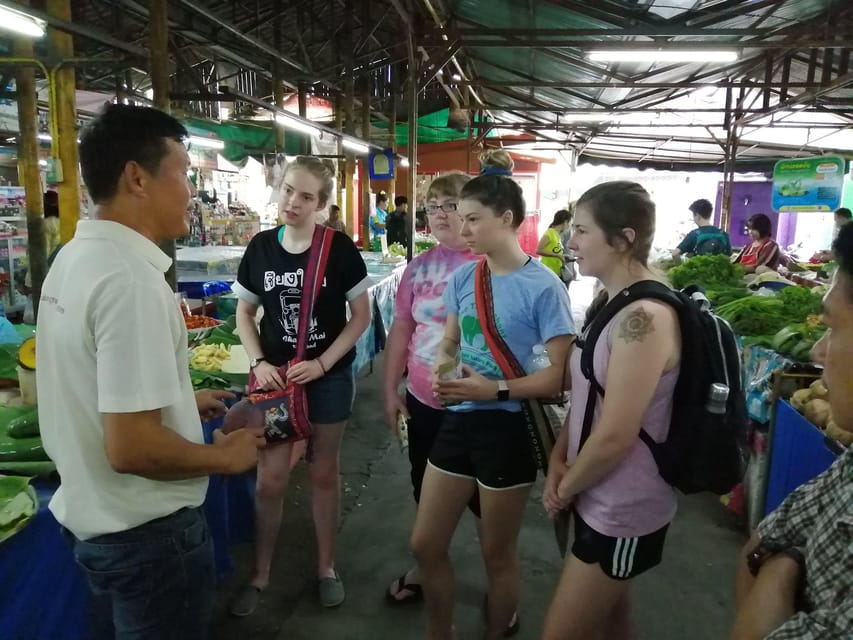
The first stop is a local market near Chiang Mai Gate. This is not just a quick shopping run. Your guide introduces the herbs, spices, and vegetables used in Thai cooking, giving you a better sense of how the dishes get their flavor.
That early market visit is one of the most useful parts of the morning. Thai recipes often list ingredients that are unfamiliar to home cooks, and seeing them in their natural setting makes the recipe book easier to use later. You can connect the fresh herbs and aromatics on the market tables with the curry paste and stir-fries you prepare afterward.
The market segment does vary in depth. I would like more time and explanation about the other stalls and their produce, especially if you have never visited a Thai market before. One participant found the visit too quick, so do not expect a long food-market tour with time to browse every corner.
Still, it gives the cooking class a local starting point. You are not simply handed a tray of measured ingredients in a tourist kitchen. You first see the raw materials and learn why they matter.
More Thai Cooking Classes in Chiang Mai
- Half-Day Thai Cooking Class at Organic Farm in Chiang Mai
★ 5.0 · 19,087 reviews - Chiang Mai: Cooking Class, Market & Thai Herbs Garden Tour
★ 4.9 · 4,824 reviews - Chiang Mai: Authentic Cooking Class with Market & Farm Visit
★ 4.9 · 4,546 reviews
Cooking inside a traditional Lanna home
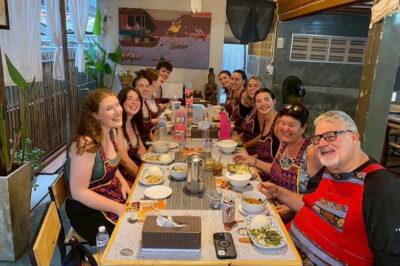
After the market, you continue to a traditional Lanna home in the old city area. The setting gives the class a more personal feel than a large commercial cooking school, while still keeping the process organized.
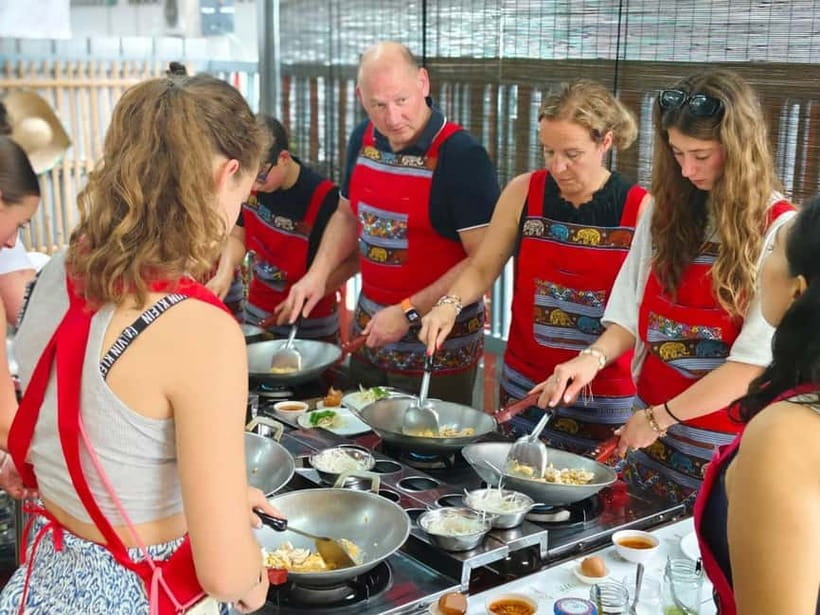
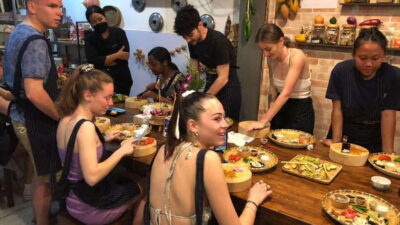
Your cooking station is prepared for you, and the ingredients are supplied. Several class members appreciated this arrangement because it lets you focus on cooking rather than washing, chopping, and setting up every item from scratch. The staff also takes care of clearing and washing dishes, a small luxury after preparing a large meal.
The English-speaking chef demonstrates each step, then helps you work through it yourself. The teaching style appears to be friendly and energetic rather than formal. Tuu has been praised for her careful instruction and humor, while Flook is known for keeping the class light and explaining Thai food clearly. Wave has also received strong praise for answering questions and helping at every stage.
The instructor may vary by date. Other named chefs include Balloon, Mew, Gataii, Kat, and Ton. The consistent theme is personal help at the cooking stations, not a lecture from across the room.
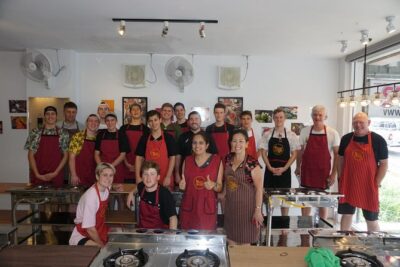
Group size matters here. A smaller class gives you a better chance to ask how much chili to use, when to add an ingredient, or how to adjust the heat. One participant specifically liked the class size because everyone received attention. If you learn best by doing, this is more useful than a demonstration where you only watch.
Making curry paste the old-fashioned way
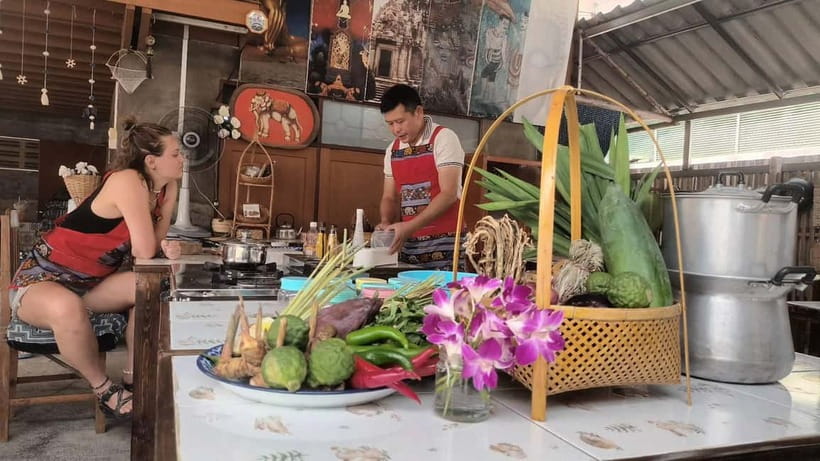
The class highlight is the curry paste. You make it from scratch rather than relying on a prepared mix, which shows how Thai cooks build flavor through fresh aromatics, herbs, and spices.
This is the point where the class becomes more than a meal and a recipe handout. You learn the basic logic behind Thai cooking: strong ingredients need to be balanced, and the order and preparation of those ingredients affect the final dish.
The chef guides you through the process, so you do not need previous cooking experience. You can also ask questions as you go. The class is designed for a hands-on approach, but the teacher remains close enough to help when the work gets busy.
Spice levels deserve a practical note. Some menu choices are not very spicy, so you are not forced into a chili-heavy meal. Tell the instructor what you prefer while selecting dishes or preparing the ingredients. The supplied information does not promise that every dish can be changed, so it is best to discuss your comfort level at the start.
Six dishes, sticky rice, and a lot to eat
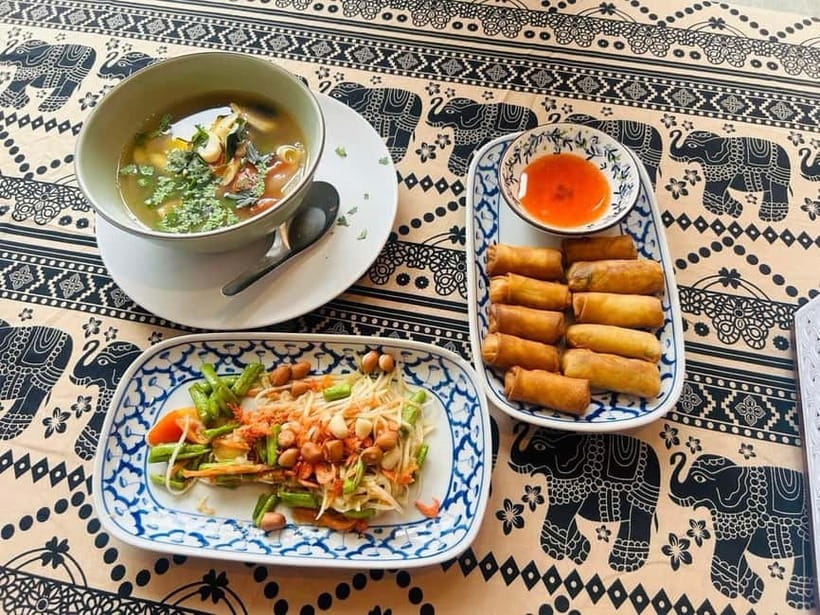
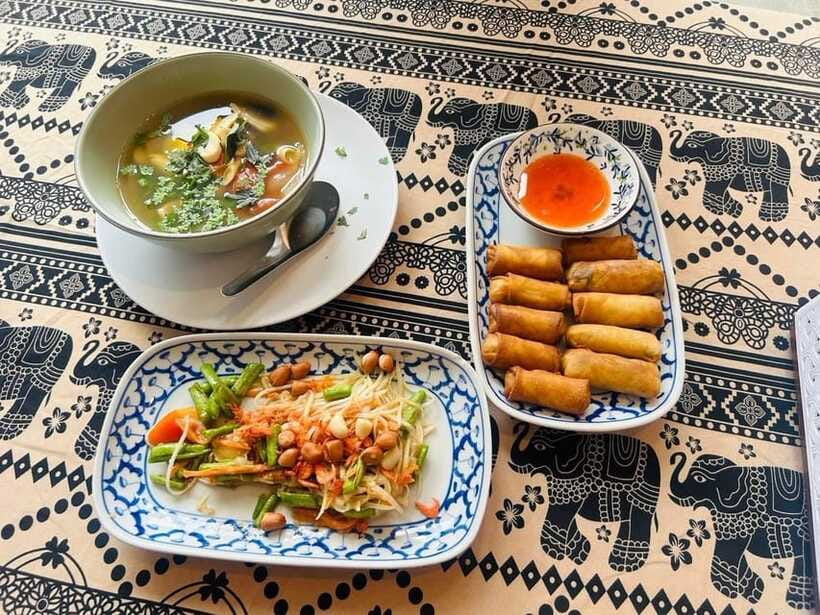
The class includes six traditional Thai dishes. The exact choices may depend on the session and the menu options, but the experience includes curry paste made from scratch, sticky rice with mango, and a local Thai meal.
The appeal is variety. You are not spending four hours preparing one plate. You work through several dishes and then sit down to eat the food you made. That gives you a better feel for how different flavors and textures fit together in a Thai meal.
Sticky rice with mango adds a sweet finish and gives the class a chance to cover a different cooking method. It also makes the recipe book more useful because you leave with more than savory dishes to recreate at home.
The portions are generally plentiful, but one person expected enough for a full dinner and still felt slightly hungry. I would treat the meal as a generous class lunch or brunch, not assume it will replace every meal of the day. The schedule can be arranged as brunch, lunch, or dinner depending on the start time.
You also need to choose your dishes as the class progresses or according to the available menu. One participant liked having many options, and another appreciated that the selection included dishes that were not all spicy. This flexibility makes the class suitable for mixed groups with different tastes.
Same coastline, a completely different day out:
- Chiang Mai: Elephant Sanctuary, Waterfall & Bamboo Rafting
★ 4.9 · 9,160 reviews - Chiang Mai: Doi Inthanon National Park Eco-Friendly Tour
★ 4.6 · 6,667 reviews - Chiang Mai: Elephant Sanctuary & Waterfall Group Tour
★ 4.9 · 5,780 reviews - Chiang Mai: Chiang Rai Temples, Karen Tribe and Hot Springs
★ 4.7 · 5,401 reviews
What the four hours feel like
Four hours is enough time to give the cooking proper attention without turning the class into an all-day commitment. The schedule combines transportation, the market, ingredient instruction, cooking, and eating, so the pace is active.
The market visit comes first, followed by the kitchen session. Once cooking begins, you can expect demonstrations, preparation, cooking, help from the instructor, and time to eat the finished dishes. The format is practical and social, with plenty of chances to talk with the chef and the other people at your station.
The class has been described as well organized, and that matters when six dishes are involved. Ingredients are ready, stations are set up, and the team clears away used equipment. You still do the important work, but you are not slowed down by chores that have little to do with learning Thai food.
The pace may feel quick during the market portion. It may also feel busy when several dishes are being prepared at once. That is part of the fun, but if you want a slow, highly detailed culinary lesson, you should keep your expectations in check.
Hotel pickup and the transport tradeoff
Pickup is included, which adds real value in Chiang Mai. You do not have to find the Lanna home yourself, and the class can collect you from your hotel after you provide the address.
Wait in your hotel lobby 15 to 30 minutes before the scheduled pickup. The exact start time depends on availability, so check the available session before booking.
Transport is the weakest part of the experience. Most of the comments are positive about organization, but one participant found the ride late, hot, and bumpy. Another described the vehicle as a jeep rather than an air-conditioned minivan. That may not bother you for a short transfer, but it is worth knowing if you are sensitive to heat or road movement.
The pickup is still valuable, especially if you are staying in the old city and want a simple door-to-door plan. Just allow some flexibility around the pickup time and do not schedule another activity immediately afterward.
Is $32 good value?
At $32 per person, this is a strong price for a four-hour activity. The fee includes hotel pickup, the market tour, ingredients, instruction, six dishes, the food you prepare, and a recipe book.
The meal alone is not the only measure of value. You also get direct instruction, a market introduction, and techniques you can use after returning home. The curry paste lesson is particularly useful because it teaches a method rather than just one finished recipe.
You may receive a printed or digital recipe book, depending on the session. One participant also received a PDF recipe book and photos. The official inclusions confirm a recipe book, but do not promise photos for every departure.
The only value concern is portion size. Most people leave full, but one person wanted more food. If you are booking this mainly for a large dinner, you may want a snack later. If you are booking it as a food lesson with a substantial meal included, the price is easier to justify.
Who will enjoy this class most
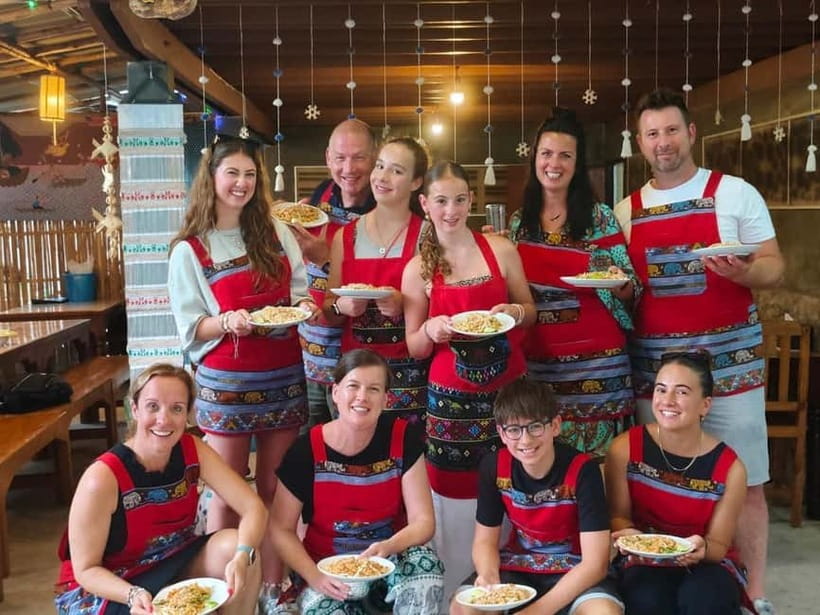
I would recommend this experience to anyone who enjoys food and wants to understand Thai cooking beyond ordering familiar dishes. It works well for first-time cooks because the chef demonstrates each stage and provides help at the station.
It is also a good choice for couples, friends, and solo participants who like a social activity. The class brings people together around a task, and the cooking format gives you something to do while meeting the group.
You should book it if you want:
- A short cultural activity in the old city
- Practical Thai recipes you can try at home
- A market introduction alongside a cooking lesson
- A meal made by your own hands
- A friendly English-speaking instructor
- Several dishes rather than one long demonstration
It may be less suitable if you dislike group activities, want a luxury vehicle, or need a very slow-paced market tour. Children under five cannot join, and alcohol and drugs are not allowed. Comfortable clothes are the sensible choice.
Small details that make the class work
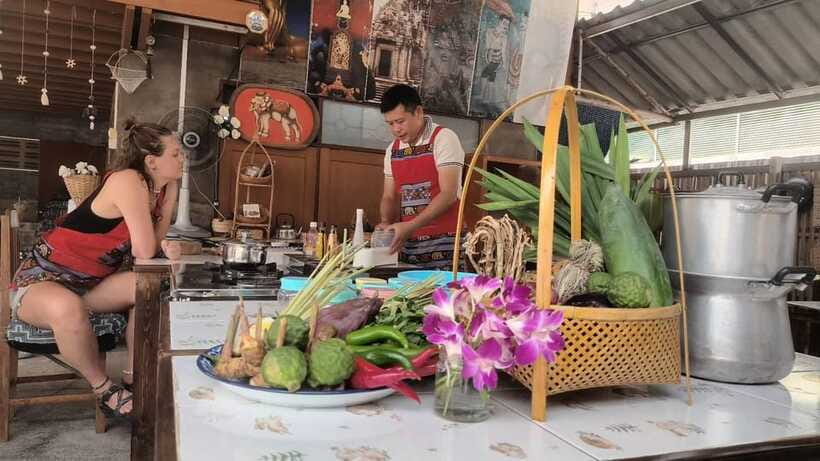
The best part of this experience is the balance between instruction and participation. You are not merely watching a chef cook. You make curry paste, prepare multiple dishes, and sit down to eat the result.
I also like the way the market and kitchen connect. The herbs and vegetables introduced at the start return as ingredients in the recipes, giving the morning a clear thread.
The staff’s attitude is another strength. The named instructors have been praised for being funny, patient, polite, and encouraging. That matters when a recipe goes wrong or you are unsure how much chili to add. A warm teacher can turn a technical lesson into a relaxed morning.
The class is not perfect. The market stop could use more explanation, transport may be uncomfortable, and the portions may not satisfy the biggest appetites. But those are manageable limits for an activity that offers a lot at a reasonable price.
Should you book it?
Book this class if you want to cook, not just eat, and if you value a local market visit and a home-style setting. The combination of curry paste from scratch, six dishes, sticky rice with mango, hotel pickup, and a recipe book gives you more substance than a simple restaurant meal.
I would choose it early in your Chiang Mai stay. The market lesson and cooking techniques can help you understand later meals, and you may even recognize the herbs and sauces on restaurant menus.
For most food-focused visitors, this is an easy recommendation at $32. Just allow extra time around pickup, wear comfortable clothes, and think of the final meal as a satisfying class lunch or brunch rather than a guaranteed feast for a large appetite.
FAQ
How long does the Chiang Mai cooking class last?
The activity lasts four hours, including the local market visit, cooking instruction, and meal.
How much does the cooking class cost?
The price is $32 per person.
Is hotel pickup included?
Yes. Hotel pickup is included, but you need to provide your hotel name or the address of your location when booking.
How early should I wait for pickup?
You should wait in your hotel lobby 15 to 30 minutes before your scheduled pickup time.
What language is the class taught in?
The instructor teaches in English.
How many dishes will I cook?
The class includes cooking six different traditional Thai dishes. The available choices may vary by session.
Will I make curry paste from scratch?
Yes. Making curry paste from scratch is one of the core activities.
Is sticky rice with mango included?
Yes. Sticky rice with mango is included among the dishes taught in the class.
Can young children join the activity?
Children under five years old are not permitted to participate.
More Shopping Tours in Chiang Mai
- Evening Cooking Class in Organic Farm with Local Market Tour
★ 5.0 · 394 reviews - Chiang Mai: Elephants, Sticky Waterfalls, Market and Temple
★ 4.9 · 227 reviews - Half-Day Cooking Class with Market Tour
★ 5.0 · 163 reviews - Chiang Mai: Morning Cooking Class with Market Visit
★ 4.9 · 81 reviews
More Markets in Chiang Mai
- Chiang Mai: Cooking Class with Market and Pickup
★ 4.9 · 1,365 reviews - Chiang Mai: Evening Cooking Class and Local Market Visit
★ 4.9 · 648 reviews - Chiang Mai: Evening Local Street Food Market Tour
★ 4.8 · 604 reviews - Chiang Mai: Kalare Night Bazaar Boxing Stadium Muay Thai
★ 4.7 · 507 reviews
Just added around Chiang Mai
- Taste of Chiang Mai: Michelin Guide & Street Food Tour★ 4.9 · 159 reviews
- Red, Blue, White Temples & Hot Spring Trip from Chiang Mai★ 4.4 · 143 reviews
- From Chiang Mai: Mae Taeng Valley and Waterfalls Cycle Tour★ 4.9 · 159 reviews
- Long Neck Village, Silver Temple & Chiang Mai Top Sites★ 4.7 · 17 reviews
- Chiang Mai: Local Northern Thai Cooking Class at Grandma’s★ 5.0 · 33 reviews
- Chiang Mai: Khum Khantoke Northern Thai Cuisine and Show★ 4.3 · 38 reviews
- Private : Sticky Waterfall & Secret Temple & Karen Village.★ 5.0 · 9 reviews
- Half-day with CHIANGMAI ELEPHANT CARE program (12pm-6pm.)★ 5.0 · 27 reviews
Thai Cooking Classes, compared.
Half-Day Thai Cooking Class at Organic Farm in Chiang Mai
Read our review →
Cooking Class, Market & Thai Herbs Garden Tour
Read our review →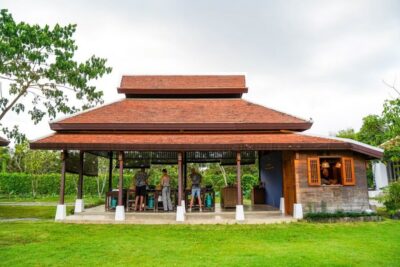
Authentic Cooking Class with Market & Farm Visit
Read our review →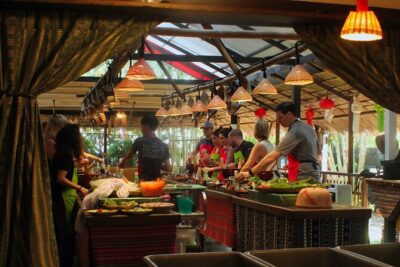
Phuket Thai Cooking Class with Market Tour Option
Read our review →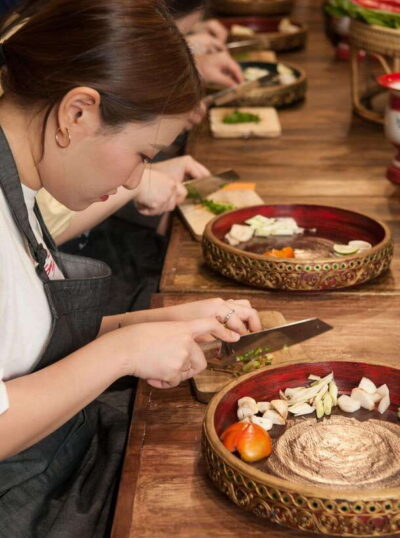
Tingly Thai Cooking School Half-Day Cooking Class
Read our review →Browse the lists this tour appears in