
Review · NATIONAL PARK TOURS
Samut Prakan: Erawan Museum Discounted Admission Ticket
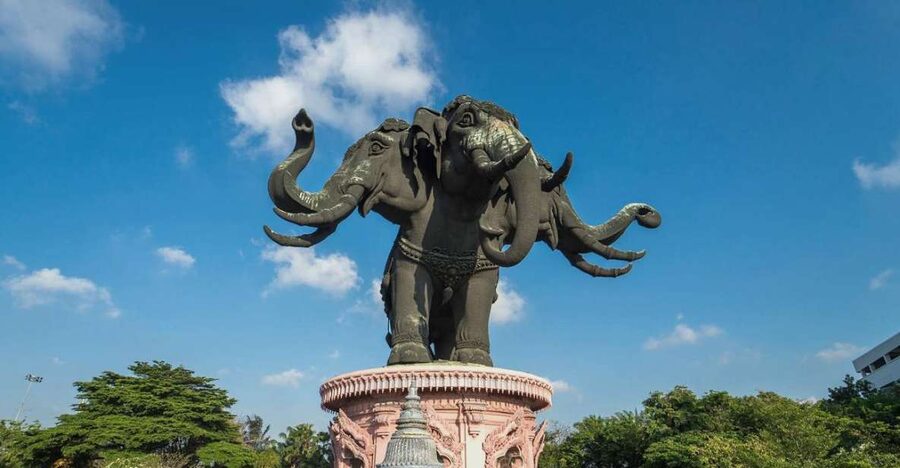
The first thing to catch your eye is the enormous three-headed bronze elephant, perched above the museum like a surreal landmark from a Thai legend. Inside, the building becomes a journey through Underworld, Earth, and Heaven, with porcelain, religious figures, stained glass, and painted ceilings shaping each stage.
I like the way the museum joins art, belief, and one collector’s objects in a single building. I also like the easy access from the BTS Green Line, plus the free shuttle tuk-tuk from Chang Erawan Station. The main drawback is that your ticket is tied to a specified date and time, so you need to plan this stop rather than drift in whenever you please.
In This Review
- Key points to know before you go
- Why the three-headed elephant is worth the trip
- Starting below the elephant in the Suvarnabhumi Level
- Looking up through the Earth Section
- Reaching Heaven inside the elephant
- Taking a slower walk through the garden
- What the $12 ticket really gives you
- Getting there from Bangkok by BTS
- The small rules that shape the visit
- Who will enjoy this museum most
- Should you book the Erawan Museum ticket?
- FAQ
- Where is Erawan Museum located?
- How can I reach the museum by public transportation?
- How much does admission cost?
- How long is the ticket valid?
- What does the ticket include?
- Is an audio guide available?
- What should I wear to Erawan Museum?
- Can I cancel the booking?
Key points to know before you go
- The elephant is the entrance landmark: The huge three-headed sculpture forms the upper part of the museum and gives the visit its most memorable photo.
- Three levels tell a symbolic story: The Suvarnabhumi, Earth, and Cosmo sections represent past, present life, and heavenly realms.
- The $12 price covers more than the galleries: Your ticket includes the museum, surrounding areas, flowers, incense, lotus flower, taxes, and fees.
- BTS makes the trip simple: Exit at Chang Erawan Station, E17, Exit 2, then use the free shuttle tuk-tuk.
- Dress and behavior matter: Shorts, short skirts, sleeveless shirts, food, drinks, and pets are not permitted.
- You can listen in five languages: Audio guide options are English, Thai, Chinese, Korean, and Russian.
Why the three-headed elephant is worth the trip
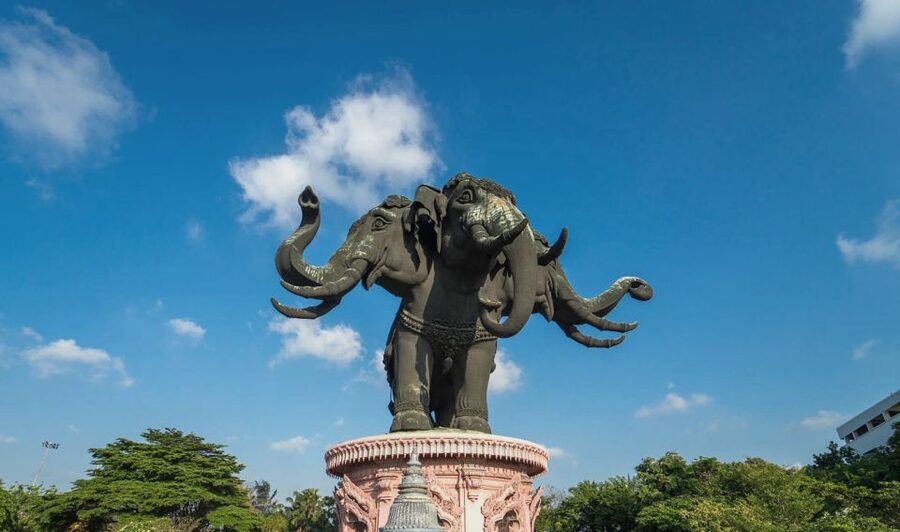
Erawan Museum sits in Samut Prakan, just outside Bangkok, but it feels far removed from the city’s usual temples and shopping streets. The building is designed around a gigantic three-headed elephant, a sculpture so large that it becomes part of the skyline as you approach.
The elephant is made of bronze and is described as the first and largest hand-carved sculpture of its kind. You do not need a long visit to appreciate its scale. From the outside, it gives you the classic photograph. From inside, you realize that the museum occupies the elephant’s body and the circular base below it.
The building was created as a symbol of peace and humanity. Its displays bring together Asian religious ideas, philosophies, art, and the personal collection of the museum’s owner. That mix is important to understand before you enter. This is not a conventional art museum with neatly separated periods and labels. It is a personal, symbolic place where architecture carries as much meaning as the objects on display.
I would allow at least a couple of hours if you want time for the interior, garden, photographs, and audio guide. The ticket is valid for one day, but the entry itself is tied to the date and time selected when you book.
More national park tours in Thailand:
- Chiang Mai: Doi Inthanon National Park Eco-Friendly Tour
★ 4.6 · 6,667 reviews - Doi Inthanon Waterfall and Royal Project Chiang Mai
★ 5.0 · 1,735 reviews - From Bangkok: Erawan Park & Kanchanaburi Small-Group Tour
★ 4.5 · 1,582 reviews
Starting below the elephant in the Suvarnabhumi Level
Begin at the underground Suvarnabhumi Level, located below the elephant. This section represents the Underworld and the past. The setting gives the first part of your visit a quieter, more enclosed feel than the open garden outside.
Here you can see ancient artifacts and porcelain from the owner’s collection. One notable type is Benjarong, Thai-style ceramic ware known for its detailed decoration and traditional use. If you like ceramics, this level deserves more than a quick walk-through. The objects help explain the museum’s connection to Thai artistic traditions rather than presenting the elephant as a stand-alone novelty.
You will also see Naga, the snake-like god associated with the Underworld in Buddhist belief. Naga is linked with water and the giving of water, so the figure carries more meaning than a simple mythical creature. It helps connect the objects and architecture to the religious ideas running through the museum.
The underground section may be the least immediately dramatic part of the visit, especially after seeing the elephant outside. Still, it provides useful context. The displays represent the past, while the upper levels move toward the present world and then the heavens.
The included flowers, incense, and lotus flower are part of the visit’s religious setting. You should treat them as more than decorative extras. They reflect the museum’s spiritual character and help explain why quiet, respectful behavior is expected inside.
Looking up through the Earth Section
The Earth Section occupies the circular base that supports the elephant. This is the central part of the museum, and it is where the building’s architecture becomes the main attraction.
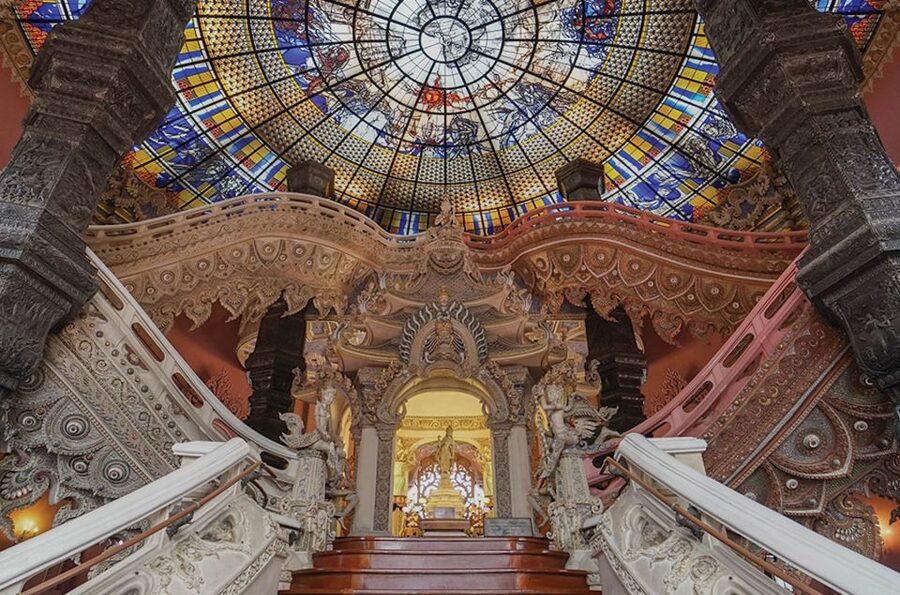
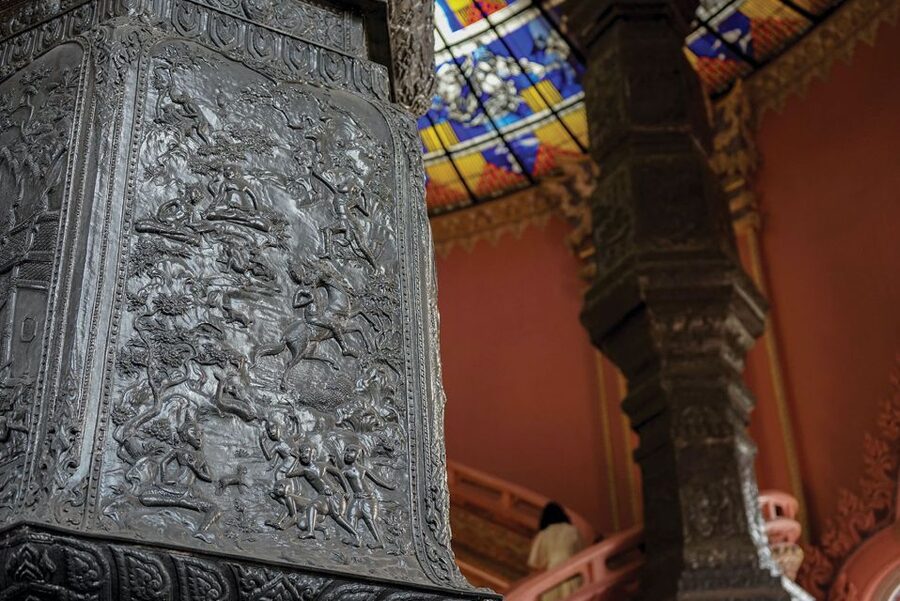
The interior combines Western and Eastern art forms. Rather than keeping those traditions in separate rooms, the design brings them together through structure, decoration, and color. The effect can feel unusual at first. Give yourself time to look upward and around you instead of rushing from display to display.
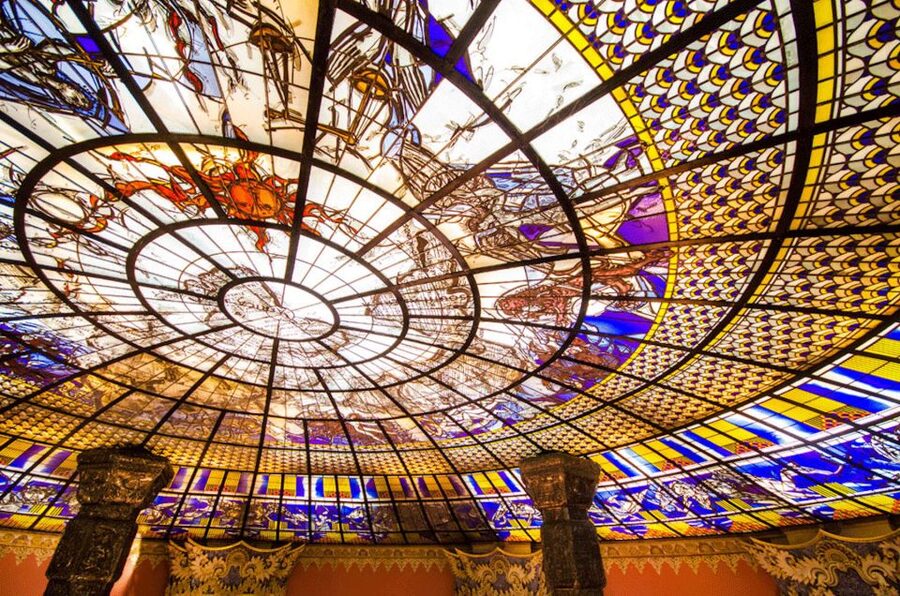
The ceiling near the entrance is designed to suggest the ceiling of the Earth. Stained glass forms an image or pattern of the planet, turning natural light into part of the exhibit. This is one of the best places to pause for a photograph, though commercial photography and video are not allowed inside.
The Earth Section is also a good reminder that this museum is meant to be read symbolically. The building is not simply a container for artifacts. Its floors, ceilings, sculptures, and passageways are arranged to express a view of the universe.
I like this part because it gives you something to notice even if you are not an expert in Thai art. You can appreciate the scale, the unusual blend of styles, and the stained glass without needing to identify every object. The audio guide can add useful background in English, Thai, Chinese, Korean, or Russian.
There is a practical point here: the museum asks you to dress modestly. Shorts, short skirts, and sleeveless shirts are not allowed. Choose clothing that covers your shoulders and knees before leaving Bangkok, since it is easier than trying to solve the problem at the entrance.
Reaching Heaven inside the elephant
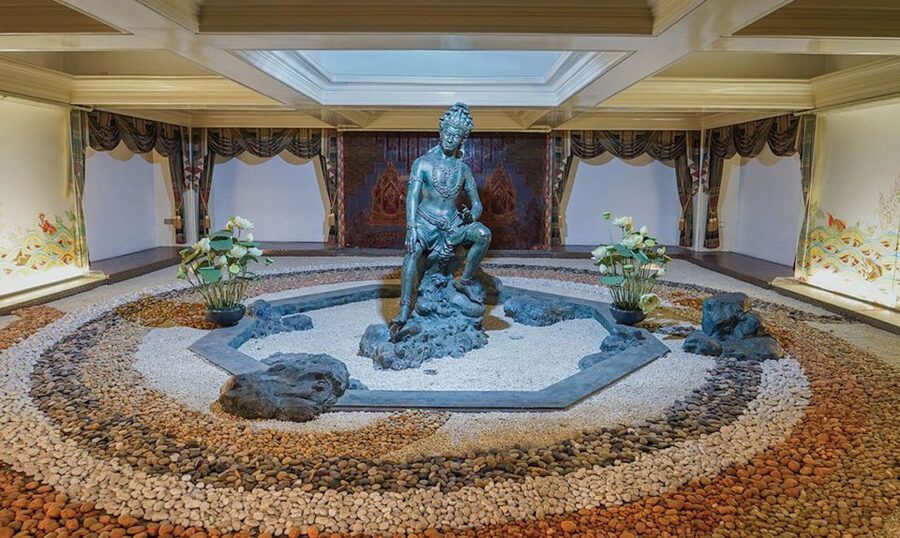
The highest interior section is called the Cosmo Level. It occupies the body of the elephant, which makes this part especially memorable. You reach it through two passageways leading from the elephant’s right and left feet.
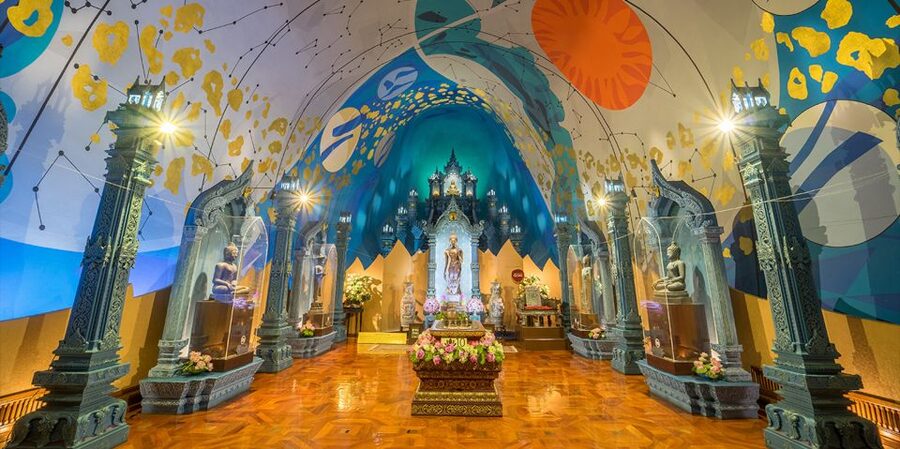
The routes lead toward an area painted with stories of gods and goddesses floating in Heaven. This is the most theatrical part of the museum. The scale of the elephant outside is impressive, but walking through its body gives the building a strange, personal quality. You are no longer just looking at a sculpture. You are moving through one.
The painted heavenly scenes complete the museum’s three-part structure. The Suvarnabhumi Level represents the past and the Underworld. The Earth Section presents the human world. The Cosmo Level moves upward toward gods, goddesses, and Heaven.
Do not expect a standard gallery layout here. The routes, imagery, and symbolism are part of the experience. You might find the painted scenes more striking than the collection itself, especially if you enjoy architecture and religious art.
The Cosmo Level also makes the museum a strong choice for photographs. The elephant’s interior, painted walls, unusual angles, and stained glass all offer different backgrounds. Keep your camera for personal use only. Commercial photographs and videos are not permitted inside.
A few more Thailand trips to weigh up
- Samui:Elephant Jungle experience & The First Elephant Museum
★ 4.9 · 226 reviews - Samut Prakan: The Erawan Museum Admission Ticket (NON THAI)
★ 4.8 · 89 reviews - Chiang Mai: Art in Paradise Illusion Museum Entry Ticket
★ 4.4 · 82 reviews - Pattaya: Art in Paradise 3D Museum Discounted Ticket
★ 4.6 · 75 reviews
Taking a slower walk through the garden
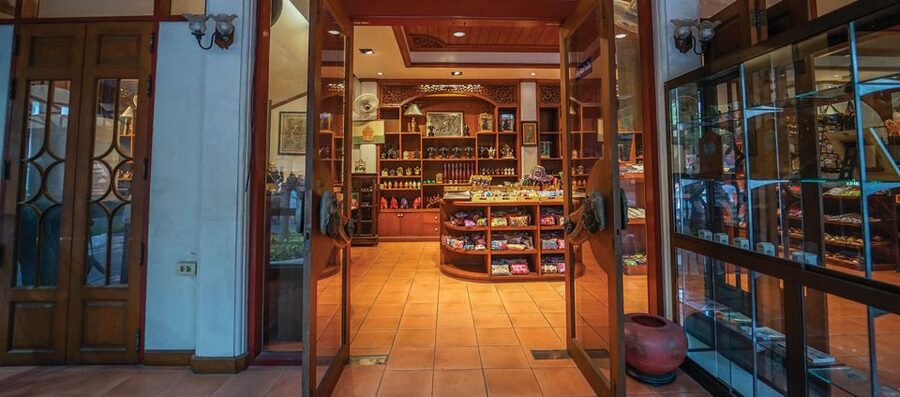
After the interior, use the access included with your ticket to explore the areas around the museum. The garden contains rare tree species from different parts of Thailand, including trees with connections to Thai literature.
This outside section provides a useful change of pace. The museum’s interior asks you to look at ceilings, symbols, artifacts, and painted figures. The garden lets you walk, breathe, and see the elephant building from different angles.
I would not treat the garden as a filler before your ride back. The trees add another layer to the museum’s idea of Asia and Thai culture. They also give you more room for photographs than the interior, where you need to remain quiet and respectful.
You can combine the garden with the exterior elephant photographs either before or after the galleries. If the day is hot, you may prefer to see the indoor levels first and save the garden for a shorter final walk.
What the $12 ticket really gives you
At $12 per person, this is a reasonable add-on for a Bangkok stay, particularly if you value unusual architecture and cultural sites over a standard city attraction. The ticket includes discounted admission, taxes and fees, flowers, incense, lotus flower, and access to the surrounding museum areas.
The value is strongest because the museum offers several distinct experiences in one place:
- A giant bronze elephant outside
- A private collection of ancient artifacts and porcelain
- Three symbolic interior levels
- Stained glass and painted ceilings
- Religious sculptures and imagery
- A garden with trees from around Thailand
- Audio guide choices in five languages
It is not the right value for everyone. If you only want a quick photograph of the elephant, the full admission may feel unnecessary. The ticket makes more sense if you plan to enter the galleries, use the audio guide, and spend time outside.
The discounted price is useful, but pay attention to the booking time. You can visit only on the specified date and at the specified time. That restriction is a small trade-off for the lower price and should be considered when building your Bangkok schedule.
You can reserve now and pay later, which helps if your plans are still changing. Free cancellation is available up to 24 hours in advance for a full refund. Check the selected time carefully before finalizing your day.
Getting there from Bangkok by BTS
The easiest stated route is the BTS Skytrain Green Line. Ride to Chang Erawan Station, E17, and leave through Exit 2. A free shuttle tuk-tuk operates there every day and takes you to the museum.
Transfers are not included in the ticket, so you are responsible for getting to the station and using the shuttle. This is still a fairly simple arrangement for an independent visit, especially compared with arranging a private taxi to an attraction outside central Bangkok.
Allow extra time for the ride from your hotel to the station, the shuttle connection, and the timed entry. Do not schedule the museum so tightly that one delayed train ruins the booking.
The meeting point is Erawan Museum, 99 Tambon Bang Muang Mai, Amphoe Mueang Samut Prakan, Samut Prakan 10270. Keep the address available in case you need to show it to a driver or confirm your destination.
The small rules that shape the visit
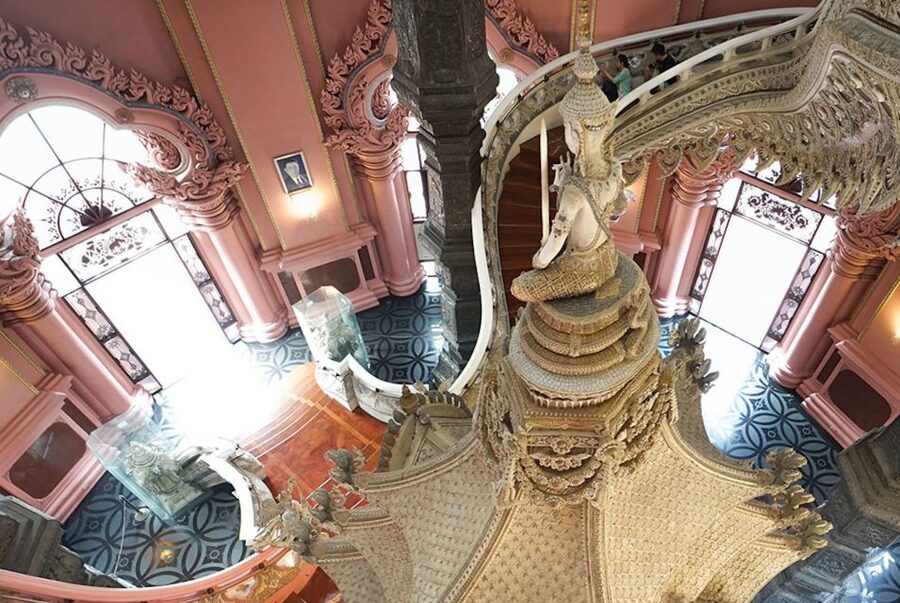
Erawan Museum asks you to remain quiet and respectful. That request matters because the building is both a museum and a sacred place. The religious figures, incense, lotus flower, and heaven scenes are not presented only as decoration.
Food and drinks are not permitted inside. Pets are not allowed. Modest clothing is required, with no shorts, short skirts, or sleeveless shirts.
Personal photographs and videos are part of the fun, but commercial photography and filming inside are prohibited. If you are creating professional content, check the rules before you arrive rather than assuming the usual phone photography policy applies.
The museum is a better fit for people who enjoy looking closely. The elephant creates an instant visual hit, but the rest of the visit rewards patience. Read the information, listen to the audio guide, and notice how the three levels connect.
Who will enjoy this museum most
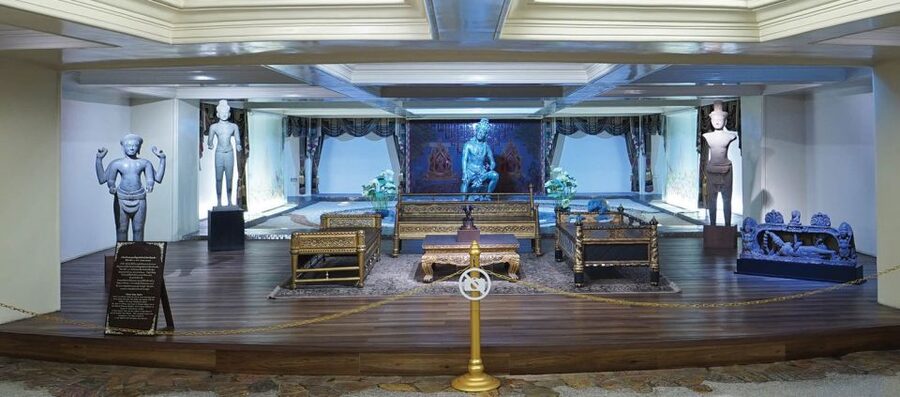
I would recommend Erawan Museum to you if you like architecture, religious art, unusual museums, and places that are difficult to compare with anything else in Bangkok. It also works well for photographers who want more than another temple entrance shot.
Families may enjoy the giant elephant and the colorful interior, but the quiet rules and modest dress requirements still apply. Children who need a fast-moving attraction may lose interest in the artifact displays, so plan the visit around the exterior sculpture and garden as well.
The site is also a good choice if you have already seen several of Bangkok’s main temples and want something different. It provides Thai cultural context without repeating the usual palace and riverside route.
I would be more cautious if you dislike symbolic art, personal collections, or attractions outside the center. The museum’s meaning is expressed through design and religious imagery, not through a conventional chronological exhibit. If that style does not appeal to you, the elephant may be the only part that holds your attention.
The overall rating is 4.8 from 20 reviews, and the strongest praise focuses on the unusual architecture and the sense of entering a sacred place. One visit also benefited from having few large groups present, which allowed a slower look around. Since crowd levels can vary, an early or less busy time may make it easier to enjoy the details, but no specific quiet period is guaranteed.
Should you book the Erawan Museum ticket?
Book it if you want a distinctive half-day stop near Bangkok, especially if you enjoy buildings that tell a story through symbols. The $12 admission is fair when you use all three levels, the garden, the audio guide, and the included offerings.
Skip it if your schedule is packed or you only want a quick exterior photo. The timed entry requires planning, and the museum asks for respectful clothing and behavior.
For most visitors who have an open morning or afternoon, I think this is a worthwhile addition to a Bangkok itinerary. The three-headed elephant gets you through the gate, but the Underworld, Earth, and Heaven structure gives you a reason to stay.
FAQ
Where is Erawan Museum located?
Erawan Museum is at 99 Tambon Bang Muang Mai, Amphoe Mueang Samut Prakan, Chang Wat Samut Prakan 10270, Thailand.
How can I reach the museum by public transportation?
Use the BTS Skytrain Green Line and exit at Chang Erawan Station, E17, Exit 2. A free shuttle tuk-tuk runs from the station to the museum every day.
How much does admission cost?
The discounted admission ticket costs $12 per person.
How long is the ticket valid?
The ticket is valid for one day, but you can visit only on the specified date and at the specified time selected during booking.
What does the ticket include?
It includes discounted admission to Erawan Museum, flowers, incense, a lotus flower, access to the surrounding museum areas, and all taxes and fees.
Is an audio guide available?
Yes. Audio guides are available in English, Thai, Chinese, Korean, and Russian.
What should I wear to Erawan Museum?
Dress modestly. Shorts, short skirts, and sleeveless shirts are not permitted.
Can I cancel the booking?
Yes. You can cancel up to 24 hours in advance for a full refund. You can also reserve now and pay later.
Just added around Thailand
- Damnoen Saduak Floating Market Small Group Tour★ 4.0 · 107 reviews
- Angkor Wat 2-Day Tour from Bangkok★ 5.0 · 8 reviews
- Arrival Private Airport Transfer : Bangkok Airport to Hotel in Bangkok★ 4.5 · 142 reviews
- Private Best of Bangkok Full Day Highlights City Tour★ 4.5 · 13 reviews
- Ancient Wonders of Ayutthaya with Return Scenic River Cruise★ 4.0 · 31 reviews
- Private Ancient city of Ayutthaya Shore Excursion★ 5.0 · 9 reviews
- Ancient City Ayutthaya Private Guided Day Tour★ 5.0 · 49 reviews
- Ancient City Bangkok and Erawan Museum Tickets★ 4.5 · 8 reviews
National Park Tours, compared.
Doi Inthanon Waterfall and Royal Project Chiang Mai
Read our review →

3-in-1: Doi Inthanon Tour, Elephant Sanctuary, and Trekking Trail
Read our review →

Doi Inthanon Park with Kew Mae Pan Hike Day Trip
Read our review →

Doi Inthanon Private Tour with Trek & Lunch from Chiang Mai
Read our review →Browse the lists this tour appears in